
DNA Data Storage: Risks of Biological Malware
Updated May 2026
Investigating the encoding of digital code into synthetic DNA strands for long-term storage. Researchers highlight the theoretical risk of pathogens being synthesized from encoded digital viruses.
Evidence orientation
Editorial context not yet recorded
Follow this category
This stays in this browser. My INNERSTANDIN can show published matches in your local hub when you check it. It does not send email, push, or alert notifications.
Local learning review
A private browser aid for revisiting ideas. It is not an alert or a health recommendation.
Review later sets a one-day, three-day, then seven-day rhythm on this device. Choose it only when you want to revisit this article.
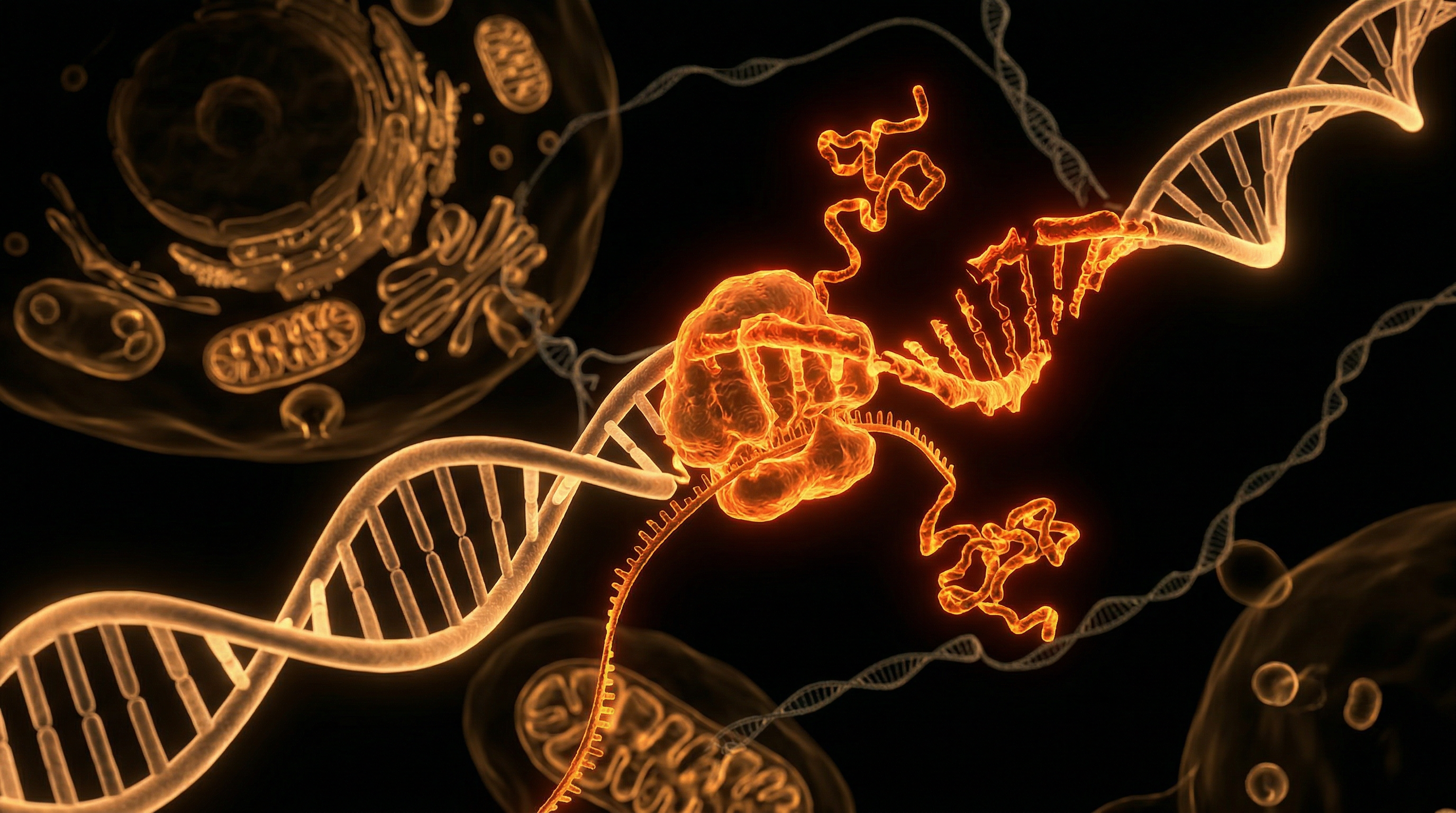
Overview
The digital age is drowning in its own exhaust. As global data production approaches a staggering 175 zettabytes by 2025, the limitations of traditional silicon-based storage—magnetic tape, hard drives, and flash memory—have become an existential crisis for the information economy. Silicon is fragile, power-hungry, and transient. In response, the scientific vanguard has turned to the oldest, most efficient storage medium in the known universe: Deoxyribonucleic Acid (DNA).
DNA data storage offers a theoretical density that is mind-boggling; a single gram of DNA can, in principle, store 215 petabytes of data. It is stable for millennia if kept cool and dark, and it requires no electricity to maintain its integrity. However, as we bridge the chasm between binary silicon and quaternary biology, we are inadvertently constructing a two-way conduit for a new breed of catastrophe.
At INNERSTANDING, we have long monitored the intersection of emerging technologies and systemic risk. The narrative presented by the commercial synthetic biology sector is one of clean, green, "molecular archiving." Yet, beneath the surface of this innovation lies the terrifying reality of Biological Malware. This is not merely the risk of a computer virus crashing a lab server; it is the theoretical and increasingly practical risk of digital code being designed to self-assemble into physical pathogens once processed by automated DNA synthesis and sequencing pipelines.
We are witnessing the birth of Cyber-Biosecurity, a field necessitated by the fact that our digital defences are utterly unprepared for "polyglot" attacks—files that exist simultaneously as malicious executable code on a computer and as a blueprint for a lethal toxin or virus in the biological realm. This article serves as a deep-dive investigation into how the very architecture of DNA data storage creates a "backdoor" into the biosphere, exposing the vulnerabilities that mainstream science is hesitant to acknowledge.
The Biology — How It Works
To understand the risk, one must first grasp the elegant yet susceptible architecture of DNA data storage. The process is a trifecta of encoding, synthesis, and sequencing.
Binary to Quaternary Conversion
Traditional computing relies on a binary system (0s and 1s). DNA uses a quaternary system composed of four nucleotide bases: Adenine (A), Cytosine (C), Guanine (G), and Thymine (T). The first step in DNA storage is the translation of digital bits into these genetic "letters."
Fact: A single millilitre of DNA can theoretically store more data than the world's largest data centres combined, with a durability exceeding 10,000 years.
Sophisticated algorithms are used to map 00 to A, 01 to C, 10 to G, and 11 to T (or variations thereof to avoid repetitive sequences like AAAAA, which are prone to errors during synthesis). This digital map is then sent to a DNA Synthesiser.
The Synthesis Pipeline: Phosphoramidite Chemistry
The actual construction of the DNA is a chemical process known as phosphoramidite synthesis. Unlike biological DNA replication, which occurs in living cells, this is an industrial, "bottom-up" process. Small fragments of DNA, called oligonucleotides, are built base-by-base on a solid support. These "oligos" are then pooled together. To store a large file, millions of these unique strands are created, each containing a portion of the data and an "indexing" sequence to ensure they can be reassembled in the correct order.
Sequencing and Decoding
To "read" the data, the DNA is processed through a Next-Generation Sequencer (NGS), such as those manufactured by Illumina or Oxford Nanopore. The sequencer identifies the order of the bases, generating a digital file (often in FASTQ or BAM format). Finally, a computer algorithm reverses the initial mapping, converting the A, C, G, and T strings back into 0s and 1s, restoring the original digital file (be it a PDF, a video, or an OS).
Mechanisms at the Cellular Level
The danger begins when we realise that the "data" we are storing is not inert. DNA is the source code of life. While the storage industry treats DNA as a high-density plastic, the machinery of life—the ribosome, RNA polymerase, and chaperone proteins—treats it as an instruction manual.
The "Execution" of Genetic Code
In a standard computer, code is "executed" by the CPU. In a biological context, code is executed through Transcription and Translation.
- Transcription: The DNA sequence is copied into Messenger RNA (mRNA).
- Translation: The mRNA travels to the ribosome, where it is read in groups of three bases (codons), each corresponding to a specific amino acid. These amino acids are chained together to form Proteins.
The "Biological Malware" threat arises when a digital file is maliciously encoded such that its DNA representation contains Promoters, Open Reading Frames (ORFs), and Termination Signals that a living cell recognises. If such a DNA strand were to find its way into a biological host—either through laboratory contamination or intentional release—the host’s own cellular machinery would begin "printing" the encoded protein.
The In-Silico to In-Vivo Bridge
Researchers at the University of Washington demonstrated a primitive version of this in 2017. They encoded a known computer exploit into a short strand of synthetic DNA. When a DNA sequencer analysed this strand, the resulting digital data overflowed the buffer of the sequencing software, allowing the "DNA" to take control of the computer processing it.
However, the reverse is far more chilling. A "Bio-Polyglot" could be a file that appears to be a harmless ZIP archive to a computer, but when synthesised, it contains the genetic sequence for Ricin or the Ebola glycoprotein. This is the Digital-to-Biological (D2B) attack vector.
Molecular Mimicry and Obfuscation
Because DNA storage involves "shuffling" and "indexing" data, a malicious sequence can be hidden across multiple fragmented strands. This makes it invisible to current biosecurity screening tools, which typically look for continuous sequences of known pathogens. Only when the data is "rehydrated" or pooled for reading does the functional, pathogenic sequence emerge. This is the biological equivalent of fragmented malware used by sophisticated APT (Advanced Persistent Threat) groups.
Environmental Threats and Biological Disruptors
The synthesis and storage of DNA do not occur in a vacuum. The environment itself acts as a massive, chaotic laboratory where synthetic DNA can interact with natural organisms through Horizontal Gene Transfer (HGT).
Horizontal Gene Transfer: The Silent Vector
In the natural world, bacteria frequently swap genetic material via transformation, transduction, or conjugation. If a DNA data storage facility suffers a containment breach—or even through routine waste disposal—synthetic "data" strands enter the ecosystem.
- Transformation: Soil bacteria can take up free-floating synthetic DNA from their environment.
- Integration: If the synthetic DNA contains sequences similar to the bacterial genome (homology), it can be integrated into the bacterium's own DNA.
Warning: If the encoded "data" happens to be a novel antibiotic resistance gene or a metabolic disruptor, we have effectively introduced "digital pollution" into the global microbiome.
The Role of CRISPR-Cas9
The ubiquity of CRISPR-Cas9 gene-editing technology exacerbates this risk. CRISPR systems are essentially "search and replace" tools for DNA. In an environment saturated with synthetic DNA "data," a CRISPR-equipped organism could inadvertently (or via engineered design) use these synthetic strands as templates for genomic edits. We are looking at a future where "data leaks" result in "evolutionary leaps" for the wrong species.
Nanotechnology and Delivery Systems
The commercialisation of Lipid Nanoparticles (LNPs)—the same technology used in mRNA vaccines—provides a perfect "envelope" for DNA malware. An adversary could encode a pathogen into DNA, encapsulate it in LNPs, and store it as "archived data." To the naked eye and standard sensors, it is a vial of clear liquid. In reality, it is a stable, programmable biological weapon ready for activation upon exposure to a biological host.
The Cascade: From Exposure to Disease
How does a digital string of 0s and 1s become a physical epidemic? The cascade is a multi-stage process that exploits the lack of "air-gaps" between bioinformatics and bench-top biology.
Stage 1: The Malicious Encoding
An actor uses a "Bio-Compiler" to design a DNA sequence that fulfils two roles:
- It stores a legitimate file (e.g., a corporate database) to avoid suspicion.
- It contains a "steganographic" layer where, if read by a ribosome, it produces a cytokine storm-inducing protein or a neurotoxin.
Stage 2: Synthesis and Distribution
The actor submits this sequence to a commercial DNA synthesis provider. While major providers belong to the International Gene Synthesis Consortium (IGSC) and screen for "Red Flag" pathogens, the screening is based on exact matches to known threats. By using "codon optimisation" or "obfuscation," the actor can bypass these filters, creating a sequence that is functionally identical to a toxin but looks like "junk DNA" to a computer scanner.
Stage 3: The "Accidental" Integration
The synthetic DNA is delivered to a data storage facility. During the handling, sequencing, or eventual disposal of the "obsolete" DNA, a technician is exposed via an aerosol or a needle-stick. Alternatively, the DNA is released into the local water supply.
Stage 4: Cellular Takeover
Once inside a human cell, the synthetic DNA migrates to the nucleus or stays in the cytoplasm. If the actor has included a T7 promoter or a human-compatible RNA Polymerase II binding site, the cell begins to transcribe the "data." The cell, following the instructions of the digital malware, begins to produce the encoded pathogen.
The Reality: Unlike a natural virus, which has evolved for fitness, this "malware pathogen" can be designed for pure lethality, with no requirement for the host to survive long enough for transmission.
What the Mainstream Narrative Omits
The promotional material for DNA storage from tech giants and biotech startups is conspicuously silent on several critical fronts. At INNERSTANDING, we believe these omissions are not accidental but represent a systemic "blind spot" driven by the rush to commercialise.
The Absence of an "Undo" Button
In silicon computing, if a file is corrupted or malicious, we format the drive. In DNA storage, once a sequence is synthesised and released into a biological environment, it cannot be "deleted." It becomes part of the planetary "genetic soup." There is no Biological Firewall capable of preventing a synthetic sequence from being replicated by natural polymerase enzymes once it has escaped containment.
The "Dual-Use" Deception
Mainstream discourse focuses on "biosecurity" in terms of preventing terrorists from ordering the Smallpox genome. It completely ignores the emergent properties of synthetic DNA. You do not need the Smallpox genome to cause havoc. A sequence that merely mimics an essential human signalling protein—but with a 10% higher affinity for its receptor—could cause a chronic, "silent" autoimmune epidemic across a population, all originating from a "data archive."
The Vulnerability of the Software Stack
The software used to manage DNA data—tools like ClustalW, BLAST, and various "Basecallers"—was written for research, not for security. These programmes are riddled with vulnerabilities. A "DNA Malware" attack could compromise the entire global bioinformatics infrastructure, leading to a situation where we cannot trust the results of medical diagnostics or forensic DNA testing. If the "reading" of DNA is compromised by the "content" of the DNA, the entire system of modern molecular biology collapses.
The Economic Incentive for Negligence
Screening every megabyte of DNA data for potential biological activity is computationally expensive and slows down the "write" speed of DNA storage. To make DNA storage commercially viable compared to Amazon Web Services (AWS) or Microsoft Azure, companies are incentivised to "speed up" the pipeline by loosening screening protocols. We are sacrificing biological safety on the altar of "High-Speed Molecular Archiving."
The UK Context
The United Kingdom is positioning itself as a "Global Science Superpower," with a heavy focus on the "Bio-Economy." However, this ambition brings unique risks to the British Isles.
Porton Down and the Defence Angle
The Defence Science and Technology Laboratory (Dstl) at Porton Down is well aware of the risks of synthetic biology. Yet, the UK's National Data Strategy increasingly looks toward synthetic DNA as a solution for the NHS's mounting data crisis. The integration of sensitive patient records into DNA storage creates a massive target for state-sponsored actors. Imagine a scenario where a foreign adversary replaces a section of the UK's "genomic archive" with a dormant biological "time bomb."
The "Golden Triangle" Vulnerability
The concentration of DNA synthesis startups and research institutes in the Oxford-Cambridge-London "Golden Triangle" creates a dense hub of synthetic DNA production. In the UK, regulations regarding "Benchtop DNA Synthesisers"—devices the size of a printer that can create DNA in an office—are still in their infancy. These devices bypass the central screening of large providers like Twist Bioscience or Integrated DNA Technologies (IDT), allowing for the "dark synthesis" of malicious code on British soil.
The Regulatory Void
While the UK has the Human Tissue Act and various GMO regulations, there is currently no specific legislation governing the "Digital-to-Biological" interface. The UK’s Health Security Agency (UKHSA) is primarily focused on natural zoonotic threats (like COVID-19 or Avian Flu) and is under-equipped to monitor the "synthetic-digital" landscape. There is a lack of mandatory "Bio-Checksums" for any DNA stored or synthesised within the UK.
Protective Measures and Recovery Protocols
If we are to embrace DNA data storage, we must implement a Cyber-Biosecurity framework that treats genetic code with the same (and greater) caution as nuclear launch codes.
1. Mandatory Biosecurity Screening (The "Bio-Firewall")
Every digital-to-DNA encoding algorithm must include a mandatory "safety compiler." This software would simulate the folding of any potential proteins encoded by the DNA. If a sequence is found to have a high probability of biological activity—even if it doesn't match a known pathogen—the synthesis must be blocked.
2. Encryption as a Biological Safeguard
Data must be encrypted before it is converted to DNA. Robust encryption (like AES-256) ensures that the resulting A, C, G, and T sequences are statistically indistinguishable from random noise. Random sequences are highly unlikely to form functional promoters or proteins.
Rule: Never store "Plaintext" biology. If you can read the digital file, the cell can read the biological toxin.
3. Physical Air-Gapping and Containment
DNA storage facilities should be treated as Biosafety Level 3 (BSL-3) environments. Automated sequencing pipelines must be air-gapped from the public internet to prevent a DNA-based exploit from spreading to the global grid. Furthermore, "Kill Switches" should be engineered into the storage medium—such as designing the DNA to degrade instantly upon exposure to oxygen or specific wavelengths of light.
4. Semantic Analysis of Genetic Code
We need to move beyond "sequence matching" to "semantic understanding." This involves using Machine Learning (ML) to predict the "intent" of a DNA strand. Just as an EDR (Endpoint Detection and Response) system looks for suspicious behaviour in a computer program, a "Biological EDR" would look for suspicious motifs in synthetic DNA that suggest it is designed to hijack a ribosome.
5. The "Bio-Checksum" and Recovery
Every vial of storage DNA must include a "Sentinel Sequence"—a specific, non-functional strand of DNA that can be quickly tested to verify the integrity of the archive. If the Sentinel is altered, the entire batch is deemed compromised and must be chemically neutralised (e.g., via bleach or incineration) rather than being sequenced.
Summary: Key Takeaways
The transition to DNA data storage is not merely a technological upgrade; it is a fundamental shift in the relationship between information and life. The risks are profound, and the current safeguards are insufficient.
- The D2B Vector: Digital malware can now be "printed" into biological reality. The "Polyglot" file is the ultimate trojan horse.
- Synthesis Blindness: Commercial screening overlooks "obfuscated" or fragmented pathogens, allowing lethal sequences to be ordered via a web browser.
- Environmental Integration: Synthetic "data" DNA can be integrated into the natural microbiome via horizontal gene transfer, leading to unpredictable ecological and health consequences.
- The UK Risk: As a hub for both "Big Tech" and "Big Bio," the UK is a prime target for cyber-biological sabotage, yet it lacks the regulatory framework to manage "Benchtop Synthesis."
- Encryption is Non-Negotiable: The only way to ensure DNA remains "data" and does not become "biology" is to ensure it remains encrypted until the very moment of digital decoding.
As we move forward, the scientific community must stop treating DNA as a passive "hard drive." It is a dynamic, volatile, and highly "executable" medium. If we fail to respect the bridge we are building between the digital and the biological, the first "system crash" of the DNA data era will not result in a "Blue Screen of Death," but in a global biological catastrophe that no "reboot" can fix. INNERSTANDING will continue to monitor these developments, exposing the truths that the silicon-valley-biotech complex would rather keep archived in the dark.
This article is provided for informational and educational purposes only. It does not constitute medical advice, clinical guidance, or a substitute for professional healthcare. Information reflects cited research at time of publication. Always consult a qualified healthcare professional before acting on any health information.
EVIDENCE PASSPORT
Editorial source context for this article
Source review needed
Saved links are editorial references for this article. They may support specific claims rather than every sentence. Open and assess each source in context. This passport does not independently verify them.
Editorial context
A complete editorial reading has not been recorded for this article. Source links remain available for you to open and assess directly.
Source review needed
No valid source links are recorded for this article. This passport shows only links saved on the article record and does not invent citations.
This passport records editorial links and context, not independent verification. Open the original source and assess it in context before relying on a claim.
Medical Disclaimer
The information in this article is for educational purposes only and does not constitute medical advice, diagnosis, or treatment. Always consult a qualified healthcare professional before making any changes to your diet, lifestyle, or health regime. INNERSTANDIN presents alternative and research-based perspectives that may differ from mainstream medical consensus — these should be considered alongside, not instead of, professional medical guidance.
Read Full DisclaimerContinue the thread
Keep this question moving.
Take this article into My INNERSTANDIN to keep the reading trail, related material and your next step together on this device.