Ecotoxicological Pathways of Silica Microparticles: Disrupting the Mineral Balance of Mesenchymal Progenitor Cells
A deep-dive investigation into how environmental silica microparticles interfere with the differentiation and mineralisation processes of mesenchymal progenitor cells, potentially leading to systemic connective tissue dysfunction and impaired mineral homeostasis.
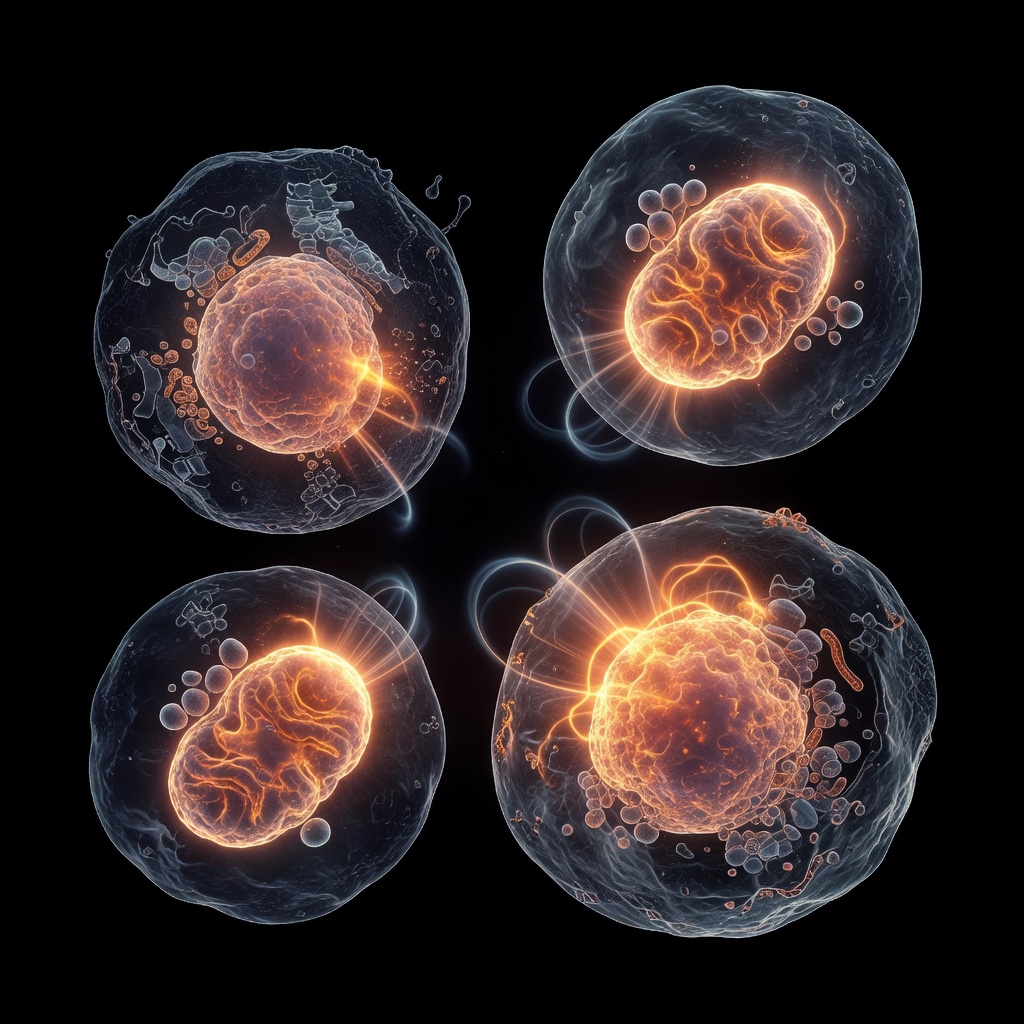
# Ecotoxicological Pathways of Silica Microparticles: Disrupting the Mineral Balance of Mesenchymal Progenitor Cells\n\n## Introduction: The Invisible Lattice\n\nIn the pursuit of 'Innerstanding' our health, we must often look beyond the macronutrients and lifestyle choices that dominate public discourse to the very minerals that provide our biological scaffolding. Silicon dioxide, or silica, is a ubiquitous component of the Earth's crust. While it is an essential trace element required for the synthesis of collagen and the calcification of bone, its environmental presence in the form of microparticles represents an emerging ecotoxicological threat. This article explores the nuanced pathways through which silica microparticles infiltrate our biology and disrupt the delicate mineral balance of Mesenchymal Progenitor Cells (MPCs), the primary architects of our connective tissue.\n\n## The Mesenchymal Progenitor Cell: The Body's Regenerative Engine\n\nMesenchymal Progenitor Cells are multipotent stromal cells capable of differentiating into various cell types, including osteoblasts (bone cells), chondrocytes (cartilage cells), and adipocytes (fat cells). In the context of the UK’s aging population and the rising prevalence of musculoskeletal disorders, the health of these cells is paramount.
MPCs are responsible for the constant turnover and repair of our connective tissues. However, their high metabolic activity and role in mineral handling make them particularly susceptible to environmental toxins that mimic or interfere with mineral signalling.\n\n## The Trojan Horse: Ingress and Bioavailability\n\nSilica microparticles enter the human body primarily through inhalation of industrial dust, environmental pollution, and, increasingly, through micro-glass and synthetic additives in consumer products. Once these particles cross the mucosal barriers, they enter the interstitial fluid and the systemic circulation. Because of their size—often ranging from 1 to 10 micrometres—they are not easily cleared by the lymphatic system. Instead, they interact directly with the extracellular matrix (ECM) where MPCs reside.\n\nWhen an MPC encounters a silica microparticle, it may attempt to internalise it through a process known as endocytosis.
Unlike soluble silicates, which the body can use for mineralisation, these crystalline or amorphous microparticles act as a 'Trojan Horse.' Once inside the cell, they disrupt the intracellular environment, initiating a cascade of events that shifts the cell's focus from tissue regeneration to inflammatory survival.\n\n## Disruption of Mineral Signalling and Homeostasis\n\nThe primary mechanism of silica toxicity in MPCs involves the disruption of calcium and phosphorus homeostasis. Mineralisation is a finely tuned process where MPCs secrete a matrix that is subsequently hardened by the deposition of hydroxyapatite. Silica, being chemically similar to other minerals in the tetrahedral group, can interfere with the ion channels on the cell membrane.\n\n1. Calcium Interference: High concentrations of silica microparticles have been shown to induce an abnormal influx of calcium ions into the cytoplasm. This 'calcium storm' triggers premature activation of signalling pathways, leading to the exhaustion of the cell’s mineralisation potential.\n2. Alkaline Phosphatase Inhibition: Alkaline phosphatase (ALP) is a critical enzyme produced by MPCs to prepare the tissue for mineralisation. Silica microparticles can bind to the active sites of ALP, reducing its enzymatic activity and preventing the proper formation of bone and cartilage matrix.\n3. Mitochondrial Dysfunction: The energy required for mineral transport is generated by the mitochondria.
Silica microparticles induce oxidative stress (ROS production) within these organelles, effectively 'starving' the cell of the ATP needed to pump minerals against a concentration gradient.\n\n## The Root Cause: Why Microparticles Differ from Trace Elements\n\nIt is essential to distinguish between the 'trace element' silicon and the 'pollutant' silica microparticle. The root cause of the pathology discussed here is the physical and chemical surface area of the microparticle. While soluble silica (as orthosilicic acid) supports the cross-linking of glycosaminoglycans in connective tissue, microparticles present a reactive surface that adsorbs essential proteins and minerals. This 'protein corona' effect strips the local environment of the nutrients required for healthy MPC function, leading to what we term 'localized mineral bankruptcy.'\n\n## Impact on Connective Tissue Mineralisation\n\nWhen the mineral balance of MPCs is disrupted, the downstream effect on connective tissue is profound. Instead of healthy, flexible, and resilient collagen structures, the tissue may undergo one of two pathological shifts:\n\n* Ectopic Calcification: The cellular stress caused by silica can lead to 'dystrophic mineralisation,' where minerals are deposited in soft tissues (like tendons or blood vessels) where they do not belong, causing stiffness and pain.\n* Fibrosis: The body attempts to wall off the silica particles by producing excessive, disorganized collagen.
This leads to the thickening and scarring of connective tissues, a hallmark of conditions such as silicosis, but now increasingly recognized as a systemic risk in sub-clinical environmental exposure.\n\n##
Energy Blend Supports
Energy Blend is a comprehensive formula designed to fuel your body at a cellular level, promoting sustained physical stamina and mental clarity without synthetic spikes. It targets fundamental metabolic pathways to ensure your nervous system and hormonal activity remain balanced and resilient.
Vetting Notes
Pending
The UK Context
and Environmental Resilience\n\nIn the United Kingdom, historical industrial exposure combined with modern urban particulate matter creates a complex landscape for mineral health. Understanding these ecotoxicological pathways allows for a more targeted approach to wellness. Supporting the body’s natural detoxification pathways and ensuring an adequate intake of 'competitor' minerals—such as magnesium and high-quality bioavailable calcium—can help mitigate the affinity of silica microparticles for our progenitor cells.\n\n## Conclusion: Reclaiming Mineral Balance\n\nThe journey to 'Innerstanding' health requires us to recognize that our cells are in constant conversation with the environment. Silica microparticles represent a significant, yet often silent, disruptor of the mesenchymal engine. By focusing on the root causes—oxidative stress, enzymatic inhibition, and mineral displacement—we can begin to develop strategies to protect our connective tissue and maintain the integrity of our biological scaffolding.
True health education must empower the individual to look beyond the surface, ensuring that the mineral foundations of the body remain unburdened by the residues of the modern world.
This article is provided for informational and educational purposes only. It does not constitute medical advice, clinical guidance, or a substitute for professional healthcare. Information reflects cited research at time of publication. Always consult a qualified healthcare professional before acting on any health information.
RESEARCH FOUNDATIONS
Biological Credibility Archive
Citations provided for educational reference. Verify via PubMed or institutional databases.
Medical Disclaimer
The information in this article is for educational purposes only and does not constitute medical advice, diagnosis, or treatment. Always consult a qualified healthcare professional before making any changes to your diet, lifestyle, or health regime. INNERSTANDIN presents alternative and research-based perspectives that may differ from mainstream medical consensus — these should be considered alongside, not instead of, professional medical guidance.
Read Full DisclaimerReady to learn more?
Continue your journey through our classified biological research.
DISCUSSION ROOM
Members of THE COLLECTIVE discussing "Ecotoxicological Pathways of Silica Microparticles: Disrupting the Mineral Balance of Mesenchymal Progenitor Cells"
SILENT CHANNEL
Be the first to discuss this article. Your insight could help others understand these biological concepts deeper.
THE ARSENAL
Based on Silica & Connective Tissue Mineralisation — products curated by our research team for educational relevance and biological support.
Energy Blend Supports

Clean Slate – Detoxes thousands of chemicals,heavy metals, pesticides, allergens, mold spores and fungus

Rejuvenation Pack – Essential Vitamins and Minerals for Health Restoration
INNERSTANDING may earn a commission on purchases made through these links. All products are selected based on rigorous educational relevance to our biological research.
RABBIT HOLE
Follow the biological thread deeper