
Elasticity vs Plasticity
Updated May 2026
Differentiating between the elastic recoil of tendons and the plastic remodeling of fascial sheets is vital for training. This guide explains how to apply stress to achieve the desired tissue change.
Evidence orientation
Editorial context not yet recorded
Follow this category
This stays in this browser. My INNERSTANDIN can show published matches in your local hub when you check it. It does not send email, push, or alert notifications.
Local learning review
A private browser aid for revisiting ideas. It is not an alert or a health recommendation.
Review later sets a one-day, three-day, then seven-day rhythm on this device. Choose it only when you want to revisit this article.
Overview
In the realm of modern biomechanics and sports science, a profound misunderstanding persists, one that keeps athletes sidelined and chronic pain patients in a cycle of perpetual "management" rather than resolution. This misunderstanding stems from a failure to distinguish between two fundamental mechanical properties of the human biological fabric: Elasticity and Plasticity.
For decades, the mainstream medical establishment has viewed the human body through a Newtonian lens—as a series of discrete levers (bones) and pulleys (muscles). In this reductionist framework, the fascia and connective tissue were discarded as "packaging material," stripped away in cadaver labs to reveal the "important" structures. However, we now know that the fascial network is a continuous, whole-body, fluid-filled, crystalline matrix that functions as our largest sensory organ and our primary structural architect.
Elasticity is the ability of a tissue to deform under load and return instantly to its original shape once the load is removed. It is the spring-like quality found pre-eminently in tendons. Plasticity, conversely, is the capacity for a tissue to undergo permanent structural remodeling in response to sustained, long-term pressure. This is the domain of the fascial sheets, the aponeuroses, and the deep investing layers of the body.
To train effectively, one must understand that these two properties respond to diametrically opposed stimuli. Treating a plastic problem with an elastic solution—or vice versa—not only leads to performance plateaus but invites the very "overuse" injuries that plague the modern sporting world. This article serves as an exhaustive deconstruction of these biological imperatives, exposing the gaps in conventional physical therapy and providing a blueprint for true structural integration.
Callout Fact: The fascial system contains approximately six times more sensory nerve endings than muscle tissue, making it the primary organ of interoception and proprioception.
The Biology — How It Works
To understand the difference between elasticity and plasticity, we must first examine the architecture of the Extracellular Matrix (ECM). The ECM is composed of a ground substance (a hydrating gel), and various protein fibres, primarily collagen and elastin.
The Elastic Mechanism
Elasticity is governed by the ratio of elastin to collagen and the specific arrangement of these fibres. In a tendon, collagen fibres are arranged in tight, parallel bundles. When an athlete jumps or runs, these fibres stretch slightly, but the energy is primarily stored in the cross-links and the "crimp" of the collagen.
The Stretch-Shortening Cycle (SSC) is the hallmark of elastic efficiency. In this phase, the muscle remains relatively isometric, while the tendon stretches and recoils like a high-tension spring. This allows for movement with minimal metabolic cost. A kangaroo, for instance, can hop at high speeds with virtually no increase in oxygen consumption because its movements are almost entirely elastic.
The Plastic Mechanism
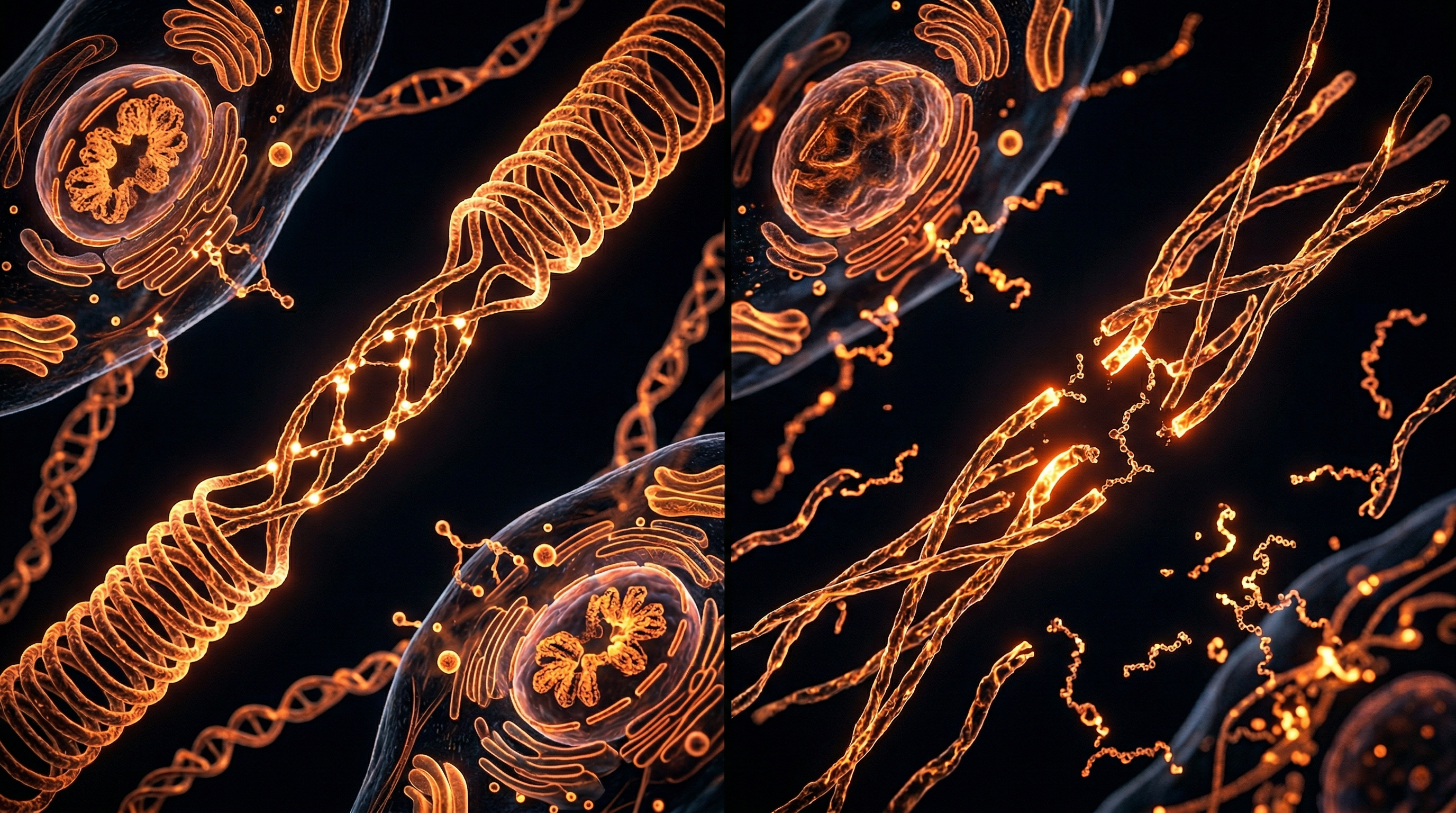
Plasticity is the biological equivalent of "remodelling the house." It involves the physical rearrangement of the collagenous network. When fascia is subjected to a slow, sustained load (known as creep), the ground substance becomes more fluid—a property known as thixotropy—and the collagen fibres begin to glide past one another.
If this load is held for a sufficient duration, the fibroblasts (the architects of the ECM) perceive the mechanical signal and begin to lay down new collagen in the direction of the stress. This does not happen in seconds; it happens over minutes, hours, and ultimately, months. Plastic change is the "growth" of the body’s internal architecture to accommodate new postural or movement demands.
The Stress-Strain Curve
In engineering and biology, the Stress-Strain Curve defines how materials behave.
- The Toe Region: The initial taking up of slack in the tissue.
- The Elastic Region: The tissue stretches but will return to its original length.
- The Plastic Region: The tissue is stretched beyond its elastic limit. It will not return to its original length; it has been permanently altered.
- Failure Point: The tissue tears (e.g., a grade 3 ligament rupture).
The goal of fascial training is to inhabit the Plastic Region safely to induce remodeling without reaching the Failure Point.
Mechanisms at the Cellular Level
The magic of tissue transformation happens within the micro-vacuolar system. Under a microscope, fascia is not a solid sheet but a series of chaotic, fluid-filled bubbles that allow for multi-directional sliding.
Fibroblasts: The Intelligence within the Matrix
The fibroblast is the primary cell responsible for the synthesis of the ECM. These cells are not passive; they are highly sensitive to mechanotransduction—the process by which cells convert mechanical stimulus into chemical activity.
When you apply a plastic load (slow, sustained tension), the fibroblast is physically stretched. This stretching opens ion channels in the cell membrane, triggering a cascade of signals that reach the nucleus. The cell then begins to manufacture pro-collagen, which is extruded into the extracellular space to reinforce the tissue.
Myofibroblasts and Tonic Contraction
In cases of chronic stress or trauma, fibroblasts can transform into myofibroblasts. These cells contain alpha-smooth muscle actin, giving them the ability to contract like muscle cells. Myofibroblasts are responsible for "fascial tone." While necessary for wound healing, an overabundance of myofibroblasts leads to fascial densification and pathological stiffness, common in conditions like Dupuytren's contracture or frozen shoulder.
The Role of Hyaluronan
Between the layers of fascia sits hyaluronan (hyaluronic acid). This molecule acts as a biological lubricant. In a healthy state, it allows fascial planes to glide freely over one another. However, when the body is sedentary or dehydrated, hyaluronan becomes "sticky" and viscous. This is the biological reality behind the feeling of "stiffness" in the morning. Movement (mechanical shear) is required to lower the viscosity of hyaluronan and restore "the glide."
Key Term: Piezoelectricity — Collagen is a piezoelectric material. When mechanical stress is applied to it, it generates a small electrical charge. This charge acts as a signal for fibroblasts to migrate to the area and begin repair, effectively making the fascial network a whole-body communication system that operates faster than the nervous system.
Environmental Threats and Biological Disruptors
The integrity of our connective tissue is currently under siege by modern environmental factors that are rarely discussed in mainstream sports science. These disruptors affect the molecular "quality" of the collagen being produced, making it either too brittle (loss of elasticity) or too rigid (loss of plasticity).
The Glyphosate-Glycine Substitution
The primary amino acid in collagen is glycine. Emerging (though often suppressed) research suggests that glyphosate, the active ingredient in many herbicides, is chemically similar to glycine. There is a terrifying possibility that the body, in a state of glycine deficiency, may mistakenly incorporate glyphosate into the collagen synthesis process. This results in "broken" collagen that lacks the proper tensile strength, leading to the unexplained "epidemic" of ACL tears and tendon ruptures in young athletes today.
EMFs and the Crystalline Water Matrix
Fascial health is entirely dependent on hydration. However, this is not just about "drinking more water." It is about the Fourth Phase of Water (EZ water), a structured crystalline state that forms along biological surfaces like collagen.
Electromagnetic Fields (EMFs) from mobile devices and Wi-Fi have been shown to disrupt the voltage-gated calcium channels in cells and interfere with the formation of structured water. When the water matrix surrounding the collagen fibres is disrupted, the fibres cannot glide. The result is a "brittle" body that is prone to inflammatory "itis" conditions (tendonitis, fasciitis).
The High-Sugar Path: Glycation
Advanced Glycation End-products (AGEs) occur when sugar molecules attach to collagen fibres. This creates "cross-links" that act like biological glue, soldering together layers of fascia that should be separate. This process, known as glycation, makes the fascia lose its elastic recoil and become prematurely aged and "crunchy."
The Cascade: From Exposure to Disease
The loss of fascial integrity is not a sudden event; it is a slow, insidious cascade that moves from functional limitation to chronic disease.
Phase 1: Loss of Glide (Densification)
It begins with sedentary behaviour or repetitive, limited-range movements (like typing or cycling). The hyaluronan thickens. The layers of fascia begin to adhere. You feel "tight," but a hot shower or a quick stretch seems to fix it.
Phase 2: Fibrosis and Compensatory Patterns
As the adhesions harden, the body can no longer move through its natural axes. To compensate, the nervous system recruits other muscles. A lack of hip mobility (plastic failure) leads to excessive shearing in the lumbar spine. This is where most "back pain" originates, yet mainstream medicine continues to look at the spine rather than the fascial constraints of the pelvis.
Phase 3: Structural Distortion and Neural Entrapment
The thickened fascia begins to compress peripheral nerves and blood vessels. Conditions like Carpal Tunnel Syndrome, Thoracic Outlet Syndrome, and Sciatica are often not issues with the nerves themselves, but issues of the fascial "sleeves" through which those nerves must pass.
Phase 4: Systemic Inflammation
Because the fascia is a continuous network, a local restriction creates global tension. This chronic mechanical "noise" keeps the sympathetic nervous system in a state of high alert, leading to systemic inflammation, poor lymphatic drainage, and eventually, the degradation of joint cartilage as the "bio-tensegrity" of the body collapses.
What the Mainstream Narrative Omits
The refusal of medical institutions to integrate fascial science is not merely an oversight; it is a byproduct of a system built on pharmaceutical intervention and surgical "fixes."
- The Myth of "The Muscle": You cannot train a muscle in isolation. Every muscle is encased in, and permeated by, fascia (epimysium, perimysium, endomysium). When you perform a bicep curl, you are training a "myofascial unit." The mainstream obsession with muscle hypertrophy often ignores the fact that if the fascia does not expand to accommodate the muscle, the internal pressure (compartment pressure) rises, leading to decreased vascularity and strength.
- The Failure of Passive Stretching: Most people "stretch" for 20-30 seconds. This is the "no-man's land" of connective tissue training. It is too long to utilize elastic recoil and too short to induce plastic remodeling. To change the plastic structure of fascia, a hold must typically be maintained for 3 to 5 minutes under moderate tension.
- Biotensegrity vs. Compression: Traditional anatomy teaches that we are "weight-bearing" like a stone wall. This is false. We are tensegrity structures (tensional integrity). Our bones are "floating" struts held in a sea of tensional fascia. This explains why an injury in the right ankle can manifest as a headache—the tension is transmitted through the entire web. Mainstream medicine's failure to treat the global web is why "local" treatments for chronic pain have such low success rates.
Callout Fact: In a healthy body, the fascia allows the skin to slide up to 75% of its length over the underlying muscle. In chronic pain patients, this "glide" is often reduced to less than 20%.
The UK Context
In the United Kingdom, the approach to connective tissue health is particularly archaic. The NHS model, while excellent for acute trauma, is poorly equipped for the nuances of fascial pathology.
- The Physiotherapy "Wait and See": UK patients with "tendonitis" (more accurately called tendonosis, a degenerative rather than inflammatory condition) are often prescribed rest and ibuprofen. This is the worst possible treatment. Rest causes the collagen matrix to further disorganise, and NSAIDs (Non-Steroidal Anti-Inflammatory Drugs) have been shown to inhibit the fibroblast activity necessary for repair.
- The "British Stiff Upper Lip" Posture: There is a cultural component to fascia. The typical "desk-bound" British lifestyle, combined with a damp, cold climate, creates a "thermal tightening" of the fascial tissues. Cold weather increases the viscosity of the ground substance, making the UK population more prone to "stiff" injuries during the winter months.
- Lack of Specialised Bodywork: While "Sports Massage" is common in the UK, true Structural Integration (Rolfing) or Fascial Manipulation (Stecco method) is often relegated to the "alternative" fringes. In countries like Germany or Italy, fascial research is integrated into top-tier orthopaedic clinics, whereas the UK remains largely stuck in the 1980s muscle-bone paradigm.
Protective Measures and Recovery Protocols
To master the body, one must train both the Spring (Elasticity) and the Container (Plasticity). Here is how to apply stress to achieve the desired tissue change.
Training for Elasticity (The Tendon Spring)
To improve elastic recoil, the stimulus must be high-velocity and short-duration.
- Plyometrics: Rhythmic jumping, skipping, and bounding. The focus should be on "minimum ground contact time."
- Ballistic Loading: Using kettlebells or medicine balls to create rapid deceleration and acceleration phases.
- The 48-Hour Rule: Tendons require longer to recover than muscles. High-intensity elastic training should never be done on consecutive days.
- Temperature: Tendons operate best when "warm." In the UK climate, keeping the joints covered and warm during training is essential for maintaining elastic safety.
Training for Plasticity (The Fascial Sheet)
To remodel the fascia, the stimulus must be slow, low-intensity, and long-duration.
- Yin-Style Loading: Holding positions that put specific fascial lines under tension for 3–5 minutes. This triggers the "creep" phenomenon and signals fibroblasts to remodel the tissue.
- Eccentric Loading: Slow, controlled lengthening of the tissue under load (e.g., a 10-second descent in a squat). This helps realign disorganised collagen fibres.
- Hydration and Movement: "Micro-movements" throughout the day are more effective for fascial health than one hour at the gym followed by eight hours of sitting. Varying your movement "texture" prevents densification.
Nutritional and Bio-Hacking Support
- Collagen Synthesis: Supplement with high-quality Collagen Peptides (Types I and III) combined with Vitamin C and Copper, which are essential co-factors for collagen cross-linking.
- Silica: This "forgotten" mineral is vital for the strength and flexibility of connective tissue.
- Magnesium: Required for the relaxation of the myofibroblasts and to prevent the calcification of fascial tissues.
- Structured Water: Consuming "living" water (from spring sources or vortexed water) and maintaining electrolyte balance to ensure the crystalline matrix of the fascia remains hydrated.
- Grounding (Earthing): Connecting to the Earth's electron flow can help reduce the inflammatory "charge" in the fascial web and improve the structure of biological water.
Summary: Key Takeaways
The distinction between elasticity and plasticity is the difference between a body that breaks and a body that bends and bounces.
- Fascia is not "wrapping"; it is a sophisticated, sensory-rich, liquid-crystalline communication network.
- Elasticity belongs to the tendons and requires fast, rhythmic loading. It provides "free" energy and speed.
- Plasticity belongs to the fascial sheets and requires slow, sustained loading. It provides structure, posture, and long-term mobility.
- Modern environment (Glyphosate, EMFs, Sugar) acts as a "biological saboteur" of collagen quality, making our tissues more prone to injury.
- Traditional medicine often fails by ignoring the whole-body "tensegrity" and focusing on local symptoms rather than global fascial restrictions.
- True recovery involves 12–24 months of consistent fascial training, as connective tissue turns over much more slowly than muscle tissue.
To truly understand "Innerstanding" is to recognise that you are not a machine made of parts, but a fluid-filled web of biological intelligence. By respecting the laws of elasticity and plasticity, you stop fighting your biology and start facilitating its ultimate expression.
The future of human performance and longevity lies not in the "breaking" of the body, but in the intelligent "moulding" of the matrix. Own your architecture, or your environment will mould it for you.
This article is provided for informational and educational purposes only. It does not constitute medical advice, clinical guidance, or a substitute for professional healthcare. Information reflects cited research at time of publication. Always consult a qualified healthcare professional before acting on any health information.
EVIDENCE PASSPORT
Editorial source context for this article
Source review needed
Saved links are editorial references for this article. They may support specific claims rather than every sentence. Open and assess each source in context. This passport does not independently verify them.
Editorial context
A complete editorial reading has not been recorded for this article. Source links remain available for you to open and assess directly.
Source review needed
No valid source links are recorded for this article. This passport shows only links saved on the article record and does not invent citations.
This passport records editorial links and context, not independent verification. Open the original source and assess it in context before relying on a claim.
Medical Disclaimer
The information in this article is for educational purposes only and does not constitute medical advice, diagnosis, or treatment. Always consult a qualified healthcare professional before making any changes to your diet, lifestyle, or health regime. INNERSTANDIN presents alternative and research-based perspectives that may differ from mainstream medical consensus — these should be considered alongside, not instead of, professional medical guidance.
Read Full DisclaimerContinue the thread
Keep this question moving.
Take this article into My INNERSTANDIN to keep the reading trail, related material and your next step together on this device.