
Endocrine Disruptors: Altering Human Lipid Profiles
Updated May 2026
Environmental toxins like BPA and phthalates can interfere with lipid signaling pathways in the liver. We expose the hidden chemicals in the UK environment that contribute to rising dyslipidaemia.
Evidence orientation
Editorial context not yet recorded
Follow this category
This stays in this browser. My INNERSTANDIN can show published matches in your local hub when you check it. It does not send email, push, or alert notifications.
Local learning review
A private browser aid for revisiting ideas. It is not an alert or a health recommendation.
Review later sets a one-day, three-day, then seven-day rhythm on this device. Choose it only when you want to revisit this article.
Overview
For decades, the clinical narrative surrounding dyslipidaemia and cardiovascular health has been dominated by a singular, reductionist focus: the interplay between dietary saturated fats and sedentary lifestyles. We have been told that the rise in elevated Low-Density Lipoprotein (LDL) cholesterol and the epidemic of Non-Alcoholic Fatty Liver Disease (NAFLD)—recently renamed Metabolic Dysfunction-Associated Steatotic Liver Disease (MASLD)—is simply a matter of personal willpower and caloric mathematical imbalances. However, as a senior researcher for INNERSTANDING, I must assert that this narrative is fundamentally incomplete.
We are currently witnessing a silent, molecular coup d'état. The human endocrine system, a highly tuned signalling network developed over millions of years, is being hijacked by a suite of synthetic compounds known as Endocrine Disrupting Chemicals (EDCs). These substances, ubiquitous in our modern environment, do not merely "interfere" with hormones; they rewire the very pathways that govern how our bodies synthesise, transport, and metabolise lipids.
From the bisphenols in our food linings to the phthalates in our personal care products and the PFAS (Per- and Polyfluoroalkyl Substances) in our drinking water, we are immersed in an invisible chemical soup. These compounds act as "metabolic disruptors" or "obesogens," tricking the liver into a state of chronic lipogenesis, regardless of exercise or diet. In the United Kingdom, where regulatory oversight has struggled to keep pace with industrial output, the impact on public health is profound. This article exposes the biochemical mechanisms through which environmental toxins alter human lipid profiles and why the mainstream medical establishment continues to ignore this chemical reality.
The Biology — How It Works
To understand how toxins alter lipids, one must first appreciate the endocrine system's role as the body's primary "software." Hormones are the coding instructions that tell cells whether to burn fat for energy, store it for later, or export it into the bloodstream.
The Liver as the Metabolic Hub
The liver is the central clearinghouse for lipid metabolism. It coordinates the synthesis of cholesterol, the assembly of Very-Low-Density Lipoproteins (VLDL), and the clearance of remnants from the circulation. This process is governed by a family of nuclear receptors—proteins that sit inside the nucleus of liver cells (hepatocytes) and act as sensors for hormones and nutrients.
The Molecular Mimicry
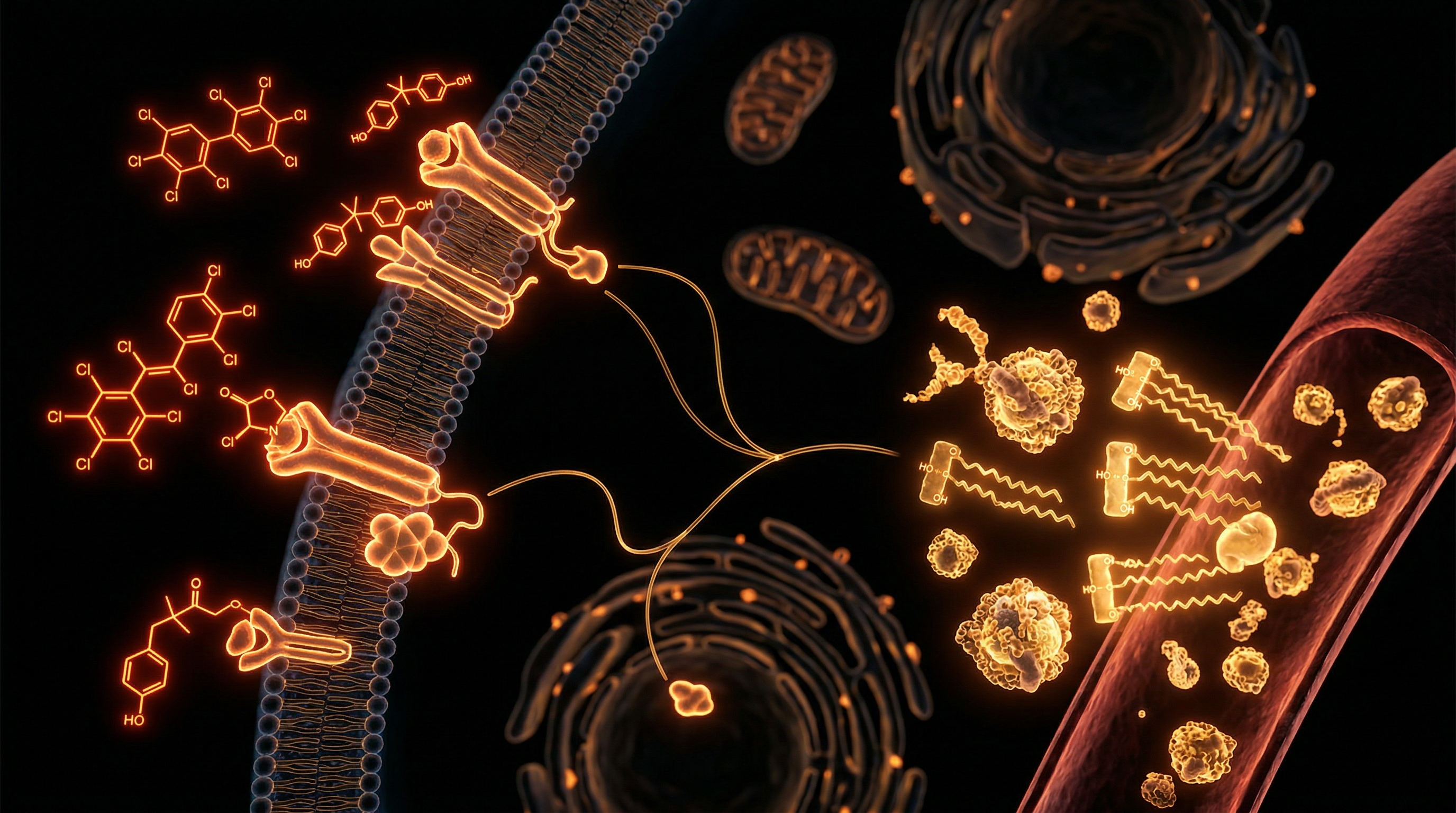
EDCs are structural mimics. Many of these chemicals possess phenolic rings or carbon chains that closely resemble natural hormones like oestrogen, thyroid hormone, or glucocorticoids. Because of this structural similarity, EDCs can bind to nuclear receptors with high affinity.
Fact: Endocrine disruptors can operate at concentrations as low as parts per billion or even parts per trillion, mimicking or blocking the natural ligands that regulate lipid homeostasis.
When an EDC binds to a receptor in the liver, it sends a "false signal." For example, it might tell the liver that there is an urgent need to synthesise more fatty acids, even when the body is already in a state of energy surplus. This leads to the pathological accumulation of triglycerides and the subsequent distortion of the systemic lipid profile.
Mechanisms at the Cellular Level
The disruption of lipid profiles by EDCs is not a vague "toxic" effect; it is a precise, ligand-mediated interference with specific transcriptional pathways. To understand the depth of this crisis, we must examine the primary cellular targets.
1. PPAR Signalling Disruption
The Peroxisome Proliferator-Activated Receptors (PPARs), specifically PPAR-alpha and PPAR-gamma, are the master regulators of lipid metabolism.
- PPAR-alpha is primarily responsible for fatty acid oxidation (burning fat).
- PPAR-gamma governs adipogenesis (the creation of fat cells) and lipid storage.
Many phthalates and PFAS act as potent PPAR agonists. By inappropriately activating PPAR-gamma, these toxins promote the expansion of adipose tissue and the diversion of lipids into storage. Conversely, by interfering with PPAR-alpha, they inhibit the liver's ability to "burn" fat, leading to hepatic steatosis.
2. The SREBP-1c Pathway
Sterol Regulatory Element-Binding Protein 1c (SREBP-1c) is a transcription factor that controls the synthesis of fatty acids and triglycerides. Under normal conditions, it is regulated by insulin. However, chemicals like Bisphenol A (BPA) have been shown to upregulate SREBP-1c expression directly. This forces the liver into a state of "de novo lipogenesis," creating new fat from sugar at an accelerated rate, which is then pumped into the blood as VLDL, eventually becoming small-dense LDL particles—the most atherogenic form of cholesterol.
3. LXR and FXR Interference
The Liver X Receptor (LXR) and Farnesoid X Receptor (FXR) manage cholesterol transport and bile acid metabolism. EDCs can disrupt the "reverse cholesterol transport" system, the process by which High-Density Lipoprotein (HDL) carries cholesterol away from the arteries back to the liver. When LXR signalling is compromised by toxins, HDL levels often drop, and the body loses its primary mechanism for "cleaning" the vascular walls.
4. Oxidative Stress and Mitochondrial Dysfunction
Beyond receptor binding, many EDCs cause direct damage to the mitochondria within hepatocytes. When the mitochondria are "poisoned" by heavy metals or organophosphates, they cannot efficiently process fatty acids through beta-oxidation. This results in the "back-up" of lipids, leading to cellular inflammation and the release of inflammatory cytokines, which further drive dyslipidaemia.
Environmental Threats and Biological Disruptors
The list of chemicals capable of altering human lipid profiles is extensive. However, several "heavy hitters" dominate the UK environmental landscape.
Bisphenols (BPA, BPS, BPF)
Used in the linings of food tins, thermal paper receipts, and polycarbonate plastics. BPA is a known xenoestrogen.
- Lipid Impact: Increased total cholesterol, increased triglycerides, and promotion of insulin resistance.
- The Trap: Even "BPA-Free" products often contain BPS or BPF, which have been shown to be equally, if not more, disruptive to lipid signalling.
Phthalates
These are plasticisers used to make PVC flexible and are found in fragrances, shampoos, and detergents.
- Lipid Impact: Phthalates like DEHP interfere with PPAR-alpha, suppressing fatty acid oxidation and contributing to the "fatty liver" phenotype.
PFAS (The "Forever Chemicals")
Used in non-stick cookware (Teflon), grease-proof food packaging, and aqueous fire-fighting foams. These chemicals do not break down in the environment and accumulate in human tissues.
- Lipid Impact: Extensive epidemiological data link PFAS exposure to significant increases in total cholesterol and LDL cholesterol. Unlike other toxins, PFAS seem to interfere with the recycling of bile acids, forcing the liver to produce more cholesterol.
Organophosphate Pesticides
Widely used in industrial agriculture across the UK.
- Lipid Impact: These chemicals inhibit acetylcholinesterase but also disrupt the HPT (Hypothalamic-Pituitary-Thyroid) axis. Since thyroid hormone is a major driver of LDL clearance, pesticide-induced thyroid disruption leads to "sluggish" lipid metabolism and elevated LDL.
The Cascade: From Exposure to Disease
The journey from inhaling a phthalate-laden fragrance or drinking PFAS-contaminated water to receiving a diagnosis of "high cholesterol" is a multi-stage biological cascade.
Stage 1: The Initial Insult
Toxins enter the body via ingestion, inhalation, or dermal absorption. Due to their lipophilic (fat-loving) nature, they bypass many of the body's water-soluble filtration systems and head straight for the liver or adipose tissue.
Stage 2: Hepatic Reprogramming
In the liver, the EDCs bind to the nuclear receptors discussed earlier. The liver’s "transcriptome"—the set of genes being actively expressed—is altered. Lipogenic genes are turned "ON," and fat-burning genes are turned "OFF."
Stage 3: The Accumulation Phase
The liver begins to store excess triglycerides. This is the onset of NAFLD. As the liver cells become engorged with fat, they become resistant to insulin. This creates a vicious cycle: insulin resistance leads to higher insulin levels, which further stimulates lipogenesis.
Stage 4: Systemic Dyslipidaemia
The liver attempts to export the excess fat to protect itself. It increases the production of VLDL particles. In the bloodstream, these are processed into small-dense LDL (sdLDL). These small particles are particularly dangerous because they easily penetrate the arterial wall and are prone to oxidation.
Important Callout: Standard lipid panels often miss this cascade. A patient may have "normal" total cholesterol but a high count of sdLDL and high triglycerides, a classic signature of EDC-driven metabolic disruption.
Stage 5: Clinical Pathology
The final stage is the manifestation of cardiovascular disease, Type 2 diabetes, or advanced cirrhosis. By the time these conditions are diagnosed, the role of environmental toxins is rarely, if ever, considered by the attending physician.
What the Mainstream Narrative Omits
As a researcher, I find the silence from major health organisations regarding EDCs to be the most damning aspect of the modern medical landscape. Why is the link between toxins and lipids not common knowledge?
The Pharmaceutical Bias
The global market for statins and lipid-lowering drugs is worth tens of billions of pounds. If the medical establishment were to admit that a significant driver of dyslipidaemia is environmental toxicity, the focus would shift from "a pill for every ill" to radical environmental reform and detoxification protocols—neither of which are profitable for the pharmaceutical industry.
The "Calorie is a Calorie" Fallacy
Mainstream dietetics remains obsessed with the First Law of Thermodynamics, treating the human body like a simple steam engine. This ignores the Endocrine Theory of Obesity and Dyslipidaemia. Two people can consume the exact same number of calories, but if one is burdened with a high "toxic load" of BPA and PFAS, their liver will prioritize fat storage and cholesterol synthesis, while the other remains metabolically healthy.
Regulatory Capture
In both the UK and the EU, the committees responsible for setting "Safe Daily Limits" for chemicals are often populated by scientists with historical or current ties to the chemical industry. The "cocktail effect"—the reality that we are exposed to hundreds of chemicals simultaneously—is almost never studied, as regulations only look at chemicals in isolation.
The UK Context
The United Kingdom presents a unique and troubling case study for environmental lipid disruption.
The Post-Brexit Regulatory Gap
Following Brexit, the UK moved away from the EU's REACH (Registration, Evaluation, Authorisation and Restriction of Chemicals) framework. There are significant concerns among the scientific community that the UK's domestic version, UK REACH, is underfunded and slower to ban known endocrine disruptors. This has made the UK a potential "dumping ground" for products containing chemicals that are being phased out in Europe.
Thames Water and Microplastics
The UK's waterways are notoriously contaminated. A recent study of the River Thames found some of the highest concentrations of microplastics in the world. These microplastics act as "magnets" for other persistent organic pollutants (POPs) like PCBs and dioxins. When these are ingested through the food chain or contaminated water supplies, they provide a direct route for EDCs to enter the British population.
The Legacy of Industrialisation
As one of the first industrialised nations, the UK has a heavy burden of "legacy" toxins. Chemicals like Polychlorinated Biphenyls (PCBs), though banned decades ago, remain in the soil and the silt of our harbours. These compounds are potent stimulators of the Pregnane X Receptor (PXR), which is a major driver of drug and lipid metabolism disruption.
The "Stiff Upper Lip" Approach to Regulation
There is a cultural tendency in UK regulatory bodies to wait for "conclusive proof" of harm—a bar that is nearly impossible to meet given the complexity of human biology. This contrasts with the "Precautionary Principle" used elsewhere, where chemicals are assumed to be potentially harmful until proven otherwise.
Protective Measures and Recovery Protocols
While the systemic challenge is vast, individuals can take scientifically backed steps to protect their lipid profiles from environmental interference.
1. Advanced Filtration
Standard carbon filters are insufficient for many EDCs.
- Action: Utilise Reverse Osmosis (RO) or high-grade distillation for drinking water to remove PFAS and fluoride (which can also disrupt thyroid-lipid signalling).
- Action: Install shower filters to prevent the inhalation of vaporised phthalates and chlorine.
2. Supporting Hepatic Detoxification
The liver requires specific substrates to conjugate and excrete fat-soluble toxins.
- Phase I Support: Ensure adequate intake of B-vitamins and antioxidants to manage the reactive oxygen species produced when the liver breaks down chemicals.
- Phase II Support: This is where the toxins are actually prepared for excretion.
- Glucuronidation: Supported by calcium-d-glucarate (found in cruciferous vegetables).
- Sulfation: Supported by sulphur-rich foods like garlic, onions, and eggs.
- Glutathione: The master antioxidant. Supplementing with NAC (N-Acetyl Cysteine) can help the liver process EDCs.
3. Dietary Interventions
- Avoid Tinned Foods: Unless specifically labelled BPA/BPS-free, assume the lining is leaching bisphenols.
- Organic Produce: To reduce the load of organophosphate pesticides that disrupt thyroid and lipid signalling.
- Increase Soluble Fibre: Fibre acts as a "sponge" in the gut, binding to excreted toxins and bile acids, preventing them from being reabsorbed via the enterohepatic circulation.
4. Mobilisation through Thermogenesis
EDCs are stored in white adipose tissue. To remove them, they must be mobilised.
- Sauna Therapy: Regular use of infrared saunas has been shown to assist in the excretion of certain heavy metals and phthalates through the skin.
- Exercise: Not just for "burning calories," but for stimulating the lymphatic system to move toxins toward the organs of elimination.
5. Mindful Consumerism
- Fragrance-Free: Modern "parfum" is a proprietary blend of hundreds of chemicals, almost always including phthalates. Switch to essential oil-based or fragrance-free personal care.
- Ditch the Non-Stick: Replace Teflon-coated pans with cast iron, stainless steel, or ceramic.
Summary: Key Takeaways
The evidence is undeniable: the rising tide of dyslipidaemia in the UK and beyond is not merely a failure of diet, but a consequence of environmental chemical warfare.
- EDCs are Metabolic Hijackers: Chemicals like BPA, phthalates, and PFAS bind to nuclear receptors (PPAR, LXR, SREBP-1c), forcing the liver to synthesise and store fat.
- The Statin Distraction: Mainstream medicine focuses on suppressing cholesterol production via drugs, rather than addressing the environmental triggers causing the liver to overproduce cholesterol in the first place.
- The UK Risk: Post-Brexit regulatory shifts and aging infrastructure mean the British public is at a heightened risk of exposure to "forever chemicals" and microplastics.
- Action is Possible: Through rigorous water filtration, hepatic support, and the elimination of plastic-based exposures, it is possible to reclaim your metabolic health.
As we move further into the 21st century, the definition of "healthy living" must evolve. It is no longer enough to count calories and walk 10,000 steps. We must become stewards of our internal molecular environment, guarding our endocrine systems against the silent disruptors that threaten our cardiovascular and metabolic integrity. The era of ignoring environmental toxicity in clinical lipidology must come to an end. We must demand cleaner water, tighter regulations, and a medical paradigm that looks beyond the pill bottle to the very air we breathe and the water we drink.
This article is provided for informational and educational purposes only. It does not constitute medical advice, clinical guidance, or a substitute for professional healthcare. Information reflects cited research at time of publication. Always consult a qualified healthcare professional before acting on any health information.
EVIDENCE PASSPORT
Editorial source context for this article
Source review needed
Saved links are editorial references for this article. They may support specific claims rather than every sentence. Open and assess each source in context. This passport does not independently verify them.
Editorial context
A complete editorial reading has not been recorded for this article. Source links remain available for you to open and assess directly.
Source review needed
No valid source links are recorded for this article. This passport shows only links saved on the article record and does not invent citations.
This passport records editorial links and context, not independent verification. Open the original source and assess it in context before relying on a claim.
Medical Disclaimer
The information in this article is for educational purposes only and does not constitute medical advice, diagnosis, or treatment. Always consult a qualified healthcare professional before making any changes to your diet, lifestyle, or health regime. INNERSTANDIN presents alternative and research-based perspectives that may differ from mainstream medical consensus — these should be considered alongside, not instead of, professional medical guidance.
Read Full DisclaimerContinue the thread
Keep this question moving.
Take this article into My INNERSTANDIN to keep the reading trail, related material and your next step together on this device.
Explore this in the Body Map
See where this hits your biology. Interactive anatomy, threats, and protective protocols.
Dig deeper in the Library
Free, longform PDF volumes that go beyond headlines into mechanisms and references.