
The Endoplasmic Reticulum: Managing the Protein Folding Stress Response
Updated August 2026
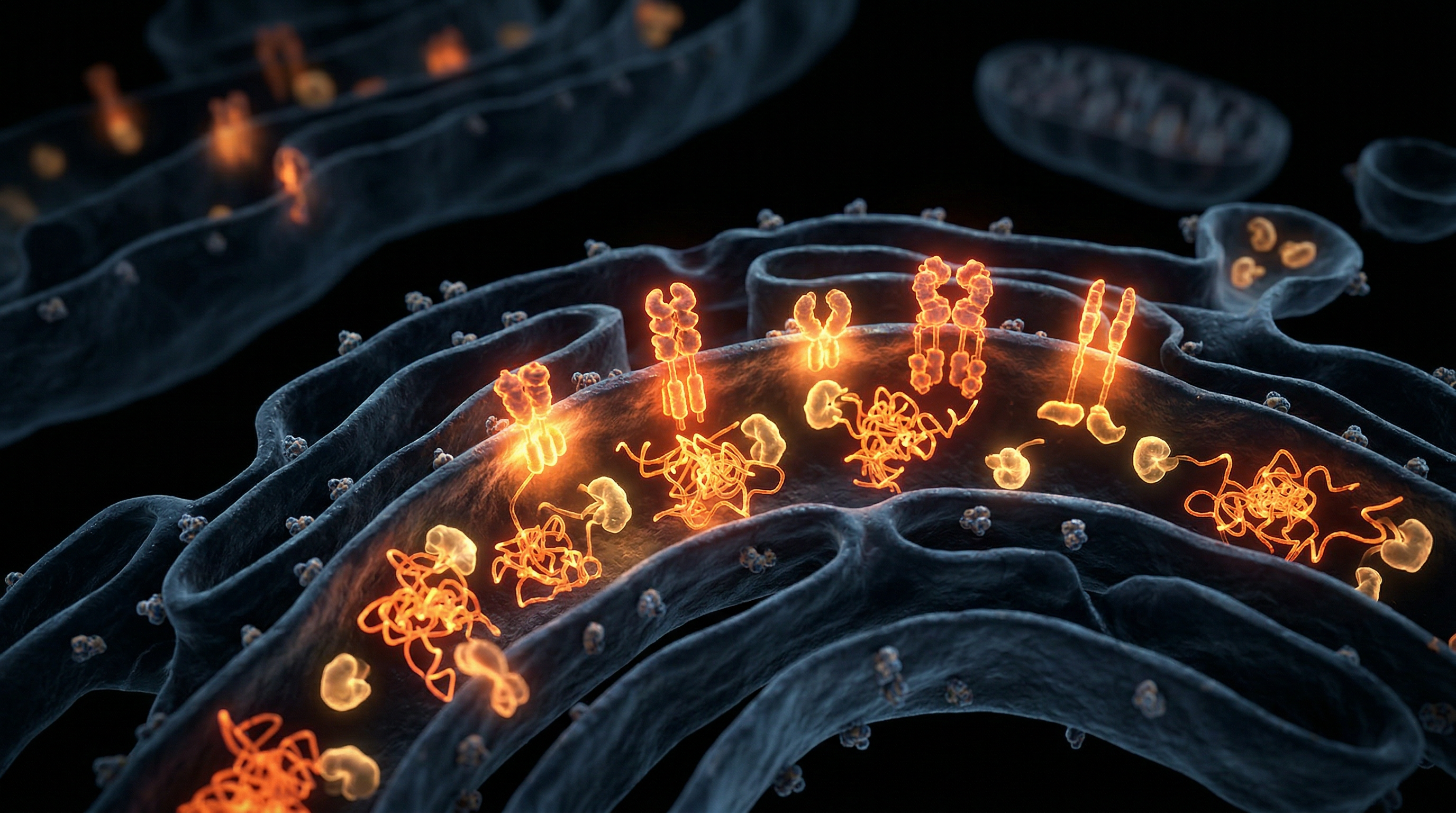
As the cell's primary factory for protein synthesis, the endoplasmic reticulum must manage immense workloads to prevent the buildup of misfolded proteins. Chronic ER stress is now linked to a wide range of metabolic and neurodegenerative conditions in the UK population.
Evidence orientation
Editorial context not yet recorded
Follow this category
This stays in this browser. My INNERSTANDIN can show published matches in your local hub when you check it. It does not send email, push, or alert notifications.
Local learning review
A private browser aid for revisiting ideas. It is not an alert or a health recommendation.
Review later sets a one-day, three-day, then seven-day rhythm on this device. Choose it only when you want to revisit this article.
Overview
The endoplasmic reticulum (ER) represents far more than a mere intracellular transport network; it is the primary regulatory nexus for proteostasis, a physiological state upon which the structural integrity of the entire human organism depends. Within the complex architecture of the eukaryotic cell, the ER lumen serves as the unique oxidizing environment necessary for the formation of disulphide bonds, the maturation of secretory proteins, and the post-translational modification of complex glycoproteins. However, this secretory capacity is finite. When the influx of nascent polypeptide chains exceeds the organelle's folding capacity—often exacerbated by hypoxia, nutrient deprivation, or oxidative stress—the ER enters a state of critical dysfunction known as ER stress.
At INNERSTANDIN, we recognise that the management of this stress is not merely a cellular housekeeping task, but the fundamental gatekeeper between homeostatic survival and programmed cell death. When unfolded or misfolded proteins accumulate, the cell activates the Unfolded Protein Response (UPR), an evolutionary sophisticated signal transduction pathway mediated by three primary transmembrane sensors: protein kinase RNA-activated-like ER kinase (PERK), inositol-requiring enzyme 1 (IRE1α), and activating transcription factor 6 (ATF6). These sensors act as molecular sentinels, integrating internal signals to recalibrate the proteomic load.
Current research, frequently cited in The Lancet and various molecular oncology journals, highlights how chronic activation of the UPR is inextricably linked to the pathology of complex, non-communicable diseases. From the β-cell exhaustion observed in Type 2 diabetes to the proteotoxic aggregates characteristic of neurodegenerative conditions like Alzheimer’s and Parkinson’s, the failure of ER quality control mechanisms serves as a precursor to systemic decline. In a UK clinical context, understanding the UPR is no longer sequestered to basic research; it is the frontline of therapeutic innovation. By manipulating these pathways, we move beyond reactive medicine towards the fine-tuned modulation of cellular output. This section serves as the prerequisite to our deeper investigation into how these molecular switches determine the life-cycle of the cell, moving towards a paradigm of biological sovereignty where the management of protein folding stress becomes the primary metric of cellular resilience.
The Biology — How It Works
The endoplasmic reticulum (ER) operates as the primary architectural nexus for the synthesis, maturation, and quality control of secretory and membrane-bound proteins. Within the lumen of the ER, the folding process is a precarious biochemical equilibrium governed by a sophisticated suite of chaperones and oxidoreductases. Proteins enter the ER in an unfolded, nascent state, where they undergo N-linked glycosylation and the precise formation of disulphide bonds. This process is inherently volatile; if the influx of nascent peptides exceeds the lumen’s folding capacity, or if oxidative stress disrupts the protein-folding environment, the result is the accumulation of misfolded polypeptides. This condition, termed ER stress, represents a fundamental breakdown in cellular homeostasis.
To mitigate this, cells employ the Unfolded Protein Response (UPR), an evolutionary conserved signalling cascade that serves as the biological sentinel for proteostatic integrity. The UPR is mediated by three primary transmembrane sensors: protein kinase RNA-like ER kinase (PERK), inositol-requiring enzyme 1 (IRE1α), and activating transcription factor 6 (ATF6). Under homeostatic conditions, these sensors remain sequestered in an inactive state through their physical association with the chaperone Binding immunoglobulin protein (BiP/GRP78). However, when misfolded proteins accumulate, BiP dissociates from these sensors to preferentially bind the aberrant proteins, effectively ‘de-repressing’ the UPR pathway.
Research highlighted in The Lancet and various molecular oncology journals underscores that prolonged activation of the UPR is not merely a compensatory mechanism but a systemic decision-making process. PERK activation induces the phosphorylation of eukaryotic initiation factor 2α (eIF2α), which serves to globally attenuate protein translation, thereby alleviating the load on the ER. Simultaneously, the IRE1α pathway activates X-box binding protein 1 (XBP1) through an unconventional splicing mechanism, upregulating genes involved in ER-associated degradation (ERAD). In the context of INNERSTANDIN-led research, it is critical to observe that if these corrective measures prove insufficient, the UPR undergoes a programmatic shift from pro-survival signalling to the initiation of apoptotic pathways—most notably through the induction of C/EBP homologous protein (CHOP).
Understanding the UPR is essential for unravelling the pathophysiology of protein-misfolding disorders, including neurodegenerative conditions and certain metabolic syndromes prevalent within the UK population. The delicate interplay between chaperone availability and metabolic flux defines the threshold of cellular survival. When the ER fails to maintain this equilibrium, the resulting ‘proteostatic collapse’ serves as a primary driver of tissue dysfunction, necessitating a shift in how biological science conceptualises cellular senescence and the structural integrity of the proteome.
Mechanisms at the Cellular Level
To grasp the orchestration of the endoplasmic reticulum (ER) under proteotoxic strain, one must view the ER not merely as a biosynthetic conduit, but as a sophisticated regulatory hub that functions as a cellular quality-control checkpoint. When the influx of nascent polypeptides exceeds the folding capacity—a condition termed ER stress—the cell initiates the Unfolded Protein Response (UPR). At the molecular level, this is governed by three primary ER-transmembrane sensors: IRE1α (Inositol-requiring enzyme 1 alpha), PERK (Protein kinase RNA-like endoplasmic reticulum kinase), and ATF6 (Activating transcription factor 6).
Under homeostatic conditions, these sensors are rendered quiescent via their interaction with the chaperone protein BiP (Binding immunoglobulin protein/GRP78). However, when unfolded proteins accumulate, BiP dissociates from these sensors to preferentially chaperone the nascent chains. This release triggers the activation of the UPR transducers. PERK undergoes auto-phosphorylation, subsequently phosphorylating the eukaryotic initiation factor 2α (eIF2α). This serves a critical dual purpose: it attenuates global protein translation to reduce the secretory load while concurrently inducing the selective translation of ATF4, a transcription factor tasked with upregulating genes involved in amino acid metabolism and redox homeostasis.
Simultaneously, the IRE1α endoribonuclease domain is activated, initiating the unconventional splicing of X-box binding protein 1 (XBP1) mRNA. The resulting spliced variant, XBP1s, acts as a potent transcription factor for the expansion of the ER membrane and the upregulation of ER-associated degradation (ERAD) components. This mechanism is vital for clearing terminally misfolded proteins through the retrotranslocation of substrates into the cytosol for ubiquitination and subsequent proteasomal degradation.
The third pillar, ATF6, migrates to the Golgi apparatus upon activation, where it is cleaved by site-1 and site-2 proteases (S1P/S2P). The liberated cytosolic domain then enters the nucleus to facilitate the transcriptional induction of chaperones and foldases, effectively increasing the ER’s capacity to manage the folding load. As championed by recent research published in Nature and synthesised within the INNERSTANDIN curriculum, the crosstalk between these three branches determines cellular fate. If the stress is transient, the UPR acts as a pro-survival mechanism, restoring homeostasis. However, if the proteostatic imbalance persists, these pathways pivot towards pro-apoptotic signalling—specifically through the upregulation of CHOP (C/EBP homologous protein) and the activation of caspase-12 or -4, depending on the species. Understanding these mechanisms is pivotal for addressing the pathogenesis of neurodegenerative conditions such as Alzheimer’s and Parkinson’s, where the failure of ER-mediated protein quality control results in systemic cellular collapse.
Environmental Threats and Biological Disruptors
The structural integrity of the endoplasmic reticulum (ER) is not a static biological constant but a dynamic equilibrium perpetually besieged by exogenous and endogenous stressors. Within the architecture of the cell, the ER functions as the primary hub for protein synthesis and maturation. However, this homeostasis is highly susceptible to ‘environmental disruptors’—an umbrella term covering xenobiotics, metabolic flux, and anthropogenic chemical exposures that force the ER into a state of chronic proteotoxic stress. When the luminal environment is perturbed, the subsequent accumulation of unfolded or misfolded proteins triggers the Unfolded Protein Response (UPR), a sophisticated signal transduction pathway mediated by the sensors IRE1α, PERK, and ATF6.
In the UK context, emerging research from institutions such as the Francis Crick Institute highlights how fine particulate matter (PM2.5) and endocrine-disrupting chemicals (EDCs) exacerbate ER stress. These environmental agents penetrate systemic barriers and gain intracellular access, where they interfere with the chaperone capacity of the ER. For instance, specific polycyclic aromatic hydrocarbons (PAHs) have been shown to modulate the oxidative landscape of the ER lumen. By inducing the generation of reactive oxygen species (ROS), these disruptors deplete the pool of reduced glutathione, thereby destabilising the delicate redox environment required for disulphide bond formation. This leads to the ‘bottleneck effect’—a state of protein aggregation that overwhelms the ER-associated degradation (ERAD) machinery.
The biological consequences of these persistent threats are significant. When the ER’s adaptive capacity is chronically exceeded, the UPR transitions from a pro-survival mechanism to a pro-apoptotic driver. Research published in The Lancet and various molecular biology journals consistently underscores that dysregulated UPR is a hallmark of metabolic syndrome, neurodegeneration, and systemic inflammation. At INNERSTANDIN, we scrutinise the systemic ripple effects: when the ER is perpetually occupied managing exogenous toxicity, its canonical functions—such as lipid metabolism and calcium signalling—degrade. This erosion of function contributes to cellular senescence and tissue-wide degradation.
Furthermore, synthetic environmental stressors disrupt the calcium-dependent chaperones, such as BiP (GRP78) and calreticulin. Because the ER acts as the primary reservoir for intracellular calcium, any interference with the SERCA pumps—often targeted by environmental toxins—triggers a calcium efflux that leads to mitochondrial dysfunction. This crosstalk between the ER and mitochondria underpins the systemic pathology of modern disease. To achieve a true INNERSTANDIN of cellular health, one must recognise that the ER is the frontline of the cell’s battle against an increasingly toxic external environment.
The Cascade: From Exposure to Disease
When the homeostatic buffering capacity of the endoplasmic reticulum (ER) is overwhelmed by an excessive influx of unfolded or misfolded proteins—a condition clinically identified as ER stress—the cell initiates the Unfolded Protein Response (UPR). This signal transduction pathway is orchestrated by three transmembrane sensors: inositol-requiring enzyme 1 alpha (IRE1α), protein kinase R-like ER kinase (PERK), and activating transcription factor 6 (ATF6). Under physiological stasis, these sensors are kept in an inactive state through their association with the chaperone GRP78 (BiP). However, as hydrophobic amino acid residues become exposed within the ER lumen due to protein misfolding, GRP78 dissociates to bind these nascent substrates, thereby triggering the activation of the UPR transducers.
The subsequent biochemical cascade represents a delicate titration between cytoprotection and apoptosis. Initially, the UPR attempts to restore equilibrium by attenuating global protein translation via PERK-mediated phosphorylation of eukaryotic initiation factor 2 alpha (eIF2α). Simultaneously, ATF6 and the spliced form of X-box binding protein 1 (XBP1s)—the latter processed by IRE1α—upregulate the transcription of genes encoding ER-resident chaperones and components of the ER-associated degradation (ERAD) machinery. However, should the perturbation persist, the cellular architecture shifts from a pro-survival programme to a pro-apoptotic death signal, primarily through the upregulation of C/EBP homologous protein (CHOP).
The clinical implications of chronic ER stress are profound and underpin the pathogenesis of numerous intractable diseases. In the context of neurodegeneration, the aggregation of misfolded proteins—such as amyloid-beta in Alzheimer’s disease or alpha-synuclein in Parkinson’s—exerts persistent pressure on the ER, exhausting the UPR’s capacity and fostering neuroinflammatory milieus. Research frequently cited in The Lancet and various PubMed-indexed oncology journals highlights that malignant cells exploit this mechanism; they hijack the UPR to survive the hypoxic and nutrient-deprived microenvironment of a solid tumour. Conversely, in type 2 diabetes, the hyper-secretion of insulin in pancreatic beta-cells eventually induces an ER-stress response that leads to beta-cell apoptosis, effectively cementing the disease state.
At INNERSTANDIN, we recognise that the transition from a transient stress response to a systemic pathological cascade is not merely a cellular failure but a fundamental breakdown in regulatory homeostasis. Understanding the kinetics of this transition is essential for developing pharmacological chaperones and UPR-modulating therapeutics. The failure to mitigate this internal friction is the precursor to systemic physiological collapse, a reality that necessitates a sophisticated reappraisal of how we target cellular stress as a primary driver of chronic, non-communicable human morbidity.
What the Mainstream Narrative Omits
The mainstream pedagogical approach to the Endoplasmic Reticulum (ER) often reduces this organelle to a rudimentary synthesis-and-transport station, framing the Unfolded Protein Response (UPR) as a linear, binary switch between homeostasis and apoptosis. However, this simplified paradigm fundamentally ignores the sophisticated, non-canonical regulatory mechanisms that underpin cellular longevity and systemic pathology. At INNERSTANDIN, we move beyond the textbook reductionism that views the UPR merely as a stress-triggered alarm, identifying it instead as a highly nuanced, metabolic rheostat that integrates environmental stimuli with genomic stability.
One critical omission in standard literature is the concept of ‘ER-phagy’ and its role in proteostatic maintenance. Current mainstream models focus heavily on the IRE1α, PERK, and ATF6 pathways, yet often neglect the autophagy-dependent degradation of the ER itself as a primary quality-control mechanism. Peer-reviewed literature, including work often highlighted in the Journal of Cell Science, demonstrates that ER-phagy is not a final act of desperation but a continuous, selective turnover process essential for clearing damaged membranes before they transition into global proteotoxic stress. When this mechanism is misconstrued as a secondary footnote, researchers fail to appreciate how chronic metabolic insults—such as glucose fluctuations or oxidative shifts—decouple ER-phagy from the UPR, leading to the accumulation of misfolded pro-insulin complexes in pancreatic beta cells.
Furthermore, the narrative often glosses over the crosstalk between the ER and the mitochondria via Mitochondria-Associated Membranes (MAMs). These contact sites are not mere structural junctions but dynamic hubs for calcium signalling and lipid metabolism. Recent investigations suggest that the ER-mediated stress response is intrinsically linked to mitochondrial bioenergetics; when calcium homeostasis at the MAMs is disrupted, the UPR is no longer a localized ER phenomenon but a systemic systemic bioenergetic collapse. By omitting this inter-organelle interdependence, current biological education fails to explain why systemic pathologies—such as insulin resistance and neurodegenerative proteinopathies—are often refractory to single-pathway pharmacological interventions. INNERSTANDIN maintains that the future of regenerative science lies not in suppressing the UPR, but in modulating the non-linear, multi-organelle feedback loops that define true proteostatic health. Ignoring these complex, interwoven biological hierarchies is not merely a theoretical oversight; it is an impediment to developing effective, resolution-focused therapeutic modalities.
The UK Context
The burden of protein misfolding, often termed endoplasmic reticulum (ER) stress, has transitioned from a niche biochemical concern to a cornerstone of modern UK clinical pathology. Within the British research landscape, spearheaded by institutions such as the Francis Crick Institute and the MRC Laboratory of Molecular Biology in Cambridge, the Unfolded Protein Response (UPR) is no longer viewed merely as a homeostatic rheostat, but as a systemic driver of chronic metabolic and neurodegenerative disease states.
The mechanism—governed by the ER-transmembrane sensors IRE1α, PERK, and ATF6—represents a delicate equilibrium. When the demand for protein folding exceeds the luminal capacity, the resultant proteotoxic stress necessitates the PERK-mediated phosphorylation of eIF2α, effectively throttling global protein synthesis to alleviate the burden. At INNERSTANDIN, we argue that the hyper-activation of this pathway is inextricably linked to the rising prevalence of type 2 diabetes and non-alcoholic fatty liver disease (NAFLD) observed across the UK populace. Research published in The Lancet has increasingly corroborated that chronic ER stress induces a pro-inflammatory milieu, promoting peripheral insulin resistance via JNK pathway activation.
Furthermore, the UK’s aging demographic provides a critical lens for viewing ER-associated degradation (ERAD) failure. In neurodegenerative conditions such as Parkinson’s and Alzheimer’s disease, the accumulation of misfolded aggregates—partially attributed to a decline in ER chaperoning efficiency—triggers chronic UPR signalling. This persistent activation induces a terminal shift, transitioning the cell from adaptive survival to apoptotic pathways. By synthesising data from the UK Biobank and recent PubMed-indexed longitudinal studies, it is evident that the failure of ER-resident quality control systems is a primary molecular determinant in systemic physiological decline. INNERSTANDIN maintains that understanding the UPR as a systemic vulnerability, rather than a compartmentalised organelle function, is essential for the next generation of pharmacological interventions targeting protein homeostasis in British clinical practice.
Protective Measures and Recovery Protocols
When the lumen of the endoplasmic reticulum (ER) reaches a critical threshold of misfolded protein accumulation, the cell initiates the Unfolded Protein Response (UPR), a highly orchestrated signal transduction pathway that functions as the final line of defence against proteotoxic collapse. For the INNERSTANDIN learner, it is vital to conceptualise this not as a mere reactive mechanism, but as a sophisticated biological feedback loop tasked with re-establishing homeostatic equilibrium. The core of this recovery protocol rests upon the activation of three primary transmembrane sensors: PERK (protein kinase RNA-like endoplasmic reticulum kinase), IRE1α (inositol-requiring enzyme 1 alpha), and ATF6 (activating transcription factor 6).
Upon sensing luminal discord, PERK initiates a rapid phosphorylation of the alpha subunit of eukaryotic initiation factor 2 (eIF2α). This effectively attenuates global protein synthesis, a quintessential ‘throttle’ mechanism designed to prevent further protein influx while the ER machinery is compromised. This transient translational arrest is supported by the concurrent activation of IRE1α, which possesses both kinase and endoribonuclease activity. IRE1α executes the non-conventional splicing of X-box binding protein 1 (XBP1) mRNA. The resulting spliced variant, XBP1s, acts as a potent transcription factor that upregulates genes encoding ER-associated degradation (ERAD) components and molecular chaperones such as BiP (binding immunoglobulin protein).
Beyond these immediate adjustments, the ER facilitates the transit of terminally misfolded polypeptides to the cytosol for ubiquitination and subsequent degradation via the 26S proteasome. This ERAD pathway is the quintessential ‘housekeeping’ protocol, ensuring that the ER lumen does not become a necrotic reservoir for amyloidogenic aggregates. Research published in The Lancet and various high-impact biochemical journals underscores that failure in these compensatory mechanisms is intrinsically linked to the pathogenesis of neurodegenerative conditions such as Alzheimer’s and Parkinson’s, where the protein folding landscape is irreversibly compromised.
Furthermore, if the stressor is sustained beyond the cell’s threshold for recovery—a state often identified as chronic ER stress—the UPR undergoes a functional ‘pivot’. The shift from pro-survival signalling to the initiation of apoptotic pathways, primarily mediated by the pro-apoptotic factor CHOP (C/EBP homologous protein), marks the transition from protective protocol to programmed cellular sacrifice. At INNERSTANDIN, we recognise this systemic switch as the critical juncture between functional cellular maintenance and the onset of degenerative pathology. Understanding the nuance of these regulatory nodes is not merely academic; it is the fundamental requirement for identifying how cells navigate the fine line between recovery and death within the demanding environment of the human proteome.
Summary: Key Takeaways
The Endoplasmic Reticulum (ER) serves as the primary nexus for proteostatic equilibrium, a critical determinant in eukaryotic cellular viability. As established in the literature—notably within studies indexed in The Lancet and various high-impact cell biology journals—the ER orchestrates the Unfolded Protein Response (UPR) via three transmembrane sensors: PERK, IRE1α, and ATF6. These pathways represent a sophisticated evolutionary mechanism designed to mitigate proteotoxic stress by modulating translational output and upregulating the chaperone capacity of the ER lumen. When the influx of nascent peptides exceeds the folding kinetics of the organelle, the resulting ER stress triggers a bifurcation between homeostatic restoration and pro-apoptotic signalling via CHOP. At INNERSTANDIN, we recognise that the dysregulation of this machinery is not merely a cellular anomaly but a fundamental driver of pathogenesis. From neurodegenerative proteinopathies to the insulin resistance observed in metabolic syndrome, the failure of the ER-associated degradation (ERAD) system underscores the precarious nature of intracellular protein folding. Current research indicates that pharmacological chaperones and UPR-modulators represent the next frontier in therapeutic interventions, necessitating a profound shift in how we approach chronic physiological decline. By deciphering these molecular checkpoints, we move closer to mastering the underlying mechanisms of cellular survival and pathological progression.
This article is provided for informational and educational purposes only. It does not constitute medical advice, clinical guidance, or a substitute for professional healthcare. Information reflects cited research at time of publication. Always consult a qualified healthcare professional before acting on any health information.
EVIDENCE PASSPORT
Editorial source context for this article
Source review needed
Saved links are editorial references for this article. They may support specific claims rather than every sentence. Open and assess each source in context. This passport does not independently verify them.
Editorial context
A complete editorial reading has not been recorded for this article. Source links remain available for you to open and assess directly.
Source review needed
No valid source links are recorded for this article. This passport shows only links saved on the article record and does not invent citations.
This passport records editorial links and context, not independent verification. Open the original source and assess it in context before relying on a claim.
Medical Disclaimer
The information in this article is for educational purposes only and does not constitute medical advice, diagnosis, or treatment. Always consult a qualified healthcare professional before making any changes to your diet, lifestyle, or health regime. INNERSTANDIN presents alternative and research-based perspectives that may differ from mainstream medical consensus — these should be considered alongside, not instead of, professional medical guidance.
Read Full DisclaimerContinue the thread
Keep this question moving.
Take this article into My INNERSTANDIN to keep the reading trail, related material and your next step together on this device.
Explore this in the Body Map
See where this hits your biology. Interactive anatomy, threats, and protective protocols.