
Environmental Neurotoxins in UK Waterways
Updated May 2026
Chemical runoff in British rivers is linked to neurological disruptions that mirror the symptoms of somatic trauma. We trace the path from water pollution to dysregulated nervous system function in the UK population.
Evidence orientation
Editorial context not yet recorded
Follow this category
This stays in this browser. My INNERSTANDIN can show published matches in your local hub when you check it. It does not send email, push, or alert notifications.
Local learning review
A private browser aid for revisiting ideas. It is not an alert or a health recommendation.
Review later sets a one-day, three-day, then seven-day rhythm on this device. Choose it only when you want to revisit this article.
Overview
The British landscape is defined by its waterways. From the arterial flow of the Thames to the crystalline streams of the Highlands, water is the literal lifeblood of the United Kingdom. However, beneath the surface of these iconic rivers and within the pipes of our ageing infrastructure lies a silent, molecular emergency. We are currently witnessing an unprecedented saturation of environmental neurotoxins—chemical agents that do not merely pollute the water but infiltrate the human nervous system, altering the very architecture of our cognition and emotional regulation.
As a senior biological researcher for INNERSTANDING, my investigation into the UK’s water quality reveals a harrowing parallel between environmental degradation and the escalating crisis of somatic trauma. For decades, the medical establishment has viewed "trauma" as a purely psychological or event-based phenomenon. This article argues for a radical shift in perspective: the chronic ingestion of sub-lethal concentrations of neurotoxic runoff is inducing a state of biological dysregulation that mirrors the physiological signatures of Post-Traumatic Stress Disorder (PTSD).
The "body memory" of the UK population is being rewritten by xenobiotics. We are no longer dealing with isolated incidents of pollution; we are dealing with a continuous, low-dose chemical assault that keeps the human nervous system in a state of perpetual high alert, or "freeze," leading to a nationwide epidemic of anxiety, cognitive decline, and autonomic dysfunction.
Key Fact: According to recent environmental audits, not a single river in England is currently classified as being in "good" overall chemical health, with 100% of monitored sites failing to meet standards for priority hazardous substances.
The Biology — How It Works
To understand how waterborne toxins translate into neurological trauma, one must first understand the vulnerability of the human nervous system. The brain is the most metabolically active organ in the body, protected by a sophisticated gateway known as the Blood-Brain Barrier (BBB). For most of evolutionary history, the BBB was an impenetrable fortress against large pathogens and toxins. However, modern industrial chemistry has birthed a suite of lipophilic (fat-soluble) molecules that slip through this barrier with ease.
Once these neurotoxins enter the bloodstream via ingestion or dermal absorption, they target the HPA Axis (Hypothalamic-Pituitary-Adrenal Axis)—the body’s central command system for stress. Under normal conditions, the HPA axis triggers the release of cortisol and adrenaline during a threat and then returns to homeostasis. Environmental neurotoxins, however, disrupt this feedback loop.
The Gut-Brain-Water Connection
The majority of these toxins first interact with the enteric nervous system—the "second brain" in our gut. Chemicals such as glyphosate and polychlorinated biphenyls (PCBs) disrupt the delicate microbiome, leading to "leaky gut" syndrome. This allows inflammatory cytokines to enter the systemic circulation, which in turn signals to the brain that the organism is under biological siege. This constant signalling creates a state of neuroinflammation, the biological bedrock of somatic trauma.
Bioaccumulation and the Longevity of Toxins
Unlike many biological pathogens that the body can expel, many of the chemicals found in UK waterways are bioaccumulative. They lodge themselves in adipose (fatty) tissue, particularly within the myelin sheaths that insulate our nerves. This means the body carries a "chemical memory" of every glass of water consumed and every swim in a polluted river, leading to a cumulative toxic load that eventually breaches the threshold of physiological resilience.
Mechanisms at the Cellular Level
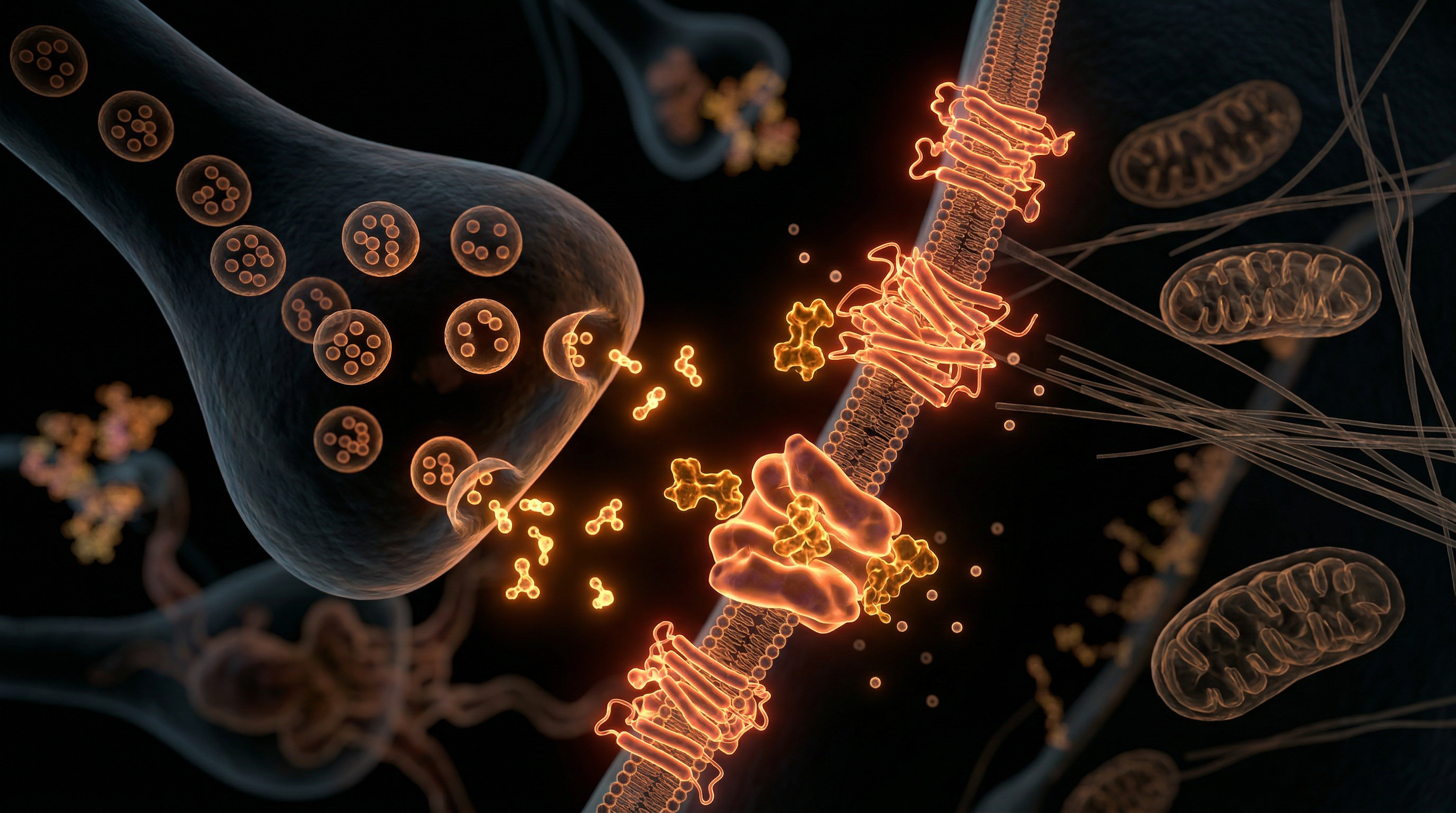
At the microscopic scale, the disruption is even more insidious. Neurotoxicity is not always about cell death; it is often about functional interference.
Glutamate Excitotoxicity
Many pesticides found in UK runoff, particularly organophosphates, interfere with the enzyme acetylcholinesterase. This leads to an overstimulation of the nervous system. Furthermore, many toxins trigger an excessive release of glutamate, the brain's primary excitatory neurotransmitter. When glutamate levels remain chronically high, neurons become over-saturated, leading to "excitotoxicity." This state is biologically identical to the "hyperarousal" seen in trauma survivors. The cells are effectively "screaming" until they burn out.
Mitochondrial Dysfunction
The mitochondria are the powerhouses of our cells, but they are also the primary sensors of environmental stress. Neurotoxins like PFAS (Per- and Polyfluoroalkyl Substances)—often called "forever chemicals"—uncouple the mitochondrial respiratory chain. When mitochondria fail, the cell cannot maintain its electrical potential. This leads to a collapse in the vagal tone, the measure of the vagus nerve's ability to regulate the parasympathetic (rest and digest) system.
Oxidative Stress and DNA Methylation
The presence of heavy metals such as lead and cadmium in ageing UK pipes induces the production of Reactive Oxygen Species (ROS). These free radicals damage neuronal DNA and alter epigenetic methylation. This is where environmental neurotoxicity intersects with "body memory" at its deepest level: the toxins can actually change which genes are expressed, potentially passing a "primed" stress response down to future generations—a form of inherited environmental trauma.
- Ion Channel Mimicry: Toxins like mercury can mimic essential minerals like zinc or magnesium, tricking the cell into letting them in, where they then lock the ion channels in an "open" or "closed" position.
- Synaptic Pruning Interference: During development, children exposed to these toxins may experience abnormal synaptic pruning, leading to neurodevelopmental disorders that are often misdiagnosed as purely genetic.
Environmental Threats and Biological Disruptors
The "cocktail" of pollutants in UK waterways is uniquely complex. We are not facing a single "smoking gun" but a synergistic assault from multiple vectors.
1. Neonicotinoids and Agricultural Runoff
Despite various bans, neonicotinoid pesticides continue to leach into the UK's river systems from agricultural land. These are potent neuro-disruptors designed specifically to attack the nervous systems of insects. In humans, they bind to nicotinic acetylcholine receptors, contributing to cognitive fatigue and the "brain fog" often associated with chronic somatic stress.
2. PFAS: The "Forever Chemicals"
PFAS are used in everything from non-stick pans to firefighting foam. They are now ubiquitous in British tap water. Because they do not break down, they circulate in the human body for years. They are linked to endocrine disruption, specifically affecting the thyroid gland, which is the master regulator of the body’s metabolic "tempo." A disrupted thyroid creates a feeling of persistent lethargy or "freeze," a classic somatic trauma response.
3. Pharmaceuticals and Hormone Mimics
UK sewage treatment plants are not currently equipped to filter out complex pharmaceutical compounds. Studies have found high concentrations of SSRIs (antidepressants), hormonal contraceptives, and beta-blockers in major rivers.
Callout: When we drink "treated" water, we are often consuming a dilute micro-dose of the nation's collective psychiatric and contraceptive prescriptions. These "passive" doses interfere with our own neurotransmitter balance, dulling emotional resonance and disrupting the natural rhythm of the nervous system.
4. Heavy Metals from Victorian Infrastructure
Much of the UK's water is still delivered through lead piping or copper systems joined with lead solder. While "safe levels" are cited by water companies, there is no known safe level of lead for the human brain. Lead is a potent neurotoxin that replaces calcium in the brain, leading to increased aggression, lower IQ, and a permanent state of nervous system irritability.
The Cascade: From Exposure to Disease
The path from a glass of contaminated water to a diagnosed "disorder" is a cascade of escalating biological failures. This is the "Somatic Trauma" loop in action.
Phase 1: The Alarm Response (Acute Exposure)
Upon initial exposure to a neurotoxic load—perhaps during a "sewage spill" event in a local river—the body enters a state of sympathetic dominance. The heart rate increases, and the gut slows down. This is the body trying to "run away" from a molecular threat.
Phase 2: The Chronic Load (Allostatic Overload)
When the exposure is constant (via daily tap water), the body can never return to the "rest and digest" state. This is known as allostatic load. The nervous system becomes "brittle." Minor external stresses that a healthy person would brush off instead trigger full-blown panic attacks or "meltdowns." The person is now living in a state of somatic trauma, not because of what happened to them, but because of what is in them.
Phase 3: Systemic Collapse (The Disease State)
Eventually, the constant neuroinflammation and HPA axis dysregulation manifest as chronic illnesses. These include:
- Chronic Fatigue Syndrome (ME/CFS): A state of permanent metabolic "freeze."
- Fibromyalgia: The nervous system's pain signals are permanently "stuck" in the on position.
- Early-Onset Neurodegeneration: Parkinson's and Alzheimer's, both of which have been linked to environmental neurotoxin exposure and "leaky" blood-brain barriers.
Statistic: A 2022 study linked long-term exposure to certain waterborne agricultural chemicals to a 70% increase in the risk of developing Parkinson’s-like symptoms in rural UK populations.
What the Mainstream Narrative Omits
The public discourse on water quality in the UK is currently focused on the aesthetics of pollution—smell, visibility of sewage, and the death of fish. While these are critical issues, they serve as a "smoke screen" for the more profound neurological crisis.
The Myth of "Safe Limits"
Regulatory bodies like the Environment Agency and DEFRA set "safe limits" for individual chemicals. This approach is fundamentally flawed for two reasons:
- Synergistic Toxicity: Chemicals are tested in isolation. However, the "cocktail effect" means that Chemical A and Chemical B might be harmless alone, but when combined in a human body, they become 10x more toxic.
- The Bio-Individuality Gap: A "safe" level for a 180lb healthy male is a neurotoxic dose for a developing foetus, an infant, or someone with an already compromised nervous system.
Regulatory Capture
The UK's water companies are private entities prioritising shareholder dividends over infrastructure upgrades. This has led to a "don't look, don't find" policy regarding advanced chemical testing. Standard water tests do not screen for the vast majority of emerging neurotoxins, including many PFAS variants and thousands of different pharmaceutical metabolites.
The Erasure of Somatic Connection
By categorising symptoms like anxiety and "brain fog" as purely psychological, the mainstream medical narrative protects the industrial polluters. If these symptoms were acknowledged as environmentally induced neurotoxicity, the legal and financial liabilities for water companies would be catastrophic. Instead, the public is "gaslit" into believing their dysregulated nervous systems are a personal failing or a "mental health" trend, rather than a direct consequence of their environment.
The UK Context
The United Kingdom faces a unique set of challenges that make its population particularly vulnerable to waterborne neurotoxicity.
A Legacy of Industrialism
The UK was the cradle of the Industrial Revolution. Many of our riverbeds are still lined with "legacy sediments" of heavy metals and banned chemicals like PCBs. Every time there is a flood—increasingly common due to climate instability—these toxins are churned back into the water column.
Privatisation and Infrastructure Decay
Since the privatisation of the water industry in 1989, investment in filtration technology has lagged behind the rate of chemical innovation. Most UK treatment plants rely on 20th-century technology to fight 21st-century chemicals.
- The Thames Basin: This area serves millions of people and is one of the most "recycled" water systems in the world. Water is pulled from the river, treated, used, flushed, and returned to the river multiple times before it reaches the sea. This concentrates non-biodegradable neurotoxins at each cycle.
- The River Wye Crisis: Intensive poultry farming in the Wye valley has led to massive phosphate and nitrate runoff, which triggers toxic algal blooms. These blooms produce cyanotoxins, which are potent neurotoxins that can aerosolise and be inhaled, or enter the water supply, causing acute neurological distress.
The Post-Brexit Regulatory Gap
Since leaving the EU, the UK has diverged from the REACH (Registration, Evaluation, Authorisation and Restriction of Chemicals) regulations. There are growing concerns that the UK is becoming a "dumping ground" for chemicals that are banned or more strictly controlled on the continent, leading to a higher toxic load in our domestic environment.
Protective Measures and Recovery Protocols
While the systemic issue requires political and industrial overhaul, individuals can take immediate steps to protect their nervous systems and clear the "body memory" of these toxins.
1. Advanced Filtration
Standard carbon filters (like "jug" filters) are insufficient for neurotoxins.
- Reverse Osmosis (RO): This is the gold standard for removing PFAS, heavy metals, and pharmaceutical residues. Ensure your RO system includes a remineralisation stage, as "dead" water can leach minerals from the body.
- Activated Alumina: Specifically for removing fluoride, which is added to water in many UK regions and is a known developmental neurotoxin.
2. Biological Support for Detoxification
To clear the cellular "memory" of toxins, the body's natural drainage pathways must be supported.
- Up-regulating Glutathione: This is the body's master antioxidant. Consumption of cruciferous vegetables, or supplementation with N-Acetyl Cysteine (NAC), helps the liver conjugate and expel neurotoxins.
- Binder Therapy: Using natural binders like modified citrus pectin, zeolite, or activated charcoal can help trap toxins in the gut before they can be reabsorbed into the bloodstream.
3. Somatic Resets
Because neurotoxins keep the body in a trauma state, physical practices are required to "inform" the nervous system that the threat is being managed.
- Vagus Nerve Stimulation: Cold water immersion (using filtered water), deep diaphragmatic breathing, and "shaking" exercises (TRE - Tension & Trauma Releasing Exercises) can help move the body out of a chemically-induced "freeze" state.
- Sauna Therapy: Many lipophilic neurotoxins are excreted through sweat. Regular infrared sauna use can significantly reduce the "body burden" of stored chemicals.
4. Dietary Defence
- Organic Consumption: Minimising additional pesticide intake is crucial to lowering the "allostatic load."
- Polyphenol-Rich Foods: Blueberries, turmeric, and green tea are neuroprotective and help combat the oxidative stress caused by waterborne heavy metals.
Summary: Key Takeaways
The crisis of UK water quality is not merely an environmental issue; it is a neurological and somatic emergency. The intersection of industrial negligence and biological vulnerability has created a landscape where the British population is living in a state of chemically-induced trauma.
- The Water-Trauma Link: Waterborne neurotoxins mimic the physiological markers of somatic trauma, leading to widespread HPA axis dysregulation and autonomic "freeze."
- The BBB is Breached: Modern xenobiotics easily bypass the brain's defences, causing neuroinflammation and excitotoxicity at sub-lethal doses.
- Institutional Failure: Regulatory "safe limits" are a fallacy that ignores the synergistic "cocktail effect" and the reality of bioaccumulation.
- UK Specifics: Crumbling Victorian infrastructure and agricultural runoff in rivers like the Wye and Thames have created a "perfect storm" of neurotoxic exposure.
- Somatic Sovereignty: Recovery requires a dual approach: high-level water filtration to stop the assault, and somatic/biological protocols to clear the "chemical memory" from the body's tissues.
We must stop viewing our health as separate from our ecology. The water flowing through our rivers is the same water flowing through our veins and bathing our neurons. To heal the British nervous system, we must first heal the British water. Until the systemic change occurs, the burden of protection falls upon the individual—to filter, to detoxify, and to remember that their "trauma" may not be a story of the past, but a molecule in their glass.
This article is provided for informational and educational purposes only. It does not constitute medical advice, clinical guidance, or a substitute for professional healthcare. Information reflects cited research at time of publication. Always consult a qualified healthcare professional before acting on any health information.
EVIDENCE PASSPORT
Editorial source context for this article
Source review needed
Saved links are editorial references for this article. They may support specific claims rather than every sentence. Open and assess each source in context. This passport does not independently verify them.
Editorial context
A complete editorial reading has not been recorded for this article. Source links remain available for you to open and assess directly.
Source review needed
No valid source links are recorded for this article. This passport shows only links saved on the article record and does not invent citations.
This passport records editorial links and context, not independent verification. Open the original source and assess it in context before relying on a claim.
Medical Disclaimer
The information in this article is for educational purposes only and does not constitute medical advice, diagnosis, or treatment. Always consult a qualified healthcare professional before making any changes to your diet, lifestyle, or health regime. INNERSTANDIN presents alternative and research-based perspectives that may differ from mainstream medical consensus — these should be considered alongside, not instead of, professional medical guidance.
Read Full DisclaimerContinue the thread
Keep this question moving.
Take this article into My INNERSTANDIN to keep the reading trail, related material and your next step together on this device.
Explore this in the Body Map
See where this hits your biology. Interactive anatomy, threats, and protective protocols.
Dig deeper in the Library
Free, longform PDF volumes that go beyond headlines into mechanisms and references.