
Environmental Toxicity: The Ecological Cost of Rapeseed Monocultures
Updated May 2026
The massive expansion of rapeseed production in the UK relies on intensive pesticide use and harms local biodiversity. This report highlights the environmental devastation required to produce industrial vegetable fats.
Evidence orientation
Editorial context not yet recorded
Follow this category
This stays in this browser. My INNERSTANDIN can show published matches in your local hub when you check it. It does not send email, push, or alert notifications.
Local learning review
A private browser aid for revisiting ideas. It is not an alert or a health recommendation.
Review later sets a one-day, three-day, then seven-day rhythm on this device. Choose it only when you want to revisit this article.
Overview
The British countryside, particularly throughout the spring months, has undergone a radical aesthetic and biological transformation over the last four decades. What was once a patchwork of diverse meadows, ancient woodland, and varied cereal crops has been increasingly dominated by a blinding, neon-yellow monoculture: Brassica napus, or oilseed rape. While mainstream agricultural narratives frame this as a triumph of domestic food security and "heart-healthy" oil production, a deeper biological and ecological interrogation reveals a far more sinister reality.
The expansion of rapeseed production represents one of the most significant shifts in UK land use in modern history. However, this "yellow revolution" is not merely a change in scenery; it is an industrial imposition that demands an aggressive chemical regime to sustain. As a senior researcher at INNERSTANDING, it is my duty to expose the hidden biological costs of this enterprise. We are witnessing the systematic poisoning of the British pedosphere (soil), the collapse of invertebrate populations, and the introduction of unstable, inflammatory lipid profiles into the human food chain.
The industrialisation of rapeseed—transitioning from a lubricant for steam engines to a staple of the human diet—has required the mass application of neonicotinoids, glyphosate, and pyrethroids. This report will detail how these substances do not simply vanish after application but initiate a cascade of environmental toxicity that disrupts cellular function across species, including our own.
The Biology — How It Works
Brassica napus is a resilient, opportunistic amphidiploid—a hybrid resulting from the cross-breeding of Brassica oleracea (cabbage/kale) and Brassica rapa (turnip). Its biological success in the UK climate is due to its ability to germinate in low temperatures and its massive nutrient-drawing capacity.
The Industrial Modification
Historically, rapeseed oil was unfit for human consumption due to high levels of erucic acid (linked to cardiac lipidosis) and glucosinolates (which impart a bitter taste and can interfere with thyroid function). Through selective breeding and genetic manipulation in the late 20th century, "Double Low" or LEAR (Low Eruic Acid Rapeseed) varieties were created. This is what the industry markets as "Canola" or simply "Rapeseed Oil."
Nutrient Extortion and Soil Depletion
From a biological perspective, rapeseed is a "hungry" crop. It requires intensive nitrogen, phosphorus, and sulphur inputs.
- Nitrogen Demands: Rapeseed typically requires upwards of 200kg of nitrogen per hectare to achieve industrial yields.
- Sulphur Sensitivity: Unlike many cereals, rapeseed is highly sensitive to sulphur deficiency, necessitating additional chemical fertilisers.
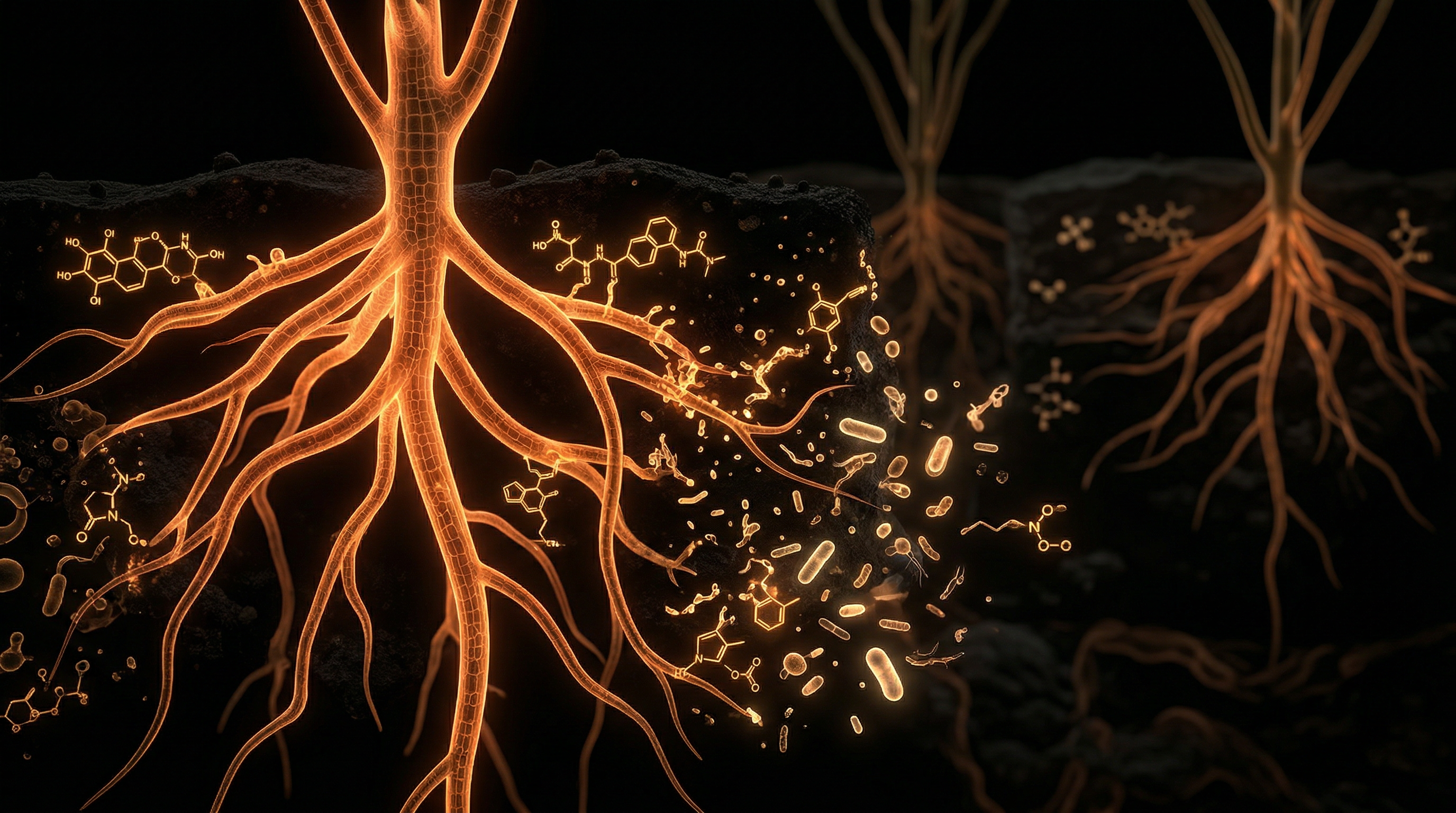
- Mycorrhizal Inhibition: Crucially, Brassica species do not form symbiotic relationships with arbuscular mycorrhizal fungi (AMF). In fact, they produce allelopathic chemicals that actively suppress these vital fungal networks, leaving the soil biologically "sterile" for subsequent crops.
The Chemical Shield
Because rapeseed is grown in massive, dense monocultures, it creates a perfect breeding ground for pests such as the Cabbage Stem Flea Beetle (CSFB) and the Pollen Beetle. To combat this, the industry has historically relied on systemic pesticides. These are chemicals designed to permeate every cell of the plant, from the roots to the nectar, ensuring that any organism attempting to consume the plant is poisoned.
Mechanisms at the Cellular Level
To understand the environmental cost, we must look at the bio-molecular interactions between the chemicals used in rapeseed cultivation and living cells.
Neonicotinoids and Neurotoxicity
Although certain neonicotinoids (like thiamethoxam and clothianidin) have faced bans and restrictions in the UK, "emergency authorisations" are frequently granted. Neonicotinoids act as agonists at the nicotinic acetylcholine receptors (nAChRs).
- In insects, these receptors are concentrated in the central nervous system.
- The chemical binds irreversibly to the receptor, causing overstimulation, paralysis, and death.
- At sub-lethal doses, it causes "cellular confusion," where bees lose their ability to navigate, forage, or communicate (the "waggle dance").
Glyphosate and the Shikimate Pathway
Glyphosate is used as a desiccant on rapeseed to ensure "even ripening" before harvest. It works by inhibiting the 5-enolpyrosylshikimate-3-phosphate (EPSP) synthase enzyme.
- This enzyme is part of the shikimate pathway, responsible for producing essential aromatic amino acids (phenylalanine, tyrosine, and tryptophan).
- While the industry claims glyphosate is safe for humans because we lack this pathway, our gut microbiome (the trillions of bacteria in our intestines) does possess it.
- Disruption of the shikimate pathway in soil microbes and human gut flora leads to a "biological desert" inside and out, facilitating the overgrowth of pathogenic bacteria like Clostridium difficile.
Oxidative Stress and Mitochondrial Dysfunction
The surfactants used in pesticide formulations (such as POEA) increase the permeability of cellular membranes. Once inside a non-target cell (be it a soil microbe or a human hepatocyte), these chemicals induce the production of Reactive Oxygen Species (ROS).
- Lipid Peroxidation: The high concentration of polyunsaturated fatty acids (PUFAs) in the rapeseed plant itself is highly susceptible to oxidation. When sprayed with chemicals, the plant's internal lipid structure begins to degrade.
- Mitochondrial Decay: Exposure to these toxins disrupts the Electron Transport Chain (ETC), leading to a drop in ATP production. In birds and small mammals living near rapeseed fields, this manifests as reduced metabolic efficiency and impaired reproductive success.
Environmental Threats and Biological Disruptors
The "ecological cost" mentioned in our title is not an abstract concept; it is a measurable decline in the vitality of the British landscape.
The Green Desert Effect
A rapeseed field in bloom looks vibrant, but to a biologist, it is a "Green Desert."
- Floral Monotony: While it provides an initial glut of nectar, this lasts for only a few weeks. Once the petals fall, there is zero forage left for insects.
- Habitat Fragmentation: The expansion of rapeseed has led to the removal of hedgerows to accommodate larger machinery, destroying the "wildlife corridors" that connect isolated populations of mammals and insects.
Aquatic Contamination and Eutrophication
The nitrogen-heavy fertilisers required for rapeseed are highly leachable.
- During heavy British rains, nitrates and phosphates wash into local streams and rivers.
- This leads to eutrophication: algal blooms that deplete oxygen in the water, causing mass die-offs of fish and aquatic invertebrates.
- > Statistic: Over 40% of UK rivers are currently failing water quality tests due to agricultural runoff, with rapeseed-heavy regions in the East of England being the worst affected.
Pesticide Drift and Chronic Exposure
Pesticides do not stay where they are sprayed. Through a process called volatilisation, chemicals like lambda-cyhalothrin (a common pyrethroid used on rapeseed) can travel kilometres from the site of application.
- This results in "non-target mortality," where beneficial insects like ladybirds, lacewings, and spiders—the natural predators of pests—are wiped out, necessitating even more chemical use in a vicious cycle of dependency.
The Cascade: From Exposure to Disease
The environmental toxicity of rapeseed monocultures is not contained within the field; it moves up the trophic levels.
Bioaccumulation in Apex Predators
Small mammals (voles, mice) that feed on the seeds of treated rapeseed accumulate systemic toxins in their fatty tissues.
- Birds of Prey: Kestrels and Owls, which prey on these rodents, receive a concentrated dose of pesticides.
- The Endocrine Link: Many of the pesticides used are Endocrine Disrupting Chemicals (EDCs). They mimic oestrogen or interfere with thyroid hormones, leading to "feminisation" in amphibians and reduced sperm counts in mammalian populations.
The Human Lipid Connection
As a society, we have swapped stable saturated fats (tallow, butter) for highly processed rapeseed oil. This shift is biologically catastrophic.
- Omega-6 Dominance: Rapeseed oil is high in Linoleic Acid (LA). Excessive intake of LA leads to the accumulation of OXLAMs (Oxidized Linoleic Acid Metabolites) in human tissue.
- Chronic Inflammation: OXLAMs are pro-inflammatory and are linked to the pathogenesis of obesity, type 2 diabetes, and non-alcoholic fatty liver disease (NAFLD).
- Processing Toxins: The industrial extraction of rapeseed oil involves high heat and chemical solvents like hexane. This process turns a "natural" seed into a deodorised, bleached product that contains trace amounts of trans-fats and lipid peroxides before it even reaches the frying pan.
What the Mainstream Narrative Omits
The public is told that rapeseed oil is the "Great British Olive Oil." This is a calculated deception by the industrial-agricultural complex.
The "Heart Healthy" Myth
The mainstream narrative focuses on the presence of Omega-3 (alpha-linolenic acid) in rapeseed oil. What they omit is that this Omega-3 is highly unstable.
- Under the high heat of industrial processing and subsequent cooking, these delicate fats oxidise.
- Consuming oxidised fats is significantly more damaging to arterial health than consuming stable saturated fats. The "heart-healthy" seal is based on lowering LDL cholesterol, but it ignores the fact that it is oxidised LDL—driven by PUFA consumption—that causes plaque formation.
The Energy Balance Lie
Proponents of rapeseed cultivation point to its use in "biofuels" as a win for the environment.
- However, when you factor in the energy required to produce synthetic fertilisers, the fuel for heavy machinery, the transport of chemicals, and the energy-intensive refining process, the Energy Return on Investment (EROI) is negligible, if not negative.
- We are essentially converting fossil fuels (natural gas used for nitrogen fertiliser) into a low-quality vegetable oil, destroying the soil in the process.
The Stealth Ingredient
Rapeseed oil is now the "default" fat in the UK food system. It is in bread, biscuits, mayonnaise, "vegan" cheeses, and infant formula.
- By saturating the food supply with a cheap, industrially-produced fat, the industry has bypassed consumer choice.
- Most people are unaware that they are consuming the byproduct of a chemically-dependent monoculture every single day.
The UK Context
The United Kingdom serves as a unique case study for the rapeseed crisis, especially following its departure from the European Union.
The Cabbage Stem Flea Beetle Crisis
Following the EU-wide ban on neonicotinoid seed treatments in 2018 (due to their devastating impact on bee populations), UK rapeseed farmers faced a crisis.
- Without the "chemical shield" provided by neonics, the Cabbage Stem Flea Beetle populations exploded.
- Instead of transitioning to polyculture or regenerative models, many UK farmers pivoted to even more frequent spraying of pyrethroids.
- The Result: The beetles quickly evolved resistance to pyrethroids, leaving farmers with failing crops and an even more toxic environment.
Regulatory Tug-of-War
The UK government (DEFRA) has frequently granted "emergency" use of banned pesticides. This creates a regulatory environment of uncertainty where the long-term health of the ecosystem is sacrificed for short-term yield stability.
- In East Anglia—the "breadbasket" of the UK—the concentration of rapeseed is so high that the air and water quality consistently show traces of agricultural chemicals that should, by law, be restricted.
The Loss of the British Meadow
Since the massive expansion of rapeseed in the 1970s and 80s, the UK has lost 97% of its wildflower meadows. Rapeseed monocultures have played a central role in this loss, as they demand the total eradication of "weeds" (which are actually vital nectar sources for insects) to ensure industrial efficiency.
Protective Measures and Recovery Protocols
If we are to reverse the biological and ecological damage caused by the rapeseed industry, we must adopt a multi-faceted approach to recovery—both for the land and for our bodies.
Ecological Restoration: The Regenerative Shift
The only way to heal the soil is to break the monoculture.
- Diverse Crop Rotations: Farmers must be incentivised to move away from rapeseed and toward a 7-to-10-year rotation that includes nitrogen-fixing cover crops (clover, vetch) and herbal leys.
- Rewilding Corridors: Replanting hedgerows and "buffer strips" around fields can provide a refuge for insects and mammals, shielding them from chemical drift.
- Mycorrhizal Inoculation: To fix the soil biology, we must reintroduce the fungal networks that Brassica species suppress.
Human Biological Recovery: The Dietary Pivot
For the individual, the goal is to purge the accumulated OXLAMs and inflammatory markers from the body.
- Elimination of Industrial Seed Oils: The most effective step is the total removal of rapeseed oil, sunflower oil, and "vegetable" spreads from the diet.
- Prioritising Stability: Replace unstable PUFAs with stable fats that have a historical precedent in human biology: Grass-fed Butter, Ghee, Tallow, and Extra Virgin Olive Oil (which is primarily monounsaturated and more stable).
- Antioxidant Support: To combat the oxidative stress caused by environmental toxins, increase intake of fat-soluble vitamins (A, D, K2) and glutathione-boosting precursors like NAC (N-Acetyl Cysteine).
Policy and Advocacy
- Demand Transparency: Lobby for clearer labelling of "vegetable fats" in processed foods.
- Support Organic and Regenerative: By purchasing from farmers who refuse the "chemical treadmill," consumers can shift the economic viability of rapeseed monocultures.
Summary: Key Takeaways
The ecological and biological cost of rapeseed monocultures is a burden that future generations will be forced to pay.
- Ecological Devastation: The intensive use of neonicotinoids and glyphosates has created a "toxic landscape," leading to the collapse of invertebrate populations and the contamination of UK waterways.
- Soil Sterility: Brassica napus is a biologically aggressive crop that suppresses the vital fungal networks (AMF) required for a healthy ecosystem.
- Industrial Processing: The transformation of rapeseed into "food" requires high-heat refining and chemical solvents, resulting in an unstable, oxidised product that promotes chronic human inflammation.
- Trophic Cascades: Toxins from rapeseed fields bioaccumulate in apex predators and act as endocrine disruptors across species.
- The UK Crisis: Post-Brexit regulatory shifts and pest resistance are pushing the UK toward an even more chemically-dependent agricultural model.
Final Fact: Despite being marketed as a sustainable "green" crop, a single hectare of industrial rapeseed can require over 10 separate chemical applications in a single growing season. This is not agriculture; it is chemical warfare against the biosphere.
The yellow fields of Britain are not a sign of agricultural health; they are a neon warning. It is time to look beneath the surface and demand a return to a food system that prioritises biological integrity over industrial efficiency. INNERSTANDING will continue to monitor these developments, exposing the truths that the industrial-agricultural complex wishes to keep buried.
This article is provided for informational and educational purposes only. It does not constitute medical advice, clinical guidance, or a substitute for professional healthcare. Information reflects cited research at time of publication. Always consult a qualified healthcare professional before acting on any health information.
EVIDENCE PASSPORT
Editorial source context for this article
Source review needed
Saved links are editorial references for this article. They may support specific claims rather than every sentence. Open and assess each source in context. This passport does not independently verify them.
Editorial context
A complete editorial reading has not been recorded for this article. Source links remain available for you to open and assess directly.
Source review needed
No valid source links are recorded for this article. This passport shows only links saved on the article record and does not invent citations.
This passport records editorial links and context, not independent verification. Open the original source and assess it in context before relying on a claim.
Medical Disclaimer
The information in this article is for educational purposes only and does not constitute medical advice, diagnosis, or treatment. Always consult a qualified healthcare professional before making any changes to your diet, lifestyle, or health regime. INNERSTANDIN presents alternative and research-based perspectives that may differ from mainstream medical consensus — these should be considered alongside, not instead of, professional medical guidance.
Read Full DisclaimerContinue the thread
Keep this question moving.
Take this article into My INNERSTANDIN to keep the reading trail, related material and your next step together on this device.
Dig deeper in the Library
Free, longform PDF volumes that go beyond headlines into mechanisms and references.