
Epigenetic Alterations: Do Post-Viral Syndromes Rewrite Our Genetic Expression?
Updated May 2026
An analysis of how viral proteins can influence gene methylation and long-term health outcomes. Learn about the potential for heritable changes in immune response following spike exposure.
Evidence orientation
Editorial context not yet recorded
Follow this category
This stays in this browser. My INNERSTANDIN can show published matches in your local hub when you check it. It does not send email, push, or alert notifications.
Local learning review
A private browser aid for revisiting ideas. It is not an alert or a health recommendation.
Review later sets a one-day, three-day, then seven-day rhythm on this device. Choose it only when you want to revisit this article.
Overview
For decades, the central dogma of molecular biology suggested that our genetic blueprint was a fixed ledger—an unchangeable script inherited from our parents that dictated our biological destiny. However, the emerging field of epigenetics has shattered this deterministic view. We now understand that while our DNA sequence (the hardware) may remain largely static, the "software" that runs upon it—the chemical modifications that determine which genes are turned on or off—is incredibly fluid.
In the wake of the global health events of the early 2020s, a disturbing pattern has emerged. Millions of individuals are suffering from post-viral syndromes, characterized by profound exhaustion, cognitive impairment, and multi-systemic dysfunction. While mainstream medicine struggles to provide a definitive diagnostic framework, a growing cohort of independent researchers is looking deeper: into the very nucleus of the cell.
The question we must confront is whether the Spike protein—whether introduced via natural infection or through novel biotechnological interventions—acts as a master epigenetic disruptor. Evidence suggests that these viral components do not merely pass through the body; they leave a lasting "molecular footprint." Through mechanisms such as DNA methylation and histone modification, these proteins may be effectively rewriting our genetic expression, potentially locking the immune system into a state of chronic maladaptation and even threatening the genomic integrity of future generations.
This article explores the harrowing possibility that post-viral syndromes are not merely lingering infections, but a fundamental reprogramming of the human biological operating system.
The Biology — How It Works
To understand how a virus or a viral protein can "rewrite" our expression, we must first master the basics of the epigenetic landscape. Every cell in your body contains the same DNA, yet a neuron looks and acts differently from a liver cell. This differentiation is governed by epigenetic marks.
DNA Methylation: The Silence of the Genes
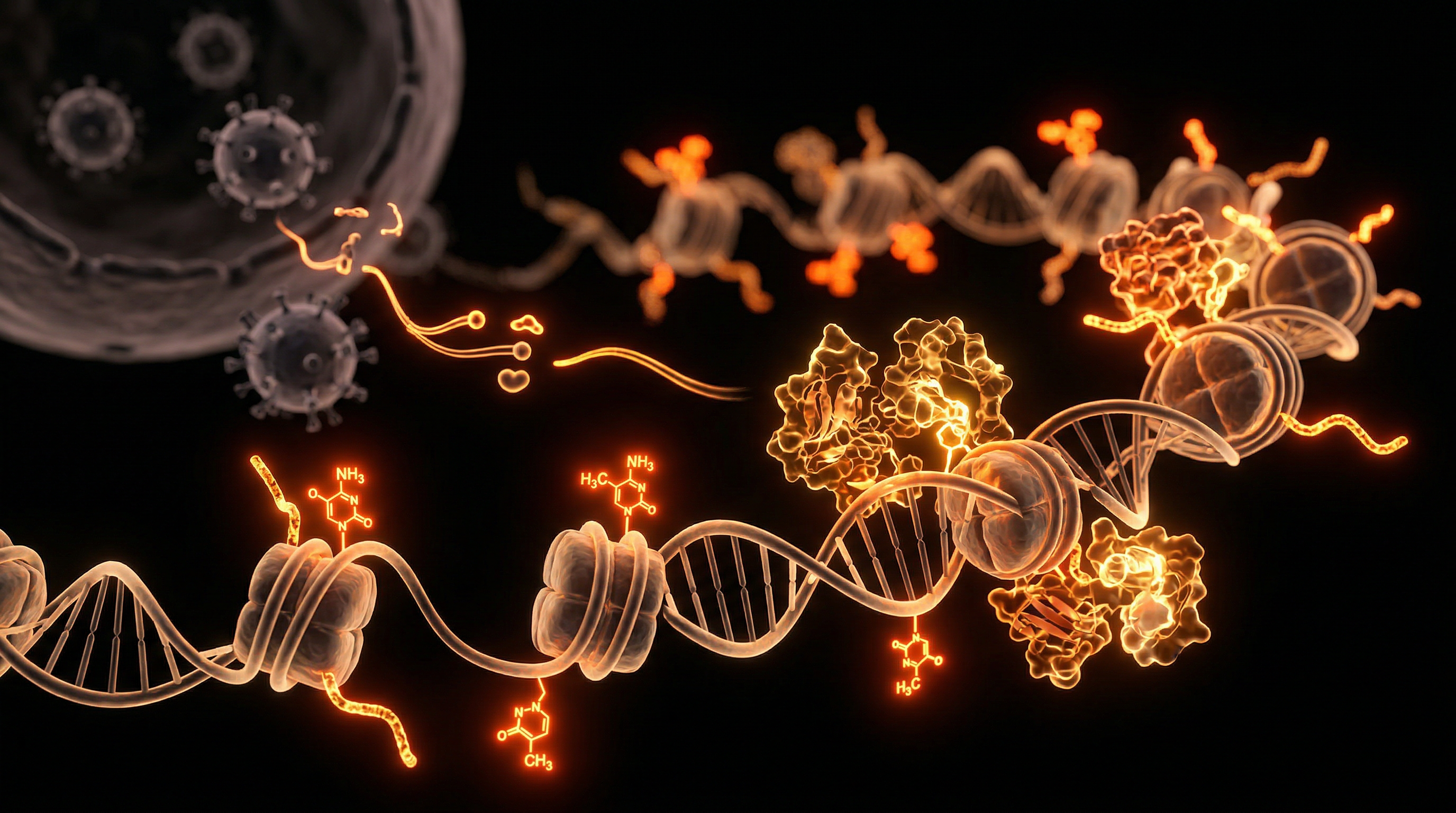
The most well-studied epigenetic mechanism is DNA methylation. This involves the attachment of a methyl group (a carbon atom bonded to three hydrogen atoms) to the DNA molecule, typically at specific sites known as CpG islands.
- When a gene promoter is heavily methylated, the gene is generally "silenced" or turned off.
- Conversely, demethylation allows the cellular machinery to access the gene, leading to its expression.
In the context of post-viral syndromes, we are observing aberrant methylation patterns. Critical genes involved in the interferon response (our primary antiviral defence) may become hyper-methylated and silenced, while pro-inflammatory cytokine genes remain hypomethylated and permanently "stuck" in the "on" position.
Histone Modification: The Spooling of Life
DNA does not float freely in the nucleus; it is wrapped around proteins called histones. Think of histones as spools and DNA as the thread.
- Acetylation of histones usually loosens the DNA, making it easier to read.
- Deacetylation tightens the wrap, hiding the genes from the cell’s reading machinery.
Viral proteins are known to hijack Histone Deacetylases (HDACs). By doing so, the Spike protein can effectively "close the book" on vital cellular repair pathways, preventing the cell from returning to a state of homeostasis after the initial threat has passed.
Non-Coding RNA: The Dark Matter of the Genome
Previously dismissed as "junk DNA," non-coding RNAs (ncRNAs), particularly microRNAs (miRNAs), play a crucial role in post-transcriptional regulation. They act like a dimmer switch for gene expression. Studies have shown that the Spike protein can alter the profile of circulating miRNAs, leading to a systemic cascade of epigenetic shifts that affect everything from vascular health to neurological function.
Fact: Epigenetic changes can be remarkably rapid. Research indicates that environmental stressors can alter gene methylation patterns within hours, but these changes can persist for years, or even a lifetime.
Mechanisms at the Cellular Level
The Spike protein is not a passive bystander; it is a highly active ligand capable of initiating complex intracellular signalling. The mechanism by which it influences the nucleus involves several key pathways that are often overlooked in conventional clinical settings.
Nuclear Localisation of the Spike Protein
A critical discovery in the field of "Spikeopathy" is the presence of Nuclear Localisation Signals (NLS) within the protein structure itself. This suggests that the Spike protein (or fragments thereof) can translocate into the cell nucleus. Once inside, it can physically interfere with the DNA repair machinery.
- BRCA1 and 53BP1 Interference: Preliminary research indicates that the Spike protein can inhibit the recruitment of key DNA repair proteins (BRCA1 and 53BP1) to sites of damage.
- Genomic Instability: If the cell cannot repair its DNA efficiently, it may undergo apoptosis (cell death) or, more dangerously, persist in a mutated state, increasing the risk of oncogenesis (cancer).
The NF-κB Pathway and Chronic Inflammation
The Spike protein interacts with ACE2 receptors and Toll-Like Receptors (TLRs), specifically TLR4. This interaction triggers the NF-κB (Nuclear Factor kappa-light-chain-enhancer of activated B cells) pathway.
- NF-κB is a "master switch" for inflammation.
- Chronic activation of this pathway leads to a self-perpetuating loop where inflammatory signals cause epigenetic changes that, in turn, make the cell more sensitive to further inflammation.
- This creates the "cytokine storm" seen in acute phases, but in post-viral syndromes, it evolves into a "cytokine drizzle"—a low-grade, persistent inflammatory state that exhausts the mitochondria and the adrenal system.
Mitochondrial Epigenetics (Mitohormesis)
Mitochondria have their own DNA (mtDNA) which is also subject to epigenetic regulation. The Spike protein has been shown to disrupt mitochondrial fission and fusion, leading to fragmented mitochondria that leak reactive oxygen species (ROS). These ROS further damage the nuclear DNA and alter the epigenetic marks, creating a "retrograde signalling" crisis where the power plants of the cell begin to dictate a "survival mode" to the nucleus, halting normal metabolic function.
Environmental Threats and Biological Disruptors
The epigenetic landscape does not exist in a vacuum. The impact of the Spike protein is compounded by an increasingly toxic environment and the specific delivery mechanisms used in modern medical interventions.
Lipid Nanoparticles (LNPs) as Epigenetic Adjuvants
In the context of mRNA-based interventions, the Lipid Nanoparticles (LNPs) used to deliver the genetic instructions are themselves biologically active.
- LNPs are designed to be highly inflammatory to "boost" the immune response.
- However, this "adjuvant effect" can trigger widespread epigenetic remodelling in the bone marrow, specifically in hematopoietic stem cells.
- This leads to trained immunity, where the innate immune system is epigenetically programmed to overreact to future stimuli, potentially explaining the rise in hyper-inflammatory conditions and new-onset allergies.
The Persistence of the Synthetic Script
Unlike natural viral RNA, which is rapidly degraded, synthetic mRNA is often modified (e.g., using N1-methylpseudouridine) to increase its stability and evade immune detection.
- This persistence means the body may produce the Spike protein for far longer than initially predicted.
- Long-term exposure to a foreign protein is an "epigenetic stressor" that the human evolutionary history has not prepared us for, leading to a state of immune exhaustion and the hallmark "exhausted T-cell" phenotype seen in chronic post-viral sufferers.
Synergistic Toxicity: Glyphosate and Heavy Metals
The modern environment is saturated with toxins like glyphosate, which can act as a glycine analogue and potentially be misincorporated into proteins. When the body is attempting to synthesise proteins under the direction of an external script while simultaneously being poisoned by environmental toxins, the risk of "misfolded" proteins and subsequent epigenetic panic increases exponentially.
Statistic: According to some epigenetic "clock" studies, individuals suffering from severe post-viral syndrome show a biological age acceleration of 3 to 5 years compared to their chronological age.
The Cascade: From Exposure to Disease
How does a microscopic epigenetic change manifest as a debilitating illness? The cascade is multi-phasic and involves the total collapse of cellular communication.
Phase 1: The Initial Epigenetic "Shock"
Upon exposure to the Spike protein, the cell's immediate priority is defence. It shuts down non-essential pathways (like growth and repair) and activates the inflammatory cascade. Epigenetically, this involves a massive "re-shuffling" of methyl groups.
Phase 2: Failure of the "Off-Switch"
In a healthy system, once the threat is gone, enzymes like TET (Ten-Eleven Translocation) proteins work to remove the "emergency" methyl marks and restore the cell to its baseline. However, the Spike protein appears to inhibit these "reset" enzymes. The cell remains in a state of high alert, even when no virus is present.
Phase 3: Systemic Dysregulation
This cellular state begins to affect organ systems:
- The Endothelium: Epigenetic changes in the lining of the blood vessels lead to a loss of nitric oxide production, causing "micro-clots" and vascular resistance.
- The Brain: Microglial cells (the brain's immune cells) become epigenetically "primed," leading to neuroinflammation and the profound "brain fog" reported by patients.
- The Gut: The microbiome-epigenetic axis is disrupted. The gut wall becomes "leaky," allowing bacterial endotoxins into the bloodstream, which further fuels the epigenetic fire.
Phase 4: Transgenerational Potential
Perhaps the most concerning aspect is Transgenerational Epigenetic Inheritance. If these epigenetic modifications occur in the germline (sperm or egg cells), there is a theoretical possibility that the "primed" immune state or the weakened DNA repair capacity could be passed on to offspring. While data in humans is still being gathered, animal models show that environmental exposures can leave marks that persist for four generations or more.
What the Mainstream Narrative Omits
The corporate and governmental health apparatus has largely ignored the epigenetic implications of Spike protein exposure. To acknowledge this would be to admit that the long-term consequences of current public health strategies are unknown and potentially catastrophic.
The IgG4 Class Switch
One of the most significant "suppressed truths" is the observation of an IgG4 class switch in multi-dosed individuals.
- Normally, the body produces IgG1 and IgG3 to fight off viruses.
- After repeated exposure to the Spike protein via certain platforms, the immune system switches to producing IgG4—a subclass typically associated with tolerance (like for bee stings or pollen).
- This is an epigenetic adaptation to "over-stimulation." The problem? IgG4 is ineffective at clearing viruses and can hide cancer cells from the immune system. The mainstream narrative calls this "immunity," whereas a molecular biologist would call it "immunological surrender."
Inhibition of p53
The protein p53 is known as the "Guardian of the Genome." It monitors DNA integrity and triggers cell death if the damage is too great to repair.
- Research (often relegated to "pre-print" servers or niche journals) suggests the Spike protein may bind to the p53 domain.
- This epigenetic silencing of p53 is a hallmark of cancer development. The "sudden" appearance of aggressive, late-stage cancers (so-called "turbo cancers") coincides with the biological pathways activated by p53 inhibition.
Reverse Transcription Concerns
While the "fact-checkers" were quick to dismiss the idea that mRNA can be integrated into DNA, the LINE-1 (Long Interspersed Nuclear Element-1) retrotransposon system tells a different story.
- Human cells contain an endogenous enzyme called Reverse Transcriptase.
- In vitro studies have shown that when cells are stressed by the Spike protein, LINE-1 can be activated, potentially allowing for the reverse transcription of synthetic RNA into the host genome.
- This is the ultimate "rewrite"—a permanent alteration of the genetic ledger.
The UK Context
In the United Kingdom, the impact of post-viral syndromes has been staggering, yet the response from the NHS and the MHRA (Medicines and Healthcare products Regulatory Agency) has been heavily criticised for its lack of depth.
- The ONS Data: Office for National Statistics data has consistently shown a rise in "long-term sickness" as a primary reason for people leaving the workforce. As of 2023, over 2.5 million people in the UK identify as having a chronic illness that limits their daily activities.
- The Yellow Card System: The UK’s "Yellow Card" reporting system for adverse events is notoriously under-utilised, with some estimates suggesting only 1-10% of incidents are actually reported. This leads to a massive data gap regarding the long-term epigenetic "tail" of the Spike protein.
- Regulatory Capture: There are growing concerns regarding the funding of the MHRA, which is largely financed by the very pharmaceutical companies it is tasked with regulating. This creates a "conflict of interest" that prevents a rigorous investigation into genomic and epigenetic stability.
The UK's approach has largely been "wait and see," treating the symptoms of post-viral syndrome with psychological support or basic rehabilitation, rather than addressing the underlying molecular and epigenetic catastrophe.
Protective Measures and Recovery Protocols
If we accept that the Spike protein has rewritten our genetic expression, the goal of recovery must be Epigenetic Rescission—the process of "erasing" the harmful marks and restoring healthy gene expression.
Nutrigenomics: Eating for Your Epigenetics
The field of nutrigenomics studies how nutrients influence gene expression. To combat the Spike's effects, we must provide the body with the raw materials for "correct" methylation.
- Methyl Donors: Supplementing with Trimethylglycine (TMG), Methyl-B12, and 5-MTHF (Folate) provides the methyl groups needed to silence the pro-inflammatory genes that have been stuck "on."
- Sulforaphane: Found in broccoli sprouts, this compound is a potent activator of the Nrf2 pathway, which triggers the expression of antioxidant and DNA-repair genes.
- Resveratrol and Quercetin: These polyphenols are Sirtuin activators. Sirtuins are enzymes that "clean" the histones, removing the "acetyl tags" that keep inflammatory genes open for business.
Targeting the Spike Protein
Recovery is difficult if the protein persists.
- Nattokinase: An enzyme derived from fermented soy (natto) that has been shown in vitro to degrade the Spike protein.
- Autophagy Induction: Intermittent fasting and spermidine stimulate autophagy—the cell's "rubbish disposal" system—which can help break down and remove the persistent Spike proteins and damaged mitochondria.
Lifestyle as Medicine
- Cold Water Immersion: Triggers a "hormetic stress" response that can reset the autonomic nervous system and improve mitochondrial health through "mitochondrial biogenesis."
- Circadian Rhythm Alignment: Epigenetic enzymes are highly sensitive to the day/night cycle. Restoring sleep and reducing "blue light" exposure at night is essential for the DNA repair enzymes that operate during deep sleep.
Important Callout: Recovery from epigenetic damage is a marathon, not a sprint. It involves consistent, multi-modal interventions over months or even years to slowly "tilt" the epigenetic landscape back toward health.
Summary: Key Takeaways
The evidence is mounting that post-viral syndromes are not just "lingering flu." They represent a fundamental shift in the human biological narrative.
- Epigenetic Plasticity: Our genes are not our destiny, but they are vulnerable to "rewriting" by aggressive viral proteins and novel biotechnological delivery systems.
- The Spike as a Disruptor: The Spike protein enters the nucleus, interferes with DNA repair (p53/BRCA1), and hijacks the NF-κB inflammatory master-switch.
- The Silent Crisis: Mainstream medicine's refusal to acknowledge "Spikeopathy" and its epigenetic consequences is leaving millions without effective treatment.
- Genomic Integrity: The risk of transgenerational inheritance and the rise of "turbo cancers" suggest that the epigenetic impact of recent years may be felt for decades to face.
- The Path Forward: Through nutrigenomics, autophagy induction, and environmental detoxification, it is possible to support the body in its attempt to "re-write" its own expression back to a state of balance.
We stand at a crossroads in human biology. We can either ignore the molecular reality of these epigenetic alterations or we can take proactive steps to understand, expose, and ultimately reverse the damage done to the human genome. The survival of our long-term health, and that of our descendants, may well depend on it.
This article is provided for informational and educational purposes only. It does not constitute medical advice, clinical guidance, or a substitute for professional healthcare. Information reflects cited research at time of publication. Always consult a qualified healthcare professional before acting on any health information.
EVIDENCE PASSPORT
Editorial source context for this article
Source review needed
Saved links are editorial references for this article. They may support specific claims rather than every sentence. Open and assess each source in context. This passport does not independently verify them.
Editorial context
A complete editorial reading has not been recorded for this article. Source links remain available for you to open and assess directly.
Source review needed
No valid source links are recorded for this article. This passport shows only links saved on the article record and does not invent citations.
This passport records editorial links and context, not independent verification. Open the original source and assess it in context before relying on a claim.
Medical Disclaimer
The information in this article is for educational purposes only and does not constitute medical advice, diagnosis, or treatment. Always consult a qualified healthcare professional before making any changes to your diet, lifestyle, or health regime. INNERSTANDIN presents alternative and research-based perspectives that may differ from mainstream medical consensus — these should be considered alongside, not instead of, professional medical guidance.
Read Full DisclaimerContinue the thread
Keep this question moving.
Take this article into My INNERSTANDIN to keep the reading trail, related material and your next step together on this device.
Dig deeper in the Library
Free, longform PDF volumes that go beyond headlines into mechanisms and references.