
Epigenetic Erosion: Pesticide-Induced Gene Silencing in UK Livestock
Updated May 2026
Pesticide residues in livestock feed can trigger epigenetic modifications that are passed down through generations. These changes impact the metabolic health and resilience of the UK's food-producing animals.
Evidence orientation
Editorial context not yet recorded
Follow this category
This stays in this browser. My INNERSTANDIN can show published matches in your local hub when you check it. It does not send email, push, or alert notifications.
Local learning review
A private browser aid for revisiting ideas. It is not an alert or a health recommendation.
Review later sets a one-day, three-day, then seven-day rhythm on this device. Choose it only when you want to revisit this article.
Overview
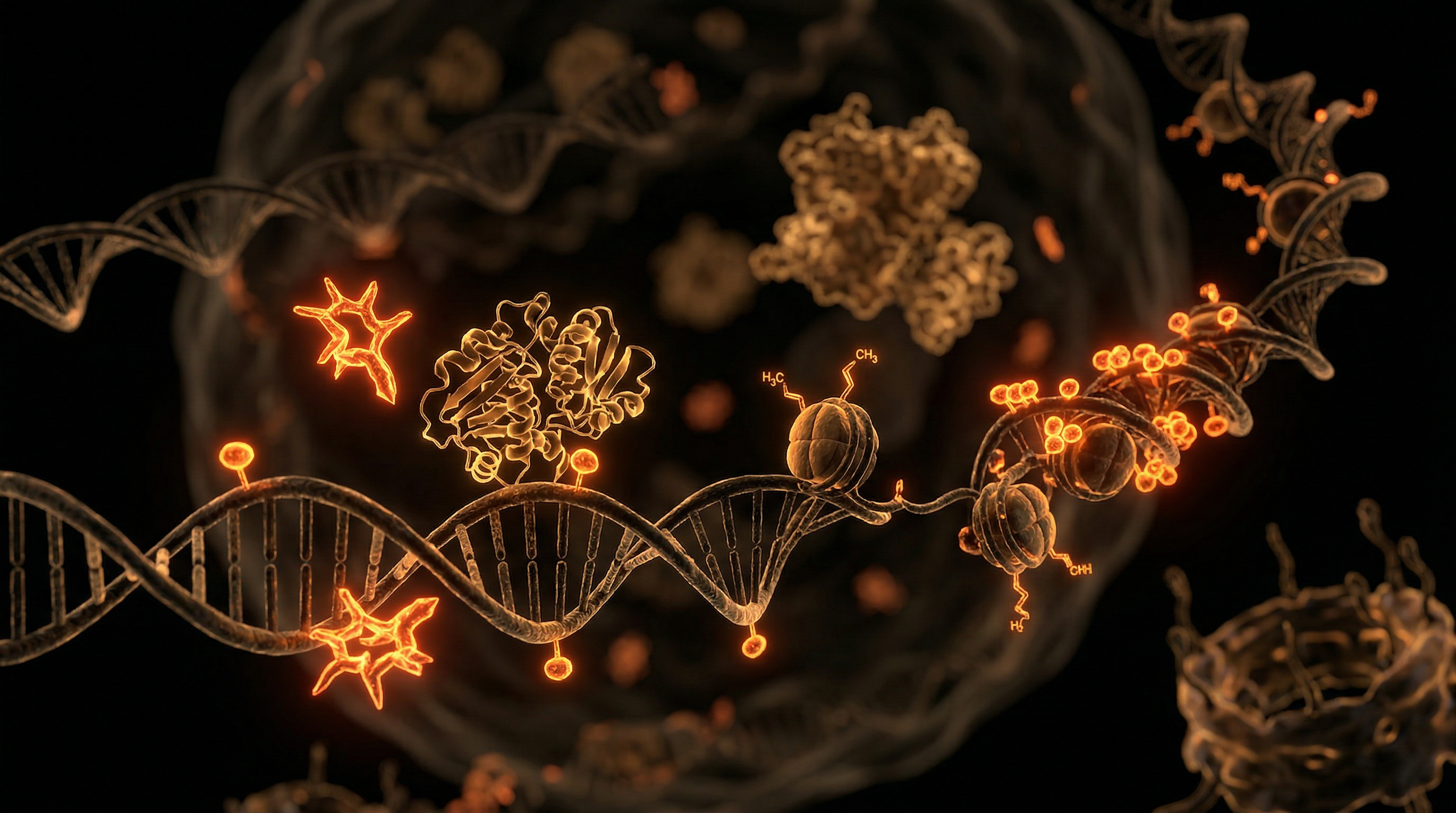
In the hushed laboratories of molecular biology, a silent crisis is being decoded—one that threatens the very foundational health of the United Kingdom's agricultural heritage. For decades, the mainstream agricultural narrative has focused on the genotype: the fixed sequence of DNA that defines a Hereford bull or a Romney sheep. However, we now know that the genome does not act alone. Overlaid upon the DNA is the epigenome, a complex system of biochemical switches that determines which genes are expressed and which are silenced.
Epigenetic Erosion refers to the progressive degradation of these regulatory mechanisms. In the UK, this erosion is being accelerated by chronic, low-level exposure to pesticide residues found in livestock feed, water, and the environment. While regulatory bodies often dismiss these residues as "below safe limits," this traditional toxicological model fails to account for the non-linear, transgenerational impact of epigenetic modifications.
This article serves as a technical exposé on how modern agrochemicals—ranging from glyphosate to organophosphates—act as biological disruptors. They do not necessarily mutate the DNA sequence itself, but they alter the histone tails and DNA methylation patterns that govern life. These alterations are not confined to the exposed animal; they are etched into the germline, creating a "biological debt" that is passed from dam to offspring, manifesting as reduced fertility, metabolic dysfunction, and a catastrophic loss of immunological resilience across the UK’s food-producing landscape.
The Biology — How It Works
To understand epigenetic erosion, one must look beyond the double helix. The epigenome is the interface between the environment and the genome. It consists of chemical compounds and proteins that can attach to DNA and direct such actions as turning genes on or off, and controlling the production of proteins in particular cells.
The Architecture of Gene Expression
The DNA in a single bovine cell is approximately two metres long, yet it is packed into a nucleus only a few micrometres wide. This is achieved by wrapping the DNA around proteins called histones, forming a structure known as chromatin.
- Euchromatin: Open, relaxed chromatin that allows gene transcription (the gene is "on").
- Heterochromatin: Tightly packed chromatin that prevents gene expression (the gene is "silenced").
The Software of Life
If the DNA is the hardware of the livestock’s biological system, the epigenome is the software. Epigenetic markers tell the cell whether to be a muscle cell, a liver cell, or an immune cell. However, pesticides act as "malware" in this system. By mimicking hormones or disrupting methyl-group availability, these chemicals force the software to "reprogramme" itself in real-time.
Key Statistic: Research indicates that up to 70% of the variation in livestock health outcomes may be attributed not to the genetic code itself, but to epigenetic regulation influenced by environmental stressors.
The Transgenerational Bridge
The most harrowing aspect of this biology is transgenerational epigenetic inheritance. In a pregnant ewe, three generations are simultaneously exposed to pesticide residues: the ewe (F0), the developing foetus (F1), and the primordial germ cells within that foetus (F2) which will eventually become the F2 generation. If a pesticide triggers a gene-silencing event in those germ cells, the "erosion" is locked into the lineage before the grand-offspring is even born.
Mechanisms at the Cellular Level
Pesticide-induced gene silencing operates through three primary, interlocking mechanisms: DNA Methylation, Histone Modification, and Non-coding RNA interference.
1. DNA Methylation: The Silent Seal
This is the most well-studied epigenetic mechanism. It involves the attachment of a methyl group (CH3) to the cytosine bases of DNA, typically at CpG islands (regions with a high frequency of cytosine-guanine pairs).
- When a promoter region of a gene is heavily methylated, the gene is effectively "locked."
- Pesticides like Glyphosate and Vinclozolin have been shown to cause aberrant hypermethylation of genes associated with metabolic regulation and sperm development.
- In UK cattle, hypermethylation of the IGF2 (Insulin-like Growth Factor 2) gene has been linked to intrauterine growth restriction, resulting in "thrifty" phenotypes that are prone to obesity and insulin resistance.
2. Histone Modification and Acetylation
Histones are not merely packing material; they are dynamic regulators. Enzymes known as Histone Acetyltransferases (HATs) and Histone Deacetylases (HDACs) add or remove acetyl groups.
- Acetylation generally promotes gene expression.
- Deacetylation leads to gene silencing.
- Many organophosphate pesticides inhibit the enzymes responsible for maintaining these marks, leading to a "tightening" of the chromatin and the silencing of vital neurodevelopmental genes in livestock.
3. Non-coding RNAs (miRNAs)
Once thought to be "junk," non-coding RNAs are now recognised as potent regulators. MicroRNAs (miRNAs) can bind to messenger RNA (mRNA) and prevent it from being translated into proteins.
- Pesticide exposure triggers the overproduction of specific "silencer" miRNAs.
- These miRNAs can circulate in the blood and even be passed through colostrum, meaning a calf’s first meal may contain the epigenetic signals for immune suppression if the mother was exposed to pesticide-laden feed.
4. Mitochondrial Epigenetics (Mitogenetics)
Mitochondria have their own DNA (mtDNA) and are particularly susceptible to oxidative stress induced by pesticides. Pesticides disrupt the electron transport chain, leading to the production of reactive oxygen species (ROS) that damage the mitochondrial epigenome, effectively silencing the genes responsible for cellular energy production.
Environmental Threats and Biological Disruptors
The UK livestock sector is exposed to a cocktail of chemicals, many of which are "legacy" pollutants that persist in soil, while others are "current-use" pesticides that enter the system via imported soy and maize.
Glyphosate: The Systematic Eraser
Glyphosate, the active ingredient in Roundup, is the most widely used herbicide in the world and a staple in the production of imported livestock feed.
- While industry claims it is safe because the shikimate pathway (its target) does not exist in mammals, this ignores the microbiome-epigenetic axis.
- Glyphosate disrupts the gut microbiota of livestock, leading to a deficiency in methyl donors (like B12 and folate) produced by beneficial bacteria.
- Without these methyl donors, the animal cannot maintain healthy DNA methylation patterns, leading to widespread "epigenetic noise" and the silencing of protective genes.
Organophosphates (OPs) and Neonicotinoids
In the UK, the legacy of sheep dipping with organophosphates continues to haunt the industry. OPs are potent neurotoxins that alter the methylation of genes in the hypothalamic-pituitary-adrenal (HPA) axis.
- This leads to a permanent state of "biological stress" in the animal.
- Even at sub-lethal doses, OPs can silence the genes involved in the cholinergic system, leading to long-term behavioural and physiological deficits in sheep and cattle.
Endocrine Disrupting Chemicals (EDCs)
Many pesticides act as xenoestrogens. They mimic natural hormones and bind to receptors, sending false signals to the nucleus.
- These false signals trigger the recruitment of epigenetic modifiers that silence genes necessary for natural hormone production.
- Atrazine (though banned in the UK, residues persist and appear in imported feed) is notorious for inducing the expression of aromatase, which converts testosterone to oestrogen, while simultaneously silencing genes required for androgen synthesis.
Important Fact: A 2021 study found that even when pesticides are removed from the diet, the "epigenetic signature" of the exposure can persist for at least three generations in mammalian models.
The Cascade: From Exposure to Disease
The erosion of the epigenome does not result in immediate death, but rather a slow, cascading decline in the "biological fitness" of the UK herd.
The "Thrifty Phenotype" and Metabolic Syndrome
When a gestating animal is exposed to pesticide-induced nutritional or chemical stress, the foetus receives a signal that the external environment is hostile. Through epigenetic reprogramming, the foetus silences genes related to high-energy metabolism and activates genes for fat storage.
- In UK beef production, this manifests as animals that develop metabolic syndrome.
- These animals have higher rates of steatosis (fatty liver) and poor muscle-to-fat ratios, despite being fed high-quality forage.
Immunological Senescence
One of the most critical casualties of gene silencing is the Major Histocompatibility Complex (MHC), which is vital for the immune system to recognise pathogens.
- Pesticide residues promote the hypermethylation of cytokine genes (like Interferon-gamma).
- This results in "immunological silencing," where the livestock appear healthy but possess an immune system that is "turned off" to specific threats like Bovine Tuberculosis (bTB) or digital dermatitis.
- This may explain why certain UK herds remain highly susceptible to disease despite rigorous vaccination and biosecurity protocols.
Reproductive Failure
The UK dairy industry faces a "fertility crisis," with conception rates declining over several decades. While much of this is blamed on genetic selection for high milk yield, epigenetic erosion is a significant hidden factor.
- Exposure to EDCs silences genes in the oocytes (eggs), leading to poor embryo quality.
- In bulls, pesticide exposure leads to sperm epimutations—defects in the epigenetic "packing" of the sperm DNA that prevent successful fertilisation or cause early miscarriage in the cow.
What the Mainstream Narrative Omits
The current regulatory framework in the UK, governed by the Health and Safety Executive (HSE) and informed by the Expert Committee on Pesticide Residues in Food (PRiF), is based on an antiquated model of toxicology.
The Myth of the "Safe Limit"
Toxicology has traditionally followed the maxim "the dose makes the poison." However, epigenetics operates on non-monotonic dose responses.
- Extremely low doses of a pesticide can sometimes cause more epigenetic damage than high doses, as they are "sensed" by the body as hormonal signals rather than toxins.
- The UK’s "Maximum Residue Levels" (MRLs) are calculated based on acute toxicity (death or gross organ damage), completely ignoring the subtle gene-silencing events that occur at parts-per-billion levels.
The Synergy Factor (The Cocktail Effect)
UK livestock are rarely exposed to one pesticide. They are exposed to a "cocktail."
- Regulatory testing is performed on single chemicals.
- Science shows that Chemical A might not cause methylation changes alone, and Chemical B might not either. But together, they create a synergistic effect that aggressively silences the CYP450 genes responsible for detoxification, making the animal even more vulnerable to further exposures.
Regulatory Capture and the "Ghostwriting" of Safety
The data used to approve pesticides in the UK is largely provided by the manufacturers themselves. Independent studies showing epigenetic harm are often dismissed as "not following Good Laboratory Practice (GLP) guidelines," a bureaucratic loophole used to silence independent research that threatens the status quo of the multibillion-pound agrochemical industry.
Callout: In the UK, over 40% of tested livestock feed samples contain residues of more than one pesticide, yet the long-term epigenetic impact of these combinations remains unstudied by government bodies.
The UK Context
The UK occupies a unique and precarious position in the global food system, especially following its exit from the European Union.
Post-Brexit Regulatory Divergence
Since Brexit, there are growing concerns that the UK may diverge from the EU’s Precautionary Principle.
- Pressure to secure trade deals (notably with the US and the CPTPP nations) threatens to increase the importation of feed containing pesticides that are currently banned for use within the UK (such as Paraquat or certain neonicotinoids).
- This creates a "double standard" where UK farmers are restricted in what they can spray, but their livestock are fed the very chemicals that are being phased out, leading to internal "epigenetic erosion" of the British herd.
The Intensity of the UK Dairy Sector
The UK dairy industry is highly intensified, particularly in regions like Somerset and Cheshire.
- High-yielding cows are under massive physiological stress, making their epigenome more "labile" (unstable) and susceptible to chemical interference.
- The use of maize silage, which is heavily treated with herbicides, as a primary winter feed source, ensures a constant, year-round exposure to gene-silencing agents.
Soil Health and the Legacy of "Persistent Organic Pollutants"
UK soils, particularly in the Midlands and East Anglia, still contain residues of organochlorines like DDT and Lindane, banned decades ago.
- These chemicals are stored in the fatty tissues of grazing livestock.
- During periods of weight loss or lactation, these "legacy" chemicals are mobilised into the bloodstream, triggering new rounds of epigenetic silencing in the current generation of animals.
Protective Measures and Recovery Protocols
While the situation is dire, the science of epigenetics also offers hope. Unlike genetic mutations, epigenetic marks are, in theory, reversible.
1. Regenerative Agriculture as an Epigenetic Reset
Moving livestock from intensive, grain-based systems to diverse herbal leys and permanent pasture is the first step in halting erosion.
- Diverse pastures provide a range of phytonutrients that act as natural HDAC inhibitors and methyl donors.
- By removing the primary source of pesticide exposure (imported soy/maize), the "epigenetic pressure" is lifted, allowing the animal's cellular machinery to begin a "reset."
2. Nutritional Intervention and Methyl Donors
To combat gene silencing, livestock diets must be optimised for methylation capacity.
- Supplementation with Choline, Methionine, Vitamin B12, and Folic Acid provides the biochemical raw materials needed to maintain healthy DNA methylation patterns.
- High-quality, bioavailable minerals (Zinc, Selenium) are essential for the enzymes that "write" and "erase" epigenetic marks.
3. Testing and Epigenetic Profiling
The UK needs to move beyond simple residue testing.
- High-throughput sequencing can now be used to create "epigenetic profiles" for breeding stock.
- By selecting animals that show "epigenetic resilience"—those whose gene expression remains stable despite environmental challenges—breeders can begin to "breed out" the chemical legacy of the past fifty years.
4. Policy Reformation: The "Epigenetic Standard"
The UK government must adopt a new regulatory framework that includes epigenetic toxicity testing for all new and existing pesticides.
- This would require chemicals to be tested for their ability to alter DNA methylation across generations before being approved for use in the food chain.
- A "Clean Feed" certification for UK livestock would provide a market-driven incentive for farmers to avoid pesticide-laden imports.
Summary: Key Takeaways
The phenomenon of Epigenetic Erosion represents one of the most significant, yet overlooked, threats to the UK’s food security and animal welfare.
- Pesticides are Gene Silencers: Common agrochemicals like glyphosate and organophosphates do not just kill weeds or insects; they act as molecular switches that turn off vital health and immunity genes in livestock.
- The Shadow of the Past: Through transgenerational inheritance, the chemical exposures of the "Grand-Dam" are reflected in the health of the calf today. We are dealing with a multi-generational biological debt.
- The Metabolic Toll: This erosion manifests as a "thrifty phenotype," leading to livestock that are metabolically inefficient, prone to disease, and reproductively compromised.
- Regulatory Failure: Current UK "safe limits" are scientifically inadequate as they ignore the non-linear, epigenetic mechanisms of low-dose, chronic exposure and chemical synergies.
- A Path Forward: Through regenerative grazing, targeted nutritional support for methylation, and a radical shift in regulatory policy, the UK has the opportunity to repair its "biological software" and restore the resilience of its livestock.
The "ghost in the machine" of British agriculture is no longer a mystery; it is a series of biochemical marks etched onto the DNA by a chemical-heavy industrial system. To ignore this "epigenetic erosion" is to gamble with the future of the living world. The time for a molecular awakening in the UK agricultural sector is now.
This article is provided for informational and educational purposes only. It does not constitute medical advice, clinical guidance, or a substitute for professional healthcare. Information reflects cited research at time of publication. Always consult a qualified healthcare professional before acting on any health information.
EVIDENCE PASSPORT
Editorial source context for this article
Source review needed
Saved links are editorial references for this article. They may support specific claims rather than every sentence. Open and assess each source in context. This passport does not independently verify them.
Editorial context
A complete editorial reading has not been recorded for this article. Source links remain available for you to open and assess directly.
Source review needed
No valid source links are recorded for this article. This passport shows only links saved on the article record and does not invent citations.
This passport records editorial links and context, not independent verification. Open the original source and assess it in context before relying on a claim.
Medical Disclaimer
The information in this article is for educational purposes only and does not constitute medical advice, diagnosis, or treatment. Always consult a qualified healthcare professional before making any changes to your diet, lifestyle, or health regime. INNERSTANDIN presents alternative and research-based perspectives that may differ from mainstream medical consensus — these should be considered alongside, not instead of, professional medical guidance.
Read Full DisclaimerContinue the thread
Keep this question moving.
Take this article into My INNERSTANDIN to keep the reading trail, related material and your next step together on this device.
Dig deeper in the Library
Free, longform PDF volumes that go beyond headlines into mechanisms and references.