
Epigenetic Memory and Ancestral Diet in Modern Food Deserts
Updated May 2026
Explore how modern UK ultra-processed diets override ancestral epigenetic signaling, leading to chronic disease. We examine the biological necessity of returning to traditional nutrient density.
Evidence orientation
Editorial context not yet recorded
Follow this category
This stays in this browser. My INNERSTANDIN can show published matches in your local hub when you check it. It does not send email, push, or alert notifications.
Local learning review
A private browser aid for revisiting ideas. It is not an alert or a health recommendation.
Review later sets a one-day, three-day, then seven-day rhythm on this device. Choose it only when you want to revisit this article.
Overview
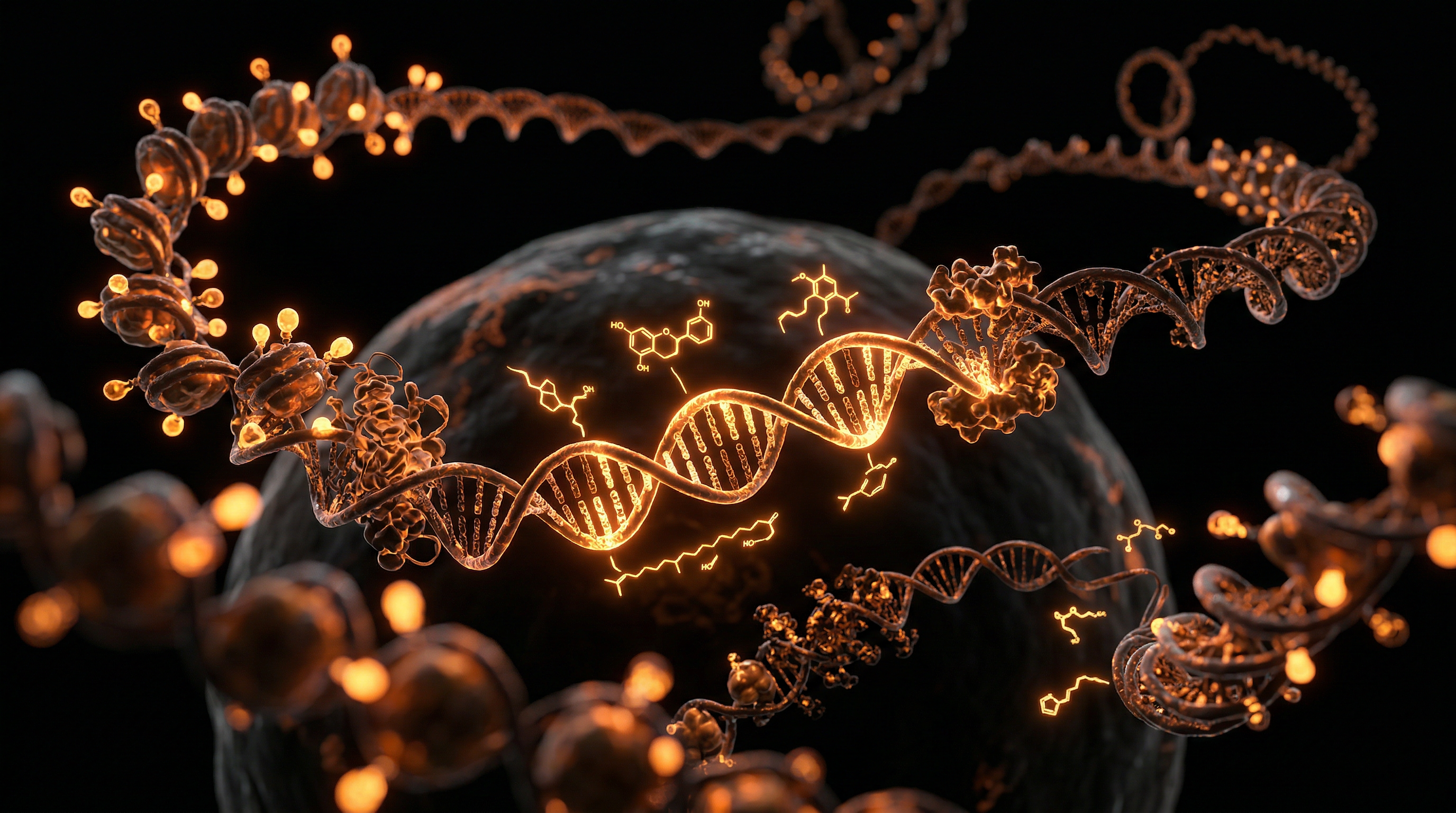
We stand at a precipice where the biological continuity of the human species is being severed. For millennia, the human genome has functioned not as a static blueprint, but as a dynamic archive—a living record of ancestral environments, stressors, and, most crucially, nutritional intake. This is epigenetic memory: the molecular mechanism by which our ancestors' diets speak to our current cells, instructing them on how to metabolise, defend, and replicate.
However, the modern landscape, particularly within the United Kingdom, has undergone a radical transformation. The emergence of Food Deserts—geographical areas where access to affordable, high-quality, nutrient-dense food is non-existent—has collided with the rise of Ultra-Processed Foods (UPFs). This collision is not merely a sociological issue; it is a biological catastrophe. We are currently witnessing an evolutionary mismatch of unprecedented proportions. Our ancient DNA, programmed for the nutrient density of the Palaeolithic and the traditional agrarian eras, is being bombarded by synthetic compounds, industrial seed oils, and a dearth of essential micronutrients.
This article posits that the current epidemic of chronic disease—type 2 diabetes, obesity, neurodegeneration, and autoimmune disorders—is the direct result of "epigenetic noise." Modern industrial diets are effectively "overwriting" the ancestral signals required for health. To restore the biological integrity of the British population, we must move beyond the reductive "calories in, calories out" model and recognise food as biological information that either upholds or degrades our genetic heritage.
Key Statistic: Research indicates that over 57% of the average UK household's energy intake now comes from ultra-processed foods, the highest proportion in Europe.
The Biology — How It Works
To understand how a modern diet can "override" our ancestry, we must first understand the architecture of epigenetics. While our DNA sequence (the genome) remains relatively stable across generations, the way those genes are expressed is governed by the epigenome. Think of the genome as the hardware and the epigenome as the software that determines which programs are run.
The Transgenerational Archive
Epigenetic memory is the process by which environmental signals are recorded on the DNA through chemical "tags." These tags can be passed down from parent to offspring. The most famous example is the Dutch Hunger Winter of 1944-1945, where the grandchildren of women who suffered famine during pregnancy still show distinct epigenetic markers and an increased susceptibility to metabolic disease.
Our ancestors thrived on a diet rich in fat-soluble vitamins (A, D, K2), omega-3 fatty acids, and complex phytonutrients. These compounds acted as ligands, binding to nuclear receptors and ensuring that genes related to inflammation were "silenced" while genes related to cellular repair were "activated."
The Concept of Evolutionary Mismatch
Our physiology is adapted to a feast-and-famine cycle and a high intake of micronutrient-dense animal fats and seasonal flora. Modern food deserts provide the opposite: a constant state of "hidden hunger." In these environments, individuals are overfed in terms of calories but starved of the specific molecular signals—such as choline, folate, and cobalamin—required to maintain proper epigenetic programming. When these signals are absent, the "software" begins to glitch.
Mechanisms at the Cellular Level
At the microscopic scale, the transition from an ancestral diet to a modern UPF-heavy diet disrupts three primary epigenetic mechanisms: DNA Methylation, Histone Modification, and Non-coding RNA expression.
DNA Methylation: The Silencing Switch
DNA methylation involves the attachment of a methyl group to the DNA molecule, typically at "CpG sites." This usually acts to turn a gene "off."
- The Ancestral State: A diet rich in methyl donors (found in liver, eggs, and leafy greens) ensures that pro-inflammatory genes and "jumping genes" (transposons) remain methylated and silent.
- The Modern Disruption: Food deserts are often devoid of these methyl donors. In their absence, the body cannot effectively maintain these "silence" tags. This leads to hypomethylation, where genes that should be dormant—such as those triggering systemic inflammation—become hyperactive.
Histone Modification: The Spooling Effect
DNA is wrapped around proteins called histones. If the DNA is wrapped tightly, genes cannot be read; if loosely, they are accessible.
- Ancestral Signalling: Short-chain fatty acids (SCFAs) like butyrate, produced by the fermentation of traditional fibres or found in grass-fed butter, act as HDAC inhibitors. They keep the DNA in a configuration that promotes longevity and tumour suppression.
- The Modern Disruption: The high-sugar, low-fibre diet common in UK food deserts leads to a loss of butyrate-producing bacteria. This results in altered histone acetylation, effectively "locking" the cell into a state of stress and rapid proliferation.
Mitochondria as Epigenetic Sensors
Mitochondria are more than just powerhouses; they are the primary sensors of the nutritional environment. They produce Acetyl-CoA and Alpha-ketoglutarate, which are essential co-factors for epigenetic enzymes.
- When we consume Ancestral Fats (stearic acid, palmitic acid), mitochondria produce a clean signal.
- When we consume Industrial Seed Oils (linoleic acid), the resulting oxidative stress damages mitochondrial DNA (mtDNA) and sends a "danger" signal to the nucleus, triggering an epigenetic shift toward survival mode (fat storage and inflammation) rather than thriving.
Environmental Threats and Biological Disruptors
The modern food desert is not just an absence of good food; it is a presence of biological disruptors. In the UK, the "standard" diet in deprived urban areas is a cocktail of compounds that our ancestors never encountered.
Ultra-Processed Foods (UPFs) and "Information Overload"
UPFs are "industrial formulations" rather than food. They contain emulsifiers, thickeners, and artificial sweeteners that bypass the body's satiety signals and directly interfere with the gut-microbiome-epigenetic axis.
- Emulsifiers: These detergents (like polysorbate 80) strip the protective mucus layer of the gut, allowing bacterial endotoxins (LPS) to enter the bloodstream. This triggers a systemic epigenetic response known as metabolic endotoxemia.
- Synthetic Additives: Many preservatives act as "epigenetic mimics," binding to receptors intended for natural hormones and disrupting the endocrine system.
The Glyphosate Factor
The UK's reliance on industrial wheat and rapeseed often involves heavy use of glyphosate. While mainstream science focuses on its potential carcinogenicity, its most insidious effect is the disruption of the shikimate pathway in our gut bacteria.
Callout: Glyphosate acts as a chelator, stripping essential minerals like manganese and zinc from our food. These minerals are crucial co-factors for the enzymes that repair our DNA.
The Absence of "Nutritional Dark Matter"
Traditional diets contained thousands of compounds—terpenes, polyphenols, and trace minerals—that are not listed on standard nutritional labels. This "nutritional dark matter" provides the nuanced instructions for our epigenetic software. In a food desert, these instructions are missing, replaced by a "monocrop" of corn, soy, and wheat derivatives.
The Cascade: From Exposure to Disease
What happens when a population with a 50,000-year-old genome is placed in a 50-year-old food environment? The result is a predictable biological cascade toward chronic disease.
Phase 1: Loss of Metabolic Flexibility
Under ancestral conditions, the body could switch effortlessly between burning glucose and burning fat (ketosis). The high-carbohydrate, seed-oil-heavy diet of modern food deserts "locks" the body into glucose metabolism. This causes an epigenetic downregulation of the genes involved in fatty acid oxidation.
Phase 2: The Pro-Inflammatory Shift
As the gut barrier fails and the mitochondria struggle, the immune system remains in a state of high alert. This is Inflammageing. Epigenetic markers on white blood cells shift, making them hyper-reactive. This is why we see a rise in asthma and allergies in children living in UK inner cities—their immune systems are epigenetically primed for a threat that doesn't exist, driven by the "toxicity" of their diet.
Phase 3: The Manifestation of Chronic Disease
Over decades, these epigenetic shifts solidify into physical pathology:
- Neurodegeneration: The brain, being the most lipid-dense organ, is particularly sensitive to the replacement of ancestral omega-3s with industrial omega-6s.
- Cardiovascular Disease: It is not "cholesterol" that is the enemy, but the oxidative modification of lipoproteins, a process accelerated by the nutrient deficiencies found in food deserts.
- Type 2 Diabetes: This is essentially an epigenetic adaptation to excessive energy—the body attempts to protect the organs from sugar by shutting down insulin receptors.
What the Mainstream Narrative Omits
The current public health discourse in the UK is woefully inadequate. It focuses on "personal choice" and "calorie counting," while ignoring the systemic biological sabotage inherent in the modern food system.
The Myth of the "Healthy" Plant-Based UPF
A significant "omission" in current narratives is the push toward ultra-processed plant-based meat and dairy alternatives. These products, often high in refined starches and industrial oils, are marketed as "healthier" and "more sustainable." However, from an epigenetic perspective, they are a disaster. They lack the haeme iron, B12, and creatine found in ancestral animal foods—nutrients that are essential for DNA methylation and brain health.
The Suppression of Nutrient Density
Mainstream guidelines (like the NHS Eatwell Guide) treat all calories as equal. They fail to mention that the bioavailability of nutrients is what matters. For instance, the Vitamin A (retinol) in beef liver is infinitely more bioabsorbable than the beta-carotene in carrots. By prioritising "low fat" and "high fibre" from cereal grains, the narrative ignores the fact that grains contain phytates that actually block the absorption of minerals.
The Profitability of Chronic Disease
There is a profound silence regarding the synergy between the food industry and the pharmaceutical industry. The UPFs sold in food deserts create the very chronic conditions that the pharmaceutical industry then "manages" with lifetime medications. Neither industry has an incentive to promote the Ancestral Diet, which is essentially free and decentralised.
The UK Context
The UK presents a unique and harrowing case study in epigenetic erosion. As the first nation to industrialise, we were the first to sever our connection to the land and traditional foodways.
The North-South Divide as a Biological Map
In the UK, health inequalities are often discussed in economic terms, but they are clearly visible in the biological markers of the population. Areas like Blackpool, parts of Glasgow, and East London are "hotspots" for food deserts. In these regions, the availability of fresh, pasture-raised animal products is near zero, while the density of "Chicken Shops" and "Off-Licences" is staggering.
Observation: The "Glasgow Effect"—whereby citizens of Glasgow have lower life expectancies than those in similar UK cities—can be partially explained by a multi-generational lack of nutrient density, leading to a "weathering" of the epigenome.
The Loss of Rural Wisdom
Historically, the British diet was rich in "sea-to-plate" and "nose-to-tail" nutrition. From the omega-3 rich herring of the coastal towns to the mineral-dense organ meats (faggots, haggis, steak and kidney) of the working class, the UK once had a robust ancestral diet. The post-war "Green Revolution" and the subsequent rise of supermarkets replaced these local food systems with globalised, shelf-stable, and nutritionally void commodities.
Social Housing and Environmental Toxins
Food deserts in the UK often overlap with areas of high air pollution and poor housing. These environmental stressors act synergistically with a poor diet. Air pollutants (PM2.5) induce further epigenetic changes that exacerbate the metabolic damage caused by UPFs. For a child growing up in a UK food desert, their "biological destiny" is being written by a landscape that is hostile to human physiology.
Protective Measures and Recovery Protocols
While the situation is dire, the beauty of the epigenome is its plasticity. Epigenetic tags are not permanent; they can be added or removed through targeted nutritional interventions. To "reclaim" our ancestral health, we must adopt a strategy of Biological Restoration.
1. Prioritise Nutrient Density and Bioavailability
The cornerstone of recovery is the reintroduction of "Epigenetic Superfoods." These are foods that provide the raw materials for DNA repair and methylation:
- Ruminant Meats (Grass-fed Beef/Lamb): High in stearic acid and essential B vitamins.
- Organ Meats: Liver is the "multivitamin" of the ancestral world, providing pre-formed Vitamin A and copper.
- Pastured Eggs: A premier source of choline, vital for methylation and brain structure.
- Wild-Caught Seafood: Providing the DHA and EPA necessary for dampening neuro-inflammation.
2. Elimination of Biological Saboteurs
One cannot heal in the same environment that made them sick. Recovery requires a strict avoidance of:
- Industrial Seed Oils: (Rapeseed, Sunflower, Corn, Soy oils). These are high in linoleic acid, which incorporates into cell membranes and promotes oxidative damage.
- Refined Sugars and Flours: These trigger the insulin spikes that drive epigenetic aging.
- Non-organic Grains: To reduce glyphosate exposure.
3. Restoration of the Microbiome
The gut is the "interpreter" of our food. Traditional fermentation (sauerkraut, kefir, sourdough) introduces beneficial bacteria and post-biotics that communicate directly with our genes. In a UK context, moving away from pasteurised, homogenised dairy toward raw or traditionally fermented dairy can be transformative.
4. Circadian and Environmental Alignment
Epigenetic expression is also governed by the "Master Clock" in the brain.
- Morning Sunlight: Triggers the production of serotonin and sets the circadian rhythm, which in turn regulates metabolic genes.
- Grounding and Cold Exposure: Traditional "stressors" (hormesis) that activate the Sirtuin genes, responsible for cellular longevity and repair.
5. Community-Led Food Sovereignty
On a systemic level, we must dismantle food deserts. This involves "Urban Allotments," "Buying Clubs" for raw milk and pasture-raised meat, and rejecting the supermarket monopoly. We must treat food as a sacred biological necessity rather than a commercial commodity.
Summary: Key Takeaways
The crisis of modern health in the UK is an epigenetic disconnection. We are attempting to run ancient, complex biological software on corrupted, synthetic fuel.
- Epigenetic Memory means that our health is not just the result of our own choices, but the nutritional legacy of our ancestors.
- Food Deserts act as "black holes" of nutrition, where the absence of ancestral signals leads to the "overwriting" of our genetic health.
- Ultra-Processed Foods are not just "unhealthy"; they are biological disruptors that interfere with the fundamental mechanisms of DNA methylation and mitochondrial function.
- The Solution lies in a radical return to Ancestral Nutrient Density. By prioritising bioavailable animal fats, organ meats, and traditional preparation methods, we can begin to "cleanse" the epigenetic archive.
We must recognise that the modern food landscape is a departure from 2.5 million years of human evolution. To survive the modern paradigm, we must embrace the ancient one. The power to change our biological destiny resides not in a laboratory, but on our dinner plates. The restoration of the UK's health begins with the rejection of the industrial desert and the return to the ancestral wellspring.
This article is provided for informational and educational purposes only. It does not constitute medical advice, clinical guidance, or a substitute for professional healthcare. Information reflects cited research at time of publication. Always consult a qualified healthcare professional before acting on any health information.
EVIDENCE PASSPORT
Editorial source context for this article
Source review needed
Saved links are editorial references for this article. They may support specific claims rather than every sentence. Open and assess each source in context. This passport does not independently verify them.
Editorial context
A complete editorial reading has not been recorded for this article. Source links remain available for you to open and assess directly.
Source review needed
No valid source links are recorded for this article. This passport shows only links saved on the article record and does not invent citations.
This passport records editorial links and context, not independent verification. Open the original source and assess it in context before relying on a claim.
Medical Disclaimer
The information in this article is for educational purposes only and does not constitute medical advice, diagnosis, or treatment. Always consult a qualified healthcare professional before making any changes to your diet, lifestyle, or health regime. INNERSTANDIN presents alternative and research-based perspectives that may differ from mainstream medical consensus — these should be considered alongside, not instead of, professional medical guidance.
Read Full DisclaimerContinue the thread
Keep this question moving.
Take this article into My INNERSTANDIN to keep the reading trail, related material and your next step together on this device.
Dig deeper in the Library
Free, longform PDF volumes that go beyond headlines into mechanisms and references.