
Fascial Memory and Trauma
Updated May 2026
Biological evidence suggests fascia can store the physical imprints of emotional and physical trauma. This article explores the mechanobiology of how the 'body keeps the score' in its connective sheath.
Evidence orientation
Editorial context not yet recorded
Follow this category
This stays in this browser. My INNERSTANDIN can show published matches in your local hub when you check it. It does not send email, push, or alert notifications.
Local learning review
A private browser aid for revisiting ideas. It is not an alert or a health recommendation.
Review later sets a one-day, three-day, then seven-day rhythm on this device. Choose it only when you want to revisit this article.
Overview
For decades, the Western medical establishment has operated under a reductionist paradigm, viewing the human body as a collection of discrete parts—bones, muscles, and organs—mechanical units overseen by the master computer of the brain. In this outdated model, memory is the exclusive domain of the hippocampus and the cerebral cortex, while the connective tissue is dismissed as mere "packaging material" or "biological clingfilm."
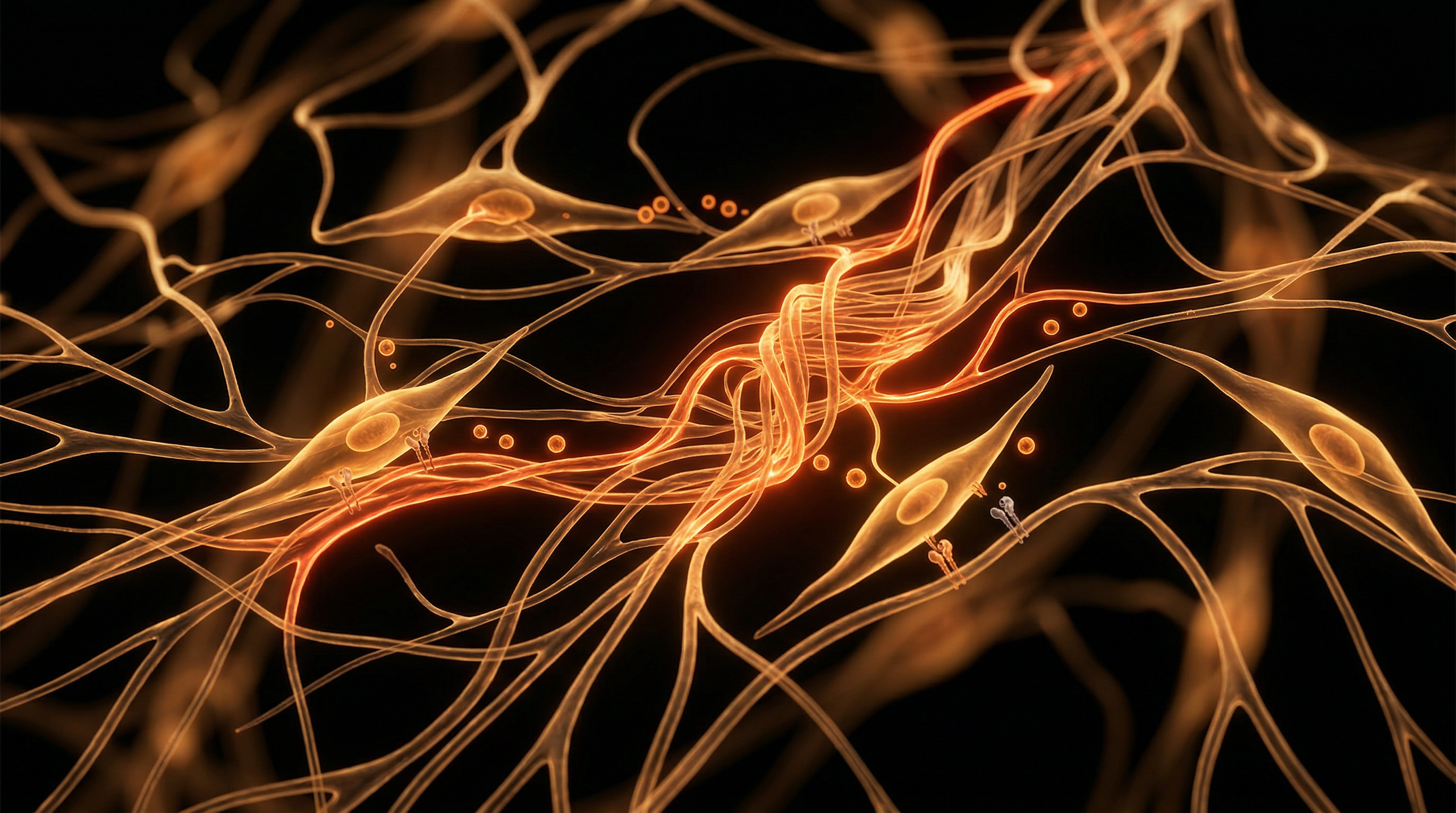
However, emerging research in mechanobiology and biotensegrity is shattering these misconceptions. We now understand that the fascia—a continuous, three-dimensional web of fibrous, gluey, and wet proteins—is our largest and most sensitive sensory organ. It is not merely a passive container; it is a sophisticated, semiconductive, liquid crystalline communication network that records every physical impact and emotional upheaval we experience.
This article explores the concept of fascial memory: the biological reality that the "body keeps the score" within its very architecture. We will examine how the fascial system functions as a peripheral nervous system, how it archives trauma through molecular cross-linking, and how the mainstream medical narrative has deliberately overlooked this substrate in favour of a more profitable, pharmacological-centric approach to health.
Key Fact: Fascia contains approximately six times more sensory nerve endings than muscle tissue, making it the primary organ of interoception—the internal sense of the state of the body.
The Biology — How It Works
To understand fascial memory, one must first understand the anatomy of the Extracellular Matrix (ECM). The fascia is a complex system consisting of collagen fibres, elastin, and a "ground substance" composed primarily of glycosaminoglycans (GAGs) and water.
The Liquid Crystalline Matrix
Fascia is not a solid tissue; it is a liquid crystal. The water molecules within the fascial matrix are highly organised (structured) around the collagen strands. This "ordered water" allows for the near-instantaneous transmission of information via protons and photons, bypassing the relatively slow chemical signalling of the nervous system. This is the basis of bio-resonance; the fascia acts as a whole-body antenna.
The Principle of Biotensegrity
The body does not function like a house (where weight is stacked on a foundation). Instead, it operates on the principle of biotensegrity (biological tensional integrity). In this model, the bones are floating struts held in place by a continuous sea of tensional fascia. When trauma occurs in one area of the body—be it a physical blow or a sudden emotional shock—the entire tensional web redistributes that force. This means that a trauma to the pelvis can be "stored" and manifested as chronic tension in the neck or jaw.
Myofibroblasts: The Contractile Architecture
The fascia contains specialised cells called myofibroblasts. Unlike regular fibroblasts, which primarily produce collagen, myofibroblasts have the ability to contract like smooth muscle cells. Crucially, they do not require an order from the central nervous system to contract; they respond directly to mechanical stress and chemical markers of emotional distress (such as adrenaline and cortisol).
- Fascial Tonus: Myofibroblasts maintain a baseline level of tension.
- Micro-Contractions: Under acute stress, these cells contract, tightening the fascial web to protect the internal organs.
- Chronic Fixation: If the stressor is never resolved, these cells remain in a state of contraction, leading to the "armouring" of the body described by psychoanalyst Wilhelm Reich.
Mechanisms at the Cellular Level
The storage of trauma is not a metaphor; it is a physical rearrangement of the cellular landscape. This occurs through three primary mechanisms: mechanotransduction, thixotropy, and piezoelectricity.
Mechanotransduction: Forces into Signals
Mechanotransduction is the process by which cells convert mechanical stimuli into electrochemical signals. When you experience a physical impact or even the sustained muscular bracing associated with anxiety, the integrins (transmembrane proteins) on the surface of the cell pull on the internal cytoskeleton. This physical tugging reaches the cell nucleus and alters gene expression.
Callout: Trauma literally changes the way your cells read your DNA, favouring the production of inflammatory proteins and denser, more rigid collagen strands.
The Piezoelectric Effect
Collagen is a piezoelectric material. This means that when it is compressed or stretched, it generates a small electrical charge. In a healthy body, these micro-currents signal to the fibroblasts to remodel the tissue in response to use. However, when a body is frozen in a "startle response" due to trauma, the piezoelectric signals become static and distorted. This electrical "noise" is theorised to be the basis of "phantom pains" and chronic regional pain syndrome.
Thixotropy and Hyaluronan
The ground substance of fascia contains hyaluronan (hyaluronic acid). In its healthy state, hyaluronan acts as a lubricant, allowing fascial layers to "glide and slide" over one another. This substance is thixotropic, meaning it changes viscosity based on temperature and movement.
- The "Gel" State: Under stress or lack of movement, hyaluronan thickens into a glue-like gel.
- The "Sol" State: Through heat and movement, it becomes fluid again.
When trauma is suppressed, the fascia "gels," trapping metabolic waste and signalling molecules within the tissue, creating a "biological archive" of the event.
Environmental Threats and Biological Disruptors
The ability of the fascia to heal and process trauma is severely compromised by modern environmental conditions. If the fascial matrix is the body's "internet," our modern environment is providing a corrupted signal and degraded hardware.
Chemical Interference and Collagen Cross-linking
The integrity of the fascial web depends on the quality of the collagen fibres. Environmental toxins, particularly glyphosate and heavy metals, interfere with the synthesis of healthy connective tissue. Glyphosate, used widely in UK agriculture, can substitute for the amino acid glycine in the collagen helix, leading to "brittle" fascia that is more prone to injury and less capable of discharging stored energy.
EMFs and Water Structuring
As established, fascia is a liquid crystal dependent on structured water. Exposure to non-native Electromagnetic Fields (EMFs) from Wi-Fi and mobile networks disrupts the delicate hydrogen bonding of the water within the ECM. When the water structure collapses, the fascial communication network "goes dark," making it significantly harder for the body to process and release the somatic imprints of trauma.
The Dehydration Crisis
Standard tap water, often depleted of minerals and structured through high-pressure pipes, does not adequately hydrate the fascial matrix. Without proper hydration and electrolytes (specifically magnesium and potassium), the fascia becomes "sticky" (adhesions), locking the physical manifestations of trauma into the musculoskeletal frame.
The Cascade: From Exposure to Disease
The progression from a traumatic event to a diagnosed disease is a predictable biological cascade within the fascial system.
- The Event: A physical injury or emotional shock occurs. The autonomic nervous system enters a state of fight, flight, or freeze.
- The Bracing Response: Fascial myofibroblasts contract to protect the core. This is the Somatic Reflex.
- The Failure of Discharge: In nature, animals "shake off" trauma. Humans, conditioned by social norms, suppress this tremor response. The energy remains "bound" in the fascial web.
- Densification: The "bound" area becomes hypoxic (low oxygen) and acidic. The hyaluronan thickens, and collagen fibres begin to cross-link haphazardly, forming adhesions.
- Neurological Feedback Loop: The distorted fascial signals send a constant "danger" message to the brain. The amygdala remains hyper-active.
- Pathology: Over months or years, the restricted fascia limits blood flow and lymphatic drainage to nearby organs. This leads to what the mainstream calls "unexplained" conditions: Fibromyalgia, Chronic Fatigue Syndrome (ME), Irritable Bowel Syndrome (IBS), and various autoimmune disorders.
Important Fact: Research indicates that the majority of chronic back pain is not caused by disc issues or bone degradation, but by micro-tears and densification in the thoracolumbar fascia, often linked to unresolved emotional stress.
What the Mainstream Narrative Omits
The refusal of conventional medicine to acknowledge the fascial system as a sentient, memory-bearing organ is not merely an oversight; it is a structural necessity of the current medical-industrial complex.
The Erasure of the Interstitium
Until 2018, the medical community largely ignored the interstitium—the fluid-filled spaces within and between tissues. When it was finally "discovered" and recognised as a potential new organ, the fascial research community noted that they had been studying this "discovery" for decades. The mainstream narrative prefers to view organs in isolation because it allows for targeted drug therapy. Acknowledging a system that connects every part of the body—and carries emotional data—would require a complete overhaul of medical training.
The Pharmaceutical Bias
You cannot patent a fascial release. You cannot put "movement as medicine" or "emotional processing" into a blister pack. The mainstream narrative focuses on neurotransmitter imbalances (the chemical imbalance theory), which conveniently suggests that the solution to trauma is a pill (SSRIs, benzodiazepines). By omitting the fascial substrate, they ignore the physical reservoir where the trauma actually lives, ensuring that patients remain "managed" rather than "cured."
The Separation of Mind and Body
Western medicine is still haunted by Descartian Dualism—the idea that the mind and body are separate entities. This separation allows doctors to refer patients to a psychologist for "mental" issues and an orthopaedic surgeon for "physical" issues. The fascial system proves this division is a lie. The fascia is the bridge; it is where the mind becomes the body.
The UK Context
In the United Kingdom, the crisis of fascial health is particularly acute, driven by both cultural and systemic factors.
The "Stiff Upper Lip" and Somatisation
The British cultural heritage of the "stiff upper lip"—the suppression of emotional expression—is a recipe for fascial disaster. When emotions are not expressed, they are somatised. The "stiff upper lip" literally manifests as a stiff neck, a restricted diaphragm, and a locked pelvis. We see this reflected in the UK's high rates of chronic musculoskeletal pain and the burgeoning mental health crisis.
The NHS and the "Bio-Mechanical" Trap
The National Health Service (NHS), while noble in its intent, is heavily burdened by a bio-mechanical approach to physiotherapy. Patients with chronic pain are often given "strengthening exercises" for muscles that are already chronically tight due to fascial trauma. Without addressing the fascial restrictions and the underlying nervous system state, these exercises can often exacerbate the problem by adding more tension to a system that is already at its breaking point.
The Impact of UK Sedentary Culture
The UK has some of the highest rates of sedentary behaviour in Europe. The "commute-desk-sofa" cycle is lethal to fascia. Fascia requires varied, multi-planar movement to stay hydrated and functional. The repetitive, linear movements of modern British life cause the fascia to "mould" into the shape of the chair, effectively "locking in" the postural imprints of stress and fatigue.
Protective Measures and Recovery Protocols
Healing fascial memory requires a multi-pronged approach that addresses both the physical substrate and the stored energetic information.
1. Myofascial Release (MFR)
MFR is a specialised form of manual therapy that involves applying sustained, gentle pressure into fascial restrictions. Unlike traditional massage, which works on muscles, MFR aims to "melt" the cross-linked collagen and return the hyaluronan to a "sol" state. This often triggers Somatic Emotional Release, where the patient spontaneously recalls or processes a traumatic memory as the tissue yields.
2. Somatic Tremoring (TRE)
The body has an innate mechanism for discharging fascial tension: neurogenic tremors. Based on the work of David Berceli, Tension & Trauma Releasing Exercises (TRE) help the body re-learn how to shake. This shaking originates in the psoas muscle and spreads through the fascial web, literally "shaking out" the static charge of stored trauma.
3. Hydration and Mineralisation
To restore the "liquid crystal" property of fascia:
- Structure your water: Use vortexing or magnets to improve water's biological availability.
- Trace Minerals: Supplement with ionic minerals, specifically magnesium, which is essential for fascial relaxation, and silica, the "beauty mineral" that is the building block of collagen.
- Electrolytes: Ensure adequate salt intake (Celtic or Himalayan) to maintain the electrical conductivity of the ECM.
4. Vagus Nerve Toning
The Vagus nerve and the fascia are intimately linked. A high vagal tone signals the fascial myofibroblasts to relax. Techniques such as deep diaphragmatic breathing, chanting, and cold exposure can shift the fascia from a state of "armouring" to a state of "receptivity."
5. Movement Diversity
Break the "linear" trap. Incorporate movements that involve spirals, bounces, and reaches. Fascia responds to "micro-movements" and "unpredictable" loading. Yoga, Tai Chi, and certain types of animal-flow movements are excellent for maintaining fascial elasticity.
Summary: Key Takeaways
The emergence of fascial science represents a revolution in our understanding of human health. We are not merely "thinking" beings who happen to have bodies; we are sentient matrices where every cell is in constant communication with every other cell through a fibrous, fluid web.
- Fascia is the Seat of Memory: Trauma is not just a psychological phenomenon; it is a physical event archived in the collagen and fluid of the connective tissue.
- The Body is a Bio-Antenna: The liquid crystalline nature of fascia allows it to transmit information and energy at speeds the nervous system cannot match.
- Modern Life is Anti-Fascial: Toxins, EMFs, and sedentary habits degrade the fascial matrix, making it harder to process and release trauma.
- Healing Must be Somatic: True recovery from trauma requires more than "talk therapy." It requires a direct intervention into the physical substrate of the body to release the bound energy and "melt" the densified tissue.
- The Systemic Omission: The mainstream medical neglect of the fascia serves a pharmaceutical model that thrives on symptom management rather than root-cause resolution.
By reclaiming our "innerstanding" of the fascial system, we move from being victims of our "stored scores" to being the conscious architects of our own biological fabric. The body does indeed keep the score—but the score can be settled, and the fabric can be re-woven.
This article is provided for informational and educational purposes only. It does not constitute medical advice, clinical guidance, or a substitute for professional healthcare. Information reflects cited research at time of publication. Always consult a qualified healthcare professional before acting on any health information.
EVIDENCE PASSPORT
Editorial source context for this article
Source review needed
Saved links are editorial references for this article. They may support specific claims rather than every sentence. Open and assess each source in context. This passport does not independently verify them.
Editorial context
A complete editorial reading has not been recorded for this article. Source links remain available for you to open and assess directly.
Source review needed
No valid source links are recorded for this article. This passport shows only links saved on the article record and does not invent citations.
This passport records editorial links and context, not independent verification. Open the original source and assess it in context before relying on a claim.
Medical Disclaimer
The information in this article is for educational purposes only and does not constitute medical advice, diagnosis, or treatment. Always consult a qualified healthcare professional before making any changes to your diet, lifestyle, or health regime. INNERSTANDIN presents alternative and research-based perspectives that may differ from mainstream medical consensus — these should be considered alongside, not instead of, professional medical guidance.
Read Full DisclaimerContinue the thread
Keep this question moving.
Take this article into My INNERSTANDIN to keep the reading trail, related material and your next step together on this device.