
Foxn1 Expression: The Genetic Master Key to Thymic Longevity
Updated May 2026
The transcription factor Foxn1 is the primary regulator of thymic epithelial cell development. This article explores genetic interventions that could maintain Foxn1 levels to prevent age-related atrophy.
Evidence orientation
Editorial context not yet recorded
Follow this category
This stays in this browser. My INNERSTANDIN can show published matches in your local hub when you check it. It does not send email, push, or alert notifications.
Local learning review
A private browser aid for revisiting ideas. It is not an alert or a health recommendation.
Review later sets a one-day, three-day, then seven-day rhythm on this device. Choose it only when you want to revisit this article.
Overview
The human immune system is often conceptualised as an eternal army, patrolling the borders of our physiology. However, the reality is far more fragile. Hidden behind the breastbone lies the thymus gland, a primary lymphoid organ that serves as the "schoolhouse" for T-lymphocytes. While we are born with a robust thymic capacity, this vital organ begins a process of progressive atrophy—known as thymic involution—almost immediately following puberty. By the time an individual reaches the age of fifty, the majority of the functional thymic tissue has been replaced by adipose (fatty) tissue, leaving the body with a severely diminished capacity to produce new, "naïve" T-cells.
For decades, the mainstream medical establishment has treated thymic involution as an unavoidable biological certainty—a natural consequence of ageing. However, emerging research in molecular biology and epigenetics has identified a singular genetic governor that dictates the life and death of this organ: the Forkhead Box N1 (Foxn1) transcription factor.
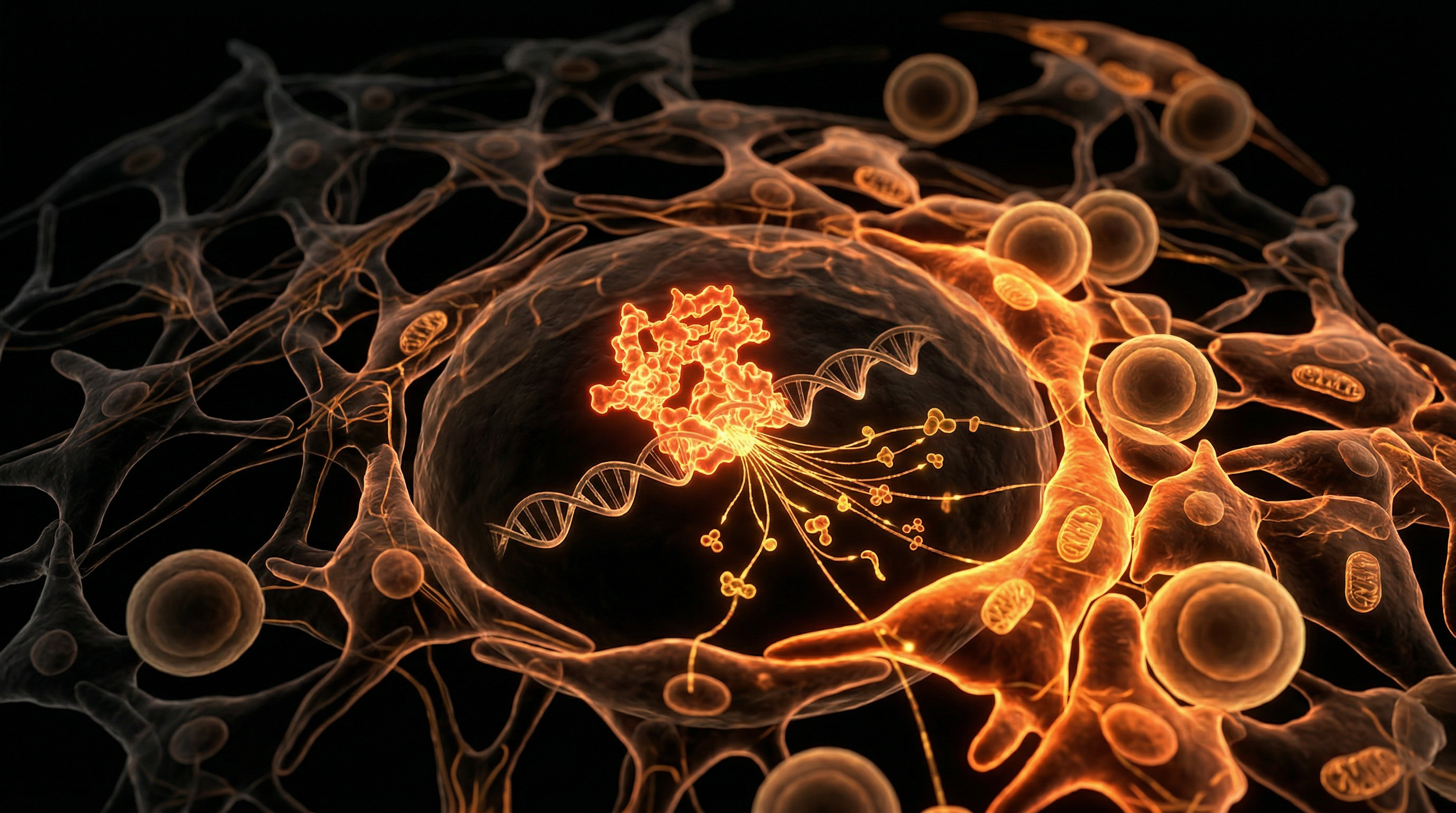
Foxn1 is not merely a marker of thymic health; it is the master regulator. It governs the differentiation, maintenance, and functional identity of Thymic Epithelial Cells (TECs). These cells provide the structural and chemical framework required for T-cell maturation. When Foxn1 expression drops, the thymus collapses. When it is sustained, the thymus remains youthful. This article explores the staggering implications of Foxn1 as the "Genetic Master Key" to thymic longevity and exposes the biological disruptors that are accelerating our immunological decline.
Callout Fact: In murine models, the targeted up-regulation of Foxn1 in aged subjects has been shown to completely reverse thymic atrophy, restoring the organ’s structural integrity and increasing the output of naïve T-cells to levels seen in young animals.
The Biology — How It Works
To understand why Foxn1 is the "Master Key," one must first understand the architecture of the thymus. Unlike other organs, the thymus is a composite of haematopoietic cells (progenitor T-cells) and a complex stromal environment. The most critical component of this stroma is the Thymic Epithelium.
The Third Pharyngeal Pouch
The story of Foxn1 begins in the embryo. During development, the thymus originates from the endoderm of the third pharyngeal pouch. Foxn1 is the essential signal that triggers these undifferentiated endodermal cells to become functional Thymic Epithelial Cells (TECs). Without Foxn1, the thymus simply does not form—a condition known in humans as Pailister-Killian syndrome or in mice as the "Nude" phenotype (characterised by a lack of hair and a total absence of a thymus).
cTECs and mTECs: The Education System
Foxn1 regulates two distinct lineages of epithelial cells:
- Cortical Thymic Epithelial Cells (cTECs): These cells reside in the outer layer (cortex) and are responsible for "positive selection," ensuring that T-cells can recognise the body’s Major Histocompatibility Complex (MHC) molecules.
- Medullary Thymic Epithelial Cells (mTECs): These cells reside in the inner core (medulla) and are responsible for "negative selection," deleting self-reactive T-cells that would otherwise cause autoimmune diseases.
The Transcriptional Command
Foxn1 works by binding to specific DNA sequences to activate a suite of genes essential for T-cell development. Key among these are Dll4 (a Notch ligand), CCL25, and CXCL12 (chemokines that recruit T-cell progenitors from the bone marrow). When Foxn1 expression is high, these signals are robust. As we age, a combination of epigenetic silencing and hormonal shifts leads to a decline in Foxn1 transcription. This drop-off is the "prime mover" of immune senescence.
Mechanisms at the Cellular Level
At the molecular level, Foxn1 acts as a primary driver of proteostasis and cellular identity within the thymic niche. The decline of Foxn1 does not happen in a vacuum; it is the result of a complex interplay between genetic signalling and environmental feedback loops.
The Wnt/β-catenin Pathway
The expression of Foxn1 is heavily dependent on the Wnt signalling pathway. Specifically, Wnt4 is produced by TECs to act in an autocrine fashion, stimulating the production of Foxn1. As we age, the expression of Wnt4 declines, or the presence of Wnt-antagonists (such as Dickkopf-1) increases. This reduction in "pro-thymic" signalling directly results in the down-regulation of Foxn1.
Epithelial-to-Mesenchymal Transition (EMT)
One of the most devastating mechanisms of thymic decline is the process where TECs lose their "epithelial" identity and transform into fibroblasts or adipocyte-like cells. This is known as Epithelial-to-Mesenchymal Transition. Foxn1 serves as a guardian against this transition. High levels of Foxn1 keep the cell locked in its functional epithelial state. When Foxn1 levels fall below a critical threshold, the TECs lose their shape, stop producing T-cell-stimulating cytokines, and eventually die or turn into fat.
The Role of MHC Expression
Foxn1 is directly responsible for the expression of MHC class II molecules on the surface of TECs. These molecules are the "mirrors" that T-cells use to learn what is "self" and what is "non-self." When Foxn1 expression diminishes, the density of MHC II on the epithelial surface drops. This results in:
- T-cell Neglect: Progenitor cells do not receive the signals to survive.
- Autoimmune Escape: Self-reactive T-cells are not properly screened, leading to a rise in chronic inflammatory conditions in the elderly.
Environmental Threats and Biological Disruptors
While the mainstream narrative suggests thymic atrophy is a programmed "feature" of human evolution, a deeper investigation suggests it is being unnaturally accelerated by modern environmental factors. Our immunological capital is being liquidated by external pressures that suppress Foxn1 expression.
Endocrine Disrupting Chemicals (EDCs)
The thymus is highly sensitive to hormonal fluctuations. Chemicals such as Bisphenol A (BPA), phthalates, and PFAS (the "forever chemicals") have been shown to interfere with the endocrine signalling required for thymic maintenance. These substances can mimic oestrogen or disrupt androgen receptors, both of which are known to modulate thymic size. Excessively high levels of sex steroids—often exacerbated by environmental xenoestrogens—are known to suppress Foxn1.
The Cortisol Hammer
Chronic stress is a "thymic killer." The thymus is rich in glucocorticoid receptors. Elevated levels of cortisol (the primary stress hormone) induce rapid apoptosis (cell death) in developing thymocytes and down-regulate the transcriptional activity of Foxn1 in the epithelial stroma. In a society defined by chronic sympathetic nervous system activation, the thymus is kept in a state of perpetual suppression.
Nutritional Deficiencies
The modern Western diet is woefully deficient in the co-factors required for Foxn1-driven gene expression. Zinc is perhaps the most critical. Zinc is a mandatory co-factor for thymulin, a hormone secreted by the thymus that is regulated by Foxn1. Without adequate zinc, Foxn1 cannot effectively drive the differentiation of T-cells. Similarly, Vitamin D3 acts as a pro-hormone that supports the thymic microenvironment; its widespread deficiency in northern latitudes (like the UK) is a primary driver of accelerated immune ageing.
The Cascade: From Exposure to Disease
When Foxn1 expression falters, the resulting "cascade of failure" ripples through every system in the body. The loss of thymic function is not just an "immune problem"; it is a systemic catastrophe.
The Rise of "Inflammaging"
As the thymus shrinks, the body’s pool of naïve T-cells (those capable of responding to new threats) evaporates. To compensate, the body relies on the clonal expansion of "memory" T-cells. These aged cells are prone to producing pro-inflammatory cytokines like IL-6 and TNF-alpha. This state of chronic, low-grade systemic inflammation is termed "inflammaging." It is the soil in which cancer, cardiovascular disease, and neurodegeneration grow.
Reduced Vaccine Efficacy and Pathogen Resistance
The inability to produce new T-cells means the body cannot mount an effective response to novel pathogens (as seen in the disproportionate impact of viral outbreaks on the elderly). This is also why vaccine efficacy drops sharply with age; there are simply no "fresh" T-cells to train.
The Autoimmune Paradox
Paradoxically, as the immune system gets "weaker," it also becomes more prone to attacking the body itself. The loss of Foxn1-regulated mTECs means that the "negative selection" process fails. Self-reactive T-cells exit the thymus and enter circulation. This explains the skyrocketing rates of Rheumatoid Arthritis, Lupus, and Hashimoto’s Thyroiditis in aging populations.
Important Statistic: By the age of 70, the output of naïve T-cells from the thymus is estimated to be less than 1% of the output during childhood.
What the Mainstream Narrative Omits
The scientific community has known about the potential for thymic rejuvenation for over two decades. Why, then, is this not a pillar of modern preventative medicine? The answer lies in the systemic biases of the "Sick Care" model.
The Profitability of Symptom Management
Regenerating the thymus via Foxn1 modulation represents a "Cure-All" for a multitude of age-related diseases. From an economic perspective, a one-time genetic or molecular intervention that restores immune function is far less profitable than a lifetime of biologics for autoimmune disease, chemotherapy for cancer, or statins for heart disease. The pharmaceutical industry is incentivised to treat the consequences of thymic atrophy, not the cause.
The "Inevitable Ageing" Dogma
There is a profound philosophical resistance to the idea that ageing can be "cured." By categorising thymic involution as "natural," regulatory bodies avoid the necessity of funding large-scale human trials for thymic regrowth. This dogma persists despite the fact that other species (such as certain sharks and turtles) maintain functional thymic tissue throughout their entire lifespans.
The Suppressed Potential of mRNA and Gene Therapy
While mRNA technology has been fast-tracked for vaccines, its potential for Foxn1 up-regulation has remained in the shadows. We possess the technology to deliver Foxn1 transcripts directly to the thymic stroma, potentially "rebooting" the organ. However, research in this area is chronically underfunded, often relegated to small-scale academic studies rather than the "Operation Warp Speed" style development it deserves.
The UK Context
The United Kingdom faces a unique set of challenges regarding thymic health and immune ageing. As a nation with a rapidly ageing population and a healthcare system (the NHS) under extreme strain, the "Foxn1 problem" is a matter of national security.
The "Vitamin D Winter"
Due to the UK’s latitude, British citizens are unable to synthesise Vitamin D for at least six months of the year. As previously mentioned, Vitamin D is essential for maintaining the thymic niche. The high prevalence of respiratory infections and autoimmune clusters in the UK can be partially traced back to this "environmental immunosuppression" that accelerates thymic decline.
British Research Leadership
On a positive note, the UK is home to world-leading research on thymic biology. Institutions like the University of Edinburgh and the Francis Crick Institute have conducted groundbreaking work on TEC regeneration. In 2014, researchers in Edinburgh became the first to successfully regenerate a living organ (the thymus) in a living animal by manipulating the Foxn1 pathway.
The NHS Burden
The cost of treating age-related immune failure in the UK is astronomical. If the UK government were to pivot from "reactive" to "regenerative" medicine—specifically targeting thymic rejuvenation—the long-term savings for the NHS would be in the billions. Yet, current protocols remain focused on late-stage interventions.
Protective Measures and Recovery Protocols
While large-scale Foxn1 gene therapy is not yet available at the local GP surgery, there are significant steps individuals can take to preserve their current thymic function and potentially stimulate Foxn1 expression.
1. Zinc and Selenium Supplementation
Zinc is the "master mineral" for the thymus. Specifically, Zinc Picolinate or Zinc Gluconate has been shown to increase thymic hormone output. Selenium works synergistically with zinc to protect the thymic stroma from oxidative damage.
- Protocol: 25-50mg of Zinc daily, balanced with 2mg of Copper.
2. Vitamin D3 and K2
To maintain the Wnt-signalling pathways that support Foxn1, Vitamin D levels must be kept in the optimal range (100-150 nmol/L). Vitamin K2 is necessary to ensure that calcium is utilised correctly and does not contribute to the "calcification" of the thymic arteries.
- Protocol: 5,000-10,000 IU of D3 daily, depending on blood tests.
3. Therapeutic Fasting and Caloric Restriction
Autophagy—the body’s cellular recycling system—is triggered by fasting. Studies have shown that prolonged fasting (48-72 hours) can "flip" a regenerative switch in the haematopoietic stem cells and clear out "senescent" (zombie) cells within the thymus, creating space for Foxn1 to drive the birth of new TECs.
4. Avoiding "Thymic Toxins"
Reducing exposure to EDCs is paramount.
- Filter drinking water to remove PFAS and fluoride (the latter of which can accumulate in the thymus/pineal axis).
- Eliminate plastic food containers to reduce BPA/Phthalate intake.
- Manage cortisol through breathwork and cold-water immersion, which has been shown to acutely stimulate immune modulation.
5. Emerging Peptides
Peptides like Thymalin and Thymosin Alpha-1 are short chains of amino acids that mimic the signals usually produced by a Foxn1-rich thymus. While often relegated to the "biohacking" fringe, these compounds have a long history of use in Eastern Europe for restoring immune function in the elderly.
Summary: Key Takeaways
The science is clear: the thymus is not a disposable organ, and its atrophy is not an inescapable fate. The transcription factor Foxn1 stands as the ultimate arbiter of our immunological age.
- Foxn1 is the Master Regulator: It controls the differentiation and maintenance of the epithelial cells that "train" our T-cells.
- Involution is Driven by Loss of Foxn1: The shrinking of the thymus is primarily a result of Foxn1 down-regulation, often triggered by environmental toxins, stress, and nutritional voids.
- The Systemic Impact: A failing thymus leads to "inflammaging," increased cancer risk, and the "Autoimmune Paradox."
- The Solution is Genetic and Molecular: While lifestyle changes help, the future of longevity lies in the targeted up-regulation of Foxn1 through gene therapy or mRNA technology.
- A Shift in Paradigm is Required: We must move away from the "inevitable decline" narrative and demand a focus on thymic regeneration as the foundation of public health.
The restoration of Foxn1 expression is more than a scientific curiosity; it is the "Master Key" to unlocking a future where we do not simply live longer, but live with the immunological vigour of our youth. The "Silent Gland" behind the breastbone has been ignored for too long. It is time we listened to its genetic command.
"References & Further Reading:"
- Blackburn, C.C., et al. (1996). "The Foxn1 gene controls the differentiation of thymic epithelial cells."
- Bredenkamp, N., et al. (2014). "Regeneration of the aged thymus by a single log-change in Foxn1 levels." (University of Edinburgh).
- Chaudhry, M.S., et al. (2016). "Thymic Regeneration and Immune Reconstitution."
- The Lancet Healthy Longevity (2021). "The Role of the Thymus in COVID-19 Outcomes."
This article is provided for informational and educational purposes only. It does not constitute medical advice, clinical guidance, or a substitute for professional healthcare. Information reflects cited research at time of publication. Always consult a qualified healthcare professional before acting on any health information.
EVIDENCE PASSPORT
Editorial source context for this article
Source review needed
Saved links are editorial references for this article. They may support specific claims rather than every sentence. Open and assess each source in context. This passport does not independently verify them.
Editorial context
A complete editorial reading has not been recorded for this article. Source links remain available for you to open and assess directly.
Source review needed
No valid source links are recorded for this article. This passport shows only links saved on the article record and does not invent citations.
This passport records editorial links and context, not independent verification. Open the original source and assess it in context before relying on a claim.
Medical Disclaimer
The information in this article is for educational purposes only and does not constitute medical advice, diagnosis, or treatment. Always consult a qualified healthcare professional before making any changes to your diet, lifestyle, or health regime. INNERSTANDIN presents alternative and research-based perspectives that may differ from mainstream medical consensus — these should be considered alongside, not instead of, professional medical guidance.
Read Full DisclaimerContinue the thread
Keep this question moving.
Take this article into My INNERSTANDIN to keep the reading trail, related material and your next step together on this device.
Explore this in the Body Map
See where this hits your biology. Interactive anatomy, threats, and protective protocols.
Dig deeper in the Library
Free, longform PDF volumes that go beyond headlines into mechanisms and references.