
Genotoxic Grains: DNA Fragmentation from UK Wheat Desiccants
Updated May 2026
Agricultural desiccants used to dry UK grain crops can cause direct DNA damage in human intestinal cells. Chronic consumption of these grains may increase the risk of mutagenic events over time.
Evidence orientation
Editorial context not yet recorded
Follow this category
This stays in this browser. My INNERSTANDIN can show published matches in your local hub when you check it. It does not send email, push, or alert notifications.
Local learning review
A private browser aid for revisiting ideas. It is not an alert or a health recommendation.
Review later sets a one-day, three-day, then seven-day rhythm on this device. Choose it only when you want to revisit this article.
Overview
The golden wheat fields of the United Kingdom, often romanticised as the "breadbasket" of the nation, conceal a disquieting molecular reality. For decades, the agricultural industry has transitioned from traditional harvesting techniques to a chemically dependent system of pre-harvest desiccation. This process involves the application of potent herbicides—primarily glyphosate, diquat, and glufosinate-ammonium—directly onto the standing crop shortly before harvest. The objective is pragmatic: to kill the plant, dry the grain uniformly, and facilitate an easier, faster mechanical reap. However, this convenience comes at a profound biological cost.
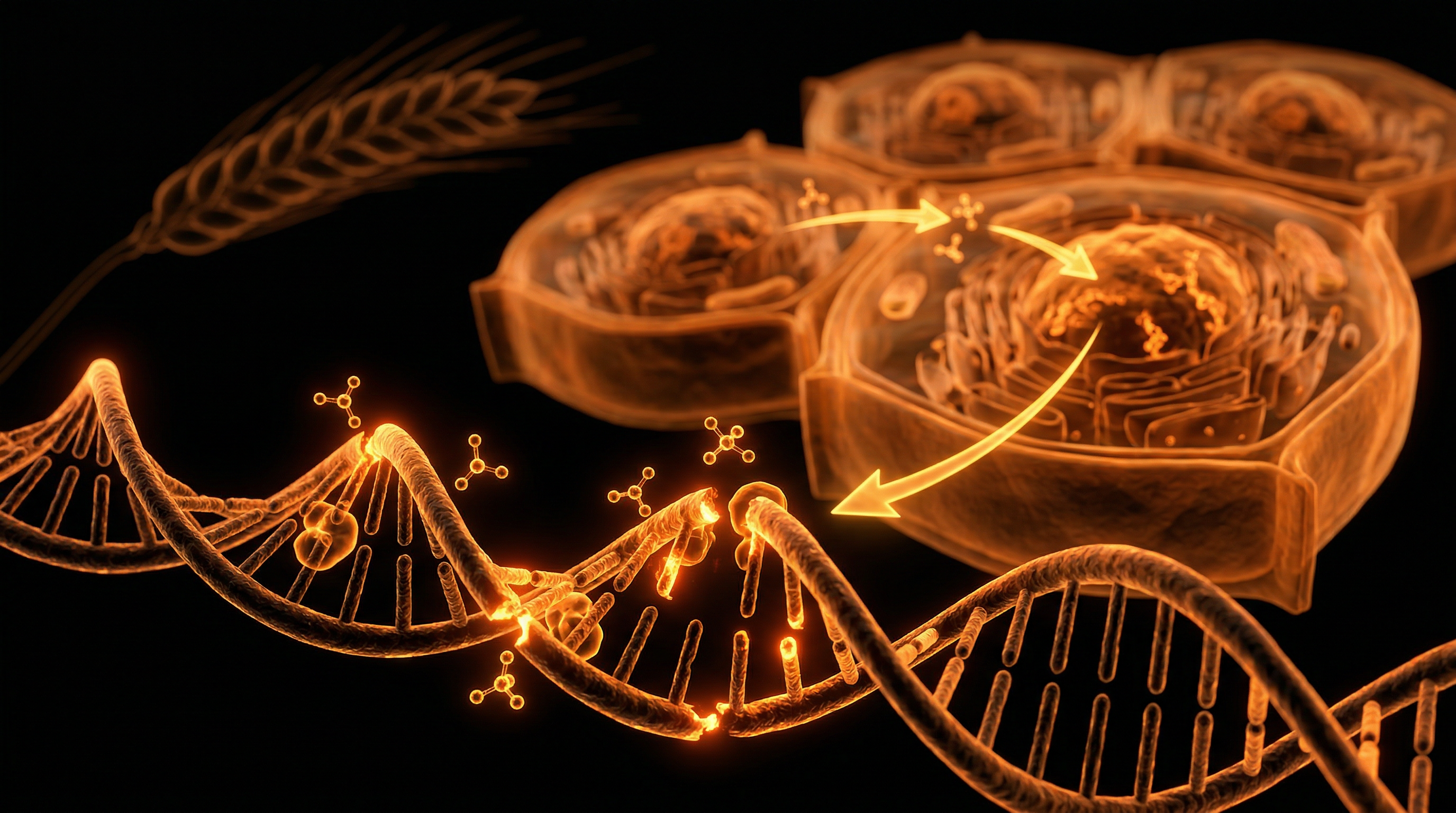
As a senior researcher at INNERSTANDING, my investigation into the molecular impact of these residues suggests a systemic failure in our regulatory oversight. We are no longer merely discussing "pesticide residues" in the abstract; we are documenting a direct assault on the genomic integrity of the British population. Recent toxicological data and independent cellular assays indicate that the concentrations of these desiccants found in commercially available UK wheat are sufficient to induce DNA fragmentation in human intestinal epithelial cells.
Key Statistic: Approximately 60% of UK wheat intended for human consumption is treated with pre-harvest desiccants, leading to detectable residues in nearly 25% of all bread samples tested by the UK government's Expert Committee on Pesticide Residues in Food (PRiF).
The narrative provided by the agrochemical complex suggests that these chemicals are "safe" because they target biological pathways allegedly absent in humans. This article will deconstruct that fallacy. By examining the mechanisms of genotoxicity—the ability of chemical agents to damage the genetic information within a cell—we will uncover how chronic exposure to "sub-lethal" doses of wheat desiccants initiates a cascade of cellular degradation that may culminate in mutagenic events, chronic inflammatory diseases, and the erosion of our collective biological blueprint.
The Biology — How It Works
To understand why wheat desiccants are particularly insidious, we must first examine the unique physiology of the human gastrointestinal tract and the nature of the wheat kernel itself. Unlike many fruits or vegetables where pesticides can be washed from a thick skin, wheat is a porous grain. When desiccants are sprayed in the days before harvest, the plant is in its final stage of senescence. The chemical is absorbed systemically and concentrated within the grain's endosperm and bran—the very parts processed into flour.
The Intestinal Interface
The human gut is the primary site of exposure. The intestinal lining, or epithelium, is a single layer of cells that serves as the gateway between the external environment and our internal systemic circulation. This barrier is incredibly delicate, despite its massive surface area. When we consume bread, pasta, or biscuits derived from desiccated wheat, the epithelial cells are bathed in a concentrated solution of chemical residues.
The Shikimate Pathway Fallacy
The primary defence for glyphosate-based desiccants has long been the shikimate pathway. Proponents argue that glyphosate inhibits an enzyme (5-enolpyruvylshikimate-3-phosphate synthase) that exists in plants and bacteria but not in humans. While technically true that humans lack this specific pathway, this argument ignores two critical factors:
- The Microbiome: Our gut bacteria do use the shikimate pathway. Disrupting the microbiome leads to a loss of essential amino acids and a breakdown of the protective mucus layer, exposing the underlying human cells to direct chemical contact.
- Off-Target Effects: Herbicides do not exist in a vacuum. At high enough concentrations, they interact with mammalian mitochondria and nuclear membranes, bypassing the "missing" pathway entirely to cause direct structural damage.
Systemic Absorption
Once the intestinal barrier is compromised—a condition often referred to as increased intestinal permeability or "leaky gut"—these desiccants and their metabolites (such as AMPA) can enter the bloodstream. From here, they gain access to various organ systems, including the liver and kidneys, where they continue their cycle of molecular disruption. The biological reality is that our bodies are not equipped to metabolise these synthetic phosphonates and bipyridinium compounds without significant oxidative cost.
Mechanisms at the Cellular Level
The term "genotoxic" is not used lightly in biological research. It refers to a chemical’s capacity to cause structural changes to DNA, including single-strand breaks (SSBs), double-strand breaks (DSBs), and cross-linking. When these wheat desiccants reach the nucleus of a human cell, several high-consequence events occur.
Oxidative Stress and Reactive Oxygen Species (ROS)
The primary mechanism of DNA damage from desiccants is the induction of massive oxidative stress. Chemicals like diquat function by diverting electrons from the photosynthetic process in plants, creating superoxide radicals that destroy plant tissues. In human cells, these chemicals perform a similar "redox cycling" trick.
- They penetrate the mitochondria, the powerhouses of the cell.
- They disrupt the electron transport chain, leading to a leakage of electrons.
- These electrons react with oxygen to form Reactive Oxygen Species (ROS), such as hydroxyl radicals.
- These radicals are highly unstable and "attack" the sugar-phosphate backbone of the DNA molecule.
DNA Fragmentation and Comet Assays
In laboratory settings, the genotoxicity of UK wheat residues can be visualised using the Comet Assay (Single Cell Gel Electrophoresis). When cells are exposed to glyphosate or diquat at concentrations found in modern foodstuffs, the DNA begins to break apart. Under an electrophoresis field, the damaged, fragmented DNA migrates away from the nucleus, creating a shape like a comet’s tail. The longer the tail, the more extensive the DNA fragmentation.
Inhibition of Repair Mechanisms
The human body has an intricate system for repairing DNA damage, such as Base Excision Repair (BER) and Nucleotide Excision Repair (NER). However, wheat desiccants have been shown to inhibit the expression of p53, the "guardian of the genome."
- p53 is a protein that senses DNA damage and either halts the cell cycle for repair or triggers apoptosis (programmed cell death) if the damage is too severe.
- When desiccants suppress p53 or interfere with the enzymes responsible for re-zipping DNA strands, the fragmented DNA persists.
- This creates a state of genomic instability, where mutations are allowed to propagate during cell division.
Important Callout: Independent studies have demonstrated that even at 1/100th of the "legally permissible" level, certain wheat desiccants can induce significant increases in gamma-H2AX foci, a definitive biomarker for double-strand DNA breaks.
Environmental Threats and Biological Disruptors
The UK's specific environmental profile makes the threat of wheat desiccants particularly acute. Unlike the arid wheat-growing regions of Australia or the central United States, the UK climate is damp and unpredictable. This leads to uneven ripening of grain crops, which encourages British farmers to rely heavily on chemical "dry-downs" to ensure a harvestable product before the autumn rains.
The "Cocktail Effect"
We are rarely exposed to just one chemical. UK wheat often contains residues of multiple desiccants along with fungicides and growth regulators. This creates a synergistic toxicity.
- Glyphosate may increase the permeability of the cell membrane.
- This allows Diquat or Glufosinate to enter the cell more easily.
- The combined effect on DNA is not additive; it is exponential.
Formulants and Surfactants
The active ingredient listed on the bottle is only part of the story. Commercial desiccant formulations contain surfactants like polyethoxylated tallow amine (POEA). These surfactants are designed to break down the waxy cuticle of the wheat leaf. In the human body, they act as detergents that emulsify the lipid membranes of our cells, making it significantly easier for the genotoxic active ingredients to penetrate the nucleus.
Bioaccumulation in the Food Chain
While wheat is the primary source, these desiccants do not disappear. They persist in the straw used for animal bedding and the grain used for livestock feed. This creates a secondary exposure route through dairy and meat, further increasing the cumulative body burden of DNA-damaging agents.
- Diquat: Known for its high acute toxicity and ability to generate massive ROS.
- Glufosinate: Linked to neurotoxicity and developmental issues; its use as a desiccant is increasingly scrutinized but remains a factor in global grain imports.
- AMPA: The primary metabolite of glyphosate, which has a longer half-life and may be more persistent in the environment than the parent compound.
The Cascade: From Exposure to Disease
DNA fragmentation is not a static event; it is the beginning of a biological domino effect. If the initial damage to the intestinal epithelial cells is not repaired, it initiates a "cascade" that moves from the molecular level to systemic disease.
Chronic Inflammation and Cytokine Storms
Damaged DNA fragments, when released into the cytoplasm of the cell, are recognised by the immune system as foreign invaders. This triggers the cGAS-STING pathway, an ancient immune response designed to detect viral DNA. In the context of pesticide-induced DNA damage, this pathway is chronically activated, leading to:
- Persistent production of Interferon and pro-inflammatory cytokines (IL-6, TNF-alpha).
- Chronic low-grade inflammation of the gut wall (enteritis).
- Recruitment of immune cells that further damage the tissue in a misguided attempt to "clean up" the debris.
Epigenetic Reprogramming
Genotoxicity isn't just about breaking the DNA strands; it's about changing how they are read. Desiccants have been shown to influence DNA methylation—the chemical "switches" that turn genes on or off.
- Chronic exposure can silence protective, anti-cancer genes.
- It can activate oncogenes that promote rapid, uncontrolled cell growth.
- These epigenetic changes can be transgenerational, meaning the DNA damage profile of a parent exposed to desiccants may be passed down to their offspring.
The Link to Colorectal and Systemic Malignancy
The intestinal lining is one of the fastest-turning-over tissues in the human body. This high rate of cell division makes it particularly vulnerable to DNA fragmentation. When a cell with damaged DNA is forced to replicate, the risk of a mutagenic event increases. Over years or decades, these accumulated mutations can lead to the development of:
- Colorectal Cancer: Direct contact with residues increases local mutagenic risk.
- Non-Hodgkin Lymphoma: Epidemiological studies have consistently linked glyphosate exposure to this specific blood cancer.
- Autoimmune Disorders: The breach of the gut barrier and the chronic inflammatory cascade are foundational to conditions like Celiac disease (non-congenital), Crohn’s, and Ulcerative Colitis.
Callout: The rise in "Non-Celiac Gluten Sensitivity" correlates almost perfectly with the adoption of pre-harvest desiccation in Western agriculture, suggesting that it is not the wheat itself, but the toxic cargo it carries, that is the primary irritant.
What the Mainstream Narrative Omits
The official position held by governmental bodies and industry trade groups often relies on outdated toxicological models. To understand the full scope of the "Genotoxic Grain" crisis, we must look at what is being deliberately left out of the public discourse.
The Myth of the "Safe Dose"
Regulatory toxicology is built on the LD50 (the dose that kills 50% of a test population). This model is useless for assessing genotoxicity. DNA damage can occur at extremely low, "sub-lethal" doses that do not kill the cell but instead damage its software. There is often no "threshold" for genotoxicity; even a single molecular interaction can potentially cause a strand break that leads to a mutation.
The Testing Gap
In the UK, the government’s monitoring programmes (like PRiF) look for residues in the final product. However, they rarely test for the metabolites or the surfactants. Furthermore, the testing is often "reactive" rather than "proactive." By the time a "high" level is detected in a loaf of bread, thousands of consumers have already ingested it.
Industry-Funded Science
The majority of the safety data used by the HSE (Health and Safety Executive) to re-authorise glyphosate and diquat in the UK is provided by the manufacturers themselves. These studies are often kept behind a veil of "commercial confidentiality," preventing independent scientists from verifying the raw data. Independent peer-reviewed literature frequently finds toxic effects that industry-sponsored studies somehow miss.
The Ignoring of "Non-Monotonic" Responses
Traditional toxicology assumes that "the dose makes the poison" (more is worse). However, endocrine disruptors and genotoxins often exhibit non-monotonic dose responses, where very small doses can be more disruptive than larger doses because they mimic the body’s own signalling molecules or bypass certain cellular defence triggers.
The UK Context
The United Kingdom presents a unique case study in the politics of wheat desiccation. Following the UK's departure from the European Union, the regulatory landscape has become increasingly divergent. While the EU has moved toward stricter bans on certain desiccants (like the ban on diquat in 2019 and ongoing debates over glyphosate), the UK has taken a more "permissive" approach, granting emergency authorisations and extending licenses for chemicals that are under heavy fire elsewhere.
The British Climate Challenge
As mentioned, the UK’s latitude and climate make it a "high-pressure" environment for grain harvest. In a wet summer, a farmer might face the total loss of a crop due to sprouting or mould if they do not desiccate. The economic pressure to use these chemicals is immense, yet the infrastructure for organic or low-input grain production remains a minority sector of the British economy.
Red Tractor and Regulatory Labels
The "Red Tractor" logo, ubiquitous in British supermarkets, is often perceived by consumers as a mark of high safety and environmental standards. However, the Red Tractor standard allows the use of pre-harvest desiccants like glyphosate. It is a standard of "legality," not necessarily a standard of "optimal health." This creates a false sense of security for the British public.
Post-Brexit Deregulation
There is a growing concern among the scientific community that the UK's "Precision Breeding" and "Retained EU Law" bills could lead to a further weakening of the precautionary principle. If the UK decides to diverge from EU residue limits (MRLs) to accommodate trade deals with countries like Australia or the US—where standards are even more lax—the genotoxic burden on the UK population will undoubtedly rise.
- Current UK Status: Glyphosate is currently authorised for use in the UK until at least late 2025.
- Diquat: While generally restricted, it still finds ways into the supply chain through imported grains and specific exemptions for non-food crops that may cross-contaminate.
Protective Measures and Recovery Protocols
While the systemic issue requires a political and agricultural overhaul, individuals can take proactive steps to protect their genomic integrity and facilitate the repair of DNA fragmentation.
Dietary Shifts: The Organic Imperative
The most effective way to reduce exposure to wheat desiccants is to transition to Certified Organic wheat products.
- Organic standards strictly prohibit the use of synthetic desiccants at any stage of the growing or harvesting process.
- Studies have shown that switching to an organic diet can reduce urinary glyphosate levels by over 70% within just one week.
- Look for ancient grains (Spelt, Einkorn, Emmer) from organic sources, as these are often grown with fewer inputs and have different protein structures that are less irritating to the gut.
Strengthening the Gut Barrier
Since the intestinal lining is the first point of contact, reinforcing it is crucial.
- Glutamine: An amino acid that serves as the primary fuel for intestinal cells and helps repair tight junctions.
- Collagen and Bone Broth: Rich in glycine and proline, which support the structural integrity of the gut lining.
- Probiotics: Specific strains like Lactobacillus rhamnosus and Bifidobacterium have been shown to help degrade pesticide residues and protect against ROS-induced damage.
Enhancing DNA Repair and Detoxification
Supporting the body’s natural detoxification and repair pathways can mitigate the impact of accidental exposure.
- Sulforaphane: Found in broccoli sprouts, this compound activates the Nrf2 pathway, which turns on hundreds of antioxidant and DNA-protective genes.
- Humic and Fulvic Acids: These natural organic substances can act as "chelators," potentially binding to glyphosate and other toxins in the digestive tract to prevent their absorption.
- Trace Minerals (Selenium and Zinc): These are essential co-factors for the enzymes (like glutathione peroxidase) that neutralise the ROS generated by desiccants.
Environmental Advocacy
The problem cannot be solved individually. Supporting British organisations like the Soil Association and the Pesticide Action Network (PAN) UK is vital for pushing for a total ban on the pre-harvest use of desiccants. The goal is to move toward a "Green Harvest"—using mechanical drying or better crop rotations rather than chemical warfare.
Summary: Key Takeaways
The presence of genotoxic desiccants in UK wheat is a silent public health crisis that strikes at the very foundation of our biology: our DNA. By bypassing the natural ripening process with chemical intervention, we have introduced a suite of molecules that fragment our genetic code and destabilise our internal ecosystems.
- Direct DNA Damage: Chemicals used to dry UK wheat, such as glyphosate and diquat, cause DNA fragmentation and oxidative stress in human cells.
- Gut Barrier Breach: These residues damage the intestinal epithelium, leading to systemic inflammation and a host of chronic diseases.
- Regulatory Failure: Current UK safety standards often ignore the "cocktail effect" and the genotoxic potential of sub-lethal, chronic exposure.
- The UK Climate Factor: Damp British weather drives a higher reliance on these chemicals compared to other regions, making the local wheat supply particularly vulnerable.
- The Path Forward: Mitigation requires a shift toward organic agriculture, a strengthening of the gut-genome axis through nutrition, and a radical demand for transparency in the UK's food regulatory framework.
The "Genotoxic Grain" is not an inevitability; it is a choice made by an industrialised food system. To reclaim our health, we must first recognise the molecular reality of what is on our plates and demand a return to an agriculture that respects the integrity of the human genome.
This article is provided for informational and educational purposes only. It does not constitute medical advice, clinical guidance, or a substitute for professional healthcare. Information reflects cited research at time of publication. Always consult a qualified healthcare professional before acting on any health information.
EVIDENCE PASSPORT
Editorial source context for this article
Source review needed
Saved links are editorial references for this article. They may support specific claims rather than every sentence. Open and assess each source in context. This passport does not independently verify them.
Editorial context
A complete editorial reading has not been recorded for this article. Source links remain available for you to open and assess directly.
Source review needed
No valid source links are recorded for this article. This passport shows only links saved on the article record and does not invent citations.
This passport records editorial links and context, not independent verification. Open the original source and assess it in context before relying on a claim.
Medical Disclaimer
The information in this article is for educational purposes only and does not constitute medical advice, diagnosis, or treatment. Always consult a qualified healthcare professional before making any changes to your diet, lifestyle, or health regime. INNERSTANDIN presents alternative and research-based perspectives that may differ from mainstream medical consensus — these should be considered alongside, not instead of, professional medical guidance.
Read Full DisclaimerContinue the thread
Keep this question moving.
Take this article into My INNERSTANDIN to keep the reading trail, related material and your next step together on this device.
Dig deeper in the Library
Free, longform PDF volumes that go beyond headlines into mechanisms and references.