
Cellular Oxidative Stress: The Mechanism of Plastic Toxicity
Updated May 2026
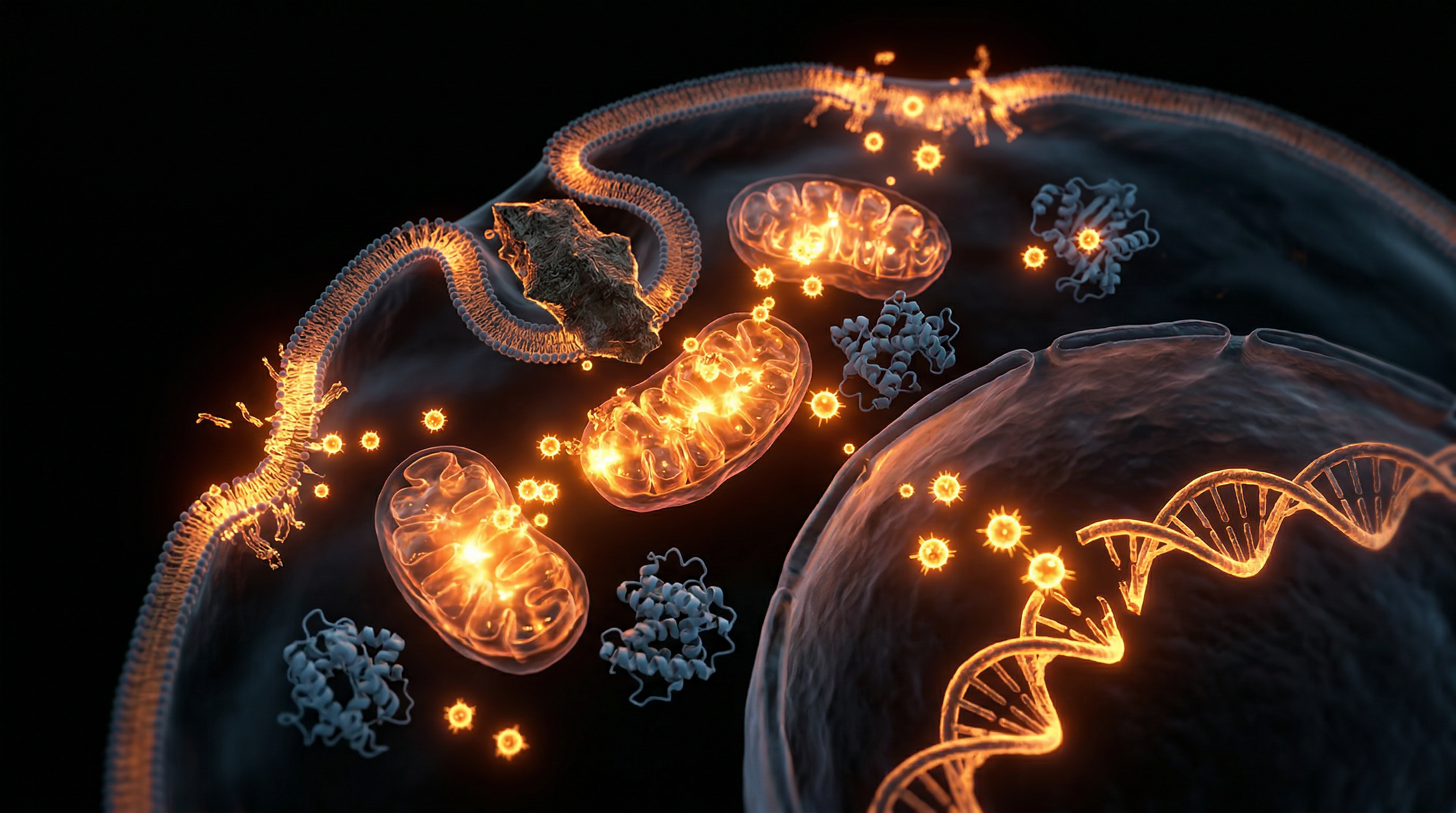
At the cellular level, nanoplastics induce the production of reactive oxygen species, leading to significant oxidative stress and DNA damage. This molecular disruption is a primary driver of cellular aging and disease.
Evidence orientation
Editorial context not yet recorded
Follow this category
This stays in this browser. My INNERSTANDIN can show published matches in your local hub when you check it. It does not send email, push, or alert notifications.
Local learning review
A private browser aid for revisiting ideas. It is not an alert or a health recommendation.
Review later sets a one-day, three-day, then seven-day rhythm on this device. Choose it only when you want to revisit this article.
Overview
For decades, the global conversation surrounding plastic pollution was confined to the aesthetic and the ecological: the strangled sea turtle, the overflowing landfill, the Great Pacific Garbage Patch. However, as our analytical capabilities have advanced into the sub-microscopic realm, a far more insidious reality has emerged. We are no longer merely observing an environmental crisis; we are participating in a biological transformation.
The transition from macroplastics to microplastics (MPs) and, crucially, to nanoplastics (NPs) has shifted the battlefield from the oceans to our internal cellular architecture. While microplastics (typically defined as particles less than 5mm) are significant, it is the nanoplastics—particles smaller than 1,000 nanometres—that pose the ultimate existential threat to human health. At this scale, plastic ceases to be an external contaminant and becomes an internal biological disruptor.
The primary mechanism of this disruption is Cellular Oxidative Stress. This is not a vague health buzzword; it is a precise biochemical state where the production of Reactive Oxygen Species (ROS) exceeds the cell's ability to detoxify them or repair the resulting damage. When nanoplastics infiltrate the cellular membrane, they initiate a cascade of molecular violence, leading to genotoxicity, protein misfolding, and the systematic erosion of mitochondrial function.
This article serves as an authoritative examination of how these synthetic polymers interact with the fundamental machinery of life. We will move beyond the superficial narrative of "pollution" to expose the molecular mechanics of how plastic is effectively "rusting" the human body from the inside out.
Key Statistic: Current estimates suggest the average human ingests between 74,000 and 121,000 plastic particles per year. However, when inhalation and sub-microscopic nanoplastics are accounted for, this number likely enters the millions.
The Biology — How It Works
To understand plastic toxicity, one must first understand the biological barriers designed to protect the organism. Human biology evolved over millions of years to filter out natural particulates—dust, pollen, and bacteria. It did not evolve to manage persistent, hydrophobic, synthetic polymers that mimic biological structures or act as "Trojan Horses" for chemical additives.
Routes of Entry and Translocation
Nanoplastics enter the human body through three primary pathways: ingestion (the gastrointestinal tract), inhalation (the respiratory system), and dermal absorption (the skin).
- Ingestion: Once swallowed, NPs encounter the acidic environment of the stomach and the complex microbiome of the intestines. Due to their minute size, they can bypass the intestinal barrier via paracellular transport or persorption, entering the lymphatic system and the bloodstream.
- Inhalation: Nanoplastics are light enough to remain suspended in the air. When inhaled, they bypass the ciliary clearance of the upper respiratory tract and settle deep within the alveoli. From there, they can cross the blood-air barrier, gaining immediate access to the systemic circulation.
- Translocation: This is the most alarming aspect of NP biology. Once in the blood, nanoplastics can cross the most "secure" barriers in the body: the Blood-Brain Barrier (BBB) and the Placental Barrier. Studies have confirmed the presence of polystyrene nanoplastics in the brain tissue of mammals and the placental tissue of humans, suggesting that the "plasticisation" of humanity begins in the womb.
The Protein Corona Effect
Upon entering a biological fluid (blood, lung surfactant, or intracellular fluid), a nanoplastic particle does not remain "naked." It immediately adsorbs proteins, lipids, and other biomolecules to its surface, forming what is known as a protein corona.
This corona essentially "masks" the plastic, giving it a biological identity. The cell no longer sees a piece of polyethylene; it sees a familiar protein complex. This facilitates endocytosis—the process by which the cell actively engulfs the particle, effectively inviting the Trojan Horse into the citadel.
Mechanisms at the Cellular Level
Once inside the cell, the presence of nanoplastics triggers a state of emergency. The cellular response is not merely a reaction to a foreign body, but a total breakdown of internal homeostasis.
The Induction of Reactive Oxygen Species (ROS)
The most significant impact of nanoplastics is the overwhelming production of Reactive Oxygen Species (ROS), including superoxide radicals, hydrogen peroxide, and hydroxyl radicals. Plastic particles induce ROS through several pathways:
- Surface Chemistry: The high surface-area-to-volume ratio of NPs makes them chemically reactive. Residual catalysts or additives (like heavy metals) on the plastic surface can trigger Fenton-type reactions, generating highly reactive radicals.
- Mitochondrial Interference: Nanoplastics have a high affinity for the mitochondria—the powerhouse of the cell. They physically disrupt the Electron Transport Chain (ETC), causing electrons to leak and react with oxygen to form superoxides.
- Lysosomal Destabilisation: Cells attempt to digest NPs within lysosomes. However, because plastic is non-biodegradable, the lysosome becomes overworked and eventually ruptures, releasing digestive enzymes and ROS into the cytoplasm.
Oxidative Stress and Lipid Peroxidation
When ROS levels spike, they begin to attack the cell’s own structures. The first target is often the cell membrane through a process called Lipid Peroxidation. ROS steal electrons from the lipids in cell membranes, resulting in a chain reaction of damage. This compromises membrane integrity, leading to "leaky" cells that can no longer regulate what enters or exits.
Genotoxicity: The Attack on DNA
The most profound consequence of plastic-induced oxidative stress is Genotoxicity. ROS generated by nanoplastics can migrate into the nucleus, causing several types of DNA damage:
- Single and Double-Strand Breaks: Literal fractures in the DNA architecture.
- Base Modifications: The chemical alteration of DNA bases (e.g., forming 8-oxodG), which leads to mutations during replication.
- Epigenetic Alterations: Nanoplastics can interfere with DNA methylation, effectively "turning off" protective genes or "turning on" oncogenes (cancer-promoting genes).
Important Fact: Unlike temporary chemical exposures, nanoplastics are persistent. They do not "wash out" of the cell easily. They remain, providing a constant source of oxidative friction that leads to chronic, low-grade genomic instability.
Environmental Threats and Biological Disruptors
While the plastic polymer itself is physically damaging, we must also consider the chemical "hitchhikers" that accompany it. Plastic is rarely just plastic; it is a complex cocktail of additives and adsorbed environmental toxins.
Endocrine Disrupting Chemicals (EDCs)
Plastics are manufactured with additives to give them flexibility, colour, or flame resistance. These chemicals, such as Bisphenols (BPA, BPS) and Phthalates, are not chemically bound to the polymer and leach out easily.
- These molecules are structurally similar to human hormones, particularly oestrogen.
- They bind to hormone receptors, sending false signals to the endocrine system.
- This disruption amplifies oxidative stress, as the body’s metabolic pathways become confused and overworked.
The Adsorption of Persistent Organic Pollutants (POPs)
Due to their hydrophobic nature, micro- and nanoplastics act as "sponges" in the environment. They attract and concentrate other toxins, such as:
- Polychlorinated Biphenyls (PCBs)
- Polycyclic Aromatic Hydrocarbons (PAHs)
- Heavy Metals (Lead, Cadmium, Mercury)
When a human ingests a nanoplastic particle, they are also ingesting a concentrated dose of these environmental poisons. Inside the cell, these toxins are released, creating a synergistic effect of toxicity that is far greater than the sum of its parts.
The "Plastisphere" and Pathogen Transport
In the UK’s waterways and urban environments, plastics develop a biofilm of bacteria and viruses known as the Plastisphere. This biofilm can include antibiotic-resistant bacteria. When these particles are inhaled or ingested, the plastic serves as a protective vessel, delivering pathogens directly into the deep tissue or the bloodstream, bypassing the primary immune defences.
The Cascade: From Exposure to Disease
The progression from cellular oxidative stress to clinical disease is a documented cascade. When the body is in a state of chronic oxidative stress due to persistent plastic exposure, systemic failure becomes inevitable.
Neurodegeneration
The brain is particularly vulnerable to oxidative stress because of its high oxygen consumption and high lipid content. As nanoplastics cross the Blood-Brain Barrier, they trigger Neuroinflammation via the activation of Microglia (the brain's immune cells).
- This chronic inflammation is a hallmark of Alzheimer’s Disease, Parkinson’s Disease, and Amyotrophic Lateral Sclerosis (ALS).
- Recent studies have identified microplastics in the olfactory bulb and the frontal cortex of human brains, suggesting a direct link between inhaled plastics and cognitive decline.
Cardiovascular Pathology
Once nanoplastics enter the bloodstream, they interact with vascular endothelial cells. The resulting oxidative stress leads to:
- Atherosclerosis: The hardening of arteries as the body attempts to "patch" plastic-induced damage with cholesterol plaques.
- Thrombosis: Increased risk of blood clots as NPs interact with platelets.
- Recent research published in the New England Journal of Medicine found that patients with microplastics in their carotid artery plaque had a 4.5 times higher risk of heart attack, stroke, or death.
Reproductive Failure and Infertility
The reproductive system is highly sensitive to the endocrine-disrupting effects of plastics.
- In Males: Nanoplastics reduce sperm count and motility by inducing oxidative stress in the testes (Sertoli and Leydig cells).
- In Females: Plastic exposure is linked to Polycystic Ovary Syndrome (PCOS), endometriosis, and premature ovarian failure.
- In Utero: Plastic exposure during pregnancy can alter the developmental trajectory of the foetus, leading to metabolic disorders later in life.
The Metabolic Crisis
Oxidative stress in the liver and adipose tissue leads to Insulin Resistance. The disruption of lipid metabolism by plastic additives (obesogens) is a contributing factor to the global epidemic of Type 2 Diabetes and obesity.
What the Mainstream Narrative Omits
The mainstream scientific and media discourse frequently engages in a form of "sanitised" reporting. While they acknowledge the presence of microplastics, they often omit the most damning aspects of the crisis to protect industrial interests.
The Fallacy of "Dose-Response"
Toxicology is traditionally based on the maxim "the dose makes the poison." Mainstream regulators argue that the levels of plastic we are exposed to are "below the threshold of harm." This is a fundamental error when dealing with nanoplastics.
- Non-Linear Toxicity: Nanoplastics do not follow a standard dose-response curve. Even infinitesimal amounts can trigger significant biological changes because they act as catalysts for oxidative stress and hormonal disruption.
- Bioaccumulation: Unlike many toxins that the liver can process and excrete, nanoplastics accumulate. The "dose" you receive today is added to the "dose" you received yesterday, leading to a lifetime of increasing toxicity.
The "Inert" Myth
For years, plastic was marketed as "biologically inert." This lie was foundational to the food packaging and medical industries. We now know that the surface of a plastic particle is a hive of chemical activity. Labeling plastic as inert is akin to labeling a hot coal as "just a rock."
Regulatory Capture and "Greenwashing"
Many "BPA-Free" products are a deception. Manufacturers often replace BPA with BPS (Bisphenol S) or BPF, which are equally, if not more, toxic. This "regrettable substitution" is a common tactic used to bypass regulation while maintaining the same hazardous production methods. The focus on "recycling" is another diversion; only 9% of plastic is recycled globally, and the process itself generates massive amounts of microplastics and toxic fumes.
The UK Context
In the United Kingdom, the plastic crisis has reached a critical juncture. Our geographical position and industrial history have created a unique set of challenges.
The State of British Waterways
The UK’s river systems are among the most plastic-polluted in Europe.
- A study by the University of Manchester found that the River Mersey had the highest levels of microplastics ever recorded in a riverbed—surpassing even the urbanised rivers of South East Asia.
- The River Thames is estimated to carry 94,000 microplastic particles per second through London.
- This pollution is not just a threat to aquatic life; it is the source of our tap water. While UK water treatment plants are efficient at removing larger particles, they are not currently designed to filter out nanoplastics.
The "Plastic Rain" over London
Inhalation is a major route of exposure in the UK's dense urban centres. Research has confirmed that "plastic rain"—the atmospheric fallout of microfibres from synthetic clothing and tyre wear—is a constant presence in London. The levels of airborne microplastics in London are significantly higher than in more rural parts of the country, contributing to the rising rates of respiratory issues and "urban fatigue."
DEFRA and the Regulatory Failure
The Department for Environment, Food & Rural Affairs (DEFRA) has been slow to implement meaningful bans on microplastics. While "microbeads" in cosmetics were banned, the much larger issue of Secondary Microplastics (from clothing and tyres) remains unaddressed. The UK’s reliance on incineration as a waste management strategy also releases dioxins and nanoplastics into the atmosphere, creating a cyclical problem of exposure.
UK Fact: 80% of UK tap water samples have tested positive for microplastic fibres. When drinking bottled water, the count increases by up to 22 times compared to tap water.
Protective Measures and Recovery Protocols
While the ubiquity of plastic makes total avoidance impossible, we can take strategic steps to minimise internal oxidative stress and support the body’s detoxification pathways.
1. Minimising Exposure (The Precautionary Principle)
- Eliminate Plastic in the Kitchen: Never heat food in plastic containers. The heat drastically accelerates the leaching of EDCs and the shedding of microplastics. Switch to glass, stainless steel, or ceramic.
- Filter Your Water: Use a high-quality water filtration system that specifically mentions the removal of particulates down to 0.1 microns (100 nanometres). Reverse Osmosis (RO) systems are the most effective at removing nanoplastics.
- Dust and Ventilate: Use HEPA filters in your home to capture airborne plastic fibres. Regular wet-dusting is essential, as microplastics accumulate in household dust.
- Natural Fibres: Avoid synthetic clothing (polyester, nylon, acrylic) which sheds millions of microfibres during wear and washing. Opt for organic cotton, wool, linen, or hemp.
2. Biological Support: Upregulating the Nrf2 Pathway
The body has an internal defence system against oxidative stress called the Nrf2 pathway. Activating this pathway increases the production of endogenous antioxidants.
- Sulforaphane: Found in broccoli sprouts, this is one of the most potent activators of the Nrf2 pathway. It helps the body produce Glutathione, our master antioxidant, which is depleted by plastic exposure.
- NAC (N-Acetyl Cysteine): A precursor to glutathione that has been shown to protect cells from the oxidative damage of nanoplastics.
- Vitamin C and E: These work synergistically to protect cell membranes from lipid peroxidation.
3. Autophagy and Cellular Repair
Autophagy is the body’s "cellular clean-up" process, where the cell breaks down and recycles damaged components.
- Intermittent Fasting: Periods of fasting (16-24 hours) trigger autophagy, which may help the cell identify and attempt to sequester or eject non-biological particulates.
- Deep Sleep: The glymphatic system (the brain's waste clearance system) is most active during deep sleep. Ensuring high-quality sleep is the primary defence against the neurodegenerative effects of nanoplastics.
4. Structural Solutions
We must advocate for a transition from a "Plastic Economy" to a "Circular Bio-Economy." This involves:
- Taxing Virgin Plastic Production: Making it more expensive to produce new plastic than to use alternatives.
- Mandatory Filtration: Requiring washing machine manufacturers to install microfibre filters.
- Redesigning Tyres: Addressing the massive contribution of tyre-wear particles to atmospheric and waterborne plastic pollution.
Summary: Key Takeaways
- Nanoplastics are the True Threat: While microplastics are concerning, nanoplastics (<1000nm) can cross the blood-brain and placental barriers, infiltrating the very core of human biology.
- Oxidative Stress is the Mechanism: Plastic toxicity is not a "poisoning" in the traditional sense, but a chronic induction of Reactive Oxygen Species (ROS) that damages DNA, proteins, and lipids.
- The Trojan Horse Effect: Plastics act as concentrated carriers for heavy metals, POPs, and endocrine disruptors, magnifying their toxic impact.
- Systemic Disease: Chronic exposure is a primary driver of the modern epidemics of neurodegeneration, infertility, cardiovascular disease, and metabolic dysfunction.
- The Mainstream Failure: Regulators rely on outdated toxicological models that ignore the persistence, bioaccumulation, and non-linear toxicity of nanoplastics.
- The UK Situation: British rivers and urban air are among the most plastic-dense in the world, requiring immediate individual and structural intervention.
- Protection is Possible: By minimising exposure through filtration and diet, and by supporting the body’s Nrf2 and autophagic pathways, we can build resilience against the "plasticised" environment.
The reality of cellular oxidative stress induced by plastic is an uncomfortable truth. It challenges our convenience-based society and our industrial foundations. However, by understanding the molecular mechanisms of this toxicity, we empower ourselves to move from passive victims to informed protectors of our biological integrity. The era of plastic-blindness must end; the health of our cells, and the future of our species, depends on it.
This article is provided for informational and educational purposes only. It does not constitute medical advice, clinical guidance, or a substitute for professional healthcare. Information reflects cited research at time of publication. Always consult a qualified healthcare professional before acting on any health information.
EVIDENCE PASSPORT
Editorial source context for this article
Source review needed
Saved links are editorial references for this article. They may support specific claims rather than every sentence. Open and assess each source in context. This passport does not independently verify them.
Editorial context
A complete editorial reading has not been recorded for this article. Source links remain available for you to open and assess directly.
Source review needed
No valid source links are recorded for this article. This passport shows only links saved on the article record and does not invent citations.
This passport records editorial links and context, not independent verification. Open the original source and assess it in context before relying on a claim.
Medical Disclaimer
The information in this article is for educational purposes only and does not constitute medical advice, diagnosis, or treatment. Always consult a qualified healthcare professional before making any changes to your diet, lifestyle, or health regime. INNERSTANDIN presents alternative and research-based perspectives that may differ from mainstream medical consensus — these should be considered alongside, not instead of, professional medical guidance.
Read Full DisclaimerContinue the thread
Keep this question moving.
Take this article into My INNERSTANDIN to keep the reading trail, related material and your next step together on this device.
Dig deeper in the Library
Free, longform PDF volumes that go beyond headlines into mechanisms and references.