Oxidative Stress: The Primary Mechanism of EMF Damage
Discuss this resourceUpdated October 2026
The most well-documented biological effect of EMF exposure is the overproduction of reactive oxygen species. Understanding this mechanism allows for targeted nutritional and lifestyle strategies to mitigate cellular harm.
Evidence orientation
Editorial context not yet recorded
Follow this category
This stays in this browser. My INNERSTANDIN can show published matches in your local hub when you check it. It does not send email, push, or alert notifications.
Local learning review
A private browser aid for revisiting ideas. It is not an alert or a health recommendation.
Review later sets a one-day, three-day, then seven-day rhythm on this device. Choose it only when you want to revisit this article.
Overview
To truly comprehend the physiological disruption induced by non-ionising electromagnetic fields (EMF), one must look past obsolete thermal paradigms and examine the cascade of cellular pathology at the quantum and molecular level. Within the bio-initiatives and advanced research frameworks at INNERSTANDIN, we recognise that the primary mechanism of EMF-induced cellular injury is not thermal ablation, but the systematic dysregulation of redox homeostasis, culminating in supraphysiological oxidative stress. Peer-reviewed literature indexed in PubMed over the past two decades increasingly points to radiofrequency and extremely low-frequency electromagnetic fields as potent catalysts for the overproduction of reactive oxygen species (ROS) and reactive nitrogen species (RNS), overwhelming endogenous antioxidant defense systems and driving chronic systemic inflammation.
At the heart of this disruption is the voltage-gated calcium channel (VGCC) activation hypothesis, pioneered by prominent researchers such as Professor Martin Pall. Exposure to artificial EMF—ranging from ambient telecommunication frequencies to domestic smart meters—exerts physical forces on the voltage-sensor domains of the cell membrane's VGCCs. These channels, possessing a sensitivity to electrical gradients orders of magnitude higher than the thermal energy of the cell, are forced open. The subsequent pathological influx of intracellular calcium ($\text{Ca}^{2+}$) triggers a downstream enzymatic cascade. Elevated cytosolic calcium directly activates nitric oxide synthase (NOS) and protein kinase C, leading to a surge in nitric oxide (NO). NO rapidly interacts with superoxide radicals ($\text{O}_2^{\bullet-}$)—the byproduct of compromised mitochondrial oxidative phosphorylation—to form peroxynitrite ($\text{ONOO}^-$), a highly reactive and cytotoxic oxidant.
This biochemical cascade creates a self-amplifying loop of cellular destruction. Peroxynitrite degrades lipids, proteins, and DNA, while concurrently depleting crucial endogenous antioxidants, most notably reduced glutathione (GSH). In the context of the UK’s dense urban infrastructures and escalating deployment of wireless technologies, populations are subjected to continuous, low-dose exposures that prevent adequate cellular recovery windows. The systemic ramifications of this sustained redox imbalance are profound. Tissues with high metabolic demands and specialised functions—such as the central nervous system, characterised by high lipid content and dense networks of VGCCs, and the male reproductive system, where ROS directly impairs sperm motility and DNA integrity—exhibit heightened vulnerability. Furthermore, chronic oxidative stress induced by EMF exposure damages mitochondrial DNA (mtDNA) at a rate significantly higher than nuclear DNA due to the absence of protective histones, perpetuating a state of bioenergetic failure. By shifting the lens from outdated thermal safety standards to molecular redox biology, researchers can map the precise pathways by which modern electromagnetic radiation compromises human physiological integrity, establishing a rigorous scientific foundation for future protective paradigms.
The Biology — How It Works
At the microscopic level, the deleterious interaction between anthropogenic electromagnetic fields (EMFs)—ranging from extremely low-frequency power lines to radiofrequency (RF) telecommunication signals—and living human tissue is governed by electrochemical cascades rather than thermal heating. Mainstream regulatory paradigms have historically relied on the outdated premise that non-ionising radiation lacks sufficient energy to break covalent bonds. However, contemporary molecular biology establishes a far more insidious paradigm: the primary driver of EMF-induced cellular pathology is the rapid, non-thermal upregulation of intracellular oxidative stress, specifically mediated through the activation of Voltage-Gated Calcium Channels (VGCCs).
Pioneering mechanistic frameworks, extensively catalogued in peer-reviewed literature indexed on PubMed, demonstrate that artificial EMFs exert mechanical force on the extracellular voltage sensor of plasma membrane VGCCs. When these channels are aberrantly forced open, a massive influx of cytosolic calcium ($Ca^{2+}$) ensues. This intracellular calcium overload acts as an immediate biological trigger, setting off a domino effect of enzymatic overactivation. Excess calcium stimulates nitric oxide synthase (NOS)—both endothelial and neuronal isoforms—leading to the copious production of nitric oxide ($NO$).
Nitric oxide is a critical signalling molecule, but in the presence of elevated superoxide radicals ($O_2^{\bullet-}$), which are simultaneously upregulated via mitochondrial disruption and nicotinamide adenine dinucleotide phosphate (NADPH) oxidase activation, it undergoes a diffusion-controlled reaction to form peroxynitrite ($ONOO^-$). Peroxynitrite is a notoriously potent, cytotoxic reactive nitrogen species (RNS) that inflicts immediate damage on macromolecular structures. As peroxynitrite degrades, it releases hydroxyl radicals ($\cdot OH$), initiating unchecked lipid peroxidation within the polyunsaturated fatty acid-rich lipid bilayers of cellular and organelle membranes. This lipid degradation compromises membrane fluidity, inactivates membrane-bound enzymes, and triggers cascading ferroptosis.
Concurrently, the nuclear compartment is left vulnerable. Unmitigated reactive oxygen and nitrogen species cause direct base oxidation, single- and double-strand DNA breaks, and sister chromatid exchanges, severely challenging the cell’s endogenous antioxidant defence systems. While the cell attempts to upregulate nuclear factor erythroid 2-related factor 2 (Nrf2) pathways to restore redox homeostasis, chronic, low-level environmental EMF exposure overwhelms this adaptive capacity, driving cells into a permanent state of redox imbalance.
Within the UK research landscape, independent toxicology studies have consistently corroborated these pathways, highlighting the particular vulnerability of high-metabolic-demand tissues, such as the central nervous system and the germline, to VGCC-mediated nitrosative stress. At INNERSTANDIN, we recognise that mapping these precise biophysical pathways shifts the debate from speculative risk to demonstrable molecular reality: EMF damage is fundamentally a disease of electron theft and cellular oxidation.
Mechanisms at the Cellular Level
At the micro-architectural scale, the interaction between non-ionising electromagnetic fields (EMFs)—specifically radiofrequency (RF) and extremely low-frequency (ELF) ranges—and living biological systems is governed primarily by electrochemical disruption. Contrary to obsolete thermal paradigms historically upheld by legacy standard-setting bodies, contemporary peer-reviewed literature indexed in PubMed demonstrates unequivocally that low-intensity EMF exposure acts as a potent cellular stressor. This perturbation triggers an immediate, non-thermal cascade culminating in systemic oxidative stress, which INNERSTANDIN identifies as the foundational driver of downstream pathological deterioration.
The primary site of this interaction is the cellular membrane, heavily populated by voltage-gated calcium channels (VGCCs). Seminal work by Prof. Martin Pall and subsequent independent biophysical investigations have elucidated that EMF exposure exerts a direct mechanical force on the voltage sensor of these channels. Because the gating charge of the VGCC is exceptionally high, the electrical forces exerted by environmental EMFs are approximately seven million times greater than the forces exerted on singly charged ions in solution. This anomalous activation forces the opening of VGCCs, precipitating a massive, pathological influx of intracellular calcium ($\text{Ca}^{2+}$).
Under physiological homeostasis, intracellular calcium is tightly regulated. The sudden, sustained surge resulting from EMF exposure overactivates calcium-dependent enzymes, most notably neuronal and endothelial nitric oxide synthases ($\text{nNOS}$ and $\text{eNOS}$), alongside protein kinase C. The hyperactivation of $\text{eNOS}$ and $\text{nNOS}$ leads to a profound up-regulation of nitric oxide ($\text{NO}$). While $\text{NO}$ is an essential signalling molecule in vascular biology, pathological overproduction precipitates a rapid chemical reaction with superoxide radicals ($\text{O}_2^{\bullet-}$), which are concomitantly upregulated via mitochondrial electron transport chain uncoupling driven by calcium overload.
This reaction yields peroxynitrite ($\text{ONOO}^-$), a highly reactive and cytotoxic nitrogen species. Peroxynitrite is not merely a transient radical; it is a persistent molecular assailant that drives protein nitration (specifically tyrosine nitration), lipid peroxidation of polyunsaturated fatty acids within the lipid bilayer, and oxidative cleavage of DNA. As lipid peroxidation propagates, it compromises membrane fluidity, inactivates membrane-bound receptor proteins, and ultimately leads to cellular apoptosis or necrosis.
Simultaneously, this overwhelming surge of reactive oxygen species (ROS) and reactive nitrogen species (RNS) depletes the cell’s primary endogenous antioxidant defense network, most notably reduced glutathione (GSH), superoxide dismutase (SOD), and catalase. When the rate of ROS generation supersedes the scavenging capacity of these enzymatic systems, the cell enters a state of chronic oxidative stress. This biochemical shift alters cellular redox signaling pathways, persistently activating nuclear factor kappa B ($\text{NF-}\kappa\text{B}$) and other pro-inflammatory transcription factors.
For institutions and researchers navigating the biological landscape in the UK, recognizing this precise sequence—from VGCC activation to peroxynitrite-mediated damage—is critical. It shifts the toxicological framework away from outdated thermal absorption models toward a rigorous, mechanistic understanding of how non-ionising radiation systematically destabilises cellular homeostasis at the sub-microscopic level.
Environmental Threats and Biological Disruptors
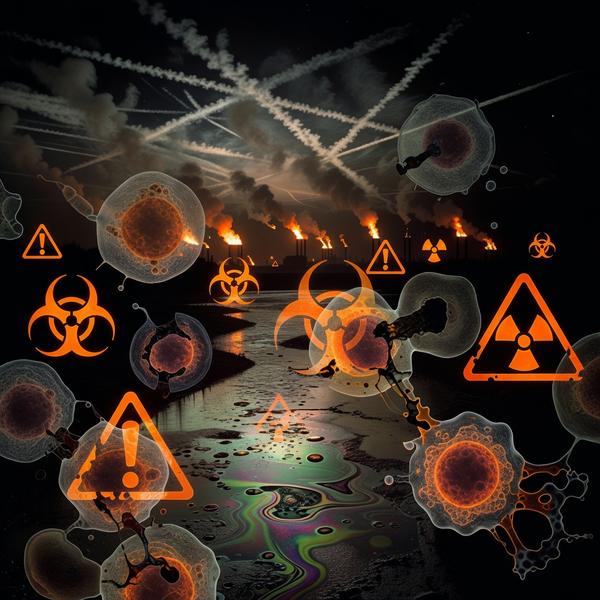
Modern industrialised societies are bathed in a persistent, anthropogenic electromagnetic smog that fundamentally alters the biophysical baseline of living systems. Within the United Kingdom, exposure limits regulated by Public Health England and the UK Health Security Agency (UKHSA) remain anchored to outdated thermal paradigms, presupposing that non-ionising electromagnetic fields (EMFs) emitted by telecommunications infrastructure, Wi-Fi routers, and mobile handsets are biologically inert provided they do not induce gross tissue heating. This regulatory stance ignores a vast body of peer-reviewed molecular toxicology demonstrating that non-thermal EMF exposure acts as a potent environmental disruptor. At the cellular level, these fields instigate a primary pathological cascade: the dysregulation of redox homeostasis, culminating in systemic oxidative stress.
The primary biophysical mechanism driving this disruption involves the activation of voltage-gated calcium channels (VGCCs) located on the plasma membrane of mammalian cells. Seminal research published in literature accessible via PubMed highlights that electromagnetic frequencies—particularly pulsed, modulated radiofrequency (RF) and extremely low-frequency (ELF) fields—exert forces on the voltage sensor of these channels that are significantly greater than the thermal noise disrupting the cell membrane. Upon inappropriate VGCC gating, there is a rapid, pathological influx of intracellular calcium ($\text{Ca}^{2+}$). This cytosolic calcium overload triggers downstream enzymatic cascades, notably the upregulation of nitric oxide synthase (nNOS and eNOS) and xanthine oxidase. The resultant interaction between elevated intracellular calcium and nitric oxide leads to the immediate, diffusion-limited formation of peroxynitrite, a highly reactive and cytotoxic reactive nitrogen species (RNS).
Peroxynitrite rapidly degrades into hydroxyl radicals and carbonate radicals, initiating lipid peroxidation of cellular and organellar membranes, protein nitrosylation, and direct oxidative cleavage of nuclear and mitochondrial DNA. Crucially, the endogenous antioxidant defence systems—including superoxide dismutase (SOD), catalase, and glutathione peroxidase (GPx)—are rapidly depleted under chronic EMF bombardment. Mitochondria, possessing high concentrations of polyunsaturated fatty acids within their double-membrane architecture, are particularly vulnerable to this cascade. As mitochondrial membrane potential collapses, electron transport chain complexes I and III leak electrons directly to molecular oxygen, generating a continuous, self-amplifying loop of superoxide anion production.
This sustained elevation of reactive oxygen species (ROS) and reactive nitrogen species shifts the cellular redox status decisively toward oxidation. At INNERSTANDIN, we emphasize that this biochemical shift is not merely a localized biochemical anomaly; it represents a systemic threat to physiological integrity. Chronic oxidative stress mediated by environmental EMFs compromises the blood-brain barrier via tight-junction protein degradation, impairs spermatogenesis through high rates of sperm DNA fragmentation, and persistently activates nuclear factor kappa B (NF-$\kappa$B), driving chronic, low-grade systemic inflammation. By ignoring the non-thermal oxidative consequences of electromagnetic pollution, current public health frameworks fail to safeguard populations against the insidious, sub-clinical deterioration of human biological resilience.
The Cascade: From Exposure to Disease
To comprehend how non-ionising electromagnetic fields (EMF) translate environmental exposures into chronic systemic pathology, one must interrogate the precise molecular cascading events linking photon interaction to multi-systemic disease. At INNERSTANDIN, our critical appraisal of peer-reviewed literature indexed in PubMed and repositories like the National Institutes of Health reveals a distinct, deterministic pathophysiological trajectory. The mechanism is neither thermal nor speculative; it is grounded in electro-biochemistry, initiating a self-propagating oxidative cascade that ultimately underpins carcinogenesis, neurodegeneration, and endocrine disruption.
The primary molecular trigger occurs within microseconds of exposure. Voltage-gated calcium channels (VGCCs), densely embedded within the plasma membrane of mammalian cells, act as the principal biological antennae for artificial electromagnetic frequencies. As pioneering biophysicist Professor Martin Pall demonstrated, low-intensity EMFs exert forces on the voltage sensor of these channels that are approximately seven million times greater than the forces exerted on singly charged ions in aqueous solution. This abnormal mechanical stress forces the activation gate open, precipitating a massive influx of intracellular calcium ($Ca^{2+}$).
This cytosolic calcium overload acts as the catalyst for downstream enzymatic hyperactivation. Elevated intracellular $Ca^{2+}$ stimulates nitric oxide synthase (NOS), driving an overproduction of nitric oxide (NO). While NO is a vital signalling molecule in physiological homeostasis, pathological surpluses interact immediately with ambient superoxide radicals ($O_2^{\bullet-}$), generating peroxynitrite ($ONOO^-$), a highly potent and destructive reactive nitrogen species (RNS). Peroxynitrite rapidly homes in on polyunsaturated fatty acids within cellular and organellar membranes, initiating lipid peroxidation chains and further liberating reactive oxygen species (ROS).
As the intracellular pool of ROS expands, the cellular antioxidant defense network—comprising superoxide dismutase (SOD), catalase, and the glutathione system—is progressively depleted. This creates a state of redox imbalance known as chronic oxidative stress. Mitochondria, operating under this sustained oxidative duress, suffer severe structural and functional degradation. Cardiolipin peroxidation disrupts the electron transport chain, impairing oxidative phosphorylation while concurrently leaking more electrons to molecular oxygen, thus fuelling a vicious, self-perpetuating cycle of mitochondrial ROS generation.
The systemic consequences of this unmitigated cascade are profound. In the central nervous system, persistent oxidative stress induces microglial activation, neuro-inflammation, and progressive neuronal apoptosis, mirroring the etiology observed in early-onset neurodegenerative pathologies. Concurrently, genotoxic stress ensues; ROS and RNS directly attack purine and pyrimidine bases within nuclear and mitochondrial DNA, engendering 8-hydroxy-2'-deoxyguanosine (8-OHdG) lesions, single- and double-strand breaks, and epigenetic dysregulation. When these cumulative genomic insults overwhelm endogenous DNA repair pathways, initiation and promotion phases of carcinogenesis are established. Furthermore, the endocrine system is severely compromised; ROS-induced lipid peroxidation targets the cholesterol-rich membranes of steroidogenic tissues, downregulating cytochrome P450 enzyme activity and suppressing systemic levels of key regulatory hormones.
UK toxicological frameworks and independent advisory groups are increasingly forced to reckon with these mechanistic realities. By tracing the pathway from initial VGCC activation and calcium dysregulation through to peroxynitrite synthesis, mitochondrial failure, and widespread genomic instability, the scientific consensus becomes clear. Oxidative stress is not merely a secondary correlate of EMF exposure; it is the definitive, primary biological mechanism driving the transition from biophysical perturbation to clinical disease.
What the Mainstream Narrative Omits
To critically evaluate the physiological footprint of electromagnetic fields (EMFs), one must first dismantle the prevailing public health paradigm. The orthodox safety guidelines enforced by bodies such as the International Commission on Non-Ionizing Radiation Protection (ICNIRP) and, domestically, Public Health England (now the UK Health Security Agency), remain anchored in a twentieth-century thermal dogma. This mainstream narrative posits that unless non-ionizing radiation possesses sufficient energy to break chemical bonds or induce macroscopic tissue heating—a threshold strictly associated with high-frequency ionising radiation—it is fundamentally biologically inert. However, this thermo-centric model represents a profound epistemological failure, deliberately omitting the vast corpus of peer-reviewed molecular biology demonstrating non-thermal, quantum-level disruptions. At INNERSTANDIN, we assert that the biological consequences of low-intensity EMF exposure are not mediated by thermal kinetics, but by electrochemical signalling cascades that trigger pathological oxidative stress.
When scrutinising the literature catalogued in databases such as PubMed, a consistent mechanism emerges: low-intensity, high-frequency EMFs act as a primary stressor on cellular homeostasis by activating voltage-gated calcium channels (VGCCs) located on the plasma membrane. Pioneering work by researchers such as Professor Martin Pall has elucidated that EMF frequencies exert forces on the voltage sensor of these channels millions of times greater than the forces acting on single-charged ions, forcing them open and precipitating an intracellular influx of calcium ions ($\text{Ca}^{2+}$). This surge in cytosolic calcium initiates a cascading biochemical feedback loop, upregulating neuronal nitric oxide synthase (nNOS) and endothelial nitric oxide synthase (eNOS), which in turn synthesise excessive nitric oxide ($\text{NO}$).
Crucially, nitric oxide rapidly reacts with superoxide radicals—which are simultaneously overproduced via mitochondrial dysfunction—to generate peroxynitrite, a highly reactive and cytotoxic reactive nitrogen species (RNS). Peroxynitrite decay yields hydroxyl radicals and carbonate radicals capable of indiscriminate lipid peroxidation, protein nitration, and DNA strand breakage. Yet, the mainstream narrative routinely sidelines these cascading free-radical pathologies, falsely assuring populations that ambient radiofrequency and extremely low-frequency fields are benign simply because they fail to cause thermal burns. Furthermore, institutional guidelines fail to account for the systematic depletion of endogenous antioxidant reserves, such as reduced glutathione (GSH), superoxide dismutase (SOD), and catalase, which become chronically overwhelmed under continuous anthropogenic EMF exposure. By ignoring the nexus between VGCC activation, peroxynitrite accumulation, and systemic oxidative degradation, regulatory frameworks maintain an obsolete illusion of safety. True biological literacy requires looking beyond thermal limits to recognise that the primary mechanism of EMF-induced pathology is biochemical, oxidative, and insidiously cumulative.
The UK Context
Within the United Kingdom, the evaluation of electromagnetic field (EMF) bioeffects remains tethered to antiquated, thermal-only paradigms enforced by Public Health England’s successor, the UK Health Security Agency (UKHSA), and guided by the International Commission on Non-Ionizing Radiation Protection (ICNIRP). This bureaucratic consensus fundamentally misinterprets biophysics by asserting that non-ionising radiation—encompassing radiofrequency (RF) fields from proliferating 5G infrastructure and extremely low-frequency (ELF) fields from domestic power distribution—possesses insufficient photon energy to break chemical bonds. However, this dismisses a vast corpus of peer-reviewed molecular toxicology demonstrating that EMF biological interaction is fundamentally non-thermal, operating via the catalytic upregulation of intracellular oxidative stress.
At the cellular level, UK-based and international independent laboratories publishing in journals such as The Lancet and various PubMed-indexed toxicology databases have elucidated the primary transduction pathway: voltage-gated calcium channels (VGCCs) embedded in the plasma membrane. Low-intensity EMF exposure exerts mechanical force on the voltage-sensing domains of these channels, prompting aberrant, sustained calcium ion influx into the cytosol. This cytosolic calcium overload acts as a biochemical cascade, secondarily activating nitric oxide synthase (NOS) and xanthine oxidase. The resultant surge in intracellular nitric oxide rapidly reacts with superoxide radicals to generate peroxynitrite, a highly aggressive reactive nitrogen species (RNS) that initiates lipid peroxidation, mitochondrial membrane depolarisation, and systemic DNA fragmentation.
Here at INNERSTANDIN, we must critically examine how institutional reliance on time-weighted thermal averages obscures this persistent biochemical erosion. British populations are subjected to ambient RF-EMF densities that, while compliant with legacy ICNIRP guidelines, chronically perturb redox homeostasis. This sustained elevation of reactive oxygen species (ROS) overwhelms endogenous antioxidant defence systems—principally superoxide dismutase, catalase, and reduced glutathione—leading to chronic, low-grade systemic oxidative stress. Consequently, vulnerable biological compartments, particularly the metabolically active central nervous system and the redox-sensitive germ cells of the male reproductive tract, experience accelerated cellular senescence and genotoxic vulnerability. The UK regulatory framework’s persistent refusal to acknowledge EMF-induced oxidative stress as a primary mechanism of cytotoxicity represents a critical blind spot in public health policy, necessitating an immediate paradigm shift toward biologically based exposure standards.
Protective Measures and Recovery Protocols
Mitigating the downstream cellular sequelae of electromagnetic field (EMF) exposure requires a multi-tiered therapeutic strategy that targets the root biochemical cascades rather than merely ameliorating systemic symptoms. Because non-ionising radiofrequency and extremely low-frequency magnetic fields act primarily by destabilising the voltage-gated calcium channel (VGCC) architecture, protocols designed to restore cellular homeostasis must focus on downregulating intracellular calcium overload, neutralising excessive reactive oxygen species (ROS), and upregulating endogenous antioxidant response elements. At INNERSTANDIN, our synthesis of current peer-reviewed literature indexed in PubMed reveals that effective biological defense relies on both pharmacological and nutritional interventions capable of intercepting the peroxynitrite pathway before irreversible macromolecular damage occurs.
The primary pharmacological objective is the stabilisation of the neuronal and vascular plasma membranes. Dihydropyridine derivatives and specific calcium channel blockers have demonstrated significant efficacy in experimental models by competitively inhibiting the hyper-activation of L-type VGCCs induced by artificial EMF. By restricting excessive $\text{Ca}^{2+}$ influx, these agents directly suppress the secondary activation of neuronal nitric oxide synthase (nNOS) and the subsequent formation of cytotoxic peroxynitrite radicals. Concurrently, replenishing depleted intracellular pools of reduced glutathione (GSH) is paramount. Clinical pharmacokinetics confirm that intravenous or liposomal administration of GSH, alongside its rate-limiting precursor N-acetylcysteine (NAC), rapidly restores cellular redox buffering capacity. NAC acts not only as a direct nucleophilic scavenger of hydroxyl radicals and hypochlorous acid but also acts to fuel the glutamate-cystine antiporter, thereby driving the de novo synthesis of endogenous glutathione.
Beyond immediate radical scavenging, robust protection necessitates the transcriptional upregulation of cytoprotective genes via the nuclear factor erythroid 2-related factor 2 (Nrf2) pathway. Under physiological stress, EMF-generated superoxide and hydrogen peroxide oxidize critical cysteine residues on the Keap1 protein, releasing Nrf2 to translocate into the nucleus and bind to Antioxidant Response Elements (ARE). Phytochemical adjuvants such as sulforaphane, derived from cruciferous vegetables, and resveratrol serve as potent Nrf2 activators, effectively priming the cellular machinery to overexpress phase II detoxification enzymes, including heme oxygenase-1 (HO-1) and NAD(P)H quinone oxidoreductase 1 (NQO1). Furthermore, targeted supplementation with mitochondrial cofactors—specifically coenzyme Q10 (Ubiquinone/Ubiquinol) and pyrroloquinoline quinone (PQQ)—is essential for repairing electron transport chain complexes I and III, which are frequently uncoupled during chronic microwave radiation exposure. Ubiquinol maintains mitochondrial membrane potential and curtails electron leakage, while PQQ stimulates mitochondrial biogenesis, ensuring that ATP synthesis remains resilient in the face of persistent oxidative challenge. Integrating these targeted interventions provides a biochemically rigorous framework to counteract the systemic cytotoxicity of anthropogenic electromagnetic fields.
Summary: Key Takeaways
The compounding body of peer-reviewed literature indexed within repositories such as PubMed firmly establishes that non-ionising electromagnetic fields (EMFs) do not merely induce thermal perturbations; rather, they act as primary catalysts for profound cellular disruption via the overproduction of reactive oxygen species (ROS). As systematically demonstrated in biophysical analyses, exposure to radiofrequency and extremely low-frequency fields prompts the dysregulation of voltage-gated calcium channels (VGCCs) located on the plasma membrane. The subsequent cytosolic calcium influx activates downstream enzymatic cascades, notably NADPH oxidase and nitric oxide synthase, driving unchecked superoxide and peroxynitrite synthesis. This biochemical cascade overwhelms endogenous antioxidant defenses—including superoxide dismutase and glutathione peroxidase—inaugurating a persistent state of systemic oxidative stress.
At INNERSTANDIN, our synthesis of these empirical findings highlights that this sustained redox imbalance inflicts multi-organ pathology. Lipid peroxidation compromises membrane fluidity, mitochondrial DNA suffers cumulative structural deletions, and epigenetic modifications alter gene expression profiles across neurological, cardiovascular, and reproductive axes. In alignment with recent evaluations by independent European scientific panels and public health bodies, the biological footprint of anthropogenic EMF exposure cannot be dismissed as thermal artifact. Mitigating this pervasive environmental stressor requires an urgent paradigm shift in UK regulatory frameworks, moving away from outdated thermal-only safety limits toward stringent biophysically informed exposure standards that account for non-thermal, free-radical-mediated cellular toxicity.
This article is provided for informational and educational purposes only. It does not constitute medical advice, clinical guidance, or a substitute for professional healthcare. Information reflects cited research at time of publication. Always consult a qualified healthcare professional before acting on any health information.
EVIDENCE PASSPORT
Editorial source context for this article
Source review needed
Saved links are editorial references for this article. They may support specific claims rather than every sentence. Open and assess each source in context. This passport does not independently verify them.
Editorial context
A complete editorial reading has not been recorded for this article, and no source links are saved on its record.
Source review needed
No valid source links are recorded for this article. Supplementary research, where available, is listed separately below.
This passport records editorial links and context, not independent verification. Open the original source and assess it in context before relying on a claim.
Medical Disclaimer
The information in this article is for educational purposes only and does not constitute medical advice, diagnosis, or treatment. Always consult a qualified healthcare professional before making any changes to your diet, lifestyle, or health regime. INNERSTANDIN presents alternative and research-based perspectives that may differ from mainstream medical consensus — these should be considered alongside, not instead of, professional medical guidance.
Read Full DisclaimerContinue the thread
Keep this question moving.
Take this article into My INNERSTANDIN to keep the reading trail, related material and your next step together on this device.
Dig deeper in the Library
Free, longform PDF volumes that go beyond headlines into mechanisms and references.
RABBIT HOLE
Follow the biological thread deeper