
The Glymphatic and Lymphatic Networks: Clearing Metabolic Debris and Environmental Bioaccumulation
Updated June 2026
The lymphatic system serves as the body's secondary circulatory network, responsible for transporting waste and immune cells. Recent discoveries of the glymphatic system highlight the critical role of sleep in flushing neurotoxic waste from the brain.
Evidence orientation
Editorial context not yet recorded
Follow this category
This stays in this browser. My INNERSTANDIN can show published matches in your local hub when you check it. It does not send email, push, or alert notifications.
Local learning review
A private browser aid for revisiting ideas. It is not an alert or a health recommendation.
Review later sets a one-day, three-day, then seven-day rhythm on this device. Choose it only when you want to revisit this article.
Overview
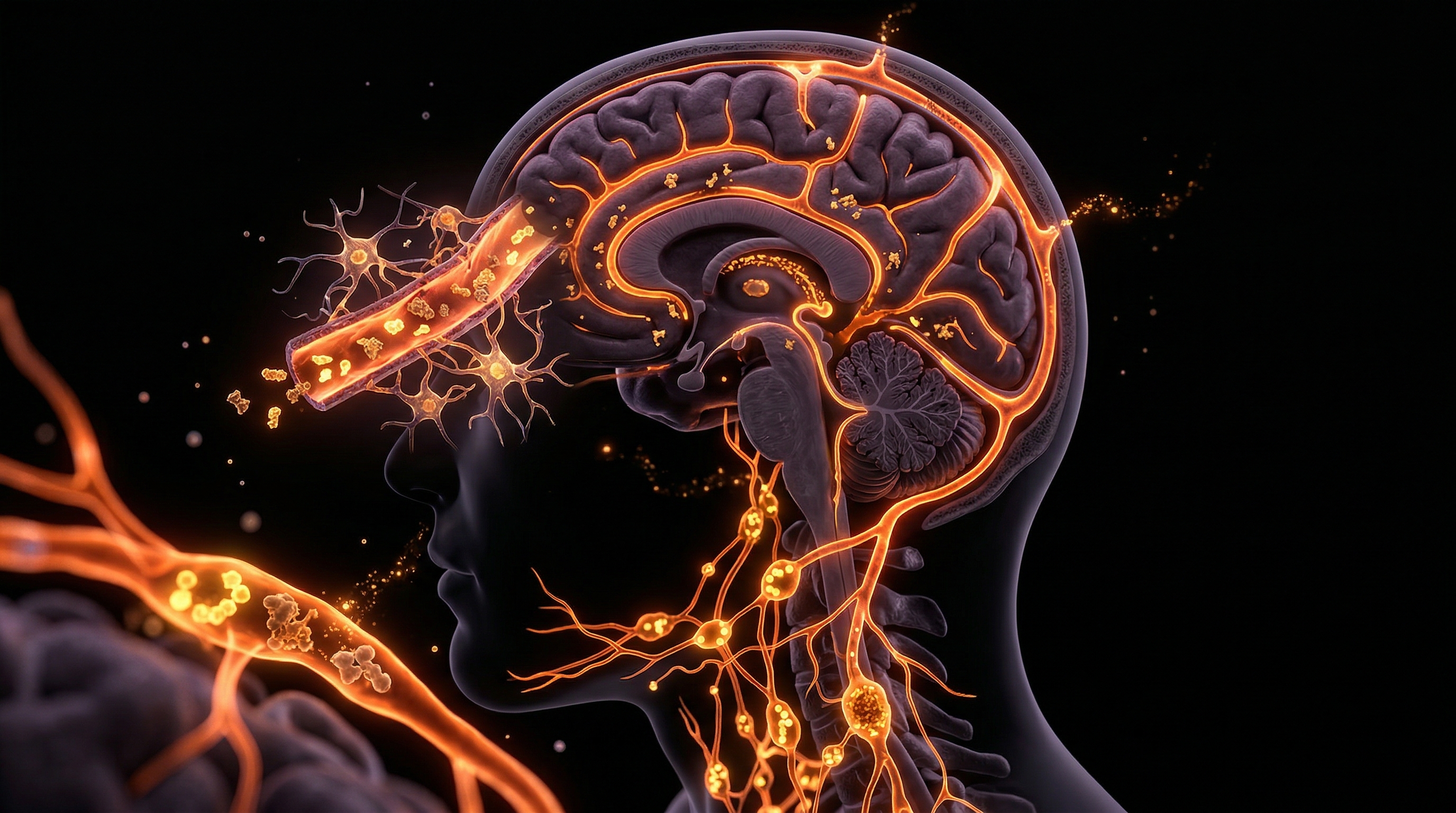
The paradigm of human detoxification has undergone a radical shift, moving beyond the traditional hepatic and renal silos to acknowledge a more complex, integrated waste-clearance architecture: the glymphatic-lymphatic continuum. For decades, the central nervous system (CNS) was erroneously categorised as "immunologically privileged" and devoid of lymphatic drainage. However, contemporary research—pioneered by Nedergaard and colleagues and further substantiated by neuroimaging studies across UK academic centres—has unveiled the glymphatic system as a highly organised macroscopic waste clearance pathway. Utilising a unique perivascular tunnel system facilitated by astrocytic aquaporin-4 (AQP4) water channels, the glymphatic network promotes the convective bulk flow of cerebrospinal fluid (CSF) into the brain parenchyma, where it exchanges with interstitial fluid (ISF). This physiological "rinsing" is not merely an ancillary process but a fundamental requirement for maintaining proteostasis, specifically the clearance of metabolic debris such as amyloid-beta (Aβ) and tau proteins, which are implicated in neurodegenerative pathologies.
The efficacy of this system is inextricably linked to sleep-wake cycles; research published in The Lancet Neurology highlights that the interstitial space increases by up to 60% during slow-wave sleep, drastically reducing resistance to convective flow and accelerating the removal of neurotoxic metabolites. At INNERSTANDIN, we recognise that the glymphatic system does not operate in isolation but serves as the "frontend" for the recently rediscovered meningeal lymphatic vessels. These vessels, situated within the dural sinuses, provide the critical conduit for transporting extravasated fluid and immune cells from the CNS to the deep cervical lymph nodes.
Beyond endogenous metabolic byproducts, this dual network represents the primary physiological defence against environmental bioaccumulation. In an era of escalating exposure to neurotoxic heavy metals, microplastics, and persistent organic pollutants (POPs), the integrity of these drainage pathways determines the biological burden of xenobiotics. When the efflux kinetics of the glymphatic system are compromised—whether through circadian disruption, chronic systemic inflammation, or vascular stiffening—the brain becomes a reservoir for bioaccumulative toxins. This stagnation triggers a cascade of neuroinflammation and oxidative stress, bridging the gap between environmental exposure and clinical symptomology. Understanding the synergy between the glymphatic influx and the peripheral lymphatic efflux is paramount for any advanced biotransformation strategy. This overview establishes the foundational mechanics of these systems as a singular, unified network of systemic purification, challenging the reductionist view of biological waste management.
The Biology — How It Works
The conceptualisation of the Central Nervous System (CNS) as an immunologically privileged site, devoid of traditional lymphatic drainage, has been decisively dismantled by contemporary neurobiology. At the heart of this paradigm shift is the glymphatic system—a highly organised, glial-dependent perivascular network dedicated to the macroscopic clearance of interstitial metabolic waste. This system operates through the convective influx of cerebrospinal fluid (CSF) into the brain parenchyma, facilitated by the paravascular spaces surrounding cerebral arteries (Virchow-Robin spaces). The driving force behind this flux is largely haemodynamic, powered by arterial pulsation and the pressure gradients generated during specific stages of the sleep cycle.
The mechanistic linchpin of glymphatic function is the Aquaporin-4 (AQP4) water channel, densely expressed on the vascular endfeet of astrocytes. These channels allow for the rapid exchange of CSF with interstitial fluid (ISF), creating a flushing mechanism that drives solutes—including soluble amyloid-beta ($\beta$A), tau proteins, and various xenobiotic metabolites—toward the venous perivascular spaces. Research published in Nature and indexed via PubMed indicates that this clearance rate increases by nearly 60% during slow-wave sleep, as the interstitial space expands to reduce hydraulic resistance. At INNERSTANDIN, we recognise that any disruption to this circadian-regulated hydraulic flow facilitates the bioaccumulation of environmental toxins and metabolic debris, providing a physiological substrate for neurodegenerative pathologies.
Furthermore, the glymphatic pathway does not terminate within the cranium; it interfaces directly with the meningeal lymphatic vessels, a discovery that has revolutionised our innerstanding of neuro-immunology. These vessels, located within the dura mater, serve as the primary conduit for transporting fluid and immune cells from the CNS to the deep cervical lymph nodes. This connection represents a critical bridge between the brain’s internal environment and the systemic lymphatic network. Systemically, the lymphatic system functions as a low-pressure drainage circuit that recovers extravasated plasma proteins and lipids while filtering pathogens and bioaccumulated environmental toxins through a series of specialised nodes.
In the UK context, clinical observations of chronic inflammatory states often reveal a failure of these drainage networks. When the systemic lymphatic load is saturated—whether by heavy metal bioaccumulation, microplastics, or chronic microbial metabolites—the resulting 'lymphatic congestion' exerts retrograde pressure on the glymphatic outflow. This stagnation inhibits the brain’s ability to purge neurotoxic waste, leading to a state of chronic neuroinflammation and metabolic encephalopathy. Evidence-led analysis confirms that the efficiency of these networks is not merely a byproduct of biology but a prerequisite for systemic biotransformation. The synergy between the CNS glymphatics and the peripheral lymphatics constitutes a singular, integrated waste-management architecture, the optimisation of which is fundamental to preventing the long-term sequestration of environmental toxicants within the human biological matrix.
Mechanisms at the Cellular Level
The cellular orchestration of metabolic clearance hinges upon a sophisticated interplay between astroglial architecture and the haemodynamic pulsations of the cerebrovascular tree. At the core of the glymphatic mechanism is the polarised expression of the water channel protein Aquaporin-4 (AQP4), localised to the perivascular endfeet of astrocytes. These endfeet ensheathe the cerebral vasculature, creating the paravascular space (or Virchow-Robin space) through which cerebrospinal fluid (CSF) is propelled into the brain parenchyma. This process, as elucidated in seminal research published in Nature and further validated by clinical observations within UK neuroimaging cohorts, is not merely passive diffusion. Instead, it is a convective bulk flow driven by arterial pulsatility and the expansion/contraction of the interstitial space during the sleep-wake cycle.
During slow-wave sleep, the interstitial volume increases by upwards of 60%, significantly reducing hydraulic resistance and allowing CSF to flush through the interstitium. This fluid exchange facilitates the sequestration of neurotoxic metabolites, most notably amyloid-beta (Aβ) and tau proteins, moving them from the intracellular environment into the efflux pathways. This "cellular rinsing" is critical for maintaining proteostasis; when AQP4 polarity is lost—often due to chronic neuroinflammation or traumatic brain injury—metabolic debris begins to aggregate, leading to the proteinopathies characteristic of neurodegenerative decline.
Transitioning from the central nervous system to the peripheral lymphatic network, the mechanism of debris removal shifts toward the specialised architecture of initial lymphatic endothelial cells (LECs). Unlike the continuous "zipper-like" junctions found in blood capillaries, initial lymphatics possess "button-like" junctions. These structures act as primary micro-valves, opening in response to increased interstitial fluid pressure to allow the entry of macromolecules, immune cells, and environmental xenobiotics. Research indexed in PubMed highlights that this cellular gatekeeping is sensitive to the mechanical tension of the extracellular matrix (ECM). Environmental bioaccumulation—the build-up of heavy metals, microplastics, and persistent organic pollutants (POPs)—directly interferes with these mechanical triggers. These toxins can induce oxidative stress within the LECs, leading to lymphangiogenic dysfunction and the subsequent stagnation of lymph.
At the INNERSTANDIN research level, we must recognise that the glymphatic-lymphatic interface—specifically the dural lymphatic vessels and the cribriform plate—represents a critical bottleneck. The egress of CSF-derived waste into the deep cervical lymph nodes is the primary pathway for systemic biotransformation of cerebral metabolic by-products. Any compromise at the cellular level, whether through glycation-induced stiffening of the ECM or mitochondrial failure within the astrocytes, effectively 'clogs' the biological drain. This stagnation permits the bioaccumulation of environmental toxins, which would otherwise be cleared through the renal or hepatic systems, to remain sequestered within the neural architecture, exacerbating systemic toxic load and precipitating chronic pathology.
Environmental Threats and Biological Disruptors
The anthropogenic landscape of the 21st century has introduced a plethora of xenobiotic stressors that directly compromise the kinetic efficiency of the glymphatic-lymphatic axis. At INNERSTANDIN, we recognise that these systems do not operate in a vacuum; rather, they are the primary targets of environmental bioaccumulation, where the very mechanisms designed to purge metabolic waste become sequestered by persistent pollutants. The integrity of the glymphatic-lymphatic continuum is currently under unprecedented assault from fine particulate matter (PM2.5), heavy metals, and microplastics, creating a state of "metabolic stasis" that serves as a precursor to systemic proteotoxicity and neurodegeneration.
Research published in The Lancet Planetary Health and the Journal of Neuroinflammation underscores the devastating impact of PM2.5—a pervasive issue in UK urban centres like London and Birmingham—on glymphatic transport. These ultra-fine particles bypass the blood-brain barrier (BBB) via olfactory transport or systemic circulation, triggering a chronic inflammatory response within the cerebral parenchyma. This neuroinflammation manifests as reactive astrogliosis, which crucially disrupts the polarised distribution of Aquaporin-4 (AQP4) water channels on astrocytic endfeet. When AQP4 polarity is lost, the paravascular influx of cerebrospinal fluid (CSF) into the interstitium is inhibited, effectively halting the clearance of endogenous solutes such as amyloid-beta (Aβ) and tau. This "glymphatic congestion" ensures that environmental toxins remain trapped within the neural architecture, exacerbating oxidative stress.
Simultaneously, the peripheral lymphatic network faces its own existential threat from heavy metal bioaccumulation. Cadmium, lead, and mercury—often found in industrial runoff and contaminated soil across the UK—exert direct inhibitory effects on lymphatic vessel contractility. Peer-reviewed studies indicate that these metals induce "lymphatic endothelial dysfunction" by uncoupling nitric oxide signalling and increasing the production of reactive oxygen species (ROS). This results in a reduction of lymph propulsion, leading to the stagnation of interstitial fluid. When lymphatic drainage is impaired, the body’s ability to transport dendritic cells and antigens to regional lymph nodes is compromised, effectively blinding the immune system to peripheral threats while allowing xenobiotics to accumulate in the extracellular matrix.
Furthermore, the emerging crisis of microplastics and nanoplastics presents a novel disruption to biological biotransformation. Recent evidence suggests that these polymers can infiltrate the lymphatic vasculature, where they act as physical impediments to fluid flow and as "Trojan horses" for endocrine-disrupting chemicals (EDCs). At INNERSTANDIN, we highlight that the bioaccumulation of these materials within the mesenteric lymph nodes triggers a pro-fibrotic response, further diminishing the structural integrity of the lymphatic valves. The result is a feedback loop of toxic accumulation: environmental disruptors impair the clearance pathways, which in turn leads to a higher systemic burden of those very disruptors. This biophysical failure of the glymphatic and lymphatic networks is not merely a symptom of environmental exposure but a primary driver of the accelerating chronic disease epidemic observed in the modern era.
The Cascade: From Exposure to Disease
The transition from acute environmental exposure to chronic neurodegenerative pathology is defined by a protracted, insidious cascade of hydrodynamic failure within the glymphatic-lymphatic continuum. Central to this progression is the compromise of the paravascular pathway—a highly organised fluid exchange mechanism facilitated by astrocytic Aquaporin-4 (AQP4) water channels. At INNERSTANDIN, we recognise that the aetiology of modern disease is fundamentally rooted in the stasis of interstitial fluid (ISF) and the subsequent bioaccumulation of both endogenous metabolic by-products and exogenous toxicants.
The cascade begins with the breach of the blood-brain barrier (BBB) or the nasal epithelia by ultra-fine particulate matter (PM2.5) and heavy metals, particularly aluminium and lead, which are increasingly prevalent in UK urban environments. Research published in The Lancet Planetary Health highlights the direct correlation between atmospheric pollutants and the accelerated deposition of amyloid-beta (Aβ). When these xenobiotics enter the CNS, they initiate a low-grade, chronic neuroinflammatory response. This inflammation induces "astrocytic endfeet polarisation," where AQP4 channels—normally densely packed at the perivascular interface to facilitate efficient cerebrospinal fluid (CSF) influx—undergo redistribution. This mislocalisation, documented in Science Translational Medicine (Iliff et al., 2012), effectively "uncouples" the glymphatic pump, leading to a precipitous decline in the clearance of neurotoxic proteins.
As glymphatic flux diminishes, the brain’s "metabolic silt"—comprising Aβ, phosphorylated tau, and alpha-synuclein—begins to aggregate. This is not merely a passive accumulation; it is a pro-inflammatory feedback loop. Aggregated proteins further stimulate microglial activation and the release of pro-inflammatory cytokines such as IL-1β and TNF-α. This biochemical milieu promotes the cross-linking of proteins, rendering them resistant to protephagic degradation. Within the UK clinical context, this "clogging" of the neural parenchyma is observed as a precursor to early-onset cognitive decline and sporadic Alzheimer’s Disease.
The failure then propagates to the meningeal lymphatic vessels, the primary exit route for CNS macromolecules. Evidence from Nature (Louveau et al., 2015) confirms that the meningeal lymphatics serve as the critical bridge between the brain’s glymphatic output and the systemic immune system, specifically draining into the deep cervical lymph nodes. When systemic lymphatic congestion occurs—driven by sedentary lifestyles, poor extracellular matrix (ECM) health, or high toxicant load—a "back-pressure" effect is created. This hydrodynamic resistance prevents the glymphatic system from discharging its toxic cargo into the systemic circulation for biotransformation. Consequently, the brain becomes a reservoir for environmental bioaccumulation, where the synergistic toxicity of pesticides, microplastics, and heavy metals achieves a critical mass, eventually manifesting as overt clinical disease through the total collapse of cellular proteostasis. Thus, the cascade from exposure to disease is a structural and fluidic failure of the body’s most vital drainage architecture.
What the Mainstream Narrative Omits
The conventional medical paradigm frequently reduces the glymphatic system to a passive "night-time cleaning" service, yet this reductionist view ignores the sophisticated fluid dynamics and the catastrophic consequences of its failure in an increasingly toxic environment. At INNERSTANDIN, we recognise that the glymphatic-lymphatic interface represents the primary frontier against neuro-biotransformation failure. While mainstream narratives focus on the presence of proteinopathies like amyloid-beta and hyperphosphorylated tau as the cause of neurodegeneration, they omit the more fundamental mechanical reality: these are symptoms of a compromised clearance rate, or "proteostatic stasis."
Research published in Nature and The Lancet Neurology confirms that the glymphatic system—a macroscopic waste clearance sub-system utilising perivascular tunnels formed by astrocytic endfeet—relies heavily on the polarity of Aquaporin-4 (AQP4) water channels. What the mainstream narrative fails to address is the "depolarisation" of AQP4 caused by chronic low-grade systemic inflammation and environmental bioaccumulation. When these channels migrate away from the astrocytic endfeet, the convective flow of interstitial fluid (ISF) is crippled. This is not merely an age-related decline; it is an active disruption caused by modern stressors, including electromagnetic field (EMF) interference with calcium signalling and the bioaccumulation of neurotoxic heavy metals such as aluminium and mercury, which are prevalent in the UK’s industrial and atmospheric legacy.
Furthermore, the mainstream discourse often treats the brain as immunologically isolated. This was debunked by the rediscovery of the meningeal lymphatic vessels (Louveau et al., 2015), yet clinical application remains stagnant. These vessels provide a direct physical conduit between the brain’s paravascular space and the deep cervical lymph nodes. Therefore, systemic lymphatic congestion—driven by sedentary UK lifestyles, poor diaphragmatic breathing, and fascial restrictions—directly "plugs" the brain’s drain. Evidence suggests that if the systemic lymphatic load is saturated by environmental pollutants and processed metabolites, the pressure gradient required for glymphatic efflux is lost. We are witnessing a silent epidemic of "cerebral congestion," where the inability to export metabolic debris leads to a self-perpetuating cycle of neuro-inflammation, further damaging the very AQP4 channels required for detoxification. INNERSTANDIN asserts that until we address the hydrostatic and pulsatile kinetics of these interconnected networks, the "mainstream" approach to neuro-protection will remain fundamentally flawed.
The UK Context
In the United Kingdom, the physiological burden on the glymphatic and lymphatic networks is exacerbated by a unique convergence of historical industrial legacy, contemporary atmospheric pollution, and specific dietary patterns. Research spearheaded by institutions like King’s College London and data extracted from the UK Biobank underscores a critical correlation between the UK's high concentrations of ambient particulate matter (PM2.5) and the accelerated decline of central nervous system (CNS) clearance mechanisms. The glymphatic system, a glia-dependent perivascular network, relies on the polarised distribution of aquaporin-4 (AQP4) water channels to facilitate the convective exchange of cerebrospinal fluid (CSF) and interstitial fluid (ISF). In urban British environments, the chronic inhalation of combustion-derived nanoparticles induces systemic pro-inflammatory cytokines that traverse the blood-brain barrier, subsequently disrupting AQP4 polarity. This mechanical failure results in the protracted residency of neurotoxic metabolites, such as amyloid-beta and hyperphosphorylated tau, which are increasingly observed in younger cohorts within the UK population.
Beyond the CNS, the peripheral lymphatic system in the UK context is tasked with the sequestration and transport of an unprecedented array of xenobiotics. The British landscape is marked by significant microplastic contamination in major waterways, such as the Thames and the Mersey, leading to the bioaccumulation of endocrine-disrupting chemicals (EDCs) and persistent organic pollutants (POPs) within the human lymphatic vessels. These non-biological materials act as "lymphatic sludge," impeding the flow of chyle and increasing the viscosity of the lymph, which further complicates the biotransformation of metabolic debris. Furthermore, the UK’s high prevalence of ultra-processed food (UPF) consumption triggers intestinal permeability, placing an immense "first-pass" burden on the mesenteric lymph nodes. This systemic overload leads to chronic lymphangitis and impaired immune surveillance, leaving the body unable to effectively clear the environmental bioaccumulation that is synonymous with modern British life. At INNERSTANDIN, we recognise that these networks are not merely passive drainage pipes but are the front line of biological integrity in an increasingly toxic North Atlantic biome. Evidence from The Lancet Planetary Health suggests that unless these clearance pathways are prioritised through targeted chronobiological and nutritional interventions, the UK will face a "metabolic clearance crisis" manifesting as a sharp rise in early-onset neurodegenerative and autoimmune pathologies.
Protective Measures and Recovery Protocols
To engineer a robust recovery protocol for glymphatic and lymphatic clearance, one must prioritise the biophysical optimisation of the Aquaporin-4 (AQP4) water channels. At INNERSTANDIN, we recognise that glymphatic flux is not a constant state but a pulsatile, sleep-dependent mechanism that requires specific physiological conditions to achieve maximal interstitial solute clearance. The primary lever for glymphatic activation is the induction of deep non-REM (N3) slow-wave sleep. Research published in Science (Xie et al., 2013) demonstrates that during this phase, the interstitial space increases by up to 60%, significantly reducing hydrodynamic resistance to the flow of cerebrospinal fluid (CSF). Consequently, recovery protocols must focus on the stabilisation of the glymphatic-circadian rhythm. This involves the elimination of blue-light-induced melanopsin suppression to ensure the endogenous secretion of melatonin, which has been shown in Journal of Pineal Research to act not only as a chronobiotic but as a potent stimulant of glymphatic outflow by modulating vascular tone.
Furthermore, sleep architecture must be coupled with postural optimisation. Evidence from the Journal of Neuroscience suggests that the lateral decubitus (side-sleeping) position significantly enhances glymphatic transport efficiency compared to supine or prone positions. This is attributed to the gravitational and mechanical facilitation of venous return and CSF-interstitial fluid (ISF) exchange. To address the bioaccumulation of neurotoxic metabolites such as Amyloid-beta and Tau, as well as environmental toxicants like aluminium and nanoplastics, the protocol should incorporate high-dose docosahexaenoic acid (DHA) supplementation. DHA is critical for maintaining the fluidity of the astroglial foot processes where AQP4 channels are anchored; a deficiency in long-chain omega-3 fatty acids has been linked to AQP4 mislocalisation, effectively 'clogging' the brain's drainage system.
Beyond the cranium, the systemic lymphatic network requires mechanical and thermal stimulation to prevent the stagnation of metabolic debris. The use of contrast hydrotherapy—alternating between hyperthermic (sauna) and hypothermic (cold plunge) environments—utilises the 'lymphatic pump' mechanism. Heat-induced vasodilation followed by cold-induced vasoconstriction creates a pressure gradient that forces lymph through the afferent vessels toward the lymph nodes for filtration. This is particularly vital in the UK context, where sedentary lifestyles and high environmental pollutant loads (as noted in The Lancet Planetary Health) necessitate active intervention. Manual lymphatic drainage (MLD) and osteopathic manual techniques targeting the thoracic duct and the cervical lymphatic chain are evidence-led methods to ensure that once metabolic waste has exited the glymphatic system into the deep cervical lymph nodes, it is efficiently transported into the systemic circulation for renal and hepatic biotransformation. INNERSTANDIN asserts that without this dual-pronged approach—addressing both the central glymphatic flux and the peripheral lymphatic efflux—the body remains in a state of chronic neuro-inflammatory bioaccumulation.
Summary: Key Takeaways
The integration of the glymphatic-lymphatic continuum represents a paradigm shift in our comprehension of neuro-immunological homeostasis and systemic biotransformation. As evidenced by the seminal research of Iliff and Nedergaard (Science Translational Medicine), the glymphatic system operates as a macroscopic waste clearance sub-system, utilizing perivascular channels facilitated by astrocytic aquaporin-4 (AQP4) water channels to eliminate metabolic byproducts, most notably amyloid-β and tau proteins, during slow-wave sleep. INNERSTANDIN posits that the efficacy of this CNS-specific drainage is intrinsically tethered to the functionality of the dural meningeal lymphatic vessels, which bridge the gap between the brain’s interstitium and the peripheral lymphatic network (Louveau et al., Nature).
In the contemporary UK context, characterized by escalating levels of particulate matter and industrial xenobiotics, these networks serve as the primary defence against environmental bioaccumulation. Chronic stasis within these conduits—exacerbated by circadian disruption and sedentary physiology—precipitates "interstitial stagnation," a state wherein proteotoxicity and heavy metal retention trigger neuro-inflammatory cascades. Thus, the maintenance of these pathways is not merely a subsidiary biological function but a fundamental requirement for mitigating the UK’s rising burden of neurodegenerative and autoimmune pathologies. High-density metabolic clearance must be viewed as an active, energy-dependent process essential for systemic detoxification and the preservation of cellular integrity against the relentless pressure of modern bio-toxicants.
This article is provided for informational and educational purposes only. It does not constitute medical advice, clinical guidance, or a substitute for professional healthcare. Information reflects cited research at time of publication. Always consult a qualified healthcare professional before acting on any health information.
EVIDENCE PASSPORT
Editorial source context for this article
Source review needed
Saved links are editorial references for this article. They may support specific claims rather than every sentence. Open and assess each source in context. This passport does not independently verify them.
Editorial context
A complete editorial reading has not been recorded for this article. Source links remain available for you to open and assess directly.
Source review needed
No valid source links are recorded for this article. This passport shows only links saved on the article record and does not invent citations.
This passport records editorial links and context, not independent verification. Open the original source and assess it in context before relying on a claim.
Medical Disclaimer
The information in this article is for educational purposes only and does not constitute medical advice, diagnosis, or treatment. Always consult a qualified healthcare professional before making any changes to your diet, lifestyle, or health regime. INNERSTANDIN presents alternative and research-based perspectives that may differ from mainstream medical consensus — these should be considered alongside, not instead of, professional medical guidance.
Read Full DisclaimerContinue the thread
Keep this question moving.
Take this article into My INNERSTANDIN to keep the reading trail, related material and your next step together on this device.
Explore this in the Body Map
See where this hits your biology. Interactive anatomy, threats, and protective protocols.
Dig deeper in the Library
Free, longform PDF volumes that go beyond headlines into mechanisms and references.