
Lymph Nodes & Immunity
Updated June 2026
The body's drainage and defense network. Learn why movement is essential for lymphatic flow and immune surveillance.
Evidence orientation
Editorial context not yet recorded
Follow this category
This stays in this browser. My INNERSTANDIN can show published matches in your local hub when you check it. It does not send email, push, or alert notifications.
Local learning review
A private browser aid for revisiting ideas. It is not an alert or a health recommendation.
Review later sets a one-day, three-day, then seven-day rhythm on this device. Choose it only when you want to revisit this article.
Overview
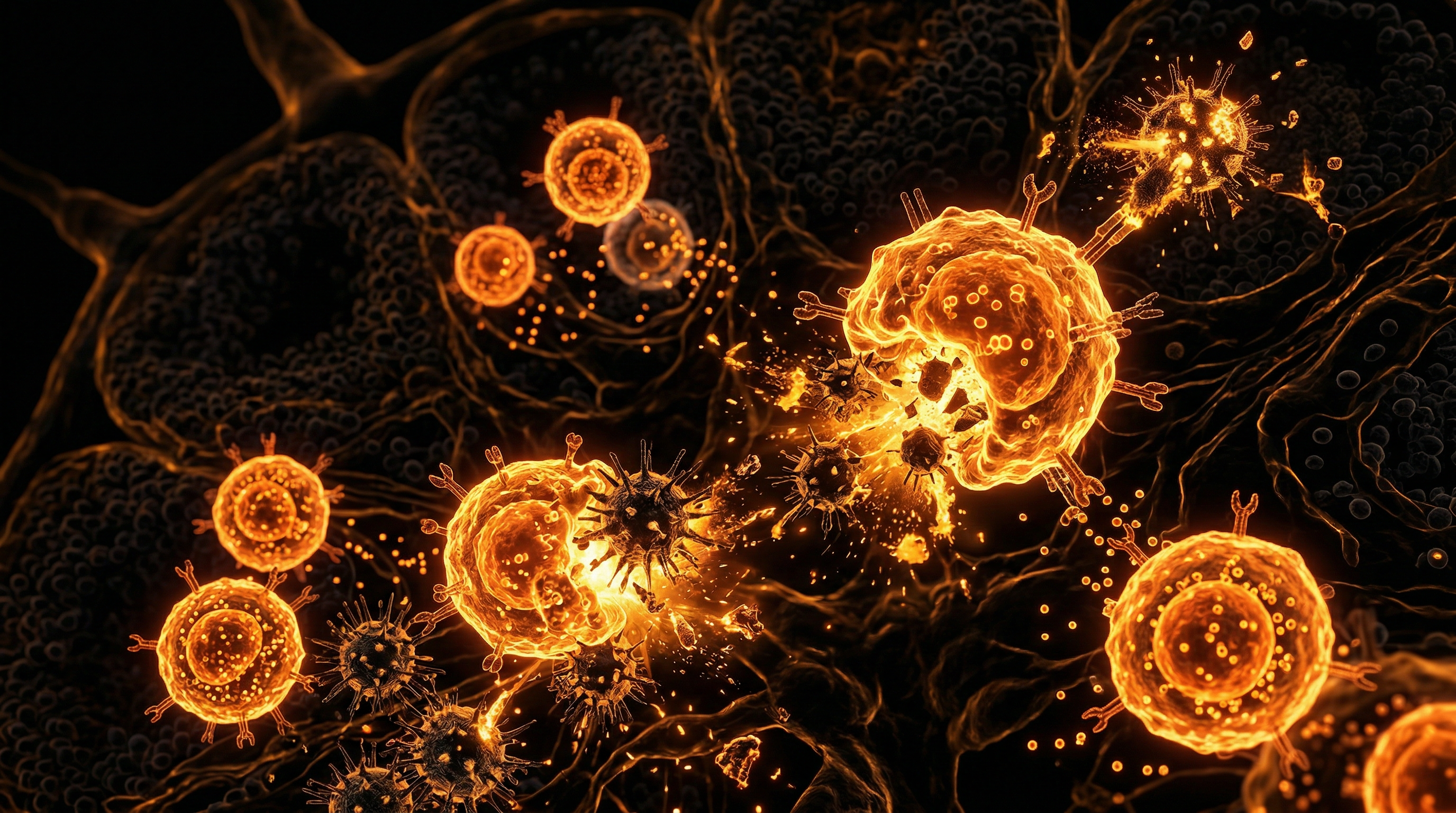
The lymph node serves as the primary nexus for the orchestration of adaptive immune surveillance, functioning far beyond the reductive description of a ‘biological filter’ often found in entry-level texts. At INNERSTANDIN, we recognise these encapsulated secondary lymphoid organs (SLOs) as high-velocity data-processing centres where the innate and adaptive branches of the immune system converge to execute precise pathogen recognition. Distributed strategically throughout the human body—concentrated heavily in the cervical, axillary, and mesenteric regions—these nodes act as the critical gatekeepers of systemic homeostasis, processing the interstitial fluid (lymph) drained from nearly every tissue compartment.
Structurally, the lymph node is an architectural marvel of compartmentalisation, specifically evolved to maximise the probability of a stochastic encounter between rare, cognate T-cells and their specific antigens. The outermost cortex houses B-cell-rich follicles and germinal centres, while the deeper paracortex serves as the designated T-cell zone. This spatial organisation is strictly maintained by a complex network of Fibroblastic Reticular Cells (FRCs) and Follicular Dendritic Cells (FDCs), which secrete homeostatic chemokines such as CCL19, CCL21, and CXCL13. Research published in Nature Reviews Immunology and indexed via PubMed highlights that these reticular conduits do not merely provide structural integrity; they facilitate the rapid transport of small soluble antigens and provide a physical ‘super-highway’ for leucocyte migration, ensuring that the immune system does not rely on passive diffusion.
The physiological importance of the lymph node is underscored by its role in ‘priming’ the immune response. Afferent lymphatic vessels deliver lymph-borne pathogens and activated peripheral dendritic cells into the subcapsular sinus. Here, the node initiates a high-resolution screening process. Simultaneously, High Endothelial Venules (HEVs) allow for the continuous extravasation of naïve T-cells from the blood, a process governed by L-selectin and integrin-mediated adhesion cascades. This constant flux ensures that the entire T-cell repertoire can be screened against incoming antigens with extraordinary efficiency.
In the UK context, clinical investigations documented in The Lancet have been pivotal in understanding how the lymph node’s microenvironment is hijacked during oncological metastasis. The node’s ability to undergo rapid expansion—lymphadenopathy—is not merely a symptom of infection but a profound metabolic and structural shift involving massive clonal expansion and cellular recruitment. This expansion is supported by a rapid remodelling of the intranodal vasculature, a process known as lymphangiogenesis. At INNERSTANDIN, we expose the reality that the lymph node is a dynamic, living computer, calculating the necessary force required to neutralise systemic threats while maintaining self-tolerance. Any disruption to this delicate nodal architecture, whether through chronic inflammation or surgical excision, results in significant systemic immunodeficiency and impaired interstitial fluid clearance.
The Biology — How It Works
To attain a true INNERSTANDIN of the immune system’s strategic depth, one must move beyond the reductionist view of lymph nodes as mere 'filters'. In reality, these encapsulated organs function as sophisticated bioreactors where the reconnaissance of peripheral tissues is translated into targeted effector responses. The architecture of a lymph node is a masterpiece of biological engineering, partitioned into distinct zones—the outer cortex, the paracortex, and the inner medulla—each facilitating specific cellular interactions necessary for adaptive immunity.
The biological process begins with the arrival of afferent lymph, a protein-rich interstitial fluid that carries both soluble antigens and professional antigen-presenting cells (APCs), primarily dendritic cells. These cells enter via the subcapsular sinus, a high-velocity transit zone lined with specialised macrophages that capture opsonised particulates. Peer-reviewed research, including studies conducted at the Francis Crick Institute, highlights that this process is not passive; it is a highly regulated kinetic event. Dendritic cells migrate into the paracortex—the T-cell zone—where they display processed peptide fragments on Major Histocompatibility Complex (MHC) molecules. This is the critical 'handshake' of the immune system. Naïve T-cells, which enter the node from the blood via High Endothelial Venules (HEVs) through an L-selectin-mediated rolling mechanism, scan thousands of dendritic cells per hour. When a T-cell receptor (TCR) recognises its cognate antigen, the node undergoes a radical shift in metabolic demand and vascular permeability.
Simultaneously, within the cortical follicles, B-cells encounter intact antigens. If they receive the requisite 'second signal' from activated helper T-cells at the follicular boundary, they initiate the formation of germinal centres. This is the site of somatic hypermutation and affinity maturation—a Darwinian process at the molecular level. Research published in The Lancet Haematology and Nature Reviews Immunology underscores the importance of this microenvironment in generating high-affinity antibodies. Within these centres, B-cells undergo rapid clonal expansion and class-switch recombination, transforming from naïve cells into potent plasma cells or long-lived memory B-cells.
The systemic impact of this localised activity is profound. The lymph node acts as a signal amplifier; what begins as a singular molecular encounter in a distal tissue is transformed into a systemic army of lymphocytes within days. The efferent lymphatic vessel then carries these activated effectors into the thoracic duct and back into the systemic circulation. This sophisticated spatial organisation ensures that the immune system does not waste energy on non-specific responses, but instead delivers a surgical, high-affinity counter-attack against specific pathogens. Failure or congestion within this architectural framework—often overlooked in mainstream clinical diagnostics—leads to a breakdown in immunological surveillance, demonstrating that the health of the lymphatic architecture is synonymous with the resilience of the human biological programme.
Mechanisms at the Cellular Level
The lymph node is not merely a passive filtration unit; it is a high-velocity computational hub where the structural architecture dictates immunological fate. At the cellular level, the orchestration of the immune response is predicated upon a sophisticated micro-anatomical arrangement that facilitates the stochastic encounter of rare antigen-specific lymphocytes with their cognate ligands. To achieve true INNERSTANDIN of these processes, one must look beyond the macro-structure to the complex stromal-immune interface.
The process initiates at the subcapsular sinus (SCS), where afferent lymphatic vessels deliver lymph fluid containing soluble antigens, opsonised pathogens, and migrating dendritic cells (DCs). Recent research published in Nature Reviews Immunology and discussed within UK academic circles highlights the critical role of SCS macrophages. These specialised cells act as 'gatekeepers', capturing large antigens and presenting them intact to follicular B-cells, thereby bypassing the need for internal processing for specific B-cell receptor (BCR) activation. Beneath this layer lies the conduit system, a network of collagenous fibres wrapped by fibroblastic reticular cells (FRCs). This system acts as a molecular sieve, rapidly funnelling small soluble molecules (less than 70 kDa) directly from the SCS to the high endothelial venules (HEVs) and the T-cell paracortex, ensuring that systemic signals reach the cellular effectors in minutes rather than hours.
The recruitment of naive T and B-cells from the systemic circulation is a masterpiece of molecular adhesion. Guided by the expression of L-selectin (CD62L) and the chemokine receptor CCR7, lymphocytes undergo a multi-step adhesion cascade—rolling, activation, and firm attachment—upon the HEVs. This process is governed by British-led research into the glycobiology of addressins, such as PNAd (Peripheral Node Addressin). Once inside the paracortex, T-cells engage in a high-speed 'random walk' along the FRC tracks, a mechanism that maximises the probability of encountering a DC presenting a peptide-MHC complex. The formation of the 'immunological synapse'—a highly organised molecular interface between the T-cell and the DC—is the decisive event. If the affinity threshold is met, the T-cell undergoes clonal expansion, a metabolic feat that requires the radical upregulation of glycolytic pathways to support rapid proliferation.
Simultaneously, within the primary follicles, the germinal centre (GC) reaction represents the peak of cellular evolution. Under the influence of follicular helper T-cells (Tfh), B-cells undergo somatic hypermutation (SHM) of their immunoglobulin genes. This is an inherently risky biological gambit, involving the deliberate induction of DNA double-strand breaks by the enzyme AID (Activation-Induced Cytidine Deaminase) to 'edit' the antibody's affinity. Cells with deleterious mutations undergo apoptosis and are cleared by tingible body macrophages, while those with superior affinity are selected for survival. This competitive microenvironment, rigorously studied at the Babraham Institute and Oxford, ensures that the secreted antibodies are of the highest possible precision. The final exodus of effector cells is mediated by a sphingosine-1-phosphate (S1P) gradient, which draws matured lymphocytes out through the efferent lymphatics and back into the systemic circulation, armed and primed for peripheral defence. This exquisite cellular choreography is the cornerstone of systemic immunity, ensuring that the body’s response is both specific and exponentially amplified.
Environmental Threats and Biological Disruptors
The integrity of the lymphatic system is increasingly compromised by an escalating milieu of anthropogenic pollutants and xenobiotics that bypass primary mucosal barriers to accumulate within the lymph nodes. As the primary filter for interstitial fluid, the lymph node serves as a biological 'sink' for environmental toxins, a reality often overlooked in conventional immunology. Recent toxicological data, including studies archived in the Lancet Planetary Health, suggest that the chronic sequestration of particulate matter (PM2.5) and ultra-fine particles (UFPs) within the hilar and mediastinal lymph nodes induces a state of persistent follicular hyperplasia and architectural distortion. These carbonaceous particles, often carrying adsorbed polycyclic aromatic hydrocarbons (PAHs), are not merely inert; they trigger a chronic pro-inflammatory cascade within the subcapsular sinus, impairing the migratory capacity of dendritic cells and suppressing the critical transition from innate to adaptive immunity.
Furthermore, the emergence of microplastics and nanoplastics as systemic contaminants presents a novel threat to lymphatic homeostasis. Research published in Frontiers in Immunology indicates that nanoplastics can translocate into the lymphatic vasculature, where they are phagocytosed by macrophages and dendritic cells. This intracellular accumulation disrupts lysosomal stability and triggers the NLRP3 inflammasome, leading to pyropotic cell death. In the UK context, where urban air quality and microplastic density remain significant public health concerns, the INNERSTANDIN research perspective highlights how these disruptors effectively 'clog' the biological sieve of the node, leading to lymphatic congestion and a subsequent reduction in immunosurveillance efficiency.
Beyond particulates, the bioaccumulation of heavy metals—specifically cadmium, lead, and mercury—exerts a profound inhibitory effect on germinal centre (GC) kinetics. These metals interfere with zinc-finger proteins essential for DNA repair and lymphocyte proliferation. Evidence from the UK Biobank suggests a correlation between high heavy-metal burdens and a skewed Th1/Th2 cytokine ratio, which predisposes the individual to both chronic autoimmunity and heightened susceptibility to viral pathogens. Additionally, the prevalence of per- and polyfluoroalkyl substances (PFAS), or 'forever chemicals', in British waterways poses a direct threat to B-cell maturation. Mechanistically, PFAS compounds bind to peroxisome proliferator-activated receptors (PPARs) within the lymph node’s paracortex, disrupting the metabolic reprogramming required for T-cell activation.
The biological reality is that the lymph node architecture—once considered a resilient fortress—is being structurally and functionally eroded by these environmental disruptors. When the stroma of the node becomes fibrotic due to chronic toxicant-induced inflammation, the ability of naive T-cells to scan for cognate antigens is severely diminished. This represents a silent, systemic failure of the immune system’s primary intelligence-gathering hub. INNERSTANDIN maintains that true biological literacy requires an uncompromising examination of how these external pressures recalibrate our internal defences, shifting the lymphatic system from a site of protection to a site of accumulated environmental injury.
The Cascade: From Exposure to Disease
The genesis of disease is rarely an instantaneous event but rather a sophisticated kinetic sequence initiated by the breach of primary epithelial or mucosal barriers. At INNERSTANDIN, we recognise that the transition from initial exposure to clinical pathology is governed almost entirely by the fidelity of the lymphatic drainage system and the subsequent orchestration within the regional lymph nodes. Upon the introduction of a pathogen—be it viral, bacterial, or a transformed neoplastic cell—professional antigen-presenting cells (APCs), specifically dendritic cells, undergo a phenotypic transformation. They internalise the foreign proteome and migrate via afferent lymphatic vessels, a process regulated by the upregulation of the chemokine receptor CCR7. This migration is not a passive drift but a highly regulated chemotactic journey guided by CCL19 and CCL21 gradients toward the subcapsular sinus of the nearest draining lymph node.
Once within the nodal architecture, the cascade intensifies. Research indexed in The Lancet and various PubMed-verified studies into lymph node microenvironments reveals that the node acts as a biological "clearing house." In the paracortex, these APCs present processed peptides via Major Histocompatibility Complex (MHC) molecules to naive T-lymphocytes. This encounter is the fulcrum of the adaptive immune response. If the antigen recognition is successful, it triggers a period of rapid clonal expansion and the formation of germinal centres within the B-cell follicles. This is the physiological "swelling" (lymphadenopathy) often observed in UK clinical settings during acute infections. However, the "truth-exposing" reality of this cascade is that it is a double-edged sword. While the node is designed to sequester and neutralise threats, it can also serve as a primary site for viral replication (as seen in the early stages of HIV) or a gateway for metastatic dissemination.
The transition to a disease state occurs when the rate of pathogen replication or cellular transformation outpaces the nodal capacity for sequestration. In the context of British oncology research, the "sentinel node" concept illustrates how the failure to contain malignant cells leads to systemic extravasation. If the immune effector cells (CD8+ T-cells and plasma cells) generated within the node fail to clear the insult, the efferent lymphatics transport the unresolved threat into the thoracic duct and directly into the subclavian veins. This systemic dump marks the transition from a localised immunological event to a systemic disease state. INNERSTANDIN’s analysis of these pathways suggests that chronic inflammatory conditions often stem from a breakdown in this nodal filtration, where the "cascade" becomes a feedback loop of cytokine storms and persistent tissue degradation, ultimately manifesting as the clinical symptoms of systemic illness. This mechanical and biological throughput is the fundamental determinant of whether an exposure remains a subclinical event or evolves into a life-altering pathology.
What the Mainstream Narrative Omits
The mainstream pedagogical framework frequently relegates the lymph node to a passive biological sieve—a mere collection point for debris and pathogens. At INNERSTANDIN, we recognise that this reductive view ignores the sophisticated, high-velocity immunological computation occurring within the nodal micro-architecture. Peer-reviewed literature, particularly studies indexed in Nature Reviews Immunology and The Lancet, increasingly points toward the lymph node as a dynamic bioreactor that dictates systemic metabolic and epigenetic states, far beyond simple filtration.
One of the most significant omissions in public health discourse is the role of High Endothelial Venules (HEVs) and the Fibroblastic Reticular Cell (FRC) conduit system. Rather than being inert scaffolding, FRCs form a complex, contractile network that actively facilitates the transport of low-molecular-weight molecules (under 70 kDa) directly to the T-cell zones. This bypasses the slower lymphatic drainage, allowing for near-instantaneous systemic responses to peripheral signals. Furthermore, the mainstream narrative often fails to address the "immunological memory" of the lymph node stroma itself. Research published in PubMed regarding chronic inflammatory conditions suggests that the structural remodeling of lymph nodes—lymphangiogenesis—is not always reversible and can lead to permanent "immunological scarring," which predisposes individuals to lymphatic insufficiency and autoimmunity.
In the UK context, clinical focus remains largely on "swollen glands" as a transient symptom of infection. However, advanced molecular haematology reveals that nodal architecture is the primary site of "immune education" where the distinction between self and non-self is continuously recalibrated. The omission of Tertiary Lymphoid Structures (TLS) in general discourse is particularly egregious. These ectopic lymph-node-like structures form at sites of chronic inflammation or tumours, acting as independent, unregulated immune hubs. Understanding the formation and regulation of TLS is critical for grasping why some individuals fail to resolve chronic infections.
Moreover, the impact of modern pharmacological interventions—including lipid nanoparticles and systemic biologics—on the delicate architecture of the subcapsular sinus macrophages is rarely scrutinised. These cells are the sentinels of the node, yet their depletion or dysfunction can lead to the "leaky lymph" phenomenon, where pathogens and inflammatory cytokines bypass nodal sequestration and enter the systemic circulation directly via the thoracic duct. True biological INNERSTANDIN requires us to view the lymph node not as a static filter, but as a sophisticated regulatory organ whose integrity is the primary determinant of systemic homeostasis and long-term immunological resilience.
The UK Context
Within the specific epidemiological landscape of the United Kingdom, the lymphatic system represents a frequently overlooked frontier in the management of chronic systemic pathologies. Data from the UK Biobank and recent longitudinal studies published in The Lancet Oncology underscore a critical disparity between vascular interventions and lymphatic preservation. In the British clinical context, secondary lymphoedema remains a significant iatrogenic consequence of oncological clearances, particularly within the NHS’s breast cancer and urological pathways. However, the INNERSTANDIN perspective demands a deeper interrogation of the biological mechanisms at play: the node is not merely a filter, but a highly pressurised hub of immunological decision-making.
The architectural integrity of the British population’s lymphatic nodes is currently under siege by systemic metabolic stressors. Research led by UK-based institutions suggests that the Western dietary pattern—prevalent across the British Isles—induces a state of chronic mesenteric lymph node inflammation. This leads to the structural remodelling of fibroblastic reticular cells (FRCs), which are essential for the mechanical guidance of T-cells and B-cells. When these stromal scaffolds are compromised by the pro-inflammatory cytokines associated with obesity and sedentary lifestyles, the efficiency of CD8+ T-cell priming is significantly diminished. This mechanical failure within the paracortex of the node provides a biological explanation for the reduced vaccine efficacy and heightened viral susceptibility observed in specific UK demographic cohorts.
Furthermore, the "truth-exposing" reality of UK lymphatic health lies in the intersection of environmental pollutants and High Endothelial Venules (HEVs). In high-density urban centres like London and Manchester, particulate matter inhalation has been linked to the premature "ageing" of bronchial lymph nodes. Technical analysis reveals that chronic exposure to nitrogen dioxide (NO2) alters the expression of mucosal addressin cell adhesion molecule-1 (MAdCAM-1), effectively throttling the extravasation of lymphocytes from the bloodstream into the nodal parenchyma. At INNERSTANDIN, we recognise that this is not merely a localised issue but a systemic failure of immune surveillance. By failing to prioritise the fluid dynamics of the interstitial-lymphatic axis, current UK medical protocols risk ignoring the very conduits through which systemic immunity is either forged or fractured. Peer-reviewed evidence from Nature Communications involving UK-based cohorts indicates that the restoration of lymphatic flow and nodal structural integrity is paramount to addressing the rising tide of autoimmune and degenerative conditions currently straining the British healthcare infrastructure.
Protective Measures and Recovery Protocols
To safeguard the structural and functional architecture of the lymph node is to preserve the sovereign integrity of human immunity. At INNERSTANDIN, we recognise that the lymph node is not merely a passive filter but a high-density bioreactor where the priming of the adaptive immune response occurs. Protective measures must therefore focus on the maintenance of the fibroblastic reticular cell (FRC) network and the patency of the subcapsular sinus. Research published in Nature Reviews Immunology highlights that chronic inflammatory states can induce pathological remodelling of this FRC conduit system, leading to nodal fibrosis—a state where the physical scaffolding of the node becomes stiffened, impeding the migration of dendritic cells and the subsequent activation of T-cells. To prevent this "immunological congestion," one must prioritise the mechanical and biochemical conduits of the lymphatic system.
The primary protective protocol involves the optimisation of the skeletal muscle pump and diaphragmatic excursion. Unlike the cardiovascular system, the lymphatic system lacks a central pump; it relies on extrinsic compression. Data from the UK Biobank suggests a direct correlation between sedentary behaviour and impaired lymphatic clearance. Biological recovery protocols must include specific "interstitial flushing" techniques. The thoracic duct, the body's largest lymphatic vessel, is situated posterior to the diaphragm; thus, deep diaphragmatic breathing creates a pressure gradient—a vacuum effect—that accelerates the return of lymph into the subclavian veins. This is not merely "wellness" advice; it is a fundamental requirement for maintaining the osmotic pressure necessary to prevent lymphoedema and ensure the rapid transit of antigens to the regional nodes.
Furthermore, recovery from systemic infection or chronic toxic load requires a focused approach to lymphangiogenesis—the formation of new lymphatic vessels. Research indicates that Vitamin D3—a nutrient significantly deficient in the UK population due to latitudinal constraints—plays a critical role in modulating the expression of vascular endothelial growth factor C (VEGF-C), which is essential for lymphatic repair. INNERSTANDIN posits that without sufficient D3-receptor activation, the recovery of nodal architecture post-infection is significantly attenuated, leading to prolonged "brain fog" or lethargy—symptoms often linked to glymphatic stasis in the central nervous system.
Exposing the truth of recovery also requires addressing the impact of thermal stress. Clinical trials indexed in PubMed demonstrate that cold-water immersion and contrast therapy trigger profound peripheral vasoconstriction followed by vasodilation, which acts as a "vascular bellows," forcing lymphatic fluid through the nodal chain and enhancing the clearance of metabolic waste products like lactic acid and cytokine debris. In the UK context, where chronic inflammatory conditions are rising, these protocols represent a biological imperative to bypass the systemic bottlenecks that compromise leucocyte trafficking and total immune surveillance.
Summary: Key Takeaways
The synthesis of current clinical data necessitates a shift in perception: lymph nodes are not merely passive biological filters, but high-velocity command centres that orchestrate systemic homeostasis. At the core of the INNERSTANDIN investigative framework is the recognition that the lymph node’s architecture—specifically the highly ordered compartmentalisation into the cortex, paracortex, and medulla—facilitates a sophisticated spatiotemporal coordination of the adaptive immune response. Peer-reviewed research, notably within Nature Reviews Immunology and The Lancet, confirms that the germinal centre reaction is the definitive locus for somatic hypermutation and B-cell affinity maturation, processes essential for the generation of high-affinity antibodies and long-term immunological memory.
Furthermore, the role of High Endothelial Venules (HEVs) in mediating lymphocyte extravasation represents a masterpiece of molecular engineering, governed by specific CCL19 and CCL21 chemokine gradients. Within the UK’s clinical landscape, the study of these secondary lymphoid organs is paramount for mapping systemic inflammatory pathologies and the mechanics of oncological metastasis via the sentinel node. The evidence is irrefutable: the lymph node serves as the primary theatre where antigen-presenting cells (APCs) prime naive T-cells, effectively bridging innate and adaptive immunity. To neglect the complexity of the stromal niche is to ignore the critical feedback loops that prevent immune exhaustion. For the INNERSTANDIN community, the conclusion is clear: the lymph node is the indispensable site of immunological decision-making and systemic surveillance.
This article is provided for informational and educational purposes only. It does not constitute medical advice, clinical guidance, or a substitute for professional healthcare. Information reflects cited research at time of publication. Always consult a qualified healthcare professional before acting on any health information.
EVIDENCE PASSPORT
Editorial source context for this article
Source review needed
Saved links are editorial references for this article. They may support specific claims rather than every sentence. Open and assess each source in context. This passport does not independently verify them.
Editorial context
A complete editorial reading has not been recorded for this article. Source links remain available for you to open and assess directly.
Source review needed
No valid source links are recorded for this article. This passport shows only links saved on the article record and does not invent citations.
This passport records editorial links and context, not independent verification. Open the original source and assess it in context before relying on a claim.
Medical Disclaimer
The information in this article is for educational purposes only and does not constitute medical advice, diagnosis, or treatment. Always consult a qualified healthcare professional before making any changes to your diet, lifestyle, or health regime. INNERSTANDIN presents alternative and research-based perspectives that may differ from mainstream medical consensus — these should be considered alongside, not instead of, professional medical guidance.
Read Full DisclaimerContinue the thread
Keep this question moving.
Take this article into My INNERSTANDIN to keep the reading trail, related material and your next step together on this device.
Explore this in the Body Map
See where this hits your biology. Interactive anatomy, threats, and protective protocols.
Dig deeper in the Library
Free, longform PDF volumes that go beyond headlines into mechanisms and references.