Gold Nanoparticles: Hyperthermia vs. Systemic Toxicity
A critical look at the use of gold nanostructures in cancer therapy through thermal ablation. Emerging evidence suggests these particles accumulate in the spleen and alter immune responses.
Overview
In the vanguard of 21st-century medicine, nanotechnology has transitioned from the realm of speculative fiction to the bedrock of experimental oncology. At the centre of this revolution sits the gold nanoparticle (AuNP). Revered for its inert chemical nature and extraordinary optical properties, the AuNP is marketed as the "magic bullet" of modern therapeutics. However, as we peel back the layers of glossy corporate-funded research, a more complex and unsettling narrative emerges. The very mechanism that allows these particles to incinerate malignant tumours—Hyperthermia—exists in a precarious tension with a clandestine reality: Systemic Toxicity.
For the British scientific community and the informed public, understanding this duality is not merely an academic exercise; it is a necessity for biological survival. We find ourselves at a crossroads where the promise of a cure must be weighed against the potential for a long-term molecular insurrection within the human body. This article explores the physiological double-edged sword of gold nanotechnology, exposing the mechanisms of heat-induced cellular destruction and the silent, systemic risks that occur when these "inert" metals refuse to leave the biological system.
The narrative of "biocompatibility" often serves as a smokescreen. While gold in its bulk form is non-reactive, at the nanoscale, physics shifts. The high surface-area-to-volume ratio creates a highly reactive interface with human biology. As we integrate these particles into the NHS’s future oncology protocols, we must demand a rigorous interrogation of their long-term residence in the liver, spleen, and bone marrow.
The Biology
To understand the gold nanoparticle, one must first understand the Surface Plasmon Resonance (SPR). This is a physical phenomenon where the electrons on the surface of the gold oscillate in resonance with incident light. By tuning the size and shape of the nanoparticle—whether they be nanospheres, nanorods, or nanocages—scientists can calibrate them to absorb specific wavelengths of light, particularly in the Near-Infrared (NIR) spectrum.
The Bio-Interface and the Protein Corona
The moment a gold nanoparticle enters the bloodstream, its "identity" changes. It is no longer a pristine piece of engineered metal; it becomes a biological entity. Within seconds, the particle is swarmed by blood proteins (albumins, globulins, and complement factors), forming what is known as the Protein Corona.
This "corona" determines the particle’s fate. It dictates which cells will "see" the gold, how long it will circulate, and which organs will eventually sequestrate it. The biological system does not see "gold"; it sees a protein-coated invader.
Organ Distribution and Bioaccumulation
The biological reality of AuNPs is their persistence. Unlike organic drugs that are metabolised by the liver and excreted, gold is an element. It cannot be "broken down."
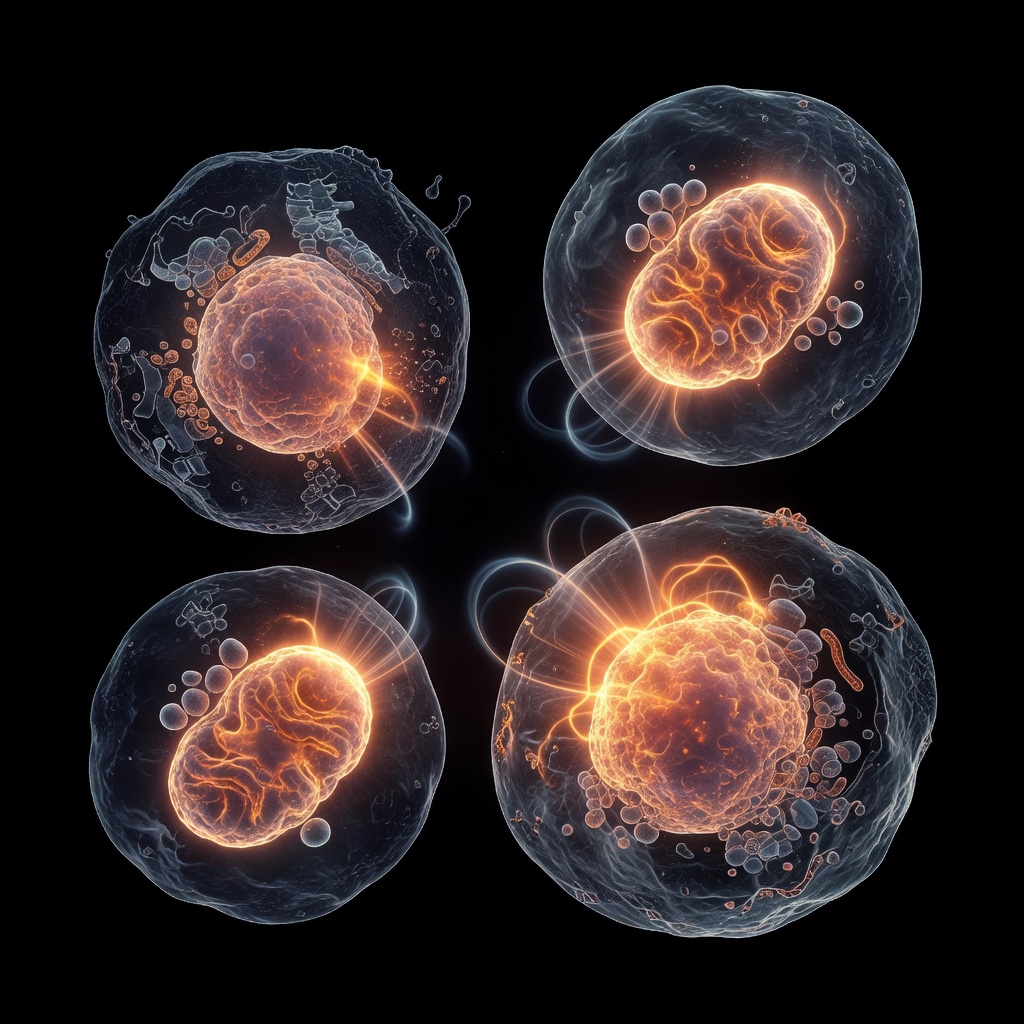
- —The Liver and Spleen: These organs act as the body’s primary filtration system. The Mononuclear Phagocyte System (MPS) identifies AuNPs as foreign debris, leading to massive accumulation in Kupffer cells (liver macrophages).
- —The Blood-Brain Barrier (BBB): Small AuNPs (under 15nm) have demonstrated the ability to cross the BBB, raising urgent questions regarding neurotoxicity and the long-term impact on cognitive health.
- —Renal Clearance: Only the smallest particles (typically <6nm) can be effectively cleared through the kidneys. Anything larger remains trapped, potentially for the duration of the patient’s life.
Mechanisms at the Cellular Level
The therapeutic utility of gold nanoparticles in oncology relies on two primary pathways: the intended (Hyperthermia) and the unintended (Oxidative Stress).
Hyperthermia: The Controlled Burn
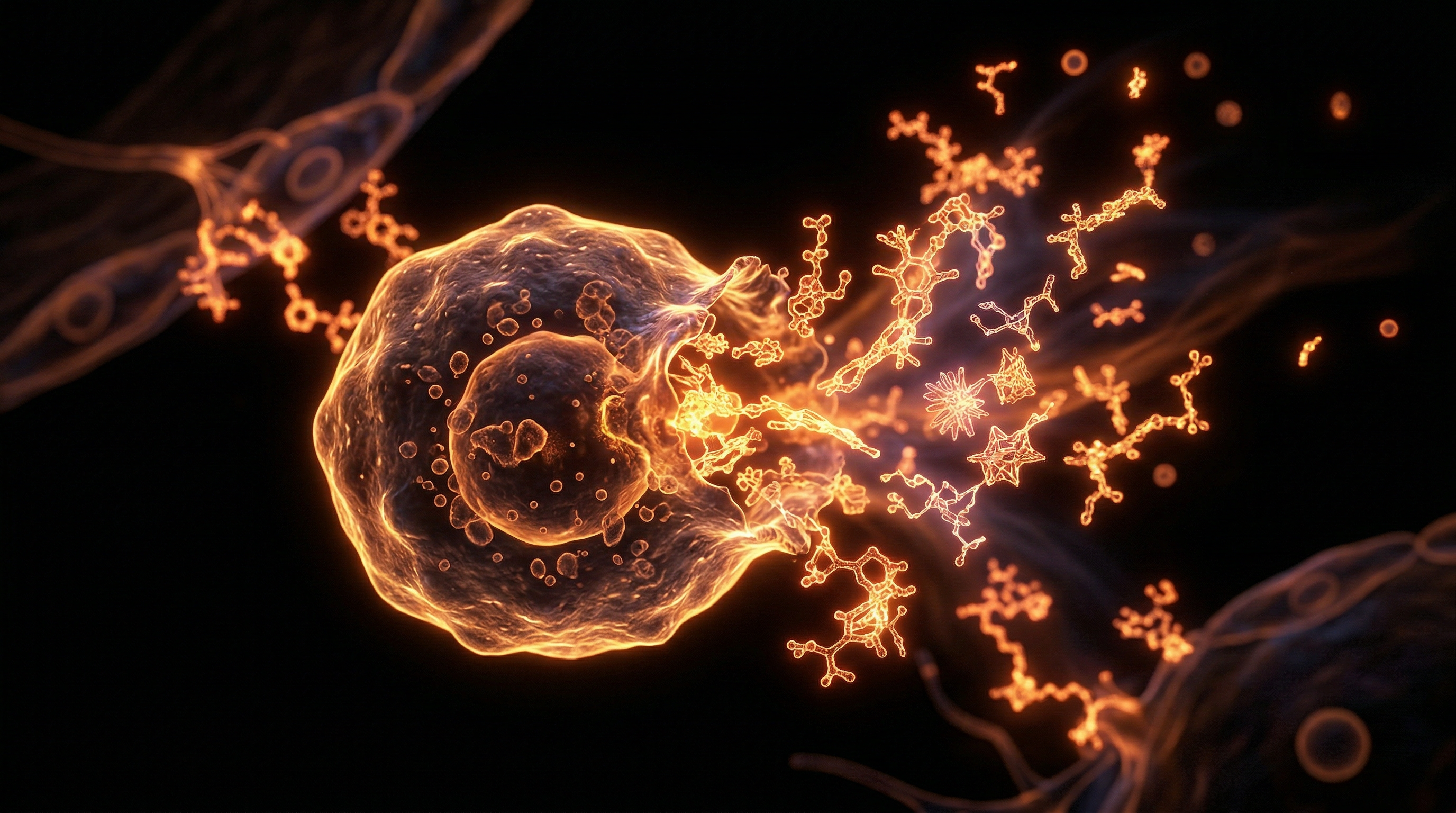
In Photothermal Therapy (PTT), AuNPs are injected and allowed to accumulate within a tumour, often through the "Enhanced Permeability and Retention" (EPR) effect—the idea that leaky tumour vessels trap nanoparticles. Once the concentration is sufficient, a laser is applied. The AuNPs absorb this light and convert it into intense, localised heat.
- —Necrosis vs. Apoptosis: High-intensity heat (above 47°C) causes rapid cell necrosis, where the cancer cell membrane ruptures, spilling its contents. This can trigger an immune response, essentially "teaching" the body to recognize the cancer.
- —Mitochondrial Disruption: Even at lower temperatures (42-45°C), hyperthermia induces proteotoxic stress, unfolding proteins within the cancer cell and forcing it into programmed cell death (apoptosis).
The Dark Side: Systemic Toxicity and ROS
While the heat kills the tumour, the presence of the gold itself initiates a different, more insidious process: the generation of Reactive Oxygen Species (ROS).
- —Oxidative Stress: AuNPs can interfere with the electron transport chain in the mitochondria, leading to the overproduction of free radicals. This results in lipid peroxidation, damaging the cell membranes of healthy tissues far removed from the tumour site.
- —Genotoxicity: There is mounting evidence that AuNPs can enter the nucleus and interact directly with DNA. This can lead to strand breaks and chromosomal aberrations. While the "truth-exposing" lens often focuses on immediate success, the long-term risk of secondary malignancies induced by gold-related DNA damage is a shadow over the field.
- —The Immunological Insurrection: AuNPs can activate the NLRP3 inflammasome. This is a multiprotein oligomer responsible for the activation of inflammatory responses. Chronic activation of this pathway by retained gold particles leads to systemic inflammation, potentially exacerbating autoimmune conditions or leading to chronic organ fibrosis.
Environmental Threats
The discussion of gold nanotechnology cannot be confined to the clinic. As these technologies scale, the environmental footprint becomes a matter of public health.
The Lifecycle of the Nanoparticle
When a patient undergoes gold-based therapy, or when industrial labs synthesise these materials, the gold eventually enters the wastewater system. Traditional water treatment facilities in the UK are not currently equipped to filter out metallic nanoparticles.
- —Bio-magnification: Once in the aquatic ecosystem, AuNPs are ingested by micro-organisms and filter feeders. Because gold is non-biodegradable, it moves up the food chain, increasing in concentration.
- —The Trojan Horse Effect: AuNPs have a high affinity for environmental toxins, such as pesticides and heavy metals. They can "carry" these toxins across biological membranes in fish and mammals that would otherwise be impermeable to them, effectively acting as a delivery system for environmental poisons.
We are witnessing the birth of a new class of "Forever Pollutants." While PFOAs and microplastics dominate the headlines, the metallic nanoparticle is the silent, more reactive cousin that we are ignoring at our peril.
The UK Context
The United Kingdom is a global hub for nanotechnology, with institutions like the London Centre for Nanotechnology and Oxford’s Department of Materials leading the charge. The NHS has increasingly looked toward "Precision Medicine" to solve the burgeoning cancer crisis. However, the UK’s regulatory framework, managed by the MHRA (Medicines and Healthcare products Regulatory Agency), faces a unique challenge.
Regulatory Gaps and Post-Brexit Standards
Post-Brexit, the UK has the autonomy to set its own safety standards for nanomaterials. There is a tension between the government’s desire to be a "Science Superpower" and the necessity for rigorous, decade-long safety trials.
- —The "Equivalence" Trap: Many nanomedicines are fast-tracked because gold is "generally recognised as safe" (GRAS) in its bulk form. This is a scientific fallacy. The UK must establish a distinct regulatory category for Nanotoxicology that accounts for the size-dependent behaviour of these elements.
- —NHS Integration: As the NHS moves toward more "ambulatory" cancer treatments, gold-based hyperthermia is seen as a cost-effective, out-patient alternative to invasive surgery. But the cost-saving today may be offset by the cost of treating chronic liver failure or autoimmune disorders in these patients ten years down the line.
British Scientific Ethics
The UK has a long history of pioneering biological ethics. There is a growing movement among British bioscientists to demand "Green Nanotechnology." This involves using plant-based reducing agents (like polyphenols from British tea or seaweed extracts) to synthesise gold particles, making them less toxic to the environment, though not necessarily solving the issue of systemic bioaccumulation.
Protective Measures
If gold nanotechnology is to be used, we must move away from the "inject and hope" model toward a strategy of Mitigation and Targeted Excretion.
1. Surface Modification (PEGylation and Beyond)
To prevent the immediate sequestration of gold by the liver, particles are often coated in Polyethylene Glycol (PEG). This creates a "stealth" effect, allowing the gold to circulate longer. However, some patients develop anti-PEG antibodies, leading to "Accelerated Blood Clearance" and potential anaphylaxis.
- —The Solution: Research into "Zwitterionic" coatings and cell-membrane-coated nanoparticles (using a patient's own red blood cell membranes to "disguise" the gold) is essential for reducing systemic toxicity.
2. Biodegradable Nanoclusters
The most promising protective measure is the development of degradable gold assemblies. These are large enough to be trapped in tumours for hyperthermia but are designed to break down into ultra-small clusters (less than 6nm) after the treatment is complete, allowing for total renal clearance through the urine.
3. Precision Dosimetry
We must move away from standardised dosing. Using advanced imaging like PET-CT to track exactly where the gold goes in real-time allows clinicians to halt treatment if the "off-target" accumulation in the spleen or bone marrow reaches a critical threshold.
4. Chelation and Post-Therapy Detoxification
Just as we use chelation therapy for lead or mercury poisoning, the medical community must investigate agents that can specifically bind to and remove gold nanoparticles from the Mononuclear Phagocyte System once their therapeutic window has closed.
Key Takeaways
- —Gold is not "Inert" at the Nanoscale: The high surface energy of AuNPs makes them biologically volatile, capable of inducing DNA damage and chronic inflammation.
- —Hyperthermia is a Double-Edged Sword: While it is a highly effective, non-invasive way to destroy tumours, the thermal energy and the particles themselves generate ROS that can damage healthy systemic tissues.
- —Bioaccumulation is the Primary Threat: Because gold is an element, it cannot be metabolised. It resides in the liver, spleen, and potentially the brain for years, with unknown long-term consequences.
- —Environmental Impact: Nanoparticles represent a new class of non-biodegradable pollutants that can bio-magnify through the food chain, carrying other toxins with them.
- —Regulatory Reform is Urgent: The UK’s MHRA must move beyond "bulk-gold" safety standards and develop specific nanomedicine protocols that prioritise long-term longitudinal data over short-term clinical "wins."
- —The Future is "Clearable": The gold standard of gold nanotechnology must be the development of particles that can be broken down and excreted via the kidneys, eliminating the risk of life-long residence.
The era of gold nanotechnology is here, and its potential to alleviate human suffering in oncology is undeniable. However, this potential must be tempered with a "truth-exposing" commitment to biology. We cannot afford to trade the cancer of today for a systemic molecular failure tomorrow. True "Innerstanding" requires us to look past the golden shimmer of new technology and confront the hard, elemental reality of the particles we are inviting into our very cells.
This article is provided for informational and educational purposes only. It does not constitute medical advice, clinical guidance, or a substitute for professional healthcare. Information reflects cited research at time of publication. Always consult a qualified healthcare professional before acting on any health information.
RESEARCH FOUNDATIONS
Biological Credibility Archive
Citations provided for educational reference. Verify via PubMed or institutional databases.
Medical Disclaimer
The information in this article is for educational purposes only and does not constitute medical advice, diagnosis, or treatment. Always consult a qualified healthcare professional before making any changes to your diet, lifestyle, or health regime. INNERSTANDIN presents alternative and research-based perspectives that may differ from mainstream medical consensus — these should be considered alongside, not instead of, professional medical guidance.
Read Full DisclaimerReady to learn more?
Continue your journey through our classified biological research.
DISCUSSION ROOM
Members of THE COLLECTIVE discussing "Gold Nanoparticles: Hyperthermia vs. Systemic Toxicity"
SILENT CHANNEL
Be the first to discuss this article. Your insight could help others understand these biological concepts deeper.
RABBIT HOLE
Follow the biological thread deeper