
Gonadorelin: Maintaining Reproductive Health in Modern Men
Updated May 2026
Gonadorelin mimics natural GnRH to stimulate the production of FSH and LH. It is essential for maintaining testicular function in an environment saturated with endocrine-disrupting chemicals.
Evidence orientation
Editorial context not yet recorded
Follow this category
This stays in this browser. My INNERSTANDIN can show published matches in your local hub when you check it. It does not send email, push, or alert notifications.
Local learning review
A private browser aid for revisiting ideas. It is not an alert or a health recommendation.
Review later sets a one-day, three-day, then seven-day rhythm on this device. Choose it only when you want to revisit this article.
Overview
The modern male is facing a biological crisis of unprecedented proportions. Over the last five decades, sperm counts have plummeted by over 50%, while testosterone levels have declined at a rate of approximately 1% per year across the global North. This is not a mere byproduct of an ageing population; it is a generational degradation of the male endocrine system. At the heart of this collapse lies the Hypothalamic-Pituitary-Gonadal (HPG) axis, a delicate feedback loop that governs reproductive health, metabolic vigour, and cognitive clarity.
As we navigate an era defined by industrial toxicity and sedentary lifestyles, the traditional medical model has largely failed to provide proactive solutions. Conventional "Testosterone Replacement Therapy" (TRT) often serves as a blunt instrument, frequently exacerbating infertility and testicular atrophy by bypassing the body’s natural signalling mechanisms. Enter Gonadorelin.
Gonadorelin is the synthetic analogue of the naturally occurring Gonadotropin-Releasing Hormone (GnRH). It represents a sophisticated, physiologically sound intervention designed to restore the "master switch" of the male reproductive system. Unlike exogenous testosterone, which silences the body's internal production, Gonadorelin seeks to re-engage the HPG axis, stimulating the pituitary gland to produce Luteinising Hormone (LH) and Follicle-Stimulating Hormone (FSH).
This article serves as a deep-dive investigation into the science of Gonadorelin, the environmental onslaught currently emasculating the modern man, and the clinical necessity of restoring endogenous endocrine function in a world designed to suppress it.
"The decline in male reproductive health is not a mystery; it is a direct consequence of a broken endocrine feedback loop, exacerbated by a chemical landscape that the human genome has never before encountered."
The Biology — How It Works
To understand Gonadorelin, one must first master the architecture of the HPG axis. The process begins in the Hypothalamus, specifically within the arcuate nucleus and the preoptic area. Here, specialised neurons release GnRH in a unique, pulsatile fashion.
The Pulsatile Requirement
The human body does not secrete GnRH in a steady stream. Instead, it releases concentrated "bursts" or pulses every 60 to 120 minutes. This rhythm is critical. If the signal were continuous, the pituitary gland would undergo downregulation—the receptors would become desensitised, and the production of downstream hormones would cease. This is a vital nuance that many mainstream practitioners overlook.
The Pituitary Relay
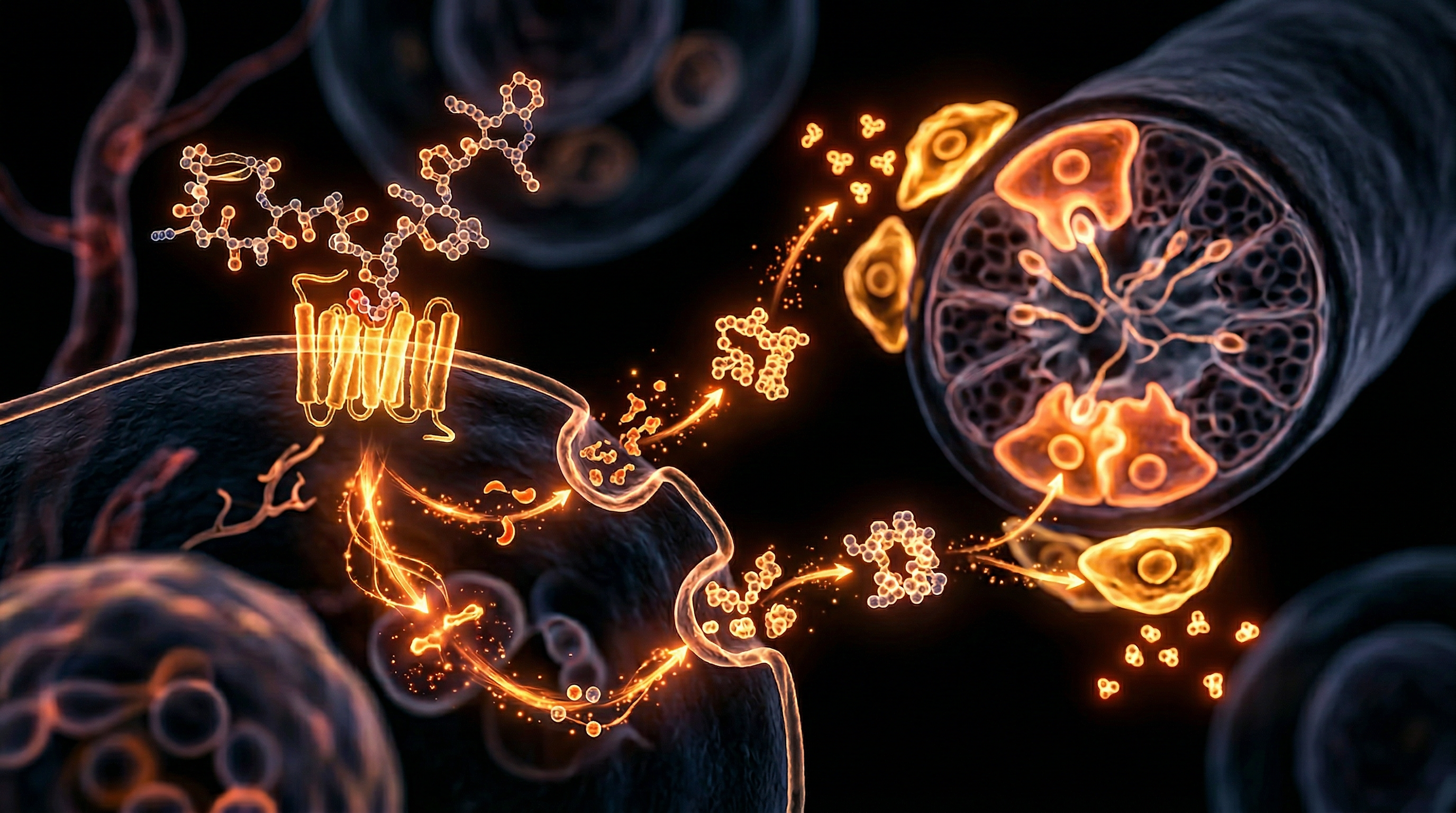
When these pulses of GnRH (or Gonadorelin) reach the Anterior Pituitary Gland, they bind to specific high-affinity receptors. This binding triggers the synthesis and release of two primary gonadotropins:
- Luteinising Hormone (LH): Often referred to as the "Signal for Strength," LH travels through the bloodstream to the Leydig cells in the testes. Its primary role is to stimulate the conversion of cholesterol into Pregnenolone, and subsequently into Testosterone.
- Follicle-Stimulating Hormone (FSH): This hormone targets the Sertoli cells within the seminiferous tubules. It is the primary driver of Spermatogenesis (the production of sperm) and the secretion of Androgen-Binding Protein (ABP), which maintains high local concentrations of testosterone within the testes.
The Feedback Loop
Under normal conditions, as testosterone and Inhibin B levels rise, they signal back to the hypothalamus and pituitary to slow down GnRH, LH, and FSH production. This maintains homeostasis. However, in the modern environment, this loop is perpetually disrupted, leading to a state of Hypogonadotropic Hypogonadism—a condition where the brain "forgets" to tell the testes to work.
Mechanisms at the Cellular Level
At the microscopic scale, the action of Gonadorelin is a masterpiece of molecular signalling. When Gonadorelin molecules bind to the GnRH Receptor (GnRHR)—a G-protein coupled receptor—they initiate a cascade that involves the Phospholipase C (PLC) pathway.
Signal Transduction and Calcium Flux
The activation of PLC leads to the production of two secondary messengers: Inositol Trisphosphate (IP3) and Diacylglycerol (DAG).
- IP3 triggers the release of intracellular calcium from the endoplasmic reticulum.
- This sudden rise in Intracellular Calcium [Ca2+] is the primary trigger for the "exocytosis" or release of LH and FSH into the systemic circulation.
- DAG activates Protein Kinase C (PKC), which facilitates the gene expression required to manufacture more hormone subunits (alpha and beta chains).
The Importance of the Leydig-Sertoli Synergy
Gonadorelin does not just "boost testosterone." It facilitates the internal environment required for Testicular Integrity. Within the testes, the testosterone produced by the Leydig cells (via LH) is required by the Sertoli cells (activated by FSH) to successfully complete the 74-day cycle of sperm maturation.
Without the FSH signal—which is often absent in men using standard TRT—the seminiferous tubules undergo Fibrosis and shrinkage. This is why Gonadorelin is increasingly viewed as an essential co-therapy; it maintains the testicular volume and the capability for future fertility by preserving the Intratesticular Testosterone (ITT) levels, which are often 100 times higher than blood levels.
FACT: Continuous administration of GnRH analogues is used clinically for chemical castration (prostate cancer treatment), whereas pulsatile administration is used to restore fertility. The timing of the dose is more important than the dosage itself.
Environmental Threats and Biological Disruptors
We are currently living in a "toxic soup" of Endocrine Disrupting Chemicals (EDCs). These substances are not merely passive pollutants; they are bioactive molecules that hijack the HPG axis.
The Estrogen Mimicry
Most EDCs, such as Bisphenol A (BPA) and Phthalates, are Xenoestrogens. They possess a molecular structure similar enough to human oestrogen that they can bind to Estrogen Receptor Alpha (ERα) and Estrogen Receptor Beta (ERβ).
- BPA: Found in receipts, plastic linings, and food containers. It binds to the pituitary, sending a false "negative feedback" signal. The brain senses high "oestrogen" and assumes the body has enough sex hormones, thus shutting down GnRH production.
- Phthalates: Used to make plastics flexible and found in synthetic fragrances. These have been shown to directly inhibit the enzymes responsible for testosterone synthesis in the Leydig cells (specifically the 17,20-lyase enzyme).
The "Forever Chemicals" (PFAS)
Per- and Polyfluoroalkyl Substances (PFAS) are ubiquitous in non-stick cookware, waterproof clothing, and fire-fighting foams. These chemicals have a half-life of years in the human body. Research indicates they disrupt the StAR (Steroidogenic Acute Regulatory) protein, which is the "gatekeeper" that allows cholesterol to enter the mitochondria to be turned into hormones. If cholesterol cannot enter the mitochondria, Gonadorelin signals are met with a "busy signal" at the testicular level.
Atrazine and the "Aromatase Up-regulation"
Atrazine, one of the most widely used herbicides, is a potent inducer of the enzyme Aromatase. This enzyme converts testosterone into oestrogen. In the presence of Atrazine, even a man with healthy Gonadorelin levels may find his testosterone being rapidly converted into oestradiol, leading to Gynecomastia (breast tissue growth), water retention, and further suppression of the HPG axis.
The Cascade: From Exposure to Disease
The disruption of the HPG axis by environmental toxins is not a localized event; it is a systemic cascade that leads to a variety of modern pathologies.
Phase 1: The Neuroendocrine Insult
Toxins cross the blood-brain barrier and accumulate in the hypothalamus. This disrupts the Kisspeptin neurons—the high-level regulators that tell GnRH when to pulse. The result is a sluggish, irregular pulse of GnRH.
Phase 2: Secondary Hypogonadism
The pituitary receives weak signals, resulting in low LH and FSH levels. This is "Secondary Hypogonadism." The testes are healthy, but they are "idling" because the "ignition" (Gonadorelin) is faulty. This is the stage where most men experience brain fog, loss of morning erections, and increased abdominal adiposity.
Phase 3: Metabolic Syndrome and Systemic Decline
Testosterone is a metabolic powerhouse. It regulates Insulin Sensitivity and Lipid Metabolism. As the HPG axis fails:
- Visceral Fat increases: This fat acts as an endocrine organ, secreting further oestrogen and inflammatory cytokines (IL-6, TNF-alpha).
- Muscle mass declines: Basal metabolic rate drops.
- Bone Density diminishes: Increasing the risk of osteopenia.
Phase 4: The Fertility Cliff
By the time a man seeks help for infertility, he may have years of accumulated testicular damage. The absence of FSH and LH signals leads to the apoptosis (cell death) of the germinal epithelium. This makes recovery via Gonadorelin or other peptides a biological necessity rather than an elective enhancement.
What the Mainstream Narrative Omits
The current medical establishment is largely unequipped, or perhaps unwilling, to address the root causes of the male endocrine collapse. Several "suppressed truths" continue to be ignored by standard GP guidelines:
The "Normal Range" Fallacy
The "Normal" reference range for testosterone has been consistently lowered over the decades. In many UK laboratories, a total testosterone level of 9 nmol/L is considered "normal." However, twenty years ago, the bottom of the range was often 12 or 15 nmol/L. By lowering the range, the medical establishment "normalises" a diseased state, denying men treatment because they fall within a statistically adjusted (but biologically deficient) bracket.
The TRT Monotherapy Trap
Most doctors who do treat low testosterone prescribe a single agent: exogenous testosterone (cypionate, enanthate, or gels). While this resolves symptoms of low T, it is a biological lobotomy. It sends a massive negative feedback signal to the brain, which halts all endogenous production of LH and FSH.
- The Result: The testes atrophy (shrink), and the man becomes 100% dependent on the pharmacy for his hormones.
- The Omission: Mainstream medicine rarely mentions Gonadorelin as an adjunct to keep the HPG axis alive during therapy.
Ignoring the "Environmental Load"
Rarely does a consultant endocrinologist ask a patient about their exposure to microplastics, their use of fluoridated water, or their proximity to agricultural runoff. The narrative focuses on "genetics" or "ageing," ignoring the fact that we are being chemically castrated by our environment. Gonadorelin is often the only way to "overpower" the inhibitory signals of environmental xenoestrogens.
The UK Context
In the United Kingdom, the situation is particularly dire due to a combination of regulatory stagnation and the specificities of the National Health Service (NHS).
NHS Limitations
The NHS "Green Book" and NICE guidelines are notoriously conservative regarding male hormone health. Gonadorelin is predominantly used in the UK for diagnostic "GnRH Stimulation Tests" to see if the pituitary is functioning, but it is rarely prescribed as a long-term maintenance protocol for health optimisation. Men are often told that unless they are actively trying to conceive right now, testicular atrophy and HPG shutdown are acceptable side effects of treatment.
The Post-Brexit Chemical Landscape
Post-Brexit, the UK's relationship with REACH (Registration, Evaluation, Authorisation and Restriction of Chemicals) has become complex. There are concerns that UK standards for endocrine disruptors may diverge from the more stringent EU protections, potentially leaving British men exposed to higher levels of certain pesticides and plasticisers that are known to interfere with GnRH signalling.
The Rise of Private Peptide Clinics
Because of the "Mainstream Omission" mentioned above, a growing number of British men are turning to private clinics and "Peptide Science" specialists. These practitioners are increasingly using Gonadorelin as a superior alternative to Human Chorionic Gonadotropin (HCG). While HCG mimics LH, Gonadorelin stimulates the production of both LH and FSH, offering a more complete restoration of the male endocrine profile.
Protective Measures and Recovery Protocols
For those looking to safeguard their reproductive health or recover from environmental/pharmaceutical suppression, a multi-faceted approach is required.
1. The Gonadorelin Protocol
When used for HPG maintenance or recovery, Gonadorelin is typically administered via small subcutaneous injections.
- Dosage: Usually 100mcg to 200mcg, administered 2-3 times per week (or more frequently in a "pulsatile" mimetic protocol).
- Synergy: It is often paired with Kisspeptin-10, another peptide that acts one step higher in the brain to trigger the natural release of Gonadorelin.
- Monitoring: Success should be measured not just by Total Testosterone, but by the presence of LH and FSH in bloodwork, and the maintenance of testicular volume.
2. Environmental Detoxification
One cannot out-inject a toxic lifestyle. Protective measures include:
- Filtration: Using high-grade reverse osmosis water filters to remove fluoride, pharmaceutical residues, and PFAS.
- Dietary Choice: Prioritising organic produce to avoid Atrazine and Glyphosate.
- Plastic Elimination: Switching to glass or stainless steel for food storage and avoiding heating any food in plastic containers.
3. Nutritional Cofactors
The HPG axis requires specific raw materials to respond to Gonadorelin:
- Zinc and Magnesium: Essential for the enzymes that produce testosterone.
- Vitamin D3: Effectively a pro-hormone that acts on the pituitary to enhance GnRH sensitivity.
- Boron: Helps lower Sex Hormone-Binding Globulin (SHBG), ensuring the testosterone produced by Gonadorelin is "Free" and bioavailable.
4. Lifestyle Intervention
High-intensity interval training (HIIT) and heavy resistance training have been shown to naturally increase the pulse frequency of GnRH. Conversely, chronic stress and high Cortisol levels directly inhibit the GnRH neurons, making stress management a physiological necessity for male health.
Summary: Key Takeaways
The crisis of modern masculinity is, at its core, a biological one. The degradation of our internal hormonal environment is being driven by an external environment that is increasingly hostile to human physiology.
- Gonadorelin is the Master Key: By mimicking GnRH, it provides the essential signal required to restart the HPG axis, stimulating both LH (for testosterone) and FSH (for fertility).
- The Environment is Emasculating: Xenoestrogens like BPA and Phthalates are actively suppressing the male brain's ability to produce gonadotropins.
- The Mainstream Model is Broken: Relying on "Normal Ranges" and TRT monotherapy leads to testicular atrophy and long-term dependence.
- Pulsatility is Vital: The body requires rhythmic signals. Gonadorelin protocols should aim to mimic this natural biological cadence.
- Restoration is Possible: Through a combination of peptide science, environmental awareness, and targeted nutrition, the "Master Switch" can be flipped back on.
In an age of chemical interference, Gonadorelin represents more than just a medical intervention; it is a tool for biological sovereignty, allowing men to reclaim the hormonal vigour that is their evolutionary birthright.
"The modern man must become his own researcher. To rely on outdated medical paradigms is to accept a state of permanent decline. Endocrine restoration via Gonadorelin is the first step toward reclaiming health in a disrupted world."
This article is provided for informational and educational purposes only. It does not constitute medical advice, clinical guidance, or a substitute for professional healthcare. Information reflects cited research at time of publication. Always consult a qualified healthcare professional before acting on any health information.
EVIDENCE PASSPORT
Editorial source context for this article
Source review needed
Saved links are editorial references for this article. They may support specific claims rather than every sentence. Open and assess each source in context. This passport does not independently verify them.
Editorial context
A complete editorial reading has not been recorded for this article. Source links remain available for you to open and assess directly.
Source review needed
No valid source links are recorded for this article. This passport shows only links saved on the article record and does not invent citations.
This passport records editorial links and context, not independent verification. Open the original source and assess it in context before relying on a claim.
Medical Disclaimer
The information in this article is for educational purposes only and does not constitute medical advice, diagnosis, or treatment. Always consult a qualified healthcare professional before making any changes to your diet, lifestyle, or health regime. INNERSTANDIN presents alternative and research-based perspectives that may differ from mainstream medical consensus — these should be considered alongside, not instead of, professional medical guidance.
Read Full DisclaimerContinue the thread
Keep this question moving.
Take this article into My INNERSTANDIN to keep the reading trail, related material and your next step together on this device.
Explore this in the Body Map
See where this hits your biology. Interactive anatomy, threats, and protective protocols.
Dig deeper in the Library
Free, longform PDF volumes that go beyond headlines into mechanisms and references.