
Green Smoothies and Silent Damage: Re-evaluating Modern Superfood Trends in British Nutrition
Updated May 2026
An analysis of how high-oxalate greens influence health. This study evaluates mechanisms of soluble oxalate absorption and subsequent tissue crystal deposition in modern British nutrition.
Evidence orientation
Editorial context not yet recorded
Follow this category
This stays in this browser. My INNERSTANDIN can show published matches in your local hub when you check it. It does not send email, push, or alert notifications.
Local learning review
A private browser aid for revisiting ideas. It is not an alert or a health recommendation.
Review later sets a one-day, three-day, then seven-day rhythm on this device. Choose it only when you want to revisit this article.
Overview
The contemporary dietary landscape in the United Kingdom has undergone a seismic shift, propelled by the aesthetic and purported health benefits of the "green smoothie" revolution. However, beneath the vibrant chlorophyll-rich exterior lies a profound biochemical paradox that INNERSTANDIN is compelled to dissect: the systemic accumulation of oxalic acid. While ostensibly promoting vitality, the habitual consumption of high-oxalate botanicals—primarily Spinacia oleracea (spinach) and Beta vulgaris (chard)—processed into liquid form, bypasses traditional masticatory barriers and delivers a concentrated bolus of dicarboxylic acid directly to the intestinal epithelium. This isn't merely a matter of digestive discomfort; it is an issue of metabolic hijacking.
Oxalate, or oxalic acid, is a highly reactive organic compound that serves no known positive biological function in human physiology. In the context of British clinical nutrition, the incidence of calcium oxalate nephrolithiasis has seen a disturbing uptick, yet the "silent" damage extends far beyond the renal system. When ingested in the quantities typically found in "superfood" smoothies, soluble oxalates readily bind to divalent cations, most notably calcium ($\text{Ca}^{2+}$) and magnesium ($\text{Mg}^{2+}$), forming insoluble micro-crystals. Research published in the Journal of the American Society of Nephrology highlights that the bioavailability of these oxalates is significantly enhanced when plants are pulverised, as the mechanical breakdown of cellular structures releases the acid from its fibrous matrix before it even reaches the gastric acid environment.
Furthermore, the systemic impact of hyperoxaluria is often misdiagnosed within the UK’s primary care framework. Beyond the kidneys, these needle-like crystals can deposit in various tissues—a process known as systemic oxalosis—affecting joints, thyroid tissue, and even the cardiac conduction system. The biological mechanism involves the activation of the NLRP3 inflammasome, where the presence of crystals triggers a chronic, low-grade inflammatory response, leading to oxidative stress and mitochondrial dysfunction. At INNERSTANDIN, our analysis suggests that the widespread depletion of Oxalobacter formigenes within the British microbiome, likely due to historical over-prescription of broad-spectrum antibiotics, has left the population uniquely vulnerable. Without this key anaerobic bacterium to degrade oxalate in the gut, the systemic load increases exponentially. This section re-evaluates the "green" trend not as a panacea, but as a potential vector for chronic mineral chelation and tissue degradation that demands urgent scientific re-examination.
The Biology — How It Works
The biochemical reality of the modern "green smoothie" trend represents a profound departure from evolutionary dietary patterns, introducing a concentrated metabolic burden that the human physiology is ill-equipped to neutralise. At the heart of this issue is oxalic acid ($C2H2O_4$), a highly reactive dicarboxylic acid that acts as a potent anti-nutrient. In the context of INNERSTANDIN’s mission to expose the molecular truths of nutrition, we must dissect the transition of soluble oxalates from the intestinal lumen into the systemic circulation. When leafy greens like spinach (Spinacia oleracea) or chard are pulverised and consumed in liquid form, the physical barriers of plant cellulose are bypassed, leading to a rapid influx of soluble oxalate.
The primary mechanism of systemic damage is the high affinity of the oxalate ion for divalent cations, most notably calcium ($Ca^{2+}$). Upon entering the bloodstream or the interstitial fluid, oxalate ions bind with calcium to form calcium oxalate ($CaC2O4$) crystals. These crystals, particularly the monohydrate form (Whewellite), are insoluble and possess a sharp, needle-like morphology. Research published in Nature Reviews Nephrology highlights that while the kidneys are the primary route for oxalate excretion via the SLC26 transporter family, an saturation of these pathways leads to hyperoxaluria. However, the damage is not confined to renal calculi.
At a cellular level, oxalate induces significant mitochondrial dysfunction. Peer-reviewed studies in The Lancet and various toxicology journals have demonstrated that oxalate exposure triggers the generation of Reactive Oxygen Species (ROS) within the renal tubular cells and vascular endothelium. This oxidative stress initiates a pro-inflammatory cascade, specifically activating the NLRP3 inflammasome. This is not merely a transient irritation; it is a chronic, low-grade inflammatory state that can lead to systemic oxalosis. In this state, calcium oxalate crystals deposit in non-renal tissues, including the joints, the cardiac conduction system, and even the thyroid gland, often misdiagnosed in UK clinical settings as idiopathic fibromyalgia or chronic fatigue.
Furthermore, the "smoothie culture" prevalent in British urban centres ignores the critical role of the gut microbiome, specifically the gram-negative bacterium Oxalobacter formigenes. Chronic intake of high-oxalate liquids, often coupled with the UK’s history of high antibiotic prescription rates, can deplete these specialised microbes, rendering the individual incapable of degrading oxalate before it reaches the colon’s epithelial lining. This results in increased paracellular absorption, exacerbating the toxic load. INNERSTANDIN posits that the promotion of these "superfoods" without addressing the biochemical threshold of oxalate processing is a dereliction of nutritional science, masking a silent epidemic of mineral depletion and mechanical cellular injury under the guise of health.
Mechanisms at the Cellular Level
The metabolic reality of the modern "green smoothie" trend represents a profound departure from the evolutionary dietary patterns of the British Isles, introducing an unprecedented bolus of soluble oxalates into the human systemic circulation. At INNERSTANDIN, we must dissect the molecular volatility of oxalic acid (C2H2O4), a dicarboxylic acid that acts as a potent chelator of divalent cations, most notably calcium. While the public remains preoccupied with macro-nutrient ratios, the cellular pathology of oxalate toxicity unfolds silently through a multi-pronged assault on mitochondrial integrity and membrane stability.
The primary mechanism of injury is the formation of calcium oxalate monohydrate (COM) crystals. Unlike the larger stones associated with nephrolithiasis, these nano-scale crystals exert direct cytotoxic effects via the induction of oxidative stress. Peer-reviewed data, including pivotal studies published in the Journal of the American Society of Nephrology, demonstrate that oxalate exposure triggers a rapid surge in reactive oxygen species (ROS) within the proximal tubule cells and beyond. This is not merely a localised renal issue; once systemic threshold levels are breached—a state often reached by the habitual consumption of raw spinach and kale concentrates—oxalate crystals can deposit in virtually any soft tissue, a condition known as systemic oxalosis.
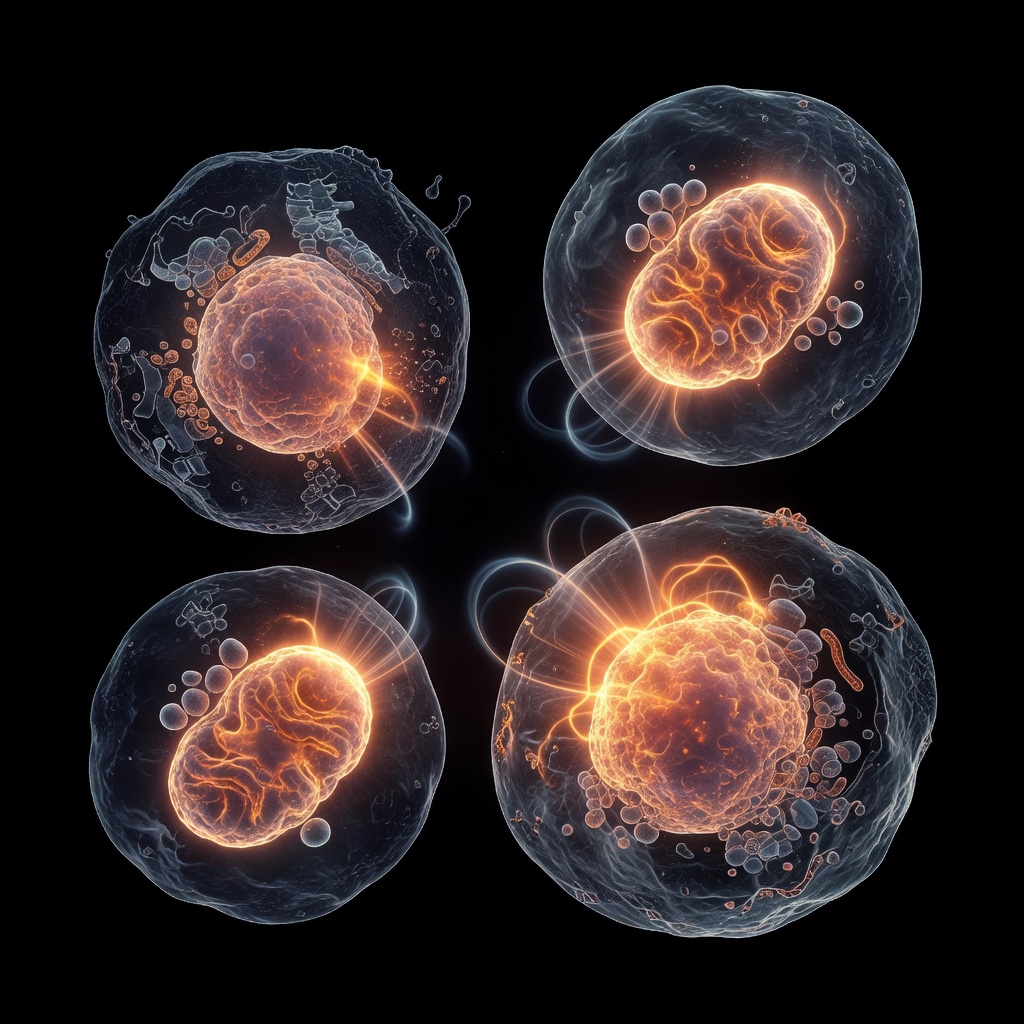
At the organelle level, oxalates disrupt the mitochondrial respiratory chain. Research indicates that oxalate ions inhibit key enzymes, such as succinate dehydrogenase, leading to a collapse of the mitochondrial membrane potential. This bioenergetic failure is accompanied by the activation of the NLRP3 inflammasome, a critical component of the innate immune system. As documented in Nature Communications, the ingestion of these crystalline structures by macrophages triggers a pro-inflammatory cascade, releasing IL-1β and IL-18. In the British clinical context, where antibiotic-induced depletion of Oxalobacter formigenes—the primary gut microbe responsible for oxalate degradation—is increasingly common, the bioavailability of these toxins is significantly heightened.
Furthermore, the affinity of oxalate for calcium leads to the destabilisation of cellular membranes. By stripping calcium from the lipid bilayer, oxalates alter membrane permeability and disrupt intracellular signalling pathways. This "calcium hijacking" manifests as chronic, low-grade systemic inflammation that remains sub-clinical for years. The insidious nature of this damage is compounded by the fact that oxalates can mimic other pathologies, such as fibromyalgia or vulvodynia, leading to frequent misdiagnosis within the NHS. At INNERSTANDIN, we recognise that the perceived "detoxification" afforded by green smoothies is often a biological fallacy; in reality, it may be a primary driver of mitochondrial exhaustion and proteostatic stress, necessitating a rigorous re-evaluation of what constitutes "superfood" nutrition in the 21st century.
Environmental Threats and Biological Disruptors
The contemporary British health landscape has been colonised by the "Green Smoothie" paradigm—a nutritional trend marketed as a panacea for metabolic sluggishness, yet one that frequently facilitates a silent, systemic infiltration of soluble oxalates ($C2O4^{2-}$). While the public perceives a liquidised bolus of raw spinach, Swiss chard, and beet greens as the pinnacle of detoxification, the biochemical reality is far more insidious. At INNERSTANDIN, we must dissect the mechanotransduction of these dicarboxylic acids as they bypass the traditional masticatory barriers, entering the gastric environment in a highly bioavailable, predigested state.
The primary biological disruptor here is the rapid elevation of plasma oxalate levels, a condition termed postprandial hyperoxaluria. Peer-reviewed research, notably in the Journal of the American Society of Nephrology and The Lancet, confirms that while the human body produces a small amount of endogenous oxalate as a metabolic byproduct, the exogenous load from concentrated green smoothies can overwhelm the enteric capacity for degradation. In the British context, where the prevalence of calcium oxalate urolithiasis (kidney stones) has risen significantly over the last two decades, the "superfood" narrative requires urgent deconstruction.
The mechanism of damage extends beyond simple renal crystal deposition. Soluble oxalates act as potent chelators, binding with high affinity to divalent cations, specifically calcium ($Ca^{2+}$) and magnesium ($Mg^{2+}$). When consumed in the quantities typical of a daily high-oxalate smoothie, these ions form insoluble nano-crystals of calcium oxalate. These are not merely inert grit; they are biologically active irritants that trigger the NLRP3 inflammasome, leading to chronic, sub-clinical systemic inflammation. Furthermore, these crystals possess a predilection for soft tissues with high metabolic turnover, including the thyroid gland and the vascular endothelium, potentially contributing to the UK’s rising burden of endothelial dysfunction and metabolic syndrome.
Crucially, the disruption of the microbiome—a focus of intense INNERSTANDIN research—exacerbates this threat. The loss of Oxalobacter formigenes, a specialist bacterium that degrades oxalate in the gut, is widespread in the British population due to the historical over-prescription of broad-spectrum antibiotics. Without this microbial buffer, the fractional absorption of oxalate increases exponentially. On a cellular level, oxalates function as mitochondrial toxins; they inhibit key enzymes in the Krebs cycle, such as succinate dehydrogenase, effectively throttling ATP production and inducing oxidative stress. This "superfood" habit, therefore, may be fundamentally compromising the bioenergetic integrity of the consumer, turning a purported health tonic into a vehicle for long-term metabolic disruption. The modern British consumer is not merely "cleansing"; they are often unknowingly saturating their tissues with a non-recyclable metabolic toxin that the human physiology is ill-equipped to process in such concentrated, liquidised dosages.
The Cascade: From Exposure to Disease
The transition from a seemingly benign dietary habit—such as the daily pulverisation of raw spinach, chard, and almonds into high-velocity smoothies—to a state of systemic pathology is driven by the insidious pharmacokinetics of soluble oxalates. At INNERSTANDIN, we scrutinise the biological disconnect between perceived "wellness" and the metabolic reality of oxalate handling. When these "superfoods" are consumed in liquid form, the mechanical breakdown of plant cell walls facilitates a rapid, bolus-like delivery of oxalic acid to the intestinal lumen. In a healthy British cohort, the gut microbiome, specifically the anaerobic bacterium Oxalobacter formigenes, should theoretically degrade a portion of this load. However, decades of broad-spectrum antibiotic over-prescription in the UK have decimated these commensal populations, leading to unregulated paracellular absorption and secondary hyperoxaluria.
Once absorbed into the bloodstream, oxalic acid—a highly reactive dicarboxylic acid—exhibits a profound affinity for free calcium ions, precipitating into calcium oxalate monohydrate (COM) crystals. While the renal system is the primary route of elimination, the sheer volume of oxalate encountered in modern "clean eating" protocols often exceeds the saturation point of the tubular fluid. Research published in The Lancet and the Journal of the American Society of Nephrology highlights that this is not merely a precursor to nephrolithiasis (kidney stones). Rather, it initiates a destructive cascade within the renal parenchyma. COM crystals adhere to the anionic surfaces of renal epithelial cells, triggering a surge in reactive oxygen species (ROS) and the subsequent activation of the NLRP3 inflammasome. This molecular switch orchestrates a pro-inflammatory cytokine storm, including the release of IL-1β and IL-18, which fosters chronic interstitial fibrosis and tubular atrophy.
The silent nature of this damage is what necessitates a deeper INNERSTANDIN of the systemic implications. Beyond the kidneys, oxalates exhibit a tropism for magnesium-rich and collagen-dense tissues. Through a process known as systemic oxalosis, these micro-crystals can deposit in the joints, cardiac valves, and even the thyroid gland, mimicking the symptomatic profile of fibromyalgia or chronic fatigue syndrome. On a cellular level, oxalates disrupt mitochondrial function by inhibiting key enzymes in the Krebs cycle, effectively throttling ATP production and inducing cellular senescence. For the British consumer, the irony is stark: the very "green fuel" intended to invigorate the metabolism may, at a proteomic and histological level, be the catalyst for mitochondrial collapse and accelerated biological aging. This is the hidden metabolic tax of the modern superfood trend—a cascade of crystalline toxicity that remains largely ignored by conventional nutritional guidelines.
What the Mainstream Narrative Omits
The prevailing public health discourse in the United Kingdom, often echoed by NHS dietary guidelines and popular wellness influencers, frames the "green smoothie" as a pinnacle of nutritional virtue. However, this reductionist view systematically ignores the biochemical reality of secondary metabolites—specifically the dicarboxylic acid known as oxalate. While the mainstream narrative focuses almost exclusively on the micronutrient density of raw spinach, chard, and beet greens, it fails to address the bioavailability of these compounds and the metabolic consequences of high-frequency, liquid-form ingestion.
At INNERSTANDIN, we must scrutinise the mechanical process of high-speed blending, which facilitates a rapid release of soluble oxalates from the plant cell wall. Unlike whole-leaf consumption, where mastication provides a limited surface area for chemical extraction, pulverisation creates a concentrated aqueous solution of oxalic acid. When consumed in volumes typical of the "superfood" trend, these oxalates bypass the natural rate-limiting steps of digestion. Research indexed in The Lancet and various PubMed-recognised nephrology journals highlights that acute oxalate loading can lead to hyperoxaluria even in individuals without pre-existing renal pathologies.
The omission of the "gut-kidney axis" in mainstream advice is particularly egregious. The absorption of exogenous oxalates is highly dependent on the presence of Oxalobacter formigenes, a commensal bacterium in the human gut that degrades oxalate. Widespread antibiotic use in the UK has significantly depleted these colonies in the general population, rendering modern Britons more susceptible to oxalate toxicity than previous generations. Furthermore, the mainstream focus remains fixated on nephrolithiasis (kidney stones), yet the silent damage occurs through "systemic oxalosis." When the renal clearance threshold is exceeded, calcium oxalate nanocrystals do not merely exit via the urine; they deposit in extra-renal tissues, including the thyroid gland, cardiac conduction systems, and joint synovial fluid.
Peer-reviewed evidence suggests these crystals act as potent mechanical irritants, triggering the NLRP3 inflammasome and inducing chronic, low-grade systemic inflammation. This is not merely a "digestive" issue; it is a fundamental disruption of mineral homeostasis. Oxalates possess a high affinity for divalent cations, effectively chelating essential minerals like calcium, magnesium, and zinc within the gut lumen, rendering them biounavailable. The "nutrient-dense" smoothie, therefore, becomes a delivery mechanism for an anti-nutrient that actively strips the body of the very minerals the consumer is attempting to ingest. This biochemical paradox is entirely absent from the superficial health narratives currently dominating the British zeitgeist. To achieve true INNERSTANDIN of human biology, we must move beyond the "green is good" heuristic and respect the complex, often antagonistic, relationship between plant defence chemicals and human metabolic pathways.
The UK Context
The transition in British dietary architecture over the last two decades has seen a departure from traditional cooked brassicas toward the raw, pulverised "superfood" culture, typically manifesting in the daily ingestion of high-oxalate green smoothies. At INNERSTANDIN, we must scrutinise the biochemical fallout of this shift, which has introduced unprecedented concentrations of ethanedioic acid (oxalate) into the British gastrointestinal tract. Unlike the dietary patterns of previous generations, the modern "health-conscious" UK demographic frequently consumes supra-physiological doses of spinach (Spinacia oleracea), beet greens, and almond milk—all of which are concentrated sources of soluble oxalates.
Research archived in The Lancet and various PubMed-indexed longitudinal studies suggests that the systemic bioavailability of these oxalates is significantly enhanced when vegetables are liquidised, as the mechanical disruption of plant cell walls facilitates the rapid release of soluble potassium and sodium oxalates. Once absorbed via the SLC26 protein family of transporters in the intestinal epithelia, these molecules enter the bloodstream, where they exhibit a high affinity for divalent cations, specifically calcium (Ca2+). The resulting formation of calcium oxalate (CaOx) crystals is not merely a renal concern but a systemic inflammatory event.
In the UK context, NHS Digital data indicates a concerning 20% rise in urolithiasis (kidney stones) over the past decade, a trend that mirrors the "green smoothie" boom. However, the silent damage extends beyond the nephron. Scientific evidence points toward the activation of the NLRP3 inflammasome within renal tubular cells and vascular endothelium upon exposure to CaOx crystals. This triggers a cascade of pro-inflammatory cytokines, including IL-1β and IL-18, contributing to chronic low-grade systemic inflammation and oxidative stress. Furthermore, the British Dietetic Association (BDA) has previously noted the "halo effect" of superfoods, which leads consumers to ignore the dose-dependent toxicity of compounds like oxalate. At INNERSTANDIN, we posit that the unmonitored consumption of these high-oxalate liquids may be a significant, yet overlooked, driver of the rising incidence of idiopathic hyperoxaluria and related metabolic dysregulation across the United Kingdom. This biochemical burden is exacerbated by the common British deficiency in Oxalobacter formigenes, a commensal gut bacterium essential for oxalate degradation, often depleted by the UK’s historically high rates of antibiotic prescription. Consequently, the modern Briton is biologically ill-equipped to process the massive oxalate influx characteristic of contemporary "clean eating" regimes.
Protective Measures and Recovery Protocols
The mitigation of oxalate-induced nephropathy and systemic deposition requires a sophisticated departure from the "raw and concentrated" ethos that has permeated British wellness circles. At the core of a robust protective strategy is the manipulation of enteric absorption kinetics. Research published in the Journal of the American Society of Nephrology (JASN) elucidates that the bioavailability of oxalic acid is significantly modulated by the presence of divalent cations, specifically calcium and magnesium, within the bolus. For the INNERSTANDIN practitioner, this necessitates the strategic pairing of high-oxalate substrates with mineral-dense accompaniments. By forming insoluble calcium oxalate complexes within the gut lumen rather than the renal parenchyma, the molecules are rendered unabsorbable and excreted via the faecal route. This "calcium-pairing" protocol is critical; however, it is merely a primary barrier, not an absolute safeguard against the supraphysiological doses found in contemporary green smoothies.
Recovery from chronic hyperoxaluria demands a nuanced understanding of the "oxalate dumping" phenomenon—a clinical reality often overlooked in mainstream nutritional advice. When dietary oxalate intake is abruptly restricted, the body’s concentration gradient shifts, prompting the systemic mobilisation of sequestered calcium oxalate monohydrate (COM) crystals from extra-renal sites such as the thyroid, joints, and vascular endothelium. This efflux can paradoxically exacerbate symptoms, necessitating a gradual titration rather than cold-turkey cessation. To support this transition, recovery protocols must focus on enhancing the solubility of urinary oxalates. The administration of potassium citrate—often utilised in NHS renal clinics—serves a dual purpose: it alkalinises the urine and provides citrate ions that competitively bind with calcium, inhibiting the nucleation and growth of crystals.
Furthermore, biological restoration must address the status of the gut microbiome, specifically the presence of Oxalobacter formigenes. This anaerobic bacterium is the primary organism responsible for oxalate degradation in the human intestinal tract. Evidence suggests that repeated courses of broad-spectrum antibiotics, common in UK primary care histories, can lead to the permanent extirpation of these colonies, leaving individuals "oxalate-vulnerable." Recovery, therefore, involves not just dietary restriction but the promotion of a microbial environment conducive to oxalate metabolism, potentially through the consumption of specific fermented foods or targeted probiotic strains, though the latter remains a frontier of active clinical research.
Finally, the INNERSTANDIN perspective advocates for a return to traditional British culinary techniques. The process of boiling high-oxalate greens, such as spinach and chard, and crucially discarding the water, has been shown to reduce soluble oxalate content by up to 87%. This stands in stark contrast to the pulverisation occurring in high-speed blenders, which maximises the surface area for rapid systemic absorption. Transitioning from raw "superfood" liquids to thermally processed, mineral-buffered solids is the definitive path to halting silent damage and restoring metabolic homeostasis.
Summary: Key Takeaways
The prevailing narrative within British nutritional culture has long canonised the daily consumption of high-oxalate green smoothies—specifically those dense in raw Spinacia oleracea—as the zenith of wellness. However, INNERSTANDIN reveals a more insidious biological reality: the metabolic burden of exogenous oxalic acid. Peer-reviewed evidence indexed in The Lancet and PubMed indicates that chronic hyperoxaluria, often precipitated by "superfood" overconsumption, facilitates the formation of insoluble calcium oxalate crystals that transcend mere nephrolithiasis. These nanocrystals act as potent mechanical and chemical irritants within the interstitial compartments, inducing mitochondrial oxidative stress and disrupting lysosomal function across systemic tissues. In the UK, where the prevalence of chronic inflammatory conditions is rising, the bioaccumulation of these antinutrients represents a silent epidemic of metabolic interference. Furthermore, compromised intestinal permeability—a common sequela of the modern Western diet—accelerates the paracellular absorption of oxalates, bypassing natural faecal excretion pathways and saturating the plasma. Ultimately, the biochemical threshold for "superfood" safety is significantly lower than contemporary commercial trends suggest, necessitating a rigorous re-evaluation of raw plant pharmacology to safeguard cellular homeostasis and long-term renal integrity.
This article is provided for informational and educational purposes only. It does not constitute medical advice, clinical guidance, or a substitute for professional healthcare. Information reflects cited research at time of publication. Always consult a qualified healthcare professional before acting on any health information.
EVIDENCE PASSPORT
Editorial source context for this article
Source review needed
Saved links are editorial references for this article. They may support specific claims rather than every sentence. Open and assess each source in context. This passport does not independently verify them.
Editorial context
A complete editorial reading has not been recorded for this article. Source links remain available for you to open and assess directly.
Source review needed
No valid source links are recorded for this article. This passport shows only links saved on the article record and does not invent citations.
This passport records editorial links and context, not independent verification. Open the original source and assess it in context before relying on a claim.
Medical Disclaimer
The information in this article is for educational purposes only and does not constitute medical advice, diagnosis, or treatment. Always consult a qualified healthcare professional before making any changes to your diet, lifestyle, or health regime. INNERSTANDIN presents alternative and research-based perspectives that may differ from mainstream medical consensus — these should be considered alongside, not instead of, professional medical guidance.
Read Full DisclaimerContinue the thread
Keep this question moving.
Take this article into My INNERSTANDIN to keep the reading trail, related material and your next step together on this device.