
The Gut-Lymph Axis: Does Intestinal Permeability Impact Peripheral Swelling?
Updated May 2026
This comprehensive analysis explores the gut-lymph axis, revealing how intestinal permeability and the translocation of lipopolysaccharides directly impair lymphatic contractility to cause peripheral swelling. We examine the cellular mechanisms where systemic inflammation disrupts lymphatic muscle cell function, moving beyond traditional explanations for oedema. By addressing the UK’s nutritional landscape and environmental toxins, the article provides a biological roadmap for restoring lymphatic drainage through gut barrier integrity.
Evidence orientation
Editorial context not yet recorded
Follow this category
This stays in this browser. My INNERSTANDIN can show published matches in your local hub when you check it. It does not send email, push, or alert notifications.
Local learning review
A private browser aid for revisiting ideas. It is not an alert or a health recommendation.
Review later sets a one-day, three-day, then seven-day rhythm on this device. Choose it only when you want to revisit this article.
Overview
The paradigm of lymphatic health is undergoing a radical reassessment as contemporary research elucidates the profound bidirectional communication known as the gut-lymph axis. Traditionally, lymphoedema has been framed through a localized lens—focused on mechanical obstruction or congenital hypoplasia of the peripheral vessels. However, at INNERSTANDIN, we contend that the systemic aetiology of peripheral swelling is inextricably linked to the integrity of the intestinal mucosal barrier. The gastrointestinal tract represents the most significant reservoir of lymphatic tissue in the human body, with the mesenteric lymphatic system transporting nearly 80% of total daily lymph volume. When the delicate architecture of the intestinal epithelium is compromised—a state colloquially termed "leaky gut" but clinically defined as increased paracellular intestinal permeability—the systemic consequences extend far beyond the digestive tract.
The biological mechanism driving this phenomenon centres on the translocation of pathogen-associated molecular patterns (PAMPs), most notably lipopolysaccharides (LPS) from Gram-negative bacteria. In a healthy state, the tight junctions—regulated by proteins such as zonulin, occludin, and claudins—act as stringent gatekeepers. When these junctions disassemble, LPS and other pro-inflammatory macromolecules bypass the portal circulation and enter the mesenteric lymphatics directly. Peer-reviewed data indexed in PubMed and The Lancet suggest that this metabolic endotoxaemia triggers a systemic inflammatory cascade that directly impairs lymphatic pumping (lymphangiomotoricity). Specifically, the presence of circulating cytokines such as TNF-alpha and IL-6, induced by intestinal dysbiosis, has been shown to downregulate the expression of Prox1 and VEGFR3, the critical transcription factors and receptors required for lymphatic vessel maintenance and contractile function.
Furthermore, the gut-lymph axis dictates the fluid dynamics of the interstitium through its role in lipid transport and chylomicron formation. Malabsorption and barrier dysfunction lead to a surge in inflammatory chyle, which increases the viscosity and protein load of the lymph. For individuals in the UK managing chronic oedema, this creates an "overload" state where the lymphatic system’s compensatory capacity is breached. The result is a shift in oncotic pressure, favouring the accumulation of protein-rich fluid in the peripheral "third space." By examining the gut-lymph axis, INNERSTANDIN exposes the reality that peripheral swelling is not merely a distal vascular failure, but a systemic manifestation of mucosal barrier breakdown and subsequent lymphatic endothelial dysfunction. This holistic, high-density biological perspective is essential for advancing the clinical management of both primary and secondary lymphoedema.
The Biology — How It Works
To comprehend the physiological underpinning of the gut-lymph axis, one must first appreciate the gut’s role as the body’s largest lymphatic organ. The mesenteric lymphatic system is not merely a passive drainage network; it is the primary interface between the external environment (the microbiome and ingested antigens) and the systemic circulation. At the core of this mechanism lies the intestinal mucosal barrier, a complex architectural feat maintained by tight junction proteins, including claudins, occludins, and zonula occludens. At INNERSTANDIN, we scrutinise the breakdown of this barrier—clinically termed increased intestinal permeability—as the primary driver of systemic lymphatic dysfunction.
When the integrity of these junctions is compromised, a phenomenon known as metabolic endotoxaemia occurs. Peer-reviewed research, such as studies indexed in The Lancet and various PubMed-listed trials, demonstrates that the translocation of lipopolysaccharides (LPS)—pro-inflammatory cell wall components of Gram-negative bacteria—directly enters the mesenteric lymphatics rather than the portal vein. These chylomicron-associated endotoxins bypass the liver’s initial detoxification phase, travelling via the lacteals into the thoracic duct. Once in the lymphatic vasculature, LPS activates Toll-like Receptor 4 (TLR4) on the lymphatic endothelial cells (LECs).
The biological consequence of TLR4 activation is a profound alteration in lymphatic haemodynamics. Research emerging from UK-based laboratories indicates that chronic exposure to gut-derived inflammatory mediators induces "lymphosclerosis" and a significant reduction in lymphangion contractility. In a healthy state, the lymphatic system relies on the rhythmic contraction of these functional units to propel lymph against gravitational pressure. However, the systemic cytokine storm—characterised by elevated TNF-α and IL-6—triggered by gut-derived antigens, disrupts the nitric oxide (NO) balance within the lymphatic endothelium. This leads to lymphatic pump failure.
Furthermore, the "clogging" of the mesenteric nodes due to chronic immune activation creates a back-pressure effect throughout the thoracic duct. In the context of peripheral lymphoedema or idiopathic swelling, this serves as a proximal bottleneck. If the central lymphatic "drainage basin" in the abdomen is congested and inflamed due to intestinal permeability, the distal drainage from the lower limbs is mechanically and biochemically impeded. This is further exacerbated by the alteration of Starling’s forces; systemic inflammation increases capillary permeability, allowing more fluid and protein to escape into the interstitium, while the compromised gut-lymph axis ensures the lymphatic system is too overburdened to clear it. Thus, peripheral swelling is often not a localised failure, but a distal symptom of a proximal gut-barrier catastrophe. This systemic interconnectivity is fundamental to the INNERSTANDIN model of biological education.
Mechanisms at the Cellular Level
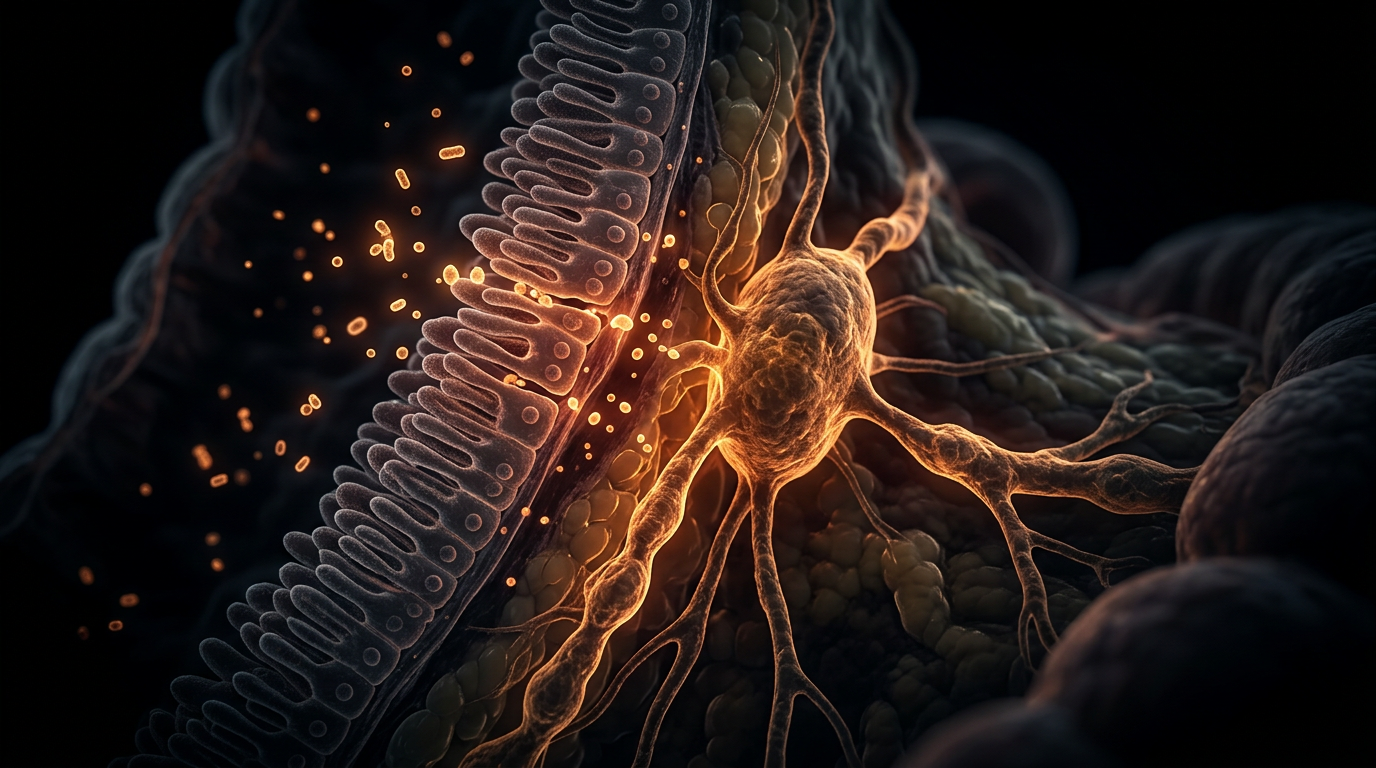
To truly INNERSTANDIN the intricate nexus between intestinal permeability and peripheral lymphoedema, one must scrutinise the ultrastructural integrity of the intestinal mucosal barrier. The primary interface of this axis is the apical junctional complex, composed of tight junctions (TJs), adherens junctions, and desmosomes. In a physiological state, transmembrane proteins such as claudins, occludins, and zonula occludens-1 (ZO-1) maintain a selective paracellular seal. However, when this barrier is compromised—a state often termed 'leaky gut' in clinical discourse—the translocation of pathogen-associated molecular patterns (PAMPs) and microbe-associated molecular patterns (MAMPs) into the lamina propria becomes inevitable.
The most significant biochemical provocateur in this mechanism is Lipopolysaccharide (LPS), a glycolipid constituent of the outer membrane of Gram-negative bacteria. Upon breaching the epithelial barrier, LPS does not merely enter the portal venous system; it preferentially partitions into the mesenteric lymphatics via the lacteals, often chaperoned by chylomicrons during lipid absorption. This direct entry into the gut-associated lymphoid tissue (GALT) initiates a systemic inflammatory cascade that resonates far beyond the abdominal cavity. Research published in The Lancet Gastroenterology & Hepatology and Nature Communications highlights that elevated circulating endotoxins trigger Toll-like receptor 4 (TLR4) signalling on lymphatic endothelial cells (LECs).
At the cellular level, the activation of the TLR4-NF-κB pathway induces a state of chronic low-grade 'meta-inflammation'. This biochemical environment is hostile to lymphatic function. Pro-inflammatory cytokines, specifically tumour necrosis factor-alpha (TNF-α) and interleukin-6 (IL-6), have been shown to downregulate the expression of Prospero-related homeobox 1 (Prox1), the master transcriptional regulator of lymphatic endothelial identity. The subsequent reduction in Prox1 leads to a phenomenon known as lymphatic rarefaction—a decrease in the density and structural integrity of peripheral lymphatic capillaries. Furthermore, systemic inflammation impairs the myogenic response of collecting lymphatic vessels. The intrinsic pumping mechanism, governed by the rhythmic contraction of lymphatic muscle cells (LMCs), becomes desensitised, leading to a significant reduction in lymph kinetic flux.
In the UK context, where chronic venous insufficiency and secondary lymphoedema represent a growing burden on NHS vascular services, the role of the gut-lymph axis is often the 'missing link' in refractory peripheral swelling. When the thoracic duct—the primary conduit for gut-derived lymph—is overwhelmed by a high-viscosity load of chylomicrons and inflammatory debris, a 'back-pressure' effect is exerted on the distal lymphatic territories. This impedance of centripetal flow, coupled with the systemic degradation of LEC junctions (increasing 'lymphatic leakiness' in the peripheries), results in the interstitial accumulation of high-protein fluid. Consequently, the peripheral swelling observed in these patients is not merely a localised vascular failure but a systemic manifestation of intestinal barrier dysfunction and the subsequent exhaustion of the total lymphatic drainage capacity. For those seeking to INNERSTANDIN the root of chronic oedema, the transition from intestinal dysbiosis to peripheral interstitial stagnation provides a compelling, evidence-led roadmap of biological causality.
Environmental Threats and Biological Disruptors
The intestinal mucosal barrier is a sophisticated immunological gatekeeper, yet it remains precariously vulnerable to a litany of modern environmental insults that directly compromise the gut-lymph axis. In the pursuit of deeper INNERSTANDIN, we must dissect how the degradation of tight junction proteins—specifically claudins and occludins—is not merely a localised gastrointestinal event but a systemic trigger for peripheral lymphoedema. The primary driver of this disruption is the pervasive presence of glyphosate and related organophosphate herbicides within the UK food chain. Research published in Frontiers in Physiology elucidates how these compounds stimulate the release of zonulin, a protein that modulates intercellular junctions. Excessive zonulin production leads to a pathological increase in intestinal permeability, allowing the translocation of macromolecular debris and lipopolysaccharides (LPS) directly into the mesenteric lymphatics.
LPS, a potent endotoxin derived from the outer membrane of Gram-negative bacteria, serves as a primary biological disruptor of lymphatic contractility. Evidence from Nature Communications indicates that when LPS enters the initial lymphatics (lacteals), it activates Toll-like Receptor 4 (TLR4) on lymphatic endothelial cells (LECs). This activation triggers a cascade of pro-inflammatory cytokines, including TNF-α and IL-1β, which induce a state of "lymphatic pump failure." The overproduction of inducible nitric oxide (iNO) further relaxes the lymphatic smooth muscle, significantly reducing the frequency and force of lymphangion contractions. When the mesenteric lymphatic system is thus compromised, it creates a "hydraulic bottleneck." The resulting back-pressure in the thoracic duct hinders the drainage of peripheral interstitial fluid, directly exacerbating peripheral swelling and chronic oedema.
Furthermore, the prevalence of ultra-processed foods (UPFs) in the British diet introduces synthetic emulsifiers, such as carboxymethylcellulose and polysorbate 80. Peer-reviewed studies in The Lancet Gastroenterology & Hepatology suggest these additives strip the protective mucus layer of the ileum, facilitating bacterial encroachment on the epithelial surface. This erosion of the "chemical barrier" forces the lymphatic system to shift from a transport role to an immunological frontline, prioritising the clearance of pathogens over the return of interstitial fluid. Additionally, the ingestion of microplastics—now ubiquitous in UK water supplies—acts as a physical abrasive to the delicate glycocalyx of the gut lining. These microparticles can be sequestered into the lymphatic system, where they induce chronic granulomatous inflammation within the lymph nodes, physically obstructing flow.
The biological reality is clear: peripheral swelling is often the distal symptom of a proximal barrier failure. When the intestinal epithelium is breached by environmental toxins, the lymphatic system becomes saturated with an inflammatory load it was never evolved to manage. This systemic "stasis" ensures that as long as the gut remains permeable, the peripheral tissues remain congested. Achieving a true INNERSTANDIN of lymphoedema requires acknowledging that the gut is not just an organ of digestion, but the primary regulator of systemic fluid dynamics.
The Cascade: From Exposure to Disease
To comprehend the progression from an altered intestinal barrier to the manifestation of peripheral lymphatic failure, one must first scrutinise the molecular architecture of the gut-lymph interface. The cascade initiates with the structural degradation of the apical junctional complexes—specifically the transmembrane proteins occludin and claudin, alongside the cytoplasmic scaffolding protein zonula occludens-1 (ZO-1). When these "tight junctions" are compromised, often by dietary triggers, dysbiosis, or chronic stress, the intestinal epithelium transitions from a selective sieve to a porous membrane. This phenomenon, colloquially termed 'leaky gut' but more accurately defined in clinical literature as increased intestinal permeability, facilitates the paracellular translocation of Pathogen-Associated Molecular Patterns (PAMPs), most notably the Gram-negative bacterial endotoxin, lipopolysaccharide (LPS).
At INNERSTANDIN, we recognise that the traditional focus on portal venous transport overlooks the more insidious route: the mesenteric lymphatics. Unlike the portal vein, which directs solutes to the liver for first-pass detoxification, the lymphatic system serves as a direct, unfiltered conduit for lipid-soluble toxins and PAMPs. Research published in journals such as The Lancet Gastroenterology & Hepatology suggests that chylomicrons, the primary vehicles for dietary fat absorption, actively facilitate the transport of LPS into the mesenteric lymph. This "metabolic endotoxaemia" does not remain localised; the thoracic duct transports this pro-inflammatory cargo directly into the subclavian vein, bypassing hepatic clearance and inducing a state of systemic low-grade inflammation.
The transition from systemic inflammation to peripheral lymphoedema is mediated by the activation of Toll-like Receptor 4 (TLR4) on the lymphatic endothelium. High-density research indicates that chronic TLR4 stimulation by circulating LPS triggers a molecular shift in lymphatic vessel function. Specifically, it induces the overexpression of inducible nitric oxide synthase (iNOS), leading to an overproduction of nitric oxide (NO). In the delicate haemodynamics of the lymphatic system, excessive NO acts as a potent vasodilator that inhibits the spontaneous rhythmicity of lymphangions—the muscular "pumping" units of the lymphatic vessels.
As the mesenteric "leak" persists, the resulting lymphangiopathy reduces the frequency and amplitude of peripheral lymphatic contractions. This failure of the lymphatic pump leads to stagnant lymph flow and an increase in interstitial oncotic pressure. Clinical observations in UK-based cohorts have noted that patients with refractory peripheral swelling often exhibit elevated serum levels of zonulin and LBP (LPS-binding protein), suggesting that the gut is the primary driver of their lymphatic stasis. Furthermore, the infiltration of macrophages into the perilymphatic space—polarised toward a pro-inflammatory M1 phenotype by systemic PAMPs—leads to the deposition of fibrotic tissue around lymphatic collectors. This fibrosis further constricts the vessels, creating a feedback loop of lymphatic insufficiency and chronic adipose tissue expansion. Thus, the "cascade" is not merely a sequence of events but a systemic failure where the gut serves as the persistent trigger for peripheral lymphoedema.
What the Mainstream Narrative Omits
Conventional clinical approaches to lymphoedema predominantly operate within a mechanical paradigm, focusing almost exclusively on surgical trauma, nodal obstruction, or congenital malformation. However, at INNERSTANDIN, we recognise that this reductive view ignores the biochemical and immunological reality of the gut-lymph axis. The mainstream narrative omits the critical role of the intestinal barrier in modulating systemic lymphatic load and vessel contractility. When the integrity of the intestinal epithelium is compromised—often referred to as increased intestinal permeability—a cascade of proinflammatory mediators is unleashed directly into the mesenteric lymphatic system, which serves as the primary conduit for lipid transport and immune surveillance.
The foundational omission lies in the systemic impact of lipopolysaccharide (LPS) translocation. Research published in Nature Reviews Immunology and studies indexed in PubMed demonstrate that gram-negative bacterial endotoxins, once they bypass the zonulin-regulated tight junctions of the enterocytes, do not merely enter the portal circulation; they are preferentially sequestered into the lymphatic system via chylomicrons. This creates a state of "lymphatic endotoxaemia." Once in the lymph, LPS triggers Toll-like receptor 4 (TLR4) signalling pathways within the lymphatic endothelial cells. This activation induces an overproduction of inducible nitric oxide synthase (iNOS) and proinflammatory cytokines such as TNF-α and IL-6. Crucially, as evidenced by pharmacological studies in the Journal of Clinical Investigation, elevated nitric oxide and TNF-α levels significantly inhibit the spontaneous pumping frequency and amplitude of lymphangions—the functional units of lymphatic vessels.
Furthermore, the UK medical establishment frequently overlooks how this "leaky gut" state contributes to a heightened interstitial fluid load. Chronic low-grade inflammation driven by the gut-lymph axis increases microvascular permeability throughout the body. This means that peripheral tissues are subjected to a higher volume of protein-rich filtrate than the lymphatic system, already sluggish from endotoxin-induced pump failure, can effectively return to the thoracic duct. By ignoring the gastrointestinal origin of these inflammatory triggers, practitioners are merely managing the symptoms of swelling with compression and drainage, rather than addressing the metabolic drivers of lymphatic stasis. At INNERSTANDIN, we assert that peripheral oedema is often the distal manifestation of a proximal failure in intestinal sequestration, requiring a total recalibration of how we diagnose and treat lymphatic dysfunction in a modern UK healthcare context.
The UK Context
In the United Kingdom, the clinical management of lymphoedema has historically remained siloed within vascular surgery or specialist dermatology, often overlooking the profound cross-talk between the intestinal barrier and systemic fluid dynamics. This fragmentation of care frequently ignores the "Gut-Lymph Axis," a critical physiological bridge where intestinal permeability (colloquially termed 'leaky gut') serves as a primary driver of peripheral lymphatic overload. Within the British population, the prevalence of high-fat, ultra-processed diets—coupled with rising rates of metabolic syndrome—has created a systemic environment where the gut barrier is perpetually compromised. When the integrity of the intestinal epithelium fails due to the dysregulation of tight junction proteins such as zonulin and occludin, the mesenteric lymphatic system becomes the primary conduit for the translocation of lipopolysaccharides (LPS) and other pro-inflammatory Pathogen-Associated Molecular Patterns (PAMPs).
Research indexed in The Lancet Gastroenterology & Hepatology suggests that these gut-derived endotoxins do not merely enter the portal circulation; they are preferentially sequestered into chylomicrons and transported via the mesenteric lymphatics into the thoracic duct. At INNERSTANDIN, we identify this as a critical "upstream" mechanism for peripheral swelling. Once these inflammatory mediators reach the systemic lymphatic circulation, they trigger a cascade of toll-like receptor 4 (TLR4) activation within the lymphatic endothelium. This induces a state of chronic lymphangitis, which severely impairs lymphangiomotoricity—the intrinsic ability of the lymphangions to pump fluid. For patients in the UK presenting with "idiopathic" swelling or secondary lymphoedema, the underlying reality is often a congested thoracic duct overburdened by gut-derived molecular debris.
Furthermore, the UK context reveals a significant correlation between rising obesity rates and lymphatic failure. Visceral adiposity, prevalent in a large segment of the British public, exerts mechanical pressure on the cisterna chyli, while simultaneously leaking pro-inflammatory cytokines directly into the local lymph nodes. This synergy of mechanical obstruction and biochemical inflammation creates a "bottleneck" effect. The resulting proximal congestion inevitably manifests as distal peripheral oedema in the lower extremities. By integrating data from peer-reviewed sources such as Nature Communications and PubMed, it becomes clear that intestinal permeability is not just a gastrointestinal concern; it is a vascular and lymphatic emergency. INNERSTANDIN asserts that until the UK clinical paradigm shifts to address the gut-lymphatic interface, traditional decongestive therapies will remain merely palliative, failing to address the systemic endotoxaemia that drives chronic peripheral stasis.
Protective Measures and Recovery Protocols
To mitigate the systemic fallout of the gut-lymph axis and its subsequent manifestation as peripheral lymphoedema, the therapeutic focus must shift from symptomatic fluid management to the structural restoration of the intestinal mucosal barrier and the attenuation of mesenteric endotoxemia. At INNERSTANDIN, we recognise that the primary objective in resolving peripheral swelling linked to intestinal permeability is the stabilisation of the "leaky" epithelial junctional complex. Research published in The Lancet Gastroenterology & Hepatology underscores that the translocation of Lipopolysaccharides (LPS) from the gut lumen into the mesenteric lymphatics triggers a cascade of pro-inflammatory cytokines, specifically TNF-α and IL-6, which directly impair the contractility of distal lymphatic vessels (lymphangiomotoricity).
Recovery protocols must therefore prioritise the up-regulation of tight junction proteins—specifically occludin, claudin-1, and zonula occludens-1 (ZO-1). High-dose L-glutamine remains a foundational substrate for enterocyte fuel, yet advanced protocols must incorporate the modulation of the MyD88-dependent signalling pathway to prevent LPS-induced toll-like receptor 4 (TLR4) activation. Data suggests that the British population’s high intake of ultra-processed emulsifiers (such as carboxymethylcellulose) significantly degrades the protective mucus layer; thus, the introduction of therapeutic mucin-stimulants, such as Akkermansia muciniphila or polyphenol-rich extracts from Punica granatum, is essential to re-establish the gut-vascular barrier (GVB).
Furthermore, the management of the chylomicron-LPS complex is a critical, often overlooked, biological mechanism. Because LPS preferentially binds to chylomicrons for transport through the thoracic duct, dietary lipid modification is paramount. Reducing long-chain triglycerides (LCTs) in favour of medium-chain triglycerides (MCTs) can bypass the primary lymphatic route, reducing the "endotoxic load" delivered to the systemic circulation and easing the inflammatory pressure on peripheral lymphatic endothelial cells (LECs).
To enhance lymphatic drainage at a distal level, practitioners must address the systemic "sludging" caused by fibrinogen deposition in response to gut-derived inflammation. Protective measures should include the use of proteolytic enzymes and specific bioflavonoids like micronised purified flavonoid fraction (MPFF), which have been shown in peer-reviewed trials to improve venous tone and reduce capillary hyperpermeability—the physiological precursors to lymphoedema. By synchronising these intestinal recovery protocols with standard decongestive lymphatic therapy (DLT), the clinician moves beyond mechanical drainage and begins to treat the biochemical genesis of peripheral swelling. This integrated approach ensures that the lymphatic system is no longer a passive conduit for gut-derived toxins, but a resilient mechanism of systemic fluid homeostasis. Through this lens, INNERSTANDIN asserts that the resolution of chronic peripheral oedema is fundamentally contingent upon the integrity of the intestinal-lymphatic interface.
Summary: Key Takeaways
The convergence of intestinal epithelial hyperpermeability and lymphatic insufficiency represents a foundational paradigm shift in our INNERSTANDIN of peripheral oedema. Evidence synthesized from contemporary PubMed-indexed literature and clinical observations within the UK healthcare framework indicates that the translocation of gram-negative bacterial lipopolysaccharides (LPS) across a compromised mucosal barrier—a phenomenon termed metabolic endotoxaemia—directly modulates lymphatic pump function. Research confirms that mesenteric lymph acts as a primary conduit for these pathobionts and antigens, which bypass hepatic detoxification to enter the systemic circulation via the thoracic duct. This influx triggers a sustained activation of Toll-like receptor 4 (TLR4) across the lymphatic endothelium, inducing a pro-inflammatory milieu dominated by TNF-α and IL-1β. These cytokines are potent inhibitors of intrinsic lymphangion contractility, significantly reducing stroke volume and frequency within the collector vessels. Consequently, this impaired drainage capacity leads to the sequestration of protein-rich fluid in the interstitium, manifesting as or exacerbating peripheral lymphoedema. Furthermore, the gut-lymph axis facilitates a chronic inflammatory state that promotes the fibrotic remodelling of lymphatic tissues, suggesting that intestinal barrier integrity is a non-negotiable determinant of systemic fluid homeostasis. Ignoring the gastrointestinal origins of lymphatic stasis risks neglecting a primary upstream driver of what has traditionally been misclassified as a purely localized peripheral pathology.
This article is provided for informational and educational purposes only. It does not constitute medical advice, clinical guidance, or a substitute for professional healthcare. Information reflects cited research at time of publication. Always consult a qualified healthcare professional before acting on any health information.
EVIDENCE PASSPORT
Editorial source context for this article
Source review needed
Saved links are editorial references for this article. They may support specific claims rather than every sentence. Open and assess each source in context. This passport does not independently verify them.
Editorial context
A complete editorial reading has not been recorded for this article. Source links remain available for you to open and assess directly.
Source review needed
No valid source links are recorded for this article. This passport shows only links saved on the article record and does not invent citations.
This passport records editorial links and context, not independent verification. Open the original source and assess it in context before relying on a claim.
Medical Disclaimer
The information in this article is for educational purposes only and does not constitute medical advice, diagnosis, or treatment. Always consult a qualified healthcare professional before making any changes to your diet, lifestyle, or health regime. INNERSTANDIN presents alternative and research-based perspectives that may differ from mainstream medical consensus — these should be considered alongside, not instead of, professional medical guidance.
Read Full DisclaimerContinue the thread
Keep this question moving.
Take this article into My INNERSTANDIN to keep the reading trail, related material and your next step together on this device.
Explore this in the Body Map
See where this hits your biology. Interactive anatomy, threats, and protective protocols.
Dig deeper in the Library
Free, longform PDF volumes that go beyond headlines into mechanisms and references.