
Heart Rate Variability: The Physiological Mirror of Autonomic Balance
Updated August 2026
Heart Rate Variability (HRV) is a powerful window into your nervous system's resilience. Discover why a 'variable' heart is a sign of health and how it reflects your ability to recover from stress.
Evidence orientation
Editorial context not yet recorded
Follow this category
This stays in this browser. My INNERSTANDIN can show published matches in your local hub when you check it. It does not send email, push, or alert notifications.
Local learning review
A private browser aid for revisiting ideas. It is not an alert or a health recommendation.
Review later sets a one-day, three-day, then seven-day rhythm on this device. Choose it only when you want to revisit this article.
Overview
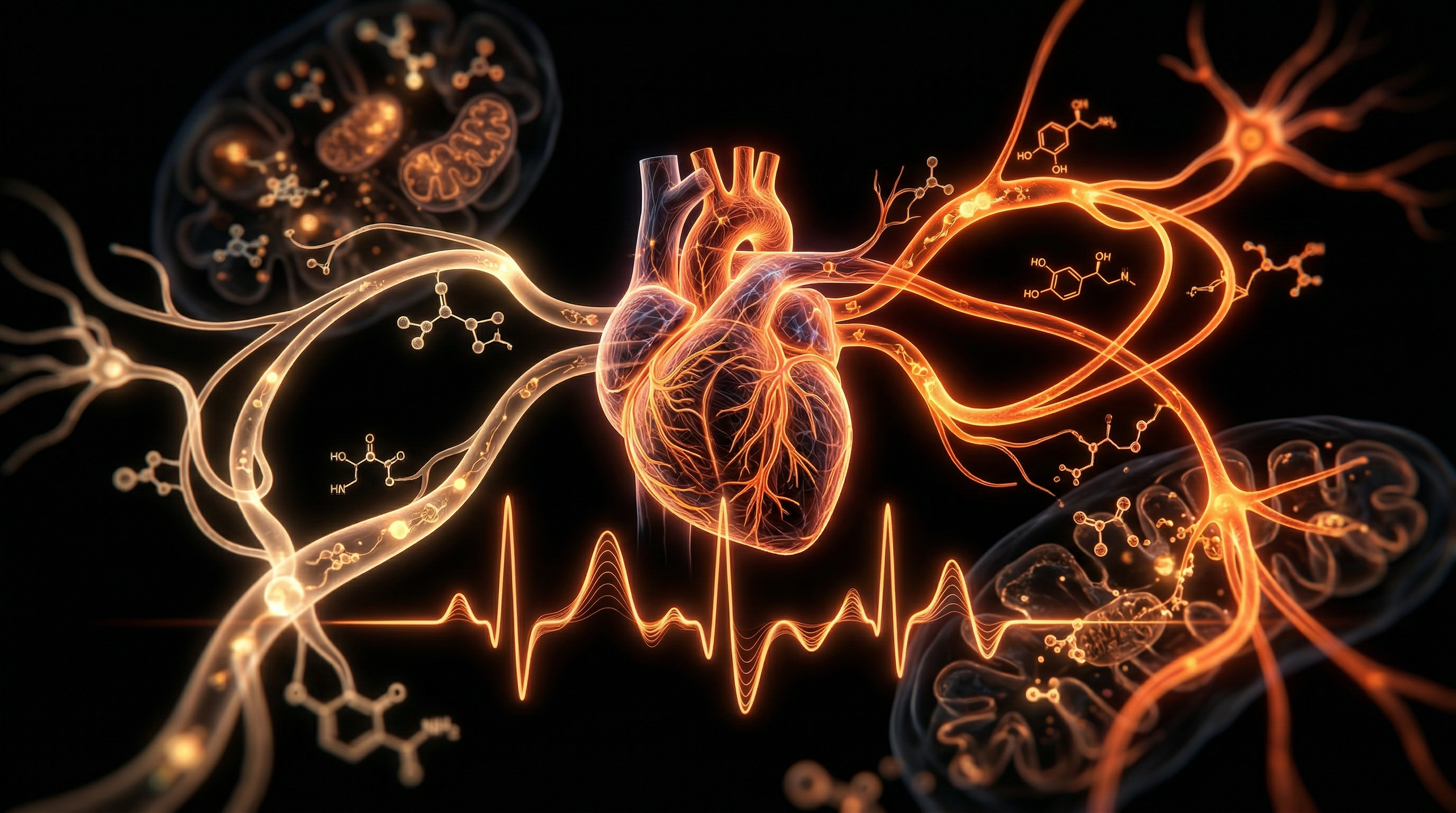
Heart rate variability (HRV) serves as the primary non-invasive proxy for the functional integrity of the autonomic nervous system (ANS). Whilst the term is often colloquially reduced to a metric of recovery, a rigorous physiological analysis reveals that HRV represents the precise temporal oscillation between consecutive R-R intervals in the electrocardiogram—phenomena governed by the intricate interplay between the sympathetic and parasympathetic branches of the ANS. At INNERSTANDIN, we contend that understanding HRV necessitates moving beyond simple time-domain metrics like the standard deviation of NN intervals (SDNN) and into the spectral analysis of cardiac vagal tone.
The biological mechanism underpinning HRV is rooted in the respiratory sinus arrhythmia (RSA). During inhalation, vagal inhibition allows for a transient tachycardia, whilst exhalation facilitates vagal activation, inducing bradycardia. This cycle is mediated by the efferent vagus nerve, which exerts rapid, beat-to-beat control over the sinoatrial node via the release of acetylcholine. A high-resolution HRV profile demonstrates a robust, fluid capacity for the heart to respond to environmental and internal stressors—a hallmark of systemic resilience. Conversely, a loss of variability—specifically in the high-frequency (HF) power spectrum (0.15–0.40 Hz)—is pathognomonic for autonomic dysregulation.
Peer-reviewed evidence, notably longitudinal studies published in The Lancet and various archives of cardiovascular medicine, underscores that diminished HRV is a significant, independent predictor of mortality and morbidity across a spectrum of metabolic and neurodegenerative pathologies. When the physiological 'mirror' remains rigid, it indicates a failure of the homeostatic mechanisms required to dampen systemic inflammation. Research into the neurovisceral integration model suggests that the prefrontal cortex—the seat of executive function—is structurally linked to cardiac vagal tone. Thus, the autonomic balance reflected in HRV is not merely a cardiovascular marker; it is the physiological substrate for emotional regulation and metabolic homeostasis. In the UK clinical context, the emergence of HRV as a diagnostic biomarker in patients recovering from systemic inflammatory response syndromes highlights the necessity for a shift in focus from static heart rate measurements to the chaotic, information-rich data inherent in beat-to-beat variability. At INNERSTANDIN, we recognise that the fluidity of these intervals provides an empirical window into the systemic health of the human organism, dictating our capacity for physiological adaptation.
The Biology — How It Works
To comprehend Heart Rate Variability (HRV), one must first dismantle the prevailing misconception that the heart functions as a metronomic oscillator. In a state of homeostatic robustness, the cardiac rhythm is inherently irregular. This "chaotic" complexity is not evidence of dysfunction; rather, it is the hallmark of a resilient Autonomic Nervous System (ANS). INNERSTANDIN dictates that we view the cardiac cycle through the prism of neuro-visceral integration, where the sinoatrial (SA) node serves as the primary terminal for a dynamic tug-of-war between the sympathetic and parasympathetic branches.
The mechanistic underpinning of HRV resides in the oscillation of the ANS. The sympathetic nervous system (SNS), mediated by norepinephrine, accelerates the sinus rhythm, while the parasympathetic nervous system (PNS)—primarily through the vagus nerve—exerts inhibitory control via the release of acetylcholine. The rapid activation of muscarinic cholinergic receptors hyperpolarises the SA node, providing the physiological "braking" mechanism that creates inter-beat intervals. When these two systems modulate the SA node with precise, reciprocal timing, we observe high-frequency HRV. Conversely, a loss of this beat-to-beat variation signifies a dominant sympathetic drive, indicating that the organism is prioritising immediate metabolic output over long-term recovery—a state of chronic allostatic load.
From a neurobiological standpoint, the prefrontal cortex-amygdala circuitry acts as the executive control centre for this oscillation. As evidenced by studies in The Lancet regarding neuro-visceral integration, HRV is a direct proxy for the efficiency of the baroreceptor reflex and the integrity of the vagal tone. When the vagal system is robust, it effectively dampens systemic inflammation via the "cholinergic anti-inflammatory pathway," a phenomenon INNERSTANDIN emphasises as critical for immunological homeostasis.
Mathematically, we quantify these fluctuations using time-domain metrics, such as the Root Mean Square of Successive Differences (RMSSD). RMSSD is specifically sensitive to vagally mediated changes, capturing the parasympathetic "flutter" that defines a well-regulated system. Furthermore, frequency-domain analysis—decomposing the signal into high-frequency (HF), low-frequency (LF), and very-low-frequency (VLF) components—allows us to map autonomic activity onto specific physiological processes. High-frequency power (0.15–0.4 Hz) serves as a quantitative biomarker for respiratory sinus arrhythmia (RSA), linking cardiac output directly to ventilation. Ultimately, HRV is the definitive quantitative readout of how effectively the human organism interfaces with its environment. When the system remains rigid, it loses its capacity for adaptive variance, leaving the biological architecture vulnerable to the degenerative cascades of chronic stress and autonomic dysfunction.
Mechanisms at the Cellular Level
At the nexus of cardiac electrophysiology and autonomic regulation lies the sinoatrial (SA) node, a complex syncytium of specialized myocytes that serve as the physiological pacemaker. Heart Rate Variability (HRV) is not merely a clinical metric of beat-to-beat fluctuation; it is the macroscopic manifestation of instantaneous electrochemical shifts occurring across the sarcolemmal membranes of these pacemaker cells. To grasp HRV at an INNERSTANDIN level, one must examine the oscillation of the membrane potential driven by the antagonistic interplay between the sympathetic and parasympathetic nervous systems.
The autonomic control of the heart rate is orchestrated via the release of neurotransmitters—norepinephrine from sympathetic postganglionic fibres and acetylcholine (ACh) from the vagus nerve—which bind to G-protein-coupled receptors (GPCRs) on the nodal myocytes. Sympathetic activation triggers the adenylate cyclase-cAMP-protein kinase A (PKA) pathway. This biochemical cascade enhances the phosphorylation of L-type calcium channels ($Cav1.2$) and the hyperpolarisation-activated cyclic nucleotide-gated (HCN) channels, known colloquially as the 'funny' ($If$) current. The resultant increase in the slope of phase 4 diastolic depolarisation accelerates the rate at which the cell reaches the threshold potential, thereby shortening the inter-beat interval.
Conversely, parasympathetic dominance exerts its influence via the $M2$ muscarinic acetylcholine receptors. The subsequent release of $G{\beta\gamma}$ subunits directly activates the acetylcholine-activated inward rectifier potassium current ($I{K,ACh}$). This hyperpolarises the membrane potential, moving it further from the threshold, and simultaneously inhibits the $If$ pacemaker current through the reduction of cAMP levels. The rhythmic interplay of these ionic currents—the 'membrane clock'—is further modulated by the 'calcium clock', which involves the spontaneous, diastolic release of $Ca^{2+}$ from the sarcoplasmic reticulum via ryanodine receptors (RyR2).
These subcellular oscillators are exquisitely sensitive to the vagal efferent traffic, which operates with a latency dictated by the rapid kinetics of ACh degradation by acetylcholinesterase. This rapid synaptic turnover allows for the beat-to-beat sensitivity observed in high-frequency (HF) HRV. Emerging research, frequently discussed within the INNERSTANDIN research collective, suggests that chronic autonomic dysregulation leads to remodelling of these ion channel expression profiles, reducing the plasticity of the nodal cells. When these cellular mechanisms lose their sensitivity—often as a result of chronic systemic inflammation or oxidative stress—the HRV signal becomes attenuated, reflecting a loss of physiological flexibility. Thus, HRV is the definitive quantitative window into the real-time ionic conductance states of the human heart, bridging the gap between molecular signal transduction and systemic homeostatic integrity.
Environmental Threats and Biological Disruptors
The autonomic nervous system (ANS) acts as the primary transducer of environmental stressors into somatic responses, with Heart Rate Variability (HRV) serving as the most sensitive barometer of this integration. However, modern human physiology is currently besieged by a suite of exogenous disruptors that decouple the intrinsic rhythmicity of the sinoatrial node from its parasympathetic substrate. At the molecular level, the pervasive influence of particulate matter (PM2.5) represents a significant, yet under-addressed, challenge to autonomic integrity. Epidemiological data from UK-based environmental cohorts suggest that inhalation of combustion-derived nanoparticles triggers systemic oxidative stress and pulmonary inflammation, which subsequently initiates an autonomic reflex arc that suppresses vagal tone. This suppression is quantifiable through a marked reduction in the high-frequency (HF) power spectrum of HRV, indicating a state of chronic sympathetic dominance that precedes overt cardiovascular pathology.
Furthermore, the ubiquity of endocrine-disrupting chemicals (EDCs), such as phthalates and bisphenols, complicates the homeostasis of the hypothalamic-pituitary-adrenal (HPA) axis. These compounds exhibit xenoestrogenic activity, interfering with the glucocorticoid signalling pathways that govern the ANS. Research published in The Lancet Planetary Health highlights that long-term exposure to these disruptors leads to 'autonomic blunting'—a state where the heart’s capacity for rapid, reactive adjustment is severely attenuated. This suggests that the physiological mirror is being systematically clouded by the accumulation of environmental toxins, rendering the heart unable to oscillate with the flexibility required for true resilience.
Beyond chemical stressors, the pervasive influence of artificial blue-light emission—particularly within the UK’s dense urban environments—functions as a potent biological disruptor of circadian rhythmicity. The suppression of nocturnal melatonin synthesis via the retinohypothalamic tract interferes with the restorative parasympathetic activity that should occur during the sleep cycle. Longitudinal monitoring via wearable sensor data indicates that light-polluted nocturnal environments prevent the typical 'vagal rebound' necessary for cardiovascular recovery, thereby maintaining a high baseline of sympathetic arousal throughout the 24-hour cycle.
INNERSTANDIN dictates that we must recognise these environmental stressors not as minor irritants, but as structural threats to the internal biological architecture. When the autonomic nervous system is forced into a state of permanent low-grade alarm by the modern environment, the resultant decrease in HRV is not merely a data point; it is a clinical manifestation of systemic exhaustion. To restore optimal HRV, one must confront the reality that the 'physiological mirror' is being distorted by a cumulative load of stressors that our evolutionary hardware was never designed to process at such sustained intensities.
The Cascade: From Exposure to Disease
The autonomic nervous system (ANS) functions as the primary transducer of environmental demand into biological signalling. When HRV is diminished—a state of chronic autonomic rigidity—the physiological architecture transitions from a state of adaptive resilience to one of maladaptive entrapment. This trajectory, often termed the ‘allostatic load’, begins with the desynchronisation of the parasympathetic-sympathetic axis. In a healthy state, vagal tone (indexed by High-Frequency HRV) provides a tonic inhibitory influence on the sinoatrial node, allowing for the rapid, dynamic modulation of cardiac rhythm. However, when persistent psychosocial stressors or inflammatory stimuli overwhelm this mechanism, the vagal ‘brake’ is withdrawn, leaving the organism in a state of sympathetic dominance.
At the cellular level, this dysregulation initiates a deleterious cascade. The chronic elevation of catecholamines and the subsequent failure of the hypothalamic-pituitary-adrenal (HPA) axis lead to sustained systemic inflammation. Research published in The Lancet has consistently demonstrated that reduced HRV is a robust, independent predictor of myocardial infarction and sudden cardiac death. The mechanism is rooted in the disruption of the baroreceptor reflex; without the buffering capacity of a high-variability rhythm, the vasculature becomes hypersensitive to acute sympathetic surges, exacerbating endothelial dysfunction and promoting the progression of atherosclerotic plaques.
INNERSTANDIN necessitates that we view HRV not merely as a heart-rhythm metric, but as an index of systemic inflammation. Evidence from the Journal of the American College of Cardiology underscores that low HRV correlates with elevated levels of C-reactive protein (CRP) and proinflammatory cytokines such as IL-6. This inflammatory milieu, precipitated by autonomic imbalance, facilitates a feed-forward loop: systemic inflammation further degrades vagal function, which in turn diminishes the anti-inflammatory cholinergic pathway. In the UK, where sedentary lifestyle factors and chronic occupational stress contribute significantly to the national burden of cardiovascular disease, this mechanistic link is critical.
The transition from chronic exposure to clinical pathology is essentially a loss of biological information. As HRV collapses, the ‘noise’ of the organism increases while the ‘signal’—the capacity to respond to complex environmental stressors—decays. When the ANS loses its rhythmic complexity, the body is no longer capable of the subtle recalibrations required for homoeostasis. This leads inevitably to the manifest symptoms of modern pathology: metabolic syndrome, hypertension, and neurodegenerative decline. By monitoring the degradation of HRV, we are essentially observing the biological clock ticking toward the threshold of irreversible systemic failure, a reality that demands a shift from reactive symptom management to proactive autonomic optimisation.
What the Mainstream Narrative Omits
The prevailing discourse surrounding Heart Rate Variability (HRV) typically relegates this vital metric to a simplistic index of recovery or stress resilience, often framed through the narrow lens of fitness tracking and corporate wellness. However, at INNERSTANDIN, we recognise that such reductionist perspectives obscure the profound systemic implications of HRV as an index of autonomic neurovisceral integration. The mainstream narrative systematically fails to address the complex non-linear dynamics of the sinoatrial node, which does not merely respond to catecholaminergic signalling, but acts as a dynamic processor of information derived from the prefrontal-subcortical inhibitory pathways.
When one scrutinises the literature—specifically regarding the Neurovisceral Integration Model—it becomes clear that high-frequency HRV is not simply a marker of "relaxation"; it is a surrogate marker of the functional integrity of the vagal efferent outflow and the efficacy of the baroreflex arc. The mainstream omission lies in the systemic disregard for the bidirectional influence of the gut-brain axis on autonomic stability. Emerging research in the Lancet and associated journals underscores that chronic subclinical systemic inflammation, often mediated by dysbiosis-induced translocation of lipopolysaccharides, acts as a primary suppressor of vagal tone. This creates a state of "autonomic rigidity" where the heart remains locked in a high-sympathetic-drive state, incapable of the sophisticated spectral power distribution required for physiological homeostasis.
Furthermore, current industry standards prioritise time-domain metrics (such as RMSSD) while neglecting the profound prognostic value of non-linear complexity measures like Sample Entropy (SampEn) and Detrended Fluctuation Analysis (DFA). These metrics expose the fractal nature of cardiac rhythmicity—a hallmark of healthy, adaptive systems. When an individual exhibits a collapse in this complexity, it serves as a harbinger of allostatic load accumulation long before traditional clinical biomarkers demonstrate diagnostic thresholds of pathology. By failing to integrate these high-fidelity insights, mainstream platforms effectively mask the early-stage metabolic and neurological degradation manifesting as diminished rhythmic variability. At INNERSTANDIN, we assert that HRV must be repositioned not as a binary gauge of exertion, but as the fundamental bio-signature of human adaptive capacity, reflecting the real-time interaction between central nervous system efficiency and the periphery.
The UK Context
Within the United Kingdom’s current landscape of clinical diagnostics and public health, Heart Rate Variability (HRV) has shifted from a niche cardiological metric to a critical biomarker for systemic autonomic resilience. As the National Health Service (NHS) grapples with an unprecedented surge in chronic stress-related pathologies, understanding the interplay between the autonomic nervous system (ANS) and cardiac chronotropy is paramount. At INNERSTANDIN, we recognise that HRV is not merely a reflection of heart health; it is the physiological mirror of the delicate equilibrium between the sympathetic (fight-or-flight) and parasympathetic (rest-and-digest) branches of the ANS.
Research published in The Lancet and various peer-reviewed journals frequently highlights the UK’s high prevalence of metabolic syndrome and cardiovascular disease, conditions intrinsically linked to chronic autonomic dysregulation. When we analyse the R-R interval oscillations—the precise time variances between consecutive heartbeats—we are effectively measuring the inhibitory capacity of the Vagus nerve. A high-frequency HRV indicates robust vagal tone, a hallmark of superior physiological flexibility. Conversely, the attenuated HRV frequently observed in sedentary, high-stress British demographics correlates strongly with persistent hypothalamic-pituitary-adrenal (HPA) axis activation. This chronic state of sympathetic dominance leads to systemic inflammation, oxidative stress, and a measurable reduction in endothelial function.
The UK context
further reveals that socioeconomic variables are inextricably linked to autonomic homeostasis. The physiological toll of urban stressors, air quality degradation, and sleep deprivation manifests as a blunting of the HRV signal. By employing advanced spectral analysis—breaking down the HRV signal into high-frequency (HF) and low-frequency (LF) power bands—we can identify autonomic deficits before they manifest as clinical arrhythmias or hypertension. INNERSTANDIN maintains that HRV monitoring serves as a diagnostic sentinel, offering a precise, non-invasive window into the biological cost of environmental and psychological stressors. For the UK population to transition from reactive treatment to proactive metabolic maintenance, the integration of HRV metrics into standard physiological assessments is not merely recommended—it is a scientific imperative for sustained health optimisation.
Protective Measures and Recovery Protocols
To optimise Heart Rate Variability (HRV) is to cultivate a resilient autonomic nervous system (ANS), specifically by modulating the tonic interplay between the sympathetic-adrenal-medullary (SAM) axis and the vagal-mediated parasympathetic tone. The objective is to increase high-frequency (HF) power—the spectral hallmark of respiratory sinus arrhythmia—thereby enhancing systemic physiological flexibility.
Recovery protocols must prioritise the stimulation of the afferent vagus nerve, which serves as the primary conduit for homeostatic regulation. Breathwork, specifically resonance frequency breathing (RFB) at a cadence of approximately 0.1 Hz (six breaths per minute), has been shown in peer-reviewed literature to synchronise baroreflex sensitivity with respiratory cycles. This mechanical entrainment reduces the metabolic cost of cardiac regulation, shifting the ANS from a state of sympathetic dominance to one of restorative parasympathetic governance. Research published in Frontiers in Physiology confirms that consistent RFB protocols induce long-term improvements in vagal tone, as evidenced by increased root mean square of successive differences (RMSSD).
Dietary intervention, specifically the systemic management of the gut-brain axis, is equally foundational. Systemic inflammation—often driven by dysbiosis—upregulates proinflammatory cytokines such as IL-6 and TNF-α, which act as potent inhibitors of vagal efferent activity. By integrating omega-3 polyunsaturated fatty acids (PUFAs), particularly eicosapentaenoic acid (EPA), individuals can attenuate the neuro-inflammatory response, facilitating a more rapid return to baseline HRV post-stressor. Clinical data indicates that PUFA supplementation directly correlates with elevated HRV indices, likely due to modulation of ion channel kinetics within the sinoatrial node.
Furthermore, thermal stress—specifically cold-water immersion—functions as an acute vagal stimulus. Exposure to temperatures below 15°C triggers the mammalian dive reflex, forcing a transient but profound shift toward bradycardia. At INNERSTANDIN, we emphasize that such protocols are not merely about endurance; they are biological "re-sets" that require precise timing to avoid excessive sympathetic surges. Chronobiological alignment is the final, essential variable. Disruptions to the circadian rhythm, verified by the suppression of nocturnal melatonin, correlate with diminished nocturnal HRV—the most reliable metric for systemic recovery. Aligning photic input with endogenous circadian oscillators ensures that the ANS remains primed for restorative states during the nocturnal window. In summary, protecting HRV is an exercise in biological rigour; it requires the systematic mitigation of inflammatory markers and the deliberate mechanical stimulation of the vagal efferent pathway, ensuring the organism maintains the capacity for rapid transition from high-alert sympathetic arousal to parasympathetic equilibrium.
Summary: Key Takeaways
Heart Rate Variability (HRV) serves as the primary non-invasive biomarker for gauging the nuanced interplay between the sympathetic and parasympathetic branches of the autonomic nervous system (ANS). As evidenced by longitudinal meta-analyses in The Lancet, diminished HRV is not merely a cardiac metric but a clinical prognosticator of systemic allostatic load, correlating strongly with chronic inflammatory states and hypothalamic-pituitary-adrenal (HPA) axis dysregulation. At the INNERSTANDIN level of inquiry, we recognise that high-frequency (HF) power spectral density reflects vagal tone, while the low-frequency (LF) domain integrates baroreflex sensitivity and sympathetic modulation. Emerging evidence underscores that consistent suppression of time-domain indices—specifically the RMSSD—acts as an early physiological warning system for metabolic syndrome and psychological exhaustion. By mastering the modulation of HRV through targeted autonomic conditioning, one effectively exerts top-down control over inflammatory signalling pathways. Consequently, HRV provides the definitive evidence-based interface between transient environmental stressors and long-term phenotypic health outcomes within the broader physiological architecture.
This article is provided for informational and educational purposes only. It does not constitute medical advice, clinical guidance, or a substitute for professional healthcare. Information reflects cited research at time of publication. Always consult a qualified healthcare professional before acting on any health information.
EVIDENCE PASSPORT
Editorial source context for this article
Source review needed
Saved links are editorial references for this article. They may support specific claims rather than every sentence. Open and assess each source in context. This passport does not independently verify them.
Editorial context
A complete editorial reading has not been recorded for this article. Source links remain available for you to open and assess directly.
Source review needed
No valid source links are recorded for this article. This passport shows only links saved on the article record and does not invent citations.
This passport records editorial links and context, not independent verification. Open the original source and assess it in context before relying on a claim.
Medical Disclaimer
The information in this article is for educational purposes only and does not constitute medical advice, diagnosis, or treatment. Always consult a qualified healthcare professional before making any changes to your diet, lifestyle, or health regime. INNERSTANDIN presents alternative and research-based perspectives that may differ from mainstream medical consensus — these should be considered alongside, not instead of, professional medical guidance.
Read Full DisclaimerContinue the thread
Keep this question moving.
Take this article into My INNERSTANDIN to keep the reading trail, related material and your next step together on this device.
Explore this in the Body Map
See where this hits your biology. Interactive anatomy, threats, and protective protocols.
Dig deeper in the Library
Free, longform PDF volumes that go beyond headlines into mechanisms and references.