
Histamine Intolerance: The Fermentation Paradox
Updated May 2026
While fermented foods are healing, many UK patients suffer from biogenic amine sensitivity due to DAO deficiency. This guide details how to navigate probiotic therapy without triggering inflammatory histamine responses.
Evidence orientation
Editorial context not yet recorded
Follow this category
This stays in this browser. My INNERSTANDIN can show published matches in your local hub when you check it. It does not send email, push, or alert notifications.
Local learning review
A private browser aid for revisiting ideas. It is not an alert or a health recommendation.
Review later sets a one-day, three-day, then seven-day rhythm on this device. Choose it only when you want to revisit this article.
Overview
In the contemporary landscape of functional medicine and holistic wellness, few interventions have gained as much traction as the "fermentation revolution." From the artisanal jars of kimchi lining the shelves of high-end boutiques to the ubiquitous presence of kombucha in mainstream supermarkets, fermented foods are heralded as the panacea for the modern microbiome crisis. However, beneath this "health halo" lies a sophisticated biological trap that remains largely unaddressed by mainstream nutritionists and the NHS alike: The Fermentation Paradox.
For the vast majority, the introduction of live, active cultures via fermented media is a restorative act, re-establishing the delicate balance of the intestinal flora. Yet, for a significant and rapidly growing subset of the UK population, these "healing" foods act as metabolic toxins. This is not due to a failure of the food itself, but a profound breakdown in the body's ability to metabolise Biogenic Amines, specifically Histamine.
Histamine Intolerance (HIT) is not an allergy in the traditional IgE-mediated sense. Rather, it is an "overflow" phenomenon—a state of disequilibrium where the cumulative intake of exogenous histamine exceeds the body’s enzymatic capacity to degrade it. In the context of the British Isles, where environmental triggers such as mould-prone housing, ultra-processed dietary foundations, and a lack of sunlight-induced Vitamin D synthesis converge, the prevalence of Diamine Oxidase (DAO) deficiency is reaching critical levels.
This article serves as a deep-dive investigation into the molecular mechanisms of histamine metabolism, the environmental disruptors that are silencing our protective enzymes, and a strategic guide for reclaiming health without triggering the inflammatory cascade that fermented foods can paradoxically induce.
The Biology — How It Works
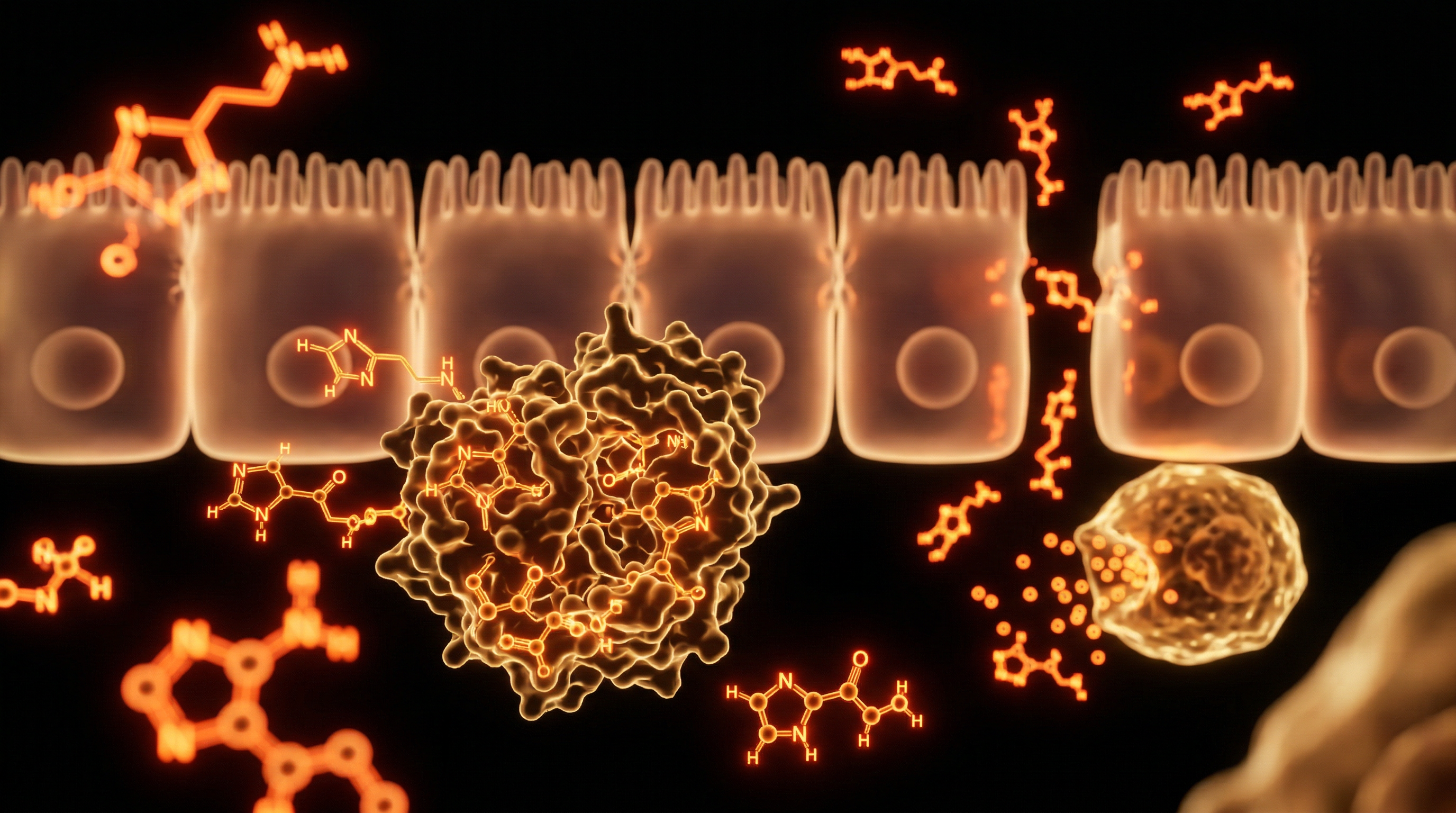
To understand the Fermentation Paradox, one must first understand the life cycle of a biogenic amine. Histamine (2-(4-imidazolyl)ethylamine) is a potent nitrogenous compound that serves as a neurotransmitter, a regulator of gastric acid secretion, and a primary mediator of the inflammatory response.
The Synthesis of Histamine
In fermented foods, histamine is produced through a process called decarboxylation. When bacteria (specifically those possessing the enzyme Histidine Decarboxylase (HDC)) interact with the amino acid L-histidine, the carboxyl group is removed, transforming it into histamine. This process occurs naturally during the aging, ripening, and fermentation of proteins. Therefore, the very process that creates the probiotic benefits of sauerkraut or aged cheddar simultaneously creates a concentrated dose of histamine.
The Degradation Pathways
In a healthy biological system, the body possesses two primary "drainage" systems for histamine:
- Diamine Oxidase (DAO): This is the primary enzyme responsible for breaking down exogenous (ingested) histamine. It is secreted by the enterocytes at the tips of the intestinal villi. Its role is to neutralise histamine in the gut lumen before it can enter the systemic circulation.
- Histamine N-methyltransferase (HNMT): This enzyme works intracellularly, primarily in the liver, lungs, and central nervous system, to manage endogenous histamine—that which is produced by the body’s own mast cells.
Callout Fact: The intestinal mucosa’s DAO activity is the single most important factor determining whether an individual can tolerate fermented foods. If DAO levels are low, even "clean" fermented foods become systemic inflammatory triggers.
The paradox arises when a patient, suffering from dysbiosis (an imbalance of gut bacteria), attempts to heal their gut with fermented foods. If that patient has compromised DAO activity—due to genetics, gut inflammation, or medication—the influx of histamine from the fermentation triggers a massive inflammatory response, further damaging the intestinal villi and further reducing DAO production. This creates a self-perpetuating cycle of chronic inflammation.
Mechanisms at the Cellular Level
At the cellular level, the effects of histamine are mediated through four distinct G-protein-coupled receptors: H1, H2, H3, and H4. The widespread distribution of these receptors explains why histamine intolerance presents as a multi-systemic disorder rather than a localised digestive issue.
Receptor Dynamics
- H1 Receptors: Located in smooth muscle, endothelial cells, and the central nervous system. Activation leads to the classic "allergy" symptoms: vasodilation, bronchoconstriction (asthma-like symptoms), and pruritus (itching).
- H2 Receptors: Found primarily in the gastric mucosa. Their activation triggers the secretion of gastric acid, leading to the "acid reflux" or "heartburn" often misdiagnosed as simple GORD (Gastro-oesophageal reflux disease) in the UK.
- H3 Receptors: Predominantly in the nervous system. These act as feedback inhibitors, regulating the release of neurotransmitters like dopamine, serotonin, and acetylcholine. Dysfunction here leads to "brain fog," cognitive impairment, and sleep-wake cycle disruptions.
- H4 Receptors: Expressed on haematopoietic cells (mast cells, eosinophils). These are the primary drivers of the chemotactic response, pulling more inflammatory cells into the gut lining.
The Role of Mast Cells
While DAO manages the intake of histamine, Mast Cell Activation (MCA) governs the internal release. In patients with HIT, the "mast cell threshold" is significantly lowered. When biogenic amines from fermented foods enter the bloodstream, they act as ligands that can trigger mast cell degranulation. This releases not just histamine, but a cocktail of over 200 inflammatory mediators, including tryptase, leukotrienes, and cytokines.
This is the "Biological Tipping Point." Once the mast cells are primed, the body enters a state of hyper-vigilance where even non-histamine foods or emotional stress can trigger an "attack."
Enzymatic Inhibition
A critical and often overlooked cellular mechanism is the Competitive Inhibition of DAO. Histamine is not the only biogenic amine. Fermented foods also contain Tyramine, Putrescine, and Cadaverine. These amines compete for the same DAO binding sites. If a patient consumes a meal high in multiple amines (e.g., a "healthy" platter of aged cheese, cured meats, and sauerkraut), the DAO enzyme becomes "saturated," allowing pure histamine to flood the system unchecked.
Environmental Threats and Biological Disruptors
The sudden surge in histamine intolerance in the 21st century is not an evolutionary accident; it is the result of unprecedented environmental interference with our enzymatic pathways.
The Glyphosate Factor
In the UK, agricultural practices rely heavily on glyphosate-based herbicides. Research suggests that glyphosate acts as a potent mineral chelator, stripping the body of Copper. Since DAO is a copper-dependent metalloenzyme, chronic exposure to pesticide residues on "healthy" vegetables can directly inhibit the production and function of the very enzyme needed to process them. Furthermore, glyphosate disrupts the Shikimate pathway in our gut bacteria, favouring the growth of histamine-producing pathogens over histamine-degrading commensals.
The "Damp House" Epidemic
The UK’s housing stock is notoriously prone to mould and damp. Mycotoxins, specifically those produced by Stachybotrys and Aspergillus, are potent mast cell triggers. A patient living in a mould-affected environment will have chronically "loaded" mast cells. In this state, the small amount of histamine in a serving of kefir is often the "last straw" that breaks the metabolic back of the individual.
Pharmaceutical Interference
Many of the most commonly prescribed medications in the UK are direct DAO inhibitors. These include:
- NSAIDs: (Ibuprofen, Aspirin) used for the very headaches that histamine often causes.
- Antidepressants: (Fluoxetine, Sertraline) which alter the degradation of biogenic amines.
- Antibiotics: Which decimate the DAO-producing bacteria and damage the intestinal villi.
- H2 Blockers: (Ranitidine, Cimetidine) Ironically, by blocking H2 receptors, they can cause a compensatory upregulation of histamine production.
Important Callout: Over 100 common medications have been identified as DAO inhibitors. Most patients are never warned that their "heartburn medication" might be making them intolerant to their "healthy" diet.
The Cascade: From Exposure to Disease
The progression from "sensitive" to "diseased" follows a predictable, though often misdiagnosed, cascade. Because histamine receptors are located everywhere, the symptoms are "chameleonic."
Stage 1: The Digestive Prelude
It begins with localized gut reactions. Bloating (often mistaken for SIBO), abdominal cramping, and "urgent" bowel movements after a high-amine meal. At this stage, the DAO in the gut is struggling but still somewhat functional.
Stage 2: Systemic Leakage
As gut permeability (Leaky Gut) increases—often exacerbated by the very alcohol or fermented acids in the diet—histamine enters the hepatic portal vein. The liver’s HNMT enzyme attempts to take the load, but if the liver is burdened by modern toxins or "Fatty Liver" (prevalent in the UK due to high fructose intake), the histamine bypasses the liver and enters the systemic circulation.
Stage 3: The Neurological and Dermatological Flare
Once systemic, histamine crosses the blood-brain barrier.
- Migraines: Histamine causes the dilation of cerebral blood vessels.
- Urticaria/Eczema: The skin becomes a secondary elimination organ, manifesting in rashes or "flushing" after meals or red wine.
- POTS (Postural Orthostatic Tachycardia Syndrome): Histamine acts as a vasodilator, causing blood pressure to drop and the heart rate to spike upon standing.
Stage 4: Chronic Inflammatory State
In the final stage, the constant presence of excess histamine keeps the immune system in a state of "Red Alert." This contributes to the development of autoimmune conditions, as the body can no longer distinguish between a foreign invader and its own histamine-saturated tissues.
What the Mainstream Narrative Omits
The mainstream medical and nutritional narrative is currently obsessed with "diversity" in the microbiome. While diversity is generally positive, the advice to "eat 30 different plants a week" and "consume fermented foods daily" is dangerously incomplete.
The Dark Side of Probiotics
Not all probiotics are created equal. Many commercial probiotic supplements and fermented foods contain strains that are histamine producers. For example:
- Lactobacillus bulgaricus (Common in yogurt)
- Lactobacillus casei
- Lactobacillus reuteri (Though beneficial for some, it is a potent histamine producer via HDC)
The mainstream narrative fails to distinguish between these and histamine-neutral or histamine-degrading strains like Bifidobacterium infantis or Lactobacillus rhamnosus. By selling "one-size-fits-all" probiotic capsules, the industry is inadvertently causing inflammatory flare-ups in millions of DAO-deficient individuals.
The Myth of "Fresh"
The "freshness" of food in the UK supply chain is often an illusion. Histamine levels increase as food sits. "Fresh" fish in a supermarket may have been caught days ago and kept on ice; "fresh" spinach may have been in a plastic bag for a week. To a DAO-deficient patient, these "healthy" foods are high-amine triggers. The mainstream focus on "Whole Foods" ignores the Biogenic Amine Clock—the reality that the older a protein-containing food is, the more toxic it becomes for the histamine-sensitive.
The Omission of Testing
The NHS rarely tests for DAO levels or serum histamine, dismissing HIT as a "fringe" or "functional" concern. This forces patients into a cycle of "exclusion diets" that can lead to orthorexia and nutrient deficiencies, rather than addressing the enzymatic root cause.
The UK Context
The United Kingdom presents a unique "Perfect Storm" for histamine-related disorders.
The "British Diet" and Gut Integrity
The UK has one of the highest consumptions of Ultra-Processed Foods (UPF) in Europe. These foods are high in emulsifiers (like polysorbate 80 and carboxymethylcellulose) which are proven to "melt" the protective mucus layer of the gut. Without this mucus layer, the DAO-producing enterocytes are exposed to mechanical and chemical damage, leading to a "Silent Epidemic" of DAO deficiency.
Atmospheric Factors
The UK’s high latitude leads to chronic Vitamin D deficiency for six months of the year. Vitamin D is a potent mast cell stabiliser. Without it, the UK population has a biologically "lower fuse" for histamine triggers. Additionally, the prevalence of "Hard Water" in areas like London and the Southeast involves high mineral content that can interfere with the delicate balance of the gut lining in sensitive individuals.
The Alcohol Culture
The UK’s social reliance on alcohol—particularly beer, cider, and wine—is a major contributor to HIT. Alcohol is a "triple threat":
- It is a potent DAO inhibitor.
- It increases gut permeability, allowing more histamine into the blood.
- Many alcoholic drinks (especially red wine and craft ales) are themselves high in histamine.
Callout Statistics: Recent surveys suggest up to 20% of the UK population may suffer from some degree of biogenic amine sensitivity, yet fewer than 1% are formally diagnosed.
Protective Measures and Recovery Protocols
Recovery from the Fermentation Paradox does not mean a lifetime of restrictive eating. It requires a strategic, three-phase approach to restore enzymatic capacity and stabilise the immune system.
Phase 1: The Clearance (2-4 Weeks)
The goal here is to empty the "Histamine Bucket."
- Elimination: Temporarily remove all fermented foods (yogurt, kefir, sauerkraut, kombucha), aged cheeses, cured meats, and alcohol.
- Low-Amine Protein: Only consume meat and fish that is "flash-frozen" or cooked immediately after purchase.
- Kitchen Hygiene: Stop using "slow cookers" or batch-cooking meals to be eaten throughout the week, as histamine levels rise in leftovers.
Phase 2: Enzymatic and Nutrient Support
To rebuild the "drainage" system:
- DAO Supplementation: Taking a porcine-derived DAO enzyme (e.g., NaturDAO or similar) before meals can provide the exogenous help needed to break down amines while the gut heals.
- Copper and Vitamin B6: These are the essential co-factors for DAO production. Ensure adequate intake through beef liver (the highest source of copper) or targeted supplementation.
- Quercetin and Luteolin: These plant-derived flavonoids act as natural "Mast Cell Stabilisers," preventing the release of internal histamine.
- Vitamin C (Ascorbic Acid): A natural antihistamine that assists in the degradation of the histamine molecule.
Phase 3: Targeted Probiotic Reintroduction
Once the systemic inflammation has subsided, one must re-innoculate the gut, but with Precision Strains. Avoid the "Multi-Strain" supermarket brands. Look for:
- Bifidobacterium infantis: Known to reduce histamine levels in the gut.
- Bifidobacterium longum: A potent anti-inflammatory strain.
- Lactobacillus rhamnosus (LGG): Helps to downregulate H1 and H2 receptors and stabilise mast cells.
- Lactobacillus plantarum: One of the few "fermentation" strains that has been shown to degrade biogenic amines rather than produce them.
Environmental Remediation
- Air Filtration: In the UK climate, using a HEPA filter with a carbon layer is essential to remove mould spores and VOCs that prime mast cells.
- Water Filtration: Use a high-quality filter (Reverse Osmosis or multi-stage) to remove chlorine and fluoride, both of which can irritate the gut lining.
Summary: Key Takeaways
- The Paradox Defined: Fermented foods are only "healing" if your enzymatic "drainage system" (DAO) is functional. If not, they act as inflammatory catalysts.
- Enzymatic Deficiency: DAO deficiency is the root cause of Histamine Intolerance, often caused by gut inflammation, genetics, or medication interference.
- The UK Risk: The combination of UPF-heavy diets, mouldy housing, and high alcohol consumption makes the UK population particularly vulnerable to biogenic amine overflow.
- Probiotic Precision: Not all bacteria are friends. Individuals with HIT must avoid histamine-producing strains (like L. bulgaricus) and focus on histamine-degraders (like B. infantis).
- Systemic Scope: Histamine Intolerance is not a "stomach ache"; it is a multi-systemic disorder affecting the brain (migraines), the heart (tachycardia), and the skin (urticaria).
- The Path Forward: Recovery involves lowering the "histamine bucket" through diet, supporting the DAO enzyme with co-factors like copper and B6, and cautiously reintroducing specific, non-histamine-producing probiotic strains.
The era of "blind fermentation" must come to an end. True healing requires an INNERSTANDING of one's unique biochemical individuality. Only by respecting the delicate balance of biogenic amines can we harness the power of probiotic medicine without falling victim to the Fermentation Paradox.
This article is provided for informational and educational purposes only. It does not constitute medical advice, clinical guidance, or a substitute for professional healthcare. Information reflects cited research at time of publication. Always consult a qualified healthcare professional before acting on any health information.
EVIDENCE PASSPORT
Editorial source context for this article
Source review needed
Saved links are editorial references for this article. They may support specific claims rather than every sentence. Open and assess each source in context. This passport does not independently verify them.
Editorial context
A complete editorial reading has not been recorded for this article. Source links remain available for you to open and assess directly.
Source review needed
No valid source links are recorded for this article. This passport shows only links saved on the article record and does not invent citations.
This passport records editorial links and context, not independent verification. Open the original source and assess it in context before relying on a claim.
Medical Disclaimer
The information in this article is for educational purposes only and does not constitute medical advice, diagnosis, or treatment. Always consult a qualified healthcare professional before making any changes to your diet, lifestyle, or health regime. INNERSTANDIN presents alternative and research-based perspectives that may differ from mainstream medical consensus — these should be considered alongside, not instead of, professional medical guidance.
Read Full DisclaimerContinue the thread
Keep this question moving.
Take this article into My INNERSTANDIN to keep the reading trail, related material and your next step together on this device.
Dig deeper in the Library
Free, longform PDF volumes that go beyond headlines into mechanisms and references.