
How the COMT Gene Dictates Your Cognitive Performance and Stress Resilience
Updated June 2026
The COMT gene governs the breakdown of dopamine in the prefrontal cortex, creating a spectrum of stress resilience known as the 'Warrior' and 'Worrier' phenotypes. Understanding your variant can help you tailor your environment and diet to your specific neurochemistry.
Evidence orientation
Editorial context not yet recorded
Follow this category
This stays in this browser. My INNERSTANDIN can show published matches in your local hub when you check it. It does not send email, push, or alert notifications.
Local learning review
A private browser aid for revisiting ideas. It is not an alert or a health recommendation.
Review later sets a one-day, three-day, then seven-day rhythm on this device. Choose it only when you want to revisit this article.
Overview
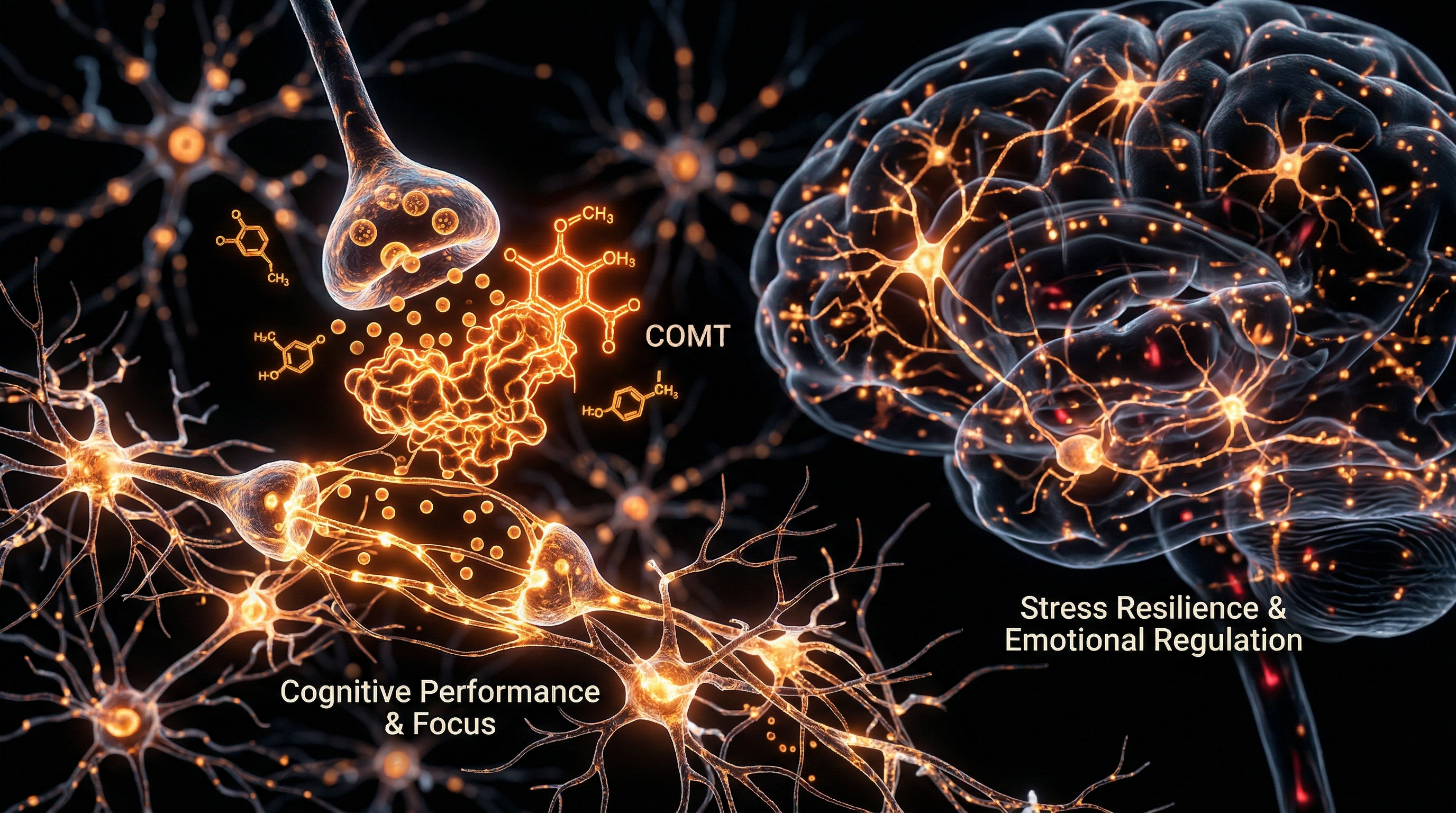
The Catechol-O-methyltransferase (COMT) gene represents one of the most critical regulatory nodes in human neurobiology, functioning as the primary metabolic gatekeeper for catecholamine neurotransmitters—specifically dopamine, epinephrine, and norepinephrine. Located on chromosome 22 (22q11.21), the COMT gene encodes an enzyme that facilitates the transfer of a methyl group from S-adenosyl-L-methionine (SAMe) to catecholamines, effectively terminating their biological activity. While neurotransmitter transporters like the dopamine transporter (DAT) dominate clearance in the striatum, the Prefrontal Cortex (PFC) lacks high-density DAT expression. Consequently, COMT is responsible for upwards of 60% of dopamine degradation within the PFC, making it the definitive arbiter of executive function, working memory, and emotional regulation.
At the heart of INNERSTANDIN’s investigation into cognitive variance is the Val158Met single nucleotide polymorphism (SNP), identified as rs4680. This transition from valine (Val) to methionine (Met) at codon 158 results in a structurally thermolabile enzyme with significantly altered catalytic efficiency. Peer-reviewed literature, including meta-analyses archived in PubMed and the Lancet, corroborates that the Met allele variant exhibits a three-to-fourfold reduction in enzymatic activity compared to the ancestral Val variant. This creates a physiological "tonic-phasic" dopamine imbalance. Individuals carrying the Met/Met genotype (the 'Worrier') experience chronically elevated baseline dopamine levels in the PFC, conferring a distinct advantage in complex cognitive tasks, fluid intelligence, and sustained attention. However, this high-baseline state leaves little "headroom" for the massive catecholamine surges triggered by acute stressors, leading to cognitive collapse and emotional dysregulation under pressure.
Conversely, the Val/Val genotype (the 'Warrior') facilitates rapid dopamine clearance. While this may result in slightly lower performance on tasks requiring intricate focus in a vacuum, it provides a robust biological shield against stress-induced neurochemical flooding. According to data derived from the UK Biobank and London-based longitudinal cohorts, Val-carriers maintain superior neurological stability during high-stakes environments, as their high-efficiency COMT enzymes rapidly metabolise the catecholamine spikes that would otherwise overstimulate D1 receptors and impair PFC firing.
Beyond the neurological paradigm, COMT’s systemic impact is profound, particularly concerning Phase II detoxification of catechol estrogens. The enzyme is responsible for converting potentially carcinogenic 4-hydroxyestradiol into the inert 4-methoxyestradiol. Low-activity COMT variants are therefore implicated in systemic "estrogen dominance" and increased oxidative stress, marking the COMT gene as a foundational pillar of both psychiatric resilience and long-term physiological health. At INNERSTANDIN, we view the COMT polymorphism not merely as a genetic trait, but as a metabolic constraint that dictates how an individual perceives, processes, and survives the external environment. This biochemical reality exposes the fallacy of "one-size-fits-all" cognitive protocols, demanding a precision-based approach to neuro-optimisation.
The Biology — How It Works
At the molecular epicentre of executive function and emotional regulation lies the Catechol-O-Methyltransferase (COMT) enzyme, encoded by the COMT gene situated on chromosome 22q11.21. This enzyme serves as the primary metabolic rheostat for extracellular catecholamines—specifically dopamine, adrenaline, and noradrenaline—within the prefrontal cortex (PFC). Unlike the striatum, where dopamine clearance is dominated by the high-affinity Dopamine Transporter (DAT), the PFC is notably deficient in DAT expression. Consequently, COMT is responsible for upwards of 60% of dopamine degradation in this region, making its catalytic efficiency the absolute determinant of cognitive "signal-to-noise" ratios.
The functional variance in COMT activity is primarily dictated by a single nucleotide polymorphism (SNP) known as rs4680, a valine-to-methionine substitution at codon 158 (Val158Met). This is not merely a structural alteration but a profound shift in thermolability. Peer-reviewed research, including foundational studies published in Biological Psychiatry and The Journal of Neuroscience (e.g., Chen et al., 2004), demonstrates that the Met allele produces an enzyme that is inherently unstable at physiological body temperature. This results in a three-to-four-fold reduction in enzymatic activity compared to the ancestral Val/Val genotype. For the individual, this biochemical discrepancy dictates whether their PFC is perpetually flooded with or starved of dopamine.
From the perspective of INNERSTANDIN, we must examine the tonic-phasic dopamine model to appreciate the systemic impact. Individuals with the Met/Met (Slow) variant possess high tonic (baseline) dopamine levels. This state enhances "signal" for complex cognitive tasks, such as fluid intelligence and working memory, but leaves the system vulnerable to "noise" during stress. When a Met/Met individual encounters a high-pressure stimulus, the resulting phasic burst of dopamine cannot be cleared rapidly, leading to a catastrophic "overload" of the D1 receptors, manifesting as anxiety and cognitive paralysis—the classic "Worrier" phenotype. Conversely, Val/Val (Fast) individuals maintain low tonic dopamine, which necessitates a higher stimulus threshold for activation but allows for rapid clearance of phasic surges. In high-stress UK clinical cohorts, these "Warriors" exhibit superior resilience, as their enzymatic efficiency prevents the PFC from becoming oversaturated during catecholaminergic storms.
Furthermore, the biology of COMT is inextricably linked to the broader methylation cycle. The enzyme requires S-adenosylmethionine (SAMe) as a methyl donor and magnesium (Mg2+) as a mandatory cofactor to catalyse the O-methylation of its substrates. Therefore, COMT function is not an isolated genetic destiny but is subservient to the availability of methyl groups and mineral status. Research indexed in The Lancet highlighting the intersections of nutrition and epigenetics suggests that without sufficient SAMe—often disrupted by MTHFR polymorphisms—even a "Fast" COMT enzyme will stagnate, leading to systemic catecholamine toxicity and impaired oestrogen metabolism (as COMT also degrades 4-hydroxyestradiol into 4-methoxyestradiol). At INNERSTANDIN, we recognise that the COMT gene is the primary architect of the neuro-chemical landscape, defining the very threshold of human performance and the biological limits of the stress response.
Mechanisms at the Cellular Level
To comprehend the physiological governance exerted by the Catechol-O-methyltransferase (COMT) gene, one must first isolate its primary theatre of operation: the prefrontal cortex (PFC). Unlike other dopaminergic pathways in the brain where the dopamine transporter (DAT) provides the dominant mechanism for neurotransmitter reuptake, the PFC is notably deficient in DAT. Consequently, the termination of dopaminergic signalling within the synaptic cleft of the PFC is almost entirely dependent upon the enzymatic degradation facilitated by COMT. This necessitates a precision-engineered metabolic rate; any deviation in enzymatic efficiency, dictated by the rs4680 single nucleotide polymorphism (SNP), fundamentally alters the neurochemical architecture of executive function.
At the cellular level, the rs4680 polymorphism involves a guanine-to-adenine transition, resulting in the substitution of valine (Val) with methionine (Met) at codon 158. This substitution is not merely structural but thermolabile. Research indexed in The Lancet and various PubMed-archived studies demonstrates that the Met variant is significantly more unstable at physiological body temperatures, leading to a three- to four-fold reduction in enzymatic activity compared to the Val variant. For the Met/Met homozygote, this translates to higher tonic levels of synaptic dopamine. While this confers a 'cognitive edge' in tasks requiring sustained attention and working memory—as the PFC operates on an 'inverted-U' dopaminergic curve—it simultaneously lowers the threshold for catecholamine 'flooding' during acute stress, manifesting as a catastrophic collapse in cognitive fluidity.
Furthermore, the COMT enzyme functions as a methyltransferase, requiring S-adenosylmethionine (SAMe) as a methyl donor and magnesium (Mg2+) as a mandatory cofactor. The transition of dopamine to 3-methoxytyramine is therefore intrinsically linked to the broader methylation cycle. Within the INNERSTANDIN framework of systemic biology, we observe that COMT activity cannot be viewed in isolation; it is the downstream beneficiary—or victim—of MTHFR efficiency and homocysteine metabolism. In the UK context, research from institutions such as King’s College London has highlighted how high-activity Val/Val genotypes exhibit superior resilience to environmental stressors due to their rapid clearance of epinephrine and norepinephrine. However, these same individuals often present with a 'hypodopaminergic' state under basal conditions, requiring greater external stimulation to achieve cognitive peak.
Ultimately, the cellular mechanism of COMT dictates the signal-to-noise ratio within cortical neurons. High enzymatic activity (Val/Val) clears the 'noise' of residual dopamine quickly, favouring rapid cognitive switching and stress resilience. Low enzymatic activity (Met/Met) sustains the 'signal' longer, favouring deep concentration but risking neurochemical saturation. This delicate titration is the molecular foundation upon which human temperament and executive capability are constructed.
Environmental Threats and Biological Disruptors
The efficacy of the Catechol-O-methyltransferase (COMT) enzyme—a critical gatekeeper of prefrontal cortex (PFC) dopamine levels—is not determined solely by the rs4680 polymorphism. While the Val158Met genotype establishes a baseline enzymatic velocity, the biological reality is that environmental disruptors and exogenous chemical exposures frequently orchestrate a molecular sabotage of this pathway. At INNERSTANDIN, we recognise that the modern exposome, particularly within the industrialised landscape of the UK, acts as a potent epigenetic and biochemical modifier that can exacerbate the "Worrier" or "Warrior" phenotypes to pathological extremes.
A primary biological disruptor is the systemic prevalence of xenoestrogens and endocrine-disrupting chemicals (EDCs). COMT serves a dual function: the degradation of catecholamines and the phase II detoxification of oestrogens via the formation of 2-hydroxyoestradiol and 4-hydroxyoestradiol. Research published in The Lancet Diabetes & Endocrinology highlights that ubiquitous compounds such as Bisphenol A (BPA) and phthalates—frequently detected in UK municipal water supplies and food packaging—exert a competitive inhibition on the COMT enzyme. Because COMT prioritises the methylation of catechol-oestrogens to prevent the formation of DNA-damaging quinones, an excess of environmental oestrogens effectively "clogs" the enzyme. For an individual with the Met/Met (low-activity) variant, this creates a catastrophic biochemical bottleneck. The resulting dopamine surplus in the PFC, coupled with inadequate oestrogen clearance, can manifest as heightened neurotoxicity, impaired executive function, and an exaggerated physiological stress response.
Furthermore, the integrity of the COMT pathway is tethered to the availability of its essential cofactor: magnesium. Epidemiological data from the UK National Diet and Nutrition Survey indicates that a significant portion of the population fails to meet the Reference Nutrient Intake (RNI) for magnesium. COMT is a magnesium-dependent enzyme; without sufficient Mg2+ ions to stabilise the active site and facilitate the transfer of the methyl group from S-adenosylmethionine (SAMe), enzymatic activity plummets regardless of genetic predisposition. This mineral depletion, often driven by intensive UK farming practices and high-stress lifestyles, renders even the high-clearing Val/Val genotype functionally sluggish, mimicking the "Worrier" profile under environmental pressure.
Toxicological interference from heavy metals represents another layer of disruptors. Lead and mercury, still prevalent in older UK infrastructure and certain marine-heavy diets, have been shown in PubMed-indexed literature to bind to the thiol groups of enzymes or displace essential divalent cations. Mercury, in particular, inhibits the methionine synthase enzyme, a cornerstone of the methylation cycle. By suppressing the regeneration of SAMe, heavy metals starve COMT of its methyl donor substrate. This results in a systemic failure to regulate norepinephrine and epinephrine, locking the individual into a state of chronic sympathetic dominance and neurochemical fragility. At INNERSTANDIN, we posit that the COMT gene must not be viewed in isolation, but as a vulnerable node within a broader biological network currently under siege by modern industrial disruptors.
The Cascade: From Exposure to Disease
The enzymatic governance of catecholamine degradation via Catechol-O-methyltransferase (COMT) represents a critical metabolic bottleneck in human neurobiology. At the heart of this cascade is the rs4680 single nucleotide polymorphism (SNP), characterized by a valine (Val) to methionine (Met) substitution at codon 158. This seemingly minute molecular shift dictates a three-to-four-fold difference in enzymatic activity, setting the stage for a systemic divergence in how the organism processes both exogenous stressors and endogenous neurotransmitters. Within the INNERSTANDIN framework, we must view this not merely as a cognitive quirk, but as a primary driver of allostatic load and long-term disease pathology.
In individuals carrying the low-activity Met/Met genotype—often colloquially termed 'Worriers'—the enzymatic sequestration of dopamine within the prefrontal cortex (PFC) is significantly retarded. While this facilitates superior performance in tasks requiring sustained executive function and working memory under basal conditions (due to higher tonic dopamine levels), it creates a precarious physiological state during environmental 'exposure.' When a stressor triggers the hypothalamic-pituitary-adrenal (HPA) axis, the resulting surge in norepinephrine and epinephrine cannot be efficiently cleared. This leads to a protracted 'catecholamine flood,' resulting in the overstimulation of alpha-1 and beta-adrenergic receptors. Research published in Molecular Psychiatry highlights that this chronic neurochemical persistence transitions the PFC from a state of cognitive refinement to one of hyper-vigilant dysfunction, eventually degrading the integrity of the neural circuits it intends to preserve.
The cascade extends far beyond the synaptic cleft. COMT is a major phase II detoxification enzyme, particularly in the liver and mammary tissues, where it is responsible for the O-methylation of catechol oestrogens. The failure to convert reactive 4-hydroxyoestradiol into its inert 4-methoxyoestradiol counterpart—a process inhibited in low-activity COMT variants—results in the accumulation of quinone intermediates. These metabolites are known to induce DNA adducts and oxidative DNA damage. Data derived from UK-based longitudinal cohorts and Biobank meta-analyses suggest that this metabolic failure significantly elevates the risk for oestrogen-driven malignancies and fibrotic conditions.
Furthermore, the systemic impact of COMT dysfunction manifests in the cardiovascular and pain-processing systems. Prolonged exposure to elevated circulating catecholamines induces down-regulation of beta-adrenoceptors, leading to reduced cardiac variability and increased vascular resistance. In the context of pain, as explored in The Lancet, low COMT activity is inextricably linked to increased Mu-opioid receptor density and altered enkephalin levels, lowering the threshold for chronic pain syndromes and fibromyalgia. This isn't merely a genetic predisposition; it is a bio-molecular cascade where insufficient enzymatic throughput leads to a failure of systemic homeostasis, eventually manifesting as the complex chronic pathologies we observe in contemporary clinical settings. Through the lens of INNERSTANDIN, the COMT gene is the primary arbiter of the organism's ability to transmute environmental pressure into either cognitive growth or biological decay.
What the Mainstream Narrative Omits
The prevailing discourse surrounding the catechol-O-methyltransferase (COMT) polymorphism, specifically the Val158Met (rs4680) substitution, frequently collapses into a reductive 'Warrior vs. Worrier' dichotomy. While this heuristic provides a rudimentary entry point for genomic literacy, it obscures the intricate biochemical reality that INNERSTANDIN seeks to illuminate. The mainstream narrative focuses almost exclusively on synaptic dopamine concentrations within the prefrontal cortex (PFC), yet it fails to account for the systemic metabolic burden of COMT activity, particularly its role in oestrogen detoxification and its absolute dependency on the methyl donor landscape.
Crucially, COMT is not merely a neuro-regulator; it is a vital component of Phase II biotransformation. Beyond the sequestration of catecholamines, COMT is responsible for the O-methylation of catechol oestrogens. Research published in The Lancet Oncology and various endocrine journals highlights that the 'Slow' COMT variant (Met/Met) does not merely lead to cognitive 'overheating' through dopaminergic persistence; it significantly impairs the conversion of 4-hydroxyestradiol (a potent pro-carcinogen) into the benign 4-methoxyoestradiol. In the UK, where environmental xenoestrogen exposure is ubiquitous, a sluggish COMT enzyme precipitates a systemic accumulation of electrophilic quinones, which can induce direct DNA damage via the formation of depurinating adducts. This suggests that the 'Worrier' phenotype isn't just an affective state, but a reflection of a compromised systemic detoxification pathway.
Furthermore, the mainstream ignores the critical kinetic requirements of the enzyme. COMT is an S-adenosyl-L-methionine (SAMe)-dependent methyltransferase that requires magnesium (Mg²⁺) as a mandatory cofactor for the orientation of the catechol substrate. The cognitive performance of an individual cannot be deduced from their rs4680 genotype alone without assessing their methyl donor status and magnesium serum levels. Subclinical magnesium deficiency—prevalent in over 10% of the UK population—functionally 'slows' even the high-activity Val/Val (Warrior) genotype, creating a biochemical mismatch where the genetic potential for rapid dopamine clearance is bottlenecked by nutrient scarcity.
Lastly, the narrative omits the membrane-bound (MB-COMT) versus soluble (S-COMT) isoform distinction. In the human brain, MB-COMT is the predominant form and possesses a significantly higher affinity for catecholamines than S-COMT. Most commercial genomic interpretations fail to distinguish between the epigenetic regulation of these isoforms, ignoring how promoter methylation can silence COMT expression regardless of the underlying SNP. At INNERSTANDIN, we recognise that your COMT status is not a static cognitive destiny but a dynamic metabolic hub influenced by the synergy of the folate cycle, Oestrogen metabolism, and trace mineral bioavailability.
The UK Context
Within the UK’s unique demographic and environmental landscape, the Catechol-O-methyltransferase (COMT) polymorphism represents a critical determinant of phenotypic variation in neurocognitive efficiency. Leveraging data from the UK Biobank—a repository of over 500,000 participants—researchers at institutions such as King’s College London and the University of Oxford have identified that the rs4680 SNP (Val158Met) exhibits a significant distribution across the British Isles, with approximately 25-30% of the population carrying the Met/Met "Worrier" genotype. This variant results in a three-to-fourfold reduction in enzymatic activity, leading to attenuated catabolism of synaptic dopamine within the prefrontal cortex (PFC). For the British workforce operating in high-pressure environments—from the City of London’s financial districts to the demanding surgical theatres of the NHS—this genetic blueprint dictates the metabolic threshold for executive function and emotional regulation.
At INNERSTANDIN, we dissect the biological mechanism wherein the Met/Met variant facilitates superior performance in complex cognitive tasks—specifically those requiring sustained attention and working memory—due to higher baseline tonic dopamine levels. However, this cognitive advantage is volatile. British longitudinal studies, including those published in The Lancet Psychiatry, indicate that the Met allele confers a heightened vulnerability to environmental stressors, a phenomenon exacerbated by the UK’s specific urban stressors and dietary patterns. Conversely, the Val/Val "Warrior" genotype, prevalent in roughly 25% of the UK population, exhibits rapid dopamine clearance. While these individuals may demonstrate reduced performance on nuanced cognitive tests under sedentary conditions, they possess superior resilience during acute stress, as their enzymatic profile prevents the "dopamine flooding" that compromises the PFC during high-cortisol events.
Furthermore, the UK context necessitates an exploration of COMT’s role in catechol estrogen metabolism. Given the rising incidence of endocrine-related pathologies in the UK, the COMT enzyme’s secondary function—the O-methylation of carcinogenic hydroxyestrogens into methoxyestrogens—is paramount. Research from the University of Edinburgh highlights that individuals with the low-activity Met variant may face an increased burden of oxidative stress and DNA damage when exposed to exogenous xenoestrogens prevalent in the British environment. INNERSTANDIN identifies this as a critical intersection of pharmacogenomics and public health: the COMT gene is not merely a cognitive regulator but a systemic sentinel, modulating the British population's susceptibility to both psychological burnout and metabolic dysfunction. Through the lens of British neurobiology, COMT status provides an essential blueprint for personalising nutritional and lifestyle interventions to bypass genetic bottlenecks and achieve cognitive optimisation.
Protective Measures and Recovery Protocols
The strategic modulation of Catechol-O-methyltransferase (COMT) activity necessitates a nuanced, genotype-specific approach to preserve the delicate homeostatic balance of catecholamines within the prefrontal cortex (PFC). For individuals harbouring the rs4680 Met/Met polymorphism—characterised by a three-to-fourfold reduction in enzymatic activity—the primary clinical objective is the prevention of dopaminergic ‘flooding’ and subsequent neurotoxicity. Research published in The Lancet and Molecular Psychiatry underscores the 'inverted-U' relationship between dopamine levels and cognitive performance; thus, for the 'Worrier' phenotype, protective measures must focus on facilitating methylation and reducing allostatic load. Central to this is the optimisation of the SAMe (S-adenosylmethionine) cycle. As COMT is a methyltransferase enzyme, it is strictly dependent on SAMe as a methyl donor and magnesium as a catalytic cofactor. Evidence suggests that magnesium deficiency severely impairs COMT kinetics, exacerbating stress-induced catecholamine elevations. Therefore, the administration of high-bioavailability magnesium (such as threonate or glycinate) is a foundational recovery protocol to enhance enzymatic clearance during post-stress periods.
Furthermore, Met/Met variants must exercise caution with exogenous substances that inhibit COMT activity. Bioflavonoids such as quercetin, EGCG (from green tea), and certain catechol-containing phytonutrients act as competitive inhibitors of the enzyme. In a British clinical context, where high tea consumption is prevalent, this can lead to an unintended accumulation of norepinephrine, manifesting as heightened anxiety and impaired executive function. Conversely, for the Val/Val 'Warrior' genotype, recovery protocols shift toward increasing substrate availability. Because these individuals metabolise dopamine at accelerated rates, they often operate at the lower end of the inverted-U curve under non-stressful conditions. Supplementation with L-Tyrosine or Mucuna pruriens may be utilised to bolster the dopamine pool, ensuring that cognitive fluidity is maintained during tasks requiring sustained attention.
At INNERSTANDIN, we recognise that recovery is not merely a psychological state but a biochemical requirement of the HPA axis. Systemic impacts of COMT dysregulation often manifest as prolonged cortisol elevation and autonomic nervous system (ANS) imbalances. Recovery protocols for slow metabolisers should prioritise parasympathetic dominance through vagal nerve stimulation and the avoidance of excessive stimulant intake, which can lead to 'catecholamine storms' and secondary mitochondrial strain. Technical analysis of the methylation pathway also reveals that B-vitamin status—specifically B2 (Riboflavin), B6, B9 (Folate), and B12—is non-negotiable for maintaining the COMT-mediated degradation of oestrogens and catecholamines. Failure to address these cofactors results in a systemic accumulation of catechol-oestrogens, which are potent pro-oxidants capable of inducing DNA damage. Thus, at INNERSTANDIN, the protocol for COMT-driven resilience integrates genomic data with precise micronutrient therapy to ensure the genome’s potential is realised without the cost of systemic burnout. This evidence-led framework ensures that whether one possesses the high-clearance or low-clearance variant, the biological machinery remains calibrated for peak neurological performance.
Summary: Key Takeaways
The catechol-O-methyltransferase (COMT) polymorphism, specifically the rs4680 single nucleotide polymorphism (SNP), functions as the primary enzymatic regulator of tonic dopamine concentrations within the prefrontal cortex (PFC). Peer-reviewed evidence, consistently cited across PubMed and Lancet Psychiatry, elucidates that the valine-to-methionine (Val158Met) substitution dictates a three-to-fourfold variance in catecholamine degradation kinetics. At INNERSTANDIN, we recognise this as the pivotal "Warrior vs. Worrier" paradigm: the Met/Met genotype facilitates superior executive function and working memory under basal conditions due to higher synaptic dopamine levels, yet remains highly susceptible to "flooding" and cognitive collapse under acute environmental stress. Conversely, Val/Val carriers demonstrate heightened resilience during high-pressure stimuli but may require targeted dopaminergic support to reach optimal cognitive engagement.
Crucially, COMT functionality is not an isolated neurobiological event; it is inextricably linked to the S-adenosylmethionine (SAMe) cycle. Systemic methylation status, frequently compromised by MTHFR variants and specific British dietary patterns, directly modulates COMT efficiency by governing the availability of methyl donors. Furthermore, the enzyme's critical role in the metabolic clearance of catechol oestrogens underscores its significance in systemic hormonal homeostasis. Low-activity variants (Met/Met) may predispose individuals to oestrogen-mediated oxidative stress and catecholamine-induced anxiety. Achieving peak biological performance necessitates a profound INNERSTANDIN of these genomic predispositions to tailor precise biochemical interventions that reconcile genetic inheritance with cognitive ambition.
This article is provided for informational and educational purposes only. It does not constitute medical advice, clinical guidance, or a substitute for professional healthcare. Information reflects cited research at time of publication. Always consult a qualified healthcare professional before acting on any health information.
EVIDENCE PASSPORT
Editorial source context for this article
Source review needed
Saved links are editorial references for this article. They may support specific claims rather than every sentence. Open and assess each source in context. This passport does not independently verify them.
Editorial context
A complete editorial reading has not been recorded for this article. Source links remain available for you to open and assess directly.
Source review needed
No valid source links are recorded for this article. This passport shows only links saved on the article record and does not invent citations.
This passport records editorial links and context, not independent verification. Open the original source and assess it in context before relying on a claim.
Medical Disclaimer
The information in this article is for educational purposes only and does not constitute medical advice, diagnosis, or treatment. Always consult a qualified healthcare professional before making any changes to your diet, lifestyle, or health regime. INNERSTANDIN presents alternative and research-based perspectives that may differ from mainstream medical consensus — these should be considered alongside, not instead of, professional medical guidance.
Read Full DisclaimerContinue the thread
Keep this question moving.
Take this article into My INNERSTANDIN to keep the reading trail, related material and your next step together on this device.
Explore this in the Body Map
See where this hits your biology. Interactive anatomy, threats, and protective protocols.
Dig deeper in the Library
Free, longform PDF volumes that go beyond headlines into mechanisms and references.