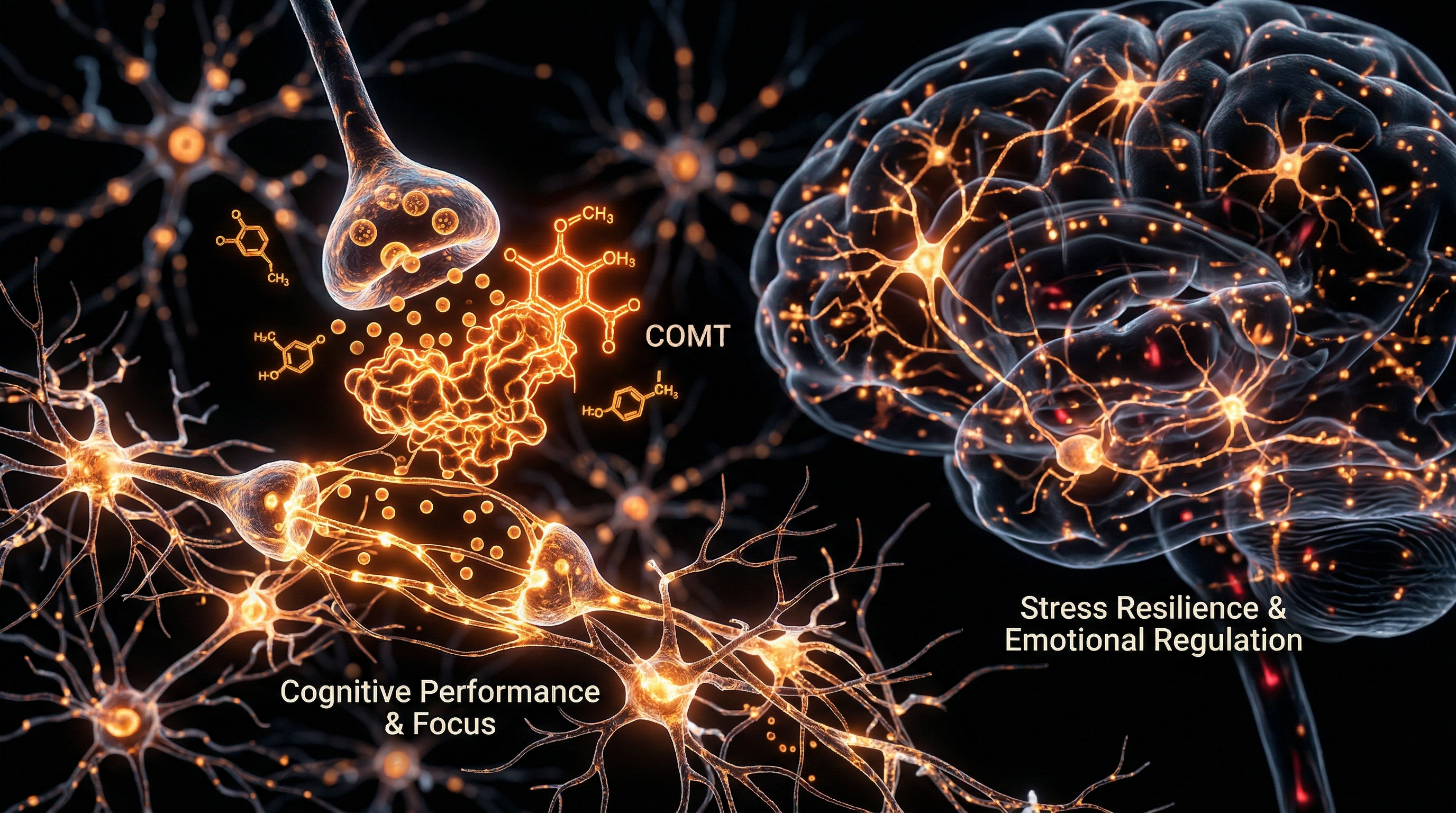
Neurotransmitter Synthesis and the BH4 Cycle: Assessing the Role of MTHFR in Phenylalanine Metabolism
An in-depth exploration of the biochemical relationship between the MTHFR gene, the tetrahydrobiopterin (BH4) cycle, and the metabolic conversion of phenylalanine into essential neurotransmitters like dopamine and serotonin.

Introduction: The Intersection of Methylation and Mental Health. At INNERSTANDING, we focus on the biochemical root causes that underpin systemic health. One of the most critical yet frequently overlooked intersections in human physiology is the relationship between the folate cycle—governed largely by the MTHFR (Methylenetetrahydrofolate Reductase) enzyme—and the biopterin cycle. While MTHFR is often discussed in the context of homocysteine and cardiovascular risk, its role in neurotransmitter synthesis through its influence on the BH4 (tetrahydrobiopterin) cycle is what truly defines its impact on mental health, cognitive function, and emotional resilience. This article explores how MTHFR polymorphisms can disrupt the metabolism of the amino acid phenylalanine, leading to a cascade of neurochemical imbalances. ### Understanding the BH4 Cycle: The Brain's Master Catalyst.
Tetrahydrobiopterin, or BH4, is a critical cofactor for several rate-limiting enzymes that produce the building blocks of our mood. Specifically, BH4 is required for: 1. Phenylalanine Hydroxylase (PAH): The enzyme that converts the essential amino acid phenylalanine into tyrosine. 2. Tyrosine Hydroxylase (TH): The enzyme that converts tyrosine into L-DOPA (the precursor to dopamine, norepinephrine, and epinephrine). 3. Tryptophan Hydroxylase (TPH): The enzyme that converts tryptophan into 5-HTP (the precursor to serotonin and melatonin). 4.
Nitric Oxide Synthase (NOS): The enzyme responsible for producing nitric oxide, which regulates vascular health and blood flow. Without sufficient BH4, these pathways stall. The result is a 'metabolic bottleneck' where amino acids from our diet cannot be effectively transformed into the neurotransmitters required for focus, pleasure, and calm. ### The Phenylalanine Hurdle. Phenylalanine is an essential amino acid found in most protein-rich foods. Under normal physiological conditions, BH4 acts as the key that unlocks the conversion of phenylalanine into tyrosine.
Tyrosine then serves as the raw material for our catecholamines (dopamine and adrenaline). However, when BH4 levels are low, phenylalanine cannot be metabolised efficiently. This leads to two distinct problems: first, the accumulation of phenylalanine, which at high levels can be neurotoxic; and second, a deficiency in tyrosine, leading to 'dopamine-depleted' states characterised by brain fog, lack of motivation, and executive dysfunction. This is the same pathway involved in Phenylketonuria (PKU), though in the context of MTHFR and BH4 cycle dysfunction, we are typically looking at sub-clinical 'hyperphenylalaninemia' rather than the severe genetic disorder. ### How MTHFR Influences the BH4 Cycle. You might ask: how does a folate gene (MTHFR) affect a biopterin cycle?
The link lies in the 'salvage pathway' of BH4. BH4 is a fragile molecule that is easily oxidised into an inactive form called BH2 (dihydrobiopterin). For the body to maintain a steady supply of neurotransmitters, BH2 must be recycled back into BH4. This recycling is performed by the enzyme Dihydrofolate Reductase (DHFR). Research suggests that 5-MTHF (the active folate produced by the MTHFR enzyme) plays a role in supporting the DHFR enzyme and stabilising the BH4 molecule.
When an individual has MTHFR polymorphisms (such as 677C>T), they produce less 5-MTHF. This deficiency can impair the recycling of BH4, leading to a state of BH4 depletion. Furthermore, MTHFR mutations often lead to elevated homocysteine. High homocysteine promotes oxidative stress and the production of peroxynitrite, a free radical that 'robs' the body of BH4 by oxidising it. Consequently, the MTHFR-compromised individual is hit twice: they produce less of the folate needed to recycle BH4, and they produce more of the oxidative stress that destroys it. ### Clinical Manifestations of BH4 and MTHFR Dysfunction.
When the MTHFR-BH4-Phenylalanine axis is disrupted, the clinical symptoms are often psychiatric and neurological. Patients may present with: 1. Treatment-Resistant Depression: Often due to low serotonin and dopamine production despite adequate amino acid intake. 2. ADHD and Executive Dysfunction: Resulting from the inability to convert tyrosine into dopamine. 3. High Pain Sensitivity: BH4 is involved in the regulation of pain pathways; its depletion can lower the pain threshold. 4.
Cardiovascular Issues: Since BH4 is required for Nitric Oxide (NO) production, a deficiency leads to 'NOS uncoupling,' where the body produces harmful superoxide instead of protective NO, leading to hypertension and endothelial dysfunction. 5. Ammonia Sensitivity: The BH4 cycle is also linked to the urea cycle. Dysregulation can lead to an accumulation of ammonia, which further taxes the brain and contributes to 'brain fog'. ### Root Cause Strategies for Optimisation. To address these issues, we must look beyond simply 'taking more folate'. A root-cause approach involves: 1.
Optimising Folate Status: Using bioactive Methylfolate (5-MTHF) to bypass MTHFR mutations and support the biopterin salvage pathway. 2. Reducing Oxidative Stress: Since BH4 is easily destroyed by oxidation, antioxidants like Vitamin C, Vitamin E, and Glutathione are essential to protect the existing BH4 pool. 3. Managing Phenylalanine Intake: For those with significant BH4 cycle disruption, excessive intake of phenylalanine (found in high amounts in aspartame and certain protein isolates) may need to be moderated. 4. Supporting the 'Uncoupled' NOS: Utilising nutrients like Arginine or Citrulline alongside BH4-supporting antioxidants to restore vascular health. 5. Cofactor Support: Iron and B3 (NADH) are also necessary for these enzymatic reactions to take place. ### Conclusion: Integration is Key.
The role of MTHFR in phenylalanine metabolism is a profound example of how one genetic variation can ripple through multiple biochemical systems. By understanding that MTHFR is not just about homocysteine, but is a key player in the biopterin cycle, we can better appreciate why methylation support is so vital for mental health. At INNERSTANDING, we advocate for a nuanced view: don't just treat the gene; treat the pathway. Supporting the BH4 cycle through antioxidant protection and methylfolate remains a cornerstone of functional neurochemistry. When we fix the biopterin engine, we don't just improve lab markers; we restore the fundamental chemistry of human thought and emotion.
This article is provided for informational and educational purposes only. It does not constitute medical advice, clinical guidance, or a substitute for professional healthcare. Information reflects cited research at time of publication. Always consult a qualified healthcare professional before acting on any health information.
RESEARCH FOUNDATIONS
Biological Credibility Archive
Citations provided for educational reference. Verify via PubMed or institutional databases.
Medical Disclaimer
The information in this article is for educational purposes only and does not constitute medical advice, diagnosis, or treatment. Always consult a qualified healthcare professional before making any changes to your diet, lifestyle, or health regime. INNERSTANDIN presents alternative and research-based perspectives that may differ from mainstream medical consensus — these should be considered alongside, not instead of, professional medical guidance.
Read Full DisclaimerReady to learn more?
Continue your journey through our classified biological research.
THE ARSENAL
Based on MTHFR & B Vitamin Metabolism — products curated by our research team for educational relevance and biological support.
Magnesium Blend – The Most Important Mineral

Magnesium L-Threonate
Energy Blend Supports
INNERSTANDING may earn a commission on purchases made through these links. All products are selected based on rigorous educational relevance to our biological research.
RABBIT HOLE
Follow the biological thread deeper