
Hydration Beyond Water: Osmotic Pressure in Isotonic Drips
Updated May 2026
Isotonic saline and Ringer's lactate affect cellular volume through precise osmotic mechanisms. Understand the science of fluid resuscitation and electrolyte balance in IV hydration.
Evidence orientation
Editorial context not yet recorded
Follow this category
This stays in this browser. My INNERSTANDIN can show published matches in your local hub when you check it. It does not send email, push, or alert notifications.
Local learning review
A private browser aid for revisiting ideas. It is not an alert or a health recommendation.
Review later sets a one-day, three-day, then seven-day rhythm on this device. Choose it only when you want to revisit this article.
Overview
In the realm of modern clinical biology, the act of "hydration" is frequently reduced to the simplistic recommendation of increasing oral water intake. However, for the senior researcher and the astute clinician, hydration is not merely a quantitative measure of fluid volume, but a complex, qualitative interplay of osmotic pressure, electrolyte stoichiometry, and bio-energetic gradients. When we transition from the digestive tract to the intravenous space, the stakes of this interplay escalate exponentially.
The administration of intravenous (IV) fluids—specifically isotonic saline and Ringer’s lactate—is perhaps the most common medical intervention globally, yet it remains one of the least understood by the general public and, arguably, by many practitioners operating on outdated paradigms. We are told that "Normal Saline" is the physiological gold standard, a mirroring of our internal sea. Yet, a deeper investigation into the biophysics of tonicity reveals a more nuanced and potentially unsettling reality.
True hydration is the maintenance of cellular volume and membrane potential. It is an active thermodynamic process. This article will dissect the molecular mechanics of how isotonic solutions interact with the human interstitium, the hidden dangers of "standard" protocols, and the bio-disruptors that are currently compromising the British population’s ability to retain cellular coherence. We are moving beyond the water bottle and into the very matrix of life: the extracellular fluid (ECF) and its regulatory control over the intracellular environment.
The Biology — How It Works
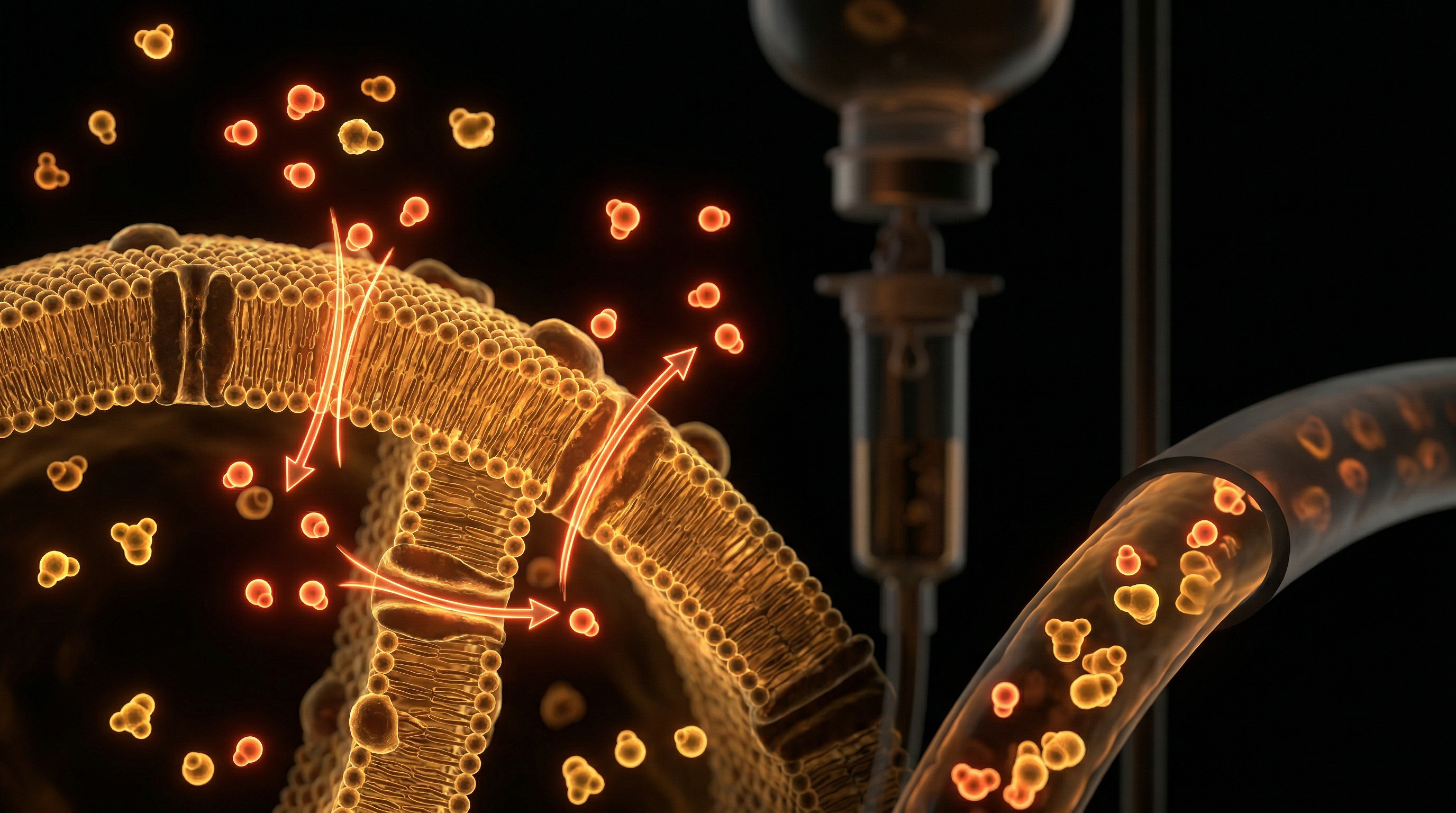
To understand IV hydration, one must first master the concept of osmosis. Osmosis is the spontaneous net movement of solvent molecules through a selectively permeable membrane into a region of higher solute concentration. In the human body, the "solvent" is water, and the "solutes" are electrolytes—primarily sodium, potassium, chloride, and bicarbonate.
The Van ’t Hoff Law and Osmotic Pressure
The driving force behind fluid movement is osmotic pressure. Calculated via the Van ’t Hoff equation ($\Pi = iMRT$), this pressure dictates whether a cell will swell (lyse), shrink (crenate), or remain in stasis.
- Isotonicity: An isotonic solution, such as 0.9% Sodium Chloride (NaCl), is designed to have an osmolarity (approximately 308 mOsm/L) that closely matches that of human blood (285–295 mOsm/L).
- The Tonicity Paradox: While 0.9% saline is labelled "Normal," it is technically hypertonic regarding chloride levels. Human plasma contains roughly 100 mEq/L of chloride; "Normal" saline contains 154 mEq/L. This discrepancy is not a trivial detail; it is a fundamental biological stressor.
The Role of the Extracellular Matrix (ECM)
The ECM is not merely "packing material" for cells. It is a highly organised, negatively charged gel-matrix composed of glycosaminoglycans (GAGs) and proteoglycans. These molecules act as a "cationic sponge," sequestering sodium and regulating the flow of water. When an isotonic drip is introduced, it does not simply fill the veins; it must negotiate with the ECM. If the ECM is congested with metabolic waste or environmental toxins, the osmotic pressure of the IV fluid can trigger a "third-spacing" effect, where fluid leaks into the interstitial gaps, causing oedema rather than cellular hydration.
Fact: The human body is approximately 60% water, but this water is distributed into two major compartments: the Intracellular Fluid (ICF), comprising two-thirds, and the Extracellular Fluid (ECF), comprising one-third. IV therapy bypasses the natural regulatory barriers of the gut to manipulate the ECF directly.
Mechanisms at the Cellular Level
At the interface of the cell membrane lies the Na+/K+-ATPase pump, an enzyme that consumes upwards of 30% of a cell’s ATP to maintain the electrochemical gradient. This pump is the engine of hydration.
Aquaporins: The Water Channels
Water does not simply diffuse through the lipid bilayer; it moves through specialised channels called aquaporins. The efficiency of these channels is dependent on the osmotic gradient established by electrolytes. If an IV fluid provides the wrong ratio of solutes, the aquaporins cannot facilitate the "solute drag" required to pull water into the mitochondria, where it is needed for oxidative phosphorylation.
Ringer’s Lactate and the Buffer System
Unlike simple saline, Ringer’s Lactate (RL)—pioneered by the British clinician Sydney Ringer in the 1880s—contains potassium, calcium, and sodium lactate.
- Lactate as a Buffer: The lactate in RL is metabolised by the liver into bicarbonate, which helps to counteract metabolic acidosis.
- The Calcium Interaction: RL is often preferred in trauma because it more closely mimics the "Strong Ion Difference" (SID) of human plasma, though the presence of calcium makes it incompatible with certain blood transfusions (due to the risk of clotting).
Gibbs-Donnan Equilibrium
Within the cellular environment, the Gibbs-Donnan effect explains how charged ions distribute themselves across the semi-permeable membrane. Because proteins inside the cell are mostly negatively charged and cannot cross the membrane, they attract cations (like sodium) and repel anions. Isotonic drips must respect this equilibrium. If the IV solution is too high in chloride, it forces the cell to eject bicarbonate to maintain electrical neutrality, leading to hyperchloraemic metabolic acidosis—a condition often misdiagnosed as the worsening of the patient's primary illness rather than a side effect of the "hydration" itself.
Environmental Threats and Biological Disruptors
In the modern era, the efficacy of an isotonic drip is being compromised by factors that didn't exist when Sydney Ringer first formulated his solution. As researchers at INNERSTANDING, we must highlight the invisible disruptors of the osmotic potential.
EMFs and Voltage-Gated Ion Channels (VGICs)
Emerging research suggests that Non-Ionizing Electromagnetic Fields (EMFs)—ubiquitous in the UK’s urban environments—interfere with voltage-gated calcium channels. By forcing these channels open, EMFs allow an influx of calcium into the cell, which disrupts the osmotic balance and triggers the production of peroxynitrites (oxidative stress). A cell under "electromagnetic siege" cannot properly regulate its volume, even when supplied with the perfect isotonic fluid.
Glyphosate and the Mineral Bypass
The prevalence of glyphosate in the British food chain (due to its widespread use as a desiccant for wheat and oilseed rape) acts as a potent mineral chelator. Glyphosate binds to essential trace minerals like magnesium and manganese, making them unavailable for the enzymes that regulate the Na+/K+ pump. Consequently, the "solute" part of the hydration equation is missing, leaving the "solvent" (the IV fluid) unable to enter the cell.
The Glycocalyx Degradation
The glycocalyx is a delicate, hair-like layer of glycoproteins lining the inside of every blood vessel. It is the true gatekeeper of vascular permeability. Environmental toxins, including microplastics (often leached from the very PVC bags used for IV fluids) and high-fructose diets, degrade this layer. A damaged glycocalyx allows "isotonic" fluid to leak immediately out of the vasculature and into the lungs or extremities, leading to pulmonary oedema or systemic swelling.
Statistic: Studies indicate that up to 40% of patients receiving high-volume "Normal Saline" in clinical settings develop some degree of hyperchloraemia, which is linked to an increased risk of acute kidney injury (AKI).
The Cascade: From Exposure to Disease
The failure to maintain osmotic pressure at the cellular level initiates a "death by a thousand cuts" cascade. When the cell cannot maintain its volume, it enters a state of cellular senescence or apoptosis.
Phase 1: Osmotic Stress and Mitochondrial Dysfunction
When the extracellular fluid becomes hypertonic (as with 0.9% saline), the cell must expend massive amounts of energy (ATP) to pump ions against the gradient to keep from shrinking. This diverts energy away from repair and towards survival. The mitochondria, sensing the stress, reduce their output of metabolic water (water produced internally during the electron transport chain), further dehydrating the cell from the inside out.
Phase 2: The Inflammatory Cytokine Storm
Dehydrated cells shrink, which triggers the release of "danger-associated molecular patterns" (DAMPs). This activates the immune system, specifically the NLRP3 inflammasome. In the UK, we see a rising tide of chronic fatigue and "brain fog," which are often clinical manifestations of low-grade cerebral oedema or cellular dehydration caused by poor osmotic regulation.
Phase 3: Systemic Collapse
Chronic mismanagement of fluid balance leads to:
- Endothelial Dysfunction: Loss of vascular tone.
- Renal Vasoconstriction: The kidneys, sensing high chloride levels, constrict the afferent arterioles, reducing the glomerular filtration rate (GFR).
- Lymphatic Congestion: The "sewer system" of the body becomes overwhelmed by stagnant interstitial fluid that cannot be re-absorbed into the veins due to lost osmotic gradients.
What the Mainstream Narrative Omits
The mainstream medical narrative treats IV fluid as a "commodity"—a simple volume expander. This reductionist view omits several critical "suppressed truths."
The "Normal Saline" Lie
The term "Normal Saline" is a misnomer of historical accident. It was based on 19th-century experiments that were not rigorous by modern standards. It is not "normal" for human physiology; it is an acidifying, high-chloride solution. The persistent use of 0.9% NaCl over "Balanced Crystalloids" (like Plasma-Lyte or Ringer’s Lactate) is driven more by hospital procurement costs and inertia than by biological superiority.
The De-structuring of Water
Mainstream science largely ignores the "Fourth Phase" of water, or Exclusion Zone (EZ) water, as championed by Dr Gerald Pollack. EZ water is a structured, gel-like state of water ($H3O2$) that forms next to biological membranes. This structured water is essential for the function of cellular proteins. Standard IV fluids are "bulk water," which lacks this structure. Without the presence of infrared light or certain mineral templates, the body must work hard to "structure" the IV fluid before it can be utilised by the cells.
The Corporate Control of Hydration
The hydration guidelines taught in medical schools are heavily influenced by the multi-billion-pound beverage and pharmaceutical industries. These guidelines emphasise volume over mineral density. By focusing on "drinking more water" or "saline drips," the narrative ignores the vital role of trace minerals (boron, silica, lithium, etc.) which are the true conductors of the body’s electrical system.
The UK Context
In the United Kingdom, the approach to IV hydration is governed largely by NICE (National Institute for Health and Care Excellence) guidelines. While NICE has recently moved toward recommending balanced crystalloids for resuscitation, the implementation on the ground in NHS trusts is inconsistent.
The "Post-Code Lottery" of Fluid Quality
Patients in the UK may receive vastly different qualities of care depending on their hospital’s budget. In many underfunded trusts, 0.9% saline remains the default due to its lower cost compared to balanced solutions like Plasma-Lyte. Furthermore, the UK’s water supply is increasingly "hard" (high in calcium carbonate) but stripped of the "soft" minerals like magnesium that are crucial for osmotic balance.
The Rise of Private IV "Boutiques"
In London and other major UK hubs, we are seeing an explosion of private IV vitamin clinics. While these offer a more "holistic" approach to hydration, many are merely adding vitamins to the same flawed 0.9% saline base. The sophisticated consumer—the INNERSTANDING reader—must look for clinics that use buffered, pH-balanced solutions and understand the importance of osmotic pressure management rather than just "vitamin loading."
British Environmental Stressors
The UK's unique environment—high humidity but low sunlight—affects how we retain water. Sunlight, specifically the infrared spectrum, is a primary driver of water structuring in the body. The British "indoor lifestyle," coupled with a lack of mineral-dense soil (due to intensive farming), creates a population that is "volume-full but cell-empty."
Protective Measures and Recovery Protocols
How does one navigate this landscape? Whether you are a clinician or a proactive individual, the goal is to restore the Biological Terrain.
1. Precision Electrolyte Loading
Hydration is a ratio, not a volume. The focus should be on the "Big Four":
- Sodium: The primary extracellular cation.
- Potassium: The primary intracellular cation.
- Magnesium: The "key" that unlocks the Na+/K+ pump.
- Calcium: The signal transducer.
The use of Quinton Marine Plasma—a cold-filtered seawater solution that contains all 78 trace minerals in the same proportions as human blood—is a superior alternative to synthetic saline for oral and, where legally available, therapeutic contexts.
2. Restoring the Glycocalyx
To prevent IV fluids from simply leaking into the tissue, one must protect the vascular lining.
- Fucoidans and Hyaluronic Acid: These supplements help rebuild the GAG layer of the glycocalyx.
- Nitric Oxide Support: Using beetroot extracts or L-arginine to maintain vascular health.
3. Grounding and Infrared Exposure
To facilitate the "structuring" of water within the body:
- Earthing: Physically connecting to the Earth's surface allows an influx of electrons, which helps maintain the negative charge of the ECM and the EZ water layers.
- Photobiomodulation: Exposure to 660nm (Red) and 850nm (Near-Infrared) light provides the energy required for the mitochondria to produce metabolic water and for the cell to "structure" the IV fluids it receives.
4. Demanding Balanced Crystalloids
In a clinical or hospital setting in the UK, patients have the right to ask about the type of fluid being administered. Advocating for Ringer’s Lactate or Plasma-Lyte over "Normal Saline" can significantly reduce the risk of post-IV complications and kidney stress.
Callout: Modern "bio-hacking" hydration protocols often involve "Sole"—a saturated solution of Himalayan salt and spring water—taken in small amounts to provide the body with the mineral templates needed for osmotic regulation.
Summary: Key Takeaways
The science of hydration is being rewritten. We are moving away from the "water-as-filler" model and toward a "fluid-as-information" model.
- Osmotic Pressure is King: Hydration is dictated by the pressure gradients created by solutes, not just the volume of the solvent.
- Normal Saline is Not Normal: The high chloride content of 0.9% NaCl is a metabolic toxin that can lead to acidosis and kidney injury.
- The Cell is an Engine: Hydration requires ATP. If your mitochondria are failing (due to EMFs, toxins, or mineral deficiencies), you cannot hydrate, no matter how much you drink or drip.
- The UK Environment Challenges Us: Between glyphosate, "dead" tap water, and electromagnetic smog, the British population faces a unique set of "hydration disruptors."
- Focus on Mineral Stoichiometry: To truly hydrate, one must provide the full spectrum of trace minerals, protect the glycocalyx, and use light/grounding to structure the body's internal water.
In the final analysis, "Hydration Beyond Water" is a call to recognise the body as an electrical, osmotic masterpiece. When we treat it with the precision it deserves—respecting the delicate balance of the isotonic drip—we unlock levels of vitality that the mainstream narrative has long forgotten. Understanding the osmotic pressure in isotonic drips is not just a medical necessity; it is a fundamental pillar of biological sovereignty.
"References & Technical Notes:"
For the deep-diver, investigate the "Strong Ion Difference" (SID) theory by Peter Stewart, which provides a more accurate model of acid-base balance than the traditional Henderson-Hasselbalch equation. Explore the "Starling Principle" and its recent revisions regarding the subglycocalyx space to understand why fluid resuscitation often fails in septic or toxic states.
This article is provided for informational and educational purposes only. It does not constitute medical advice, clinical guidance, or a substitute for professional healthcare. Information reflects cited research at time of publication. Always consult a qualified healthcare professional before acting on any health information.
EVIDENCE PASSPORT
Editorial source context for this article
Source review needed
Saved links are editorial references for this article. They may support specific claims rather than every sentence. Open and assess each source in context. This passport does not independently verify them.
Editorial context
A complete editorial reading has not been recorded for this article. Source links remain available for you to open and assess directly.
Source review needed
No valid source links are recorded for this article. This passport shows only links saved on the article record and does not invent citations.
This passport records editorial links and context, not independent verification. Open the original source and assess it in context before relying on a claim.
Medical Disclaimer
The information in this article is for educational purposes only and does not constitute medical advice, diagnosis, or treatment. Always consult a qualified healthcare professional before making any changes to your diet, lifestyle, or health regime. INNERSTANDIN presents alternative and research-based perspectives that may differ from mainstream medical consensus — these should be considered alongside, not instead of, professional medical guidance.
Read Full DisclaimerContinue the thread
Keep this question moving.
Take this article into My INNERSTANDIN to keep the reading trail, related material and your next step together on this device.
Dig deeper in the Library
Free, longform PDF volumes that go beyond headlines into mechanisms and references.