
Hypothyroidism and the Iodine Blind Spot
Updated May 2026
NHS standard TSH testing frequently fails to identify subclinical hypothyroidism caused by widespread iodine deficiency. This report investigates why metabolic slowing is often misattributed to lifestyle choices.
Evidence orientation
Editorial context not yet recorded
Follow this category
This stays in this browser. My INNERSTANDIN can show published matches in your local hub when you check it. It does not send email, push, or alert notifications.
Local learning review
A private browser aid for revisiting ideas. It is not an alert or a health recommendation.
Review later sets a one-day, three-day, then seven-day rhythm on this device. Choose it only when you want to revisit this article.
Overview
The modern landscape of British public health is currently haunted by a silent, metabolic spectre. Millions of individuals, predominantly women, navigate their lives through a persistent fog of exhaustion, unexplained weight gain, and cognitive decline. When these patients seek answers from the National Health Service (NHS), they are met with a diagnostic protocol that is not only antiquated but fundamentally flawed. At the heart of this failure lies the Iodine Blind Spot.
Hypothyroidism, once understood as a complex endocrine disruption, has been reduced to a single, binary metric: the Thyroid Stimulating Hormone (TSH) test. By relying almost exclusively on this pituitary proxy, the NHS systematically overlooks the cellular reality of iodine deficiency. This report posits that what is frequently labelled as "lifestyle-induced" obesity or "idiopathic" depression is, in many cases, a direct consequence of a profound nutritional void—specifically the lack of bioavailable iodine.
Iodine is the central scaffold of metabolic life. Without it, the thyroid gland cannot synthesise the hormones required to regulate the basal metabolic rate (BMR). However, the mainstream narrative ignores a critical environmental shift: we are currently living in a "pro-goitrogenic" environment where halides such as fluoride, bromide, and chloride compete for the very receptors meant for iodine.
Statistic: According to the World Health Organisation (WHO), the UK is now ranked among the top ten iodine-deficient nations in the developed world, yet iodine status is rarely, if ever, assessed in standard GP consultations.
The result is a national health crisis masked by bureaucratic rigidity. By failing to account for iodine's role in thyroid health, the NHS perpetuates a cycle of misdiagnosis, over-prescribing antidepressants or statins while the underlying mitochondrial engine remains starved of its essential spark.
The Biology — How It Works
To understand the iodine blind spot, one must first grasp the elegant, yet fragile, architecture of the Hypothalamic-Pituitary-Thyroid (HPT) axis. The thyroid, a butterfly-shaped gland situated in the neck, acts as the body's primary thermostat. It produces two main hormones: Thyroxine (T4) and Triiodothyronine (T3).
The numbers '4' and '3' in these names are not arbitrary; they denote the exact number of iodine atoms attached to the tyrosine backbone of the molecule. Iodine is the literal "fuel" of the hormone.
- T4 (Thyroxine): This is the storage form of the hormone. It contains four atoms of iodine. It is relatively inactive in terms of metabolic stimulation but circulates in the blood, waiting to be converted.
- T3 (Triiodothyronine): This is the active form, containing three atoms of iodine. T3 is what enters the cells to stimulate mitochondrial activity and oxygen consumption.
The production process begins when the hypothalamus releases Thyrotropin-Releasing Hormone (TRH), which signals the pituitary gland to release TSH. TSH then instructs the thyroid to pull iodine from the bloodstream to create hormones.
The "Blind Spot" emerges here: the NHS protocol assumes that if TSH is within a "normal" range (usually 0.4 to 4.5 mIU/L), the entire system is functioning correctly. This is a catastrophic assumption. A patient may have "normal" TSH levels while suffering from cellular hypothyroidism, where the thyroid is producing enough T4, but the body is unable to convert it into active T3, or the iodine levels are so low that the hormones produced are structurally compromised or insufficient for peripheral tissue needs.
The Tyrosine-Iodine Synthesis
The synthesis of thyroid hormones occurs within the follicles of the thyroid gland. A protein called Thyroglobulin (Tg) acts as a scaffold. Through a process called organification, an enzyme called Thyroid Peroxidase (TPO) oxidises iodide ions into iodine and attaches them to tyrosine residues on the thyroglobulin.
If iodine is scarce, the gland becomes inefficient. It may enlarge (goitre) in a desperate attempt to capture more iodine, or it may simply produce "lean" hormones that fail to meet the metabolic demands of the brain, heart, and muscles.
Mechanisms at the Cellular Level
The true impact of iodine deficiency is not found in the blood, but within the intracellular environment. Every cell in the human body has receptors for thyroid hormones, but the journey from the bloodstream to the cell nucleus is fraught with potential for failure.
The Sodium-Iodide Symporter (NIS)
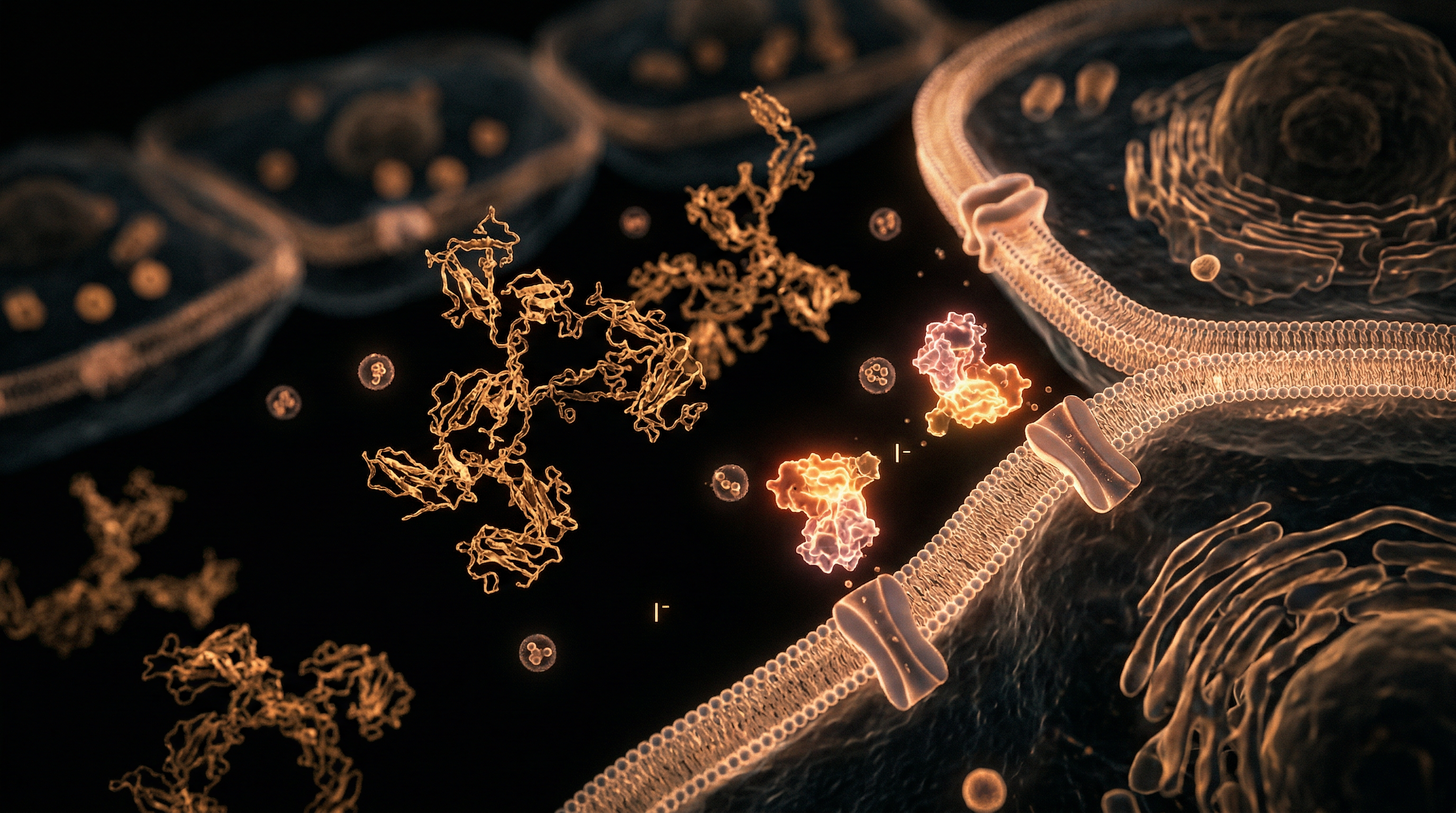
The first critical mechanism is the Sodium-Iodide Symporter (NIS). This is a protein "pump" that sits on the membrane of the thyroid cells—and, crucially, other tissues including the salivary glands, gastric mucosa, and breast tissue. The NIS is responsible for pulling iodine against a concentration gradient into the cell.
In a state of iodine deficiency, the NIS expression may increase, but if the environment is flooded with competing halides (discussed in detail in the following section), the pump becomes clogged. The cell effectively "starves" even if iodine is present in trace amounts in the diet.
Deiodination: The Master Switch
Once T4 is released into the blood, it must be converted to T3 to be of any use. This happens via deiodinase enzymes (D1, D2, and D3). These enzymes are selenium-dependent.
Callout: Without sufficient selenium, the body cannot strip the fourth iodine atom off T4 to create T3. This leads to an accumulation of Reverse T3 (rT3)—an inactive mirror image of T3 that blocks the cellular receptors, effectively putting the brakes on the metabolism.
Mitochondrial Bioenergetics
Inside the cell, T3 enters the nucleus and binds to thyroid hormone receptors (TRs). This binding triggers the transcription of genes responsible for:
- ATP Production: Increasing the efficiency of the mitochondria (the cell's power plants).
- Thermogenesis: Generating heat.
- Protein Synthesis: Repairing and building tissues.
When iodine is low, T3 levels drop. The mitochondria slow down. The "burn rate" of the body's fuel (glucose and fatty acids) decreases. This is why hypothyroid patients gain weight despite caloric restriction; their cellular "engines" are idling at half-speed. They are not overeating; they are under-burning.
Environmental Threats and Biological Disruptors
The "Blind Spot" is exacerbated by a toxic modern environment that actively antagonises iodine. In chemistry, the Halogen Group on the periodic table includes Fluorine, Chlorine, Bromine, and Iodine. Because they are in the same column, they share similar atomic structures.
The Halogen Displacement Theory
This theory, supported by a wealth of biochemical evidence, suggests that the body’s iodine receptors can be "fooled" by other halogens. If you are deficient in iodine, your body will grab the next best thing to fill the gaps in the thyroid and other tissues.
- Fluoride: Widely added to the UK water supply in many regions and found in almost all commercial toothpastes. Fluoride is a potent thyroid disruptor. Historically, fluoride was actually used as a medication to suppress overactive thyroids.
- Bromide: Found in "flour improvers" (potassium bromate) in some breads, flame retardants in furniture and electronics, and certain medications. Bromide is highly toxic to the thyroid and directly displaces iodine.
- Chlorine: Found in tap water and swimming pools. Chlorine competes with iodine for uptake via the NIS.
Endocrine Disruptors (EDCs)
Beyond the halogens, substances like Perchlorates (used in rocket fuel and found in trace amounts in some fertilisers/water) and Bisphenol A (BPA) from plastics interfere with thyroid hormone transport and receptor binding.
The NHS diagnostic model ignores this "toxic load." It assumes the thyroid exists in a vacuum, unaffected by the chemical soup of 21st-century life. A patient's TSH might look "normal" because the pituitary is being adequately stimulated, but their peripheral tissues are saturated with bromide and fluoride, rendering the thyroid hormones ineffective.
The Cascade: From Exposure to Disease
The transition from optimal health to clinical disease is rarely sudden. It is a slow, progressive cascade—a metabolic "sinking" that can take years to reach the point where it triggers a red flag on an NHS lab report.
Stage 1: Compensated Hypothyroidism
At this stage, iodine stores begin to deplete. The thyroid works harder to maintain hormone levels. TSH might rise slightly but remain within the "normal" range. The patient starts to feel "tired all the time" (TATT), a symptom GPs often dismiss as "stress" or "ageing."
Stage 2: The Conversion Failure
As selenium and iodine levels drop, the body can no longer efficiently convert T4 to T3. T4 levels look perfect on a blood test, but the patient experiences:
- Brain Fog: The brain is a massive consumer of T3.
- Cold Intolerance: Loss of thermogenic capacity.
- Thinning Hair: Specifically the outer third of the eyebrows (Queen Anne’s Sign).
Stage 3: The Metabolic Shutdown (Subclinical Hypothyroidism)
Here, TSH begins to rise above the 2.5 mIU/L mark—which many functional medicine practitioners consider the upper limit of optimal, though the NHS continues to use 4.5 or even 10.0 as the threshold for treatment.
Key Fact: The body begins to prioritise survival over "luxury" functions. Ovulation may stop (infertility), skin becomes dry as oil production slows, and the digestive tract becomes sluggish (constipation).
Stage 4: Overt Disease and Comorbidities
Finally, the TSH breaks the arbitrary barrier. By this point, the patient may have developed secondary issues:
- Hypercholesterolemia: The liver needs T3 to clear LDL cholesterol.
- Depression: T3 is required for the synthesis of serotonin.
- Cardiovascular Stress: The heart muscle requires T3 for contractility.
The NHS then treats the high cholesterol with statins and the depression with SSRIs, never once checking the patient's iodine status or the integrity of their thyroid conversion.
What the Mainstream Narrative Omits
The refusal of the NHS to update its thyroid protocols is a triumph of bureaucracy over biology. Several key omissions define the mainstream "blind spot":
1. The Reference Range Fallacy
The "normal" range for TSH was established by testing large populations of people. However, these populations often included individuals with undiagnosed thyroid dysfunction. Furthermore, "normal" is a statistical average, not an "optimal" value. For most humans, a TSH above 2.0 is a sign of a struggling system.
2. The Total T3/Reverse T3 Exclusion
Standard NHS panels rarely test for Free T3 or Reverse T3. They only test TSH, and sometimes Free T4. This is like checking the level of fuel in a car's tank (T4) without checking if the engine is actually running (T3). If the conversion is blocked by rT3, the patient is functionally hypothyroid regardless of their T4 levels.
3. The Autoimmune Overlook
Hashimoto’s Thyroiditis is the leading cause of hypothyroidism in the UK. It is an autoimmune condition where the body attacks the thyroid. Iodine deficiency is often the trigger for this, as a "starved" thyroid becomes inflamed and more susceptible to immune attack. The NHS rarely tests for TPO Antibodies until the thyroid is already destroyed.
4. The "Iodine is Dangerous" Myth
Medical students are often taught the Wolff-Chaikoff Effect, which suggests that high doses of iodine will shut down the thyroid. While a temporary "stunning" of the gland can occur, the effect is transient. This historical fear-mongering has led to a situation where the Recommended Daily Allowance (RDA) for iodine is set at the bare minimum to prevent goitre (150mcg), rather than the amount needed for optimal whole-body health (which some researchers suggest is in the milligram range).
The UK Context
The United Kingdom presents a unique and troubling case study in iodine deficiency. Historically, the UK had a "Goitre Belt"—regions like Derbyshire where iodine deficiency was endemic.
The Milk Dependency
Unlike the United States or Switzerland, the UK never implemented a mandatory salt iodisation programme. Instead, in the 1940s and 50s, the UK "accidentally" solved its goitre problem through the dairy industry. Iodine-based cleaners were used on cow udders, and iodine was added to cattle feed. This leached into the milk, making dairy the primary source of iodine for the British public.
However, dietary habits have shifted radically:
- The Rise of Plant-Based Diets: Most milk alternatives (almond, oat, soy) contain negligible iodine unless specifically fortified.
- The War on Salt: Public health campaigns to reduce salt intake, combined with the preference for gourmet "Sea Salt" or "Himalayan Pink Salt" (which are naturally very low in iodine), have further depleted intake.
- Postcode Lottery: NHS trusts have varying thresholds for what they consider "hypothyroid," meaning a patient in Manchester might be treated while a patient in London with the same results is told they are "fine."
The "Lifestyle" Blame Game
Because the NHS fails to identify subclinical hypothyroidism, the resulting weight gain is blamed on the patient. The "Eat Less, Move More" mantra is not only ineffective for a hypothyroid patient—it is damaging. Chronic caloric restriction and excessive cardio further suppress T3 production and increase rT3, locking the patient into a state of metabolic adaptation that makes weight loss impossible.
Protective Measures and Recovery Protocols
Overcoming the "Iodine Blind Spot" requires a proactive, evidence-based approach that bypasses the limitations of mainstream diagnostics. Recovery involves not just iodine, but the "companion nutrients" required for its safe use.
1. Accurate Testing
Do not rely on TSH alone. A comprehensive panel should include:
- Free T4 and Free T3: To see what is actually available to the cells.
- Reverse T3: To check for conversion blocks.
- TPO and TG Antibodies: To rule out autoimmunity.
- Urinary Iodine Loading Test: This is the gold standard for assessing body-wide iodine stores, rather than a snapshot serum test.
2. The Iodine Protocol (Stepwise Re-mineralisation)
Iodine should never be taken in isolation. The "Iodine Protocol" developed by researchers like Dr. David Brownstein involves:
- Selenium (200mcg): Vital for T4 to T3 conversion and protecting the thyroid from oxidative damage during iodine uptake.
- Magnesium: Essential for the hundreds of enzymatic reactions that govern metabolism.
- Unrefined Salt (Celtic or Sea Salt): Provides the sodium necessary for the NIS (Sodium-Iodide Symporter) to function.
- Vitamin C: Helps support the symporter mechanism and repair damaged receptors.
3. Gradual Supplementation
Using Lugol’s Solution or Iodoral (a tablet form) allows for precise dosing. Starting with low doses (e.g., 6.25mg) and slowly titrating up helps avoid "detox" reactions (Bromoderma), which occur as iodine begins to displace bromide from the tissues.
4. Halogen Avoidance
- Filter Your Water: Use a high-quality filter (like a Berkey or Reverse Osmosis) that specifically removes fluoride.
- Organic Grains: Avoid commercial breads containing potassium bromate.
- Fluoride-Free Dental Care: Switch to hydroxyapatite-based toothpastes.
5. Liver and Gut Support
Since much of the T4 to T3 conversion happens in the liver and gut, optimising these organs is essential. This includes reducing alcohol intake, managing the microbiome, and ensuring adequate fibre for the excretion of "used" hormones.
Summary: Key Takeaways
The failure of the NHS to address the iodine blind spot is a systemic diagnostic error that affects millions. By moving beyond the TSH-only model, we can begin to address the root causes of the UK's metabolic crisis.
- The TSH test is a flawed proxy: It measures pituitary signal, not cellular thyroid status. A "normal" TSH does not rule out hypothyroidism.
- Iodine is more than a thyroid nutrient: It is required by every cell in the body, particularly the breasts, ovaries, and prostate.
- Environmental halides (Fluoride/Bromide) are active antagonists: They displace iodine, leading to "starved" cells even in the presence of a standard diet.
- Selenium is the essential partner: Supplementing iodine without selenium can be counterproductive and potentially trigger autoimmune responses.
- Weight gain is a metabolic symptom: For the hypothyroid patient, obesity is often a consequence of low T3, not a lack of willpower.
The path to metabolic recovery begins with the recognition that we are fundamentally biological beings currently living in an anti-biological environment. Restoring iodine sufficiency is not merely a "supplement choice"; it is a necessary reclamation of our fundamental metabolic health. For the British public, trapped in the "blind spot" of the NHS, this knowledge is the first step toward genuine healing.
This article is provided for informational and educational purposes only. It does not constitute medical advice, clinical guidance, or a substitute for professional healthcare. Information reflects cited research at time of publication. Always consult a qualified healthcare professional before acting on any health information.
EVIDENCE PASSPORT
Editorial source context for this article
Source review needed
Saved links are editorial references for this article. They may support specific claims rather than every sentence. Open and assess each source in context. This passport does not independently verify them.
Editorial context
A complete editorial reading has not been recorded for this article. Source links remain available for you to open and assess directly.
Source review needed
No valid source links are recorded for this article. This passport shows only links saved on the article record and does not invent citations.
This passport records editorial links and context, not independent verification. Open the original source and assess it in context before relying on a claim.
Medical Disclaimer
The information in this article is for educational purposes only and does not constitute medical advice, diagnosis, or treatment. Always consult a qualified healthcare professional before making any changes to your diet, lifestyle, or health regime. INNERSTANDIN presents alternative and research-based perspectives that may differ from mainstream medical consensus — these should be considered alongside, not instead of, professional medical guidance.
Read Full DisclaimerContinue the thread
Keep this question moving.
Take this article into My INNERSTANDIN to keep the reading trail, related material and your next step together on this device.
Explore this in the Body Map
See where this hits your biology. Interactive anatomy, threats, and protective protocols.
Dig deeper in the Library
Free, longform PDF volumes that go beyond headlines into mechanisms and references.