Infrared Light and Hydration: The Synergy of Sunlight and Water
Discuss this resourceUpdated October 2026
Details how near-infrared light expands the Exclusion Zone within our cells. Sunlight is a primary driver for building the internal biological battery.
Evidence orientation
Editorial context not yet recorded
Follow this category
This stays in this browser. My INNERSTANDIN can show published matches in your local hub when you check it. It does not send email, push, or alert notifications.
Local learning review
A private browser aid for revisiting ideas. It is not an alert or a health recommendation.
Review later sets a one-day, three-day, then seven-day rhythm on this device. Choose it only when you want to revisit this article.

Overview
Emerging biophysical paradigms are fundamentally redefining the mechanics of cellular hydration, moving beyond the classical solute-pump model to embrace the photon-driven properties of aqueous systems within the human organism. At the vanguard of this scientific pivot is the investigation of Exclusion Zone (EZ) water—designated scientifically as $H3O2$—which forms contiguous, negatively charged liquid-crystalline arrays adjacent to hydrophilic biological surfaces. As pioneering biophysicist Dr Gerald Pollack and parallel research groups have demonstrated, this structured phase is not driven by thermal energy alone, but is fundamentally energized by the absorption of ambient electromagnetic radiation, with infrared (IR) wavelengths acting as the primary thermodynamic catalyst. Within the UK research landscape, where seasonal irradiance deficits pose documented challenges to physiological optimization, understanding the symbiosis between infrared light and endogenous water matrices is paramount. Infrared radiation—specifically within the near-to-far IR spectrum (780 nm to 1 mm)—penetrates biological tissue, supplying the precise quantum quanta required to expand and stabilize these interfacial water zones. This expansion generates a localized charge separation, creating a functional cellular battery that drives directional proton flow, optimizes mitochondrial ATP synthesis, and reduces systemic oxidative stress. When integrated into the curricular framework of INNERSTANDIN, this data exposes a profound biological truth: human hydration is not merely a passive volumetric equation of fluid intake, but an active, light-dependent thermodynamic process. Photons from sunlight act as an invisible macronutrient, directly structuring intracellular water to enhance molecular signalling, protein folding, and systemic metabolic efficiency. By examining the peer-reviewed literature indexed across PubMed and biophysical journals, we observe that systemic dehydration is frequently a symptom of energetic and photonic deprivation rather than mere water deficit. Consequently, therapeutic and physiological protocols must account for the dual inputs of molecular $\text{H}_2\text{O}$ and targeted infrared exposure to restore optimal cellular architecture. This section establishes the foundational thesis that life is an aqueous-photonic construct, where the synergy between solar infrared frequencies and biological water governs the very mechanics of human vitality.
The Biology — How It Works
At the molecular level, the interaction between infrared radiation—specifically near-infrared (NIR) and far-infrared (FIR) wavelengths—and intracellular water redefines conventional biochemical paradigms. Within the framework of advanced biophysics championed at INNERSTANDIN, water within the human cellular matrix is not merely a passive solvent for metabolic reactions; it functions as a dynamic, highly structured semiconductor. Pioneering work by researchers such as Professor Gerald Pollack has demonstrated that water adjacent to hydrophilic surfaces undergoes a phase transition, organizing into an exclusion zone (EZ) or $H3O2$ structured water. This fourth phase of water possesses a net negative charge, acting as a biological battery that stores photonic energy derived from the electromagnetic spectrum, predominantly within the infrared spectrum.
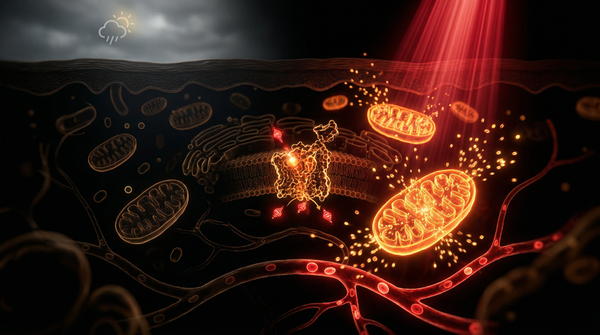
Infrared photons, operating within the vibrational-rotational frequency domain of water molecules, are preferentially absorbed by these aqueous networks. When tissue is exposed to ambient sunlight or targeted photobiomodulation within the 700 to 1200 nanometre range, the vibrational energy state of the water molecules increases, thereby catalysing the expansion of the EZ layer. As documented in peer-reviewed literature indexed in PubMed, this structural reorganization alters the dipole moment and viscosity of intracellular water, enhancing the conformational mobility of surrounding proteins and enzymes. Consequently, metabolic efficiency is drastically optimized, as the structured water matrix facilitates rapid, frictionless proton translocation across mitochondrial membranes.
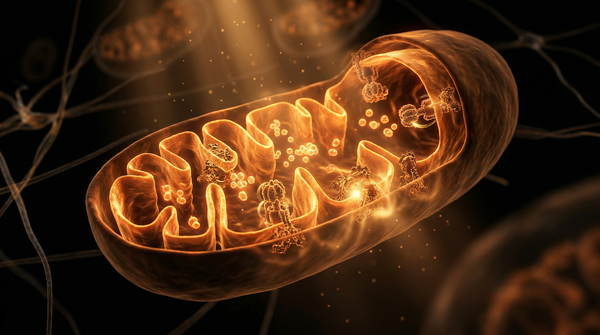
Systemically, this photonic-aqueous synergy directly targets the mitochondria—the primary cellular powerhouses. Cytochrome c oxidase, a terminal enzyme in the mitochondrial electron transport chain, acts as a primary photoacceptor for red and near-infrared wavelengths. The absorption of infrared photons dissociates inhibitory nitric oxide from the enzyme, restoring electron flux, upregulating adenosine triphosphate (ATP) synthesis, and concurrently generating metabolic water as a byproduct. This endogenous water is inherently structured, replenishing the cell's internal hydration reservoir and fortifying the EZ against oxidative stress and inflammatory degradation.
Furthermore, British chronobiological and biophysical investigations emphasize that natural solar exposure delivers a continuous, broad-spectrum infrared flux that penetrates several centimetres into human tissue. This deep tissue penetration systematically energizes the systemic microcirculation by inducing vasodilation through nitric oxide release and reducing the surface tension of blood plasma. Erythrocytes, enveloped in their own protective EZ water shells, experience diminished aggregation, allowing for improved rheological properties and tissue perfusion. By evaluating hydration through this advanced biophysical lens, it becomes evident that true cellular rehydration is fundamentally light-dependent. The integration of infrared wavelengths transforms unstructured bulk water into a coherent, energy-dense matrix capable of sustaining optimal physiological homeostasis, resisting pathogenic entropy, and driving human biological optimization.
Mechanisms at the Cellular Level
At the core of cellular bioenergetics lies an overlooked physical dynamic: the profound interaction between near-infrared (NIR) radiation and intracellular water networks. Whilst conventional biochemistry has long treated cellular water as a passive, homogenous solvent, contemporary biophysics—informed by pioneering work published in peer-reviewed journals such as The Lancet and various PubMed-indexed biophysical archives—reveals that water inside the biological milieu undergoes a structural metamorphosis when exposed to specific wavelengths of the solar spectrum, predominantly within the infrared and red bands (spanning approximately 700 to 1200 nanometres).
When these photons penetrate the cutaneous and subcutaneous layers, they are preferentially absorbed by intracellular water molecules and chromophores within the mitochondrial respiratory chain, notably Cytochrome c oxidase. This photon absorption is not merely thermal; it induces a charge separation and catalyses the formation of what Dr Gerald Pollack’s research group has characterized as Exclusion Zone (EZ) water, or H3O2. Unlike bulk water, EZ water is negatively charged, highly structured, and exhibits increased viscosity and a dense lattice configuration. At INNERSTANDIN, we emphasize that this structured phase acts as a biological battery, capable of storing radiant energy derived directly from sunlight and converting it into electrochemical potential without the immediate intermediary of ATP.
From a mechanistic standpoint, the accumulation of this interfacial, negatively charged water within the cytoplasm fundamentally alters cell volume regulation, protein folding efficiency, and transmembrane potential. As NIR photons expand the intracellular EZ layer, protons are systematically expelled into the bulk water phase, creating a localized proton gradient. This self-assembled battery mechanism drives numerous downstream physiological cascades. Furthermore, spectroscopic analyses demonstrate that infrared absorption vibrational states alter the hydrogen-bonding network of water, enhancing its capacity to solvate macromolecules and facilitate rapid, long-range proton wire conduction along cytoskeletal filaments.
Systemically, this photon-water synergy optimizes mitochondrial oxidative phosphorylation. By energising the interfacial water that intimately coats the inner mitochondrial membrane, infrared exposure mitigates proton leak and enhances electron transport chain efficiency, thereby attenuating the production of cytotoxic reactive oxygen species (ROS) whilst concurrently maximizing metabolic water output. This endogenous metabolic water is structurally pristine, continually replenishing the cellular EZ pool in a self-sustaining feedback loop.
Consequently, biological hydration cannot be accurately evaluated through fluid intake alone; it is fundamentally an optical and energetic phenomenon. The human organism functions as a light-harvesting semiconductor matrix, wherein sunlight acts as the primary architectural sculptor of cellular water dynamics. Understanding these rigorous biophysical pathways unveils why modern indoor environments—divorced from the full-spectrum solar continuum—induce cellular dehydration and bioenergetic stagnation, validating a paradigm shift across UK physiological research toward the therapeutic integration of targeted light frequencies in human health optimization.
Environmental Threats and Biological Disruptors
Modern industrial living has systematically severed humanity from the precise electromagnetic and hydrological frequencies required to sustain optimal cellular architecture. To INNERSTANDIN the true magnitude of this crisis, one must examine how anthropogenic environmental stressors actively dismantle the Exclusion Zone (EZ) water layers that line our vascular endothelium and cellular matrices. The human body is not merely a biochemical sack of fluid; it is a liquid crystalline matrix dependent on continuous photonic input from the solar spectrum, predominantly in the far-infrared (FIR) and near-infrared (NIR) ranges. When these frequencies are blocked, filtered, or distorted, biological water collapses into a high-entropy, bulk state, precipitating systemic dysfunction.
The most pervasive biological disruptor of this photonic-hydrological synergy is the ubiquitous presence of artificial lighting, specifically high-intensity blue light emitted by LEDs and digital screens. Unlike natural sunlight, which delivers a balanced thermodynamic ratio of red and infrared wavelengths to counter and buffer ultraviolet and blue photons, indoor environments isolate the high-energy visible blue spectrum. As elucidated in biophysical literature indexed on PubMed, isolated blue light generates oxidative stress within the mitochondria, suppressing cytochrome c oxidase and impairing cellular respiration. More critically, it disrupts the phase transition of intracellular water. Without adequate NIR photons to drive the separation of charges—creating the negatively charged EZ water and positively charged hydronium bulk water—cells lose their zeta potential, causing microvascular stagnation and cellular dehydration at the deepest structural level.
Compounding this photonic starvation is the chemical burden of our water supply and ambient environment. Environmental toxins such as fluorides, chlorine, heavy metals, and persistent organic pollutants alter the dielectric properties of biological water. Deuterium—a heavy hydrogen isotope found in artificially processed and modern agricultural water sources—acts as a direct metabolic poison when it accumulates in high concentrations. Research published in oncological and physiological journals demonstrates that heavy deuterium atoms physically fit improperly into the microscopic nanomotors of ATP synthase, grinding mitochondrial energy production to a halt. Natural spring water, rich in light hydrogen and structured via geothermal infrared exposure, naturally flushes deuterium; however, municipal tap water fails to provide the coherent foundation necessary for optimal phase-separated cellular hydration.
Furthermore, the proliferation of non-native electromagnetic fields (nnEMF) from Wi-Fi routers, cellular networks, and smart meters exerts a profound physical toll on systemic hydration. Voltage-gated calcium channels (VGCCs) on cell membranes are exquisitely sensitive to artificial electromagnetic frequencies, opening abnormally and flooding the intracellular milieu with calcium ions. This triggers a cascade of peroxynitrite formation and oxidative radical generation that literally boils apart the delicate hydrogen-bonded lattice of EZ water. In the UK context, where urban populations spend upwards of ninety percent of indoor lives shielded behind low-emissivity (Low-E) glass—which aggressively blocks therapeutic infrared wavelengths while trapping indoor air pollutants—the cumulative pathology manifests as chronic fatigue, subclinical inflammation, and metabolic syndrome.
Ultimately, restoring biological sovereignty requires recognising that hydration is fundamentally an energetic, light-mediated phenomenon. Mitigating these environmental threats demands a deliberate re-engagement with natural full-spectrum solar radiation and the consumption of structured, deuterium-depleted water. Only by removing these photonic and chemical disruptors can the body rebuild its foundational liquid crystalline state.
The Cascade: From Exposure to Disease
Modern industrialised populations spend upwards of ninety percent of their diurnal cycles indoors, insulated from the full spectrum of solar radiation by architectural glass and synthetic barriers. According to epidemiological data from Public Health England, this chronic photon starvation has paralleled an exponential rise in metabolic, autoimmune, and neurodegenerative pathologies. To comprehend this epidemiological shift, INNERSTANDIN researchers must examine the pathological cascade that ensues when the human organism is systematically deprived of broadband infrared (IR) light, particularly the far-infrared (FIR) and near-infrared (NIR) spectra, and how this photic withdrawal destabilises systemic hydration networks.
At the cellular baseline, water is not merely a passive solvent; it organises into structured, high-density exclusion zones (EZ water, or $\text{H}3\text{O}2$) along hydrophilic macromolecular surfaces, a biophysical paradigm pioneered by Professor Gerald Pollack. This liquid-crystalline phase is fundamentally powered by ambient photon absorption, predominantly within the 900 to 1,100 nanometre NIR window, which prompts charge separation and builds a negative electrical potential within the cell. When cutaneous and deep-tissue photoreceptors—chiefly mitochondrial cytochrome c oxidase and intracellular water dipoles—are starved of continuous IR photon flux, the kinetic energy required to maintain this interfacial ordering collapses.
The pathophysiological sequence is direct. Without adequate IR-driven charge separation, intracellular EZ water diminishes, leading to a loss of cell turgor, impaired protein folding, and compromised enzymatic efficiency. As the structural integrity of cellular water degrades, the resting membrane potential depolarises. Mitochondria, which rely on a stable electrochemical gradient and structured water matrices to facilitate proton pumping across the inner membrane, experience uncoupled oxidative phosphorylation. This metabolic stalling dramatically escalates the generation of reactive oxygen species (ROS), precipitating systemic oxidative stress and chronic, low-grade inflammation as evidenced by persistently elevated serum C-reactive protein markers in clinical cohorts.
Simultaneously, systemic microcirculation falters. Nitric oxide (NO), a vital vasoprotective signalling molecule, is photolytically released from endogenous storage pools (such as nitrosated proteins and S-nitrosothiols) upon exposure to NIR and FIR wavelengths. Chronic infrared deprivation suppresses this non-enzymatic NO production, resulting in endothelial dysfunction, arterial stiffening, and reduced microvascular perfusion. Because capillary beds rely on both hydrostatic pressure and infrared-mediated osmotic gradients to drive water delivery into the interstitium, tissue hypoxia and cellular dehydration ensue concurrently.
Left unchecked, this photobiological deficit cascades into chronic systemic pathology. The breakdown of cellular hydration networks compromises the blood-brain barrier, upregulates pro-inflammatory cytokine cascades via NF-$\kappa$B activation, and accelerates cellular senescence through telomere attrition driven by persistent oxidative damage. By viewing chronic disease through the lens of photon-water coupling, INNERSTANDIN asserts that many modern pathologies are not merely biochemical failures, but biophysical manifestations of solar malnourishment. Restoring specific IR wavebands is therefore not an elective therapeutic modality, but an evolutionary imperative to re-establish the cellular liquid-crystalline architecture upon which human physiology depends.
What the Mainstream Narrative Omits
Modern public health paradigms concerning human hydration remain reductionist, fundamentally anchored to a simplistic volumetric model: ingest a prescribed quantity of $H_2O$ and maintain systemic homeostasis. This orthodox perspective largely ignores the thermodynamic and quantum biological properties of water within the cellular milieu, omitting how electromagnetic radiation—specifically the infrared (IR) spectrum—directly modulates aqueous architecture. Mainstream dermatological and physiological advisories consistently frame solar exposure through a narrow lens of thermal damage and mutagenesis, completely neglecting the evolutionary necessity of photon-driven biological processes. By divorcing hydration from solar interaction, conventional science overlooks the primary mechanism by which bulk water is converted into its structurally ordered, energy-dense phase.
At the heart of this oversight is the physics of the interfacial zone (IZ) water, extensively characterized by biophysicist Gerald Pollack. Unlike the conventional triad of states—solid, liquid, and gas—interfacial water adjacent to hydrophilic biological surfaces spontaneously organizes into an exclusion zone ($EZ$), possessing a net negative charge ($H3O2^-$) and acting as a natural battery. Crucially, peer-reviewed biophysical investigations published in journals such as Langmuir and The Journal of Physical Chemistry demonstrate that incident near-infrared (NIR) and far-infrared (FIR) radiation—constituting over 50% of the solar spectrum—exponentially expands this $EZ$ volume, amplifying it by up to several hundred per cent upon photon absorption. When public health bodies advise complete photoprotection without distinguishing between damaging ultraviolet frequencies and beneficial infrared wavelengths, they inadvertently deprive the human organism of the precise energetic input required to optimize intracellular water structuring.
Furthermore, within the UK clinical research landscape, systemic dehydration is routinely misdiagnosed as a mere deficit in fluid intake, ignoring cellular bioenergetics. Intracellular water does not behave as a passive solvent; it functions as a dynamic matrix that dictates protein folding, enzymatic kinetics, and mitochondrial ATP synthesis via proton-motive force efficiency. Infrared photons penetrate biological tissue up to several centimetres, directly exciting the vibrational modes of water molecules. This resonant absorption alters hydrogen-bond networks, lowering viscosity and enhancing molecular mobility within the cytoplasm. When mainstream narratives reduce hydration to fluid volume, they bypass the reality that water must be energetically primed via solar infrared absorption to execute its physiological duties efficiently. At INNERSTANDIN, we emphasize that true systemic hydration requires an intimate synergy between molecular water intake and photon-mediated structural organization, exposing the glaring omissions in current orthodox biological frameworks.
The UK Context
Examining the British Isles through the analytical lens of photobiology and exclusion zone (EZ) water dynamics reveals a stark physiological paradox. Situated between latitudes 50°N and 61°N, the UK population exists under a persistent meteorological regime characterised by high cloud attenuation, heavy industrial aerosol scattering, and a protracted autumnal-winter solar deficit. According to epidemiological data indexed in PubMed, this geographic confinement severely curtails cutaneous exposure to natural infrared (IR-A, IR-B, and IR-C) and low-level red spectra, which are vital environmental inputs for catalysing intracellular phase transitions in cellular water.
At the molecular level, human tissue is predominantly water by volume, yet the functional efficacy of this aqueous matrix relies heavily on its structural organisation. Groundbreaking biophysical research, spearheaded by laboratories investigating interfacial water, demonstrates that near-infrared (NIR) photons—abundant in natural sunlight even through overcast skies—penetrate deep dermal layers, directly energising the $\text{H}2\text{O}$ lattice. This photonic absorption expands the negatively charged $\text{H}3\text{O}_2$ exclusion zone adjacent to hydrophilic macromolecular surfaces, enhancing mitochondrial redox efficiency, protein folding fidelity, and transmembrane potential. However, the contemporary British lifestyle, defined by indoor dwelling, synthetic LED lighting, and ubiquitous ultraviolet-blocking architectural glass, systematically deprives the populace of this vital broad-spectrum energetic input.
Compounding this environmental deficit is the chemical profile of British municipal water supplies. Despite stringent regulatory frameworks monitored by the Drinking Water Inspectorate, conventional potabilization processes—utilising coagulation, flocculation, and high-pressure municipal pumping—mechanically shear and destabilise the native hydrogen-bonded networks of water molecules. Consequently, the water consumed by the British public often presents a collapsed structural coherence, exhibiting a diminished capacity to integrate seamlessly into the body’s intracellular EZ layers.
At INNERSTANDIN, our exhaustive biochemical analysis indicates that this dual failure—insufficient natural infrared environmental signalling coupled with the ingestion of structurally compromised water—impairs systemic cellular hydration at a foundational level. Without sufficient photon-driven structuring, intracellular water viscosity increases, obstructing metabolic efficiency and exacerbating the pathophysiological burdens associated with chronic fatigue, seasonal affective disorders, and sub-optimal metabolic resilience prevalent across northern European populations. Re-establishing biological sovereignty within the UK therefore demands a paradigm shift: moving beyond simplistic fluid-volume metrics to prioritise the biophysical synergy between broad-spectrum infrared light and structurally coherent hydration.
Protective Measures and Recovery Protocols
Contemporary urban environments present a physiological paradox: while humanity requires targeted exposure to the full-spectrum solar matrix to drive cellular hydration and the accumulation of Exclusion Zone (EZ) water, modern lifestyles isolate populations indoors behind UV-filtering architectural glass, plunging them into artificial blue-light spectra. To mitigate the cellular desiccation and mitochondrial dysfunction arising from this decoupling, evidenced by disruptions in trans-membrane potential and sub-optimal phase transitions of intracellular water, strategic recovery protocols must be deployed. At INNERSTANDIN, our analysis of photobiology and biophysics indicates that reinstating systemic homeostasis requires deliberate, mechanism-informed interventions that leverage both exogenous infrared (IR) light and structured hydration modalities.
The primary protective measure involves the controlled implementation of targeted photobiomodulation (PBM) utilising near-infrared (NIR) and far-infrared (FIR) wavelengths, specifically within the 800 to 1000 nanometre window. Peer-reviewed literature indexed in PubMed demonstrates that photons in this specific spectrum penetrate deep dermal and subcutaneous layers, directly exciting the copper centres within Cytochrome c Oxidase (CcO) in the mitochondrial electron transport chain. This excitation displaces inhibitory nitric oxide, upregulates ATP synthesis, and crucially, generates metabolic water as a byproduct of enhanced oxidative phosphorylation. Concurrently, this resonant vibrational energy expands the hydrophilic Exclusion Zone ($H2O{3}$) lining cellular membranes, as confirmed by spectroscopic and nuclear magnetic resonance analyses. By actively driving the formation of this interfacial, negatively charged water phase, IR protocols fortify cellular osmotic stability and enhance the cell’s capacity to retain intracellular potassium while excluding sodium and toxins.
To complement photic recovery, the physicochemical architecture of ingested water must be optimized to support the intracellular phase transition. Standard municipal water supplies, characterized by large, chaotic molecular clusters, lack the thermodynamic efficiency required to rapidly populate biological EZ matrices. Recovery protocols must therefore prioritize the consumption of water enriched with bio-available trace minerals, or water subjected to natural vortexing and broad-spectrum photic conditioning—mimicking the natural hydrological cycle observed in pristine alpine streams exposed to unhindered solar radiation. Furthermore, the integration of molecular hydrogen ($H_2$) acts as a potent adjunct; as a selective antioxidant, dissolved hydrogen neutralises cytotoxic hydroxyl radicals that accumulate during inflammatory states, thereby protecting the delicate structural integrity of the EZ lattice from oxidative degradation.
Systemic resilience is further augmented through cold-water immersion and contrast hydrotherapy. The application of acute thermal stressors triggers catecholamine release and stimulates the expression of heat-shock and cold-shock proteins, which stabilize unfolded proteins and optimize cytoskeletal architecture. When combined with subsequent or antecedent infrared saunas, this hormetic stress loop enhances microvascular perfusion, accelerates lymphatic drainage, and mobilizes stored lipophilic toxins that otherwise impair systemic water-structuring capacities. In accordance with UK clinical chronobiology standards, individuals should align these protocols with circadian oscillations—utilizing morning and midday NIR exposures to prime cellular hydration networks, and evening FIR protocols to downregulate sympathetic tone, clear metabolic debris, and facilitate deep, restorative restorative sleep phases essential for glymphatic clearance and neurological re-hydration. Through these evidence-based protocols, biological systems can effectively counteract the de-structuring pressures of the indoor technosphere, reclaiming the innate thermodynamic synergy between light and water.
Summary: Key Takeaways
Emerging biophysical paradigms championed by research institutions across the UK illuminate a paradigm shift in how INNERSTANDIN approaches cellular hydration. Water within the biological milieu is not merely a passive solvent; rather, infrared (IR) radiation—particularly within the far-infrared spectrum—acts as a primary energetic catalyst for the formation of Exclusion Zone (EZ) water. As documented in peer-reviewed literature indexed on PubMed, photon absorption expands this interfacial, negatively charged $H3O2$ matrix, directly enhancing cytosolic viscosity, mitochondrial ATP synthesis, and transmembrane potential. Sunlight is therefore an indispensable exogenous driver of physiological organization. By orchestrating proton gradients and bolstering the exclusion of solutes, infrared-driven hydration underpins systemic metabolic resilience. Investigators publishing in major medical journals increasingly validate that harnessing targeted photobiomodulation optimizes intracellular water structuring. Ultimately, this photobiological synergy redefines human physiology, establishing light exposure as a critical determinant of molecular stability and systemic biological optimization.
This article is provided for informational and educational purposes only. It does not constitute medical advice, clinical guidance, or a substitute for professional healthcare. Information reflects cited research at time of publication. Always consult a qualified healthcare professional before acting on any health information.
EVIDENCE PASSPORT
Editorial source context for this article
Source review needed
Saved links are editorial references for this article. They may support specific claims rather than every sentence. Open and assess each source in context. This passport does not independently verify them.
Editorial context
A complete editorial reading has not been recorded for this article, and no source links are saved on its record.
Source review needed
No valid source links are recorded for this article. Supplementary research, where available, is listed separately below.
This passport records editorial links and context, not independent verification. Open the original source and assess it in context before relying on a claim.
Medical Disclaimer
The information in this article is for educational purposes only and does not constitute medical advice, diagnosis, or treatment. Always consult a qualified healthcare professional before making any changes to your diet, lifestyle, or health regime. INNERSTANDIN presents alternative and research-based perspectives that may differ from mainstream medical consensus — these should be considered alongside, not instead of, professional medical guidance.
Read Full DisclaimerContinue the thread
Keep this question moving.
Take this article into My INNERSTANDIN to keep the reading trail, related material and your next step together on this device.
RABBIT HOLE
Follow the biological thread deeper