
The Infrasound Illusion: Investigating the Biological Impact of Low-Frequency Vibrations
Published April 2026
An investigative look into the invisible world of low-frequency noise and its role in vibroacoustic disease and vestibular dysfunction.
Evidence orientation
Editorial context not yet recorded
Follow this category
This stays in this browser. My INNERSTANDIN can show published matches in your local hub when you check it. It does not send email, push, or alert notifications.
Local learning review
A private browser aid for revisiting ideas. It is not an alert or a health recommendation.
Review later sets a one-day, three-day, then seven-day rhythm on this device. Choose it only when you want to revisit this article.
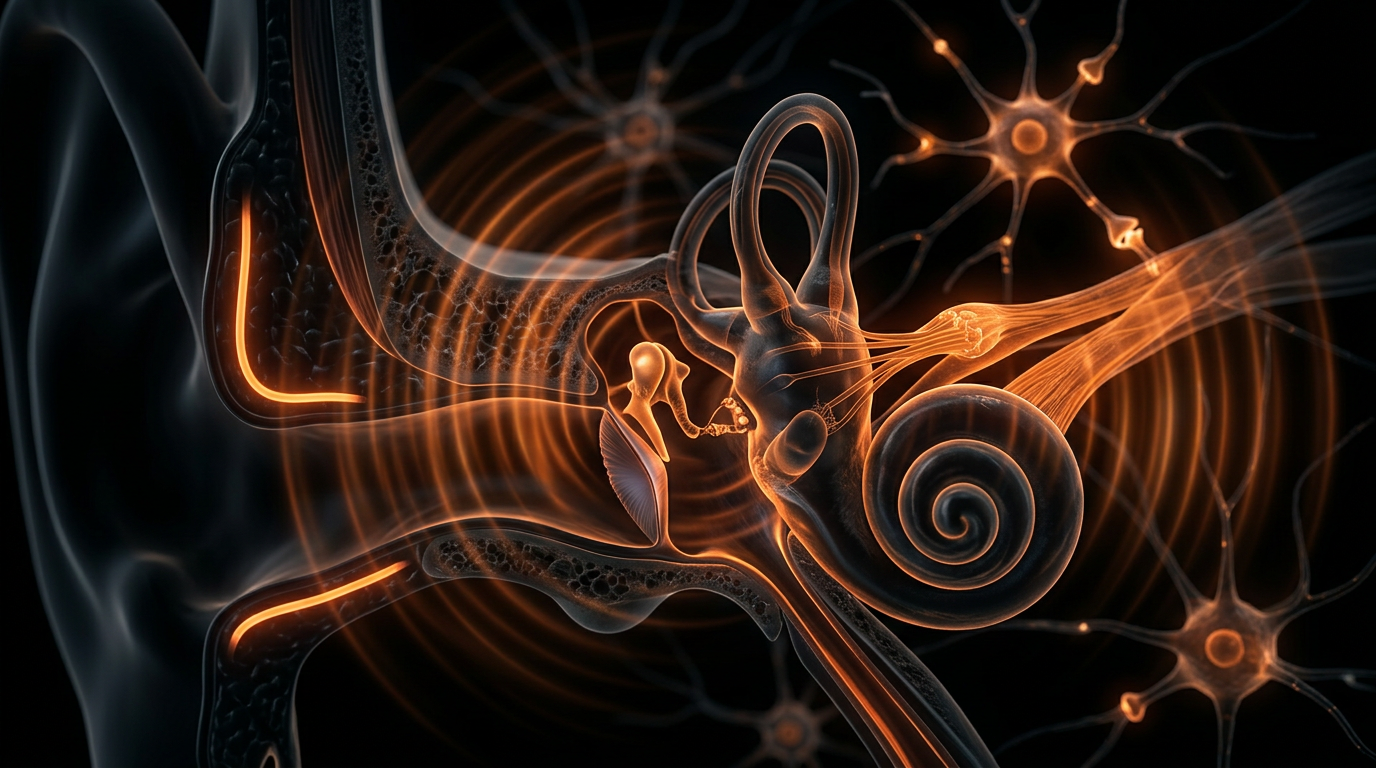
There is a silent spectrum of noise pollution that escapes both the human ear and standard regulatory frameworks: low-frequency noise (LFN) and infrasound. These sounds, typically below 200 Hz, are generated by industrial wind turbines, large ventilation systems, and heavy transport. While mainstream medicine often dismisses the complaints of those sensitive to these frequencies as psychosomatic, an evidence-based investigation into vibroacoustic disease (VAD) suggests a far more complex biological interaction. Section 1: Below the Threshold of Hearing. The human body is not just an auditory receiver; it is a resonant chamber.
Low-frequency sound waves have long wavelengths that can penetrate walls and human tissue with ease. These waves interact with mechanoreceptors throughout the body, including those in the pleura and pericardium. Chronic exposure to LFN has been shown to induce the thickening of these membranes—a hallmark of vibroacoustic disease. This is a structural adaptation to mechanical stress that can lead to respiratory and cardiac dysfunction, yet it is rarely screened for in standard UK clinical practice. Section 2: The Vestibular System and the 'Inner Storm'.
The vestibular system, responsible for balance and spatial orientation, is particularly sensitive to infrasound. Exposure can cause 'otolith dysfunction,' leading to symptoms of dizziness, nausea, and a profound sense of unease or 'impending doom.' This is due to the direct mechanical stimulation of the hair cells in the utricle and saccule. Furthermore, LFN can disrupt the pressure regulation within the inner ear, leading to symptoms mimicking Meniere’s disease. For many, the 'mystery' of their chronic vertigo or anxiety is solved not by a psychiatrist, but by identifying an invisible low-frequency source in their environment. Section 3: A New Frontier in Environmental Medicine.
Addressing LFN requires a shift in how we measure sound. The standard 'A-weighting' used in noise meters filters out the very frequencies that cause VAD. We must advocate for 'C-weighted' or 'G-weighted' measurements to capture the true acoustic load. On an individual level, physical barriers are often ineffective against LFN; the most effective strategy is 'frequency cancellation' or, if possible, relocation away from high-vibration industrial sites. Recognizing infrasound as a mechanical pathogen is crucial for those suffering from 'unexplained' chronic fatigue and inflammatory conditions.
This article is provided for informational and educational purposes only. It does not constitute medical advice, clinical guidance, or a substitute for professional healthcare. Information reflects cited research at time of publication. Always consult a qualified healthcare professional before acting on any health information.
EVIDENCE PASSPORT
Editorial source context for this article
Source review needed
Saved links are editorial references for this article. They may support specific claims rather than every sentence. Open and assess each source in context. This passport does not independently verify them.
Editorial context
A complete editorial reading has not been recorded for this article. Source links remain available for you to open and assess directly.
Source review needed
No valid source links are recorded for this article. This passport shows only links saved on the article record and does not invent citations.
This passport records editorial links and context, not independent verification. Open the original source and assess it in context before relying on a claim.
Medical Disclaimer
The information in this article is for educational purposes only and does not constitute medical advice, diagnosis, or treatment. Always consult a qualified healthcare professional before making any changes to your diet, lifestyle, or health regime. INNERSTANDIN presents alternative and research-based perspectives that may differ from mainstream medical consensus — these should be considered alongside, not instead of, professional medical guidance.
Read Full DisclaimerContinue the thread
Keep this question moving.
Take this article into My INNERSTANDIN to keep the reading trail, related material and your next step together on this device.
Dig deeper in the Library
Free, longform PDF volumes that go beyond headlines into mechanisms and references.