
Intestinal Permeability Loss: The Leaky Gut Link
Updated May 2026
Microplastics physically damage the intestinal lining, increasing permeability and leading to 'leaky gut' syndrome. This allow toxins and undigested food particles to enter the bloodstream, triggering systemic issues.
Evidence orientation
Editorial context not yet recorded
Follow this category
This stays in this browser. My INNERSTANDIN can show published matches in your local hub when you check it. It does not send email, push, or alert notifications.
Local learning review
A private browser aid for revisiting ideas. It is not an alert or a health recommendation.
Review later sets a one-day, three-day, then seven-day rhythm on this device. Choose it only when you want to revisit this article.
Overview
The human intestinal tract is arguably the most critical interface between our internal biological systems and the increasingly hostile external environment. Spanning an approximate surface area of 32 square metres, this intricate barrier is tasked with an almost impossible dual role: it must be selectively permeable to allow the absorption of life-sustaining nutrients and water, while remaining absolutely impenetrable to pathogens, toxins, and undigested macromolecules. This delicate equilibrium is governed by the intestinal mucosal barrier, a sophisticated multi-layered defence system.
However, a new and insidious threat has emerged that challenges the integrity of this gatekeeper: microplastics (MPs) and nanoplastics (NPs). These ubiquitous synthetic polymers, derived from the degradation of industrial waste, packaging, and textiles, have now permeated every level of the global food chain. We are no longer merely "exposed" to plastics; we are consuming them. Estimates suggest the average human ingests between 39,000 to 52,000 plastic particles annually, a figure that rises significantly for those relying on bottled water or living in highly urbanised environments.
Recent toxicological research, often sidelined by mainstream industrial interests, reveals a harrowing reality. These particles do not simply pass through the digestive tract as inert waste. Instead, they interact physically and chemically with the intestinal epithelium. This interaction leads to intestinal permeability loss, colloquially known as ‘leaky gut’ syndrome. When the structural integrity of the tight junctions (the ‘glue’ between gut cells) is compromised, the result is a systemic translocation of foreign materials into the bloodstream.
This article explores the mechanical and biochemical pathways through which microplastics breach the human barrier. We will examine how these polymers trigger chronic inflammation, disrupt the microbiome, and initiate a cascade of systemic diseases that the modern medical establishment is only beginning to categorise. At INNERSTANDING, we believe that understanding the cellular reality of this plastic invasion is the first step toward biological sovereignty and recovery.
The Biology — How It Works
To understand how microplastics cause "leakage," one must first appreciate the architectural complexity of the intestinal barrier. This is not a static wall but a dynamic, multi-layered ecosystem composed of three primary lines of defence.
The Microbiological Layer
The first line of defence is the commensal microbiota. These trillions of bacteria occupy the luminal space and the outer mucus layer, providing "colonisation resistance" against pathogens. They also produce short-chain fatty acids (SCFAs) like butyrate, which serve as the primary energy source for colon cells and help maintain the tight junctions. Microplastics have been shown to induce dysbiosis, a state of microbial imbalance, which weakens this first layer of protection before the plastic even touches a human cell.
The Chemical and Mucus Layer
The second layer consists of the mucus barrier, primarily composed of the gel-forming glycoprotein MUC2. This "sieve" traps larger particles and houses antimicrobial peptides and Immunoglobulin A (IgA). Microplastics, particularly those with hydrophobic surfaces, can become embedded in this mucus, altering its viscosity and thickness. Research indicates that chronic exposure to polystyrene nanoplastics can significantly reduce the expression of mucin genes, effectively "thinning the veil" that protects the underlying cells.
The Physical Epithelial Layer
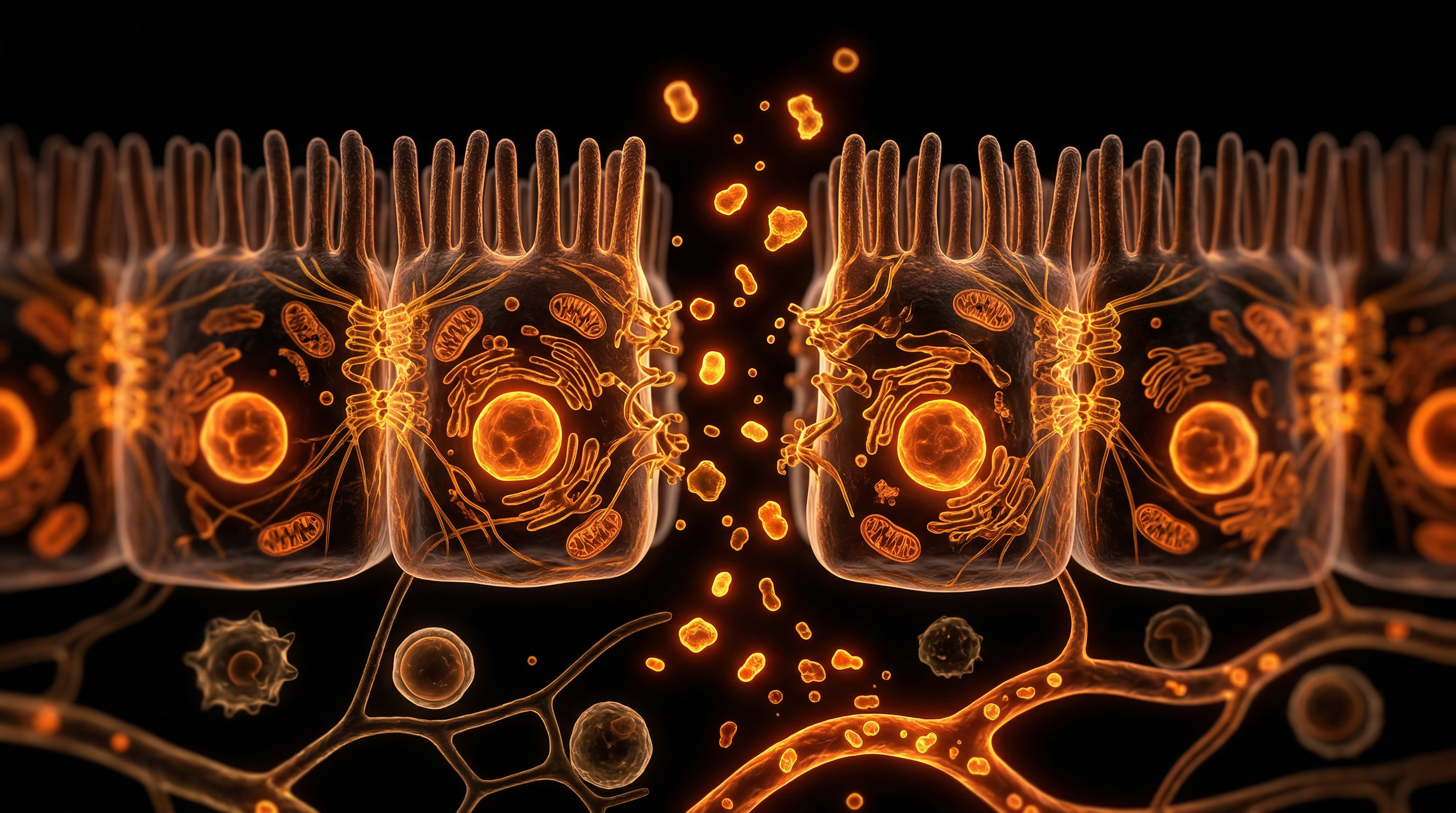
The final and most crucial layer is the intestinal epithelium, a single layer of columnar cells called enterocytes. These cells are fused together by a complex of proteins known as the Apical Junctional Complex (AJC), which includes:
- Tight Junctions (TJs): Proteins like claudin, occludin, and zonula occludens-1 (ZO-1). These are the primary regulators of the paracellular pathway (the space between cells).
- Adherens Junctions: Provide mechanical stability.
- Desmosomes: Link the internal cytoskeleton of adjacent cells.
Callout Fact: The intestinal barrier is only a single cell thick (approximately 20 micrometres). This means that a microscopic breach in this thin layer provides direct access to the underlying mucosal immune system and the systemic circulation.
When microplastics interact with this physical layer, they do not just "bounce off." Depending on their size and surface charge, they can be absorbed via paracellular transport (slipping between cells) or transcellular uptake (entering through the cell itself). It is the failure of the tight junctions—the "unzipping" of the cell-to-cell bonds—that defines intestinal permeability loss.
Mechanisms at the Cellular Level
The damage inflicted by microplastics and nanoplastics at the cellular level is both mechanical and biochemical. It is not merely the presence of the plastic, but the body’s reaction to it that facilitates the "leaking."
Physical Abrasion and "The Sandpaper Effect"
Microplastics are often jagged, irregular fragments. At the micro-scale, these particles act as physical irritants to the microvilli (the finger-like projections on enterocytes). This mechanical stress can lead to the shedding of the brush border membrane, reducing the surface area available for nutrient absorption and creating localized "micro-tears" in the epithelial sheet.
Oxidative Stress and Mitochondrial Dysfunction
Once in contact with or internalised by enterocytes, nanoplastics trigger the production of Reactive Oxygen Species (ROS). Plastics, particularly those weathered by environmental exposure, often carry a high surface "corona" of adsorbed toxins. This oxidative stress overwhelms the cell’s antioxidant defences, leading to lipid peroxidation of the cell membrane. Furthermore, nanoplastics have been observed to localise within the mitochondria, the cell's power plants, disrupting ATP production and triggering apoptosis (programmed cell death). When enterocytes die prematurely, gaps are left in the barrier.
The Disruption of Tight Junction Proteins
The most critical mechanism of "leaky gut" is the down-regulation of TJ proteins. Studies using human intestinal cell lines (such as Caco-2) have shown that exposure to polystyrene microplastics directly leads to a decrease in ZO-1 and occludin expression.
- Zonulin Signalling: Microplastics may trigger the release of zonulin, a protein that modulates intestinal permeability. High levels of zonulin are a hallmark of Coeliac disease and Type 1 diabetes; it essentially signals the tight junctions to open wide, allowing large-scale translocation of luminal contents.
The "Trojan Horse" Effect (Chemical Leaching)
Microplastics are never "just plastic." They are chemical cocktails containing additives such as phthalates, Bisphenol A (BPA), and flame retardants. These chemicals are not chemically bound to the polymer matrix and leach out easily in the acidic and enzymatic environment of the gut.
- Endocrine Disruption: BPA and phthalates mimic oestrogen and interfere with hormonal signalling that maintains gut integrity.
- Adsorbed Pollutants: In the environment, microplastics act as magnets for Persistent Organic Pollutants (POPs) like PCBs and heavy metals. When a plastic particle enters the gut, it delivers a concentrated dose of these toxins directly to the intestinal wall.
Environmental Threats and Biological Disruptors
The modern environment is saturated with microplastic sources that specifically target the gastrointestinal tract. While the mainstream focuses on "ocean plastic," the most immediate threats to the human gut are far more domestic.
Bottled Water and Beverage Containers
Statistic: A landmark study found that a single litre of bottled water can contain an average of 240,000 detectable plastic fragments, 90% of which are nanoplastics small enough to enter the human bloodstream directly.
The process of opening and closing a plastic cap, combined with the degradation of the Polyethylene Terephthalate (PET) bottle, releases a constant stream of NPs into the liquid. When consumed on an empty stomach, these particles have a clear path to the intestinal lining.
Food Packaging and "Heat-and-Eat" Culture
The use of plastic containers in microwave ovens is a primary driver of intestinal disruption. Heat accelerates the breakdown of polymers and the leaching of plasticisers. Polypropylene containers, often marketed as "microwave safe," have been shown to release millions of microparticles when heated.
Synthetic Tea Bags
Many premium tea brands have moved from paper to "silky" plastic tea bags (made of nylon or PET). Steeping a single plastic tea bag at brewing temperature (95°C) releases approximately 11.6 billion microplastics and 3.1 billion nanoplastics into a single cup. For a frequent tea drinker, this represents a massive, acute assault on the intestinal barrier.
The Global Food Chain: Seafood and Salts
Because microplastics accumulate in the organs of marine life, the consumption of whole organisms (like shellfish, mussels, and sardines) leads to direct ingestion. Furthermore, sea salt has been found to be globally contaminated with microplastics, meaning that even a "healthy" home-cooked meal may be seasoned with synthetic polymers.
The Cascade: From Exposure to Disease
The loss of intestinal permeability is not an isolated event; it is the "Patient Zero" of systemic chronic disease. Once the barrier is breached, a process known as Metabolic Endotoxaemia begins.
Systemic Inflammation and Cytokine Storms
When the gut "leaks," substances that should never leave the intestinal lumen enter the portal vein. This includes Lipopolysaccharides (LPS)—pro-inflammatory endotoxins from the cell walls of bacteria. The immune system, sensing these foreign invaders, enters a state of high alert.
- The liver is overwhelmed by the influx of toxins.
- The body produces pro-inflammatory cytokines such as TNF-alpha and IL-6.
- Chronic systemic inflammation becomes the baseline, driving insulin resistance and cardiovascular disease.
Autoimmunity: The Molecular Mimicry Path
The entry of undigested food proteins and plastic-bound toxins into the bloodstream can trigger autoimmune reactions. Through a process called molecular mimicry, the immune system may begin to attack the body’s own tissues that "look like" the foreign proteins it encountered during a leaky gut episode. This has been linked to the rise in Hashimoto’s thyroiditis, Rheumatoid Arthritis, and Croeliac disease.
The Gut-Brain Axis and Neurotoxicity
There is a direct highway between the gut and the brain via the vagus nerve. Furthermore, once microplastics reach the bloodstream, nanoplastics have been shown to cross the blood-brain barrier.
- Neuroinflammation: The inflammatory signals from a "leaky gut" can reach the brain, contributing to "brain fog," anxiety, and depression.
- Neurodegenerative Links: Emerging research suggests a link between gut-derived inflammation and the formation of amyloid plaques in Alzheimer’s disease.
Metabolic Disruption
Microplastics are now being categorised as "obesogens." By disrupting the gut microbiota and inducing chronic inflammation in the intestinal wall, they alter how the body processes fats and sugars, contributing to the global epidemic of obesity and Type 2 diabetes.
What the Mainstream Narrative Omits
The reason the public is not being warned about the "Leaky Gut-Microplastic Link" with the urgency it deserves is due to a combination of regulatory inertia and industrial lobbying.
The "Dose Makes the Poison" Fallacy
Traditional toxicology is built on the idea that small amounts of a substance are harmless. However, microplastics do not follow this linear model. They are bio-persistent. They do not "flush out" easily; they accumulate in the mucus layer and within the tissues themselves. Regulatory bodies like the European Food Safety Authority (EFSA) often cite a "lack of evidence" for human harm, ignoring the precautionary principle while waiting for decades-long longitudinal studies that are ethically impossible to conduct on humans.
The "Inertness" Myth
For decades, the plastic industry pushed the narrative that polymers are chemically inert and biologically "invisible." This narrative deliberately ignored the role of additives and the physical reality of nanoparticles. By framing plastic as a "litter problem" (an aesthetic issue) rather than a "bio-integrity problem," the industry shifted the blame to the consumer’s recycling habits rather than the inherent toxicity of the material.
The Focus on "Macro" over "Nano"
Most government testing protocols are designed to detect microplastics down to 100 micrometres. However, the most damage to the intestinal barrier is done by nanoplastics (smaller than 1 micrometre), which are invisible to standard monitoring equipment. By focusing on what they can easily measure, authorities are underestimating the biological threat by several orders of magnitude.
The UK Context
In the United Kingdom, the microplastic crisis is exacerbated by specific geographical and infrastructure challenges.
The Sewage Crisis and the Food Chain
The UK’s antiquated sewage system frequently discharges untreated waste into rivers and coastal waters. This waste is a primary source of microfibre pollution from synthetic clothing (polyester and acrylic).
- British Shellfish: Research from the University of Hull found that mussels harvested off the British coast contain some of the highest microplastic counts in the world.
- Agricultural Spreading: In the UK, "sewage sludge" is often used as fertiliser on agricultural land. This sludge is concentrated with microplastics, which then enter the soil and are taken up by root vegetables, bringing the plastic cycle full circle to the British dinner table.
Regulatory Gaps Post-Brexit
Following Brexit, the UK's relationship with REACH (Registration, Evaluation, Authorisation and Restriction of Chemicals) has become fractured. There are concerns that the UK may lag behind the EU in banning certain plastic additives known to damage the gut barrier, such as specific phthalates and "forever chemicals" (PFAS) that often coat "grease-proof" food packaging used in UK high-street food chains.
The NHS Burden
The "leaky gut" phenomenon is a silent driver behind the escalating costs of the NHS. The UK has some of the highest rates of Inflammatory Bowel Disease (IBD) and Irritable Bowel Syndrome (IBS) in Europe. While the NHS focuses on symptom management through biologics and steroids, there is almost no clinical focus on the environmental drivers—like microplastic ingestion—that are causing the underlying barrier failure.
Protective Measures and Recovery Protocols
While the ubiquity of plastics makes total avoidance impossible, biological researchers are identifying ways to fortify the intestinal barrier and facilitate the clearance of particles.
Physical and Dietary Interventions
- Eliminate Plastic "Hotspots": Transition to glass or stainless steel for all food and water storage. Never heat food in plastic. Switch to loose-leaf tea or brands that use verified plastic-free paper bags.
- High-Quality Water Filtration: Standard carbon filters are insufficient for nanoplastics. Use Reverse Osmosis (RO) systems with a final remineralisation stage to ensure the smallest particles are removed.
- The Power of Cruciferous Vegetables: Sulforaphane, found in broccoli and Brussels sprouts, has been shown to enhance the body's detoxification pathways and may help the gut lining resist oxidative stress.
Supplementation for Barrier Repair
- L-Glutamine: The primary fuel for enterocytes. Supplemental glutamine is essential for "re-zipping" the tight junctions.
- Collagen and Amino Acids: Rich in proline and glycine, which are the building blocks of the intestinal mucus layer.
- Polyphenols (Quercetin and Curcumin): These natural compounds are potent inhibitors of zonulin release and help dampen the NF-kB inflammatory pathway triggered by plastic particles.
- Spore-Based Probiotics: Unlike standard probiotics, spore-based strains (like Bacillus coagulans) can survive the transit to the lower gut and help rebuild the microbial diversity needed to protect the epithelium.
Lifestyle and Policy
- Fibre Intake: Adequate soluble and insoluble fibre acts as a "biological broom," helping to trap microplastics in the faecal bolus and speed their transit through the body, reducing contact time with the intestinal wall.
- Advocacy: Supporting UK-based initiatives like City to Sea or Surfers Against Sewage helps push for the systemic changes (such as the ban on microplastics in cosmetics and stricter industrial discharge laws) that are required to reduce the environmental load.
Summary: Key Takeaways
The link between microplastics and intestinal permeability is no longer a fringe theory; it is a biological certainty that demands immediate attention.
- Intestinal Permeability Loss (Leaky Gut) is the primary mechanism through which microplastics initiate systemic disease.
- Nanoplastics are the most dangerous size fraction, capable of entering cells, disrupting mitochondria, and crossing the blood-brain barrier.
- Tight Junctions are the "molecular glue" destroyed by plastic-induced oxidative stress and chemical leaching.
- Modern Exposure is dominated by bottled water, synthetic tea bags, and heated food packaging.
- The Systemic Cascade leads from a breached gut to chronic inflammation, autoimmunity, and metabolic dysfunction.
- Mainstream Neglect is driven by outdated toxicological models and industry influence, leaving the individual responsible for their own "barrier sovereignty."
- Recovery is Possible through the strict elimination of plastic contact, RO water filtration, and targeted supplementation to repair the epithelial lining.
The infiltration of our biology by synthetic polymers is the defining environmental health challenge of the 21st century. To protect our health, we must protect our barriers. Understanding the "Leaky Gut Link" is the first step in reclaiming our internal environment from a world made of plastic.
This article is provided for informational and educational purposes only. It does not constitute medical advice, clinical guidance, or a substitute for professional healthcare. Information reflects cited research at time of publication. Always consult a qualified healthcare professional before acting on any health information.
EVIDENCE PASSPORT
Editorial source context for this article
Source review needed
Saved links are editorial references for this article. They may support specific claims rather than every sentence. Open and assess each source in context. This passport does not independently verify them.
Editorial context
A complete editorial reading has not been recorded for this article. Source links remain available for you to open and assess directly.
Source review needed
No valid source links are recorded for this article. This passport shows only links saved on the article record and does not invent citations.
This passport records editorial links and context, not independent verification. Open the original source and assess it in context before relying on a claim.
Medical Disclaimer
The information in this article is for educational purposes only and does not constitute medical advice, diagnosis, or treatment. Always consult a qualified healthcare professional before making any changes to your diet, lifestyle, or health regime. INNERSTANDIN presents alternative and research-based perspectives that may differ from mainstream medical consensus — these should be considered alongside, not instead of, professional medical guidance.
Read Full DisclaimerContinue the thread
Keep this question moving.
Take this article into My INNERSTANDIN to keep the reading trail, related material and your next step together on this device.
Explore this in the Body Map
See where this hits your biology. Interactive anatomy, threats, and protective protocols.
Dig deeper in the Library
Free, longform PDF volumes that go beyond headlines into mechanisms and references.