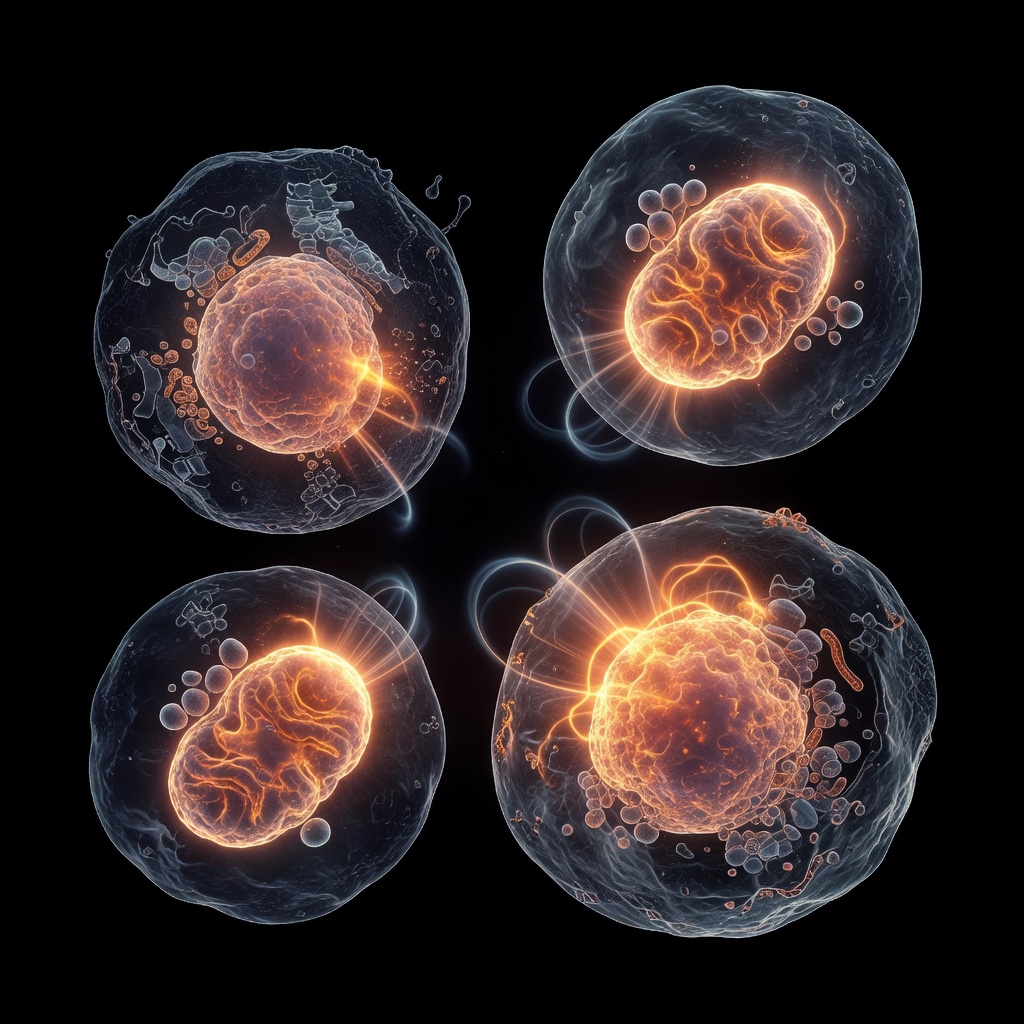
Intracellular Magnesium Deficiency: A Root-Cause Analysis of ATP Synthesis Failure and Cardiovascular Mineralization
An in-depth exploration of how magnesium deficiency at the cellular level disrupts energy production and leads to the calcification of soft tissues, analyzed through the lens of Hair Tissue Mineral Analysis (HTMA).

# Intracellular Magnesium Deficiency: The Silent Bioenergetic Crisis Within the landscape of modern nutritional science, magnesium is frequently lauded as a 'master mineral.' Yet, despite its ubiquity in supplements and health discourse, a profound misunderstanding persists regarding its measurement and its role in systemic disease. At INNERSTANDING, we focus on the root causes of dysfunction, and few issues are as pervasive or as damaging as intracellular magnesium deficiency. This condition, often invisible to standard medical screening, serves as a primary driver for ATP synthesis failure and the progressive mineralization of the cardiovascular system. ## The Fallacy of Serum Magnesium Testing The most significant hurdle in identifying magnesium deficiency is the clinical reliance on serum magnesium testing. Only about 1% of the body's total magnesium is found in the blood; the remaining 99% resides within the cells and the bone matrix. Because the body maintains serum magnesium within a very tight homeostatic range to ensure cardiac rhythm, blood levels will remain 'normal' even while tissues are severely depleted.
By the time magnesium shows as low in a blood test, the cellular stores have often been exhausted for years. This is where Hair Tissue Mineral Analysis (HTMA) becomes an indispensable tool. HTMA provides a window into the intracellular environment, reflecting the mineral status of tissues over a three-month period and revealing the 'burn rate'—the speed at which an individual is using up their magnesium stores due to stress, toxicity, or metabolic demand. ## The Mg-ATP Complex: Why Magnesium is Energy To understand why magnesium deficiency leads to fatigue and metabolic failure, one must look at the mitochondria. Adenosine Triphosphate (ATP) is the universal energy currency of the cell. However, ATP is not biologically active on its own.
In the body, ATP must bind to a magnesium ion to form what is known as the Mg-ATP complex. Without magnesium, the phosphate bonds in ATP cannot be broken effectively to release energy. Consequently, a cell can technically have 'enough' ATP, but if magnesium is absent, that energy remains locked away and unusable. This results in a state of 'cellular starvation' despite adequate caloric intake. This bioenergetic failure manifests as chronic fatigue, exercise intolerance, and brain fog, but its most dangerous effects occur in the heart—an organ that never rests and requires a constant, high-volume supply of Mg-ATP to maintain its contractile function. ## The Mineralization Cascade: When Calcium Invades Magnesium and calcium operate in a delicate, antagonistic balance often referred to as the 'Great Seesaw.' Magnesium is responsible for keeping calcium dissolved in the blood and directing it toward the bones and teeth.
It acts as a natural calcium channel blocker, ensuring that calcium does not flood the intracellular space. When magnesium levels drop, the gates are left open. Calcium rushes into the cells, particularly those in the soft tissues and the vascular system. This intracellular calcium influx triggers a cascade of events: the cell becomes hyper-excitable, oxidative stress increases, and the mitochondria are further damaged. Over time, this results in 'metastatic calcification'—the hardening of tissues that should remain flexible. ## Cardiovascular Mineralization and Arterial Stiffness The cardiovascular system is uniquely vulnerable to this magnesium-calcium imbalance.
When magnesium is insufficient to regulate calcium, the smooth muscle cells within the arterial walls undergo a phenotypic shift. They begin to behave like bone cells (osteoblasts), laying down calcium phosphate crystals in the vessel walls. This process, known as vascular mineralization, leads to arterial stiffness and hypertension. Unlike simple atherosclerosis (the buildup of plaque), medial calcification involves the actual hardening of the arterial architecture. This increases the workload on the heart, reduces capillary perfusion, and significantly elevates the risk of myocardial infarction and stroke.

Rejuvenation Pack – Essential Vitamins and Minerals for Health Restoration
The Rejuvenation Pack is a foundational toolkit designed to restore your biological baseline by replenishing the essential vitamins and minerals often stripped from modern diets. This comprehensive set targets your metabolic and immune systems to help you reclaim energy, mental clarity, and physical resilience.
Vetting Notes
Pending
From an HTMA perspective, a high Calcium-to-Magnesium (Ca/Mg) ratio—often called the 'Lifestyle Ratio'—is a primary indicator of this process. A ratio significantly above 10:1 suggests that calcium is precipitating out of solution and into the soft tissues, signaling an urgent need for magnesium repletion and metabolic rebalancing. ## The 'Burn Rate' and Root Causes of Depletion Why are we so magnesium-deficient? The root causes are manifold, ranging from the macro-environmental to the micro-biochemical. 1. Soil Depletion: Industrial farming practices have stripped the soil of essential minerals. Even a 'perfect' diet today contains significantly less magnesium than the same diet would have seventy years ago. 2. The Stress Response: Magnesium is our primary 'anti-stress' mineral. Under physical or emotional stress, the adrenal glands trigger the release of magnesium from the cells into the blood to be utilized by the muscles and brain, after which it is excreted by the kidneys.
This 'stress-induced magnesium loss' creates a vicious cycle: stress depletes magnesium, and low magnesium makes the body more reactive to stress. 3. The Calcium-D Preoccupation: The public health emphasis on high-dose calcium supplementation and Vitamin D (without cofactors) has exacerbated the problem. Vitamin D increases calcium absorption; however, the enzymes that convert Vitamin D into its active form are magnesium-dependent. High Vitamin D intake can actually drain magnesium stores while pushing calcium into the arteries. 4. Pharmaceutical Antagonists: Common medications, including proton pump inhibitors (PPIs) for acid reflux and various diuretics for hypertension, actively block magnesium absorption or increase its excretion. ## Restoring the Cellular Terrain Reversing intracellular magnesium deficiency requires more than just a random supplement. It requires a strategic approach informed by HTMA data. Because the body can only absorb a certain amount of magnesium through the digestive tract at once, 'slow and steady' repletion using highly bioavailable forms like magnesium bisglycinate or malate is essential.
Furthermore, cofactors such as Vitamin B6 (in its active P5P form) are necessary to 'escort' magnesium into the cell. By addressing the root cause—the lack of the magnesium ion required for ATP activity and calcium regulation—we can effectively halt the progression of cardiovascular mineralization and restore the bioenergetic integrity of the human body. INNERSTANDING advocates for a shift away from reactive symptom management toward the proactive restoration of mineral homeostasis, ensuring the heart and mitochondria have the foundational elements they need to thrive.
This article is provided for informational and educational purposes only. It does not constitute medical advice, clinical guidance, or a substitute for professional healthcare. Information reflects cited research at time of publication. Always consult a qualified healthcare professional before acting on any health information.
RESEARCH FOUNDATIONS
Biological Credibility Archive
Citations provided for educational reference. Verify via PubMed or institutional databases.
Medical Disclaimer
The information in this article is for educational purposes only and does not constitute medical advice, diagnosis, or treatment. Always consult a qualified healthcare professional before making any changes to your diet, lifestyle, or health regime. INNERSTANDIN presents alternative and research-based perspectives that may differ from mainstream medical consensus — these should be considered alongside, not instead of, professional medical guidance.
Read Full DisclaimerReady to learn more?
Continue your journey through our classified biological research.
DISCUSSION ROOM
Members of THE COLLECTIVE discussing "Intracellular Magnesium Deficiency: A Root-Cause Analysis of ATP Synthesis Failure and Cardiovascular Mineralization"
SILENT CHANNEL
Be the first to discuss this article. Your insight could help others understand these biological concepts deeper.
THE ARSENAL
Based on Hair Tissue Mineral Analysis (HTMA) — products curated by our research team for educational relevance and biological support.

MSM Sulphur – Nature’s Forgotten Mineral

Magnesium L-Threonate

Magnesium Blend – The Most Important Mineral
INNERSTANDING may earn a commission on purchases made through these links. All products are selected based on rigorous educational relevance to our biological research.
RABBIT HOLE
Follow the biological thread deeper