
Iodine Scarcity in the UK Dairy Chain
Updated May 2026
The UK is one of the most iodine-deficient nations in the developed world due to a lack of mandatory salt iodisation. This piece details how shifting dietary habits are impacting thyroid hormone synthesis and neurodevelopment.
Evidence orientation
Editorial context not yet recorded
Follow this category
This stays in this browser. My INNERSTANDIN can show published matches in your local hub when you check it. It does not send email, push, or alert notifications.
Local learning review
A private browser aid for revisiting ideas. It is not an alert or a health recommendation.
Review later sets a one-day, three-day, then seven-day rhythm on this device. Choose it only when you want to revisit this article.
Overview
In the hierarchy of essential trace elements, few carry the physiological weight of iodine, yet none are as profoundly neglected within the British public health discourse. For decades, the United Kingdom has operated under a dangerous assumption: that the nutritional requirements of the population are being met through a combination of a varied diet and the "accidental" fortification provided by the dairy industry. However, as we move further into the 21st century, this precarious pillar of public health is crumbling.
The United Kingdom now stands as one of the most iodine-deficient nations in the developed world, ranking alongside countries traditionally associated with endemic goitre. Unlike the United States, Canada, or much of Europe, the UK has never implemented a mandatory salt iodisation programme. Instead, it relied on a byproduct of agricultural hygiene—the use of iodophor disinfectants in the dairy industry—to provide a steady supply of iodine through cow’s milk. As dietary habits shift toward plant-based alternatives and agricultural practices evolve, this "accidental" source is evaporating, leaving a massive biochemical void.
Iodine is not merely a component of metabolic health; it is the fundamental architect of human intelligence and the primary regulator of cellular energy. Its scarcity in the UK dairy chain represents a silent emergency, manifesting in a generational decline in neurodevelopmental outcomes and a burgeoning epidemic of thyroid dysfunction. This article explores the biological necessity of iodine, the environmental factors sabotaging its uptake, and the systemic failures that have left the British population nutritionally "orphaned."
Fact: The UK is one of only a few high-income countries where iodine deficiency is considered a significant public health problem by the World Health Organisation (WHO).
The Biology — How It Works
To understand the gravity of the UK's iodine crisis, one must first grasp the elegant, yet fragile, biology of the Hypothalamus-Pituitary-Thyroid (HPT) axis. Iodine is the sole element required for the synthesis of thyroid hormones, which are the only iodine-containing molecules in the human body.
The Synthesis of T4 and T3
The thyroid gland, a butterfly-shaped organ situated at the base of the neck, acts as a biological sensor and regulator. It traps circulating iodide (the ionic form of iodine) from the bloodstream with extraordinary efficiency. Once inside the thyroid, iodide undergoes "organification."
- Thyroxine (T4): Contains four iodine atoms. It is the primary secretory product of the thyroid gland, acting as a pro-hormone.
- Triiodothyronine (T3): Contains three iodine atoms. This is the biologically active form that interacts with nuclear receptors to modulate gene expression.
Without sufficient iodine, the thyroid cannot produce these hormones in adequate quantities. When levels drop, the pituitary gland releases Thyroid Stimulating Hormone (TSH) to force the thyroid to work harder. In a state of chronic scarcity, this leads to the compensatory enlargement of the gland, known as a goitre.
The Role of Deiodinases
The conversion of T4 to the active T3 happens primarily in the peripheral tissues (liver, kidneys, and brain) via enzymes called deiodinases. These enzymes are selenium-dependent. This creates a critical biochemical partnership: iodine provides the raw material, while selenium provides the "tools" to activate it. In the UK, where soil is often depleted of both iodine and selenium, the population faces a "double hit" to their metabolic machinery.
Neurodevelopment and the Fetal Brain
The most critical window for iodine sufficiency is during pregnancy and early infancy. During the first trimester, the fetus is entirely dependent on maternal thyroid hormones for brain development. These hormones regulate neuronal migration, synaptogenesis, and the myelination of nerve fibres. Even a "mild-to-moderate" deficiency in a mother—the exact level currently observed in over 50% of pregnant women in the UK—can lead to a permanent reduction in the child's IQ and diminished cognitive performance in later life.
Mechanisms at the Cellular Level
At the microscopic scale, the management of iodine involves a sophisticated transport system that is highly sensitive to environmental interference.
The Sodium-Iodide Symporter (NIS)
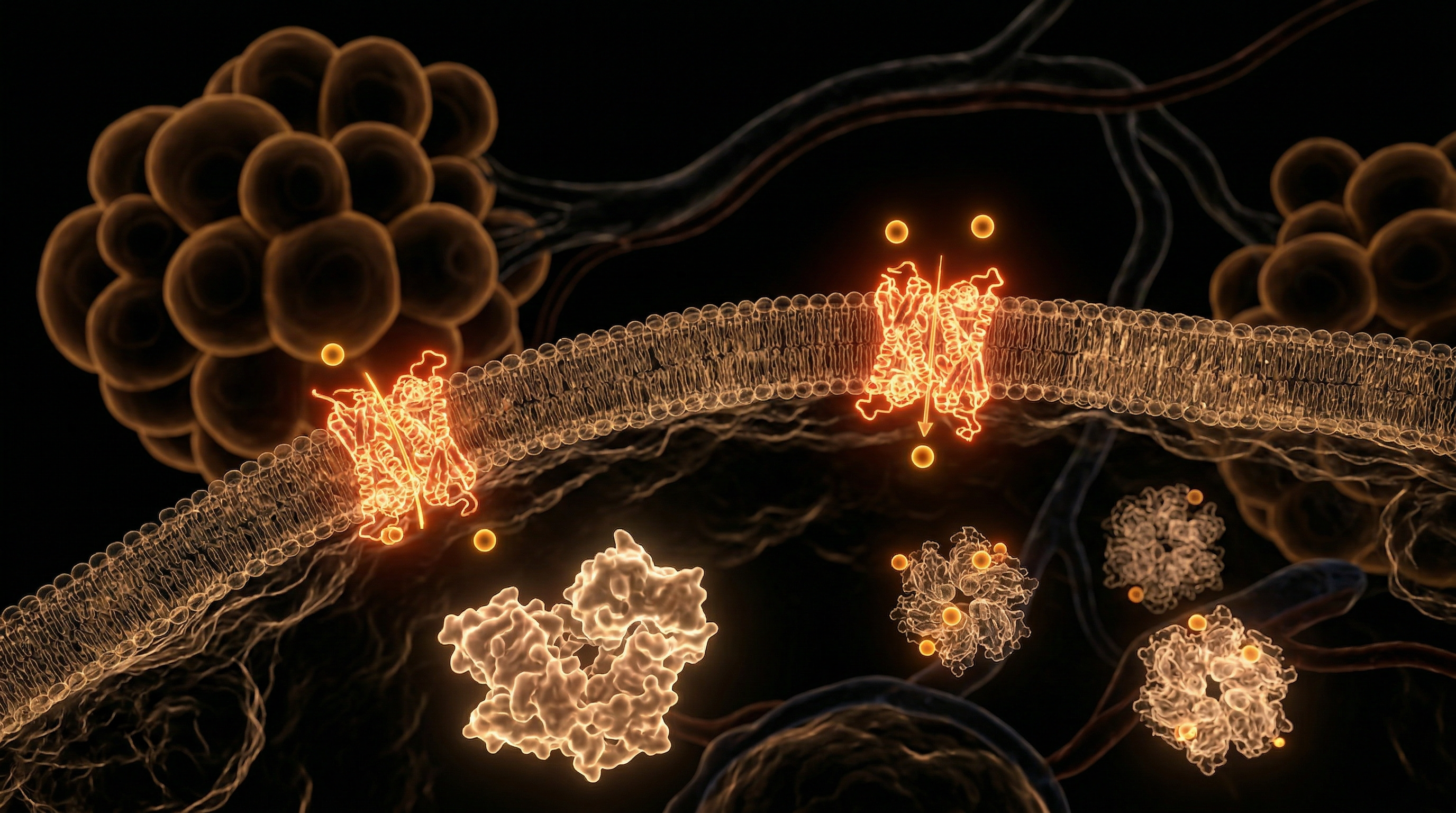
The entry point for iodine into the thyroid follicular cell is the Sodium-Iodide Symporter (NIS). This transmembrane protein uses the electrochemical gradient of sodium to "pump" iodide into the cell against a massive concentration gradient. The NIS is not exclusive to the thyroid; it is also expressed in the mammary glands, the salivary glands, and the stomach lining.
In lactating women, the NIS works to concentrate iodine into breast milk, ensuring the infant receives the high doses required for rapid brain growth. When systemic iodine is low, the body enters a state of internal competition, where the thyroid and the mammary glands must fight for a diminishing pool of resources.
Pendrin and Thyroid Peroxidase (TPO)
Once iodide enters the follicular cell, it must cross the apical membrane to reach the colloid (the storage centre of the thyroid). This is facilitated by a transporter called pendrin. Once in the colloid, the enzyme Thyroid Peroxidase (TPO) oxidises the iodide and attaches it to a large protein called thyroglobulin.
Key Term: Organification is the process of binding iodine to thyroglobulin, creating the precursors to T3 and T4.
If this process is disrupted—either by a lack of iodine or by the presence of competing toxins—the follicular cells can undergo oxidative stress. A lack of iodine causes the thyroid to "rev" its engine, producing excess hydrogen peroxide (needed for the TPO reaction) which, if not utilised, can damage the thyroid tissue itself, potentially triggering autoimmune responses like Hashimoto’s Thyroiditis.
Environmental Threats and Biological Disruptors
The UK iodine crisis is not merely a matter of "not eating enough fish." It is exacerbated by an environment saturated with halide competitors and goitrogens that actively block iodine uptake.
The Halogen Displacement Theory
Iodine belongs to the halogen group on the periodic table, alongside Fluorine, Chlorine, and Bromine. Because these elements share similar chemical properties and atomic radii, they can compete for the same receptors and transport mechanisms in the human body.
- Fluoride: Widely present in the UK water supply (in certain regions) and dental products. Fluoride can inhibit the NIS and interfere with the enzymes that convert T4 to T3.
- Bromine (Bromide): Perhaps the most insidious competitor. Bromated vegetable oils and "flour improvers" (potassium bromate) were historically common. While some uses are restricted, bromine is still prevalent in flame retardants (PBDEs) found in British furniture and electronics. Bromine can displace iodine from the thyroid and from breast tissue.
- Chlorine: Present in tap water and swimming pools. Excessive exposure can further burden the thyroid's ability to sequester iodine.
Perchlorate and Nitrate Interference
Perchlorate is a chemical used in rocket fuel, explosives, and some fertilisers. It is a potent inhibitor of the NIS. Even at low concentrations, it can block iodide from entering the thyroid. Similarly, high levels of nitrates from agricultural runoff can interfere with iodine transport, creating a situation where even if iodine is present in the diet, it cannot reach the cells where it is needed.
Goitrogens in the Modern Diet
While often healthy in a balanced state, certain foods contain goitrogens—compounds that interfere with iodine metabolism.
- Glucosinolates: Found in cruciferous vegetables (kale, broccoli). These are usually only a problem if eaten raw in massive quantities alongside a pre-existing iodine deficiency.
- Soy Isoflavones: Genistein and daidzein can inhibit TPO. With the massive shift toward soy-based "milks" in the UK, this becomes a significant factor for those already iodine-depleted.
The Cascade: From Exposure to Disease
The result of chronic iodine scarcity in the UK is a cascade of physiological failures that the mainstream medical establishment often treats as separate, unrelated "lifestyle diseases."
The Metabolic Slowdown
Thyroid hormones are the master controllers of the basal metabolic rate (BMR). When iodine is scarce, T3 levels drop, and the body’s "idle speed" slows down. This manifests as:
- Unexplained weight gain and resistance to weight loss.
- Chronic fatigue and lethargy.
- Cold intolerance (poor thermogenesis).
- Constipation and sluggish digestion.
The UK’s "obesity crisis" is frequently blamed entirely on caloric surplus and sedentary behaviour, yet the underlying role of widespread, subclinical hypothyroidism driven by iodine deficiency is rarely addressed.
The "IQ Leak"
The most devastating impact is the subtle erosion of cognitive potential. Studies by the University of Surrey and University of Bristol have linked mild iodine deficiency in pregnant UK women to lower IQ scores and poorer reading ability in their children by age nine. This is not "cretinism" (the severe form of deficiency), but a shifted bell curve of intelligence. By failing to ensure iodine sufficiency, the UK is effectively "dimming the lights" on the cognitive future of its population.
Fibrocystic Breast Disease and Reproductive Health
Iodine is not just for the thyroid. The breasts are a major iodine reservoir. Iodine helps regulate the sensitivity of estrogen receptors. In the absence of sufficient iodine, breast tissue can become hyper-sensitive to estrogen, leading to the development of cysts, nodules, and fibrocystic breast disease. There is a growing body of "suppressed" research suggesting that chronic iodine deficiency is a significant risk factor for breast cancer, as iodine is necessary for the apoptosis (programmed cell death) of abnormal breast cells.
What the Mainstream Narrative Omits
The official UK narrative on iodine is one of "complacency through ignorance." Public Health England (now the UK Health Security Agency) and the NHS have historically resisted calls for mandatory salt iodisation, often citing the need to reduce overall salt intake to prevent cardiovascular disease. This "siloed" thinking creates a dangerous trade-off.
The "Dairy Accident" Exposed
For years, the UK was considered iodine-sufficient. This wasn't due to policy, but because of:
- Iodophor disinfectants: Used to clean cow udders and milking machinery.
- Iodine-fortified cattle feed: Designed to improve bovine reproductive health.
The iodine leached into the milk, making dairy the primary source of iodine for the British public. However, the industry has moved toward non-iodine-based disinfectants (like chlorine or organic acids) to meet different standards. Consequently, the iodine content of UK milk is no longer guaranteed and is highly seasonal (higher in winter when cows are fed fortified silage indoors).
The Plant-Based Blind Spot
The meteoric rise of veganism and plant-based diets in the UK has created a nutritional "perfect storm." Most consumers switching from cow's milk to almond, oat, or soy milk assume they are making a "healthier" choice. However, unless these milks are specifically fortified with potassium iodate, they contain almost zero iodine. A 2017 study found that most plant-based milk alternatives in the UK provided only about 2% of the iodine found in cow’s milk.
The Salt Myth
The UK’s refusal to iodise salt is a global anomaly. Over 120 countries have successful Universal Salt Iodisation (USI) programmes. The British argument that "we must reduce salt" is a false dichotomy. You do not need more salt to get iodine; you simply need the salt you already consume to be iodised. By failing to mandate this, the government has left iodine intake to the "lottery" of the dairy chain.
The UK Context
The data regarding the UK's iodine status is startling, yet it rarely makes the front pages. The UK is currently ranked in the top 10 iodine-deficient nations globally when looking at certain demographics.
The 2011 Lancet Study
A landmark study published in The Lancet surveyed schoolgirls aged 14–15 across nine UK centres. It found that 51% were iodine deficient, with 16% being moderately-to-severely deficient. This was the first major wake-up call that the "Dairy Accident" was no longer protecting the most vulnerable segment of the population.
Regional Variations and Soil Depletion
The "Goitre Belt" of the UK—traditionally areas like Derbyshire and the Cotswolds—historically had such low soil iodine that goitres were common (the "Derbyshire Neck"). While modern logistics mean we eat food from everywhere, the baseline level of iodine in British-grown produce remains extremely low due to the lack of volcanic activity and the leaching of minerals from the soil over millennia.
The Socio-Economic Gap
Iodine deficiency in the UK tracks with socio-economic status. Those with higher incomes may afford iodine-rich foods like organic dairy (though organic dairy is actually lower in iodine than conventional dairy), wild-caught white fish, and eggs. Those on tighter budgets, or those relying on processed foods made with non-iodised salt, are at the highest risk.
Statistics: Estimates suggest that the average UK adult's iodine intake has fallen by over 25% in the last two decades.
Protective Measures and Recovery Protocols
Given the systemic failure to address iodine scarcity, the responsibility for maintaining iodine sufficiency now falls on the individual. However, "re-iodising" a deficient body must be done with precision to avoid the Wolff-Chaikoff effect (a temporary shutdown of the thyroid in response to a sudden, massive dose of iodine).
Testing for Deficiency
Standard blood tests for TSH and T4 are often insufficient to detect iodine deficiency until it has reached a state of clinical disease.
- Urinary Iodine Concentration (UIC): The WHO standard for assessing population-wide status.
- 24-Hour Urine Loading Test: This involves taking a known dose of iodine and measuring how much the body retains. A high retention rate indicates a "thirsty" body and a state of deficiency.
Strategic Dietary Sources
For those not wishing to supplement, the dairy chain remains a primary—if unreliable—source.
- White Fish: Haddock and cod are the most concentrated sources.
- Eggs: The yolk contains the iodine, provided the hens were fed fortified meal.
- Seaweed: While high in iodine, seaweed (especially kelp) can be problematic due to high levels of arsenic and erratic iodine concentrations. Kombu is extremely high, while Nori is more moderate.
Supplementation Protocols
When the diet is insufficient, supplementation may be necessary.
- Potassium Iodide (KI): The most common form found in tablets. It is highly bioavailable.
- Lugol’s Solution: A liquid containing both elemental iodine and potassium iodide. This is often favoured by biological researchers because different tissues in the body (thyroid vs. breast vs. prostate) prefer different forms of the element.
- Nascent Iodine: A more "energetic" form of iodine, claimed to be more easily absorbed, though scientific literature on its superiority over KI is sparse.
Essential Cofactors
Iodine supplementation should never be done in a vacuum. To ensure the iodine is utilised correctly and to prevent oxidative damage, the following cofactors are essential:
- Selenium (100–200mcg): Vital for the deiodinase enzymes and to neutralise H2O2.
- Magnesium: Required for the ATP-dependent NIS pump.
- Vitamin C: Helps support the symporter function and reduce oxidative stress.
- Unrefined Sea Salt: Provides the sodium necessary for the Sodium-Iodide Symporter to function.
Warning: Individuals with existing autoimmune thyroid disease (Hashimoto's or Graves') must approach iodine supplementation with extreme caution and professional guidance, as sudden increases can trigger "flares" if selenium levels are inadequate.
Summary: Key Takeaways
The UK’s iodine crisis is a silent epidemic born of policy neglect and shifting cultural habits. As we move away from the "accidental" fortification provided by the dairy industry, we are exposing a population to metabolic and cognitive decline.
- The UK is uniquely vulnerable: Due to the lack of mandatory salt iodisation and a heavy reliance on a dairy industry that is changing its practices.
- Brain Development at Risk: Maternal iodine deficiency is likely contributing to a measurable decline in the cognitive potential of the next generation of British children.
- Environmental Sabotage: Halogens like fluoride and bromine, alongside nitrates and perchlorates, are actively displacing what little iodine remains in our systems.
- The "Dairy Accident" is Over: Plant-based diets and new agricultural cleaning methods mean that dairy is no longer a reliable iodine source.
- Selenium Synergy: Iodine cannot work alone. UK soil depletion of selenium further complicates the thyroid health of the nation.
- Individual Action is Required: In the absence of state-level intervention, British citizens must proactively manage their iodine intake through testing, diet, and informed supplementation.
The restoration of iodine levels in the UK is not just a matter of "nutrition"; it is a matter of national intelligence, metabolic resilience, and the prevention of chronic, avoidable disease. The "spark of life" is dimming in the British Isles; it is time to reignite it through biological understanding and decisive action.
"References & Further Reading (Innerstanding Database):"
- The Lancet Diabetes & Endocrinology (2016): Iodine deficiency in the UK.
- World Health Organisation: Urinary iodine concentrations for determining iodine status.
- Zimmermann MB: Iodine deficiency and thyroid function.
- The University of Surrey: The impact of plant-based milks on iodine intake.
This article is provided for informational and educational purposes only. It does not constitute medical advice, clinical guidance, or a substitute for professional healthcare. Information reflects cited research at time of publication. Always consult a qualified healthcare professional before acting on any health information.
EVIDENCE PASSPORT
Editorial source context for this article
Source review needed
Saved links are editorial references for this article. They may support specific claims rather than every sentence. Open and assess each source in context. This passport does not independently verify them.
Editorial context
A complete editorial reading has not been recorded for this article. Source links remain available for you to open and assess directly.
Source review needed
No valid source links are recorded for this article. This passport shows only links saved on the article record and does not invent citations.
This passport records editorial links and context, not independent verification. Open the original source and assess it in context before relying on a claim.
Medical Disclaimer
The information in this article is for educational purposes only and does not constitute medical advice, diagnosis, or treatment. Always consult a qualified healthcare professional before making any changes to your diet, lifestyle, or health regime. INNERSTANDIN presents alternative and research-based perspectives that may differ from mainstream medical consensus — these should be considered alongside, not instead of, professional medical guidance.
Read Full DisclaimerContinue the thread
Keep this question moving.
Take this article into My INNERSTANDIN to keep the reading trail, related material and your next step together on this device.
Explore this in the Body Map
See where this hits your biology. Interactive anatomy, threats, and protective protocols.
Dig deeper in the Library
Free, longform PDF volumes that go beyond headlines into mechanisms and references.