
Kidney Filtration: How Your Body Manages Homeostasis and Fluid Dynamics
Updated August 2026
The kidneys are far more than just waste filters; they are the master chemists of the blood. Learn the intricate mechanics of the nephron and how the kidneys regulate blood pressure and electrolyte balance.
Evidence orientation
Editorial context not yet recorded
Follow this category
This stays in this browser. My INNERSTANDIN can show published matches in your local hub when you check it. It does not send email, push, or alert notifications.
Local learning review
A private browser aid for revisiting ideas. It is not an alert or a health recommendation.
Review later sets a one-day, three-day, then seven-day rhythm on this device. Choose it only when you want to revisit this article.
Overview
The renal architecture represents the pinnacle of biological fluid dynamics, functioning not merely as a filtration unit, but as the master regulator of internal homeostasis. At INNERSTANDIN, we recognise that the kidney’s capacity to maintain the delicate electrochemical balance of the extracellular fluid (ECF) is a feat of precise hydraulic engineering. Each adult human kidney comprises approximately one million nephrons, the functional units that execute the tripartite process of glomerular filtration, tubular reabsorption, and tubular secretion. This complex orchestration is essential for the preservation of systemic arterial pressure, pH buffering, and the excretion of nitrogenous metabolic waste, such as urea and creatinine, which would otherwise reach systemic toxicity levels.
The process initiates within the renal corpuscle, where hydrostatic pressure forces blood plasma across the glomerular filtration barrier—a sophisticated trilaminar structure comprising fenestrated endothelium, the glomerular basement membrane (GBM), and the slit diaphragms formed by podocyte foot processes. This barrier operates under strict size and charge selectivity, preventing the loss of high-molecular-weight proteins like albumin while facilitating the transition of water and solutes into the Bowman’s space. As documented in seminal physiological studies (cf. Guyton and Hall Textbook of Medical Physiology), the glomerular filtration rate (GFR) remains remarkably stable across a wide range of blood pressures, an autoregulatory phenomenon facilitated by the tubuloglomerular feedback mechanism involving the macula densa.
Beyond mere filtration, the kidney manages homeostasis through the fine-tuned modulation of ion gradients and osmotic pressure. Through the hormonal interplay of the renin-angiotensin-aldosterone system (RAAS) and the secretion of antidiuretic hormone (vasopressin), the renal tubules adjust the permeability of collecting ducts, dictating the concentration of urine and the preservation of blood volume. In the UK clinical landscape, understanding these mechanisms is paramount, as disruptions in renal hemodynamics are primary indicators in the progression of chronic kidney disease (CKD) and systemic hypertension. When renal clearance falters, the resulting accumulation of electrolytes and metabolic by-products precipitates systemic failure. By deconstructing the biophysical forces at play within the nephron, INNERSTANDIN provides the empirical foundation necessary to comprehend how the body’s filtration engine maintains the viability of the human organism under constant, shifting environmental pressures.
The Biology — How It Works
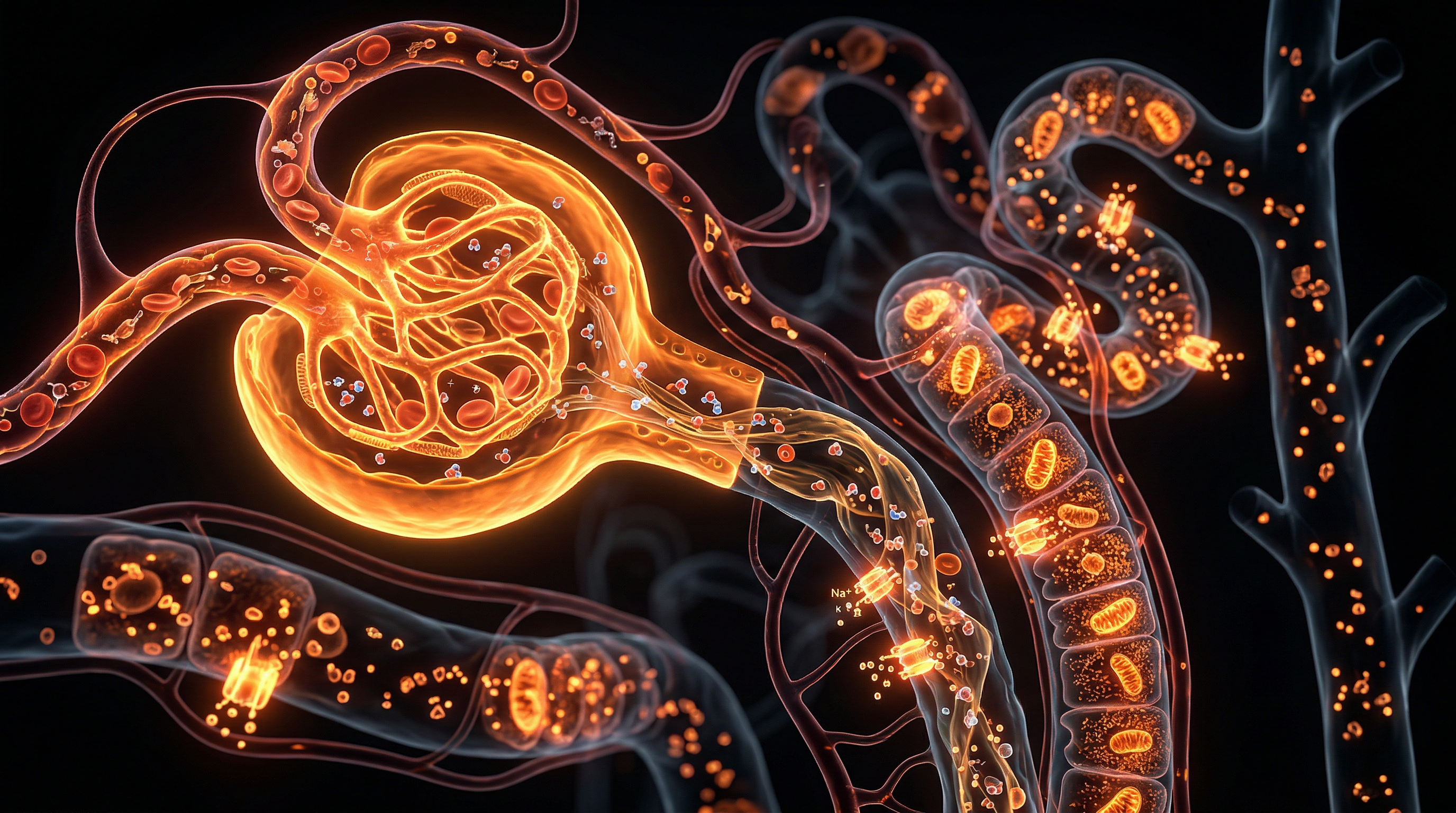
The renal filtration apparatus operates as a masterclass in haemodynamic precision, anchored by the nephron—the functional unit of the kidney. At the core of this process lies the glomerulus, a specialised capillary bed encased within Bowman’s capsule. Here, the physiology transcends simple passive diffusion, evolving into a sophisticated filtration barrier governed by Starling’s forces: the interplay of hydrostatic and oncotic pressures.
Blood enters the glomerulus via the afferent arteriole, which possesses a larger luminal diameter than the efferent arteriole. This configuration creates high hydrostatic pressure, effectively ‘forcing’ plasma—minus large proteins and cellular components—across the glomerular filtration barrier (GFB). The GFB itself is a trilaminar masterpiece consisting of the fenestrated capillary endothelium, the glomerular basement membrane (GBM), and the slit diaphragms of podocytes. Recent evidence published in The Lancet highlights that any disruption to the podocyte foot processes, particularly through the dysregulation of nephrin proteins, precipitates proteinuria, signalling an immediate failure in the homeostatic integrity of the systemic circulation.
Once the primary filtrate enters the proximal convoluted tubule (PCT), the focus shifts from filtration to selective reabsorption. Approximately 65% of the glomerular filtrate—comprising water, sodium, potassium, and glucose—is reclaimed here via active transport mechanisms, primarily the Na+/K+-ATPase pump. This is not merely a passive recovery; it is an energy-demanding metabolic requirement, necessitating high mitochondrial density within tubular cells. At INNERSTANDIN, we emphasise that the kidney consumes oxygen at a rate disproportionate to its mass, illustrating the sheer metabolic cost of maintaining internal milieu stability.
As the filtrate traverses the Loop of Henle, the kidney employs the counter-current multiplier system. By establishing a hypertonic medullary interstitium through the differential permeability of the ascending and descending limbs, the organ facilitates the fine-tuned concentration of urine. Under the influence of arginine vasopressin (AVP)—or antidiuretic hormone—aquaporin-2 channels are translocated to the apical membranes of the collecting ducts. This mechanism allows for the precise titration of fluid retention versus excretion, a process essential for the regulation of blood pressure and systemic pH balance.
The integration of these mechanisms is evidence that the kidneys do not merely ‘filter’ blood; they orchestrate a continuous feedback loop that recalibrates plasma osmolarity and ion concentrations in real-time. Failure to uphold these physiological parameters leads to rapid systemic collapse, underscoring why the renal system is the ultimate gatekeeper of biological homeostasis within the human organism. Through rigorous observation, one observes that every litre of fluid processed is a testament to the complex regulatory architecture inherent to the human body.
Mechanisms at the Cellular Level
At the crux of renal homeostatic control lies the nephron, a sophisticated physiological engine that defies mere passive diffusion. The process of ultrafiltration is orchestrated within the renal corpuscle, specifically at the glomerular filtration barrier (GFB). This tri-layered architecture—comprising the fenestrated glomerular endothelium, the glomerular basement membrane (GBM), and the slit diaphragms of the podocytes—functions as both a size-selective and charge-selective filter. Research published in The Lancet consistently highlights that the podocytes, terminally differentiated epithelial cells with interdigitating foot processes, are the critical gatekeepers. These cells express nephrin and podocin, proteins essential for the structural integrity of the slit diaphragm. When this molecular scaffold is compromised, as seen in various proteinuric nephropathies, the fundamental capacity for selective permeability is lost, leading to systemic physiological collapse.
Moving into the proximal convoluted tubule (PCT), the cellular mechanism shifts from filtration to active transcellular transport. Here, the apical membrane is densely packed with microvilli forming the brush border, massively increasing the surface area for reabsorption. The engine driving this is the basolateral Na⁺/K⁺-ATPase pump. By establishing a steep electrochemical gradient, this pump facilitates the secondary active transport of glucose, amino acids, and bicarbonate via the sodium-glucose linked transporter 2 (SGLT2). INNERSTANDIN recognises that this metabolic demand necessitates a high density of mitochondria, making the PCT exceptionally vulnerable to hypoxic injury—a common pathway in the progression of chronic kidney disease (CKD) across the UK population.
As the filtrate traverses the Loop of Henle, the cellular response is dictated by the differential permeability of the thin descending and thick ascending limbs (TAL). The TAL is characterised by the NKCC2 symporter, which facilitates the reabsorption of sodium, potassium, and chloride. This mechanism is the bedrock of the countercurrent multiplier system, creating the hyperosmotic medullary interstitium required for water conservation. It is at this juncture that pharmacological intervention, such as the application of loop diuretics, highlights our profound reliance on these cellular transporters to modulate extracellular fluid volume. Finally, in the distal tubule and collecting duct, the cellular response is fine-tuned by hormonal inputs. Aldosterone acts upon the principal cells to modulate the Epithelial Sodium Channel (ENaC), while antidiuretic hormone (ADH) triggers the translocation of aquaporin-2 water channels to the apical membrane. This precise, subcellular regulation ensures that despite extreme fluctuations in dietary intake and environmental stressors, the internal milieu remains within the stringent parameters required for cellular viability.
Environmental Threats and Biological Disruptors
The structural integrity of the human nephron—a biological marvel responsible for the orchestration of haemodynamic stability—is increasingly compromised by a spectrum of environmental xenobiotics. Within the context of INNERSTANDIN, we must scrutinise how modern industrial exposure disrupts the glomerular filtration rate (GFR) and the delicate tubuloglomerular feedback mechanisms required for fluid homeostasis. The kidneys, acting as the primary conduits for systemic detoxification, function as high-pressure filters that are uniquely susceptible to reactive oxidative stress (ROS) and toxicological insult.
A burgeoning body of peer-reviewed evidence, notably published in The Lancet and various toxicology journals, highlights the insidious impact of persistent organic pollutants (POPs) and heavy metal bioaccumulation on renal tubular epithelium. Cadmium and lead, often sequestered in the proximal convoluted tubule, disrupt the mitochondrial respiratory chain. This impairment of oxidative phosphorylation reduces ATP availability, directly impeding the active transport of electrolytes—specifically sodium and potassium—thereby destabilising the osmotic gradients essential for water reabsorption. When these gradients collapse, the compensatory mechanisms that preserve systemic fluid dynamics are overwhelmed, leading to a state of chronic interstitial inflammation.
Furthermore, the surge in microplastic ingestion and the widespread presence of endocrine-disrupting chemicals (EDCs) like bisphenol A (BPA) introduce systemic epigenetic interference. Research indexed on PubMed suggests that EDCs may bind to nuclear receptors, altering the expression of genes involved in the renin-angiotensin-aldosterone system (RAAS). By modulating the RAAS pathway, these disruptors can induce maladaptive vasoconstriction of the afferent arteriole, effectively 'bottlenecking' the filtration process and inducing sustained systemic hypertension. This cascade illustrates a profound breakdown in the body's self-regulatory capacity, where the kidney transitions from an efficient homeostatic organ to a site of chronic toxicological stress.
In the UK context, the interplay between environmental air quality (particulate matter PM2.5) and systemic kidney function has emerged as a significant area of inquiry. Systemic inflammation, triggered by the inhalation of fine particulates, manifests as a vascular burden that exacerbates the metabolic load on the glomerulus. When systemic cytokines circulate, they trigger the activation of the nucleotide-binding oligomerization domain-like receptor protein 3 (NLRP3) inflammasome within renal cells. This molecular triggering promotes fibrosis and sclerotic damage, ultimately diminishing the functional nephron mass. As INNERSTANDIN researchers, we assert that the kidney’s homeostatic efficiency is not merely a function of internal biology but is inextricably linked to the environmental toxic load. Understanding these disruptors is essential for mitigating the rapid erosion of renal filtration resilience in an increasingly synthetic world.
The Cascade: From Exposure to Disease
The physiological integrity of the renal filtration barrier is not merely a static biological feature; it is a dynamic, high-pressure interface subject to the relentless attrition of systemic metabolic and haemodynamic stressors. At the nexus of this function lies the glomerular filtration barrier (GFB), a tripartite structure comprising the fenestrated endothelium, the glomerular basement membrane (GBM), and the podocyte foot processes bridged by the slit diaphragm. When this delicate architecture is compromised, the cascade from exposure to chronic kidney disease (CKD) follows a path of non-linear progression, often termed the ‘hyperfiltration hypothesis’.
Initially, chronic exposure to exogenous toxins, hyperglycaemia, or hypertension induces a state of compensatory hyperfiltration within the remaining functional nephrons. As observed in longitudinal studies published in The Lancet, this compensatory recruitment triggers a maladaptive increase in glomerular capillary pressure. While seemingly protective in the short term, this mechanical shear stress initiates a phenotypic switch in podocytes—cells notoriously incapable of robust replication. Under excessive mechanical tension, podocytes undergo effacement, detaching from the GBM and leading to denudation. This denudation exposes the underlying capillaries to the systemic circulation, facilitating focal segmental glomerulosclerosis (FSGS), a hallmark lesion in the progression of renal insufficiency.
From a biochemical perspective, the exposure to reactive oxygen species (ROS) and advanced glycation end-products (AGEs) further exacerbates this cascade. These molecules stimulate the transformation of resident fibroblasts into myofibroblasts, accelerating the synthesis of extracellular matrix proteins. Within the INNERSTANDIN framework of physiological mastery, we must recognise this as a transition from regulated filtration to pathological fibrosis. The subsequent reduction in the total surface area available for filtration necessitates an exponential increase in the workload of the surviving nephrons. This vicious cycle—hyperfiltration, hypertrophy, and eventual sclerosis—defines the clinical trajectory of nephropathy.
Evidence from the UK’s Renal Registry underscores that systemic inflammation, often driven by dietary-induced metabolic acidosis, serves as a secondary accelerant. This systemic perturbation compromises the proximal tubule’s capacity for reabsorption, forcing the tubulointerstitial space to manage an overflow of filtered solutes. The resultant interstitial inflammation and secondary tubular atrophy are definitive markers of irreversible nephron loss. By synthesising these mechanisms, one begins to see that kidney filtration is not an isolated mechanical process, but a fragile systemic equilibrium. The transition from health to disease is not a sudden rupture, but a relentless, mechanistically predictable attrition, driven by the persistent failure of homeostatic regulation in the face of cumulative molecular toxicity.
What the Mainstream Narrative Omits
The mainstream physiological paradigm frequently reduces renal function to a simplistic model of pressure-driven filtration, portraying the kidneys as mere hydraulic filters akin to a rudimentary mechanical sieve. This reductionist view prioritises the glomerular filtration rate (GFR) as a static metric, often neglecting the profound, non-linear orchestration of the renal interstitium and the systemic regulatory feedback loops governed by the autonomic nervous system. At INNERSTANDIN, we recognise that the renal architecture operates as a sophisticated bio-electrochemical interface, not a passive conduit.
Critically, the conventional narrative often overlooks the vital role of the renal glycocalyx—a complex, negatively charged meshwork of proteoglycans and glycoproteins lining the glomerular endothelial cells. This structure is the primary determinant of permselectivity. When this layer is degraded, as seen in early-stage metabolic dysregulation or systemic inflammatory states, the filtration barrier fails long before traditional serum creatinine or cystatin C markers register an decline. Furthermore, the role of the renal lymphatics—an often ignored anatomical feature—is paramount in fluid homeostasis. Research published in The Lancet and various PubMed-indexed cardiovascular journals highlights that interstitial fluid pressure is modulated by an active lymphatic network that prevents oedema and maintains the oncotic gradient necessary for reabsorption. By ignoring the lymphatics, the standard medical discourse fails to account for the kidney’s capacity to buffer against acute volume overload, treating it as an isolated organ rather than a component of a synchronised fluid-dynamic matrix.
Moreover, the mainstream conversation remains largely silent on the kidney’s role in endocrine signalling beyond erythropoietin and renin. We must consider the renal production of klotho, a potent anti-ageing protein, and its critical regulatory influence on phosphate metabolism and vascular calcification. When the renal parenchyma undergoes chronic oxidative stress, klotho expression is suppressed, leading to systemic vascular rigidification—a cascade that is rarely addressed in primary care until advanced stages of nephropathy occur. By failing to integrate these high-level biological mechanisms, the clinical community misses the opportunity for early-intervention strategies that go beyond crude symptomatic management, leaving the fundamental homeostatic integrity of the human body poorly understood and chronically underserved.
The UK Context
Within the United Kingdom, the silent escalation of chronic kidney disease (CKD) presents a profound physiological crisis, underscored by the burden of an ageing population and the metabolic consequences of modern Western dietary patterns. The glomerular filtration rate (GFR)—the primary metric of renal functionality—serves as the arbiter of systemic homeostasis. In the British context, epidemiological data from the Lancet and the UK Renal Registry indicate that perturbations in these filtration dynamics are not merely isolated organ failures but systemic manifestations of dysregulated haemodynamics and chronic inflammatory signalling.
When the nephron’s structural integrity is compromised, the physiological implications for fluid dynamics are absolute. The kidney’s capacity to maintain blood pressure through the renin-angiotensin-aldosterone system (RAAS) becomes pathological under the strain of hypertensive nephropathy, a leading contributor to end-stage renal disease (ESRD) in the UK. INNERSTANDIN the micro-vascular mechanics of the afferent and efferent arterioles reveals that even minor deviations in hydrostatic pressure facilitate a cascade of proteinuria, triggering tubular epithelial injury. This is not merely a filtration malfunction; it is a breakdown in the barrier function of the glomerular basement membrane, where the loss of podocyte integrity leads to the leakage of macromolecular proteins, fundamentally altering oncotic pressure and predisposing the patient to systemic oedema.
Furthermore, the UK’s commitment to evidence-based nephrology has highlighted the nexus between metabolic syndrome and glomerular hyperfiltration. Research indicates that early-stage hyperfiltration, often preceding clinical proteinuria, acts as a compensatory mechanism that paradoxically accelerates nephron senescence. As we scrutinise the metabolic pathways influencing renal solute clearance, it becomes clear that the kidney’s role in fluid dynamics is intrinsically linked to systemic pH regulation and electrolyte balance. The biological reality remains immutable: once the compensatory threshold of the nephron population is breached, the organism’s ability to manage osmotic flux is irreversibly diminished, mandating a rigorous, evidence-led approach to preserving the structural sanctity of the glomerular apparatus.
Protective Measures and Recovery Protocols
The functional integrity of the nephron unit is not merely a static biological constant but a dynamic equilibrium predicated on the preservation of the glomerular filtration barrier (GFB). From an INNERSTANDIN perspective, the GFB—comprised of fenestrated capillary endothelium, the glomerular basement membrane (GBM), and podocyte foot processes—serves as the primary checkpoint for fluid homeostasis. When systemic haemodynamics are compromised, typically through prolonged hypertensive stress or hyperfiltration-induced barotrauma, the physical deformation of the podocyte slit diaphragm initiates an irreversible cascade of effacement, leading to proteinuria and subsequent tubulointerstitial fibrosis.
Clinical evidence highlighted in The Lancet underscores that the recovery protocol for renal homeostasis is intrinsically linked to the modulation of the Renin-Angiotensin-Aldosterone System (RAAS). Pharmacological inhibition, specifically via Angiotensin-Converting Enzyme (ACE) inhibitors or Angiotensin II Receptor Blockers (ARBs), functions as the gold standard for reducing intraglomerular pressure. By mitigating the vasoconstriction of the efferent arteriole, these agents alleviate the sheer stress exerted on the GBM, effectively preserving the filtration fraction. However, current research into regenerative nephrology suggests that pharmacological intervention is only half the systemic equation.
Nutritional and physiological modulation of the oxidative stress environment is equally paramount. The renal parenchyma is disproportionately susceptible to reactive oxygen species (ROS) due to its high mitochondrial density and metabolic throughput. Evidence suggests that the upregulation of the Nrf2 (Nuclear factor erythroid 2-related factor 2) antioxidant pathway serves as a critical protective mechanism against toxicant-induced nephropathy. High-density dietary intake of polyphenolic compounds, specifically those identified in longitudinal UK cohort studies, has been associated with a reduction in the inflammatory cytokines IL-6 and TNF-α, which are known to precipitate the phenotypic transition of renal fibroblasts into myofibroblasts.
Furthermore, the management of fluid dynamics requires a granular understanding of the proximal tubule’s reabsorptive capacity. During phases of acute metabolic stress, the sodium-glucose cotransporter 2 (SGLT2) becomes a focal point for intervention. Beyond their glycaemic control, SGLT2 inhibitors facilitate a 'tubuloglomerular feedback' reset; by increasing the delivery of sodium chloride to the macula densa, these agents trigger afferent arteriolar vasoconstriction, thereby normalising the glomerular filtration rate (GFR). This feedback loop is essential for preventing the hyperfiltration that characterises early-stage renal decline. Understanding these biochemical levers allows for a sophisticated approach to renal preservation, ensuring that the kidney’s capacity for filtration remains robust against the chronic stressors of modern physiological demand. Through this lens, INNERSTANDIN asserts that renal recovery is not merely a passive healing process, but a proactive metabolic management strategy.
Summary: Key Takeaways
The renal filtration apparatus operates as the definitive regulator of systemic homeostasis, orchestrating a complex synergy between the glomerulus, the tubular system, and endocrine signalling pathways. At the microscopic level, the glomerular filtration barrier—comprised of fenestrated endothelium, the glomerular basement membrane, and podocyte slit diaphragms—acts as a high-precision molecular sieve, selectively retaining vital proteins whilst facilitating the clearance of metabolic waste. As evidenced in clinical nephrology and longitudinal data published in The Lancet, the nephron’s capacity to execute precise solute concentration and fluid reabsorption is the bedrock of vascular integrity and acid-base balance. Through the renin-angiotensin-aldosterone system (RAAS), the kidneys exert profound control over arterial pressure and electrolyte concentrations, particularly sodium and potassium. INNERSTANDIN the mechanics of these pressure-driven dynamics reveals that even marginal perturbations in hydrostatic pressure can trigger compensatory autoregulatory responses, preventing deleterious systemic outcomes. Ultimately, renal efficacy defines the boundaries of human metabolic viability and long-term physiological resilience.
This article is provided for informational and educational purposes only. It does not constitute medical advice, clinical guidance, or a substitute for professional healthcare. Information reflects cited research at time of publication. Always consult a qualified healthcare professional before acting on any health information.
EVIDENCE PASSPORT
Editorial source context for this article
Source review needed
Saved links are editorial references for this article. They may support specific claims rather than every sentence. Open and assess each source in context. This passport does not independently verify them.
Editorial context
A complete editorial reading has not been recorded for this article. Source links remain available for you to open and assess directly.
Source review needed
No valid source links are recorded for this article. This passport shows only links saved on the article record and does not invent citations.
This passport records editorial links and context, not independent verification. Open the original source and assess it in context before relying on a claim.
Medical Disclaimer
The information in this article is for educational purposes only and does not constitute medical advice, diagnosis, or treatment. Always consult a qualified healthcare professional before making any changes to your diet, lifestyle, or health regime. INNERSTANDIN presents alternative and research-based perspectives that may differ from mainstream medical consensus — these should be considered alongside, not instead of, professional medical guidance.
Read Full DisclaimerContinue the thread
Keep this question moving.
Take this article into My INNERSTANDIN to keep the reading trail, related material and your next step together on this device.
Explore this in the Body Map
See where this hits your biology. Interactive anatomy, threats, and protective protocols.
Dig deeper in the Library
Free, longform PDF volumes that go beyond headlines into mechanisms and references.