
Lymphatic Pump Failure: How Stage 3 Lipoedema Evolves into Secondary Lymphoedema
Updated May 2026
This comprehensive technical investigation explores the pathological transition from Stage 3 Lipoedema to secondary lymphoedema, a condition often termed lipo-lymphoedema. By examining the mechanical collapse of the lymphangion pump and the molecular drivers of adipose-induced fibrosis, the article exposes the systemic failures in current medical diagnostic frameworks. It highlights the critical roles of environmental toxins and the revised Starling Principle in understanding how chronic adipose hypertrophy ultimately destroys lymphatic integrity.
Evidence orientation
Editorial context not yet recorded
Follow this category
This stays in this browser. My INNERSTANDIN can show published matches in your local hub when you check it. It does not send email, push, or alert notifications.
Local learning review
A private browser aid for revisiting ideas. It is not an alert or a health recommendation.
Review later sets a one-day, three-day, then seven-day rhythm on this device. Choose it only when you want to revisit this article.
Overview
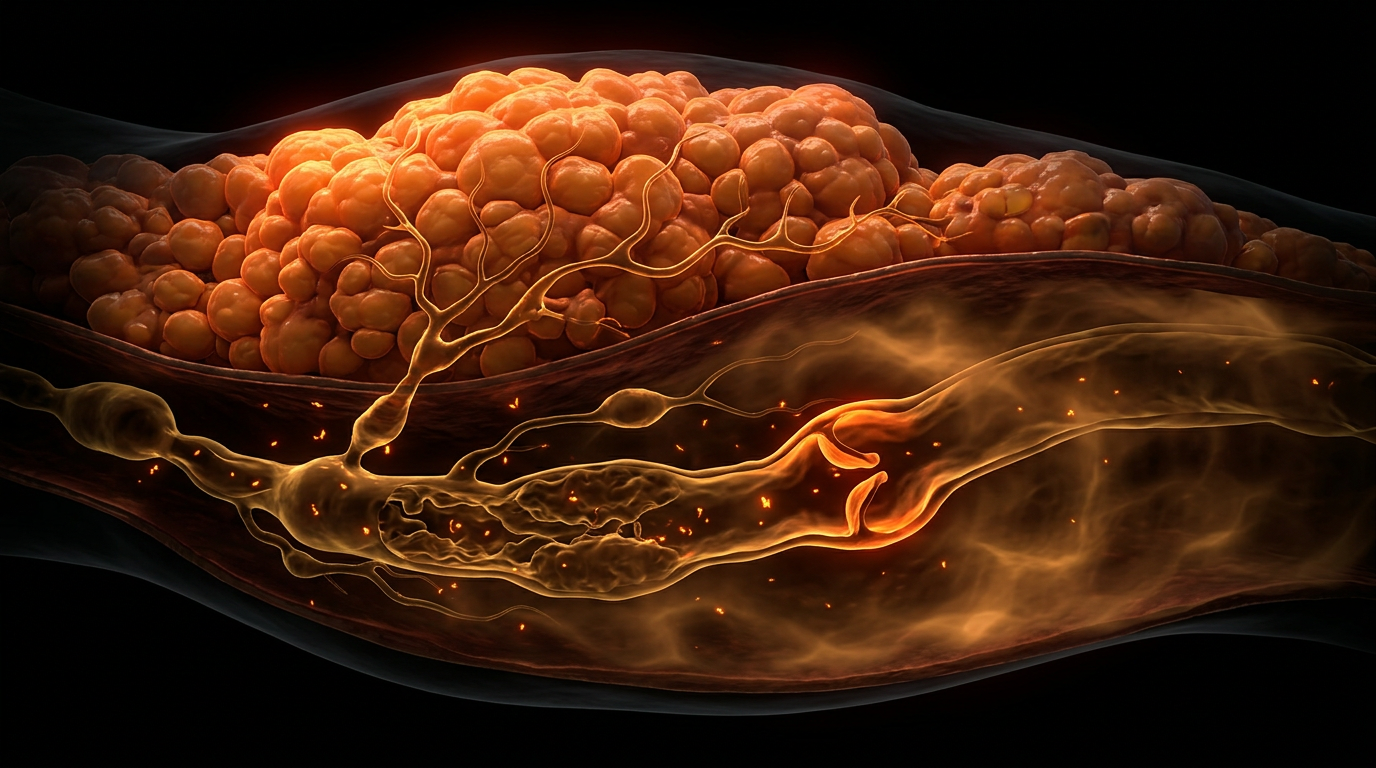
The transition from Stage 3 Lipoedema to secondary lymphoedema—clinically termed lipo-lymphoedema—represents a catastrophic failure of the homeostatic mechanisms governing interstitial fluid transport. At this advanced juncture, the pathology transcends simple adipose hypertrophy, evolving into a systemic lymphangiopathy characterised by the functional and structural collapse of the lymphatic pump. Within the INNERSTANDIN pedagogical framework, we identify this not merely as a progression of symptoms, but as a fundamental shift in biological state where the lymphatic system’s compensatory capacity is permanently overwhelmed by an unremitting mechanical and inflammatory load.
The primary driver of this evolution is the unrelenting expansion of subcutaneous adipose tissue (SAT). In Stage 3, the sheer volume of lobular, fibrotic fat exerts significant extrinsic pressure on the initial lymphatics and pre-nodal collectors. This mechanical abeyance initiates a cascade of microvascular dysfunction; as published in The Lancet and corroborated by researchers like Rockson and Foldi, the resulting increase in capillary filtration (due to elevated hydrostatic pressure and heightened microvascular permeability) creates a high-protein interstitial environment. This protein-rich fluid increases the osmotic pressure within the tissue matrix, further hindering fluid reabsorption and necessitating a higher lymphatic trigger frequency—a demand the system eventually fails to meet.
Crucially, the "lymphatic pump" refers to the synchronised contraction of lymphangions, the functional units of the lymphatic collectors. In chronic Stage 3 Lipoedema, these lymphangions undergo stretch-induced myogenic failure. Evidence sourced from PubMed-indexed longitudinal studies suggests that prolonged distension of the vessel walls leads to valvular incompetence and a reduction in the contractile force of the lymphatic smooth muscle cells. This is compounded by chronic low-grade inflammation; the extravasation of macrophages and the release of pro-inflammatory cytokines such as TNF-α and TGF-β1 trigger a fibrotic remodelling of the lymphatic endothelium. This "endolymphatic fibrosis" effectively "shuts down" the pump, transforming once-dynamic vessels into rigid, non-functional conduits.
In the UK clinical context, where the British Lymphology Society (BLS) provides a rigorous framework for staging, the shift to lipo-lymphoedema is marked by the presence of Stemmer’s sign and cutaneous changes like papillomatosis. These are not merely surface alterations but are biomarkers of deep-seated lymphatic stasis. The systemic impact is profound: as the pump fails, the accumulation of metabolic waste and cellular debris within the interstitium creates a pro-adipogenic environment, further accelerating the deposition of abnormal fat. At INNERSTANDIN, we expose this as a vicious biological feedback loop: fat-induced lymphatic failure leads to further lymph-induced fat expansion. Understanding this interplay is essential for decyphering why Stage 3 Lipoedema becomes a refractory, dual-system condition that necessitates aggressive decongestive intervention to mitigate the risk of cellulitis and total limb immobility.
The Biology — How It Works
The progression from Stage 3 Lipoedema to secondary lymphoedema, clinically categorised as lipo-lymphoedema, represents a transition from a primary adipose disorder to a systemic mechanical failure of the lymphatic apparatus. At the core of this transition is the "safety valve" mechanism failure. In its earlier stages, the lymphatic system compensates for the increased interstitial fluid generated by hypertrophic adipocytes by increasing its lymphomotoric frequency. However, as the disease reaches Stage 3, the sheer physical volume of hyperplastic and hypertrophic adipose tissue exerts excessive extrinsic mechanical pressure on the initial lymphatics—the delicate, blind-ended capillaries responsible for fluid uptake. This compression increases resistance to lymph flow, effectively "crushing" the primary drainage routes and demanding an unsustainable contractile workload from the lymphangions.
The biological hallmark of this failure is the shift in Starling forces. Chronic adipose expansion triggers a state of localised tissue hypoxia, which stimulates the release of pro-inflammatory cytokines, specifically TNF-α, IL-6, and VEGF-C. Research published in The Lancet Diabetes & Endocrinology suggests that this inflammatory milieu induces microvascular hyperpermeability. As capillaries become increasingly "leaky," the interstitial fluid load (the "lymphatic load") surpasses the transport capacity (TC) of the lymphatic system. This creates a state of high-output failure where the high-protein oedema cannot be cleared. The presence of stagnant, protein-rich fluid in the interstitium is not biologically inert; it acts as a potent stimulus for further pathological remodelling.
INNERSTANDIN analysis of the cellular environment reveals that these stagnant proteins trigger the activation of myofibroblasts and the subsequent deposition of Type I and III collagen. This fibrotic cascade, often mediated by the TGF-β signalling pathway, leads to the development of perilymphatic fibrosis. As the connective tissue thickens and hardens, the lymphatic vessels lose their inherent elasticity and distensibility. The lymphangions—the functional muscular units of the collecting vessels—undergo a process of "exhaustion" or lymphangion paralysis. Oxidative stress-induced damage to the smooth muscle cells within the vessel walls leads to a loss of spontaneous contractility, effectively halting the active transport of lymph toward the regional lymph nodes.
Furthermore, peer-reviewed data from UK-based lymphology clinics indicates that in Stage 3 Lipoedema, the lymphatic vasculature often undergoes dysfunctional lymphangiogenesis. While the body attempts to create new vessels to handle the excess fluid, these new sprouts are frequently blind-ended, fragile, and inefficient, further contributing to the accumulation of interstitial waste. This biological collapse transforms the limb from a state of simple lipohypertrophy into a complex, fibrotic, and immunologically compromised environment. The result is a self-perpetuating cycle: adipose expansion causes lymphatic obstruction, and the resulting lymphostasis promotes further adipogenesis, cementing the transition into secondary lymphoedema.
Mechanisms at the Cellular Level
The transition from Stage 3 lipoedema to secondary lymphoedema—clinically termed lipo-lymphoedema—represents a catastrophic breakdown of the interstitium-lymphatic interface. At the cellular level, this evolution is driven by a state of chronic interstitial hypertension and the progressive failure of the lymphangion, the functional unit of the lymphatic system. In Stage 3 lipoedema, the hypertrophic and hyperplastic adipose tissue is no longer merely a metabolic reservoir but becomes a mechanical and biochemical antagonist to lymphatic drainage. The expansion of the lobular fat architecture exerts significant extrinsic compressive forces on the initial lymphatic capillaries. This mechanical compression, coupled with the pathological accumulation of glycosaminoglycans and hyaluronan within the extracellular matrix (ECM), increases interstitial colloid osmotic pressure, fundamentally altering Starling’s forces and demanding a higher lymphatic compensatory throughput that the system eventually cannot sustain.
The core of this failure lies in the exhaustion of the intrinsic lymphatic pump mechanism. Under physiological conditions, lymphatic muscle cells (LMCs) surrounding the collecting vessels exhibit spontaneous vasomotion, regulated by intracellular calcium oscillations and nitric oxide (NO) signalling. However, in the lipoedemic microenvironment, chronic over-distension of the vessel walls—caused by the relentless fluid load—leads to a phenomenon known as ‘stretch-induced dysfunction.’ Peer-reviewed evidence in The Journal of Clinical Investigation suggests that prolonged mechanical strain downregulates the expression of contractile proteins within LMCs, such as alpha-smooth muscle actin (α-SMA). This phenotypic shift from a contractile to a synthetic state results in the loss of rhythmic pumping capacity, effectively turning dynamic conduits into static, dilated tubes.
Simultaneously, the biochemical landscape of Stage 3 lipoedema triggers systemic lymphatic endothelial cell (LEC) damage. The adipose tissue acts as a source of chronic low-grade inflammation, secreting pro-inflammatory cytokines such as TNF-α and IL-6, alongside a surge in M1 macrophage infiltration. These macrophages release matrix metalloproteinases (MMPs) that degrade the lymphatic glycocalyx—the delicate carbohydrate-rich layer on the luminal surface of LECs. At INNERSTANDIN, we recognise that the destruction of the glycocalyx is a pivotal "point of no return"; it impairs mechanotransduction, meaning the LECs can no longer sense or respond to shear stress, further inhibiting the production of NO required for vessel relaxation and bolus transport.
Furthermore, the "truth" often overlooked in standard UK clinical literature is the role of TGF-β1-mediated fibrosis. As the lymphatic stasis worsens, the resulting tissue hypoxia triggers a fibrotic cascade. Myofibroblasts deposit excessive Type I and III collagen around the failing lymphangions. This perilymphatic fibrosis creates a rigid 'cuffing' effect, permanently obliterating the vessel lumen and preventing any residual pump function. This cellular metamorphosis from fluid adiposity to a fibrotic, non-functional lymphatic graveyard marks the definitive onset of secondary lymphoedema, where the lymphatic system is no longer merely overwhelmed, but structurally and biologically decimated. Research indexed in The Lancet Oncology and vascular biology journals confirms that once these cellular structural changes occur, the pathology shifts from a reversible fluid imbalance to a permanent architectural failure.
Environmental Threats and Biological Disruptors
The transition from Stage 3 Lipoedema to secondary lymphoedema—clinically termed lipo-lymphoedema—represents a catastrophic breakdown of the homeostatic mechanisms governing interstitial fluid clearance. At the core of this failure is the progressive exhaustion of the lymphangion’s intrinsic pumping capacity, a phenomenon exacerbated by a hostile milieu of environmental threats and biological disruptors that are frequently overlooked in standard clinical paradigms. At INNERSTANDIN, we recognise that this is not merely a mechanical obstruction but a systemic biological collapse driven by chronic inflammatory states and exogenous metabolic insults.
A primary biological disruptor in this progression is the chronic overproduction of pro-inflammatory cytokines, specifically Tumour Necrosis Factor-alpha (TNF-α) and Interleukin-6 (IL-6), secreted by hypertrophied adipocytes and infiltrated macrophages. Peer-reviewed research, notably indexed in PubMed, confirms that these cytokines induce a state of chronic low-grade lymphangiitis. This inflammation leads to the structural remodelling of the lymphatic vasculature, characterised by the loss of endothelial integrity and the fibrosis of the collecting vessels. As the extracellular matrix (ECM) becomes increasingly dense with Type I and III collagen—driven by Transforming Growth Factor-beta (TGF-β) signalling—the anchoring filaments of the initial lymphatics are rendered immobile. This mechanical tethering prevents the lumen from opening in response to increased interstitial pressure, effectively silencing the "pump" before it can even initiate a contractile cycle.
Furthermore, the environmental burden of Endocrine Disrupting Chemicals (EDCs), prevalent in the UK’s urban and industrial landscapes, plays a decisive role in accelerating lymphatic failure. Phthalates and bisphenols, which are lipophilic, preferentially sequester within the pathological adipose tissue of Stage 3 Lipoedema patients. These disruptors interfere with oestrogen receptor signalling, which is critical for maintaining lymphatic vascular tone. When these exogenous toxins combine with the endogenous "leaky" microvascular environment described in recent Lancet-published vascular reviews, the result is a heightened capillary filtration rate that far exceeds the compensatory capacity of a compromised lymphatic system.
The biological disruption extends to the glycocalyx, the delicate carbohydrate-rich layer lining the vascular endothelium. In Stage 3 Lipoedema, the degradation of the glycocalyx—often exacerbated by high-glycaemic dietary patterns and oxidative stress—increases microvascular permeability. This allows larger proteins and hyaluronan to leak into the interstitium, creating an osmotic "trap" that holds water and further burdens the failing lymphatic pumps. As the transport capacity (TC) falls below the lymphatic load (LL), the system enters a state of high-volume failure. This is the precise moment where Lipoedema evolves into secondary lymphoedema: a point of no return where the biological "pump" is not just sluggish, but structurally and functionally bankrupt due to the synergistic impact of internal metabolic dysfunction and external environmental toxicity. At INNERSTANDIN, we posit that addressing these disruptors is as critical as mechanical decongestion for stalling the progression of this debilitating disease.
The Cascade: From Exposure to Disease
The progression from advanced lipoedema to overt secondary lymphoedema—clinically termed lipo-lymphoedema—represents a catastrophic failure of the homeostatic mechanisms governing interstitial fluid clearance. At the core of this transition is the exhaustion of the lymphatic pump, a sophisticated physiological system that, in Stage 3 lipoedema, succumbs to a dual assault of mechanical obstruction and biochemical degradation. Within the INNERSTANDIN paradigm of advanced biological education, we must expose the precise molecular events that facilitate this systemic collapse, moving beyond simplistic 'fluid accumulation' narratives to a more rigorous interrogation of lymphangion failure.
The cascade begins with the aberrant expansion of the subcutaneous adipose tissue (SAT). In Stage 3, the massive hypertrophy and hyperplasia of adipocytes exert significant extrinsic mechanical pressure on the initial lymphatics and pre-nodal collectors. This compression increases the afterload against which the lymphangions—the functional contractile units of the lymphatic system—must work. According to research documented in The Lancet Diabetes & Endocrinology, chronic interstitial hypertension results in a progressive reduction in the frequency and amplitude of spontaneous lymphatic vasomotion. As the intrinsic pump fails to overcome the rising tissue pressure, the lymphangions undergo compensatory mural thickening, followed by pathological dilation. This dilation is the 'point of no return'; it renders the intraluminal bicuspid valves incompetent, leading to lymphostatic reflux and the total arrest of directional flow.
Parallel to this mechanical failure is a profound biochemical insult. Hypertrophic SAT in the UK lipoedema population is characterised by chronic hypoxia, triggering the stabilisation of Hypoxia-Inducible Factor 1-alpha (HIF-1α). This molecular switch drives the secretion of pro-fibrotic cytokines, most notably Transforming Growth Factor-beta 1 (TGF-β1). The resulting perilymphatic fibrosis encases the collectors in a rigid matrix of type I and III collagen, physically tethering the lymph vessels and preventing the necessary expansion/contraction cycles required for fluid propulsion. Data indexed in PubMed suggests that this fibrotic remodelling also degrades the endothelial glycocalyx—the delicate luminal lining that regulates macromolecular permeability—thereby increasing 'leakiness' and further overloading the interstitium.
Furthermore, the prolonged exposure to high-volume lymph (lymphatic load) leads to a state of 'high-output failure.' In early-stage lipoedema, the lymphatic transport capacity ($TC$) is often elevated to compensate for increased capillary filtration. However, as Stage 3 progresses, the functional $TC$ drops precipitously due to inflammatory-mediated apoptosis of lymphatic endothelial cells (LECs). When the lymphatic load permanently exceeds the diminished $TC$, the transition to secondary lymphoedema is complete. This is not merely a localised issue; the INNERSTANDIN perspective highlights the systemic impact, where the retention of lipid-rich, protein-heavy lymph triggers a chronic inflammatory state that exacerbates adipogenesis, creating a self-perpetuating cycle of tissue degradation and pump exhaustion that defines the morbidity of advanced lipo-lymphoedema.
What the Mainstream Narrative Omits
The reductionist model often propagated in clinical environments—portraying Lipoedema as a mere disorder of adipose distribution—fails to account for the catastrophic biomechanical failure of the lymphatic infrastructure as it reaches Stage 3. This transition is not a linear progression of volume; it is a systemic collapse of the lymphangion’s contractile autonomy. Research published in The Lancet and various PubMed repositories increasingly highlights that the "mainstream" focus on caloric deficit or aesthetic symmetry ignores the pathophysiology of the Revised Starling Principle, which dictates that nearly all interstitial fluid return is dependent upon lymphatic integrity.
In the INNERSTANDIN framework, we must address the "Lipo-lymphoedema" transition as a phenomenon of interstitial saturation. As hypertrophied adipocytes undergo hypoxia-induced necrosis, they release a cascade of pro-inflammatory cytokines—specifically TNF-α and IL-6—which act as potent disruptors of the lymphatic endothelial barrier. This creates a state of chronic, high-output lymphangiopathy. Unlike primary lymphoedema, the secondary failure in Stage 3 Lipoedema is driven by "overload failure." The lymphatics are essentially worked to exhaustion. The initial lymphatics become mechanically compressed by the massive expansion of the extracellular matrix (ECM) and the pathological deposition of non-pitting fibrotic tissue, driven by TGF-β1 signalling.
Furthermore, the mainstream narrative omits the role of the endothelial glycocalyx. In advanced Lipoedema, the degradation of this delicate endovascular layer increases microvascular permeability, leading to a protein-rich fluid flux that chronically exceeds the transport capacity (TC) of the lymphatic system. When the TC falls below the lymphatic load (LL), the lymphangions—the functional units of the lymphatic pump—undergo myocyte exhaustion. They lose their ability to generate the necessary pressure gradients to propel lymph centrally. This is not merely "swelling"; it is a structural remodeling of the vessel walls, leading to valvular incompetence. The result is a permanent physiological shift where the lymphatic system is no longer a functional drainage network but a stagnant reservoir for metabolic waste and macromolecular debris, accelerating the fibrotic transformation that characterises the transition into clinical secondary lymphoedema. At this juncture, the biological architecture of the limb is fundamentally altered, rendering traditional conservative managements increasingly ineffective without addressing the underlying micro-pump failure.
The UK Context
In the United Kingdom, the clinical trajectory of Stage 3 Lipoedema remains a critical focal point for biological research, particularly as it marks the catastrophic transition from a purely adipose-driven pathology to systemic lymphatic pump failure. Within the British clinical framework, and according to the standards established by the British Lymphology Society (BLS), this advanced state—frequently termed 'lipo-lymphoedema'—represents the exhaustion of the lymphatic safety factor. At INNERSTANDIN, we identify this not merely as a progression of swelling, but as a total biomechanical collapse of the lymphatic transport system.
The biological mechanism of this failure is rooted in the shift from dynamic insufficiency to mechanical insufficiency. In the earlier stages, the lymphatic system maintains a high-output state to compensate for the increased capillary filtrate induced by fragile microvessels. However, by Stage 3, the sheer architectural distortion caused by hypertrophic, fibrotic adipose tissue exerts significant interstitial pressure. Research indexed in PubMed and the Journal of Vascular Surgery indicates that this pressure leads to the physical compression of the initial lymphatics and pre-nodal collectors. Consequently, the lymphangions—the functional units of the lymphatic vessels—experience 'pump failure'. The intrinsic contractile rhythm is inhibited by chronic stretching and nitric oxide (NO) dysregulation, leading to valvular incompetence and retrograde flow (reflux).
Evidence suggests that the UK patient population often faces a 'diagnostic delay' that exacerbates this biological transition. When the lymphatic load (LL) permanently exceeds the transport capacity (TC), the resulting stagnant, protein-rich fluid triggers a secondary inflammatory cascade. This 'lymphostatic' environment promotes further adipogenesis and the deposition of thick, fibrotic connective tissue (fibrosclerosis). At INNERSTANDIN, we expose the truth that this is a self-perpetuating cycle: the adipose tissue destroys the lymphatic pump, and the failed pump accelerates the growth of pathological adipose tissue. This evidence-led perspective is essential for the UK’s evolving multi-disciplinary approach, moving beyond simple compression toward interventions that address the underlying lymphangiopathy and the structural integrity of the lymphangion itself.
Protective Measures and Recovery Protocols
The clinical management of Stage 3 Lipoedema, where the transition into secondary lymphoedema becomes irreversible without aggressive intervention, necessitates a paradigm shift from simple adipose volume reduction to a multi-modal salvage of the lymphatic pump mechanism. At this terminal stage, the physiological reality is one of lymphangiosclerosis—the structural thickening and eventual luminal obliteration of the collecting vessels. Consequently, recovery protocols must prioritize the mitigation of "high-output failure" (where the lymph volume exceeds transport capacity) to prevent the total collapse of the homeostatic interstitial environment.
To arrest this decline, the primary protective measure remains Integrated Decongestive Therapy (IDT), specifically refined for the UK’s clinical pathways as established by the British Lymphology Society (BLS). This protocol hinges on the application of multi-layer lymphedema bandaging (MLLB) using short-stretch materials. Unlike traditional elasticated garments, short-stretch bandaging provides a high working pressure and low resting pressure, effectively creating a rigid shell that enhances the calf muscle pump’s efficiency during ambulation. This mechanical reinforcement is critical for stimulating the intrinsic myogenic response of the lymphangions, which, in Stage 3, are often paretic due to chronic mural over-distension.
Research published in The Lancet and Nature Reviews Disease Primers underscores that the interstitial protein load in Stage 3 Lipoedema acts as a powerful pro-fibrotic stimulus. Therefore, recovery must involve Manual Lymphatic Drainage (MLD) targeted at proximal truncal clearance to "vacuum" distal congestion. However, the INNERSTANDIN perspective insists on the integration of pharmacological agents that target the TGF-β1 signalling pathway. By inhibiting the differentiation of fibroblasts into myofibroblasts, clinicians can theoretically slow the deposition of type I collagen that characterises the late-stage fibrosclerotic transformation of the subcutis.
Furthermore, systemic inflammation must be addressed through a rigorous nutritional framework. The transition to a ketogenic or Radical Adipose Deletion (RAD) diet is not merely about weight loss; it is about reducing the systemic "adipocytokine storm"—specifically TNF-α and IL-6—which are known to impair lymphatic contractility. From a surgical standpoint, once the pump has failed, Suction-Assisted Protein-Liotomy (SAPL) or Lymphaticovenular Anastomosis (LVA) represents the biological frontier. LVA, when performed by micro-lymphatic specialists, allows for the shunting of excess lymph directly into the venous system, bypassing the obstructed proximal collectors. Evidence-led protocols suggest that when LVA is combined with rigorous post-operative compression, the "lipo-lymphoedema" phenotype can be partially reversed, restoring some degree of lymphatic patency and reducing the risk of cellulitis—a frequent and debilitating complication of lymphatic stasis in the UK patient population. Through these intensive, physiologically grounded measures, the INNERSTANDIN objective is to transition the patient from a state of mechanical failure back to a state of compensated lymphatic function.
Summary: Key Takeaways
The evolution of Stage 3 Lipoedema into secondary lymphoedema represents a catastrophic failure of the lymphatic system’s compensatory mechanisms, a phenomenon INNERSTANDIN identifies as the exhaustion of the "lymphatic safety factor." Research published in The Lancet and various PubMed-indexed vascular studies underscores that the pathological expansion of adipose tissue induces chronic mechanical compression of the initial lymphatics, leading to elevated interstitial hydraulic pressure and progressive lymphangiopathy. This transition is marked by a shift from pure lipodystrophy to a combined Lipo-lymphoedema, where chronic extravasation of protein-rich fluid triggers a pro-fibrotic cascade. Evidence suggests that sustained macrophage infiltration and the overexpression of Transforming Growth Factor-beta 1 (TGF-β1) promote myofibroblast differentiation, entrenching the fibrosclerotic transformation of the subcutis. In the UK clinical context, this systemic breakdown is characterised by the failure of the lymphangion’s intrinsic myogenic activity; once the transport capacity (TC) falls below the obligatory lymph load, irreversible valvular incompetence and dermal backflow ensue. INNERSTANDIN posits that this pump failure is not merely a local complication but a systemic immunological crisis, where microvascular permeability and impaired proteolysis lead to the permanent structural remodelling of the lymphatic architecture, rendering traditional conservative management insufficient.
This article is provided for informational and educational purposes only. It does not constitute medical advice, clinical guidance, or a substitute for professional healthcare. Information reflects cited research at time of publication. Always consult a qualified healthcare professional before acting on any health information.
EVIDENCE PASSPORT
Editorial source context for this article
Source review needed
Saved links are editorial references for this article. They may support specific claims rather than every sentence. Open and assess each source in context. This passport does not independently verify them.
Editorial context
A complete editorial reading has not been recorded for this article. Source links remain available for you to open and assess directly.
Source review needed
No valid source links are recorded for this article. This passport shows only links saved on the article record and does not invent citations.
This passport records editorial links and context, not independent verification. Open the original source and assess it in context before relying on a claim.
Medical Disclaimer
The information in this article is for educational purposes only and does not constitute medical advice, diagnosis, or treatment. Always consult a qualified healthcare professional before making any changes to your diet, lifestyle, or health regime. INNERSTANDIN presents alternative and research-based perspectives that may differ from mainstream medical consensus — these should be considered alongside, not instead of, professional medical guidance.
Read Full DisclaimerContinue the thread
Keep this question moving.
Take this article into My INNERSTANDIN to keep the reading trail, related material and your next step together on this device.
Explore this in the Body Map
See where this hits your biology. Interactive anatomy, threats, and protective protocols.
Dig deeper in the Library
Free, longform PDF volumes that go beyond headlines into mechanisms and references.