
Lymphatic Drainage Mechanisms
Updated May 2026
The lymphatic system relies entirely on the movement of fascia to pump waste out of the body. Learn how fascial restrictions lead to localized edema and immune dysfunction.
Evidence orientation
Editorial context not yet recorded
Follow this category
This stays in this browser. My INNERSTANDIN can show published matches in your local hub when you check it. It does not send email, push, or alert notifications.
Local learning review
A private browser aid for revisiting ideas. It is not an alert or a health recommendation.
Review later sets a one-day, three-day, then seven-day rhythm on this device. Choose it only when you want to revisit this article.
Overview
The human body is often viewed through the lens of its primary systems: the nervous system as the electrical grid, the skeletal system as the framework, and the cardiovascular system as the delivery mechanism. Yet, a silent, pervasive, and arguably more critical architecture underlies these structures—the lymphatic-fascial complex. While mainstream medicine has long relegated the lymphatic system to a secondary role, viewing it merely as a "drainage kit" for excess fluid, emerging biological research suggests it is the very seat of our immunological intelligence and metabolic health.
The lymphatic system is a vast, one-way network of vessels, nodes, and organs that acts as the body's primary waste management and detoxification infrastructure. However, unlike the cardiovascular system, which possesses the heart as a central pump, the lymphatic system is passive. It relies entirely on external mechanical forces to move lymph—a clear-to-white fluid containing white blood cells, proteins, and cellular debris—against gravity and through the dense filtration units of the lymph nodes.
This is where fascia enters the equation. Fascia is the continuous web of connective tissue that envelopes every muscle, organ, nerve, and vessel in the body. It is no longer considered mere "anatomical packing material." Instead, we now understand it to be a sophisticated, mechanosensitive organ that provides the structural tension and movement required to drive lymphatic flow. When fascia is healthy, hydrated, and mobile, the lymph flows freely, and the body remains "clean." When fascia becomes restricted, dehydrated, or scarred—a state often induced by sedentary lifestyles, trauma, or environmental toxins—the lymphatic system stagnates.
This stagnation leads to localized edema, the accumulation of metabolic waste, and a catastrophic breakdown in immune surveillance. In this comprehensive analysis, we will explore the intricate mechanobiology of lymphatic drainage, the role of the extracellular matrix (ECM), and the silent environmental disruptors that are turning our internal oceans into stagnant swamps.
The Biology — How It Works
To understand lymphatic drainage, one must first appreciate the scale of the system. The human body contains approximately twice as much lymph fluid as blood. While the heart pumps roughly 5 litres of blood per minute, the lymphatic system moves only a few litres of lymph per day. This slow, deliberate pace is necessary for the meticulous filtration that occurs within the lymph nodes, where pathogens are identified and neutralised.
The Lymphatic Architecture
The system begins with initial lymphatics (lymphatic capillaries). these are microscopic, blind-ended tubes located in the interstitial spaces between cells. These capillaries merge into larger collecting vessels, which feature one-way valves known as lymphangions.
- Lymphangions: These are the functional "hearts" of the lymphatic vessel. Each segment between two valves can contract rhythmically. However, these contractions are weak and require the "muscle pump" of the surrounding fascial tissue to be effective.
- The Thoracic Duct: The largest lymphatic vessel in the body, which collects the majority of the body’s lymph and empties it back into the venous system at the left subclavian vein.
- Lymph Nodes: Biological processing plants. They house dense populations of T-cells and B-cells that scan the lymph for foreign antigens.
The Fascial Pump
Because the lymphatic system lacks a central pump, it utilizes the fascial-muscular pump. Every time a muscle contracts, it exerts pressure on the surrounding fascia. This pressure compresses the lymphatic vessels. Due to the one-way valves, the lymph can only move toward the heart.
Callout Fact: Over 80% of lymphatic vessels are located within the superficial fascia, just beneath the skin. This makes the system incredibly sensitive to light touch, movement, and the structural integrity of the skin-fascia interface.
When fascia becomes "bound" or "glued" due to chronic inflammation or lack of movement, it creates a physical bottleneck. This is akin to a kink in a garden hose. Even if the internal pressure is high, the fluid cannot bypass the restriction, leading to interstitial stagnation.
Mechanisms at the Cellular Level
At the microscopic level, the interface between the fascia and the lymphatic capillary is a masterpiece of biological engineering. The walls of initial lymphatics are composed of a single layer of endothelial cells that overlap like shingles on a roof.
Anchoring Filaments and Mechanotransduction
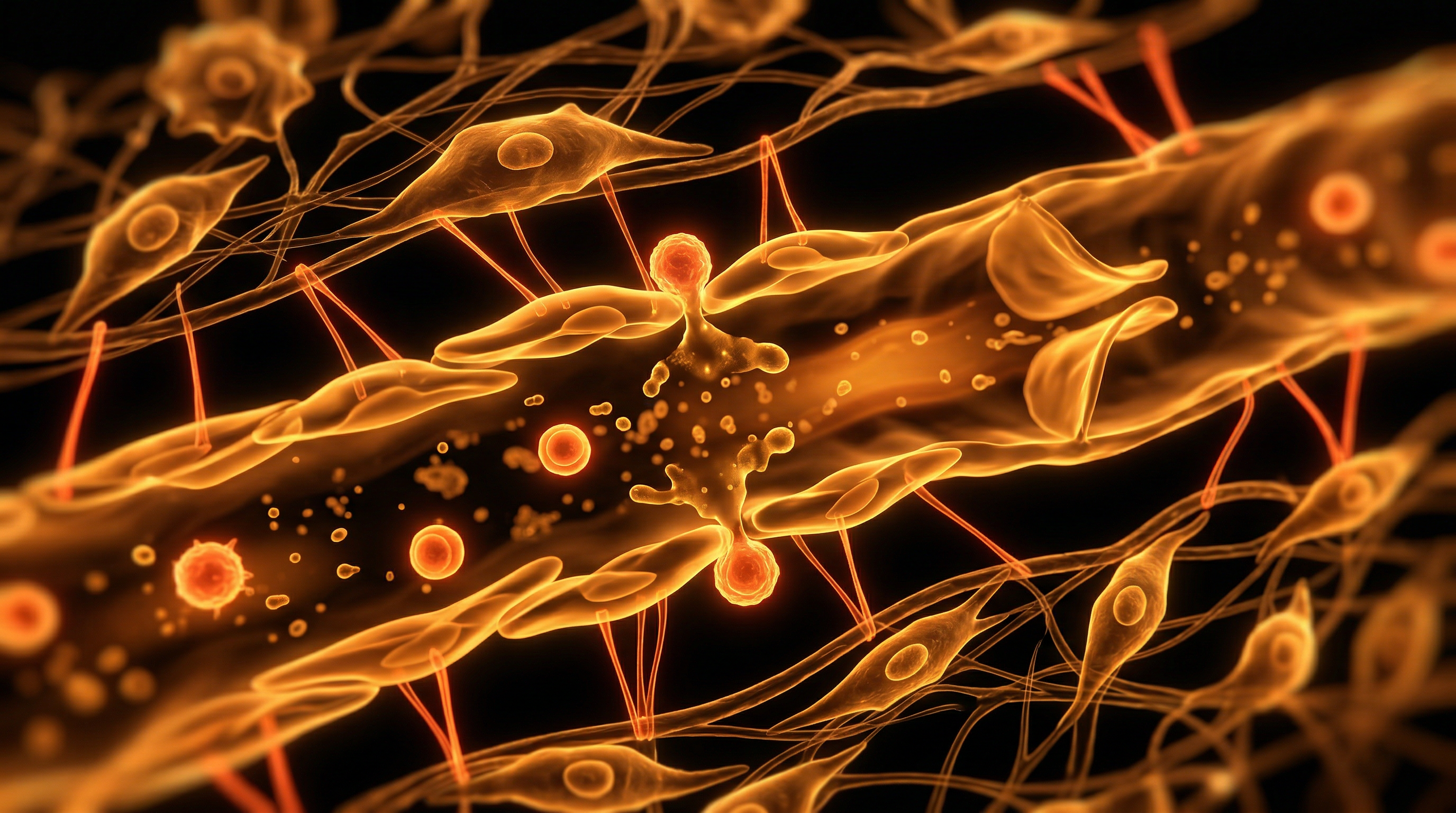
These endothelial cells are attached to the surrounding collagen fibres of the fascia by tiny "tethering" structures called anchoring filaments.
- When the interstitial pressure increases (due to fluid buildup) or when the fascia is stretched through movement, these anchoring filaments are pulled taut.
- This physical tension literally pulls the overlapping endothelial cells apart, opening "swing flaps."
- Interstitial fluid, containing proteins, fats, and cellular waste, rushes into the lymphatic capillary.
- Once the tension is released, the flaps close, trapping the fluid inside the vessel to be transported.
This process is a prime example of mechanotransduction—the cellular process of converting mechanical stimuli into biochemical signals. If the fascia is stiff or fibrotic, these filaments cannot pull effectively, and the "flaps" remain shut. This is why exercise and manual therapy are not merely "good for you"—they are biologically required to "unlock" the cellular gates of the detoxification system.
The Role of Hyaluronan
Within the fascial layers, a substance called hyaluronan (or hyaluronic acid) acts as a lubricant. In a healthy state, hyaluronan allows fascial layers to slide and glide over one another. When the body becomes acidic or dehydrated, hyaluronan can transition from a "sol" (fluid) state to a "gel" (viscous) state. This "super-gel" increases the viscosity of the interstitial fluid, making it significantly harder for the lymphatic system to pull waste out of the tissues. This is the molecular basis of "feeling stiff" in the morning or after a long flight.
Environmental Threats and Biological Disruptors
In the modern era, our lymphatic systems are under siege by factors that our ancestors never encountered. These disruptors affect both the chemistry of the lymph and the structural integrity of the fascia.
1. The Glyphosate Factor
The herbicide glyphosate is a potent disruptor of collagen synthesis. It acts as an analogue to the amino acid glycine, which is a primary building block of collagen. When glyphosate is integrated into our connective tissues, the "architecture" of the fascia becomes brittle and prone to micro-tearing and inflammation. This creates a systemic fascial restriction that impedes lymphatic flow at the source.
2. Microplastics and Nanoparticles
Modern humans are now bio-accumulating microplastics. These particles often lodge in the extracellular matrix, the fluid-filled space between cells. Because these particles are non-biodegradable, they create "physical roadblocks" in the microscopic lymphatic channels. The lymph nodes then become congested as they attempt to filter out these synthetic polymers, leading to chronic lymphadenopathy (swollen nodes).
3. Electrosmog and Water Structure
The water within our fascia is not just "bulk water"; it is structured water (EZ water). This liquid crystalline state allows for rapid signalling and efficient fluid movement. Exposure to high levels of Non-Ionising Radiation (EMFs) has been shown to disrupt the exclusion zone (EZ) of water in our cells. When the water structure collapses, the lymph becomes more viscous, and the "sliding and gliding" mechanism of the fascia is compromised.
4. Sedentary "Desk-Lock"
The lymphatic system is designed for a body in constant motion. The modern habit of sitting for 8–10 hours a day effectively shuts down the cisterna chyli, a major lymphatic reservoir located in the abdomen. This leads to "heavy legs," pelvic congestion, and a buildup of toxins in the lower extremities.
The Cascade: From Exposure to Disease
What happens when the lymphatic-fascial pump fails? The result is not merely a bit of swelling; it is a systemic descent into pathology. This progression can be described as a "biological cascade."
Stage 1: Interstitial Stagnation
The first sign is often subtle. You might notice "sock marks" that take a long time to disappear, a puffy face in the morning, or general brain fog. At this stage, the interstitium is becoming saturated with metabolic byproducts like lactic acid and carbon dioxide. The environment around the cells becomes increasingly acidic.
Stage 2: Fascial Fibrosis
In an attempt to stabilize the area of stagnation, the body lays down extra collagen fibres. This is fibrosis. The fascia thickens and hardens. This further compresses the lymphatic vessels, creating a feedback loop of increasing restriction and decreasing drainage.
Stage 3: Immune Dysfunction and "Inflammaging"
Because the lymph nodes are not receiving a steady stream of fluid to "sample," the immune system becomes "blind." Pathogens can colonise stagnant areas without detection. Concurrently, the trapped waste triggers a chronic low-grade inflammatory response. This is often the root cause of autoimmune conditions, where the immune system, frustrated by its inability to clear "self" waste, begins attacking the surrounding fascial tissue.
Stage 4: Chronic Disease and Malignancy
Cancer thrives in an acidic, low-oxygen, stagnant environment. The lymphatic system is the primary route for "metastasising" cancer cells, but it is also the system meant to destroy them. If the lymph is stagnant, the "patrolling" Natural Killer (NK) cells cannot reach the site of a developing tumour. Furthermore, the buildup of heavy metals and xenobiotics in the stagnant lymph acts as a mutagenic soup, damaging cellular DNA.
Callout Fact: Studies have shown that women with restricted fascial movement in the axillary (armpit) region due to surgery or tight bras have a significantly higher risk of developing breast cysts and tumours, as the lymphatic drainage from the breast tissue is physically impeded.
What the Mainstream Narrative Omits
The medical establishment largely treats the lymphatic system as a footnote to the cardiovascular system. This is a profound "omission by design" that keeps the population dependent on pharmaceutical interventions rather than physiological restoration.
The "Discovery" of the Interstitium
In 2018, mainstream science "discovered" a new organ called the interstitium—a body-wide network of fluid-filled spaces supported by a lattice of collagen. For the holistic community, this was not news. For centuries, traditional medicines (such as TCM and Ayurveda) have spoken of the "vital fluids" and the "meridians" (which map almost perfectly to fascial lines). By "discovering" it so late, Western medicine avoided admitting that their previous focus on isolated organs was fundamentally flawed.
The Suppression of Manual Lymphatic Drainage (MLD)
While the UK and Europe have a stronger tradition of MLD, in many parts of the world, manual therapy for the lymph is dismissed as "beauty treatment." There is no profit for Big Pharma in a patient who can clear their own internal "sewage system" through movement, hydration, and fascial release. Instead, the focus remains on treating the symptoms of stagnation—such as using diuretics for edema or anti-inflammatories for fascial pain—rather than addressing the mechanical blockage.
The Emotional-Fascial Connection
Mainstream biology refuses to acknowledge that fascia stores emotional trauma. When we experience a "fright/flight" response, our fascia contracts. If that trauma is not processed, the fascia remains in a state of chronic tension. This "armouring" (as described by Wilhelm Reich) creates permanent zones of lymphatic stagnation. You cannot "detox" a body that is stuck in a physiological state of fear.
The UK Context
In the United Kingdom, we face a unique set of challenges regarding lymphatic health. The combination of our climate, diet, and healthcare structure has created a "perfect storm" for fascial-lymphatic dysfunction.
- The NHS Crisis of Preventative Care: The NHS is world-class at emergency medicine, but it is poorly equipped to deal with the "slow-burn" issues of lymphatic stagnation. Patients with early-stage lymphedema or fascial pain are often sent away with painkillers, only to return years later with chronic inflammatory diseases.
- The "Stiff Upper Lip" Culture: There is a cultural tendency in the UK to ignore physical discomfort and "soldier on." This mental state manifests physically as rigid fascia, particularly in the neck, shoulders, and jaw—all critical areas for the drainage of the glymphatic system (the brain’s lymphatic system).
- Environmental Loading: The UK has some of the most "hard" water in Europe, particularly in the South East. High mineral content in drinking water, combined with the legacy of industrial pollution in our rivers, increases the chemical load on the lymphatic system.
- The Microclimate of Sedentary Work: With a massive shift toward service-based and digital roles in hubs like London, Manchester, and Birmingham, the "desk-bound" phenotype is becoming the norm. The lack of natural, varied movement is the primary driver of the "National Stagnation" we are currently witnessing.
Protective Measures and Recovery Protocols
Restoring the lymphatic-fascial pump is not a one-time event; it is a lifestyle of "biological housekeeping." To reverse years of stagnation, one must address both the structure (fascia) and the fluid (lymph).
1. Rebounding: The Ultimate Lymphatic Exercise
The most effective way to move lymph is through vertical acceleration and deceleration. Using a rebounder (mini-trampoline) for just 10 minutes a day can increase lymphatic flow by up to 15 to 30 times. The change in G-force at the bottom of each bounce opens all the one-way valves simultaneously, creating a "flush" throughout the entire system.
2. Manual Fascial Release
To address "kinks in the hose," one must manually break up fascial adhesions.
- Dry Brushing: Using a natural bristle brush toward the heart stimulates the superficial lymphatics.
- Foam Rolling / Yin Yoga: These practices apply sustained pressure to the fascia, encouraging the hyaluronan to return to a "sol" state and releasing trapped fluid.
- Gua Sha: This ancient technique uses a smooth tool to "scrape" the skin, which breaks up micro-congestions in the superficial fascia.
3. Hydration and "Structuring" Your Internal Ocean
Drinking "bulk" tap water is insufficient. To support the fascia, water must be hydrating at a cellular level.
- Mineralisation: Adding a pinch of high-quality sea salt or magnesium drops helps the water enter the cells.
- Silica: This mineral is the "glue" of the fascia. Supplementing with bamboo extract or horsetail can help repair damaged collagen fibres.
- Exclusion Zone (EZ) Support: Spending time in the sun (Infrared light) and grounding (walking barefoot on the earth) helps build the structured water layer within your fascia, reducing lymph viscosity.
4. Deep Diaphragmatic Breathing
The diaphragm is the most powerful lymphatic pump in the body. It sits directly above the cisterna chyli. Deep, "belly" breathing creates a pressure vacuum that literally sucks lymph up from the legs and abdomen into the thoracic duct. Most people are "chest breathers," which contributes significantly to pelvic and lower-body stagnation.
5. Temperature Cycling
The "Sauna and Cold Plunge" protocol is a powerful lymphatic workout. Heat (Vasodilation) expands the vessels, while cold (Vasoconstriction) squeezes them. This "thermal pumping" moves lymph through the system rapidly and is one of the fastest ways to clear a "brain fog" caused by glymphatic congestion.
Summary: Key Takeaways
The lymphatic system is not an isolated drainage network; it is the fluid expression of the fascial web. To care for one is to care for the other. As we have explored, the path from health to disease is often a path from flow to stagnation.
- Movement is Mandatory: The lymph system is passive. Without fascial movement, metabolic waste accumulates, leading to cellular suffocation.
- Fascia is the Pump: Healthy, hydrated, and mobile fascia is the primary engine of detoxification and immune surveillance.
- Environment Matters: Modern threats like glyphosate, microplastics, and EMFs target the structural integrity of our fascia and the viscosity of our lymph.
- The "Great Reveal": Mainstream medicine’s late arrival to the "interstitium" confirms what holistic thinkers have known—the space between the organs is as important as the organs themselves.
- Personal Sovereignty: By incorporating rebounding, deep breathing, and fascial release, you take control of your body's "inner environment," moving from a state of toxic stagnation to one of vibrant, flowing health.
In the quest for "Innerstanding," we must recognise that our bodies are not machines with fixed parts, but biological rivers. When the river flows, life flourishes. When the river stops, the swamp takes over. It is time to clear the dams, hydrate the channels, and get the Great River of Life moving again.
This article is provided for informational and educational purposes only. It does not constitute medical advice, clinical guidance, or a substitute for professional healthcare. Information reflects cited research at time of publication. Always consult a qualified healthcare professional before acting on any health information.
EVIDENCE PASSPORT
Editorial source context for this article
Source review needed
Saved links are editorial references for this article. They may support specific claims rather than every sentence. Open and assess each source in context. This passport does not independently verify them.
Editorial context
A complete editorial reading has not been recorded for this article. Source links remain available for you to open and assess directly.
Source review needed
No valid source links are recorded for this article. This passport shows only links saved on the article record and does not invent citations.
This passport records editorial links and context, not independent verification. Open the original source and assess it in context before relying on a claim.
Medical Disclaimer
The information in this article is for educational purposes only and does not constitute medical advice, diagnosis, or treatment. Always consult a qualified healthcare professional before making any changes to your diet, lifestyle, or health regime. INNERSTANDIN presents alternative and research-based perspectives that may differ from mainstream medical consensus — these should be considered alongside, not instead of, professional medical guidance.
Read Full DisclaimerContinue the thread
Keep this question moving.
Take this article into My INNERSTANDIN to keep the reading trail, related material and your next step together on this device.
Explore this in the Body Map
See where this hits your biology. Interactive anatomy, threats, and protective protocols.
Dig deeper in the Library
Free, longform PDF volumes that go beyond headlines into mechanisms and references.