
The Macular Pigment Shield: Lutein and Zeaxanthin's Role in Preventing AMD
Updated May 2026
An in-depth look at how xanthophyll carotenoids filter high-energy blue light and neutralize oxidative stress in the macula. This piece highlights the critical deficiency in modern UK diets and its link to Age-Related Macular Degeneration.
Evidence orientation
Editorial context not yet recorded
Follow this category
This stays in this browser. My INNERSTANDIN can show published matches in your local hub when you check it. It does not send email, push, or alert notifications.
Local learning review
A private browser aid for revisiting ideas. It is not an alert or a health recommendation.
Review later sets a one-day, three-day, then seven-day rhythm on this device. Choose it only when you want to revisit this article.
Overview
In the modern era, the human eye is under a form of biological siege. Never before in our evolutionary history have we been exposed to such high concentrations of artificial, high-energy visible (HEV) blue light, nor have our internal antioxidant defences been so depleted by the industrialisation of the food supply. At the centre of this crisis is Age-Related Macular Degeneration (AMD), a condition that has become the leading cause of permanent vision loss in the United Kingdom, affecting over 600,000 individuals in its late stages and millions more in its early, "silent" progression.
The macula is a small, specialised area at the centre of the retina, responsible for sharp, central vision and colour perception. It is what allows us to read, drive, and recognise faces. Yet, this vital tissue is incredibly fragile, subjected to the highest metabolic demands of any tissue in the body and bombarded by light-induced oxidative stress. Nature’s primary defence against this onslaught is the Macular Pigment (MP)—a concentrated layer of two specific xanthophyll carotenoids: Lutein and Zeaxanthin.
These molecules do not merely "support" eye health; they are fundamental structural and functional components of the visual system. They act as "internal sunglasses," filtering out the most damaging wavelengths of light before they reach the photoreceptors, while simultaneously neutralising the toxic by-products of light-driven metabolism. However, the human body cannot synthesise these carotenoids. They must be acquired through the diet. In the UK, a profound nutritional deficit has emerged, leaving the macula vulnerable to a slow, degenerative decay that the mainstream medical establishment often treats as an "inevitable" consequence of ageing. This article will expose the biological mechanisms behind this shield and why its preservation is the single most important factor in the fight against blindness.
Fact 1: The human macula has the highest concentration of carotenoids found anywhere in the body, with levels of Lutein and Zeaxanthin being up to 1,000 times higher in the retina than in the blood plasma.
The Biology — How It Works
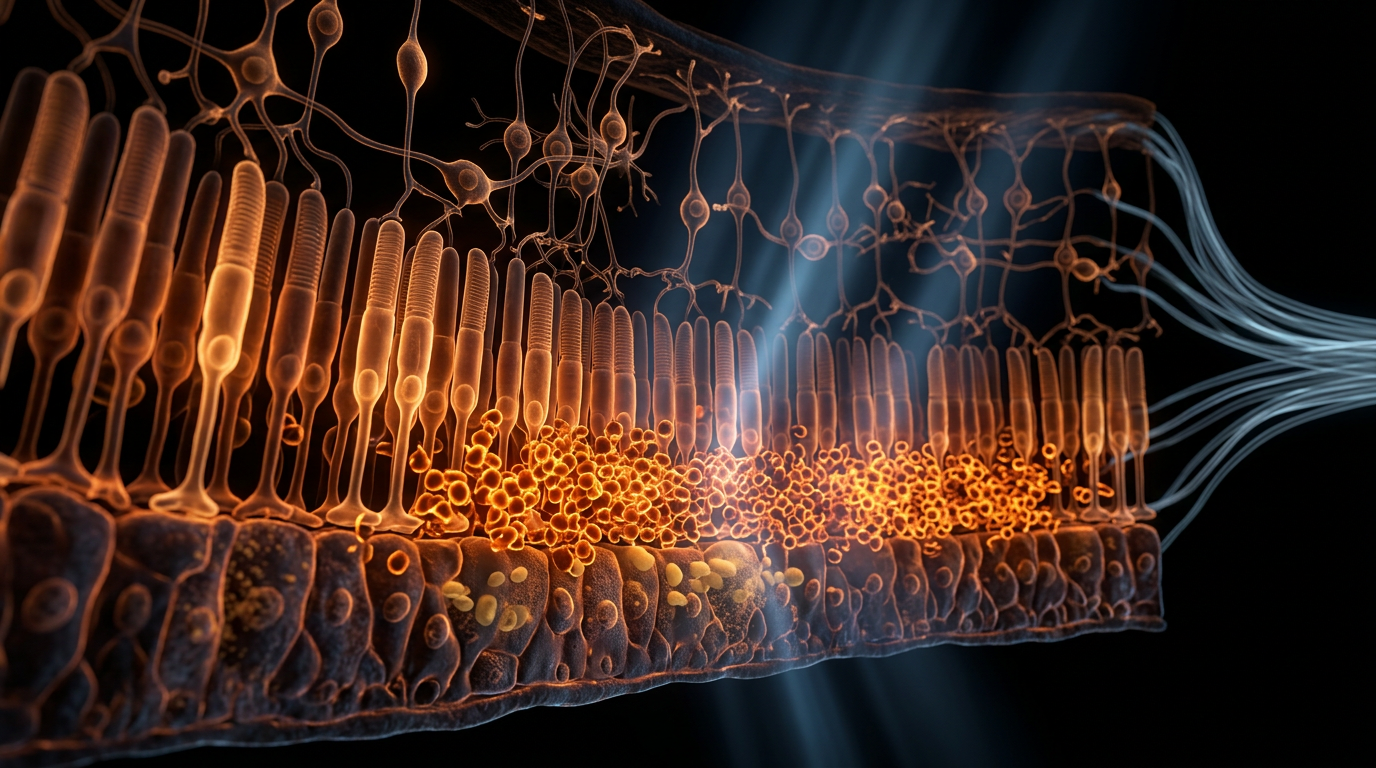
To understand the Macular Pigment, one must first understand the anatomy of the eye as a light-harvesting organ. When light enters the eye, it passes through the cornea and lens, focusing onto the retina. At the very centre of the retina lies the macula lutea (Latin for "yellow spot"). Its yellow hue is not accidental; it is provided by the dense accumulation of Lutein and Zeaxanthin.
The Xanthophyll Specialisation
While there are over 600 carotenoids found in nature and approximately 20-30 found in the human bloodstream, the eye is incredibly selective. It crosses the blood-retina barrier to specifically deposit only Lutein, Zeaxanthin, and its isomer, Meso-zeaxanthin, into the macula. This selectivity indicates a profound evolutionary requirement for these specific molecules.
Optical Filtration
The primary biological role of these carotenoids is the filtration of HEV blue light (wavelengths between 400 and 500 nanometres). Blue light has a shorter wavelength and higher energy than other colours in the visible spectrum. Because of this energy, it scatters more easily, causing "chromatic aberration" (visual blur) and, more importantly, it penetrates deep into the eye, reaching the delicate retinal pigment epithelium (RPE).
The yellow pigments of Lutein and Zeaxanthin act as a complementary filter, absorbing up to 90% of this high-energy blue light before it hits the photoreceptors. This is not just about protection; it improves visual performance by reducing glare and increasing contrast sensitivity.
Spatial Distribution
The distribution of these pigments is highly organised. Zeaxanthin and Meso-zeaxanthin are most concentrated in the fovea—the very centre of the macula where cone density is highest. Lutein is more prevalent in the peripheral macula. Together, they form a density gradient known as Macular Pigment Optical Density (MPOD). A high MPOD is the physiological hallmark of a protected eye, whereas a low MPOD is a primary risk factor for the development of AMD.
Fact 2: Short-wavelength blue light is significantly more phototoxic than longer wavelengths, capable of inducing "photo-oxidation" which permanently destroys retinal cells.
Mechanisms at the Cellular Level
The "Shield" operates on two fronts: physical filtration (as discussed) and biochemical neutralisation. To appreciate the latter, we must look at the macula's unique metabolic environment.
The Quenching of Singlet Oxygen
The retina is the most oxygen-consuming tissue in the human body. This high oxygen tension, combined with constant light exposure and a high concentration of polyunsaturated fatty acids (PUFAs) in the cell membranes, creates a "perfect storm" for oxidative stress.
When light hits the retina, it can excite oxygen molecules into a highly reactive state known as singlet oxygen. This is a rogue molecule that can tear through cellular structures. Lutein and Zeaxanthin possess a unique chemical structure—a long chain of conjugated double bonds—that allows them to "quench" singlet oxygen. They essentially absorb the excess energy from the reactive oxygen species (ROS) and dissipate it as harmless heat, returning the oxygen to its stable "ground state" without being destroyed themselves in the process.
Lipid Peroxidation Defence
The outer segments of the photoreceptors are rich in Docosahexaenoic acid (DHA), an omega-3 fatty acid vital for visual signalling. However, DHA is extremely susceptible to lipid peroxidation—a chain reaction where free radicals "steal" electrons from the lipids in cell membranes, leading to cell death. Lutein and Zeaxanthin sit within the lipid bilayer of these membranes, acting as "sacrificial" antioxidants that halt the chain reaction of peroxidation, preserving the integrity of the photoreceptor cells.
Inflammation Control
Recent research suggests that the Macular Pigment also modulates the inflammatory response within the eye. Chronic, low-grade inflammation is a known driver of AMD. Lutein has been shown to inhibit the activation of NF-κB (nuclear factor kappa-light-chain-enhancer of activated B cells), a protein complex that controls the transcription of DNA and is a "master switch" for inflammation. By keeping this switch in the "off" position, the pigments prevent the immune system from inadvertently damaging the retina.
Environmental Threats and Biological Disruptors
The biological shield of the macula is currently facing an unprecedented level of environmental stress that our ancestors never encountered. This "environmental mismatch" is the primary reason for the surging rates of AMD in the UK.
The Blue Light Hazard and LED Dominance
Historically, humans were exposed to blue light primarily from the sun, balanced by high levels of protective near-infrared light. Furthermore, after sunset, blue light exposure dropped to zero. Today, the UK population is bathed in artificial blue light from 6:00 AM until midnight.
The transition from incandescent light bulbs (which are warm and low in blue light) to LEDs and Compact Fluorescent Lamps (CFLs) has been a disaster for retinal health. Modern LED screens (smartphones, tablets, laptops) and "cool white" LED home lighting have a massive "blue peak" in their spectral output. This constant bombardment exhausts the macular pigment stores as they work overtime to filter the excess HEV light.
The Role of Processed Seed Oils
A critical but often ignored factor in retinal degeneration is the change in dietary fats. The modern UK diet is saturated with industrially processed seed oils (sunflower, rapeseed, corn oils), which are high in Omega-6 Linoleic Acid. These oils integrate into the retinal membranes, replacing the more stable fats. When combined with blue light exposure and low antioxidant levels, these unstable fats oxidise rapidly, accelerating the destruction of the RPE.
Pharmaceutical Interference
Certain common medications can sensitise the retina to light damage or interfere with carotenoid absorption. These include some antibiotics (like tetracycline), diuretics, and even some cholesterol-lowering statins, which can alter the transport of fat-soluble nutrients like Lutein and Zeaxanthin to the eye.
Fact 3: Most modern white LEDs emit a spike of blue light at 450nm, exactly where the retina is most susceptible to photochemical damage.
The Cascade: From Exposure to Disease
AMD does not happen overnight. It is the result of decades of "micro-insults" to the retinal tissue. When the Macular Pigment Shield is thin, the following cascade occurs:
Phase 1: Photochemical Stress and RPE Fatigue
The Retinal Pigment Epithelium (RPE) is a layer of cells that supports the photoreceptors by providing nutrients and hauling away metabolic waste. When Lutein and Zeaxanthin levels are low, the RPE is hit directly by blue light and ROS. It begins to struggle with its "housekeeping" duties.
Phase 2: The Accumulation of Drusen
As the RPE becomes less efficient, it fails to clear the waste products from the photoreceptors. This waste—composed of oxidised lipids and proteins—accumulates under the retina in deposits called Drusen. In the mainstream narrative, Drusen are seen as a "sign" of AMD. In reality, they are the "rubbish" that the RPE was too damaged to take out.
Phase 3: "Dry" AMD (Atrophy)
As Drusen accumulate, they create a physical barrier between the RPE and the blood supply (the choroid). The retinal cells begin to starve of oxygen and nutrients. This leads to the slow death of the photoreceptors, known as Geographic Atrophy or "Dry" AMD. Vision becomes blurred, and "blind spots" appear in the central field.
Phase 4: "Wet" AMD (Neovascularisation)
In a desperate attempt to bring oxygen to the starving retina, the body triggers the growth of new, fragile blood vessels (angiogenesis). However, these vessels are poorly formed and leak blood and fluid into the macula. This is "Wet" AMD, which can cause rapid and total loss of central vision within weeks if left untreated.
What the Mainstream Narrative Omits
The current approach to AMD in the NHS and private ophthalmology is largely reactive rather than proactive. There is a glaring omission of the "preventative window"—the 20 to 30 years before symptoms appear when the Macular Pigment could be built up.
The Testing Gap
Why is Macular Pigment Optical Density (MPOD) testing not a standard part of an eye exam at the local optician? MPOD testing can identify individuals at high risk for AMD years before any structural damage is visible on an OCT scan. By ignoring this metric, the medical system misses the opportunity for early nutritional intervention.
The Pharmaceutical Bias
The "gold standard" for Wet AMD is the injection of Anti-VEGF drugs directly into the eye. While these can save vision in the short term, they are incredibly expensive and do nothing to address the underlying cause of the disease: oxidative stress and nutritional deficiency. There is far more profit in a lifetime of monthly ocular injections than in a 50p-a-day protocol of Lutein and Zeaxanthin.
The "Ageing" Myth
We are told that AMD is simply "age-related," as if the eye has a programmed expiration date. This is biological determinism. AMD is a lifestyle-driven metabolic disease of the eye. Labelling it "age-related" absolves the food industry and the lighting industry of their roles in the epidemic and discourages the public from taking preventative action.
Fact 4: Research indicates that individuals with the highest levels of Macular Pigment have an 82% lower risk of progressing to advanced AMD compared to those with the lowest levels.
The UK Context: A Perfect Storm for Blindness
The United Kingdom is currently facing a "perfect storm" of factors that make our population uniquely vulnerable to AMD.
The "British Diet" and Carotenoid Bankruptcy
The average UK adult consumes less than 2mg of Lutein and Zeaxanthin per day. Clinical trials, such as the AREDS2 study, suggest that a minimum of 10mg of Lutein and 2mg of Zeaxanthin is required for protective effects. This "carotenoid gap" is a primary driver of the UK's vision crisis. The traditional "meat and two veg" (usually overcooked carrots and peas) simply does not provide the concentration of xanthophylls found in the Mediterranean-style diet or the diets of our ancestors.
The Sunlight Paradox
While the UK is not known for its blazing sunshine, our northern latitude means that for much of the year, the sun is low on the horizon. This position increases the amount of direct sunlight entering the eye at a horizontal angle, particularly during the morning and late afternoon. When this is combined with the high prevalence of overcast skies (which scatter blue light, creating "sky blue" glare), the cumulative UV and HEV exposure is higher than many realise.
The NHS Burden
AMD currently costs the UK economy billions of pounds in direct healthcare costs and lost productivity. As the "Baby Boomer" generation ages, the NHS is projected to be overwhelmed by the demand for AMD treatments. Yet, there is still no national public health campaign regarding Lutein, Zeaxanthin, or the dangers of blue light. The focus remains on "managing" blindness rather than "manufacturing" health.
Protective Measures and Recovery Protocols
If you want to protect your vision or halt the progression of existing AMD, a passive approach will not suffice. You must actively build and maintain your Macular Pigment Shield.
1. The Nutritional Foundation
The primary source of Lutein and Zeaxanthin is dark, leafy green vegetables. However, the bioavailability of these nutrients is key. They are fat-soluble, meaning they must be eaten with a source of healthy fat to be absorbed.
- Kale and Spinach: These are the undisputed kings of Lutein. One cup of cooked kale can provide over 20mg of Lutein.
- Egg Yolks: While they contain less total carotenoid than kale, the Lutein and Zeaxanthin in egg yolks are much more bioavailable because they are packaged with lipids.
- Orange Peppers: These are one of the best sources of Zeaxanthin.
- Pistachios: The only nut to contain significant amounts of these pigments.
2. Supplementation: The AREDS2 Ratio
For those already showing signs of Drusen or for those with a family history of AMD, diet alone may not be enough to bridge the gap quickly. Supplementation is often necessary. The evidence-based ratio, derived from the Age-Related Eye Disease Study 2 (AREDS2), is:
- 10mg Lutein
- 2mg Zeaxanthin
However, many leading researchers now suggest higher doses (20mg/4mg) are more effective for those with low baseline MPOD. It is also vital to include Meso-zeaxanthin, which is often missing from cheaper supplements but is critical for the central fovea.
3. Environmental Mitigation
You must reduce the "drain" on your macular pigments.
- Blue-Blocking Glasses: Wear high-quality "amber" or "red" tinted glasses in the evening to block artificial blue light from screens.
- Lighting Audit: Swap "cool white" LED bulbs in your home for "warm" or incandescent-style bulbs, especially in the bedroom and living room.
- Screen Filters: Use software like 'Iris' or 'f.lux' on all computers to shift the colour temperature toward the red end of the spectrum.
- Outdoor Protection: When in bright sunlight, particularly near water or snow, wear high-quality polarised sunglasses that specifically filter HEV light.
4. Co-Factors for Ocular Health
The Macular Pigment does not work in a vacuum. It requires co-factors to function optimally:
- Zinc: Essential for the transport of Vitamin A from the liver to the retina.
- Vitamin C and E: Work synergistically with carotenoids to neutralise free radicals.
- Omega-3 (DHA): Provides the structural framework for the retinal cells that the pigments protect.
Fact 5: It can take 6 to 12 months of consistent supplementation and dietary changes to significantly increase Macular Pigment Optical Density (MPOD). Consistency is paramount.
Summary: Key Takeaways
The tragedy of Age-Related Macular Degeneration is that it is largely a disease of nutritional neglect and environmental mismanagement. The human eye was designed to function for a lifetime, provided it is given the raw materials it needs to maintain its biological shield.
- Lutein and Zeaxanthin are not optional "supplements"; they are structural components of the macula that the body cannot make on its own.
- The Macular Pigment Shield works by physically filtering blue light and chemically neutralising the oxidative stress that leads to retinal cell death.
- The UK Diet is critically deficient in these pigments, leaving millions of people at risk of avoidable blindness.
- Modern Lighting (LEDs) and screen time have increased the "blue light burden" to levels that the human eye is not evolutionarily adapted to handle.
- Proactive Prevention—through MPOD testing, high-dose carotenoid intake, and blue light mitigation—is the only way to truly "prevent" AMD.
The era of viewing vision loss as an inevitable part of ageing must end. By understanding the science of the Macular Pigment, we can take control of our ocular destiny and ensure that our "internal sunglasses" remain dark, dense, and protective for as long as we live. At INNERSTANDING, we believe that truth is the first step toward health. The truth is: your vision is in your hands—and on your plate.
This article is provided for informational and educational purposes only. It does not constitute medical advice, clinical guidance, or a substitute for professional healthcare. Information reflects cited research at time of publication. Always consult a qualified healthcare professional before acting on any health information.
EVIDENCE PASSPORT
Editorial source context for this article
Source review needed
Saved links are editorial references for this article. They may support specific claims rather than every sentence. Open and assess each source in context. This passport does not independently verify them.
Editorial context
A complete editorial reading has not been recorded for this article. Source links remain available for you to open and assess directly.
Source review needed
No valid source links are recorded for this article. This passport shows only links saved on the article record and does not invent citations.
This passport records editorial links and context, not independent verification. Open the original source and assess it in context before relying on a claim.
Medical Disclaimer
The information in this article is for educational purposes only and does not constitute medical advice, diagnosis, or treatment. Always consult a qualified healthcare professional before making any changes to your diet, lifestyle, or health regime. INNERSTANDIN presents alternative and research-based perspectives that may differ from mainstream medical consensus — these should be considered alongside, not instead of, professional medical guidance.
Read Full DisclaimerContinue the thread
Keep this question moving.
Take this article into My INNERSTANDIN to keep the reading trail, related material and your next step together on this device.
Explore this in the Body Map
See where this hits your biology. Interactive anatomy, threats, and protective protocols.