
Metabolic Inflexibility: Why Mitochondrial Health is the Key to Weight Management
Updated May 2026
Metabolic flexibility is the ability to switch between burning glucose and burning fat. This article explains how damaged mitochondria lead to metabolic 'stiffness,' making weight loss difficult and increasing the risk of Type 2 Diabetes.
Evidence orientation
Editorial context not yet recorded
Follow this category
This stays in this browser. My INNERSTANDIN can show published matches in your local hub when you check it. It does not send email, push, or alert notifications.
Local learning review
A private browser aid for revisiting ideas. It is not an alert or a health recommendation.
Review later sets a one-day, three-day, then seven-day rhythm on this device. Choose it only when you want to revisit this article.
Overview
The modern landscape of human health is dominated by a paradox: we are arguably the most overfed generation in history, yet we are biologically starving. Across the United Kingdom and the Western world, we are witnessing an unprecedented explosion of obesity, Type 2 Diabetes, and metabolic syndrome. The mainstream medical establishment, led by the NHS and various public health bodies, continues to parrot the reductive and scientifically hollow mantra of "Calories In, Calories Out." They suggest that weight management is merely a matter of willpower and simple arithmetic. This is not only a gross oversimplification; it is a fundamental biological lie.
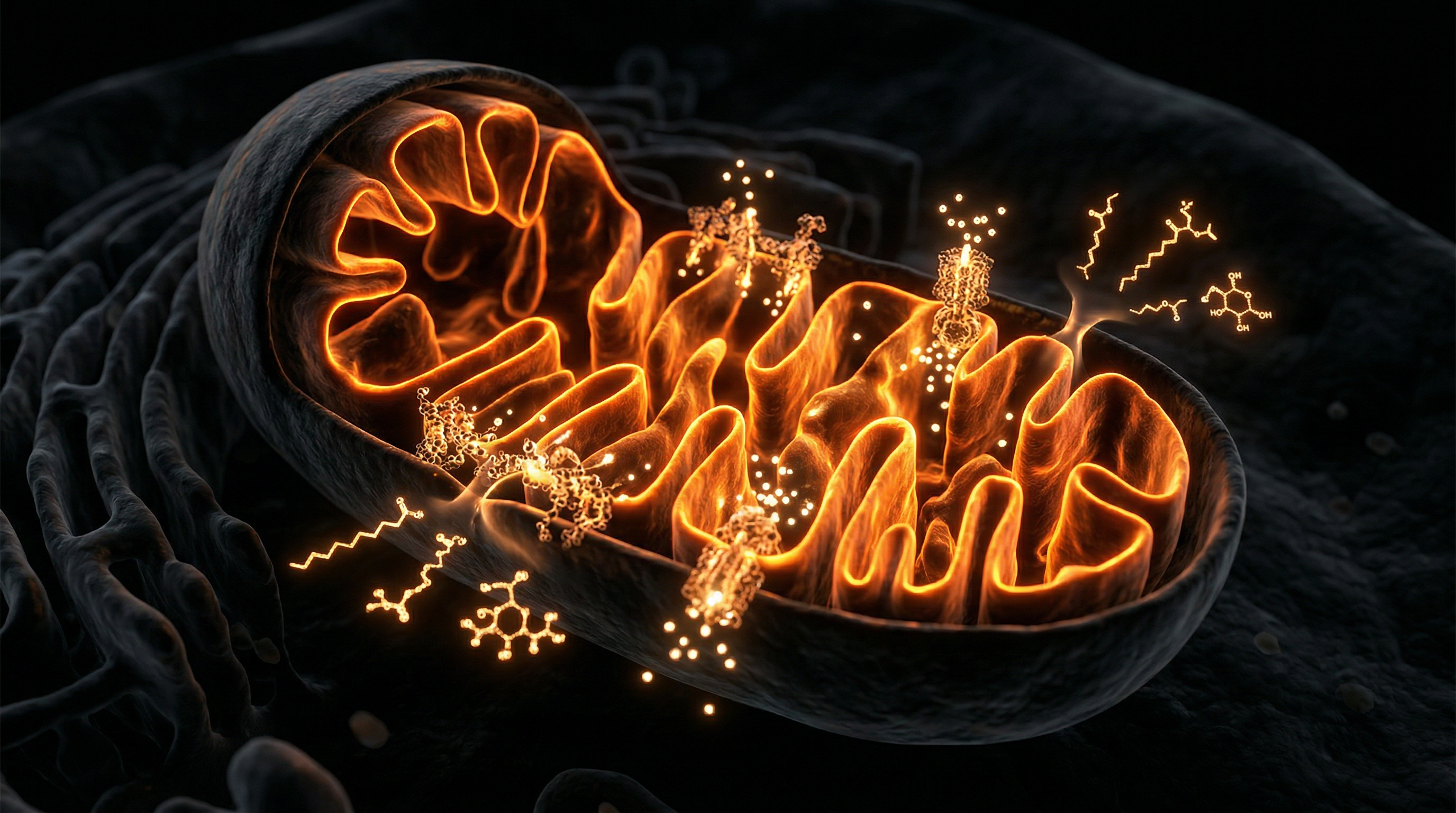
The true arbiter of your weight, your energy, and your longevity is not the calculator on your phone, but the mitochondria residing within your cells. Specifically, the crisis we face is one of Metabolic Inflexibility.
Metabolic flexibility is the evolutionary superpower that allowed our ancestors to survive in environments of fluctuating food availability. It is the ability of the body to seamlessly switch between burning glucose (sugar) and burning lipids (fat) based on availability and demand. When you are metabolically flexible, your body is an efficient, dual-fuel engine. When you become metabolically "stiff" or inflexible, you lose the ability to tap into your internal fat stores, regardless of how little you eat or how much you exercise.
This article will expose the cellular mechanics of this "metabolic lockdown." We will delve into how damaged mitochondria create a biological bottleneck that traps energy as adipose tissue, how environmental toxins sanctioned by the Environment Agency and FSA are poisoning our cellular respirators, and why restoring mitochondrial "machinery" is the only path to sustainable weight management and the reversal of chronic disease.
UK Health Crisis Fact: According to recent data, nearly 28% of adults in England are classified as obese, with a further 36% being overweight. This is not a failure of character; it is a systemic failure of mitochondrial signal transduction across the population.
##
The Biology — How It Works
To understand metabolic flexibility, one must understand the two primary fuel sources of the human body: glucose and non-esterified fatty acids (NEFAs). In a healthy state, the body prioritises glucose oxidation when blood sugar is elevated (post-prandial) and switches to fatty acid oxidation during periods of fasting or low-intensity movement.
The Randle Cycle
The primary mechanism governing this switch is known as the Randle Cycle, or the Glucose-Fatty Acid Cycle. Discovered in 1963 by Sir Philip Randle at the University of Cambridge, this biochemical "competition" determines which fuel the mitochondria will utilise.
In a metabolically flexible individual, the presence of high levels of fatty acids inhibits the uptake and oxidation of glucose in the muscle cells, preserving glucose for the brain. Conversely, when insulin is secreted in response to a carbohydrate-rich meal, it should theoretically shut down fat burning (lipolysis) and promote glucose oxidation.
The Failure of the Switch
Metabolic inflexibility occurs when this switching mechanism breaks down. In an inflexible state, the body remains "stuck" in glucose-burning mode even when insulin levels are low, or—more commonly—it becomes unable to effectively oxidise either fuel efficiently. This results in mitochondrial congestion.
When the mitochondria are unable to process fuel, the "back pressure" of un-oxidised electrons causes a leak in the Electron Transport Chain (ETC). This leads to the overproduction of Superoxide, a highly reactive free radical that damages mitochondrial DNA (mtDNA) and the delicate inner membrane. The result is a cell that cannot burn fat, even in a caloric deficit, leading to the soul-crushing experience of "diet-resistant" obesity.
##
Mechanisms at the Cellular Level
The mitochondrion is far more than a "powerhouse"; it is a sophisticated environmental sensor. To understand why weight loss becomes impossible, we must look at the specific pathways within the mitochondrial matrix and the inner membrane.
The Electron Transport Chain (ETC) and Proton Leak
The process of creating ATP (adenosine triphosphate) involves moving electrons through four multi-protein complexes (Complex I-IV). This movement pumps protons into the intermembrane space, creating an electrochemical gradient—essentially a biological battery.
In a healthy mitochondrion, the flow is fluid. In a dysfunctional one, particularly in the presence of Insulin Resistance, the flow "backs up."
- Complex I (NADH:ubiquinone oxidoreductase): This is the entry point for electrons from glucose.
- Complex II (Succinate dehydrogenase): This is the entry point for electrons from fat (via FADH2).
When a person consumes a diet high in both refined carbohydrates and industrial seed oils (omega-6 polyunsaturated fats), both complexes are bombarded simultaneously. This creates a "traffic jam" at the level of Coenzyme Q10 (CoQ10). The mitochondria cannot decide which fuel to prioritise, leading to a massive spike in Reactive Oxygen Species (ROS).
The Role of Pyruvate Dehydrogenase (PDC)
The Pyruvate Dehydrogenase Complex is the gatekeeper enzyme that allows the products of glycolysis to enter the mitochondria for aerobic respiration. In a state of metabolic inflexibility, PDC is often inhibited. This means even if you have glucose in your blood, it cannot be efficiently "burned" for energy in the mitochondria. Instead, it is diverted toward De Novo Lipogenesis (DNL)—the creation of new fat—primarily in the liver. This is the foundational mechanism of Non-Alcoholic Fatty Liver Disease (NAFLD), now more accurately termed MAFLD (Metabolic Associated Fatty Liver Disease).
Mitophagy and Mitochondrial Dynamics
Mitochondria are not static; they undergo fusion (joining together) and fission (splitting apart). They also have a quality control mechanism called mitophagy—the selective recycling of damaged mitochondria. In the metabolically inflexible, mitophagy is suppressed. Damaged, "leaky" mitochondria are allowed to persist, cluttering the cell and emitting inflammatory signals (specifically NLRP3 inflammasomes). This creates a state of low-grade systemic inflammation, which further desensitises insulin receptors, creating a vicious cycle of weight gain and cellular decay.
Critical Biological Truth: Weight gain is a protective mechanism. When your mitochondria can no longer process energy without causing catastrophic oxidative damage, the body shunts that energy into fat cells to prevent "cellular frying." Obesity is a symptom of mitochondrial self-defence.
##
Environmental Threats and Biological Disruptors
We do not live in a vacuum. Our mitochondrial health is under constant assault from a cocktail of synthetic chemicals and environmental stressors, many of which are "recognised as safe" by the Food Standards Agency (FSA) despite mounting evidence of their mitochondrial toxicity.
Obesogens and Endocrine Disruptors
"Obesogens" are a class of chemicals that artificially stimulate adipogenesis (fat cell creation) and impair mitochondrial function.
- Phthalates and Bisphenols (BPA/BPS): Found in UK food packaging and plastic water bottles, these chemicals interfere with Peroxisome Proliferator-Activated Receptors (PPARs), the master regulators of fat metabolism.
- Perfluoroalkyl Substances (PFAS): Often called "forever chemicals," these are pervasive in UK tap water. PFAS have been shown to inhibit mitochondrial fatty acid oxidation, effectively "locking" the door to the fat store.
The Glyphosate Connection
Despite being banned in several countries, Glyphosate remains the most widely used herbicide in UK agriculture. Glyphosate acts as a "mineral chelator," stripping essential mitochondrial co-factors like Manganese and Zinc from the soil and our food. Furthermore, it disrupts the Shikimate pathway in our gut bacteria. While humans don't have this pathway, our microbiome does, and a damaged microbiome sends "distress signals" that impair mitochondrial biogenesis in the host.
The Blue Light and Circadian Mismatch
Mitochondria are deeply rhythmic. They rely on the light-dark cycle to coordinate energy production. The UK's modern environment is saturated with "artificial blue light" from LED bulbs and screens, particularly after sunset. This suppresses Melatonin—not just the sleep hormone, but the most potent mitochondrial antioxidant. Without nocturnal melatonin, the mitochondria cannot repair the oxidative damage incurred during the day, leading to "morning-after" metabolic stiffness.
Seed Oils and Lipid Peroxidation
The shift from traditional fats (butter, tallow) to industrial seed oils (sunflower, rapeseed, soybean) is perhaps the greatest mitochondrial catastrophe in British history. These oils are high in Linoleic Acid, a fragile omega-6 fat that incorporates itself into the mitochondrial membrane component called Cardiolipin. When cardiolipin is composed of unstable seed oils, it oxidises easily, causing the Electron Transport Chain to "disintegrate," leading to massive electron leakage and metabolic failure.
##
The Cascade: From Exposure to Disease
Metabolic inflexibility is not a binary state; it is a progressive "rusting" of the metabolic engine. The transition from health to chronic disease follows a predictable, yet often ignored, cascade.
Stage 1: Postprandial Lethargy
The first sign of mitochondrial stiffness is the "afternoon slump." When a metabolically flexible person eats, they feel energised. When an inflexible person eats, their mitochondria struggle to process the influx, leading to a temporary energy "blackout" as the cell enters a state of oxidative stress.
Stage 2: Hyperinsulinaemia
As mitochondria become less efficient at burning fuel, the body compensates by pumping out more Insulin. High insulin is a "storage signal." It effectively prevents the enzyme Hormone-Sensitive Lipase (HSL) from breaking down body fat. At this stage, the individual may have "normal" blood sugar according to an NHS GP, but their insulin levels are sky-high—a condition the mainstream rarely tests for (fasting insulin).
Stage 3: Leptin Resistance
As fat stores grow, they secrete Leptin, the hormone that tells the brain you have enough energy. However, chronic inflammation from damaged mitochondria "muffles" the leptin signal in the hypothalamus. The brain now perceives the body as starving, despite being 30kg overweight. This triggers intense cravings and reduces the "basal metabolic rate" (BMR), as the brain attempts to conserve energy.
Stage 4: Type 2 Diabetes and Beyond
Eventually, the pancreas cannot keep up, or the cells become so resistant to insulin that blood sugar remains elevated. This is Type 2 Diabetes. But the damage doesn't stop at blood sugar. Excess glucose begins to bond with proteins in a process called Glycation (forming Advanced Glycation End-products, or AGEs), which "caramelises" the vascular system, leading to cardiovascular disease, kidney failure, and neurodegeneration (often called "Type 3 Diabetes" or Alzheimer’s).
Stat Callout: It is estimated that up to 80% of the UK population exhibits some degree of metabolic inflexibility, with many remaining undiagnosed until significant organ damage has occurred.
##
What the Mainstream Narrative Omits
The refusal of the medical establishment to address mitochondrial health is nothing short of a scandal. By focusing on symptoms rather than cellular mechanisms, the pharmaceutical industry has created a multi-billion pound "management" market.
The Statin Deception
Millions of Britons are prescribed Statins to lower cholesterol. While they do lower LDL, they also inhibit the production of Hormone-Sourced Coenzyme Q10—the very electron carrier required for mitochondrial function. By "fixing" a blood marker (cholesterol), statins can actively accelerate mitochondrial decay and muscle wasting, often leading to the very metabolic "fatigue" that prevents exercise.
The "Ozempic" Band-Aid
The current craze for GLP-1 agonists (like Semaglutide) is a perfect example of the "management" mindset. While these drugs induce weight loss by slowing gastric emptying and suppressing appetite, they do not "fix" the underlying mitochondrial dysfunction. In many cases, a significant portion of the weight lost is Lean Muscle Mass, which is the primary site of mitochondrial density. Losing muscle while remaining metabolically inflexible is a recipe for a "rebound" weight gain of purely fat once the drug is discontinued.
The Low-Fat Fallacy
For decades, the Public Health England "Eatwell Guide" (now under the Office for Health Improvement and Disparities) has encouraged a high-carbohydrate, low-fat diet. For a metabolically inflexible person, this is equivalent to throwing gasoline on a fire. High carbohydrate intake maintains high insulin, which keeps the mitochondria locked away from fat stores, ensuring that the individual remains hungry and tired.
##
The UK Context
The United Kingdom presents a unique "perfect storm" for mitochondrial dysfunction. From our geographic location to our regulatory environment, the British public is uniquely disadvantaged.
The Vitamin D / UV Crisis
Mitochondria contain Photoreceptors. They respond to infrared and ultraviolet light. Due to our northern latitude and notoriously grey weather, the vast majority of Britons are chronically deficient in Vitamin D3 and, more importantly, lack exposure to near-infrared light from the sun, which has been shown to stimulate mitochondrial repair and ATP production. Our "indoor lifestyle" is a direct contributor to metabolic stiffness.
Ultra-Processed Food (UPF) Dominance
The UK has the highest consumption of ultra-processed foods in Europe. These "Frankenfoods" are specifically engineered to bypass the body's satiety signals. They are combinations of high-fructose corn syrup (which bypasses the Randle cycle and goes straight to the liver) and "hydrogenated" or "refined" seed oils. This combination is a "mitochondrial bomb" that creates immediate and lasting metabolic inflexibility.
The NHS Burden
The NHS is currently spending approximately £10 billion per year on treating Type 2 Diabetes and its complications. This is a fiscal black hole. If the NHS shifted its focus from pharmaceutical management to mitochondrial restoration—via nutritional ketosis, fasting protocols, and environmental detoxification—the "crisis" could be mitigated within a decade. However, the influence of the food and pharma lobbies on UK health policy remains a formidable barrier to this truth.
##
Protective Measures and Recovery Protocols
If metabolic inflexibility is a "rusting" of the engine, then recovery is a process of deep cleaning and rebuilding. You cannot "exercise away" a broken metabolism if your mitochondria cannot burn the fuel you are trying to use. You must first restore the machinery.
1. Nutritional Intervention: The "Metabolic Reset"
To fix the Randle Cycle, you must temporarily remove one of the competing fuels.
- The Ketogenic Protocol: By drastically reducing carbohydrates, you lower insulin and force the mitochondria to "re-learn" how to oxidise fat. This stimulates Mitochondrial Biogenesis—the creation of new, healthy mitochondria.
- Elimination of Seed Oils: Total avoidance of rapeseed, sunflower, and vegetable oils. Replace them with stable saturated fats (tallow, suet, butter, coconut oil) that protect the mitochondrial membrane from lipid peroxidation.
- Protein Leverage: Prioritise high-quality animal proteins. Amino acids like L-Carnitine are essential for transporting fatty acids into the mitochondria (via the CPT-1 shuttle).
2. Time-Restricted Feeding (TRF)
The mitochondria need "downtime" to perform mitophagy. Constant snacking keeps the body in a permanent state of "energy influx," preventing the cellular "cleanup crew" from working. A 16:8 or 18:6 fasting window allows the body to clear out damaged cellular components and resets insulin sensitivity.
3. Hormetic Stress: Heat and Cold
Hormesis is the biological principle that "what doesn't kill you makes you stronger."
- Cold Exposure: Immersing yourself in cold water (10-15°C) activates Brown Adipose Tissue (BAT). Brown fat is densely packed with mitochondria that "uncouple" energy production to create heat instead of ATP, essentially "burning off" excess calories as pure heat.
- Sauna / Heat Stress: Heat shock proteins triggered by sauna use help to refold damaged proteins and protect mitochondria from oxidative stress.
4. Targeted Supplementation
While food is first, certain co-factors can "jump-start" a stalled engine:
- CoQ10 (Ubiquinol): The essential electron carrier.
- PQQ (Pyrroloquinoline quinone): Shown to stimulate the growth of new mitochondria.
- Magnesium: Essential for every step of ATP production; most UK soil is depleted of it.
- Alpha-Lipoic Acid (ALA): A potent antioxidant that works specifically within the mitochondrial matrix to improve glucose uptake.
- NAD+ Precursors (NMN/NR): NAD+ is the "currency" of the mitochondria; levels decline with age and metabolic stress.
5. "Zone 2" Exercise
Forget HIIT (High-Intensity Interval Training) if you are metabolically inflexible. HIIT relies on glucose. Instead, focus on Zone 2 Training—low-intensity steady-state movement (like a brisk walk or light cycle) where you can still hold a conversation. Zone 2 specifically targets the mitochondria in Type I muscle fibres, forcing them to become more efficient at burning fat.
##
Summary: Key Takeaways
The path to weight management and vibrant health is not found in a calorie-counting app or a pharmaceutical injection. It is found in the microscopic "furnaces" that power your existence.
- Weight gain is a symptom of mitochondrial failure, not the cause.
- Metabolic Inflexibility is the inability to switch between burning sugar and fat, caused by a "traffic jam" of electrons and oxidative damage.
- The "Calories In, Calories Out" model is a biological fallacy that ignores the signalling role of hormones like insulin and the health of the mitochondrial membrane.
- Environmental toxins, from glyphosate to seed oils and blue light, are "mitochondrial poisons" that are currently unregulated or even encouraged by UK authorities.
- Recovery is possible through metabolic resets (low carb), fasting, hormetic stress, and protecting your circadian rhythm.
It is time to stop blaming your willpower and start healing your biology. The "metabolic lockdown" can be broken, but only if you stop listening to the mainstream narrative and start feeding the "machinery" of life itself. Your mitochondria are waiting.
"INNERSTANDING Editorial Staff"
Researching the truths they refuse to broadcast.
This article is provided for informational and educational purposes only. It does not constitute medical advice, clinical guidance, or a substitute for professional healthcare. Information reflects cited research at time of publication. Always consult a qualified healthcare professional before acting on any health information.
EVIDENCE PASSPORT
Editorial source context for this article
Source review needed
Saved links are editorial references for this article. They may support specific claims rather than every sentence. Open and assess each source in context. This passport does not independently verify them.
Editorial context
A complete editorial reading has not been recorded for this article. Source links remain available for you to open and assess directly.
Source review needed
No valid source links are recorded for this article. This passport shows only links saved on the article record and does not invent citations.
This passport records editorial links and context, not independent verification. Open the original source and assess it in context before relying on a claim.
Medical Disclaimer
The information in this article is for educational purposes only and does not constitute medical advice, diagnosis, or treatment. Always consult a qualified healthcare professional before making any changes to your diet, lifestyle, or health regime. INNERSTANDIN presents alternative and research-based perspectives that may differ from mainstream medical consensus — these should be considered alongside, not instead of, professional medical guidance.
Read Full DisclaimerContinue the thread
Keep this question moving.
Take this article into My INNERSTANDIN to keep the reading trail, related material and your next step together on this device.
Explore this in the Body Map
See where this hits your biology. Interactive anatomy, threats, and protective protocols.
Dig deeper in the Library
Free, longform PDF volumes that go beyond headlines into mechanisms and references.