
Microbial Biofilms: The Protective Shield Protecting Pathogens from the Immune System
Updated May 2026
This article explores the concept of biofilms—sophisticated bacterial fortresses that allow pathogens to survive antibiotics and immune attacks. It details how biofilms contribute to chronic infections and how they can be disrupted.
Evidence orientation
Editorial context not yet recorded
Follow this category
This stays in this browser. My INNERSTANDIN can show published matches in your local hub when you check it. It does not send email, push, or alert notifications.
Local learning review
A private browser aid for revisiting ideas. It is not an alert or a health recommendation.
Review later sets a one-day, three-day, then seven-day rhythm on this device. Choose it only when you want to revisit this article.
Overview
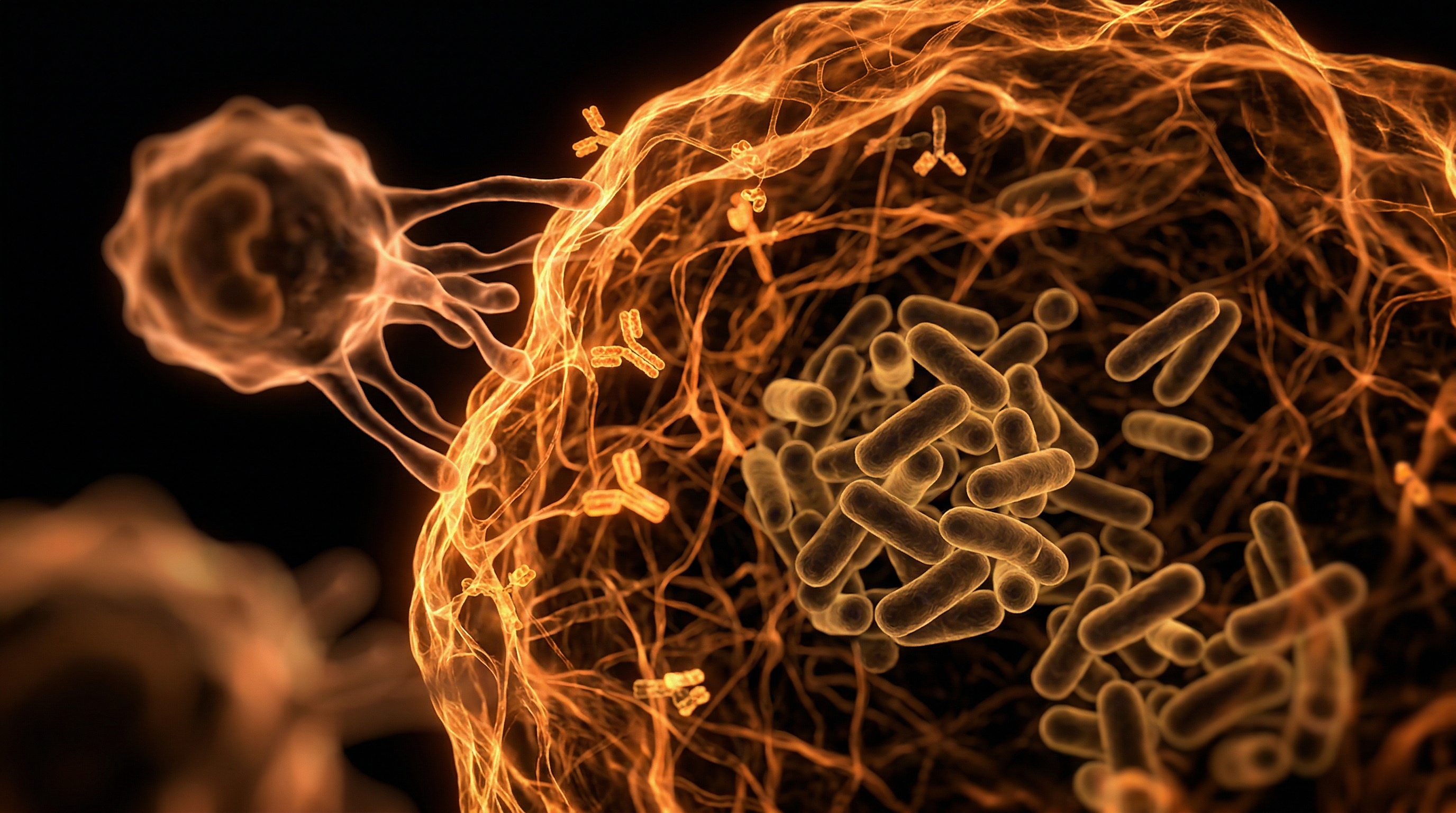
For decades, the mainstream medical narrative has viewed bacterial infections through a reductive, simplistic lens: a single species of free-floating bacteria enters the host, multiplies, and is subsequently neutralised by either the innate immune system or a course of antibiotics. This planktonic model of microbiology, while convenient for laboratory culture and pharmaceutical marketing, is a dangerous oversimplification that fails to account for the reality of chronic, recalcitrant disease. In the natural world—and crucially, within the human body—bacteria do not prefer to live in isolation. Instead, they seek out community, constructing sophisticated, multi-species fortresses known as biofilms.
A biofilm is a complex, three-dimensional aggregate of microorganisms embedded within a self-produced matrix of Extracellular Polymeric Substances (EPS). This matrix acts as a biological "cloaking device" and a physical shield, rendering the pathogens within virtually invisible to the host’s immune surveillance and up to 1,000 times more resistant to antimicrobial agents than their free-swimming counterparts. These are not merely clusters of germs; they are highly organised, semi-sentient biological structures that communicate through chemical signalling, share genetic data, and coordinate their metabolism to ensure survival against all odds.
The persistence of conditions such as chronic fatigue, recurring urinary tract infections (UTIs), Lyme disease, and small intestinal bacterial overgrowth (SIBO) can often be traced back to the presence of these microbial strongholds. As long as the biofilm remains intact, the underlying infection remains untreatable by conventional means. This article exposes the hidden architecture of these bacterial cities, the mechanisms they use to bypass our biological defences, and the systemic failure of modern medicine to address this foundational pillar of chronic illness.
According to the National Institutes of Health (NIH) and the Center for Disease Control (CDC), it is estimated that up to 80% of all human bacterial infections are associated with biofilm formation, yet standard diagnostic protocols in the UK and abroad still rely almost exclusively on planktonic testing methods.
##
The Biology — How It Works
The transition from a solitary, vulnerable bacterium to a member of a fortified biofilm community is a regulated, multi-stage process driven by environmental stress and nutrient availability. To understand the threat, we must first understand the construction.
The Lifecycle of a Biofilm
The formation of a biofilm begins with reversible attachment. Planktonic bacteria, propelled by flagella, encounter a surface—be it the mucosal lining of the gut, the wall of a blood vessel, or a prosthetic implant. At this stage, the bacteria "sense" the surface through tactile feedback. If the conditions are favourable, they transition to irreversible attachment, deploying specialized adhesion proteins (adhesins) to lock themselves onto the substrate.
Once anchored, the bacteria begin to secrete the Extracellular Polymeric Substance (EPS). This is the "glue" that defines the biofilm. As the matrix expands, the bacteria undergo a profound phenotypic shift, altering the expression of thousands of genes. They stop investing energy in motility (losing their flagella) and start investing in communal defence. The biofilm matures into a complex structure with water channels that function like a primitive circulatory system, delivering nutrients and removing metabolic waste from the deep interior of the colony.
Finally, when the colony reaches a critical mass or when environmental conditions shift, the biofilm enters the dispersal phase. Individual bacteria or small clumps of the matrix break off and re-enter the bloodstream or surrounding tissues to seed new infections elsewhere. This explains why many patients experience "flares" of symptoms; a dormant biofilm has just released a new wave of planktonic invaders.
Quorum Sensing: The Bacterial Internet
Bacteria within a biofilm are not silent. They communicate using a sophisticated chemical language known as Quorum Sensing (QS). By secreting and detecting small signalling molecules called autoinducers (such as N-acyl homoserine lactones), bacteria can "count" how many of their kind are in the immediate vicinity.
When the concentration of these molecules reaches a specific threshold, it triggers a collective change in gene expression. This allows the colony to act as a single multicellular organism. They can coordinate the release of toxins, the production of more EPS, or the activation of antibiotic resistance genes all at once, overwhelming the host's immune response before it has a chance to react. This collective intelligence is what makes biofilms so difficult to eradicate; they are always one step ahead of the host's defensive strategies.
##
Mechanisms at the Cellular Level
To appreciate why the human immune system is often powerless against these structures, we must examine the molecular components of the biofilm matrix. It is not merely a "slime" layer; it is a sophisticated biochemical barrier.
The Composition of the Matrix
The EPS matrix is composed of four primary elements, each serving a tactical purpose:
- Exopolysaccharides: These provide the structural "scaffolding" and retain moisture, preventing the bacteria from desiccation. In Pseudomonas aeruginosa infections, for instance, the polysaccharide alginate creates a thick, viscous barrier that prevents white blood cells from penetrating.
- Extracellular DNA (eDNA): Long ignored by researchers, eDNA is now known to be a critical structural component. It acts like "rebar" in concrete, reinforcing the matrix and facilitating horizontal gene transfer (the exchange of antibiotic resistance genes between different species).
- Proteins and Amyloid Fibres: These provide tensile strength and help the biofilm adhere to diverse surfaces, including living tissue and synthetic materials like heart valves.
- Lipids and Surfactants: These molecules control the flow of fluids through the biofilm and help in the eventual dispersal of the colony.
The "Persister Cell" Phenomenon
Deep within the layers of the biofilm, oxygen and nutrient levels are low. This creates a gradient where bacteria in the centre enter a state of metabolic dormancy. These are known as persister cells. Because most antibiotics work by disrupting active metabolic processes (like cell wall synthesis or DNA replication), they are completely ineffective against these dormant cells. When the course of antibiotics is finished and the "active" bacteria on the surface of the biofilm are killed, the persister cells remain. Once the threat has passed, they "wake up," repopulate the biofilm, and the chronic infection returns.
Evading the Immune Response
The biofilm employs several "stealth" tactics to neutralise the host's immune system:
- Frustrated Phagocytosis: Neutrophils and macrophages (the body’s "eater" cells) are attracted to the site of infection. However, they cannot engulf the massive, sticky biofilm structure. In their attempt to destroy it, they release caustic enzymes and reactive oxygen species (ROS) into the surrounding tissue, causing massive collateral damage and chronic inflammation while the bacteria inside remain unharmed.
- Complement Inhibition: The biofilm matrix can bind and inactivate complement proteins, which are essential for marking pathogens for destruction.
- Antigenic Masking: By hiding behind the EPS layer, the bacteria prevent their surface antigens from being detected by B-cells and T-cells. The immune system knows something is wrong, but it cannot find the specific target to lock onto.
Chronic inflammation caused by "frustrated phagocytosis" is a leading driver of tissue degradation in conditions like Cystic Fibrosis and Chronic Obstructive Pulmonary Disease (COPD), where biofilms in the lungs create a permanent state of immune hyper-activation.
##
Environmental Threats and Biological Disruptors
Biofilms do not exist in a vacuum. Their formation and resilience are heavily influenced by the internal and external environment of the host. Certain substances can strengthen these fortresses, while others are being identified as potential "siege engines" to break them down.
Heavy Metals as Structural Reinforcements
One of the most suppressed facts in clinical microbiology is the role of heavy metals in biofilm stability. Research has shown that bacteria actively sequester metals such as Calcium, Magnesium, Iron, and Lead to cross-link the EPS matrix. Iron, in particular, is a precious commodity for pathogens. Staphylococcus aureus and Pseudomonas have evolved elaborate mechanisms (siderophores) to steal iron from the host's serum to build their biofilms.
The Impact of Modern Agriculture and Water
In the UK, the Environment Agency and the Food Standards Agency (FSA) have monitored the rise of antimicrobial resistance (AMR) in the food chain. The sub-therapeutic use of antibiotics in livestock does not just create resistant bacteria; it encourages those bacteria to form biofilms as a survival mechanism. Furthermore, the presence of microplastics in the UK's water systems provides an ideal synthetic substrate for "plastispheres"—biofilms that colonise plastic particles, allowing pathogens to survive water treatment processes and enter the human gut in a highly protected state.
Biological Disruptors
While the mainstream focus remains on killing the bacteria, the emerging "truth" in bio-medicine is that we must first disrupt the matrix. Substances that interfere with Quorum Sensing (QS inhibitors) or that break down the EPS are essential. These include:
- Enzymes: Proteolytic enzymes like Serrapeptase and Nattokinase have shown an ability to digest the proteinaceous components of the biofilm.
- Chelators: Agents like EDTA (Ethylenediaminetetraacetic acid) can strip the structural metals (Calcium and Magnesium) out of the biofilm, causing the "glue" to liquefy.
- Phytochemicals: Concentrated extracts of Allicin (from garlic), Berberine, and Cinnamic acid act as potent QS inhibitors, "silencing" the bacterial communication and preventing the colony from coordinating its defences.
##
The Cascade: From Exposure to Disease
The progression from an initial exposure to a chronic biofilm-mediated disease is a predictable, yet often ignored, biological cascade. This process explains why a "simple" infection can lead to a lifetime of systemic health issues.
Stage 1: The Breach and Colonisation
The process begins with an opportunistic breach—perhaps a period of high stress that suppresses Secretory IgA in the gut, or a course of broad-spectrum antibiotics that wipes out the protective commensal flora. Without the "colonisation resistance" provided by healthy bacteria, pathogens like Candida albicans or Escherichia coli gain a foothold on the mucosal lining.
Stage 2: The Establishment of the Fortress
Within 24 to 48 hours, these pathogens begin to form micro-colonies and secrete EPS. At this stage, symptoms may be mild or non-specific—fatigue, bloating, or a general feeling of malaise. The host's immune system attempts to clear the infection but is rebuffed by the emerging matrix.
Stage 3: Systemic Toxicity and "Bio-Warfare"
As the biofilm matures, it becomes a "factory" for endotoxins. For Gram-negative bacteria, this involves the release of Lipopolysaccharides (LPS). Because the bacteria themselves are hidden, the immune system reacts to the circulating LPS, leading to systemic inflammation. This is the stage where "Brain Fog," joint pain, and autoimmune triggers occur. The biofilm may also sequester other pathogens; for example, Borrelia burgdorferi (the causative agent of Lyme disease) is known to hide within biofilms alongside other bacteria and even heavy metals, making it nearly impossible to detect in standard blood tests.
Stage 4: The Chronic Cycle
The biofilm becomes a permanent fixture. It periodically releases planktonic "scouts" which trigger acute symptomatic flares. The patient is given a standard 7-day course of antibiotics. The planktonic cells die, the symptoms temporarily subside, but the biofilm fortress remains untouched. This cycle can continue for decades, slowly exhausting the host's adrenal and immune reserves, leading to what is often misdiagnosed as "Chronic Fatigue Syndrome" or "Fibromyalgia."
##
What the Mainstream Narrative Omits
The current standard of care in the UK’s NHS and global medical bodies is fundamentally flawed when it comes to biofilms. The "truth" that is rarely discussed in the GP's surgery is that our entire diagnostic infrastructure is designed to fail when faced with a biofilm infection.
The Culturing Fallacy
When a patient presents with symptoms of infection, the standard protocol is to take a swab, blood sample, or urine sample and "culture" it in a lab. This process involves trying to grow bacteria in a nutrient-rich agar dish. However, bacteria in a biofilm are sessile and often metabolically inactive. They do not grow well in cultures. Furthermore, the EPS matrix prevents the bacteria from being picked up by the swab in the first place. This leads to the "False Negative" epidemic, where a patient is told they have "no infection" despite being symptomatic, simply because the biofilm refused to grow in a Petri dish.
The MIC (Minimum Inhibitory Concentration) Lie
Antibiotic efficacy is measured by the Minimum Inhibitory Concentration (MIC)—the lowest concentration of a drug that prevents the visible growth of a bacterium in its planktonic state. This measurement is completely irrelevant for biofilms. Because the matrix restricts antibiotic penetration and the persister cells are dormant, the effective concentration needed to kill a biofilm can be hundreds of times higher than the MIC—levels that would be lethal to the human patient. By relying on MIC data, doctors are prescribing doses that are high enough to damage the gut microbiome but too low to even "scratch the surface" of the biofilm.
The Role of Dental Health
Mainstream medicine often separates dental health from systemic health, yet the mouth is the primary site of biofilm formation in the human body. Dental plaque is a classic biofilm. Research has shown that pathogens from oral biofilms, such as Porphyromonas gingivalis, can enter the bloodstream and seed biofilms in the coronary arteries, contributing to heart disease. Despite this, biofilm disruption is rarely part of the conversation regarding cardiovascular prevention in the UK.
Recent studies using Next-Generation Sequencing (NGS) and FISH (Fluorescence In Situ Hybridisation) have revealed that many "sterile" inflammatory conditions, such as interstitial cystitis, are actually caused by deep-seated, culture-negative biofilms.
##
The UK Context
In the United Kingdom, the challenge of biofilms is compounded by specific environmental and regulatory factors. The UK has one of the highest rates of antibiotic prescribing in Europe, and while the O'Neill Report on Antimicrobial Resistance (commissioned by the UK government) highlighted the existential threat of "superbugs," it largely failed to address the biofilm as the primary mechanism of that resistance.
Infrastructure and Water Systems
The UK’s ageing water infrastructure is a major reservoir for biofilms. The Environment Agency has flagged concerns regarding the "bio-fouling" of water pipes, where biofilms protect pathogens like Legionella and Campylobacter from chlorination. This means that even "treated" water can carry the genetic precursors and matrix fragments that facilitate biofilm formation once they enter the human GI tract.
The NHS and the "Standard of Care"
Within the NHS, the pressure to "clear the list" and follow "NICE (National Institute for Health and Care Excellence) guidelines" often prevents doctors from looking deeper into chronic infection. NICE guidelines for conditions like recurring UTIs or chronic sinusitis rarely mention biofilm disruption. As a result, patients are trapped in a loop of "revolving door" prescriptions. Furthermore, the MHRA (Medicines and Healthcare products Regulatory Agency) has been slow to approve or categorise the natural biofilm disruptors (like certain enzymes or high-dose lactoferrin) that are increasingly being used in private, functional medicine circles.
The Rise of "Post-Viral" Syndromes
In the wake of recent global events, the UK has seen a surge in "Long-Covid" and other post-viral syndromes. Emerging research suggests that viral infections can "prime" the body for bacterial biofilm overgrowth. Viruses can damage the mucosal lining, providing the perfect "anchor point" for opportunistic bacteria to build their fortresses. Without addressing these bacterial structures, many UK patients find themselves unable to recover their baseline health.
##
Protective Measures and Recovery Protocols
Eradicating a mature biofilm is a complex, multi-phased operation. It is not about "blasting" the body with more drugs; it is about a coordinated "siege" strategy that involves deconstructing the fortress, neutralising the inhabitants, and rebuilding the host's defences.
Phase 1: Weakening the Matrix (The Breach)
The first step is to liquefy the "glue" that holds the biofilm together.
- Proteolytic Enzymes: Taking enzymes like Serrapeptase, Nattokinase, or Lumbrokinase on an empty stomach allows these proteins to enter the systemic circulation and begin digesting the protein scaffolds of the biofilm.
- Chelation: Using binders like EDTA, Modified Citrus Pectin, or Silica can help pull the structural metals (Calcium, Iron, Lead) out of the biofilm matrix.
- Bismuth Thiol Complexes: Emerging research suggests that Bismuth, when combined with specific thiols, can profoundly disrupt the EPS of Gram-negative bacteria.
Phase 2: Disrupting Communication (The Silence)
Once the matrix is weakened, we must stop the bacteria from "calling for reinforcements."
- Quorum Sensing Inhibitors: Natural agents such as Allicin (from garlic), Oregano Oil (containing carvacrol), and Clove (containing eugenol) are potent inhibitors of bacterial communication.
- Lactoferrin: This protein, naturally found in colostrum, starves bacteria of the iron they need to maintain the biofilm's structural integrity.
Phase 3: Targeted Eradication (The Attack)
Only after the biofilm is breached should antimicrobial agents be used. This ensures that the pathogens are in their vulnerable, planktonic state.
- Herbal Antibiotics: Use "broad-spectrum" natural agents like Berberine, Neem, and Grapefruit Seed Extract. Unlike synthetic antibiotics, these often contain multiple compounds that bacteria find much harder to develop resistance against.
- Silver Hydrosol: Nano-particle silver can penetrate the weakened matrix and deliver an oxidative strike to the pathogens within.
Phase 4: Flushing and Rebuilding (The Clean-up)
As the biofilm breaks down, it will release a "die-off" of toxins (LPS, heavy metals, and metabolic waste).
- Binders: Use Activated Charcoal, Zeolite Clay, or Chlorella to "mop up" the released toxins and prevent them from being reabsorbed in the colon.
- Probiotic Repopulation: The "empty space" left by the biofilm must be filled with beneficial bacteria. Using high-dose, multi-strain probiotics (specifically those containing Lactobacillus rhamnosus and Saccharomyces boulardii) helps to re-establish colonisation resistance.
- Mucosal Support: Repair the gut or sinus lining with L-Glutamine, Aloe Vera, and Marshmallow Root to prevent the "anchor points" for future biofilms.
##
Summary: Key Takeaways
The revelation that chronic disease is often a "fortress-mediated" condition changes everything for the informed patient. We can no longer rely on the outdated planktonic model of infection.
- Biofilms are the Rule, Not the Exception: In the human body, most pathogens exist within these protected communities, not as solitary cells.
- The Matrix is the Shield: The Extracellular Polymeric Substance (EPS) is a physical and biochemical barrier that neutralises both antibiotics and the immune system.
- Testing is Flawed: Standard UK diagnostic cultures frequently miss biofilm-based infections, leading to millions of "unexplained" chronic cases.
- Metals are the Rebar: Calcium, Magnesium, and Iron are essential for biofilm stability; chelation is often a necessary part of the "siege."
- A Multi-Phase Approach is Essential: To recover, one must first disrupt the matrix with enzymes and chelators, inhibit communication with QS inhibitors, and then eradicate the exposed pathogens before rebuilding the microbiome.
The clinical establishment may be slow to adapt, but the biological truth is clear: until we address the biofilm, we are merely treating the symptoms of a war while the enemy remains safe inside its fortress. True healing requires us to dismantle these structures and restore the body's internal sovereign territory.
This article is provided for informational and educational purposes only. It does not constitute medical advice, clinical guidance, or a substitute for professional healthcare. Information reflects cited research at time of publication. Always consult a qualified healthcare professional before acting on any health information.
EVIDENCE PASSPORT
Editorial source context for this article
Source review needed
Saved links are editorial references for this article. They may support specific claims rather than every sentence. Open and assess each source in context. This passport does not independently verify them.
Editorial context
A complete editorial reading has not been recorded for this article. Source links remain available for you to open and assess directly.
Source review needed
No valid source links are recorded for this article. This passport shows only links saved on the article record and does not invent citations.
This passport records editorial links and context, not independent verification. Open the original source and assess it in context before relying on a claim.
Medical Disclaimer
The information in this article is for educational purposes only and does not constitute medical advice, diagnosis, or treatment. Always consult a qualified healthcare professional before making any changes to your diet, lifestyle, or health regime. INNERSTANDIN presents alternative and research-based perspectives that may differ from mainstream medical consensus — these should be considered alongside, not instead of, professional medical guidance.
Read Full DisclaimerContinue the thread
Keep this question moving.
Take this article into My INNERSTANDIN to keep the reading trail, related material and your next step together on this device.
Explore this in the Body Map
See where this hits your biology. Interactive anatomy, threats, and protective protocols.
Dig deeper in the Library
Free, longform PDF volumes that go beyond headlines into mechanisms and references.