
Microbiome Mapping: The Future of Precision Diagnostics in the UK
Updated May 2026
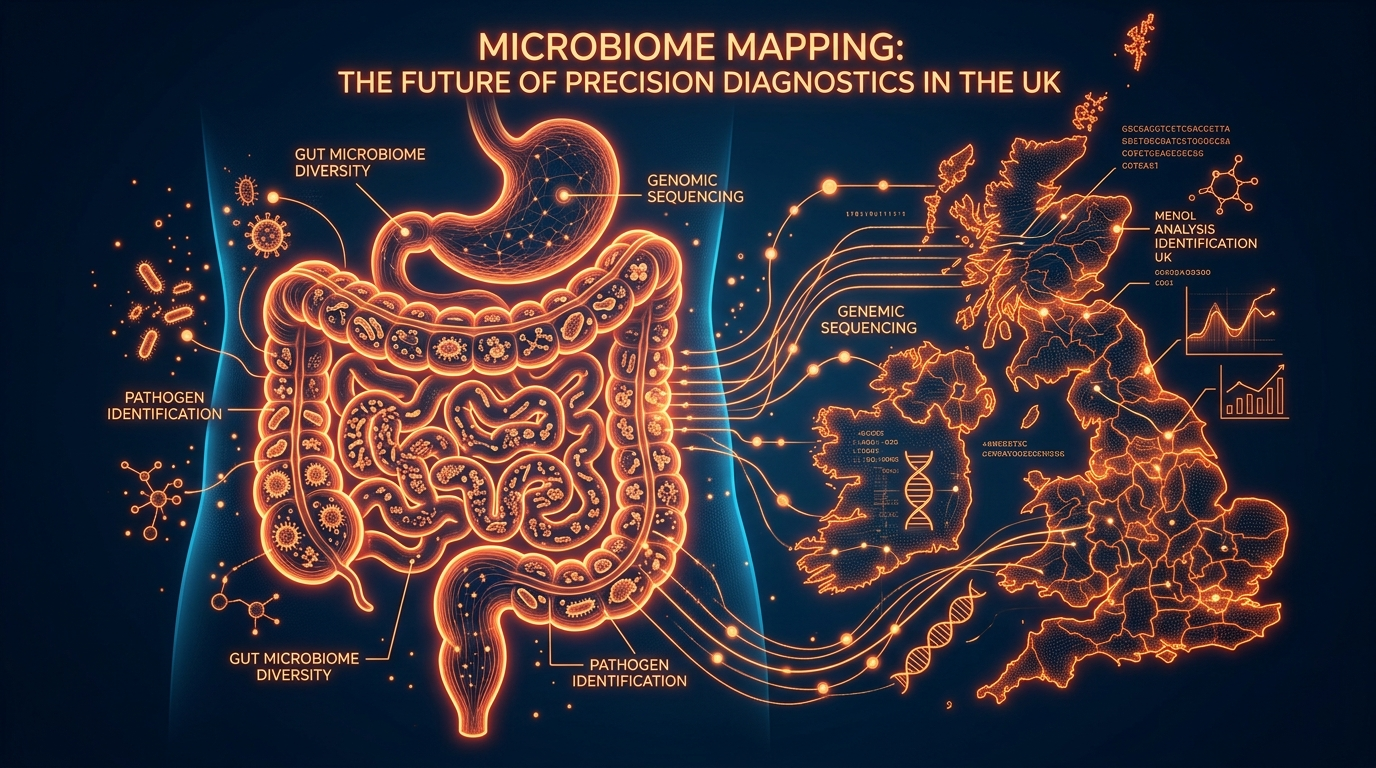
Emerging technologies in DNA sequencing allow us to look beyond simple overgrowth and into the specific species involved. This precision data is set to revolutionize how UK practitioners approach small intestinal health.
Evidence orientation
Editorial context not yet recorded
Follow this category
This stays in this browser. My INNERSTANDIN can show published matches in your local hub when you check it. It does not send email, push, or alert notifications.
Local learning review
A private browser aid for revisiting ideas. It is not an alert or a health recommendation.
Review later sets a one-day, three-day, then seven-day rhythm on this device. Choose it only when you want to revisit this article.
Overview
The landscape of gastroenterology is undergoing a seismic shift, moving away from the blunt-force trauma of broad-spectrum antibiotics and rudimentary diagnostic tools toward a sophisticated, data-driven era of precision medicine. At the heart of this revolution lies Microbiome Mapping. For decades, the medical establishment viewed the small intestine as a mere conduit for nutrient absorption, diagnosing its dysfunction through the narrow lens of "overgrowth"—a term that implies a simple quantitative excess of bacteria. However, emerging DNA sequencing technologies have revealed that the reality is far more complex. It is not merely a question of how much bacteria is present, but which specific strains are colonising the delicate mucosal architecture of the small bowel.
The small intestine, traditionally a "black box" due to its relative inaccessibility compared to the colon, is now being illuminated by high-throughput sequencing. In the United Kingdom, where digestive complaints account for a staggering proportion of GP consultations, the limitations of the standard Hydrogen Breath Test (HBT) are becoming impossible to ignore. Microbiome mapping offers a way out of the cycle of chronic bloating, brain fog, and malabsorption by providing a granular, species-level blueprint of the internal ecosystem. This is the transition from "Small Intestinal Bacterial Overgrowth" (SIBO) as a monolithic diagnosis to a multifaceted understanding of Small Intestinal Dysbiosis.
By leveraging technologies such as 16S rRNA sequencing and Whole Genome Shotgun (WGS) metagenomics, UK practitioners can now identify the presence of opportunistic pathogens, the depletion of commensal keystone species, and the functional capacity of the microbiome to produce metabolites—both beneficial (like short-chain fatty acids) and detrimental (like hydrogen sulphide or lipopolysaccharides). This article serves as a foundational guide for the modern researcher and the proactive patient, detailing why microbiome mapping is the only viable path forward for precision diagnostics in British clinical practice.
Statistics from the British Society of Gastroenterology suggest that functional dyspepsia and IBS-like symptoms affect up to 20% of the UK population, yet a significant percentage of these patients remain undiagnosed or poorly managed due to antiquated testing protocols.
##
The Biology — How It Works
To understand microbiome mapping, one must first appreciate the shift from culture-dependent to culture-independent microbiology. Traditionally, identifying bacteria required growing them in a petri dish. However, over 99% of the microbes residing in the human gut are anaerobic and cannot survive exposure to oxygen, making them impossible to culture in a laboratory setting. Microbiome mapping bypasses this limitation by looking directly at the genetic material (DNA) of the organisms.
16S rRNA Sequencing: The Phylogenetic Signature
The "gold standard" for broad taxonomic identification is 16S rRNA sequencing. This method targets a specific region of the bacterial genome—the 16S ribosomal RNA gene. This gene is present in all bacteria but contains "hypervariable regions" that act like biological barcodes. By sequencing these barcodes, researchers can categorise every bacterium in a sample into its respective genus and species.
In the context of the small intestine, this allows us to see beyond "overgrowth." We can now identify whether the "overgrowth" is dominated by Klebsiella, Escherichia coli, or Enterococcus. This distinction is critical because different species produce different metabolic by-products and elicit different immune responses. A Klebsiella dominance, for example, is often associated with high levels of histamine production, leading to systemic symptoms that a simple breath test would never explain.
Shotgun Metagenomics: The Functional Blueprint
While 16S rRNA tells us who is there, Shotgun Metagenomics tells us what they are doing. This technology sequences all the DNA in a sample, including the functional genes. It allows us to map the metabolic pathways present in the gut. Can these bacteria break down oxalates? Are they producing neurotoxic metabolites? Are they resistant to common antibiotics? Shotgun sequencing provides a high-resolution map of the microbiome’s functional potential, offering a level of detail that was previously confined to the realms of high-level academic research.
The Problem with Sampling the Small Intestine
One of the primary challenges in the UK’s diagnostic landscape is that most microbiome maps are based on stool samples. While stool is an excellent proxy for the colon, it does not always accurately reflect the small intestine. The small intestine is a high-flow environment with a much lower microbial density than the colon. However, the emergence of capsule-based sampling and advanced bioinformatic algorithms now allows for "computational deconvolution," where the unique signatures of small intestinal residents can be teased out from the larger colonic data set.
##
Mechanisms at the Cellular Level
The impact of the microbiome is not confined to the lumen of the gut; it is a cellular dialogue. The epithelial lining of the small intestine is a single cell layer thick, representing the primary interface between the external world and the internal environment. This barrier is maintained by tight junctions—multiprotein complexes that regulate paracellular permeability.
The Role of Lipopolysaccharides (LPS)
When the small intestinal microbiome shifts toward a dominance of Gram-negative bacteria (such as Proteobacteria), there is an increased production of Lipopolysaccharides (LPS). These are endotoxins found in the outer membrane of these bacteria. When the gut barrier is compromised—a state often triggered by dysbiosis—LPS can "leak" into the bloodstream. This triggers a systemic inflammatory response via Toll-Like Receptor 4 (TLR4) on immune cells. This cellular mechanism explains why small intestinal issues often manifest as "brain fog," joint pain, and chronic fatigue; it is a state of metabolic endotoxaemia.
The Migrating Motor Complex (MMC) and Microbial Stasis
At a mechanical level, the small intestine relies on the Migrating Motor Complex (MMC)—a "cleansing wave" of electromechanical activity that sweeps through the intestine during fasting. This wave is controlled by the enteric nervous system and the hormone motilin. In a healthy state, the MMC prevents bacteria from migrating upwards from the colon.
Microbiome mapping has revealed that certain species, particularly those that produce high levels of hydrogen or methane, can physically inhibit the MMC. Methane-producing archaea, such as Methanobrevibacter smithii, act as local anaesthetics to the gut wall, slowing transit time and creating a feedback loop where stasis leads to further overgrowth. This cellular and mechanical interplay is why a "one-size-fits-all" approach to SIBO usually fails; without identifying the specific microbial inhibitor of the MMC, recurrence is almost guaranteed.
Secretory IgA and Mucosal Immunity
The small intestine is the largest immune organ in the body, housing the majority of the Gut-Associated Lymphoid Tissue (GALT). Microbiome mapping assesses the health of this system by proxy, looking at the diversity of species that stimulate the production of Secretory IgA (sIgA). sIgA is the first line of defence, coating the gut lining and preventing pathogens from adhering to the epithelial cells. A mapped microbiome that shows low diversity often correlates with low sIgA, leaving the host vulnerable to further environmental insults and chronic infections.
##
Environmental Threats and Biological Disruptors
The modern UK resident exists in an environment that is fundamentally hostile to a healthy microbiome. The "hygiene hypothesis" has long suggested that our overly sterile environments contribute to immune dysfunction, but the reality is more insidious. It is not just a lack of "good" bacteria; it is the active destruction of the ones we have by external chemical agents.
Glyphosate and the Shikimate Pathway
Glyphosate, the primary ingredient in many herbicides used across British agriculture, is a significant biological disruptor. While manufacturers argue that glyphosate is safe for humans because we lack the shikimate pathway (a metabolic route used by plants), the bacteria in our small intestine do possess this pathway. Exposure to glyphosate through conventionally grown wheat and oats acts as a continuous, low-dose antibiotic, selectively killing off beneficial species while allowing pathogenic, glyphosate-resistant strains to flourish. This "selective pressure" is a primary driver of the dysbiosis we see in modern mapping reports.
The PPI Epidemic
In the UK, Proton Pump Inhibitors (PPIs) are among the most frequently prescribed medications. By suppressing stomach acid, these drugs remove the first chemical barrier against ingested pathogens. Stomach acid is essential for sterilising food and for triggering the release of pancreatic enzymes. Without this acidic "gatekeeper," the small intestine is inundated with oral and environmental bacteria that would otherwise be neutralised. Mapping often shows a high prevalence of oral-origin bacteria (like Porphyromonas gingivalis) in the small intestinal signatures of long-term PPI users.
Microplastics and Biofilms
Emerging research suggests that microplastics—now ubiquitous in the UK water supply and food chain—can act as "scaffolding" for the formation of pathogenic biofilms. A biofilm is a protective slime layer that bacteria secrete to shield themselves from the host immune system and antibiotics. Traditional diagnostics cannot detect biofilms, but microbiome mapping can identify the specific "biofilm-forming" species present, such as Pseudomonas aeruginosa. This information is vital for practitioners, as it dictates the need for specific biofilm-disrupting agents before any antimicrobial therapy can be effective.
Over 6.5 million people in the UK are currently prescribed PPIs, many for years beyond the recommended short-term use, fundamentally altering their small intestinal pH and microbial composition.
##
The Cascade: From Exposure to Disease
The progression from a healthy small intestine to chronic systemic disease is a multi-stage cascade that often begins years before a clinical diagnosis is made. Microbiome mapping allows us to intervene at the early stages of this cascade, rather than waiting for end-stage pathology.
Phase 1: The Initial Insult
The cascade typically begins with an environmental insult—be it a course of broad-spectrum antibiotics, a bout of food poisoning (post-infectious SIBO), or chronic stress. This insult disrupts the microbial balance and impairs the Migrating Motor Complex.
Phase 2: Microbial Shift and Fermentation
As the "cleansing wave" fails, bacteria begin to accumulate in the small intestine. They ferment undigested carbohydrates, producing gases (hydrogen, methane, hydrogen sulphide). This leads to the characteristic bloating and abdominal pain. At this stage, a patient might receive a generic "IBS" diagnosis from an NHS GP.
Phase 3: Barrier Failure and Endotoxaemia
As the dysbiosis persists, the toxic by-products (LPS, ethanol, D-lactate) begin to damage the tight junctions. The gut becomes "leaky." This is the critical turning point where local gut issues become systemic problems. The immune system is now in a state of constant "red alert" as it deals with the influx of foreign particles into the bloodstream.
Phase 4: Systemic Manifestation and Autoimmunity
The final stage of the cascade is the development of extra-intestinal disease. This often occurs via molecular mimicry, where the immune system, confused by the constant presence of bacterial proteins in the blood, begins to attack the body’s own tissues. There is now a strong body of evidence linking small intestinal dysbiosis to:
- Hashimoto’s Thyroiditis: Driven by cross-reactivity with bacterial proteins.
- Restless Leg Syndrome (RLS): Linked specifically to iron malabsorption and inflammation caused by SIBO.
- Rosacea and Acne: The "gut-skin axis" in action, where small intestinal inflammation manifests as cutaneous eruptions.
- Fibromyalgia: Where systemic endotoxaemia lowers the pain threshold and induces muscle mitochondrial dysfunction.
##
What the Mainstream Narrative Omits
The current UK medical narrative surrounding SIBO and gut health is tragically reductive. The standard approach—breath testing followed by a 2-week course of Rifaximin—is a "sticking plaster" solution that fails to address the underlying ecological imbalance.
The Archaea and Fungi Oversight
Most mainstream diagnostics focus exclusively on bacteria. However, microbiome mapping has revealed that many "SIBO" cases are actually SIFO (Small Intestinal Fungal Overgrowth) or a dominance of Archaea. Fungi like Candida albicans and archaea like Methanobrevibacter respond very differently to treatment than bacteria do. Rifaximin, the primary antibiotic used for SIBO, has no effect on fungi and limited effect on methane-producing archaea. Without mapping, the practitioner is essentially shooting in the dark.
The Importance of Diversity Metrics
The mainstream narrative focuses on "getting rid of the bad." Precision diagnostics, however, emphasise "restoring the good." Microbiome mapping provides a Shannon Diversity Index—a mathematical measure of the richness and evenness of the microbial community. Research consistently shows that low microbial diversity is a better predictor of disease than the presence of any single pathogen. Traditional SIBO treatments often further reduce diversity, leading to a "scorched earth" effect where the patient feels better for a month, only for the symptoms to return with greater intensity as opportunistic pathogens recolonise the vacant niche.
The Genetic Predisposition (HLA-DQ)
The mainstream narrative rarely discusses the host’s genetic susceptibility. Some individuals are genetically predisposed to have a more "leaky" gut or a less efficient immune response to LPS. Microbiome mapping, when combined with genomic testing, allows for a truly personalised approach. For example, a patient with certain HLA-DQ variants may require a much more aggressive mucosal repair protocol than a patient without those variants, even if their microbiome maps look similar.
##
The UK Context
The United Kingdom presents a unique set of challenges and opportunities for microbiome mapping. The NHS, while a bastion of acute care, is notoriously slow to adopt functional diagnostic tools. The "Postcode Lottery" of UK healthcare means that access to advanced gastroenterological testing varies wildly depending on where a patient lives.
The NHS vs. Private Functional Medicine
In the current UK system, the NHS typically offers gastroscopy or colonoscopy—procedures that are excellent for detecting structural issues like ulcers or cancer but are useless for detecting microbial dysbiosis. The Hydrogen Breath Test is available in some NHS trusts, but it has a high rate of false negatives (up to 30%) and false positives.
Consequently, the burden of precision diagnostics has fallen to the private sector. UK-based laboratories are now offering some of the most advanced microbiome mapping services in the world, utilising British-developed bioinformatic pipelines. This has created a two-tier system where those who can afford private testing receive personalised data, while those on the NHS are often cycled through various antacids and antidepressants for what is essentially a microbial issue.
The British Diet and the "UK Microbiome"
The British diet, notoriously high in ultra-processed foods (UPFs), has a specific impact on the UK microbiome. Research from the ZOE Health Study (a major UK-based initiative) has shown that the average British microbiome is significantly depleted in Faecalibacterium prausnitzii, a key anti-inflammatory bacterium. This depletion is directly linked to the low fibre intake common in the UK. Precision diagnostics allow us to see exactly how the British environment is "hollowing out" our internal biodiversity.
The Regulatory Landscape
The UK’s exit from the European Union has also impacted the diagnostic landscape. While it allows for faster approval of certain medical devices and tests, it has also complicated the sharing of data and samples with European laboratories. However, this has spurred the growth of a robust, domestic UK biotech sector focused on gut health, making the UK a global hub for microbiome research.
##
Protective Measures and Recovery Protocols
The ultimate goal of microbiome mapping is to move from data to action. A map is merely a "photograph" of a moment in time; the "film" is the protocol that follows. A precision-based recovery protocol must be phased and personalised.
Phase 1: Preparation and Biofilm Disruption
Before introducing antimicrobials, the terrain must be prepared. This involves using biofilm disruptors (such as N-Acetyl Cysteine or bismuth-based compounds) to expose the hidden pathogens. In this phase, we also support the liver and gallbladder, ensuring that bile flow—the body’s natural detergent for the small intestine—is optimal.
Phase 2: Targeted Antimicrobial Therapy
Using the microbiome map, we select agents that target the specific species found.
- If Hydrogen Sulphide producers are high: We use bismuth and molybdenum.
- If Methane producers (Archaea) are high: We combine Allicin (from garlic) with Oregano oil or Neem.
- If Fungal overgrowth is present: We use Caprylic acid and Pau d’Arco.
This is a "sniper" approach rather than the "grenade" approach of broad-spectrum antibiotics.
Phase 3: The "Replace" Phase
This phase focuses on replacing what the body is missing. This might include digestive enzymes, betaine HCl (for stomach acid), and bile salts. The goal is to restore the chemical environment of the small intestine so that it no longer invites overgrowth.
Phase 4: Reinnoculation and Diversity Building
This is where the mainstream "just take a probiotic" advice usually fails. Probiotics should be chosen based on the mapping data. If a patient is already high in Lactobacillus, giving them a standard Lactobacillus-based probiotic will worsen their symptoms. Instead, we use Spore-based probiotics (Bacillus species) which are better suited for the small intestinal environment, and we focus on "prebiotic" fibres that selectively feed the missing commensal species identified on the map.
Phase 5: The Prokinetic and Vagus Nerve Support
The final and most crucial step for the UK patient is to prevent recurrence. This requires supporting the Migrating Motor Complex. This is achieved through:
- Natural Prokinetics: Ginger, 5-HTP, and Iberogast.
- Intermittent Fasting: Allowing at least 4 hours between meals to let the MMC complete its cycle.
- Vagus Nerve Stimulation: Cold exposure, deep breathing, or gargling, which activates the parasympathetic nervous system—the "rest and digest" mode essential for gut motility.
##
Summary: Key Takeaways
The transition to microbiome mapping represents the end of the "Dark Ages" for small intestinal health in the UK. We are moving toward a future where "IBS" is no longer a catch-all term for "we don't know what's wrong," but a starting point for deep genetic investigation.
- Precision over Quantity: SIBO is not just "too many bacteria" but a specific dysbiotic shift. Mapping identifies the exact species involved, allowing for targeted treatment.
- DNA is the Key: 16S rRNA and Shotgun Metagenomics provide a level of detail that breath tests and cultures cannot match, revealing the functional capacity and antibiotic resistance of the microbiome.
- The Systemic Connection: Small intestinal health is the linchpin of systemic health. Endotoxaemia (LPS leakage) is the primary driver behind modern epidemics of brain fog, fatigue, and autoimmunity.
- Environmental Context: The UK’s reliance on PPIs and ultra-processed foods, combined with glyphosate exposure, has created a "perfect storm" for small intestinal dysfunction.
- A Phased Recovery: Successful treatment requires more than just killing bacteria. It requires biofilm disruption, prokinetic support, and a data-driven reinnoculation strategy.
The future of UK diagnostics lies in the hands of the practitioners and researchers who embrace this technology. By mapping the microbiome, we are not just treating symptoms; we are decoding the very language of human health. The "black box" of the small intestine is finally open, and the data within it holds the key to a revolution in British public health.
This article is provided for informational and educational purposes only. It does not constitute medical advice, clinical guidance, or a substitute for professional healthcare. Information reflects cited research at time of publication. Always consult a qualified healthcare professional before acting on any health information.
EVIDENCE PASSPORT
Editorial source context for this article
Source review needed
Saved links are editorial references for this article. They may support specific claims rather than every sentence. Open and assess each source in context. This passport does not independently verify them.
Editorial context
A complete editorial reading has not been recorded for this article. Source links remain available for you to open and assess directly.
Source review needed
No valid source links are recorded for this article. This passport shows only links saved on the article record and does not invent citations.
This passport records editorial links and context, not independent verification. Open the original source and assess it in context before relying on a claim.
Medical Disclaimer
The information in this article is for educational purposes only and does not constitute medical advice, diagnosis, or treatment. Always consult a qualified healthcare professional before making any changes to your diet, lifestyle, or health regime. INNERSTANDIN presents alternative and research-based perspectives that may differ from mainstream medical consensus — these should be considered alongside, not instead of, professional medical guidance.
Read Full DisclaimerContinue the thread
Keep this question moving.
Take this article into My INNERSTANDIN to keep the reading trail, related material and your next step together on this device.
Explore this in the Body Map
See where this hits your biology. Interactive anatomy, threats, and protective protocols.
Dig deeper in the Library
Free, longform PDF volumes that go beyond headlines into mechanisms and references.