
Microbiome-Pain Axis: How Gut Dysbiosis Dictates Systemic Inflammation
Updated May 2026
The health of the gut microbiota directly influences the threshold of the body's inflammatory response through the vagus nerve. Evidence suggests that systemic pain conditions often originate from intestinal permeability rather than structural injury.
Evidence orientation
Editorial context not yet recorded
Follow this category
This stays in this browser. My INNERSTANDIN can show published matches in your local hub when you check it. It does not send email, push, or alert notifications.
Local learning review
A private browser aid for revisiting ideas. It is not an alert or a health recommendation.
Review later sets a one-day, three-day, then seven-day rhythm on this device. Choose it only when you want to revisit this article.
Overview
The traditional medical paradigm regarding chronic pain is currently undergoing a radical, albeit quiet, revolution. For decades, the clinical approach to persistent physical suffering has been stubbornly reductionist, operating under the assumption that if a patient experiences pain in their lower back, joints, or myofascial tissue, the source of that pain must reside within the structural integrity of those specific sites. We have been conditioned to view the human body as a mechanical assembly of parts—hinges, pulleys, and levers—where pain signifies a localised mechanical failure. However, as we delve deeper into the burgeoning field of the Microbiome-Pain Axis, we are discovering that the "smoke" of systemic inflammation often originates from a "fire" burning not in the joints or muscles, but within the complex ecological landscape of the human gastrointestinal tract.
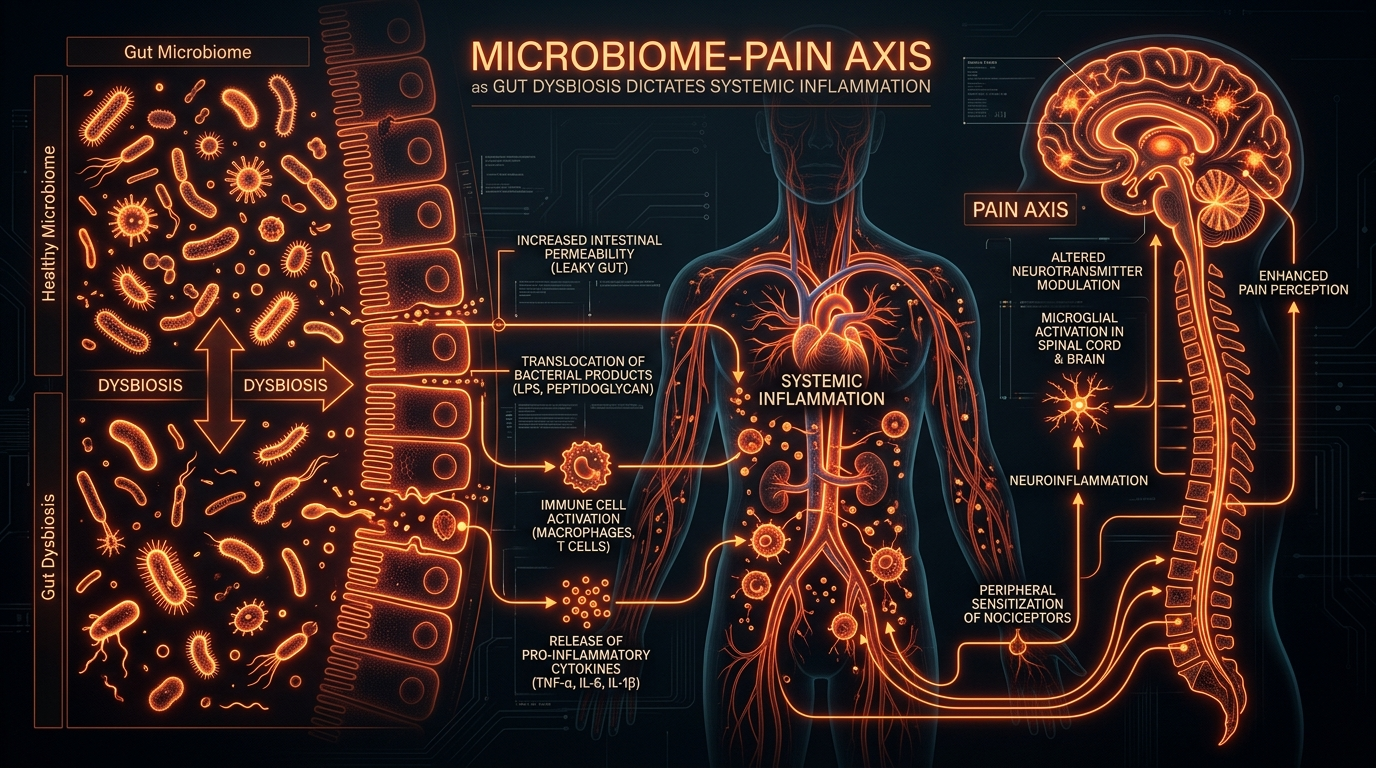
The human gut is home to approximately 100 trillion microorganisms, a diverse assembly of bacteria, fungi, viruses, and archaea that constitute the microbiota. Far from being passive passengers, these microbes function as a collective endocrine organ, a primary immune regulator, and a critical mediator of neurological signaling. When this delicate ecosystem falls into a state of dysbiosis—an imbalance between beneficial and pathogenic species—the consequences are not merely digestive. Dysbiosis triggers a cascade of systemic events that alter the body’s fundamental inflammatory set-point.
This article explores the profound biological reality that the health of your gut microbiota dictates your threshold for pain. We are moving beyond the era of treating symptoms with localized analgesics and entering an era where we recognise that intestinal permeability (commonly referred to as "Leaky Gut") is the primary driver of chronic, systemic inflammatory conditions. By understanding the bi-directional communication between the gut and the central nervous system (CNS), facilitated largely by the vagus nerve and circulating metabolites, we can finally address the root cause of the modern chronic pain epidemic.
UK STATISTIC: According to the British Pain Society, approximately 28 million adults in the UK are living with chronic pain, a figure that represents nearly 43% of the population. Despite massive pharmaceutical intervention, these numbers continue to rise, suggesting a fundamental misunderstanding of the condition's aetiology.
##
The Biology — How It Works
To understand the Microbiome-Pain Axis, one must first appreciate the Gut-Brain-Immune Triad. The gut is the only organ in the human body with its own independent nervous system, the Enteric Nervous System (ENS), often dubbed the "Second Brain." The ENS contains more than 100 million neurons—more than the spinal cord or the peripheral nervous system. This sophisticated network does not operate in isolation; it is in constant, high-speed communication with the brain via the vagus nerve, the longest cranial nerve in the body.
The Vagal Highway
The vagus nerve serves as the physical "hardwire" connecting the gut to the brain's pain-processing centres, including the thalamus and the insular cortex. Approximately 80-90% of the fibres in the vagus nerve are afferent, meaning they carry signals from the gut to the brain. When the gut environment is healthy, these signals are regulatory and calming. However, in the presence of dysbiosis, the microbiota produce pro-inflammatory metabolites and toxins that "irritate" the vagal nerve endings. This sends a constant stream of "danger" signals to the brain, effectively lowering the pain threshold and putting the central nervous system on high alert—a state known as central sensitisation.
The Microbiota as Chemical Engineers
The microorganisms in our gut are prolific chemical engineers. They metabolise the food we eat into a vast array of compounds that circulate through our bloodstream. Beneficial bacteria, such as Bifidobacterium and Lactobacillus, ferment dietary fibres into Short-Chain Fatty Acids (SCFAs), primarily butyrate, acetate, and propionate. Butyrate, in particular, is a potent anti-inflammatory agent. It strengthens the gut barrier, inhibits pro-inflammatory cytokines, and even crosses the blood-brain barrier to protect the brain from neuroinflammation.
Conversely, an overgrowth of Gram-negative pathogenic bacteria leads to an excess production of Lipopolysaccharides (LPS). LPS are powerful endotoxins found in the cell walls of these bacteria. When the gut barrier is compromised, LPS "leaks" into the systemic circulation. This condition, known as metabolic endotoxemia, is the "silent" trigger for chronic inflammation. Once in the blood, LPS acts as a systemic alarm, activating immune cells throughout the body and causing them to release a torrent of inflammatory chemicals that sensitise pain receptors (nociceptors) in distant tissues.
FACT: The gut contains 70-80% of the human body's immune cells. This makes the intestinal lining the primary interface between the external environment and our internal physiological state.
##
Mechanisms at the Cellular Level
The transition from gut dysbiosis to systemic pain occurs through specific, high-resolution cellular pathways. To address chronic pain effectively, we must look at the molecular gatekeepers of inflammation.
Zonulin and the Breach of the Fortress
The intestinal wall is a single layer of epithelial cells held together by tight junctions. These junctions act as selective gatekeepers, allowing nutrients to pass while keeping toxins and pathogens out. The protein Zonulin is the only known physiological modulator of these tight junctions. When certain triggers—such as gluten or pathogenic bacteria—cause an overproduction of Zonulin, the tight junctions "unlock," creating gaps in the intestinal wall.
This breach allows undigested food particles, pathogens, and LPS to enter the sub-epithelial space, where they encounter the GALT (Gut-Associated Lymphoid Tissue). The immune system immediately identifies these translocated substances as foreign invaders, initiating a massive inflammatory response. This is the birth of "Leaky Gut," the foundational event in the development of systemic pain.
Toll-Like Receptor 4 (TLR4) Activation
Once LPS and other microbial toxins enter the bloodstream, they seek out Toll-Like Receptor 4 (TLR4). TLR4 is a transmembrane protein found on the surface of immune cells, including macrophages and, crucially, microglia (the immune cells of the brain and spinal cord).
When LPS binds to TLR4, it triggers a signalling cascade that activates the NF-κB (nuclear factor kappa-light-chain-enhancer of activated B cells) pathway. This is the master switch for inflammation. Once flipped, the cell begins churning out pro-inflammatory cytokines such as:
- TNF-alpha (Tumour Necrosis Factor-alpha): A major driver of tissue destruction and pain sensitisation.
- IL-1 beta (Interleukin-1 beta): Directly increases the excitability of pain-sensing neurons.
- IL-6 (Interleukin-6): Involved in the transition from acute to chronic pain.
Microglial Priming and Central Sensitisation
In a healthy state, microglia are the "gardeners" of the brain, cleaning up debris and maintaining neural health. However, systemic inflammation caused by gut dysbiosis "primes" these microglia. Primed microglia become hypersensitive and hypertrophic. They migrate to the areas of the brain and spinal cord responsible for pain processing.
In this state, the nervous system becomes "wound up." The volume on pain signals is turned up, and the threshold for feeling pain is drastically lowered. This explains why patients with gut dysbiosis often suffer from allodynia (pain from stimuli that aren't normally painful) and hyperalgesia (exaggerated pain from mildly painful stimuli). The pain is real, but the source is a "glitch" in the central nervous system triggered by gut-derived endotoxemia.
##
Environmental Threats and Biological Disruptors
The modern world is, in many ways, an ecological minefield for the human microbiome. The precipitous rise in chronic pain conditions over the last 50 years correlates almost perfectly with the introduction of several key biological disruptors.
The Glyphosate Factor
One of the most insidious threats to gut health is Glyphosate, the active ingredient in the world’s most widely used herbicides. While marketed as safe for humans because our cells do not possess the "shikimate pathway" that glyphosate targets, our gut bacteria do possess this pathway. Glyphosate acts as a broad-spectrum antibiotic in the gut, selectively killing off beneficial species like Bifidobacteria while allowing pathogenic, LPS-producing strains like Salmonella and Clostridia to flourish. This induced dysbiosis is a primary driver of the modern "leaky gut" epidemic.
The Pharmaceutical Paradox: NSAIDs and Antibiotics
The very medications used to treat pain and infection are often the primary drivers of long-term suffering.
- Antibiotics: While life-saving in acute scenarios, a single course of broad-spectrum antibiotics can permanently alter the diversity of the microbiome, reducing the production of anti-inflammatory SCFAs.
- NSAIDs (Non-Steroidal Anti-Inflammatory Drugs): Common painkillers like ibuprofen and naproxen are notoriously damaging to the gastrointestinal lining. They inhibit prostaglandins that are necessary for maintaining the mucosal barrier, directly causing "micro-bleeding" and increased intestinal permeability. The patient takes the NSAID for back pain, the NSAID damages the gut, the gut creates more systemic inflammation, and the back pain becomes chronic. This is a vicious cycle of dependency.
Ultra-Processed Foods (UPFs) and Emulsifiers
The modern British diet is heavily reliant on Ultra-Processed Foods (UPFs). Beyond the lack of fibre, these foods contain synthetic emulsifiers (such as carboxymethylcellulose and polysorbate 80). Research has shown that these chemicals act like "detergents" in the gut, stripping away the protective mucus layer that prevents bacteria from coming into direct contact with the intestinal wall. When this mucus layer is eroded, the immune system remains in a state of perpetual activation.
ALARMING FACT: Recent data suggests that UPFs make up over 50% of the average UK household's food purchases. This shift in nutrition is directly mirrored by the skyrocketing rates of autoimmune and chronic pain disorders.
##
The Cascade: From Exposure to Disease
The journey from a disrupted microbiome to a diagnosis of a chronic pain condition like Fibromyalgia or Rheumatoid Arthritis follows a predictable, yet often ignored, cascade.
Stage 1: The Inciting Incident
It begins with an environmental "hit"—perhaps a period of high stress (which suppresses the immune system and alters gut motility), a course of antibiotics, or a diet high in processed sugars and low in polyphenols. This causes a shift in the microbial balance. Beneficial, anti-inflammatory species decline, and opportunistic, pro-inflammatory species take over.
Stage 2: The Barrier Breach
As the microbiome shifts, the production of butyrate drops. Without butyrate to fuel the colonocytes (gut cells), the intestinal lining weakens. Zonulin levels rise, tight junctions open, and the "Leaky Gut" becomes a reality. LPS and undigested proteins begin to flood the bloodstream.
Stage 3: Systemic Metabolic Endotoxemia
The liver, which acts as the body’s primary filter, becomes overwhelmed by the sheer volume of toxins arriving from the portal vein. LPS escapes into the general circulation. The immune system enters a state of "low-grade systemic inflammation." This isn't the hot, red, swollen inflammation of a sprained ankle; it is a cold, invisible, chemical inflammation that permeates every tissue in the body.
Stage 4: Central Sensitisation and Tissue Priming
As these inflammatory cytokines circulate, they "prime" the nervous system. At the same time, molecular mimicry may occur. This is where the immune system, confused by the foreign proteins leaking from the gut, begins to attack the body’s own tissues (e.g., the myelin sheath of nerves or the collagen in joints).
Stage 5: The Manifestation of Chronic Pain
The patient now experiences persistent pain. Because the inflammation is systemic, the pain is often diffuse. They might be diagnosed with Fibromyalgia, Chronic Fatigue Syndrome (ME/CFS), or Complex Regional Pain Syndrome (CRPS). Traditional scans (X-rays, MRIs) show no structural injury because the injury is biochemical and neurological, not mechanical.
##
What the Mainstream Narrative Omits
The mainstream medical establishment's failure to address the Microbiome-Pain Axis is not merely an oversight; it is a structural byproduct of a medical system designed for symptom management rather than root-cause resolution.
The Siloing of Medicine
In the UK's current healthcare model, specialists are sequestered into silos. A patient with chronic pain is sent to a Rheumatologist or an Orthopaedic Surgeon. A patient with digestive issues is sent to a Gastroenterologist. Rarely do these two specialists converse. The "Microbiome-Pain" link is lost in the gap between specialties. The Rheumatologist prescribes a biologic drug to suppress the immune system, never asking why the immune system is overactive in the first place. The Gastroenterologist treats the acid reflux or IBS as a localized nuisance, never considering its role in the patient’s debilitating joint pain.
The Profitability of Chronic Management
There is very little financial incentive for the "Big Pharma" industrial complex to promote gut-healing protocols. Probiotics, fermented foods, and dietary changes cannot be patented and sold at a premium. In contrast, biological drugs (TNF-alpha inhibitors) and long-term opioid prescriptions represent multi-billion-pound industries. The mainstream narrative promotes the idea that chronic pain is a "mystery" or an "inevitable part of ageing," keeping patients tethered to a lifetime of pharmaceutical intervention.
The Ignoring of "Metabolic Endotoxemia"
While the term "Leaky Gut" was once dismissed as "pseudo-science," its clinical counterpart—Increased Intestinal Permeability and Metabolic Endotoxemia—is backed by thousands of peer-reviewed studies. Yet, it remains absent from the standard diagnostic toolkit of the NHS. By ignoring the translocation of LPS, the medical establishment ignores the primary fuel for the fire of systemic inflammation.
##
The UK Context
The United Kingdom faces a unique set of challenges regarding the Microbiome-Pain Axis. The convergence of a specific dietary culture, environmental factors, and healthcare structure has created a "perfect storm" for gut-driven chronic pain.
The "British Diet" and the Fibre Gap
The average Briton consumes significantly less than the recommended 30g of fibre per day, with many struggling to even reach 15g. Fibre is the "fuel" for the beneficial bacteria that produce the anti-inflammatory butyrate. Without this fuel, the microbiome is effectively starved, leading to a loss of diversity. Furthermore, the UK has one of the highest consumptions of UPFs in Europe, leading to widespread sub-clinical gut inflammation.
The Stress of Modern Living
Psychological stress is a physical event in the gut. The "fight or flight" response diverts blood flow away from the digestive tract, increasing permeability and altering the microbial balance. In the high-stress, high-paced environment of modern Britain, the "vagal tone"—the ability of the vagus nerve to calm the body—is often severely compromised. A "low vagal tone" is a hallmark of almost every chronic pain condition.
The NHS Crisis and "Quick-Fix" Culture
The immense pressure on the NHS often results in 10-minute consultations where the easiest path is the prescription of a pill. There is no time to discuss the complexities of the microbiome, elimination diets, or the impact of environmental toxins. Consequently, millions of UK citizens are "managed" with medications that may actually be worsening their underlying gut dysbiosis.
UK FACT: Chronic pain is the leading cause of disability in the UK, costing the economy an estimated £10 billion per year in lost productivity and healthcare expenses.
##
Protective Measures and Recovery Protocols
If chronic pain is dictated by the gut, then the path to recovery must involve the restoration of the intestinal barrier and the rebalancing of the microbial ecosystem. This is not a "quick fix" but a comprehensive biological reconstruction.
1. The "Remove" Phase: Eliminating Disruptors
The first step is to remove the triggers that open the tight junctions and fuel dysbiosis.
- Glyphosate-Free/Organic Diet: Minimising exposure to pesticides is critical for allowing beneficial bacteria to recover.
- Elimination of UPFs: Remove synthetic emulsifiers, artificial sweeteners (which are highly toxic to the microbiome), and refined sugars.
- Judicious Use of NSAIDs: Switch to natural anti-inflammatories like high-dose curcumin or omega-3 fatty acids, which do not damage the gut lining.
2. The "Repair" Phase: Closing the Gates
We must provide the body with the building blocks to rebuild the mucosal barrier and the tight junctions.
- L-Glutamine: The primary fuel for the cells lining the small intestine. It is essential for "sealing" a leaky gut.
- Collagen and Bone Broth: Rich in amino acids like glycine and proline, which are necessary for structural repair of the gut wall.
- Zinc Carnosine: A specific form of zinc that has been clinically shown to heal the gastric lining and stabilise tight junctions.
3. The "Reinoculate" Phase: Diversifying the Ecosystem
Restoring diversity is about more than just a random probiotic pill.
- Fermented Foods: Incorporate traditional British fermented foods like raw sauerkraut, kefir, and kombucha. These provide "transient" beneficial bacteria that help reshape the environment.
- Diverse Fibre (The "30-Plant Rule"): Aim to eat 30 different types of plant foods per week (including herbs, nuts, and seeds) to provide a variety of prebiotics for different bacterial strains.
- Targeted Probiotics: Use specific strains like Lactobacillus rhamnosus GG or Bifidobacterium infantis, which have been shown to reduce systemic inflammation and improve pain scores.
4. The "Restore" Phase: Vagal Tone and Stress Management
Since the Microbiome-Pain Axis is bi-directional, we must address the nervous system.
- Vagal Nerve Stimulation: Techniques such as deep diaphragmatic breathing, cold water immersion (face dipping), and even humming can stimulate the vagus nerve, sending an "anti-inflammatory" signal to the gut and brain.
- Circadian Rhythm Alignment: The microbiome has its own internal clock. Eating within a consistent window (Time-Restricted Feeding) and getting morning sunlight helps synchronise the microbiota and reduces systemic inflammation.
##
Summary: Key Takeaways
The evidence is undeniable: The gut is the thermostat of human pain. When the microbiome is in a state of dysbiosis and the intestinal barrier is compromised, the body enters a state of perpetual "high alert." This systemic inflammatory environment primes the nervous system, turning minor discomforts into chronic agonies and creating pain where there is no structural injury.
"Key insights for the modern researcher and patient:"
- Pain is a Systemic Signal: Chronic pain is rarely just a local issue. It is a symptom of a systemic "glitch" often rooted in the gut.
- The Endotoxin Connection: LPS (Lipopolysaccharides) are the primary chemical triggers for the central sensitisation that characterises chronic pain.
- The Vagus Nerve is the Bridge: Physical and microbial health in the gut is communicated directly to the brain’s pain centres via the vagus nerve.
- The Environment Matters: Glyphosate, UPFs, and NSAIDs are the primary "invisible" drivers of the modern pain epidemic.
- Recovery is Possible: By sealing the gut, diversifying the microbiome, and improving vagal tone, the body's inflammatory set-point can be lowered, and the "volume" of chronic pain can be turned down—and in many cases, turned off entirely.
The era of merely masking pain with opioids and anti-inflammatories must end. We must embrace the biological reality of the Microbiome-Pain Axis and begin the work of healing the body from the inside out. True understanding of pain begins not with the nerves that feel it, but with the microbes that dictate it.
This article is provided for informational and educational purposes only. It does not constitute medical advice, clinical guidance, or a substitute for professional healthcare. Information reflects cited research at time of publication. Always consult a qualified healthcare professional before acting on any health information.
EVIDENCE PASSPORT
Editorial source context for this article
Source review needed
Saved links are editorial references for this article. They may support specific claims rather than every sentence. Open and assess each source in context. This passport does not independently verify them.
Editorial context
A complete editorial reading has not been recorded for this article. Source links remain available for you to open and assess directly.
Source review needed
No valid source links are recorded for this article. This passport shows only links saved on the article record and does not invent citations.
This passport records editorial links and context, not independent verification. Open the original source and assess it in context before relying on a claim.
Medical Disclaimer
The information in this article is for educational purposes only and does not constitute medical advice, diagnosis, or treatment. Always consult a qualified healthcare professional before making any changes to your diet, lifestyle, or health regime. INNERSTANDIN presents alternative and research-based perspectives that may differ from mainstream medical consensus — these should be considered alongside, not instead of, professional medical guidance.
Read Full DisclaimerContinue the thread
Keep this question moving.
Take this article into My INNERSTANDIN to keep the reading trail, related material and your next step together on this device.
Explore this in the Body Map
See where this hits your biology. Interactive anatomy, threats, and protective protocols.
Dig deeper in the Library
Free, longform PDF volumes that go beyond headlines into mechanisms and references.