
Microplastic Contamination: The Hidden Risk in PVC IV Bags
Updated May 2026
Environmental toxins can leach from medical-grade plastics into the infusion fluid. This article exposes the risks of phthalates and microplastics during prolonged IV therapy sessions.
Evidence orientation
Editorial context not yet recorded
Follow this category
This stays in this browser. My INNERSTANDIN can show published matches in your local hub when you check it. It does not send email, push, or alert notifications.
Local learning review
A private browser aid for revisiting ideas. It is not an alert or a health recommendation.
Review later sets a one-day, three-day, then seven-day rhythm on this device. Choose it only when you want to revisit this article.
Overview
In the modern landscape of biohacking, functional medicine, and clinical recovery, Intravenous (IV) Therapy has emerged as the gold standard for nutrient delivery. By bypassing the digestive tract, clinicians can achieve 100% bioavailability of vitamins, minerals, and antioxidants. However, a profound and systemic paradox lies at the heart of this medical advancement. While the fluid within the bag is designed to restore cellular vitality, the vessel itself—the Polyvinyl Chloride (PVC) bag—may be surreptitiously introducing some of the most pervasive toxins known to modern science: microplastics and endocrine-disrupting phthalates.
For decades, the medical community has operated under the assumption that "medical-grade" plastics are inert. We have been led to believe that the materials used to deliver life-saving fluids are stable and non-reactive. This article exposes the unsettling reality: PVC is a fundamentally unstable polymer. Through a process known as leaching, and the physical degradation of the bag’s internal surface, patients are being inadvertently "infused" with microscopic shards of plastic and chemical softeners that bypass the body's primary natural defences.
The scope of this contamination is not merely a matter of trace impurities; it represents a direct violation of the biological integrity of the patient. As we delve into the molecular mechanisms of this contamination, we must confront the hidden risk of the very tools we use for healing.
Key Fact: Recent pilot studies have detected microplastics in human blood for the first time, with PET, polyethylene, and polymers associated with medical equipment appearing at alarming frequencies.
The Biology — How It Works
To understand why PVC IV bags are problematic, one must first understand the chemistry of the material. PVC, or polyvinyl chloride, is naturally a rigid, brittle plastic. To make it flexible enough for use as a medical bag that can be squeezed, hung, and transported, manufacturers must add plasticisers.
The Vulnerability of PVC Chemistry
Unlike many other polymers, the plasticisers in PVC—most notably DEHP (Diethylhexyl phthalate)—are not chemically bonded to the PVC polymer chain. Instead, they are physically "embedded" between the molecules, acting as a lubricant to allow the chains to slide past one another. Because there is no covalent bond, these molecules are highly prone to migration.
When an aqueous solution—whether it is saline, dextrose, or a complex nutrient cocktail—comes into contact with the inner wall of a PVC bag, a concentration gradient is established. The phthalates move from the area of high concentration (the plastic) to the area of low concentration (the infusion fluid).
Factors Accelerating Leaching
The rate of this contamination is not static. Several biological and physical variables accelerate the transition of toxins from the bag to the patient:
- Lipid Content: Many IV treatments, such as Total Parenteral Nutrition (TPN) or certain anaesthetics, contain lipids. Phthalates are lipophilic (fat-loving), meaning they migrate into fatty solutions at significantly higher rates.
- Temperature: The "warming" of IV fluids, often done to prevent patient hypothermia during surgery or long infusions, increases the kinetic energy of the molecules, facilitating faster leaching.
- pH Levels: High-dose Vitamin C (ascorbic acid) infusions, common in functional medicine, alter the pH of the solution, which can increase the degradation of the plastic surface.
- Storage Time: The longer a fluid sits in a PVC container, the higher the cumulative load of both chemical leachates and physical microplastic fragments.
The Emergence of Microplastics (MPs) and Nanoplastics (NPs)
Beyond chemical leaching, we are now identifying the physical degradation of the bag. Through manufacturing friction, sterilisation processes (such as gamma irradiation or autoclaving), and the simple act of "spiking" the bag with a needle, microscopic fragments of the PVC itself are sheered off into the fluid.
These Microplastics (particles <5mm) and Nanoplastics (particles <1µm) represent a new frontier in toxicology. Because they are injected directly into the venous system, they bypass the gut barrier and the skin, which typically filter out such contaminants in the environment.
Mechanisms at the Cellular Level
Once these plastic particles and phthalates enter the bloodstream, they do not remain inert. They interact with the most fundamental components of human biology, triggering a cascade of cellular dysfunction.
Endocrine Disruption and Receptor Mimicry
Phthalates are classic endocrine-disrupting chemicals (EDCs). Their molecular structure is hauntingly similar to natural hormones, particularly oestrogen.
- The Oestrogen Receptor (ER): DEHP and its metabolites can bind to and activate oestrogen receptors, sending "false signals" to the cell. This can lead to the down-regulation of natural hormone production and the promotion of hormone-sensitive cancers.
- PPAR Activation: Phthalates also interact with Peroxisome Proliferator-Activated Receptors (PPARs), which regulate lipid metabolism and insulin sensitivity. Disruption here is a primary driver of the "obesogen" effect, where plastic exposure correlates with metabolic syndrome.
Mitochondrial Dysfunction
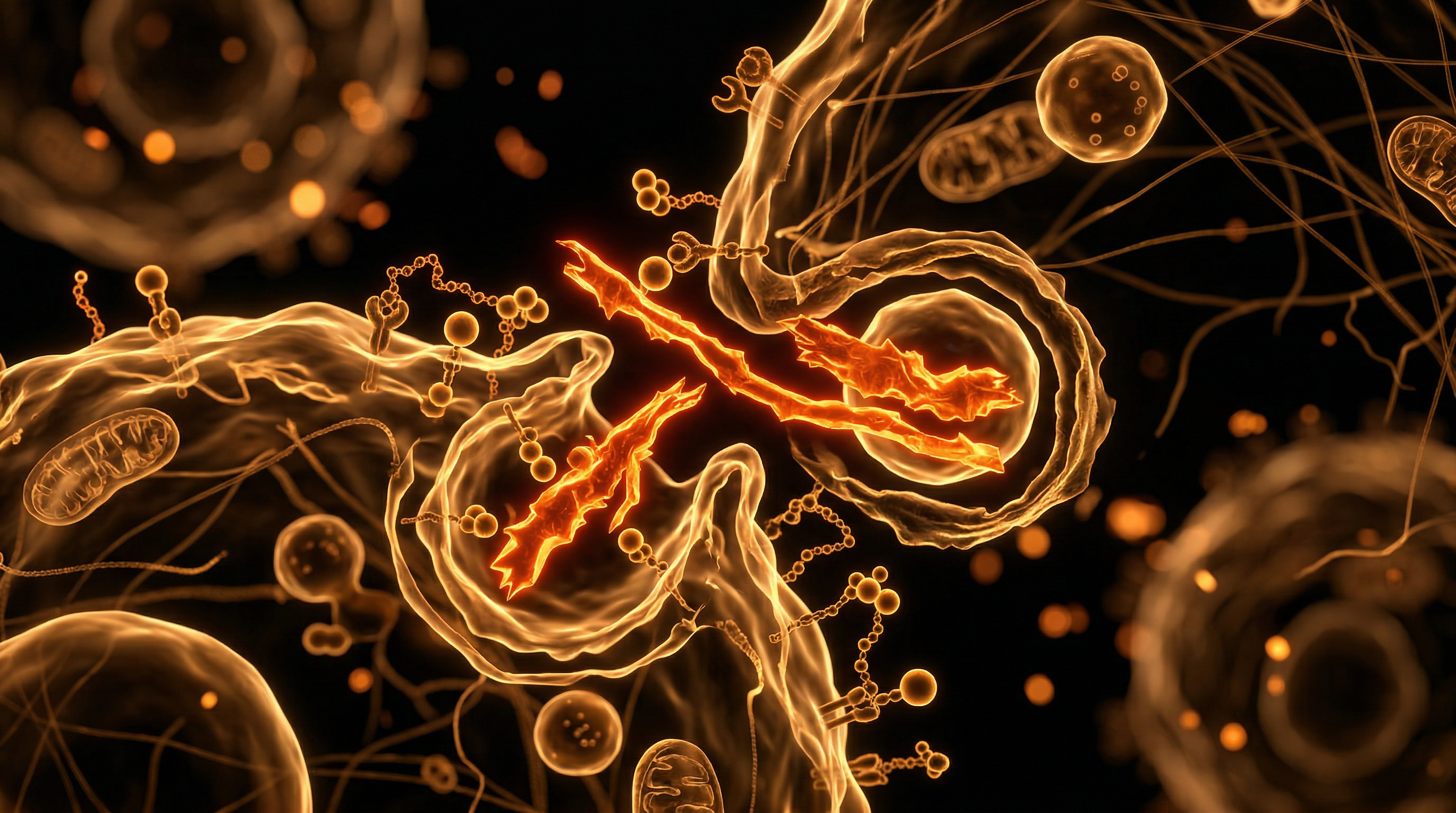
The mitochondria are the powerhouses of our cells, responsible for ATP production. Research indicates that nanoplastics can penetrate the double membrane of the mitochondria.
- Physical Obstruction: The presence of a physical plastic bead within the mitochondrial matrix disrupts the electron transport chain.
- Oxidative Stress: The cell identifies the plastic as a foreign invader, triggering the production of Reactive Oxygen Species (ROS). This leads to "oxidative bursting," which damages mitochondrial DNA (mtDNA) and leads to cellular senescence or apoptosis (programmed cell death).
The Role of Macrophages and Phagocytosis
The immune system's primary response to foreign particles in the blood is the activation of macrophages. These "scavenger cells" attempt to engulf (phagocytose) the microplastics.
- However, because PVC and other plastics are non-biodegradable, the macrophage cannot break the particle down.
- This results in "frustrated phagocytosis," where the macrophage continually releases inflammatory cytokines (such as IL-6 and TNF-alpha) in a futile attempt to destroy the plastic.
- This creates a state of chronic systemic inflammation, often referred to as "inflammageing."
Statistical Note: In neonatal intensive care units, infants receiving fluids via PVC tubing have been found to have phthalate metabolites in their urine at levels 10 to 20 times higher than those in the general population.
Environmental Threats and Biological Disruptors
Microplastics in IV bags do not exist in a vacuum. They act as "Trojan Horses" for other environmental threats, a phenomenon known as the vector effect.
Adsorption of Heavy Metals and Toxins
Plastic particles have a high surface area and are often hydrophobic. In the environment of a manufacturing plant or during the storage phase, these particles can adsorb (stick to) other toxins.
- Lead and Cadmium: Often used as stabilisers in industrial plastics, these can be present on the surface of microplastics.
- Bacterial Endotoxins: Microplastics can provide a "scaffold" for the growth of bacterial biofilms. Even if the fluid is "sterile," the presence of non-living bacterial fragments (endotoxins) on plastic shards can trigger a massive immune response, leading to unexplained "IV reactions" or shivering during therapy.
The Synergy of the "Chemical Soup"
The risk of PVC IV bags is compounded by the fact that patients are rarely exposed to just one toxin. The "cocktail effect" occurs when phthalates, microplastics, and the active pharmaceutical ingredients (APIs) interact. For instance, certain chemotherapy drugs may become more toxic to healthy cells when they "hitch a ride" on a nanoplastic particle, which allows them to penetrate tissues they would otherwise not enter, such as the blood-brain barrier.
Microplastics as Enduring Bio-Persistent Pollutants
Unlike biological toxins which the liver can eventually break down (metabolise) and the kidneys can excrete, microplastics are bio-persistent. Once a PVC fragment is lodged in the splenic tissue or the hepatic portal system, it may remain there for years, if not decades. The body's inability to clear these "synthetic stones" leads to the formation of granulomas—clusters of immune cells that wall off the foreign material, creating permanent sites of internal irritation.
The Cascade: From Exposure to Disease
The journey from a single IV session to a chronic disease state is a process of cumulative biological erosion. While the body is resilient, the direct-to-blood nature of IV-induced plastic contamination bypasses our evolutionary safeguards.
Step 1: Vascular Endothelial Damage
The first point of contact is the endothelium—the thin layer of cells lining the blood vessels. Microplastics, with their jagged edges (often visible only under electron microscopy), can cause physical micro-trauma to these cells. This triggers the release of von Willebrand factor and other pro-clotting agents, potentially increasing the risk of micro-thrombi (tiny blood clots).
Step 2: Hepatic Overload
The liver is the primary organ tasked with filtering the blood. Phthalates like DEHP are processed in the liver into MEHP (Mono-ethylhexyl phthalate), which is significantly more toxic than the parent compound.
- Continuous exposure during prolonged IV therapy (such as in chronic illness protocols) can lead to Non-Alcoholic Fatty Liver Disease (NAFLD) as the liver's metabolic pathways are diverted to manage plastic-induced oxidative stress.
Step 3: Translocation to Vital Organs
Nanoplastics are small enough to undergo translocation. This means they can move from the bloodstream into:
- The Brain: Passing the blood-brain barrier, leading to neuroinflammation and potential links to neurodegenerative diseases like Alzheimer's.
- The Placenta: In pregnant patients, these particles have been documented crossing into the foetal circulation, potentially affecting the development of the unborn child.
- The Heart: Studies have located plastic particles embedded in heart tissue, where they may interfere with electrical signalling and contribute to arrhythmias.
Step 4: Epigenetic Alterations
Long-term exposure to the phthalates found in PVC bags can lead to epigenetic changes. These are not mutations in the DNA itself, but changes in how genes are expressed. Plastic-induced stress can "silence" protective anti-inflammatory genes and "turn on" pro-inflammatory ones, creating a biological "memory" of the toxic exposure that persists even after the IV therapy has ceased.
What the Mainstream Narrative Omits
If the risks of PVC and phthalates are so well-documented in the scientific literature, why are they still the industry standard? The answer lies in a combination of economic inertia, regulatory capture, and a "reductionist" view of patient safety.
The "Dose Makes the Poison" Fallacy
Mainstream toxicology often relies on the 16th-century Paracelsian principle that "the dose makes the poison." Regulators argue that the amount of DEHP leaching from a single bag is below the "No Observed Adverse Effect Level" (NOAEL).
- The Omission: This ignores the non-monotonic dose-response of endocrine disruptors. EDCs often have more profound effects at extremely low doses than at high doses, because they interfere with delicate hormonal signaling that operates at parts-per-trillion levels.
The Cost of Innovation
PVC is incredibly cheap to produce. Transitioning the entire global medical infrastructure to PVC-free (such as EVA or Polyolefin) or glass systems would require billions of pounds in investment. The medical industrial complex prioritises "sterility" and "convenience" (unbreakable bags) over the long-term "bio-compatibility" of the delivery system.
Regulatory Lag
The European Medicines Agency (EMA) and the FDA have issued "guidelines" to limit DEHP in certain populations (like neonates), but they have stopped short of a total ban for adults. This creates a false sense of security for the general public, assuming that if it were truly dangerous, it would be banned.
Exposing the Truth: Manufacturers are not required to list "microplastics" as an ingredient or contaminant on IV bags, as they are considered "processing by-products" rather than intentional additives. This allows the industry to avoid transparency regarding the particulate load of their products.
The UK Context
In the United Kingdom, the National Health Service (NHS) is one of the largest consumers of PVC medical products in the world. While the UK has been a leader in certain areas of environmental health, the medical transition away from PVC has been sluggish.
NHS Standards and Sustainability
The NHS has committed to a "Net Zero" target, which includes reducing plastic waste. However, the focus has largely been on disposal (recycling) rather than the biological impact of the plastics on patients.
- The Procurement Gap: NHS procurement often prioritises the most cost-effective tenders. In many cases, this means purchasing PVC-based bags from global suppliers where DEHP is still the primary plasticiser.
- British Research Contributions: Interestingly, some of the most pioneering research into microplastics in human blood has come from European and British collaborations. British scientists at institutions like the University of Hull have been vocal about the "ubiquity" of these particles in human tissues, yet these findings are slow to translate into hospital bedside policy.
The MHRA's Stance
The Medicines and Healthcare products Regulatory Agency (MHRA) follows a risk-benefit analysis. For acute, life-saving interventions (such as trauma surgery), the risk of plastic exposure is deemed acceptable compared to the risk of death. The problem arises in the private functional medicine sector and chronic care, where patients may receive weekly infusions for years. Here, the risk-benefit ratio shifts dramatically, yet the MHRA provides little specific guidance for these "high-frequency" users.
Protective Measures and Recovery Protocols
For the proactive patient or the "Innerstanding" practitioner, waiting for regulatory change is not an option. We must implement strategies to mitigate exposure and facilitate the removal of these synthetic intruders.
1. Demand PVC-Free and Phthalate-Free Equipment
The most effective way to avoid the risk is to change the delivery vessel.
- Glass Bottles: Historically, IV fluids were delivered in glass. Glass is chemically inert and does not leach microplastics. While heavier and breakable, it remains the gold standard for purity.
- EVA (Ethylene Vinyl Acetate) Bags: These are flexible but do not require phthalate plasticisers. They are significantly safer than PVC.
- Non-DEHP Tubing: Ensure that the administration sets (the lines) are also labelled "DEHP-Free" or "PVC-Free."
2. High-Quality Filtration
Using an in-line IV filter (0.22-micron filter) can catch many microplastic fragments before they enter the vein. While this will not stop the dissolved chemical phthalates, it significantly reduces the physical particulate load.
3. Biological Support and Detoxification
If you have undergone extensive IV therapy using standard PVC bags, focus on the following "clearing" protocols:
- Glutathione Support: As the body's master antioxidant, glutathione is essential for the liver to process phthalate metabolites. Liposomal glutathione or NAC (N-acetylcysteine) supplementation can be beneficial.
- Binding Agents: While microplastics are in the blood, they eventually cycle through the bile. Taking binders like Activated Charcoal, Zeolite, or Modified Citrus Pectin can help "catch" toxins as they are excreted into the gut via the biliary route, preventing re-absorption.
- Sweating and Sauna: Phthalates are known to be excreted through sweat. Regular use of an infrared sauna can help mobilise these fat-soluble toxins from adipose tissue.
4. Nutrient-Dense Protection
Ensure adequate intake of Zinc and Selenium. These minerals are co-factors for the enzymes that protect your cells from the oxidative stress induced by plastic particles.
Summary: Key Takeaways
The revelation that IV therapy—a cornerstone of modern healing—is tainted with microplastic contamination is a bitter pill to swallow. Yet, "innerstanding" requires us to look at the uncomfortable truths of our industrialised medical system.
- PVC is Unstable: The lack of chemical bonds between PVC and its plasticisers (phthalates) makes leaching an absolute certainty, not a possibility.
- The Direct Route: IV delivery bypasses the body's natural filters, placing microplastics and EDCs directly into the systemic circulation.
- Cellular Havoc: These contaminants trigger mitochondrial failure, chronic inflammation, and endocrine disruption through receptor mimicry.
- Systemic Failure: Regulatory bodies focus on acute toxicity, ignoring the cumulative, low-dose "cocktail effect" that drives chronic disease.
- UK Lag: Despite being a hub for microplastic research, British clinical practice remains heavily reliant on cheap, PVC-based delivery systems.
- Actionable Change: Patients and practitioners must shift toward glass or PVC-free alternatives and employ rigorous detoxification protocols to clear the "synthetic load."
In our quest for health, we must ensure that the "cure" does not carry the seeds of further decay. By demanding higher standards in medical materials, we protect not only our own biological integrity but the future of medicine itself.
This article is provided for informational and educational purposes only. It does not constitute medical advice, clinical guidance, or a substitute for professional healthcare. Information reflects cited research at time of publication. Always consult a qualified healthcare professional before acting on any health information.
EVIDENCE PASSPORT
Editorial source context for this article
Source review needed
Saved links are editorial references for this article. They may support specific claims rather than every sentence. Open and assess each source in context. This passport does not independently verify them.
Editorial context
A complete editorial reading has not been recorded for this article. Source links remain available for you to open and assess directly.
Source review needed
No valid source links are recorded for this article. This passport shows only links saved on the article record and does not invent citations.
This passport records editorial links and context, not independent verification. Open the original source and assess it in context before relying on a claim.
Medical Disclaimer
The information in this article is for educational purposes only and does not constitute medical advice, diagnosis, or treatment. Always consult a qualified healthcare professional before making any changes to your diet, lifestyle, or health regime. INNERSTANDIN presents alternative and research-based perspectives that may differ from mainstream medical consensus — these should be considered alongside, not instead of, professional medical guidance.
Read Full DisclaimerContinue the thread
Keep this question moving.
Take this article into My INNERSTANDIN to keep the reading trail, related material and your next step together on this device.
Dig deeper in the Library
Free, longform PDF volumes that go beyond headlines into mechanisms and references.