
Microplastics: Penetrating the British Blood-Brain Barrier
Updated May 2026
Recent studies in the UK show microplastics accumulating within the brain parenchyma, disrupting normal plasticity. We investigate the inflammatory pathways triggered by these ubiquitous synthetic particles.
Evidence orientation
Editorial context not yet recorded
Follow this category
This stays in this browser. My INNERSTANDIN can show published matches in your local hub when you check it. It does not send email, push, or alert notifications.
Local learning review
A private browser aid for revisiting ideas. It is not an alert or a health recommendation.
Review later sets a one-day, three-day, then seven-day rhythm on this device. Choose it only when you want to revisit this article.
Overview
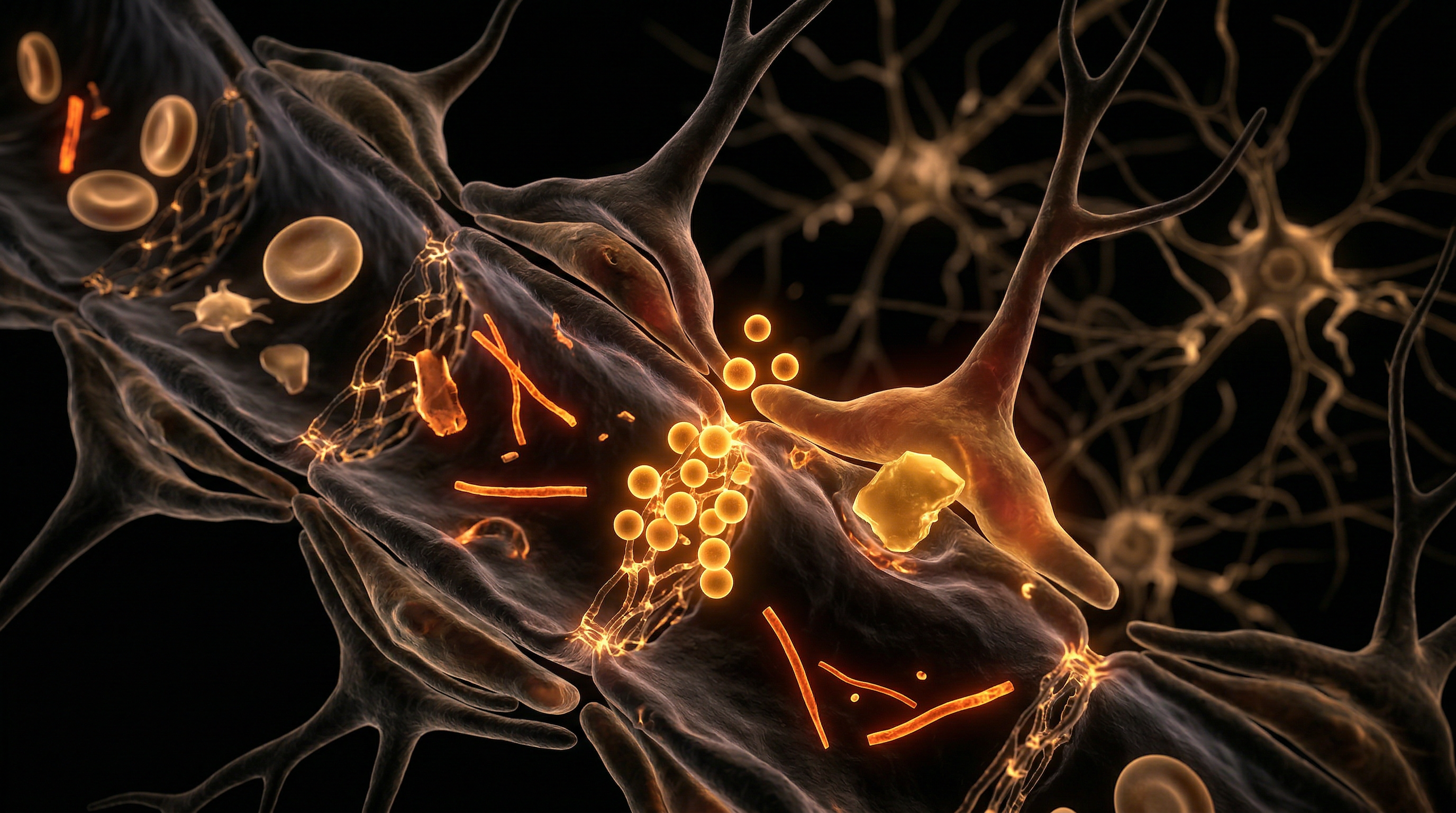
We are no longer living in the Iron Age or the Information Age; we are living in the Plasticene. For decades, the scientific community focused on the macro-environmental impact of plastic waste—turtles ensnared in netting or the Great Pacific Garbage Patch. However, a much more insidious reality has emerged beneath the surface of the visible. Recent post-mortem analyses and neurological biopsies conducted across the United Kingdom and globally have revealed a terrifying biological breach: the presence of microplastics (MPs) and nanoplastics (NPs) within the human brain parenchyma.
The human brain was once considered a "privileged" organ, shielded from the systemic fluctuations of the body by the Blood-Brain Barrier (BBB). This sophisticated physiological fortress, composed of tightly knit endothelial cells, was designed by evolution to keep toxins out while allowing nutrients in. Yet, the synthetic age has produced a novel class of invaders that the BBB is ill-equipped to handle.
In the UK, where urban density and historic reliance on plastic manufacturing intersect with a high consumption of bottled water and seafood, the levels of bioaccumulation are reaching a critical threshold. These particles are not merely inert "hitchhikers"; they are chemically active, physically disruptive, and biologically persistent. They are disrupting the delicate dance of neuroplasticity, the very mechanism by which we learn, remember, and heal. This article serves as a comprehensive investigation into the inflammatory pathways, the biological mechanisms of entry, and the long-term cognitive consequences of the plasticisation of the British mind.
Fact: Recent 2024 studies have found that human brain samples contain up to 0.5% plastic by weight, representing a 50% increase in concentration compared to samples taken just eight years ago.
The Biology — How It Works
The journey from the external environment to the internal synaptic landscape is a complex topographical crossing. Microplastics (particles <5mm) and nanoplastics (particles <1µm) enter the human body via three primary routes: ingestion, inhalation, and dermal absorption.
The Route of Entry: Ingestion and the Gut-Brain Axis
The British diet, increasingly reliant on processed convenience foods wrapped in polyethylene and liquids stored in PET (polyethylene terephthalate), provides a constant stream of plastic particulates. Once ingested, these particles interact with the gut microbiome. Nanoplastics, due to their infinitesimal size, are capable of translocating across the intestinal epithelium via persorption or M-cell mediated transport. Once they enter the lymphatic system and the bloodstream, they begin their systemic circulation.
The Olfactory Bypass
Perhaps the most direct and alarming route is inhalation. In urban centres like London, Manchester, and Birmingham, the air is saturated with synthetic fibres from tyres and textiles. When inhaled, nanoplastics can bypass the systemic circulation entirely. They lodge in the olfactory bulb, travelling along the olfactory nerve directly into the frontal cortex. This bypasses the BBB altogether, providing a "highway" for synthetic debris to enter the central nervous system (CNS).
Crossing the Blood-Brain Barrier (BBB)
For particles already in the bloodstream, the BBB remains the primary obstacle. However, plastics have developed a "Trojan Horse" strategy.
- The Protein Corona: When a plastic particle enters a biological fluid, it is immediately coated with proteins, lipids, and sugars, forming a "corona." This coating can trick the BBB’s transport receptors (such as the transferrin receptor) into actively pulling the plastic particle into the brain tissue.
- Lipophilic Diffusion: Many plastic additives, such as phthalates and bisphenols, are lipophilic (fat-soluble). Since the BBB is largely composed of a lipid bilayer, these chemicals—and the tiny particles they are bonded to—can dissolve through the barrier.
- Inflammatory Leaks: Chronic systemic inflammation, often caused by the presence of microplastics in the gut or lungs, weakens the tight junctions of the BBB, making it "leaky" and allowing larger particles to enter.
Mechanisms at the Cellular Level
Once microplastics penetrate the brain parenchyma, they do not remain stationary. They integrate into the cellular matrix, triggering a cascade of defensive and degenerative responses.
Microglial Activation and "Frustrated Phagocytosis"
Microglia are the resident immune cells of the brain. Their job is to identify and neutralise threats. When they encounter a synthetic polymer, they attempt to engulf it—a process known as phagocytosis. However, unlike a bacterium or a dead cell, plastic cannot be broken down by the enzymes within the microglial lysosome. This leads to "frustrated phagocytosis," where the microglia continuously pump out pro-inflammatory cytokines such as TNF-alpha, IL-1beta, and IL-6, creating a state of chronic neuroinflammation.
Oxidative Stress and Mitochondrial Failure
The surface of microplastics often carries heavy metals and persistent organic pollutants (POPs). These act as catalysts for the production of Reactive Oxygen Species (ROS).
- Lipid Peroxidation: The brain is highly enriched in polyunsaturated fatty acids. ROS attack these fats, leading to a breakdown of neuronal membranes.
- Mitochondrial Dysfunction: Nanoplastics have been observed entering the mitochondria—the powerhouse of the cell. By disrupting the electron transport chain, they starve the neuron of energy (ATP), eventually triggering apoptosis (programmed cell death).
Disruption of Proteostasis
The brain relies on the careful folding and clearance of proteins. Microplastics interfere with the ubiquitin-proteasome system, the "waste disposal" unit of the cell. This interference leads to the accumulation of misfolded proteins, a hallmark of neurodegenerative diseases. The plastic particles act as "seeds" or scaffolds upon which proteins like amyloid-beta and alpha-synuclein can aggregate.
Environmental Threats and Biological Disruptors
The British environment is uniquely saturated with specific types of plastic that pose distinct neurological risks.
Tyre Wear Particles (TWP)
A significant portion of the microplastic burden in the UK comes from road wear. Tyres are not just rubber; they are complex chemical cocktails containing 6PPD-quinone, a potent neurotoxin. These particles are small enough to be aerosolised and inhaled by pedestrians and cyclists in congested British cities.
Secondary Microplastics from Textiles
The UK's "fast fashion" culture contributes massive amounts of synthetic fibres (polyester, acrylic, nylon) into the water system. Standard wastewater treatment plants in Britain are not currently equipped to filter out particles at the nano-scale. Consequently, these fibres end up in the "recycled" water used for irrigation and even in some treated drinking water.
The "Plastisphere" and Biofilms
Microplastics in British waterways act as rafts for pathogens. Bacteria and viruses attach to the plastic surface, forming a biofilm. This "Plastisphere" allows for the concentration of antibiotic-resistant genes. When these plastics are ingested, they don't just bring chemical toxicity; they bring a concentrated dose of biological pathogens that can disrupt the gut-brain axis.
Statistic: It is estimated that the average UK resident inhales or ingests between 74,000 and 121,000 microplastic particles per year—a figure many researchers believe is a vast underestimation due to the difficulty in measuring nanoplastics.
The Cascade: From Exposure to Disease
The presence of plastics in the brain is not a benign condition. It initiates a long-term decline in neurological function that mirrors several modern epidemics.
Erosion of Neuroplasticity
Neuroplasticity—the brain's ability to reorganise itself by forming new neural connections—is the basis of all learning. Microplastics disrupt this via:
- LTP Inhibition: Long-Term Potentiation (LTP) is the process by which synapses strengthen. Chronic inflammation from plastic particulates raises the "noise" in the brain, making it harder for neurons to signal effectively.
- BDNF Reduction: Brain-Derived Neurotrophic Factor is essentially "brain fertiliser." Studies show that plastic-induced inflammation downregulates the expression of BDNF, leading to a "brittle" brain that cannot recover from stress or injury.
Links to Neurodegenerative Disease
The correlation between microplastic accumulation and Alzheimer’s Disease is becoming impossible to ignore. Plastic particles have been found at the core of senile plaques. Similarly, in Parkinson’s Disease, the presence of nanoplastics in the substantia nigra appears to accelerate the aggregation of alpha-synuclein, the protein responsible for the death of dopamine-producing neurons.
Cognitive Blunting and "Brain Fog"
Even in those without a formal diagnosis, the "sub-clinical" effects are rampant. Symptoms include:
- Reduced attention span.
- Impaired executive function.
- Memory fragmentation.
- Persistent lethargy and "fog."
This is likely the result of the brain's metabolic resources being diverted to manage the constant, low-grade inflammatory fire caused by synthetic debris.
What the Mainstream Narrative Omits
The mainstream media and regulatory bodies often present microplastics as an "emerging concern" rather than a present-day catastrophe. This serves several interests.
The Myth of "Inertness"
For decades, the plastic industry argued that polymers are biologically inert because they are too large to be absorbed. This narrative ignores nanoplastics. We now know that as plastic degrades, it doesn't disappear; it simply becomes smaller and more bio-available. The "inert" argument is a scientific fossil, yet it persists in regulatory frameworks.
The Post-Brexit Regulatory Gap
In the UK, the transition from EU-REACH (Registration, Evaluation, Authorisation and Restriction of Chemicals) to UK-REACH has created a "regulatory lag." The UK currently lacks the stringent oversight required to ban specific nanoplastic-shedding materials that are being restricted in the EU. This has made the British Isles a potential dumping ground for products that no longer meet European safety standards regarding microplastic leaching.
Bioaccumulation and the "Chemical Cocktail" Effect
Standard toxicity tests look at one chemical at a time. They do not account for the synergistic toxicity of microplastics. A single PET particle can carry a payload of lead, cadmium, BPA, and PFAS. The combined effect of these toxins, delivered directly into the brain tissue, is exponentially more damaging than the sum of its parts.
The UK Context
The United Kingdom faces a unique set of challenges regarding microplastic exposure, driven by its geography, infrastructure, and history.
The "Thames Plastic Trap"
The River Thames is one of the most microplastic-polluted rivers in the world. Research by the University of London found that crabs in the Thames have stomachs full of plastic fibres. Because much of the UK's drinking water is drawn from river systems, the efficacy of water filtration is a matter of national security. Current "advanced" filtration in the UK can catch microplastics, but nanoplastics often pass through traditional sand filtration and chlorination processes.
Urban Air Quality
British cities, characterised by narrow streets and "urban canyons," trap particulate matter. The high density of diesel engines and the sheer volume of tyre wear in cities like London create a unique aerosolised plastic profile. Residents are effectively breathing "synthetic dust" for a large portion of their lives.
Seafood Consumption
As an island nation, the UK relies heavily on its coastal waters. However, the North Sea is heavily contaminated with microplastics from offshore industrial activity and shipping. Bivalves (mussels, oysters) are filter feeders that concentrate plastics. When consumed by the British public, these plastics provide a direct route into the human endocrine and neurological systems.
Protective Measures and Recovery Protocols
While the ubiquity of microplastics makes total avoidance impossible, there are evidence-based strategies to reduce the "plastic load" and support the brain’s clearance mechanisms.
1. Environmental Mitigation
- Filtration: Use high-quality water filters (Reverse Osmosis is most effective for nanoplastics) and HEPA air purifiers in the home.
- Material Choices: Transition away from synthetic clothing (polyester/fleece) towards natural fibres (wool, cotton, linen) to reduce the inhalation of fibres in the home.
- The "No-Heat" Rule: Never heat food in plastic containers. Heat accelerates the leaching of both microplastics and phthalates into food.
2. Biological Support for the BBB
- Omega-3 Fatty Acids (DHA/EPA): These are essential for maintaining the structural integrity of the Blood-Brain Barrier and the neuronal membranes.
- Anthocyanins: Found in dark berries (blueberries, blackberries), these compounds have been shown to strengthen the tight junctions of the BBB and reduce neuroinflammation.
3. Enhancing Clearance (The Glymphatic System)
The brain has its own waste-clearance system known as the glymphatic system, which primarily functions during deep sleep.
- Sleep Hygiene: Prioritising 7-9 hours of quality sleep is the most effective way to "flush" the brain of metabolic waste and potentially small particulates.
- Sulforaphane: Found in broccoli sprouts, this compound activates the Nrf2 pathway, enhancing the body’s ability to detoxify heavy metals and chemicals often carried by microplastics.
4. Dietary Interventions
- Increase Fibre: Soluble fibre can help "trap" microplastics in the digestive tract, preventing their translocation into the bloodstream.
- Polyphenols: Compounds in green tea (EGCG) and turmeric (curcumin) can cross the BBB and help neutralise the ROS generated by plastic particles.
Summary: Key Takeaways
The infiltration of microplastics into the British brain is a silent crisis that demands immediate attention. We must move beyond the view of plastic as a mere litter problem and recognise it as a profound neurological threat.
- The Breach is Real: Microplastics and nanoplastics have been confirmed to reside within the human brain parenchyma, having bypassed the Blood-Brain Barrier.
- Pathways of Invasion: Entry occurs via the gut-brain axis, the olfactory nerve (inhalation), and through "Trojan Horse" protein coronas that trick the BBB's transport systems.
- Cellular Havoc: Once in the brain, plastics cause chronic microglial activation, oxidative stress, and mitochondrial failure, leading to the erosion of neuroplasticity.
- The UK Risk: High levels of tyre wear particles, contaminated waterways, and a "regulatory lag" post-Brexit make the UK population particularly vulnerable.
- Proactive Protection: While systemic change is required, individuals can protect themselves through reverse osmosis water filtration, HEPA air cleaning, and supporting the brain’s glymphatic clearance through sleep and specific phytonutrients.
The "rewiring" of the modern brain by synthetic polymers is not a science-fiction scenario; it is a measurable biological reality. As we continue to uncover the depth of this penetration, the focus must shift from "awareness" to mitigation and neuro-restoration. The future of British cognitive health depends on our ability to purge the synthetic from the synaptic.
This article is provided for informational and educational purposes only. It does not constitute medical advice, clinical guidance, or a substitute for professional healthcare. Information reflects cited research at time of publication. Always consult a qualified healthcare professional before acting on any health information.
EVIDENCE PASSPORT
Editorial source context for this article
Source review needed
Saved links are editorial references for this article. They may support specific claims rather than every sentence. Open and assess each source in context. This passport does not independently verify them.
Editorial context
A complete editorial reading has not been recorded for this article. Source links remain available for you to open and assess directly.
Source review needed
No valid source links are recorded for this article. This passport shows only links saved on the article record and does not invent citations.
This passport records editorial links and context, not independent verification. Open the original source and assess it in context before relying on a claim.
Medical Disclaimer
The information in this article is for educational purposes only and does not constitute medical advice, diagnosis, or treatment. Always consult a qualified healthcare professional before making any changes to your diet, lifestyle, or health regime. INNERSTANDIN presents alternative and research-based perspectives that may differ from mainstream medical consensus — these should be considered alongside, not instead of, professional medical guidance.
Read Full DisclaimerContinue the thread
Keep this question moving.
Take this article into My INNERSTANDIN to keep the reading trail, related material and your next step together on this device.
Explore this in the Body Map
See where this hits your biology. Interactive anatomy, threats, and protective protocols.
Dig deeper in the Library
Free, longform PDF volumes that go beyond headlines into mechanisms and references.