
Microplastics and Efflux: Impeding Cellular Clearance
Updated May 2026
Microplastics have infiltrated the UK food chain, physically obstructing the cellular efflux pumps meant to remove toxins. This accumulation leads to chronic intracellular stress and metabolic dysfunction.
Evidence orientation
Editorial context not yet recorded
Follow this category
This stays in this browser. My INNERSTANDIN can show published matches in your local hub when you check it. It does not send email, push, or alert notifications.
Local learning review
A private browser aid for revisiting ideas. It is not an alert or a health recommendation.
Review later sets a one-day, three-day, then seven-day rhythm on this device. Choose it only when you want to revisit this article.
Overview
The architectural integrity of the human cell is currently facing an unprecedented challenge, one for which evolution has provided no prior blueprint. As a senior researcher at INNERSTANDING, I have observed the progressive shift from chemical toxicity to what we must now define as physical-mechanical toxicity. We have long understood the dangers of heavy metals and persistent organic pollutants (POPs), but we are now entering the era of the Microplastic-Efflux Crisis.
Microplastics (MPs) and their even more insidious counterparts, nanoplastics (NPs), are no longer merely environmental contaminants; they have become systemic biological disruptors. In the United Kingdom, where industrial runoff, sewage sludge application on agricultural land, and the degradation of synthetic textiles have reached a zenith, the average citizen is now "bio-accumulating" plastic polymers at a rate that exceeds the body's natural capacity for clearance.
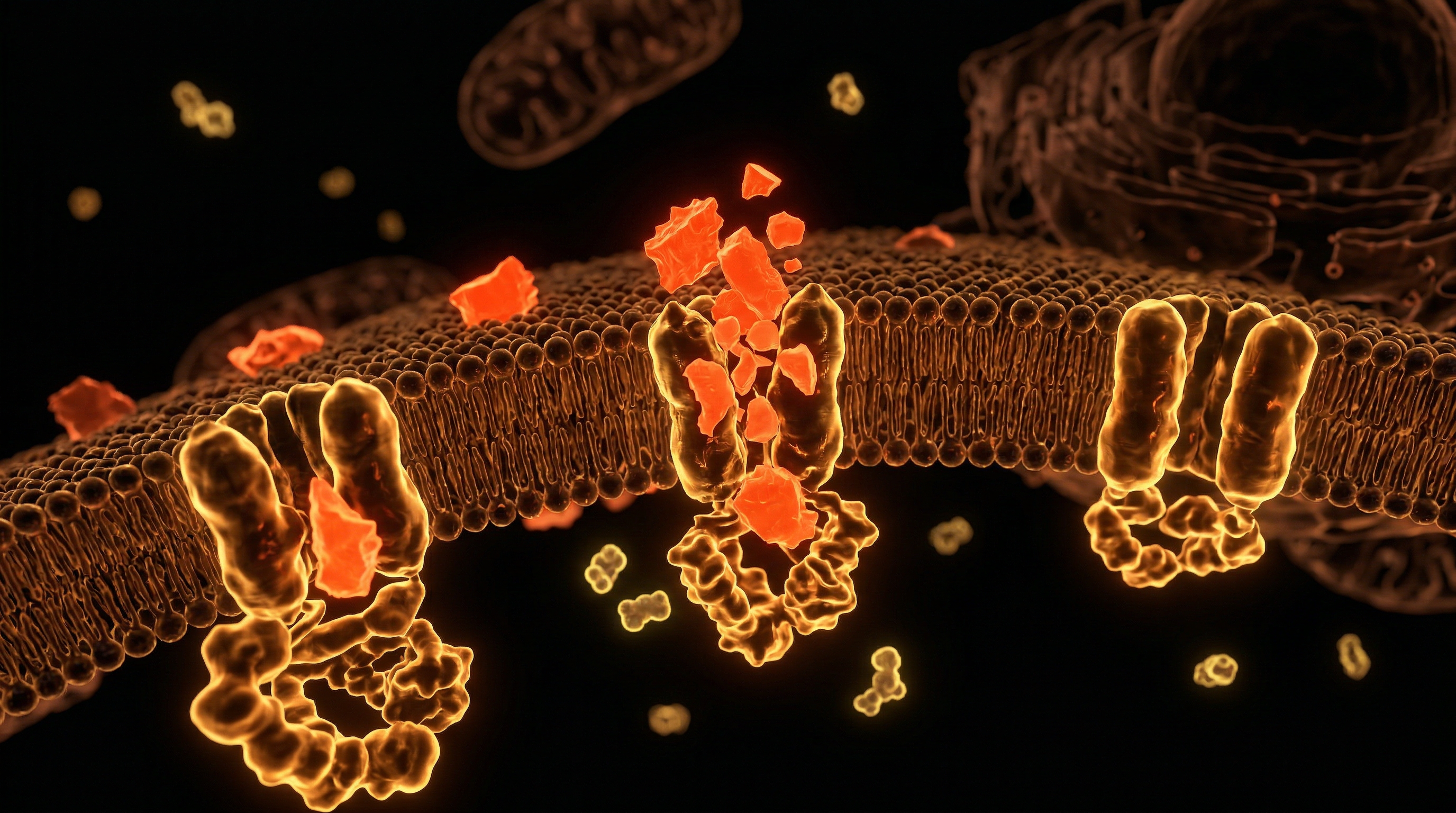
The crux of this crisis lies in the disruption of cellular efflux. Every cell in the human body is equipped with sophisticated "sump pumps"—proteins known as ATP-binding cassette (ABC) transporters—designed to eject toxins before they can damage internal organelles. Microplastics are physically obstructing these pumps. By "clogging" the gateways of cellular detoxification, these particles are not only toxic in their own right but act as force multipliers for every other environmental toxin we encounter. We are witnessing a systemic failure of biotransformation pathways, leading to a state of chronic intracellular "constipation" that precedes metabolic collapse.
Key Fact: Recent studies indicate that humans may be ingesting up to 5 grams of plastic per week—the equivalent weight of a credit card—much of which enters the circulatory system and interacts directly with cellular membranes.
The Biology — How It Works
To understand why microplastics are so devastating to the human organism, one must first understand the primary mechanism of cellular defence: the Xenobiotic Efflux System.
The human body manages internal purity through a three-phase detoxification system. Phase I (Functionalisation) and Phase II (Conjugation) occur primarily in the liver, where toxins are rendered water-soluble. However, Phase III—Efflux—is the final and most critical step. This is the physical removal of the toxin from the intracellular environment into the extracellular space (and eventually into bile or urine).
The ABC Transporters
The primary actors in Phase III are the ATP-Binding Cassette (ABC) transporters. These are transmembrane proteins that use energy (ATP) to move substrates across the lipid bilayer. The most well-known are:
- P-glycoprotein (P-gp / ABCB1): The "gatekeeper" of the blood-brain barrier and the gut lining.
- Multidrug Resistance-associated Proteins (MRPs / ABCC family): Responsible for exporting glutathione-conjugated toxins.
- Breast Cancer Resistance Protein (BCRP / ABCG2): Crucial for protecting stem cells and clearing metabolic byproducts.
Under normal conditions, these proteins act like highly efficient revolving doors. When a toxin enters the cell, it is recognised by the transporter, which then undergoes a conformational change to "swing" the toxin out.
The Introduction of the Polymer
Microplastics are synthetic polymers—long chains of repeating monomers (like ethylene or styrene) that are inherently hydrophobic. Because they are "oil-loving," they have a high affinity for the phospholipid bilayer of the cell membrane. Unlike a simple molecule of mercury or a pesticide, a microplastic particle is a physical object with a defined surface area and charge.
When these particles, particularly those in the sub-micron (nanoplastic) range, encounter the cell membrane, they do not simply pass through. They become embedded. This embedding causes a phenomenon known as membrane stiffening, which physically restricts the ability of ABC transporters to undergo the structural shifts required to eject toxins.
Mechanisms at the Cellular Level
The interference of microplastics with cellular clearance is not a single-event failure but a multi-stage mechanical and chemical assault.
1. Competitive and Irreversible Inhibition
Most toxins bind to an efflux pump, are moved, and then released. Microplastics, due to their size and surface chemistry, often bind to the active site of the ABC transporter but are too large or too chemically complex to be moved through the pore. This results in irreversible inhibition. The pump is effectively "plugged."
As more pumps become obstructed, the cell’s "efflux capacity" drops. If a cell has 1,000 active P-gp pumps and 400 are blocked by plastic particles, the cell’s ability to remove pesticides, medications, and metabolic waste is reduced by 40%. This is a silent, cumulative decline.
2. The "Trojan Horse" Effect
Microplastics are highly porous and possess a large surface area-to-volume ratio. In the environment, they act as "sponges" for other hazardous materials, such as Polychlorinated Biphenyls (PCBs), Polycyclic Aromatic Hydrocarbons (PAHs), and heavy metals.
When a microplastic particle enters a cell, it isn't just bringing plastic; it is carrying a concentrated payload of concentrated environmental toxins. Once inside the relatively acidic environment of the cell or the lysosome, these "hitchhiker" toxins are released. Because the efflux pumps are already being obstructed by the plastic particle itself, these secondary toxins cannot be removed. They remain trapped inside the cell, causing DNA damage and oxidative stress.
3. Depletion of Cellular Energy (ATP)
Efflux is an active process. It requires ATP (Adenosine Triphosphate). Microplastics have been shown to target the mitochondria—the cell’s power plants. By inducing oxidative stress within the mitochondria, microplastics reduce the production of ATP.
Scientific Fact: A cell with compromised mitochondria cannot power its efflux pumps. This creates a lethal feedback loop: microplastics block the pumps mechanically, then reduce the energy needed to operate the remaining functional pumps.
4. Disrupting the Lipid Raft
Efflux pumps are not scattered randomly; they are clustered in specific "lipid rafts"—areas of the membrane rich in cholesterol and sphingolipids. Microplastics disrupt the fluid dynamics of these rafts. By altering membrane fluidity, the plastic ensures that even if the ABC transporter is functional, it cannot dock correctly with the co-factors required for its operation.
Environmental Threats and Biological Disruptors
The ubiquity of plastic is so absolute that it has created a new geological and biological era, often termed the "Plasticene." In the UK context, our exposure pathways are distinct and pervasive.
Synthetic Fibres and Inhalation
A significant portion of UK microplastic pollution comes from synthetic textiles (polyester, nylon, acrylic). When we wash these clothes, millions of microfibres enter the wastewater system. However, they are also shed into the air of our homes. Studies have shown that indoor air often contains higher concentrations of microplastics than outdoor air. Once inhaled, these fibres reach the deep alveolar sacs of the lungs, where they bypass the initial immune response and enter the interstitial fluid, eventually reaching the systemic circulation.
The Agricultural Pathway
In the UK, a common practice involves the application of "sewage sludge" (biosolids) to agricultural land as fertiliser. While this is marketed as "recycling," sewage sludge is a concentrated repository of every microplastic washed down British drains. This plastic enters the soil, is taken up by the roots of crops (a process called translocation), or is ingested by livestock. Consequently, the UK food chain is saturated with sub-micrometre plastics that are small enough to cross the intestinal barrier via persorption.
Tyre Wear and Urban Runoff
The UK’s road network is a primary source of tyre wear particles (TWP). These are not pure rubber; they are complex mixtures of synthetic polymers, carbon black, and heavy metals. These particles are washed into rivers like the Thames, the Severn, and the Mersey. Recent data suggests the River Mersey has some of the highest recorded levels of microplastic pollution in the world. For those living in these catchments, the exposure is constant—through local seafood, water, and even the "sea spray" aerosols in coastal regions.
The Cascade: From Exposure to Disease
What happens when cellular clearance is impeded over years or decades? The result is not an acute poisoning but a slow, progressive "metabolic strangulation."
Phase 1: Intracellular Sequestration
Toxins that should be excreted begin to accumulate in the cytosol and the endoplasmic reticulum (ER). This triggers the "Unfolded Protein Response" (UPR). The cell senses it is "full" and begins to shut down non-essential functions, including protein synthesis and repair.
Phase 2: Chronic Inflammation (The Inflammasome)
Microplastic particles are recognised by the immune system as "non-self" but "indigestible." When macrophages (immune cells) attempt to engulf these particles, they cannot break them down. This leads to frustrated phagocytosis, where the immune cell ruptures, releasing inflammatory cytokines (like IL-1β) into the surrounding tissue. This is the root of chronic, "sterile" inflammation.
Phase 3: The Metabolic Shift
As efflux fails, the cell enters a state of pseudohypoxia. The mitochondria are struggling, and the cell shifts towards anaerobic glycolysis (the Warburg Effect), even in the presence of oxygen. This is a hallmark of both cancer and chronic fatigue syndromes.
Predicted Disease Outcomes
- Neurodegenerative Diseases: The obstruction of the blood-brain barrier’s P-glycoprotein pumps allows neurotoxins to accumulate in the brain. This is linked to the early onset of Alzheimer’s and Parkinson’s.
- Autoimmunity: Constant "frustrated" immune responses to microplastics lead to a loss of self-tolerance.
- Metabolic Syndrome: Intracellular "clogging" in adipocytes (fat cells) and hepatocytes (liver cells) leads to insulin resistance and non-alcoholic fatty liver disease (NAFLD).
- Infertility: The blood-testis and blood-placenta barriers rely heavily on ABC transporters. Microplastic infiltration here is linked to declining sperm counts and pregnancy complications.
What the Mainstream Narrative Omits
The mainstream scientific and governmental discourse remains focused on "leaching"—the idea that plastics are only dangerous because they leak chemicals like Bisphenol A (BPA). This is a convenient half-truth. It allows the industry to market "BPA-free" plastics as "safe."
The Physicality Fraud
The truth being suppressed is that the physical presence of the polymer is itself the toxin. You can have a "chemically inert" piece of medical-grade polyethylene, but if it is 100 nanometres wide, it will still obstruct an ABC transporter. Current UK safety regulations (managed by the FSA and HSE) do not account for physical-mechanical toxicity. They only test for chemical LD50 (lethal dose).
The Synergy Factor
Mainstream toxicology tests substances in isolation. They test "Mercury" or they test "Microplastics." They almost never test the synergistic effect. Microplastics are "force multipliers." By disabling the efflux pumps, microplastics make a "safe" level of lead or a "safe" level of glyphosate suddenly lethal, because the cell can no longer remove them. This "synergy" is the reason we are seeing a spike in chronic illness despite "improved" environmental standards for individual chemicals.
The "Bio-Corona" Cover-up
When a microplastic enters the body, it is immediately coated by our own proteins and fats, forming what is known as a biomolecular corona. This makes the plastic look like a "natural" lipoprotein or a nutrient to the cell. The cell actually assists the entry of the plastic through endocytosis, essentially inviting the "Trojan Horse" inside. The mainstream narrative rarely mentions how the body’s own transport systems are hijacked by these polymers.
The UK Context
The United Kingdom faces a unique set of challenges regarding microplastic accumulation. As an island nation with a high population density and an aging sewage infrastructure, the concentration of microplastics in the environment is significantly higher than in larger, less dense landmasses.
The "Plastic Rivers" of the North
Northern England, the cradle of the Industrial Revolution, now hosts some of the most plastic-contaminated waterways on earth. The sediments of the River Tame in Greater Manchester were found to contain over 500,000 plastic particles per square metre. This isn't just an environmental tragedy; it's a public health crisis. These particles enter the local moisture cycle and are redistributed across the UK's "breadbasket" regions.
Regulatory Paralysis
Post-Brexit, the UK's regulatory framework for chemicals (UK REACH) has struggled to keep pace with evolving science. While the EU has moved toward banning certain microplastic additions in cosmetics and detergents, the UK has been slower to implement comprehensive restrictions on the "primary" microplastics used in industrial processes. Furthermore, there is no mandatory testing for microplastics in UK tap water, despite evidence that "cloudy" water in many urban areas contains high concentrations of micro-polymers.
The British Diet and "Plasticine" Soil
The UK diet, heavily reliant on processed and packaged foods, ensures a high intake of "secondary" microplastics—those created by the degradation of food packaging. When combined with the "plasticine" nature of UK agricultural soil (due to sewage sludge), the British consumer is effectively being "polymerised" from both ends of the supply chain.
Protective Measures and Recovery Protocols
If we cannot entirely avoid microplastics in a post-industrial world, we must focus on cellular resilience and the restoration of efflux function.
1. Upregulating ABC Transporter Expression
We can "force" the cell to produce more efflux pumps to compensate for those that are blocked.
- Nrf2 Activators: The Nrf2 pathway governs the body's antioxidant response and the production of ABC transporters. Sulforaphane (from broccoli sprouts), Curcumin, and Resveratrol are potent Nrf2 activators.
- Quercetin: This flavonoid has been shown to specifically support the function of P-glycoprotein and protect the integrity of the blood-brain barrier.
2. Autophagy Induction: "Cellular Housecleaning"
Since microplastics are physical objects, the cell must use a process called autophagy (self-eating) to break them down or sequester them into lysosomes for eventual expulsion.
- Intermittent Fasting: 16-18 hour fasts trigger macro-autophagy, allowing the cell to process and "digest" internal debris.
- Spermidine: A polyamine found in aged cheese and mushrooms that acts as a potent autophagy inducer.
3. Membrane Fluidity Support
To counter the "stiffening" effect of microplastic embedding, we must maintain high membrane fluidity.
- Phosphatidylcholine (PC): The primary building block of cell membranes. Supplementing with high-quality PC helps "flush" the membrane and replace damaged lipids.
- Omega-3 Fatty Acids (EPA/DHA): These incorporate into the lipid bilayer, ensuring it remains flexible enough for transporters to function.
4. Selective Binding and Elimination
While the body cannot "detox" plastic in the traditional sense, we can reduce the "Trojan Horse" effect by binding the hitchhiker toxins in the gut.
- Activated Charcoal and Zeolite: These can bind microplastics and their associated chemicals in the intestinal tract, preventing persorption into the bloodstream.
- Sweating (Infrared Saunas): While large plastic particles cannot be sweated out, many of the phthalates and bisphenols carried by microplastics are eliminated through the skin.
5. Water and Air Filtration
- Reverse Osmosis (RO): This is currently the only domestic water filtration method capable of removing nanoplastics.
- HEPA Air Filtration: Essential for removing synthetic textile fibres from the indoor environment.
Summary: Key Takeaways
The threat of microplastics is not a distant environmental concern; it is an active, intracellular crisis that is currently impeding the fundamental biological process of biotransformation.
- Efflux Impediment: Microplastics physically block the ABC transporters (P-gp, MRP) that act as cellular sump pumps, leading to the accumulation of both plastic and secondary toxins.
- Energy Depletion: By damaging mitochondria, microplastics starve the efflux process of the ATP it requires to function.
- UK Saturation: The UK's agricultural practices and urban runoff have created a "high-load" environment for microplastics, particularly in northern industrial catchments.
- The Physicality Crisis: Current regulations fail to address the mechanical toxicity of polymers, focusing instead on outdated chemical-only models.
- Protocols for Survival: Restoring cellular clearance requires a multi-pronged approach: activating Nrf2 to increase pump production, inducing autophagy to clear internal debris, and supporting membrane fluidity with phospholipids.
We must shift our understanding of "health" from a purely nutritional model to a clearance-based model. In the Plasticene, it is not just what you put into your body that determines your longevity, but your cell's ability to eject what has been forced into it. The "clogging" of our cellular efflux pathways is the silent driver of the modern chronic disease epidemic. Only by recognising the mechanical nature of this assault can we hope to navigate the bio-industrial landscape of the 21st century.
This article is provided for informational and educational purposes only. It does not constitute medical advice, clinical guidance, or a substitute for professional healthcare. Information reflects cited research at time of publication. Always consult a qualified healthcare professional before acting on any health information.
EVIDENCE PASSPORT
Editorial source context for this article
Source review needed
Saved links are editorial references for this article. They may support specific claims rather than every sentence. Open and assess each source in context. This passport does not independently verify them.
Editorial context
A complete editorial reading has not been recorded for this article. Source links remain available for you to open and assess directly.
Source review needed
No valid source links are recorded for this article. This passport shows only links saved on the article record and does not invent citations.
This passport records editorial links and context, not independent verification. Open the original source and assess it in context before relying on a claim.
Medical Disclaimer
The information in this article is for educational purposes only and does not constitute medical advice, diagnosis, or treatment. Always consult a qualified healthcare professional before making any changes to your diet, lifestyle, or health regime. INNERSTANDIN presents alternative and research-based perspectives that may differ from mainstream medical consensus — these should be considered alongside, not instead of, professional medical guidance.
Read Full DisclaimerContinue the thread
Keep this question moving.
Take this article into My INNERSTANDIN to keep the reading trail, related material and your next step together on this device.
Explore this in the Body Map
See where this hits your biology. Interactive anatomy, threats, and protective protocols.
Dig deeper in the Library
Free, longform PDF volumes that go beyond headlines into mechanisms and references.