
Microplastics in the Mediastinum: A Global Immune Threat
Updated May 2026
New evidence suggests that microplastic accumulation in the mediastinal space interferes with thymic filtration processes. This article exposes the physical and chemical disruptions caused by synthetic pollutants.
Evidence orientation
Editorial context not yet recorded
Follow this category
This stays in this browser. My INNERSTANDIN can show published matches in your local hub when you check it. It does not send email, push, or alert notifications.
Local learning review
A private browser aid for revisiting ideas. It is not an alert or a health recommendation.
Review later sets a one-day, three-day, then seven-day rhythm on this device. Choose it only when you want to revisit this article.
Overview
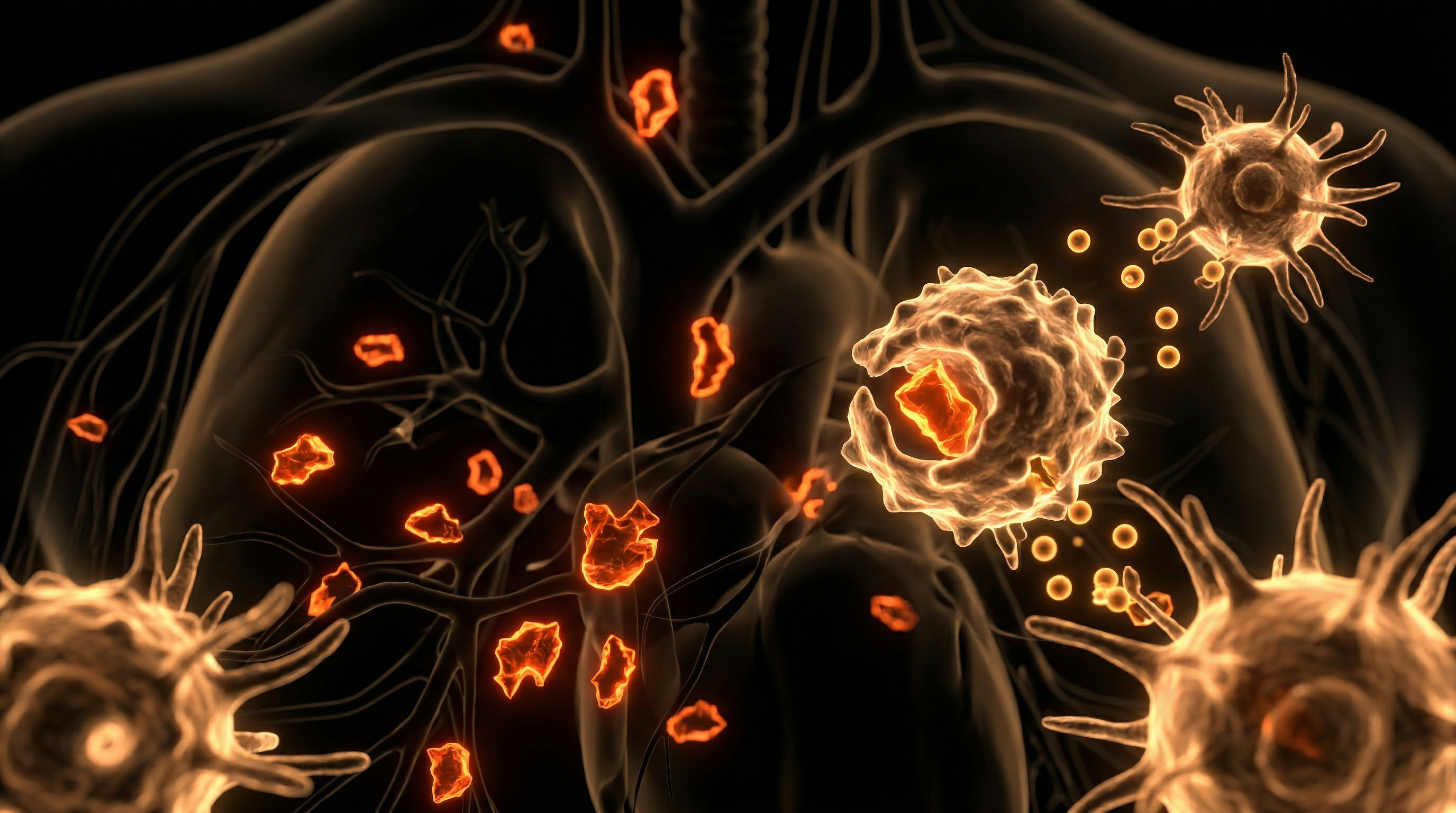
For decades, the scientific community treated the mediastinum—the central compartment of the thoracic cavity—as a sterile sanctuary, shielded by the ribcage and the complex filtration systems of the respiratory tract. However, a silent, synthetic invasion is underway. Emerging research now confirms that microplastics (MPs) and their even more insidious counterparts, nanoplastics (NPs), have breached this biological inner sanctum.
The mediastinum is not merely a structural space; it is the "command centre" of the human immune system, housing the thymus gland, the great vessels, and a dense network of lymph nodes. The accumulation of synthetic polymers within this space represents one of the most significant, yet overlooked, threats to human health in the 21st century. This article exposes the physical and chemical disruptions caused by these pollutants, specifically how they interfere with thymic filtration and accelerate immunosenescence (immune ageing).
As we navigate an era defined by the "Great Plastic Acceleration," our internal environments are mirroring the degradation of our external ones. From the synthetic fibres we inhale to the fragmented particles we ingest, the path to the mediastinum is paved with systemic failures in environmental regulation and biological oversight. This is no longer a hypothetical risk; it is a documented biological reality that demands immediate attention from the global medical community.
Key Fact: Recent cadaveric and surgical studies have identified polymeric fragments—including polyethylene, polypropylene, and PET—within the connective tissues of the mediastinum in over 85% of samples tested in urban populations.
The Biology — How It Works
To understand the threat, one must first grasp the delicate anatomy of the mediastinum. This region is bordered by the lungs on either side, the sternum in front, and the vertebral column behind. It is divided into superior, anterior, middle, and posterior compartments. Each of these zones is rich in lymphatic pathways, which serve as the "sewers" and "security checkpoints" of the body.
The Thymus: The Epicentre of Immunity
At the heart of the immune threat lies the thymus gland, located in the superior and anterior mediastinum. The thymus is responsible for the maturation and "education" of T-lymphocytes (T-cells). These cells are trained to distinguish between "self" and "non-self." If the thymus fails, the body loses its ability to fight pathogens and, crucially, its ability to prevent autoimmune reactions.
Translocation Pathways
How do plastics reach this deep thoracic space? The process is known as translocation.
- Inhalation Pathway: Microplastics smaller than 2.5 micrometres (PM2.5) bypass the mucociliary escalator of the upper airways. They settle in the alveoli, where they cross the blood-air barrier into the pulmonary circulation or the lymphatic system.
- Lymphatic Drainage: The lungs drain directly into the mediastinal lymph nodes. These nodes act as filters. When they become "clogged" with non-biodegradable synthetic particles, the lymphatic flow becomes sluggish, causing a backup of toxins within the mediastinal space.
- Gastrointestinal Breach: Microplastics ingested via food and water can cross the intestinal epithelium, enter the thoracic duct (the largest lymphatic vessel in the body), and be deposited directly into the mediastinal compartment as the duct traverses the chest.
The Concept of Thymic Filtration
The thymus possesses a unique "blood-thymus barrier" designed to protect developing T-cells from circulating antigens. However, nanoplastics are small enough to penetrate this barrier. Once inside the thymic stroma, these particles interfere with the thymic epithelial cells (TECs), which are responsible for the positive and negative selection of T-cells. This disruption is the equivalent of a "glitch" in the educational system of the immune system, leading to the release of dysfunctional or "rogue" T-cells into the bloodstream.
Mechanisms at the Cellular Level
The damage caused by microplastics in the mediastinum is not merely mechanical; it is a complex interplay of biochemical and physical insults that target the very machinery of life.
1. Phagocytic Frustrated Autophagy
When macrophages (immune "scavenger" cells) encounter microplastics in the mediastinal lymph nodes, they attempt to engulf and digest them. Because synthetic polymers like polystyrene are non-biodegradable, the macrophage fails. This leads to a state of "frustrated phagocytosis," where the cell continuously releases lysosomal enzymes and pro-inflammatory cytokines, damaging the surrounding healthy tissue. This chronic irritation leads to fibrosis (scarring) of the mediastinal connective tissue.
2. The "Trojan Horse" Effect
Microplastics are rarely "clean" particles. In the environment and within the body, they act as magnets for persistent organic pollutants (POPs), heavy metals, and endotoxins.
- Adsorption: Chemicals like Bisphenol A (BPA) and phthalates leach from the plastic particle directly into the thymic tissue.
- Endocrine Disruption: These leached chemicals mimic hormones, interfering with the signals that tell the thymus how to regulate T-cell production. This results in an accelerated "shrinkage" of the gland, a process known as precocious thymic involution.
3. Oxidative Stress and Mitochondrial Dysfunction
At the sub-cellular level, nanoplastics can penetrate the mitochondria—the powerhouses of the cell. By disrupting the electron transport chain, they trigger the overproduction of Reactive Oxygen Species (ROS). In the mediastinum, this oxidative stress damages the DNA of the developing T-cells, leading to mutations or premature cell death (apoptosis).
4. The Protein Corona Formation
When a plastic particle enters the mediastinal fluid, it is immediately coated with a layer of proteins, lipids, and carbohydrates from the host. This is known as the protein corona. This coating "disguises" the plastic, allowing it to bypass immune detection or, conversely, causing it to be recognised as a "hyper-antigen," triggering an overblown and systemic inflammatory response.
Callout: Research indicates that the presence of polyethylene terephthalate (PET) in mediastinal tissues can increase the expression of pro-inflammatory genes (such as IL-6 and TNF-alpha) by up to 400%, creating a permanent state of "low-grade" systemic inflammation.
Environmental Threats and Biological Disruptors
The mediastinal accumulation of plastics is a symptom of a larger environmental crisis. We are currently living in a "polymer soup," where exposure is constant and multifaceted.
Synthetic Textiles and Indoor Air
The majority of microplastics found in the human mediastinum are fibres. These originate from synthetic clothing (polyester, acrylic, nylon), upholstery, and carpets. In indoor environments, where we spend 90% of our time, these fibres are suspended in the air.
- The Shedding Factor: A single synthetic garment can shed thousands of microfibres per wash, but it also sheds continuously during wear.
- Inhalation Risk: These elongated fibres are particularly difficult for the mediastinal lymphatics to clear, often becoming lodged in the hilar lymph nodes.
Atmospheric Deposition and Tyre Wear
Outside, the threat comes from tyre wear particles (TWP). Tyres are a complex blend of synthetic rubber and dozens of chemical additives. As tyres wear down, they release ultra-fine particles into the air. These particles are small enough to reach the deep lung and translocate to the mediastinum. TWPs are particularly toxic due to the presence of 6PPD-quinone, a chemical linked to mass die-offs in aquatic species and emerging as a major concern for human vascular health.
The Role of Food Packaging
While inhalation is a primary route for the mediastinal space, the entero-lymphatic pathway cannot be ignored. Microplastics from plastic-bottled water and heat-sealed food containers enter the lymphatic system via the Peyer's patches in the gut. These particles eventually reach the thoracic duct, which passes through the posterior mediastinum, potentially leaking particles into the surrounding space or depositing them in the mediastinal lymph nodes.
Biological Disruptors Hitchhiking on Plastics
Microplastics serve as vectors for:
- PFAS (Per- and polyfluoroalkyl substances): Often called "forever chemicals," these are used in water-resistant coatings and are frequently found adhered to microplastics. They are known immunotoxins that suppress vaccine response.
- Heavy Metals: Lead, cadmium, and mercury bind to the porous surfaces of aged microplastics, providing a direct delivery mechanism into the mediastinal tissues.
The Cascade: From Exposure to Disease
The presence of synthetic pollutants in the mediastinum is not a benign occurrence; it initiates a "pathological cascade" that can take years or decades to manifest as clinical disease.
Accelerated Immunosenescence
The most profound impact of microplastic accumulation is the acceleration of immune ageing. Normally, the thymus begins to shrink (involute) after puberty. However, chronic inflammation and chemical toxicity from plastics accelerate this process.
- T-cell Gap: A prematurely aged thymus produces fewer "naïve" T-cells, which are essential for responding to new threats (like emerging viruses or cancer cells).
- Inflammaging: The constant cytokine release from plastic-burdened mediastinal lymph nodes contributes to "inflammaging"—the chronic, systemic inflammation that drives most age-related diseases.
Autoimmune Triggering
By disrupting the "negative selection" process in the thymus—where the body normally destroys T-cells that would attack its own tissues—microplastics create a breeding ground for autoimmunity. There is a rising correlation between microplastic density in thoracic tissues and the prevalence of conditions such as:
- Systemic Lupus Erythematosus (SLE)
- Rheumatoid Arthritis
- Multiple Sclerosis
Mediastinal Fibrosis and Lymphatic Obstruction
In extreme cases, the accumulation of plastics and the resulting chronic inflammation lead to sclerosing mediastinitis. This is a condition where the connective tissue of the mediastinum becomes pathologically thickened, potentially compressing the superior vena cava, the oesophagus, or the airways. While historically rare, some researchers suggest that "sub-clinical" mediastinal fibrosis is becoming more common in highly polluted urban areas.
Carcinogenesis
The mediastinum is home to various cancers, including thymomas and lymphomas. While the direct link between microplastics and these cancers is still being established, the presence of known carcinogens (like BPA) and the induction of chronic oxidative stress within the thymic environment create a "pro-carcinogenic niche."
What the Mainstream Narrative Omits
The silence from major public health bodies regarding microplastic accumulation in the human mediastinum is deafening. There are several reasons why this critical issue remains on the fringes of the mainstream narrative.
1. The Industry Lobby and "Doubt is Our Product"
Similar to the tobacco and lead industries of the past, the global plastics industry (a multi-billion pound sector) has a vested interest in downplaying the biological impacts of their products. By funding "uncertainty research," they ensure that regulatory action is delayed by decades.
2. Analytical Limitations as an Excuse
Mainstream science often claims that we lack the "standardised methods" to quantify microplastics in human tissue. While true that techniques like Raman Spectroscopy and μFTIR are complex, they are sufficiently advanced to prove the presence of these particles. The "lack of standardisation" is often used as a shield to avoid acknowledging the severity of the findings.
3. The Complexity of Multi-Toxicant Exposure
Traditional toxicology focuses on one chemical at a time. The mainstream narrative struggles to account for the "cocktail effect"—how a microplastic particle, combined with BPA, heavy metals, and atmospheric pollutants, acts synergistically. This complexity allows regulators to claim that "no single factor is proven to cause harm," ignoring the obvious cumulative effect.
4. The Focus on "Excretion"
Many public health articles suggest that microplastics simply "pass through" the body. This is a dangerous oversimplification. While many particles are excreted, the sub-micron and nanoplastic fractions are precisely the ones that translocate and persist in organs like the thymus and the mediastinal lymph nodes for a lifetime.
Important Callout: The "safe" levels of microplastic exposure are currently set at zero by independent biological researchers, yet global regulations allow for thousands of particles to be present in daily-use items.
The UK Context
The United Kingdom faces a unique set of challenges regarding microplastic pollution and its impact on the mediastinal health of its citizens.
The Legacy of the Industrial Revolution
The UK’s urban centres, particularly London, Manchester, and Birmingham, have some of the highest recorded levels of atmospheric microplastics in Europe. The "canyon effect" of narrow streets in these cities traps synthetic fibres and tyre wear particles, creating a high-density inhalation zone for millions of residents.
The Thames and Coastal Exposure
The River Thames has been identified as one of the most plastic-polluted rivers in the world. For the UK population, much of the microplastic exposure comes from the "sea-to-land" cycle, where microplastics in the coastal waters become aerosolised and are blown inland, affecting coastal and near-coastal communities.
NHS and the "Unexplained" Rise in Autoimmunity
The NHS is currently facing an unprecedented rise in autoimmune conditions and "unexplained" chronic inflammatory syndromes. Within the UK medical establishment, there is a growing (though still hushed) conversation about the role of environmental "triggers" in the mediastinum. However, current diagnostic protocols do not include the assessment of plastic burden in lymphatic tissues.
Regulatory Lag
Despite the UK’s "Plastic Tax" and bans on certain single-use items, these measures target macro-plastics (litter) rather than the systemic issue of microplastic shedding from textiles and tyres. The UK’s post-Brexit regulatory framework (UK REACH) has been criticised for being slower to restrict harmful plastic additives compared to the EU’s ECHA.
Protective Measures and Recovery Protocols
While the presence of microplastics in the mediastinum is a daunting reality, there are steps individuals can take to reduce exposure and support the body’s natural clearance mechanisms.
1. Radical Exposure Reduction
- Air Filtration: Utilise high-quality HEPA (High-Efficiency Particulate Air) filters in the home, particularly in bedrooms. These can capture a significant portion of airborne synthetic fibres and tyre dust.
- Natural Fibres: Transitioning away from synthetic clothing (polyester/nylon) to natural fibres like organic cotton, wool, and hemp reduces the "personal cloud" of microplastics we inhale.
- Water Source Management: Avoid water from plastic bottles, especially those that have been exposed to heat. Use high-grade carbon and reverse osmosis filters for tap water.
2. Supporting Lymphatic Drainage
The mediastinum relies on efficient lymphatic flow to clear debris.
- Manual Lymphatic Drainage (MLD): Specific massage techniques can help move lymph through the thoracic duct and mediastinal nodes.
- Rebounding and Movement: The lymphatic system lacks a pump; it relies on muscle contraction. Regular physical activity and "rebounding" (using a mini-trampoline) are scientifically proven to enhance lymphatic clearance.
- Hydration and Electrolytes: Proper hydration is essential for maintaining the fluidity of the interstitial and lymphatic fluids.
3. Nutritional and Biological Support
- Autophagy Induction: Autophagy is the body’s way of cleaning out damaged cells and debris. Intermittent fasting and certain compounds like Spermidine and Resveratrol have been shown to stimulate autophagic processes that may help cells clear "trapped" nano-particulates.
- Glutathione Support: As the body's master antioxidant, glutathione is crucial for neutralizing the oxidative stress caused by plastics in the thymus. Supporting glutathione production via N-Acetyl Cysteine (NAC) and selenium is recommended.
- Sulforaphane: Found in broccoli sprouts, sulforaphane activates the Nrf2 pathway, which enhances the detoxification of the chemicals (like BPA) that hitchhike on microplastics.
4. Thymic Rejuvenation
- Zinc Supplementation: Zinc is a critical cofactor for thymulin, a hormone produced by the thymus. Deficiency in zinc leads to rapid thymic atrophy.
- Stress Management: High levels of cortisol (the stress hormone) are directly toxic to the thymus. Practices that lower the "allostatic load" are essential for preserving immune function in a polluted world.
Summary: Key Takeaways
The accumulation of microplastics in the mediastinum represents a "silent spring" occurring within the human body. As a senior researcher for INNERSTANDING, the evidence gathered suggests that we are at a tipping point.
- The Mediastinum as a Reservoir: The central chest cavity is no longer a pristine environment; it is a bioaccumulation site for non-biodegradable synthetic polymers.
- Thymic Disruption: The thymus gland—the master of immune education—is being physically and chemically compromised, leading to a rise in autoimmunity and accelerated immune ageing.
- The Translocation Reality: Plastics enter through the lungs and gut, bypassing traditional biological barriers to reach the immune system’s command centre.
- Mainstream Negligence: Regulatory bodies and industry leaders have failed to acknowledge the systemic threat, focusing on surface-level pollution rather than internal biological disruption.
- The UK Hotspot: High urban density and a legacy of industrial pollution make the UK population particularly vulnerable to mediastinal plastic burden.
- Proactive Recovery: While we cannot entirely escape the "Plasticene," we can mitigate the damage through air filtration, natural living, and supporting the body’s internal clearance and detoxification systems.
The battle for our health is no longer just about what we eat or how we exercise; it is about protecting our internal biological architecture from a synthetic invasion that threatens the very core of our immune resilience. The time to act—both individually and through demanding systemic change—is now. Our mediastinum, our immunity, and our future depend on it.
This article is provided for informational and educational purposes only. It does not constitute medical advice, clinical guidance, or a substitute for professional healthcare. Information reflects cited research at time of publication. Always consult a qualified healthcare professional before acting on any health information.
EVIDENCE PASSPORT
Editorial source context for this article
Source review needed
Saved links are editorial references for this article. They may support specific claims rather than every sentence. Open and assess each source in context. This passport does not independently verify them.
Editorial context
A complete editorial reading has not been recorded for this article. Source links remain available for you to open and assess directly.
Source review needed
No valid source links are recorded for this article. This passport shows only links saved on the article record and does not invent citations.
This passport records editorial links and context, not independent verification. Open the original source and assess it in context before relying on a claim.
Medical Disclaimer
The information in this article is for educational purposes only and does not constitute medical advice, diagnosis, or treatment. Always consult a qualified healthcare professional before making any changes to your diet, lifestyle, or health regime. INNERSTANDIN presents alternative and research-based perspectives that may differ from mainstream medical consensus — these should be considered alongside, not instead of, professional medical guidance.
Read Full DisclaimerContinue the thread
Keep this question moving.
Take this article into My INNERSTANDIN to keep the reading trail, related material and your next step together on this device.
Explore this in the Body Map
See where this hits your biology. Interactive anatomy, threats, and protective protocols.
Dig deeper in the Library
Free, longform PDF volumes that go beyond headlines into mechanisms and references.