
Microplastics and the Gut: How Probiotics Mitigate Toxicity
Updated May 2026
The average Briton ingests a credit card's worth of plastic yearly, causing intestinal oxidative stress. Certain probiotic strains have the ability to adsorb and help excrete these microplastic particles.
Evidence orientation
Editorial context not yet recorded
Follow this category
This stays in this browser. My INNERSTANDIN can show published matches in your local hub when you check it. It does not send email, push, or alert notifications.
Local learning review
A private browser aid for revisiting ideas. It is not an alert or a health recommendation.
Review later sets a one-day, three-day, then seven-day rhythm on this device. Choose it only when you want to revisit this article.
Overview
In the contemporary era, the human organism is navigating an unprecedented biological crisis. We are no longer merely "what we eat"; we are increasingly becoming what we discard. As a senior researcher for INNERSTANDING, I have observed a disturbing trend in the longitudinal data regarding human health and environmental degradation. The most insidious of these threats is the pervasive infiltration of microplastics (MPs) and nanoplastics (NPs) into the human biological terrain.
Recent toxicological assessments provide a harrowing perspective: the average citizen in the United Kingdom is now ingesting approximately five grams of plastic every week—roughly the equivalent mass of a standard credit card. This material is not inert. It does not simply pass through the alimentary canal like insoluble fibre. Instead, these petrochemical fragments interact with the delicate architecture of the gastrointestinal tract, leaching endocrine-disrupting chemicals and physically abrading the mucosal lining.
However, amidst this chemical onslaught, a sophisticated biological countermeasure has emerged from the realm of Probiotic Medicine. Emerging research suggests that specific strains of beneficial bacteria—our ancestral allies—possess the unique biochemical capacity to sequester, neutralise, and facilitate the excretion of these plastic particles. This article serves as a comprehensive technical briefing on the mechanisms of plastic-induced enterotoxicity and the revolutionary role of fermented foods and probiotic consortia in mitigating this 21st-century plague.
Fact: Microplastics (defined as particles <5mm) and Nanoplastics (<1µm) have now been detected in human blood, lung tissue, breast milk, and the placenta, indicating a systemic breach of our biological barriers.
The Biology — How It Works
The human gastrointestinal (GI) tract is the primary interface between the external environment and our internal systemic circulation. Spanning approximately 30 square metres of surface area, the intestinal epithelium is designed for selective permeability: allowing nutrients in while keeping pathogens and toxins out. Microplastics represent a fundamental challenge to this evolutionary design.
The Entry Vectors
Microplastics enter the GI tract through two primary routes: direct ingestion (contaminated water, food, and packaging) and indirect translocation (mucociliary clearance of inhaled particles that are subsequently swallowed). Once inside the gastric environment, these particles are subjected to fluctuating pH levels and enzymatic activity. While the plastic polymer itself (polyethylene, polypropylene, polystyrene, etc.) is largely resistant to human digestive enzymes, the "weathering" process in the stomach can increase the surface area of these particles, making them more reactive.
The Mucosal Interaction
The first line of biological defence is the mucus layer, a complex hydrogel composed of mucin glycoproteins (primarily MUC2). Under normal physiological conditions, this layer traps particulate matter and facilitates its removal via peristalsis. However, microplastics exhibit a high affinity for this mucus.
- Physical Entrapment: Larger microplastics can become lodged within the mucus mesh, leading to localised areas of stagnation.
- Chemical Leaching: As the particles sit against the epithelial wall, they release "hitchhiker" chemicals—bisphenols, phthalates, and heavy metals—directly into the underlying tissue.
The Role of the Microbiota
The human gut is home to trillions of microorganisms, the microbiome. This ecological community is the first to encounter microplastics. We now understand that microplastics induce dysbiosis—a pathological shift in microbial composition. Plastics serve as a substrate for a unique community of microbes known as the "Plastisphere." When we ingest microplastics, we also ingest the pathogenic biofilm growing on them, which can disrupt the balance of our native flora, leading to an overgrowth of Proteobacteria and a decline in beneficial Firmicutes and Bacteroidetes.
Mechanisms at the Cellular Level
To understand how probiotics mitigate toxicity, we must first examine the specific cellular damage caused by plastic particles. The toxicity of microplastics is not merely mechanical; it is a complex interplay of physical, chemical, and biological stressors.
Oxidative Stress and ROS Production
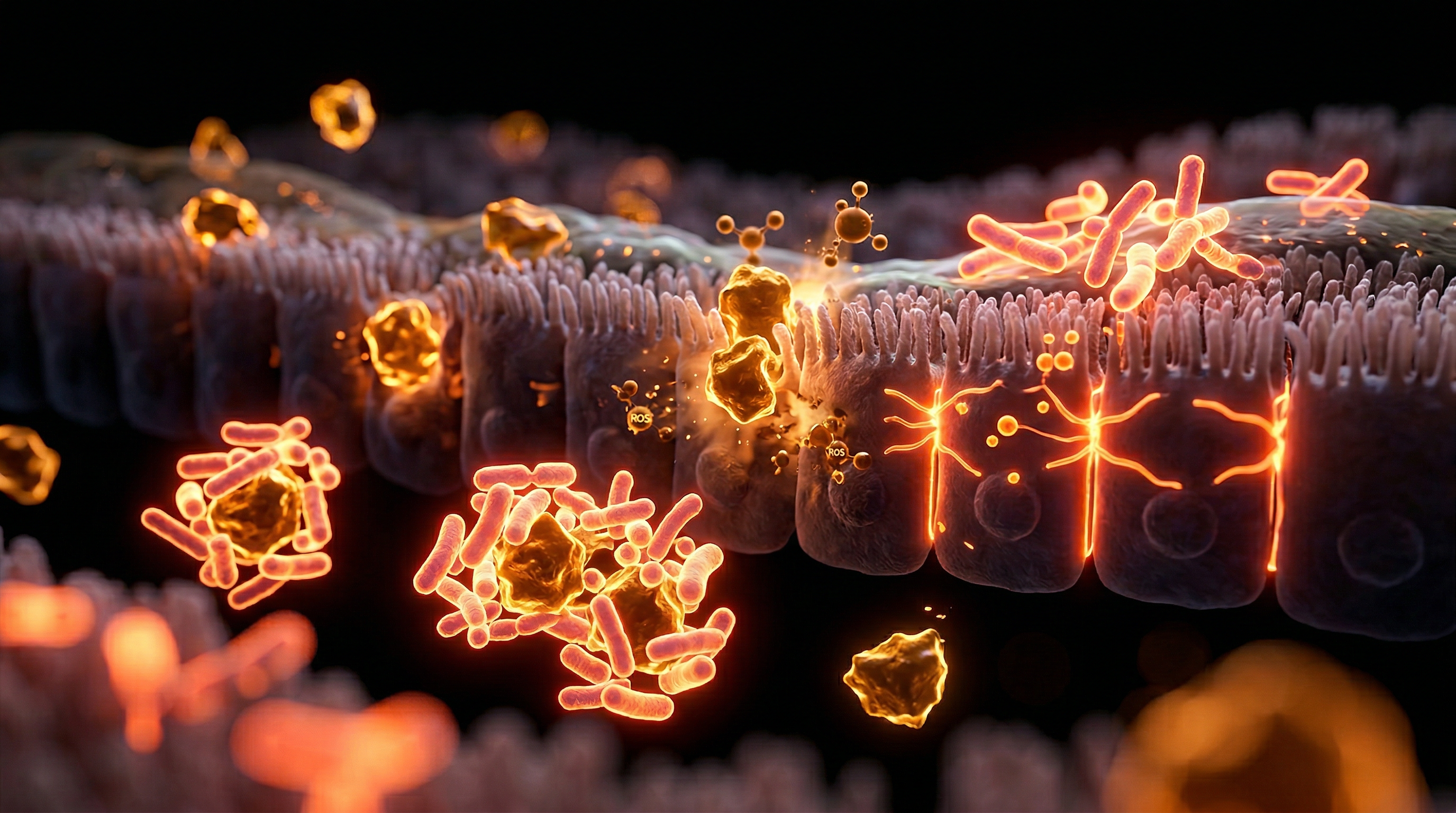
When microplastics come into contact with the enterocytes (intestinal cells), they trigger the production of Reactive Oxygen Species (ROS). The sharp edges of fragmented plastics can physically damage mitochondrial membranes, leading to an "oxidative burst." This state of chronic oxidative stress exhausts the cell's natural antioxidant reserves, such as Glutathione, leading to lipid peroxidation and DNA damage.
The Breach of Tight Junctions
The integrity of the gut barrier is maintained by Tight Junction (TJ) proteins, such as zonulin, occludin, and claudins. Microplastics have been shown to downregulate the expression of these proteins.
- Paracellular Transport: As TJ proteins degrade, the "gaps" between cells widen. This allows nanoplastics (particles small enough to bypass mechanical filters) to translocate into the lamina propria.
- Systemic Entry: Once in the lamina propria, these particles enter the lymphatic system and the portal vein, eventually reaching the liver, spleen, and brain.
Probiotic Adsorption: The Bio-Sequestration Mechanism
This is where Probiotic Medicine offers a glimmer of hope. Certain strains, most notably from the Lactobacillus and Bifidobacterium genera, have evolved cell wall structures that can "bind" to environmental toxins.
- Surface Complexation: The cell walls of probiotics are rich in peptidoglycans, teichoic acids, and exopolysaccharides. These structures carry a negative charge. Many microplastics, through environmental weathering, develop a surface charge that allows them to be electrostatically attracted to the probiotic cell wall.
- Bio-adsorption: Strains like *Lactobacillus plantarum and Lactobacillus rhamnosus* act as biological sponges. They adsorb microplastic particles onto their surface, effectively "coating" the plastic.
- Physical Excretion: Once a microplastic particle is bound to a probiotic cell, it is sequestered within the faecal bolus. Instead of lingering in the mucus layer or penetrating the epithelium, the plastic is "escorted" out of the body during regular bowel movements.
Statistic: In vitro studies have demonstrated that specific Lactobacillus strains can remove up to 90% of certain heavy metals and plastic-associated toxins from a liquid medium within 24 hours.
Environmental Threats and Biological Disruptors
The microplastic crisis is inseparable from the broader context of Xenobiotic pollution. Microplastics are not just "plastic"; they are "Trojan Horses" for a cocktail of industrial additives.
The Trojan Horse Effect
During the manufacturing process, various chemicals are added to plastics to provide flexibility (phthalates), UV resistance, or flame retardancy. Furthermore, because plastics are hydrophobic, they attract and concentrate other persistent organic pollutants (POPs) from the environment, such as PCBs (polychlorinated biphenyls) and DDT.
Endocrine Disruption
The most significant biological disruptor within microplastics is Bisphenol A (BPA) and its newer counterparts (BPS, BPF). These chemicals are structural analogues to oestrogen. When leached into the gut, they bind to oestrogen receptors, leading to:
- Metabolic Dysregulation: Interference with insulin signalling and lipid metabolism.
- Reproductive Toxicity: Impacting sperm quality and ovarian function.
- Developmental Delays: Particularly concerning in paediatric populations where the blood-brain barrier is not yet fully formed.
The "Nano-Bio" Interface
As plastics degrade into the "nano" range (<100nm), they acquire the ability to cross the Blood-Brain Barrier (BBB) and the Placental Barrier. At this scale, the particles can interfere with protein folding, leading to the formation of protein coronas that can trigger neurodegenerative pathways similar to those seen in Alzheimer’s and Parkinson’s disease.
The Cascade: From Exposure to Disease
The ingestion of microplastics initiates a pathological cascade that, if left unaddressed, moves from acute irritation to chronic systemic disease.
Phase 1: Localised Intestinal Inflammation
The initial response is the activation of the NLRP3 inflammasome within the gut lining. This leads to the secretion of pro-inflammatory cytokines like IL-1β and TNF-α. The patient may experience "vague" symptoms: bloating, irregular bowel habits, or "brain fog."
Phase 2: The "Leaky Gut" and Translocation
As tight junctions fail, the gut becomes "leaky." Not only do microplastics enter the blood, but so do Lipopolysaccharides (LPS)—endotoxins from the cell walls of Gram-negative bacteria. This creates a state of Metabolic Endotoxaemia.
Phase 3: Systemic Immune Activation
The immune system, sensing foreign polymers and endotoxins in the blood, enters a state of chronic hyper-vigilance. This is the precursor to Autoimmune Disease. The body begins to produce antibodies that may cross-react with its own tissues, as the immune system is unable to "clear" the non-biodegradable plastic particles.
Phase 4: Chronic Organ Damage and Oncogenesis
Microplastics have been found to accumulate in the liver and kidneys, the body's primary filtration organs. This accumulation induces fibrosis (scarring). Furthermore, the chronic inflammatory state, combined with the presence of carcinogenic additives, creates a "pro-oncogenic" environment, potentially increasing the risk of colorectal and hepatic cancers.
What the Mainstream Narrative Omits
As a researcher at INNERSTANDING, it is my duty to highlight the gaps in the public health discourse. The mainstream narrative, often influenced by the massive economic power of the plastics industry, tends to focus on "recycling" and "ocean cleanup" rather than the biological catastrophe occurring within the human body.
The "Safe Limit" Myth
Regulatory bodies often cite a "Threshold of Toxicological Concern" (TTC) for various chemicals. However, these thresholds were designed for individual chemicals, not for the cumulative effect of thousands of different plastic particles and their associated toxins. There is currently no "safe limit" for microplastic ingestion because the body has no natural mechanism to break down the polymer backbone.
The Overlook of Bioaccumulation
Mainstream health advice often ignores the Trophic Transfer of microplastics. We are told that eating fish is healthy, yet the biomagnification of plastics in the marine food chain means that top-level predators (and the humans who eat them) receive a concentrated dose of both plastics and the toxins they have absorbed from the ocean.
The Suppression of Probiotic Efficacy
While pharmaceutical companies race to develop expensive "binders" for toxins, they rarely mention that traditional fermented foods—kefir, sauerkraut, kimchi, and kombucha—provide a natural, bio-available, and cost-effective solution. There is little profit in a protocol that encourages the consumption of home-fermented vegetables, despite the overwhelming evidence of their efficacy in maintaining gut barrier integrity.
The UK Context
The United Kingdom presents a unique and particularly concerning profile regarding microplastic exposure. As an island nation with a heavy industrial history, our environmental loading is significant.
The Water Crisis
British tap water has been found to contain microplastic fibres in over 70% of samples tested in certain regional studies. While UK water companies claim their filtration systems are "world-class," they are not currently required to filter for particles in the sub-micrometre or nano-range.
- The Thames: Recent surveys of the River Thames have identified it as one of the most plastic-polluted rivers in the world, with a high concentration of "glitter" and micro-beads from personal care products that bypass wastewater treatment.
The "Great British Breakfast" Contamination
The average British diet is heavily reliant on "Ultra-Processed Foods" (UPFs). These foods are almost exclusively wrapped in soft plastics—polyethylene films and plastic-lined tins. When these foods are heated or stored for long periods, the rate of plastic migration into the food increases exponentially. Even the humble British "tea bag" is a major culprit; many premium tea bags are made of plastic mesh, releasing billions of microplastics into a single cup of tea.
The North Sea Impact
For those in the UK who consume local seafood, the risks are heightened. The North Sea is a "sink" for plastic pollution. Shellfish, such as mussels and oysters, are filter feeders. They process large volumes of water and naturally concentrate microplastics in their tissues. Because we often eat the entire organism, including the digestive tract, the plastic load per serving is significantly higher than in finfish.
Protective Measures and Recovery Protocols
Given the ubiquity of microplastics, "total avoidance" is impossible. However, we can employ a Biological Fortification Protocol to enhance our body’s ability to sequester and excrete these toxins.
1. Targeted Probiotic Supplementation
Not all probiotics are created equal. To combat microplastics, focus on strains with proven "heavy metal" and "xenobiotic" binding capabilities:
- **Lactobacillus plantarum (strains CCFM8610 and CCFM8661):** Extensively researched for their ability to bind lead, cadmium, and various plasticisers.
- **Lactobacillus rhamnosus (LGG):** Known for its ability to reinforce the "Tight Junctions" and prevent translocation.
- **Bifidobacterium breve:** Helps to modulate the immune response to plastic-induced inflammation.
2. The Power of Fermentation
Incorporate traditional fermented foods that contain a consortium of wild microbes. Unlike single-strain supplements, these foods provide a "bio-diverse shield":
- Kefir: Contains unique exopolysaccharides (kefiran) that have a high affinity for binding toxins.
- Sauerkraut and Kimchi: Provide the organic acids necessary to maintain an acidic gut pH, which can influence the surface charge of plastics and improve their adsorption to bacteria.
3. Dietary Prebiotics and Binders
To support the probiotics, you must provide the right "fuel" and auxiliary "cleansers":
- Soluble Fibre (Inulin, Pectin): Enhances the thickness of the mucus layer, providing a better physical barrier.
- Modified Citrus Pectin (MCP): A systemic binder that can help "catch" nanoplastics that have already entered the bloodstream.
- Chlorella and Spirulina: These micro-algae have cell walls that, like probiotics, can bind to microplastic particles and heavy metals.
4. Lifestyle Interventions
- Switch to Loose Leaf Tea: Eliminate the billions of particles from plastic tea bags.
- Glass over Plastic: Never heat food in plastic containers. Use glass or stainless steel for water storage.
- High-Quality Water Filtration: Utilise Reverse Osmosis (RO) or high-grade carbon block filters (0.5 micron or smaller) to remove the majority of MPs from drinking water.
Key Protocol Rule: For maximum efficacy, consume fermented foods or probiotics alongside meals that may contain microplastics (e.g., seafood or takeaway food) to ensure the bacteria are present in the bolus to begin the adsorption process immediately.
Summary: Key Takeaways
The microplastic invasion is a silent, systemic threat to human health, but it is not an insurmountable one. By understanding the biological pathways of toxicity and the protective power of the microbiome, we can reclaim our internal sovereignty.
- Microplastics are Trojan Horses: They carry endocrine disruptors (BPA, Phthalates) and heavy metals directly into our tissues.
- The Gut is the Battleground: Intestinal permeability ("Leaky Gut") is the primary gateway for systemic plastic contamination.
- Probiotics are Biological Filters: Specific strains like Lactobacillus plantarum can adsorb plastic particles and "escort" them out of the body through excretion.
- The UK is at High Risk: Due to contaminated tap water, tea bags, and North Sea seafood, Britons must be particularly vigilant.
- Fortification is Essential: A protocol involving fermented foods (Kefir/Sauerkraut), high-quality probiotic supplements, and the elimination of plastic food packaging is the best defence.
At INNERSTANDING, we believe that true health comes from the synthesis of ancient wisdom and cutting-edge science. The return to fermented medicines is not a step backward; it is a vital evolutionary leap forward in our struggle to survive and thrive in a plastic-saturated world. The credit card we ingest every week does not have to stay within us. Through the strategic use of Probiotic Medicine, we can ensure that our biological "books" remain balanced and our systems remain pure.
This article is provided for informational and educational purposes only. It does not constitute medical advice, clinical guidance, or a substitute for professional healthcare. Information reflects cited research at time of publication. Always consult a qualified healthcare professional before acting on any health information.
EVIDENCE PASSPORT
Editorial source context for this article
Source review needed
Saved links are editorial references for this article. They may support specific claims rather than every sentence. Open and assess each source in context. This passport does not independently verify them.
Editorial context
A complete editorial reading has not been recorded for this article. Source links remain available for you to open and assess directly.
Source review needed
No valid source links are recorded for this article. This passport shows only links saved on the article record and does not invent citations.
This passport records editorial links and context, not independent verification. Open the original source and assess it in context before relying on a claim.
Medical Disclaimer
The information in this article is for educational purposes only and does not constitute medical advice, diagnosis, or treatment. Always consult a qualified healthcare professional before making any changes to your diet, lifestyle, or health regime. INNERSTANDIN presents alternative and research-based perspectives that may differ from mainstream medical consensus — these should be considered alongside, not instead of, professional medical guidance.
Read Full DisclaimerContinue the thread
Keep this question moving.
Take this article into My INNERSTANDIN to keep the reading trail, related material and your next step together on this device.
Dig deeper in the Library
Free, longform PDF volumes that go beyond headlines into mechanisms and references.