
Microplastics and the Niche: Disrupting Bone Marrow Regeneration
Updated May 2026
Emerging research suggests that microplastic accumulation in human bone marrow impairs hematopoietic stem cell function. This investigation highlights the environmental threat to our internal blood-building factories.
Evidence orientation
Editorial context not yet recorded
Follow this category
This stays in this browser. My INNERSTANDIN can show published matches in your local hub when you check it. It does not send email, push, or alert notifications.
Local learning review
A private browser aid for revisiting ideas. It is not an alert or a health recommendation.
Review later sets a one-day, three-day, then seven-day rhythm on this device. Choose it only when you want to revisit this article.
Overview
For decades, the scientific community treated the human bone marrow as a pristine, shielded sanctum—the biological equivalent of a high-security vault where our most precious regenerative assets are stored. As the primary site of haematopoiesis, the bone marrow is responsible for generating billions of new blood cells every single day, including the red blood cells that transport oxygen and the white blood cells that constitute our primary defence against infection. However, a silent and insidious invasion has breached these walls.
Emerging toxicological data and recent histopathological analyses have confirmed a harrowing reality: microplastics (MPs) and nanoplastics (NPs) are no longer merely environmental pollutants; they are systemic biological contaminants. These synthetic polymers have been detected in human blood, lung tissue, placentas, and most recently, within the delicate architecture of the bone marrow itself.
This article serves as a comprehensive investigation into how these xenobiotic particles disrupt the "niche"—the specific microenvironment that governs stem cell behaviour. We are witnessing an unprecedented transition where the internal landscape of the human body is being physically and chemically altered by the detritus of the plastic age. The implications for long-term human health, particularly regarding immune resilience and cancer risk, are profound and, until now, largely obscured by a fragmented regulatory landscape.
Over 350 million tonnes of plastic are produced annually, with recent studies suggesting the average human ingests approximately 5 grams of microplastics every week—the equivalent weight of a credit card.
We must now confront the reality that the very "foundations" of our health—our hematopoietic stem cells (HSCs)—are being "suffocated" by a sea of synthetic polymers. This is not a speculative future threat; it is an ongoing biological crisis.
The Biology — How It Works
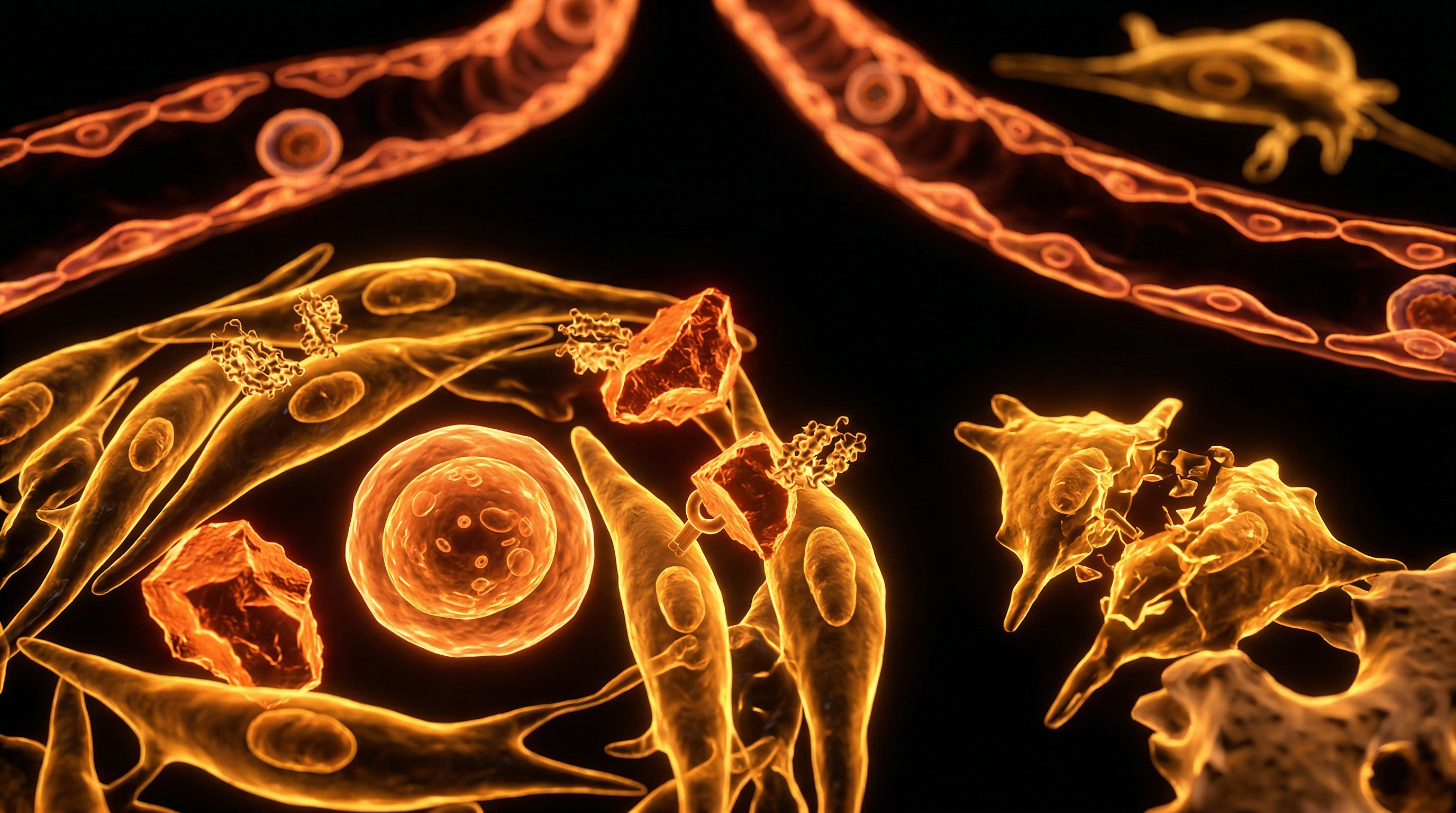
To understand the gravity of microplastic infiltration, one must first appreciate the exquisite complexity of the bone marrow niche. This is not merely a "soup" of cells; it is a highly organised three-dimensional scaffold comprising various cell types, extracellular matrix (ECM) components, and signalling molecules.
The Hematopoietic Stem Cell (HSC) Niche
At the heart of this system is the Hematopoietic Stem Cell (HSC). These cells possess the unique ability to both self-renew and differentiate into every lineage of blood cell. They reside in specialised "pockets" known as niches:
- The Endosteal Niche: Located near the inner surface of the bone, where osteoblasts (bone-forming cells) regulate HSC quiescence.
- The Vascular Niche: Located near blood vessels, where endothelial cells and perivascular cells govern the mobilisation and differentiation of HSCs.
The Homeostatic Balance
The niche serves as a protective cocoon. It maintains HSCs in a state of quiescence (a dormant state) to prevent premature exhaustion and genetic damage. When the body requires more blood cells—due to injury, infection, or normal turnover—the niche provides the specific chemical signals (cytokines and growth factors) to "wake" the stem cells and trigger controlled proliferation.
The Entry Route: How Microplastics Infiltrate the Marrow
The infiltration of microplastics into this shielded environment occurs through a process known as translocation. Once ingested or inhaled, particles smaller than 10 micrometres (µm) can cross the epithelial barriers of the gut or lungs.
- Circulatory Transport: MPs enter the bloodstream, where they are coated by plasma proteins, forming what is known as a protein corona. This "disguise" allows them to bypass certain immune checkpoints.
- Trans-endothelial Migration: Due to their size and surface chemistry, nanoplastics can physically penetrate the endothelial lining of the bone marrow sinusoids—the gateways to the marrow's interior.
- Macrophage Hijacking: In a "Trojan Horse" scenario, immune cells like macrophages ingest MPs in the periphery and then migrate back to the bone marrow, inadvertently delivering the synthetic cargo directly into the stem cell niche.
Mechanisms at the Cellular Level
Once microplastics settle within the bone marrow stroma, they do not remain inert. Their presence triggers a cascade of mechanical and biochemical disruptions that undermine the integrity of the regenerative process.
1. Physical Obstruction and Geometric Frustration
The bone marrow niche relies on precise physical contact between HSCs and their support cells. The presence of rigid, non-biodegradable microplastics creates geometric frustration. These particles physically block the receptor-ligand interactions (such as the SDF-1/CXCR4 axis) required for stem cell homing and retention. If a stem cell cannot "seat" itself correctly within its niche, it loses its protective signals and may undergo premature apoptosis (cell death).
2. Oxidative Stress and ROS Generation
One of the most well-documented effects of MPs at the cellular level is the induction of Reactive Oxygen Species (ROS).
- Mitochondrial Dysfunction: Nanoplastics can penetrate the cell membrane and localise within mitochondria, disrupting the electron transport chain.
- Chronic Inflammation: The persistent presence of a foreign body that cannot be broken down leads to "frustrated phagocytosis," where immune cells continuously release pro-inflammatory cytokines like IL-6 and TNF-α.
- DNA Damage: Elevated ROS levels lead to oxidative DNA lesions. In the context of a stem cell, these mutations are catastrophic, as they are passed down to all subsequent generations of blood cells.
3. The "Leaching" Phenomenon
Microplastics are not just polymers; they are chemical cocktails. During manufacturing, various additives are included to alter the plastic’s properties. Within the warm, slightly acidic microenvironment of the bone marrow, these chemicals leach out:
- Phthalates and Bisphenols (BPA): Known endocrine disruptors that can mimic hormones and interfere with the signalling pathways (like the Wnt/β-catenin pathway) that control stem cell fate.
- Heavy Metals: Lead, cadmium, and antimony are often used as catalysts or pigments in plastics and can be released directly into the marrow stroma.
4. Epigenetic Alterations
Emerging research suggests that exposure to polystyrene nanoplastics can alter the epigenetic landscape of HSCs. This means that while the DNA sequence itself might remain the same, the "switches" that turn genes on or off are modified. Specifically, we see a reduction in the expression of genes associated with DNA repair and an increase in genes associated with cellular senescence (aging).
A 2023 laboratory study demonstrated that human mesenchymal stem cells exposed to realistic concentrations of polyethylene microplastics showed a 40% reduction in proliferative capacity and a significant shift toward a pro-inflammatory phenotype.
Environmental Threats and Biological Disruptors
The bone marrow crisis is the internal reflection of an external environmental catastrophe. We are currently living in a "Plasticine" epoch where the ubiquity of these particles makes avoidance almost impossible.
Primary vs. Secondary Microplastics
- Primary Microplastics: Intentionally manufactured small particles, such as those used in industrial abrasives, certain cosmetics, and even some drug delivery systems.
- Secondary Microplastics: Formed from the breakdown of larger plastic items through UV radiation, mechanical wear, and oxidation. This includes the massive volume of synthetic fibres from clothing and tyre wear particles from road transport.
The "Vector" Effect
Microplastics act as "sponges" in the environment. Due to their hydrophobic surface, they adsorb Persistent Organic Pollutants (POPs), including pesticides, PCBs, and dioxins. When these particles enter the human body, they act as concentrated delivery vehicles for these toxins, transporting them directly into lipid-rich environments like the bone marrow.
Bioaccumulation in the Food Chain
While much focus is placed on seafood, microplastics have been found in:
- Drinking Water: Both bottled and tap water contain significant concentrations of micro- and nanoplastics.
- Atmospheric Dust: Inhalation is an increasingly recognised route of exposure, particularly in urban environments where synthetic carpet fibres and tyre dust are prevalent.
- Agricultural Soil: The use of "plastic mulch" and sewage sludge as fertiliser has contaminated the terrestrial food chain, leading to microplastic uptake in root vegetables and grains.
The Cascade: From Exposure to Disease
The disruption of the bone marrow niche is not an isolated event; it is the trigger for a systemic decline in health. The "cascade" of failure follows a predictable, yet devastating, path.
Phase I: Niche Erosion
The initial phase involves the loss of niche "stiffness" and biochemical integrity. The supportive stromal cells begin to transform into myofibroblasts, leading to a subtle but progressive scarring of the bone marrow, known as myelofibrosis.
Phase II: Hematopoietic Exhaustion
Under the constant stress of inflammation and ROS, HSCs are forced out of their quiescent state to replace damaged cells. This leads to "stem cell exhaustion." The "telomeres" (protective caps on the ends of chromosomes) shorten prematurely, effectively aging the blood-building system by decades.
Phase III: The Rise of Clonal Hematopoiesis
As the niche becomes increasingly toxic, only those stem cells that acquire specific mutations (often in genes like DNMT3A or TET2) can survive. This leads to Clonal Hematopoiesis of Indeterminate Potential (CHIP). While not a cancer itself, CHIP is a significant risk factor for:
- Myelodysplastic Syndromes (MDS): A group of disorders where the bone marrow fails to produce enough healthy blood cells.
- Acute Myeloid Leukaemia (AML): The sudden proliferation of abnormal white blood cells.
- Cardiovascular Disease: Mutated blood cells produced in a plastic-contaminated marrow are highly pro-inflammatory, accelerating the formation of arterial plaques.
Phase IV: Immune Paralysis
The marrow is the birthplace of B-cells and T-cell precursors. A disrupted niche produces immune cells that are "born exhausted." This manifests as a weakened response to vaccines, increased susceptibility to viral infections, and a failure of "immune surveillance," where the body loses its ability to detect and destroy emerging cancer cells in other tissues.
What the Mainstream Narrative Omits
The conversation around microplastics in mainstream media is often sanitised, focusing on "ocean cleanup" and "turtle welfare" while ignoring the direct, existential threat to human physiology. There are several uncomfortable truths that regulatory bodies and industrial giants are hesitant to address.
The Myth of the "Inert" Polymer
For years, plastic polymers like polyethylene and polypropylene were classified as "biologically inert." This classification was based on outdated toxicology models that only looked at acute toxicity (large doses causing immediate death). It ignored chronic, low-dose, multi-generational toxicity and the physical damage caused by the particle's shape and surface charge.
Regulatory Capture and the "Safe Level" Fallacy
Currently, there is no "safe level" for microplastic ingestion because the long-term cumulative effects have never been properly studied in humans. Regulatory agencies like the FDA and EFSA have been slow to act, largely due to the massive economic reliance on plastic production. The "burden of proof" has been shifted onto the public, rather than the manufacturers.
The Synergy with Electrosmog
A burgeoning area of research—often suppressed—is the interaction between microplastics and Electromagnetic Fields (EMF). Some microplastics contain metallic catalysts or carbon black, which can theoretically become "excited" or re-radiate energy when exposed to high-frequency EMF (such as 5G infrastructure). This could potentially exacerbate the oxidative stress within the bone marrow, acting as a "force multiplier" for cellular damage.
The Invisibility of Nanoplastics
Mainstream testing often only counts particles down to 10 or 1µm. However, it is the nanoplastics (below 100nm) that pose the greatest risk, as they can cross the blood-brain barrier and the placental barrier. By focusing the narrative on "visible" plastic pollution, the invisible, more dangerous nanoplastic crisis is sidelined.
The UK Context
The United Kingdom faces a unique set of challenges regarding microplastic exposure. As an island nation with a high population density and a legacy of industrialised river systems, the environmental load is significant.
The "Plastics Capital" of Europe?
Research by the University of Manchester found that parts of the River Mersey and the River Tame contained some of the highest levels of microplastic contamination ever recorded globally—surpassing even those found in many developing nations. These plastics eventually reach the coastline and enter the UK food chain.
The "Thames" Problem
The River Thames acts as a massive conveyor belt for plastic waste. A study by Royal Holloway, University of London, found that up to 80% of some fish species in the Thames had plastic fibres in their gut. For the millions of people living in the Thames Water catchment area, the recycling of water and the filtration of these particles remains a significant technological and public health hurdle.
UK Policy and BREXIT
Post-BREXIT, the UK transitioned to its own regulatory framework, UK REACH. While this offers an opportunity for stricter controls, there are concerns that the UK may diverge from more stringent EU proposals regarding the restriction of intentionally added microplastics in agricultural and industrial products.
Estimates suggest that the average UK citizen inhales between 20,000 and 50,000 microplastic particles per year, primarily from indoor environments where synthetic textiles predominate.
The NHS Burden
The long-term impact on the National Health Service (NHS) could be staggering. If microplastic accumulation leads to even a 5% increase in the incidence of MDS or leukaemia, the cost of treatment and the loss of economic productivity would run into the billions of pounds.
Protective Measures and Recovery Protocols
While the systemic challenge requires legislative action, individuals must take proactive steps to protect their "niche" and support the body's natural detoxification pathways.
1. Advanced Filtration
- Water: Standard carbon filters are insufficient for nanoplastics. Only Reverse Osmosis (RO) systems with a high-quality membrane can effectively remove the smallest synthetic particles from drinking water.
- Air: Using HEPA-13 or HEPA-14 air purifiers in the home can significantly reduce the inhalation of synthetic fibres and tyre dust.
2. Nutritional Fortification
- Sulforaphane: Found in broccoli sprouts, this compound activates the Nrf2 pathway, which is the body's primary defence against oxidative stress and chemical toxins. It has been shown to enhance the excretion of certain plastic-related toxins.
- Quercetin and Resveratrol: These polyphenols support mitochondrial health and help maintain the "quiescent" state of HSCs, protecting them from premature exhaustion.
- Alginates: Derived from seaweed, alginates can bind to heavy metals and potentially certain plastic particles in the digestive tract, preventing their absorption.
3. Lifestyle Interventions
- Eliminate Single-Use Plastics: Never heat food in plastic containers. The "migration" of monomers increases exponentially with temperature.
- Natural Fibres: Transitioning to clothing made of wool, cotton, or linen reduces the shedding of synthetic microfibres in the home environment.
- Autophagy Induction: Periodic fasting or time-restricted feeding triggers autophagy—the body’s "cellular cleanup" mechanism. This process may help immune cells clear out accumulated synthetic debris and damaged organelles.
4. Therapeutic Phlebotomy (Experimental)
While still in the nascent stages of research, some scientists suggest that regular, controlled blood donation may slightly reduce the systemic load of "forever chemicals" (PFAS) and microplastics circulating in the blood, thereby reducing the pressure on the bone marrow.
Summary: Key Takeaways
The discovery of microplastics within the human bone marrow niche marks a turning point in our understanding of environmental health. We can no longer view our "internal factories" as separate from the external world.
- The Niche is Compromised: Microplastics physically and chemically disrupt the environment where blood and immune cells are born, leading to "niche erosion."
- Stem Cell Exhaustion: Chronic exposure triggers oxidative stress, DNA damage, and premature aging of the hematopoietic system.
- Disease Link: There is a direct mechanosensitive and biochemical link between microplastic accumulation and the rise of Clonal Hematopoiesis (CHIP) and eventual bone marrow failure.
- Systemic Inaction: Mainstream narratives focus on ecological aesthetics while ignoring the molecular biological threat to human longevity.
- Proactive Protection: Mitigation requires a combination of high-level filtration, specific phytonutrient support, and a radical reduction in plastic dependency.
The bone marrow is the seat of our vitality and our biological future. If we allow its delicate architecture to be colonised by synthetic polymers, we are not just polluting our bodies; we are dismantling the very mechanisms of human regeneration. The time for "awareness" has passed; the time for biological preservation has begun.
This article is provided for informational and educational purposes only. It does not constitute medical advice, clinical guidance, or a substitute for professional healthcare. Information reflects cited research at time of publication. Always consult a qualified healthcare professional before acting on any health information.
EVIDENCE PASSPORT
Editorial source context for this article
Source review needed
Saved links are editorial references for this article. They may support specific claims rather than every sentence. Open and assess each source in context. This passport does not independently verify them.
Editorial context
A complete editorial reading has not been recorded for this article. Source links remain available for you to open and assess directly.
Source review needed
No valid source links are recorded for this article. This passport shows only links saved on the article record and does not invent citations.
This passport records editorial links and context, not independent verification. Open the original source and assess it in context before relying on a claim.
Medical Disclaimer
The information in this article is for educational purposes only and does not constitute medical advice, diagnosis, or treatment. Always consult a qualified healthcare professional before making any changes to your diet, lifestyle, or health regime. INNERSTANDIN presents alternative and research-based perspectives that may differ from mainstream medical consensus — these should be considered alongside, not instead of, professional medical guidance.
Read Full DisclaimerContinue the thread
Keep this question moving.
Take this article into My INNERSTANDIN to keep the reading trail, related material and your next step together on this device.
Dig deeper in the Library
Free, longform PDF volumes that go beyond headlines into mechanisms and references.