
Microplastics and Vascular Lipid Deposition
Updated May 2026
Emerging research suggests that microplastic ingestion correlates with increased plaque instability in human arteries. This article investigates the environmental threat of plastic particles on lipid-driven vascular inflammation.
Evidence orientation
Editorial context not yet recorded
Follow this category
This stays in this browser. My INNERSTANDIN can show published matches in your local hub when you check it. It does not send email, push, or alert notifications.
Local learning review
A private browser aid for revisiting ideas. It is not an alert or a health recommendation.
Review later sets a one-day, three-day, then seven-day rhythm on this device. Choose it only when you want to revisit this article.
Overview
For decades, the medical establishment viewed the rise of cardiovascular disease (CVD) through a narrow lens: saturated fats, sedentary lifestyles, and genetic predispositions. While these factors remain relevant, a more insidious, anthropogenic catalyst has surfaced, one that bridges the gap between environmental degradation and internal biological collapse. This is the era of the Plastocene, and our vascular systems are paying the ultimate price.
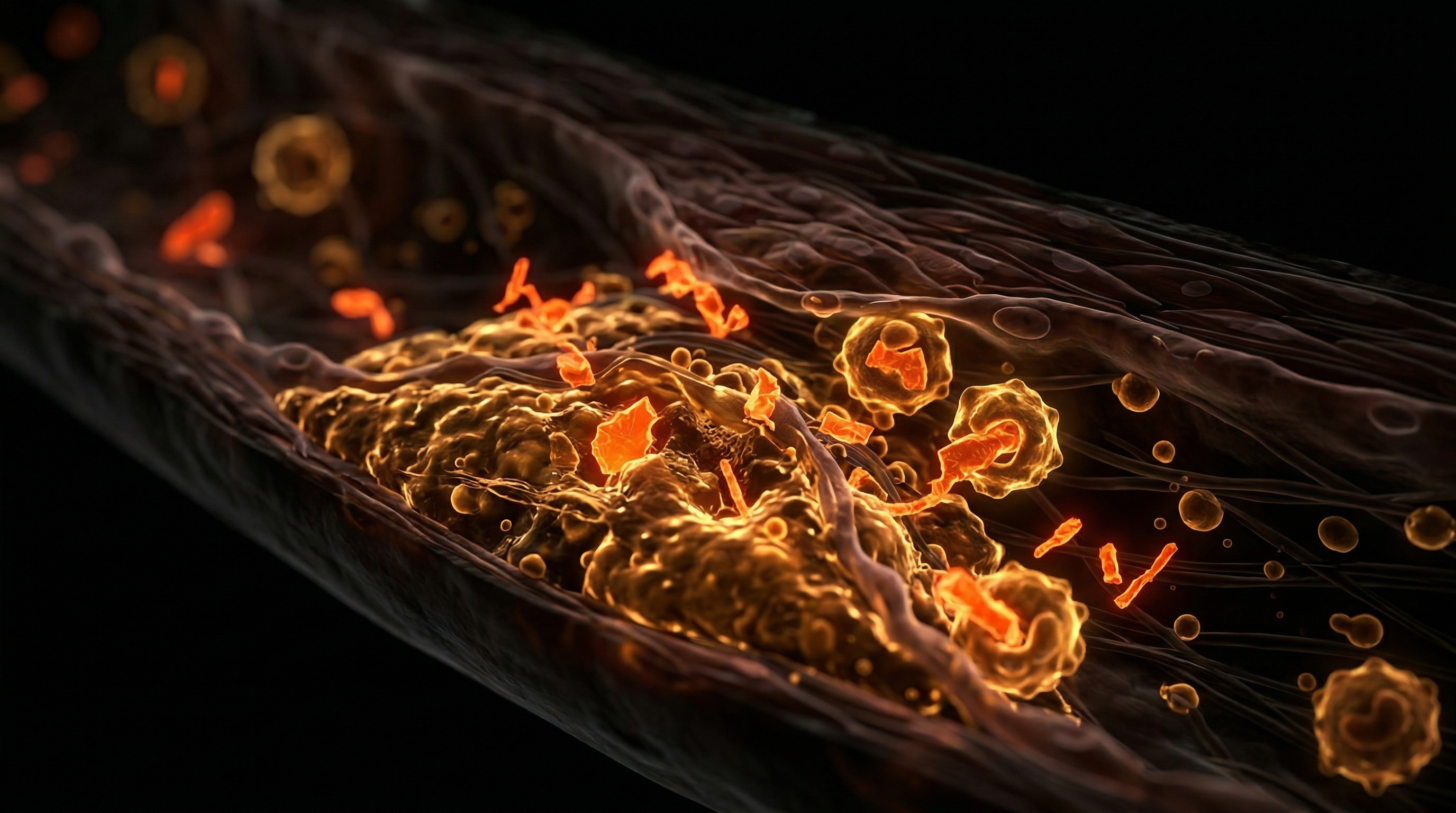
Microplastics (MPs)—defined as plastic particles smaller than 5mm—and their even more pervasive counterparts, nanoplastics (NPs), are no longer merely ecological pollutants found in our oceans. They are now officially part of the human biological matrix. Recent breakthrough research, most notably the landmark study published in the New England Journal of Medicine in March 2024, has confirmed a chilling reality: microplastics are not just passing through us; they are embedding themselves within the very arterial plaques that lead to myocardial infarction and stroke.
The discovery of Polyethylene (PE) and Polyvinyl Chloride (PVC) in the carotid artery plaques of patients undergoing endarterectomy has shifted the paradigm. We are no longer discussing "potential" risks. We are witnessing a direct correlation between the accumulation of synthetic polymers in the vascular wall and a staggering 4.5-fold increase in the risk of major adverse cardiovascular events (MACE).
As a researcher for INNERSTANDING, my objective is to peel back the layers of clinical obfuscation. We must investigate how these non-biodegradable foreign bodies interact with lipid metabolism, drive chronic inflammation, and ultimately destabilise the structural integrity of the human heart and vessels. This is not merely an environmental "nuisance"; it is a systemic biological disruption that challenges our fundamental understanding of lipid science.
Key Fact: Recent clinical data indicates that patients with detectable microplastics in their arterial plaques are nearly five times more likely to suffer a heart attack, stroke, or death within 34 months compared to those whose plaques are plastic-free.
The Biology — How It Works
The human body was never designed to metabolise or excrete synthetic polymers. When we consume microplastics through bottled water, inhale them from synthetic carpets, or absorb them through the skin via personal care products, they bypass our primary filtration systems.
The Entry Pathways
Microplastics enter the circulatory system via three primary routes:
- Ingestion (The Gut-Blood Barrier): Particles smaller than 10 micrometres can translocate across the intestinal epithelium via paracellular transport or uptake by M-cells in Peyer's patches. From there, they enter the lymphatic system or the portal vein.
- Inhalation (The Alveolar-Capillary Interface): Nanoplastics are small enough to penetrate deep into the alveoli of the lungs, crossing directly into the bloodstream. This route bypasses the first-pass metabolism of the liver, allowing for immediate systemic distribution.
- Dermal Absorption: While less common for larger MPs, nanoplastics used in cosmetics and industrial coatings can penetrate damaged or even healthy skin, reaching the underlying capillary beds.
The Protein Corona Effect
Once a plastic particle enters the blood, it does not remain "naked." Within seconds, it is swathed in a layer of proteins, primarily Apolipoproteins, fibrinogen, and albumin. This is known as the "Protein Corona."
This corona is the "biological identity" of the plastic. Ironically, microplastics have a high affinity for Low-Density Lipoprotein (LDL). By binding to LDL, the plastic particle effectively "hides" from the immune system while simultaneously altering the shape and function of the lipid molecule. This creates a hybrid "lipid-plastic" complex that the body’s scavenger receptors do not recognise as a natural entity, leading to erratic cellular responses.
Transport and Deposition
Plastics are hydrophobic. In the aqueous environment of the blood, they seek out areas of high lipid concentration or regions where blood flow is turbulent—specifically at arterial bifurcations. Because the plastics are often jagged or irregularly shaped at the nano-level, they cause mechanical micro-trauma to the Endothelial Glycocalyx, the delicate protective lining of the blood vessels. This damage acts as a "velcro" for circulating lipids, accelerating the initial stages of fatty streak formation.
Mechanisms at the Cellular Level
To understand why microplastics are so devastating to vascular health, we must zoom into the cellular environment of the arterial wall, specifically looking at the interaction between Macrophage Foam Cells and synthetic polymers.
Oxidative Stress and ROS Generation
When a microplastic particle is internalised by a vascular endothelial cell or a macrophage, it triggers an immediate inflammatory response. Unlike natural debris, the cell cannot break down the plastic via lysosomal enzymes. The cell attempts to digest the particle, leading to "frustrated phagocytosis."
- This process results in the massive overproduction of Reactive Oxygen Species (ROS).
- The resulting oxidative stress oxidises nearby LDL (oxLDL), which is significantly more atherogenic than standard LDL.
- The microplastic acts as a catalyst, continuously generating ROS as long as it remains lodged in the tissue.
The NLRP3 Inflammasome Activation
Perhaps the most critical mechanism is the activation of the NLRP3 inflammasome. Microplastics are sensed as "danger signals" (DAMPs). Their presence triggers the assembly of the NLRP3 complex, which leads to the secretion of highly inflammatory cytokines, specifically Interleukin-1β (IL-1β) and Interleukin-18.
- Chronic IL-1β elevation is a known driver of plaque instability.
- This cytokine storm recruits more monocytes to the site, creating a self-perpetuating loop of inflammation that thickens the arterial wall and narrows the lumen.
The Trojan Horse Effect
Microplastics are rarely "pure" polymers. They are carriers for a cocktail of industrial additives:
- Phthalates and Bisphenol A (BPA): These are potent endocrine disruptors that interfere with lipid signalling.
- Heavy Metals: Lead, cadmium, and mercury often adsorb onto the surface of plastics in the environment.
- Persistent Organic Pollutants (POPs): Plastics act as "sponges" for PCBs and pesticides.
When the plastic particle lodges in a vascular plaque, it slowly leaches these toxins directly into the arterial tissue. This "Trojan Horse" effect means the vascular system is dealing not just with a physical obstruction, but with a localised release of chemical "poison" that prevents the normal repair mechanisms of the vessel wall.
Autophagy Inhibition
The accumulation of plastics within the lysosomes of cells inhibits autophagy—the body's natural "recycling" process. In a healthy vessel, autophagy helps clear out damaged proteins and lipids. Microplastics clog this machinery. When autophagy fails, the cell becomes apoptotic (dies), contributing to the formation of a Necrotic Core within the plaque. A large necrotic core is the hallmark of a "vulnerable plaque" destined for rupture.
Environmental Threats and Biological Disruptors
The ubiquity of plastics in our environment has created a constant, low-grade exposure that the human body is ill-equipped to handle. We are essentially living in a "plastic soup."
The Primary Offenders
- Tyre Wear Particles (TWP): This is one of the most overlooked sources of vascular damage. As tyres wear down on roads, they release a mixture of synthetic rubber and chemical antioxidants like 6PPD-quinone. These particles are small enough to be inhaled and have been shown in animal models to cause acute vascular toxicity.
- Synthetic Textiles: Every time you wash a polyester or acrylic garment, thousands of microfibres enter the water system. These elongated fibres are particularly difficult for macrophages to clear and can become physically "stitched" into vascular tissues.
- Bottled Water: Research using stimulated Raman scattering (SRS) microscopy has revealed that a single litre of bottled water can contain up to 240,000 detectable plastic fragments. The process of "squeezing" the bottle or the heat used during transport accelerates the shedding of PET and Nylon particles into the liquid.
The "Plastisphere" and Pathogen Transport
In the environment, microplastics develop a biofilm known as the "Plastisphere." This biofilm can harbour pathogenic bacteria (such as Vibrio species) and antibiotic-resistance genes. When these "colonised" plastics enter the human body, they introduce foreign microbiota directly into the bloodstream. This can trigger systemic low-grade endotoxemia, a condition that significantly elevates the risk of lipid deposition and chronic vascular inflammation.
Important Statistic: It is estimated that the average person ingests approximately 5 grams of plastic every week—roughly the equivalent weight of a credit card.
The Cascade: From Exposure to Disease
The progression from microplastic ingestion to a fatal cardiac event is a multi-stage cascade that redefines our understanding of "clogged arteries."
Stage 1: The Initial Insult
The cascade begins with the disruption of the Endothelial Barrier. Microplastics, especially those with sharp, fragmented geometries, cause mechanical abrasion. This "sandpaper effect" on the micro-scale creates gaps between endothelial cells, allowing LDL cholesterol to seep into the sub-endothelial space (the tunica intima).
Stage 2: Accelerated Lipid Oxidation
Once in the intima, the presence of plastic-induced ROS (Reactive Oxygen Species) ensures that the LDL is rapidly oxidised. Oxidised LDL is the primary trigger for the recruitment of macrophages. However, unlike a standard plaque where the macrophage might eventually successfully sequester the lipid, here the macrophage also "eats" the plastic particle.
Stage 3: The Formation of "Plastic Foam Cells"
A standard "foam cell" is a macrophage bloated with lipids. A "plastic foam cell" is a macrophage that is both lipid-laden and physically distended by synthetic polymers. These cells are dysfunctional. They cannot migrate out of the plaque, and they cannot effectively communicate with other immune cells. They simply sit in the vessel wall, secreting inflammatory markers and proteases (like MMPs - Matrix Metalloproteinases).
Stage 4: Plaque Instability and Thinning of the Fibrous Cap
This is where the danger peaks. MMPs are enzymes that digest collagen. The stability of an arterial plaque depends on a thick, strong "fibrous cap" of collagen that keeps the fatty, necrotic core away from the bloodstream.
- The presence of microplastics stimulates the over-secretion of MMPs.
- The fibrous cap becomes thin and brittle.
- The mechanical stress of blood pressure, combined with the "unnatural" rigidity provided by the embedded plastics, causes the plaque to rupture.
Stage 5: Thrombosis
When the plaque ruptures, the internal contents (including the plastics) are exposed to the blood. This triggers an immediate clotting cascade. The plastic particles may even act as a scaffold for fibrin and platelets, making the resulting clot (thrombus) larger and more resistant to natural thrombolysis (dissolving). The result is a heart attack or stroke.
What the Mainstream Narrative Omits
The current discourse surrounding microplastics is heavily sanitised by regulatory bodies and industrial interests. There is a profound "toxicological lag" between what scientists are seeing in the lab and what public health officials are willing to admit.
The Myth of "Inertness"
For years, the plastic industry argued that polymers like Polyethylene are biologically inert because they don't react chemically in a standard test tube. This ignore the Physical Toxicity and the Surface Chemistry of the particles. Mainstream narratives focus on "chemical toxicity" (BPA, etc.) while ignoring the mechanical damage these particles do to the delicate structures of the cell, such as the mitochondria and the endoplasmic reticulum.
The Synergy with Modern Diets
The mainstream narrative treats "dietary cholesterol" and "environmental plastics" as separate issues. In reality, they are synergistic. A diet high in processed seed oils (rich in Omega-6) provides the "fuel" (oxidisable lipids) for the "fire" (plastic-induced inflammation). Without the plastics, the body might manage the lipid load; without the lipids, the plastics might cause less deposition. Together, they create a perfect storm for vascular collapse.
Regulatory Capture and Testing Limits
Most standard "toxicity" tests for plastics look for immediate cell death. They do not look for the subtle, long-term disruption of lipid metabolism or the destabilisation of plaques over decades. Furthermore, the detection of nanoplastics is prohibitively expensive and technically difficult, meaning they are conveniently "omitted" from most environmental safety reports.
The Suppression of "Bio-Persistence"
There is very little talk in mainstream media about the fact that microplastics have no "half-life" in the human body. Unlike organic toxins that the liver can conjugate and excrete, these polymers may stay in your arterial walls for the rest of your life. The "accumulation rate" is currently higher than the "clearance rate" for almost every human on Earth.
The UK Context
The United Kingdom faces a unique set of challenges regarding microplastic-driven vascular disease, driven by geography, infrastructure, and historical industrial practices.
The British Waterways Crisis
The UK’s combined sewage system is antiquated. During heavy rainfall, untreated sewage—containing massive amounts of microplastics from domestic laundry and personal care products—is discharged directly into rivers like the Thames, the Severn, and the Mersey.
- A study by the University of Manchester found that parts of the River Tame had the highest levels of microplastics ever recorded in a riverbed globally.
- This contaminated water enters the agricultural cycle and the seafood chain, particularly in the North Sea, a major source of UK fish.
The "Tyre Dust" Problem in London
London has some of the highest concentrations of atmospheric microplastics in the world, largely due to "tyre wear" and "brake wear" from the high density of heavy vehicles. Even with the transition to Electric Vehicles (EVs), the problem persists; EVs are typically heavier than internal combustion engine cars, leading to increased tyre abrasion and, consequently, more airborne microplastics in the London Underground and along major arteries like the M25.
UK Regulatory Response: The Plastic Tax and Beyond
While the UK government introduced a "Plastic Packaging Tax" in 2022, it focuses on recycling and waste reduction rather than the biological health impacts of microplastics. The Food Standards Agency (FSA) currently maintains that the risk from microplastics in food is "unlikely" to be harmful, a stance that many independent researchers find increasingly untenable in light of the March 2024 NEJM findings.
The NHS Burden
Cardiovascular disease costs the UK economy an estimated £30 billion per year. If even 10% of these cases are being accelerated by microplastic-induced plaque instability, the failure to address environmental plastic pollution represents a catastrophic oversight in public health policy.
Protective Measures and Recovery Protocols
While it is impossible to completely avoid microplastics in the modern world, there are strategic biological and lifestyle interventions that may mitigate their impact on vascular lipid deposition.
1. Filtration and Source Reduction
- Water: Use high-quality reverse osmosis (RO) filtration systems. Standard carbon filters are often insufficient for nanoplastics. Avoid all water bottled in PET plastic.
- Air: Utilise HEPA H13 or H14 air purifiers in the home, especially in bedrooms. This significantly reduces the inhalation of synthetic carpet fibres and tyre dust.
- Clothing: Transition to natural fibres (wool, silk, cotton, linen). This reduces the "personal cloud" of microplastics that you inhale throughout the day.
2. Nutritional Fortification
To counter the "oxidative stress" and "NLRP3" activation, specific nutrients are essential:
- Sulforaphane (from Broccoli Sprouts): Activates the Nrf2 pathway, the body's master antioxidant switch, which helps cells defend against the ROS generated by plastic particles.
- Omega-3 (EPA/DHA): High-dose, high-purity (tested for plastics!) fish oil or algal oil can help "resolve" inflammation via pro-resolving mediators (SPMs).
- Vitamin E (Tocotrienols): Specifically, the Delta and Gamma tocotrienols are potent at preventing the lipid peroxidation that microplastics trigger in the arterial wall.
3. Enhancing Elimination: The Role of Heat and Autophagy
- Sauna Therapy: While plastics don't "sweat out" easily, the increased circulation and the induction of Heat Shock Proteins (HSPs) can help the body manage the cellular stress caused by plastic accumulation. Some studies suggest that certain phthalates are excreted via sweat.
- Intermittent Fasting: By inducing Macro-autophagy, fasting may give macrophages a better chance to clear out the lipid portion of the "plastic foam cells," even if they cannot digest the plastic itself.
4. Vascular Support
- Vitamin K2 (MK-7): Helps ensure that calcium is directed to the bones and not the arterial wall. Since microplastics can act as a "nidus" (a starting point) for calcification within a plaque, K2 is a critical defensive nutrient.
- Glycocalyx Support: Supplements like Rhamnan Sulphate (from green seaweed) can help repair the delicate endothelial lining, making it harder for plastics and lipids to "stick" to the vessel walls.
Summary: Key Takeaways
The emergence of microplastics as a primary driver of vascular lipid deposition represents one of the most significant shifts in medical science this century. We can no longer view heart disease as a simple matter of "bad luck" or "bad diet."
- The Evidence is Irrefutable: Microplastics like PE and PVC are physically present in human arterial plaques and are directly linked to a 4.5x increase in cardiovascular mortality.
- The Mechanism is Synergistic: Plastics do not act alone; they bind to LDL cholesterol, create a "Protein Corona," and trigger a "Trojan Horse" effect by leaching endocrine disruptors into the vascular wall.
- The Damage is Multifold: From mechanical abrasion of the endothelium to the activation of the NLRP3 inflammasome and the inhibition of autophagy, microplastics attack vascular health from every angle.
- The Mainstream Narrative is Lacking: Standard medical protocols do not yet account for "plastic load," and regulatory bodies are lagging behind the molecular reality of the "Plastosphere."
- Proactive Defence is Mandatory: Through advanced water filtration, the use of natural fibres, and the targeted use of Nrf2 activators and autophagy-inducing lifestyles, individuals must take their vascular health into their own hands.
The "inner standing" of this crisis is clear: the plastic in our oceans has found its way into our hearts. Only by acknowledging this biological invasion can we begin to develop the protocols necessary to survive and thrive in a polymerised world.
This article is provided for informational and educational purposes only. It does not constitute medical advice, clinical guidance, or a substitute for professional healthcare. Information reflects cited research at time of publication. Always consult a qualified healthcare professional before acting on any health information.
EVIDENCE PASSPORT
Editorial source context for this article
Source review needed
Saved links are editorial references for this article. They may support specific claims rather than every sentence. Open and assess each source in context. This passport does not independently verify them.
Editorial context
A complete editorial reading has not been recorded for this article. Source links remain available for you to open and assess directly.
Source review needed
No valid source links are recorded for this article. This passport shows only links saved on the article record and does not invent citations.
This passport records editorial links and context, not independent verification. Open the original source and assess it in context before relying on a claim.
Medical Disclaimer
The information in this article is for educational purposes only and does not constitute medical advice, diagnosis, or treatment. Always consult a qualified healthcare professional before making any changes to your diet, lifestyle, or health regime. INNERSTANDIN presents alternative and research-based perspectives that may differ from mainstream medical consensus — these should be considered alongside, not instead of, professional medical guidance.
Read Full DisclaimerContinue the thread
Keep this question moving.
Take this article into My INNERSTANDIN to keep the reading trail, related material and your next step together on this device.
Explore this in the Body Map
See where this hits your biology. Interactive anatomy, threats, and protective protocols.
Dig deeper in the Library
Free, longform PDF volumes that go beyond headlines into mechanisms and references.