
Microplastics: Synthetic Particles Now Inside Every Human Body
Updated May 2026
Microplastics — plastic fragments smaller than 5mm — and nanoplastics (sub-micron particles) have permeated every ecosystem on Earth and are now detectable in human blood, breast milk, placentae, lung tissue, liver, kidney, and testes, with a 2022 study published in Environment International providing the first direct evidence of microplastics circulating in human blood. These particles carry a complex chemical payload: not only the polymer base (including polypropylene, polyethylene, and polystyrene) but also the plasticisers, flame retardants, UV stabilisers, and heavy metal catalysts incorporated during manufacturing — compounds including phthalates, BPA, PFAS, cadmium, and lead that leach continuously from the plastic matrix into surrounding tissue. The biological consequences of this unprecedented internal contamination — including endocrine disruption, oxidative stress, inflammatory activation, gut barrier disruption, and reproductive toxicity — are only beginning to be characterised, yet the exposure continues to increase with every passing year of plastic production.
Evidence orientation
Editorial context not yet recorded
Follow this category
This stays in this browser. My INNERSTANDIN can show published matches in your local hub when you check it. It does not send email, push, or alert notifications.
Local learning review
A private browser aid for revisiting ideas. It is not an alert or a health recommendation.
Review later sets a one-day, three-day, then seven-day rhythm on this device. Choose it only when you want to revisit this article.
Overview
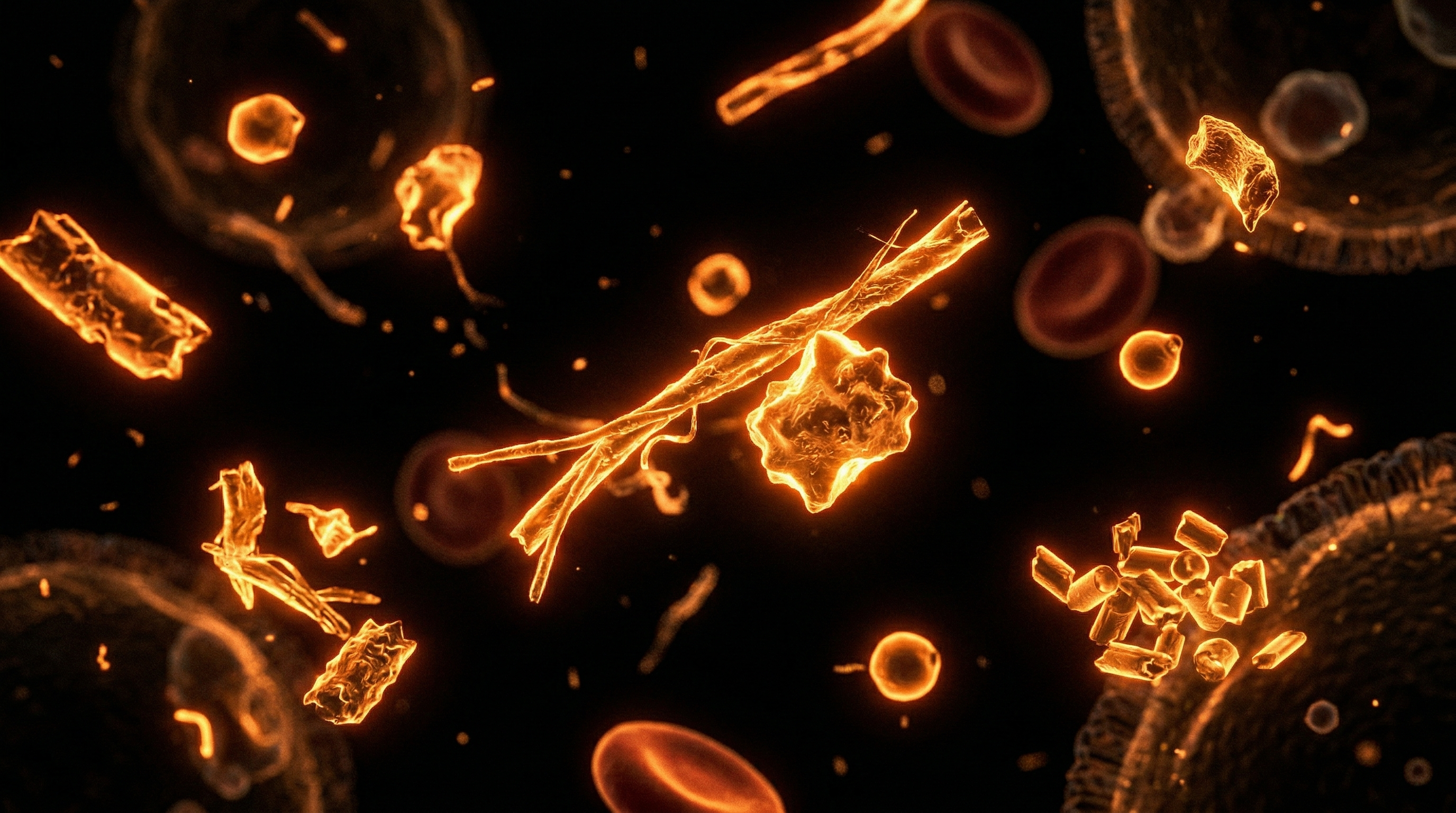
We are currently living in the Plastisosphere, a term coined by microbial ecologists to describe an entirely new ecosystem where synthetic polymers serve as the primary structural foundation. However, this ecosystem is no longer confined to the floating gyres of the Pacific Ocean or the deepest trenches of the Mariana. It has migrated. It has infiltrated the human biological matrix. We are witnessing the dawn of the Internalised Plastic Age, where the boundary between our organic tissues and synthetic industrial waste has effectively dissolved.
For decades, the mainstream narrative regarding plastic pollution focused almost exclusively on the visual tragedy of sea turtles and choked oceans. This was a convenient distraction. While the world focused on the macro, the micro and nano were quietly permeating the air we breathe, the water we drink, and the very food chain that sustains us. Today, we are forced to confront a terrifying biological reality: microplastics are now detectable in human blood, breast milk, placentae, lung tissue, liver, kidneys, and testes.
In 2022, a groundbreaking study published in the journal Environment International provided the first definitive evidence of microplastics circulating in human blood. Researchers detected plastic particles in 80% of the people tested, revealing that these synthetic invaders are not merely passing through the digestive tract—they are being absorbed into the systemic circulation.
Microplastics, defined as fragments smaller than 5mm, and nanoplastics, which are sub-micron in size, are not inert. They are biologically active chemical delivery systems. When a particle of polyethylene or polystyrene enters the human body, it does not arrive alone. It carries a hitchhiking cargo of endocrine-disrupting chemicals (EDCs), heavy metals, and persistent organic pollutants (POPs). This article will expose the cellular mechanisms of this contamination, the systemic failures that allowed it to occur, and the profound implications for human health and longevity.
##
##
The Biology — How It Works
The human body was never evolved to recognise or metabolise synthetic polymers. From a biological perspective, microplastics represent an alien structural challenge to our immune and detoxification systems. The process of contamination begins with three primary routes of entry: ingestion, inhalation, and dermal absorption.
Ingestion: The Trojan Horse of the Food Chain
The most obvious route is the gastrointestinal tract. Every time we consume food packaged in plastic, use a plastic kettle, or drink from a plastic bottle, we ingest thousands of particles. However, the contamination goes deeper. Microplastics have moved up the trophic levels. When we eat fish, we are consuming the plastic that the fish consumed, often concentrated with fat-soluble toxins.
Once inside the gut, the presence of microplastics disrupts the delicate balance of the gut microbiome. The plastic particles can act as surfaces for the growth of pathogenic "biofilms," altering the microbial diversity that is essential for immune function and neurotransmitter production. Furthermore, nanoplastics—due to their infinitesimal size—are capable of bypassing the gut barrier entirely through a process called persorption, entering the lymphatic system and eventually the bloodstream.
Inhalation: The Invisible Dust
We are currently breathing in synthetic fibres at a rate that would have been unthinkable fifty years ago. Most indoor environments are saturated with microfibres shedding from carpets, synthetic clothing (polyester, acrylic, nylon), and upholstery.
It is estimated that the average person inhales between 60,000 and 100,000 microplastic particles every year. Because these fibres are often jagged and irregular, they lodge deep within the alveoli of the lungs, where they evade the normal clearance mechanisms of the mucociliary escalator.
Unlike organic dust, which can eventually be broken down by macrophages, synthetic polymers are largely non-biodegradable. They persist in the lung tissue, creating a state of chronic, low-grade inflammation that can lead to fibrotic changes and compromised respiratory function.
Systemic Distribution: The Bloodstream and Beyond
The 2022 blood study changed everything. It proved that the body’s internal barriers are not impenetrable. Once in the blood, microplastics are transported to every organ. The study identified several specific polymers:
- Polyethylene Terephthalate (PET): Commonly used in drink bottles.
- Polyethylene (PE): Used in carrier bags and food packaging.
- Polymers of Styrene: Used in food containers and insulation.
The presence of these particles in the blood means they are in constant contact with the vascular endothelium, the delicate lining of our blood vessels. This creates a permanent state of vascular friction, where hard, synthetic particles physically abrade cells that were designed to interact only with soft, organic components.
##
##
Mechanisms at the Cellular Level
To understand why microplastics are so hazardous, we must look at the "nanoscale" interaction between the particle and the cell. This is not just about physical blockage; it is about biochemical interference.
The Protein Corona Effect
When a microplastic particle enters a biological fluid (like blood or interstitial fluid), it is immediately coated by a layer of proteins, lipids, and carbohydrates. This is known as the protein corona. This "biomolecular cloak" determines how the cell perceives the particle. The body may not see a piece of plastic; it may see a "pseudo-biological" entity. This allows the particle to be actively taken up by cells via endocytosis, effectively "tricking" the cell into bringing the toxin inside its membrane.
Oxidative Stress and Reactive Oxygen Species (ROS)
Once inside the cell, microplastics trigger the production of Reactive Oxygen Species (ROS). The physical presence of the particle interferes with the mitochondria—the cell's power plants. When mitochondria are stressed, they leak high-energy electrons that react with oxygen to create free radicals.
- These radicals cause lipid peroxidation, damaging the cell membrane.
- They cause protein carbonylation, denaturing the enzymes the cell needs to function.
- They cause DNA strand breaks, which can lead to mutations and the initiation of oncogenesis (cancer).
Lysosomal Dysfunction
Cells use lysosomes as "waste disposal units" to break down unwanted material. Because lysosomes cannot digest synthetic polymers, the microplastics accumulate within these organelles. Over time, the lysosome becomes "overstuffed" and may rupture, releasing digestive enzymes into the cytoplasm of the cell, leading to autolysis (cell self-destruction) and widespread tissue damage.
The NF-κB Inflammatory Pathway
Microplastics are potent activators of the NF-κB (nuclear factor kappa-light-chain-enhancer of activated B cells) signalling pathway. This is the master switch for inflammation. Constant activation of this pathway leads to the chronic release of pro-inflammatory cytokines like IL-6 and TNF-alpha. This "inflammaging" is a primary driver of almost all modern chronic diseases, from cardiovascular disease to neurodegeneration.
##
##
Environmental Threats and Biological Disruptors
The plastic polymer itself is only half of the story. The true "poison pill" lies in the additives—the thousands of chemicals used to give plastic its specific properties (flexibility, colour, flame resistance). These chemicals are not chemically bound to the plastic matrix; they are merely mixed in. This means they leach out into the body continuously.
Endocrine Disruptors: BPA and Phthalates
The most notorious additives are Bisphenol A (BPA) and Phthalates. These are known as Endocrine Disrupting Chemicals (EDCs) because they are molecular mimics of our natural hormones, particularly oestrogen.
- BPA binds to oestrogen receptors, sending "false signals" to the body. This is linked to early puberty, PCOS (Polycystic Ovary Syndrome), and breast and prostate cancers.
- Phthalates interfere with androgen (testosterone) signalling. This is a primary suspect in the global decline of sperm counts and the increasing incidence of male reproductive tract abnormalities.
PFAS: The "Forever Chemicals"
Many microplastics are coated with PFAS (per- and polyfluoroalkyl substances) to make them grease-resistant or waterproof. PFAS are virtually indestructible in the environment and the body. They interfere with liver function, disrupt lipid metabolism (leading to "plastic-induced obesity"), and have been linked to kidney cancer and thyroid disease.
Heavy Metal Catalysts
The manufacturing of plastic often requires catalysts like antimony, lead, and cadmium. As the microplastic particle erodes within the body, these heavy metals are released directly into the tissues. Cadmium is a potent nephrotoxin (kidney toxin) and a known carcinogen, while lead is a neurotoxin that permanently lowers cognitive capacity and alters behaviour.
A critical but overlooked threat is the "Cocktail Effect". While regulatory bodies often test the toxicity of single chemicals, they never test the synergistic toxicity of 20 different plastic additives, heavy metals, and persistent pollutants all interacting within a single human cell.
##
##
The Cascade: From Exposure to Disease
The accumulation of microplastics and their associated chemical payload triggers a cascade of biological failures that manifest as clinical disease. We are no longer talking about "potential" risks; we are seeing these correlations in the data.
Reproductive Collapse
The discovery of microplastics in human placentae and testes is perhaps the most alarming finding of the last decade. The placenta is the most highly regulated barrier in the human body, designed to protect the developing foetus from toxins. If microplastics can cross the placenta, the foetus is being exposed to synthetic polymers during the most sensitive windows of development.
In the testes, microplastics have been found in both canine and human samples. These particles disrupt the blood-testis barrier, leading to:
- Reduced sperm motility.
- Decreased sperm count.
- Morphological abnormalities in sperm.
- Disruption of Leydig cell function (the cells responsible for testosterone production).
Neurotoxicity and the Blood-Brain Barrier
Evidence is mounting that nanoplastics can cross the blood-brain barrier (BBB). Once in the brain, they trigger microglial activation. Microglia are the brain's resident immune cells. When they are chronically activated by foreign particles, they release neurotoxic chemicals that damage neurons. This process is a hallmark of Alzheimer’s, Parkinson’s, and ALS. Furthermore, the plasticisers (like BPA) have been shown to interfere with synaptogenesis—the way brain cells connect—potentially contributing to the rise in neurodevelopmental disorders like ADHD and autism.
Metabolic Dysfunction and "Obesogens"
We are currently in the midst of a global obesity epidemic that cannot be explained by calories alone. Microplastics and their additives act as obesogens—chemicals that reprogram the body's metabolic set point. They can:
- Increase the number of fat cells (adipocytes).
- Increase the amount of fat stored in those cells.
- Interfere with leptin signalling, the hormone that tells the brain you are full.
- Disrupt the thyroid gland, slowing down the basal metabolic rate.
Autoimmunity and the Leaky Gut
By disrupting the intestinal lining (the "tight junctions"), microplastics contribute to Increased Intestinal Permeability, or "Leaky Gut." This allows undigested food particles and bacterial endotoxins (LPS) to enter the bloodstream, triggering a systemic immune response. The body, in its attempt to attack these invaders, can become confused and begin attacking its own tissues, leading to the explosion of autoimmune conditions like Hashimoto's thyroiditis and rheumatoid arthritis.
##
##
What the Mainstream Narrative Omits
The mainstream media and regulatory bodies have been glacially slow to react to the microplastic crisis. This delay is not accidental; it is a byproduct of a global economy that is fundamentally tethered to the production of hydrocarbons and their primary derivative: plastic.
The Myth of "Safe Levels"
Regulatory bodies often use "No Observed Adverse Effect Levels" (NOAEL) to set safety standards. However, these standards are based on acute toxicity—will this chemical kill you immediately? They do not account for bioaccumulation—the fact that these particles build up in your tissues over 70 years. There is no such thing as a "safe level" of a non-biodegradable synthetic polymer in the human bloodstream.
The Recycling Deception
For years, the public was told that the solution to plastic pollution was recycling. We now know that recycling actually increases microplastic shedding. The mechanical process of breaking down old plastic into pellets creates trillions of micro- and nanoplastic particles that are released into the local environment through wastewater. Furthermore, recycled plastic often contains a more concentrated "cocktail" of toxins because different types of plastic (and their various additives) are melted together.
The Economic Impetus
Global plastic production is projected to triple by 2050. As the world shifts away from fossil fuels for transport, the petrochemical industry is pivoting to plastic production to maintain profitability. This means that even as we become more "eco-aware," the actual volume of synthetic particles being pumped into our biosphere is accelerating.
The "Precautionary Principle"—a fundamental tenet of European law which states that if an action or policy has a suspected risk of causing harm to the public, the burden of proof that it is not harmful falls on those taking the action—has been completely ignored regarding microplastics.
##
##
The UK Context
The United Kingdom, as an island nation with a heavy reliance on imported packaged goods and a legacy of Victorian-era water infrastructure, faces a unique set of challenges regarding microplastic contamination.
The Thames: A Synthetic River
Research by Royal Holloway, University of London, found that the River Thames has some of the highest recorded levels of microplastics in the world. Up to 80% of some fish species in the Thames were found to have plastic in their guts. This is not just an environmental issue; it is a public health issue for those consuming locally sourced seafood or using water extracted from these systems.
The Role of UK Regulatory Bodies
In the UK, the Food Standards Agency (FSA) and the Environment Agency are responsible for monitoring these threats. However, critics argue that the monitoring of microplastics in tap water and the food chain is woefully inadequate. While some EU nations have begun implementing more stringent filtration requirements for wastewater treatment plants, the UK has been slow to mandate the technology required to capture nanoplastics.
The NHS and the Burden of Chronic Disease
The NHS is currently buckling under the weight of chronic inflammatory and endocrine-related diseases. If, as the evidence suggests, microplastics are a primary environmental driver of these conditions, the failure to regulate plastic production is a direct contributor to the UK’s healthcare crisis. We are treating the symptoms (infertility, obesity, cancer) while ignoring the synthetic particles that are driving the pathology.
##
##
Protective Measures and Recovery Protocols
While the systemic problem requires global policy change, individuals can and must take steps to reduce their internal "plastic load." Because we cannot completely avoid exposure, the goal is to minimise intake and maximise the body's natural clearance mechanisms.
Step 1: Eliminate Ingestion Sources
- Stop Drinking from Plastic Bottles: Switch to glass or high-quality stainless steel. Even "BPA-free" plastics often use BPS or BPF, which are equally toxic.
- Filter Your Water: Use a Reverse Osmosis (RO) filtration system with a 0.001-micron rating. Standard "carbon filters" (like pitcher filters) are often ineffective at removing nanoplastics.
- Ditch the Plastic Kettle: Boiling water in plastic significantly increases the leaching of polymers and additives. Use a glass or all-stainless steel kettle.
- Avoid Plastic Food Containers: Never microwave food in plastic. Heat accelerates the "migration" of chemicals into your food. Use glass or ceramic for storage and heating.
- Be Wary of "Disposable" Coffee Cups: Most "paper" cups are lined with a thin film of polyethylene that sheds millions of particles when in contact with hot liquid. Use a reusable glass or ceramic cup.
Step 2: Reduce Inhalation and Dermal Absorption
- Natural Fibres Only: Gradually replace synthetic clothing (polyester/nylon) with natural fibres like organic cotton, wool, silk, or linen. Synthetic clothes shed microplastics every time you move.
- Ventilation and HEPA Filtration: Use high-quality HEPA air purifiers to capture airborne microfibres and dust in your home and office.
- Dust Frequently: Microplastics accumulate in household dust. Use a vacuum with a HEPA filter and damp-dust surfaces to prevent particles from becoming airborne again.
Step 3: Support Biological Clearance (The Recovery Protocol)
Since the body cannot easily digest plastic, we must support the pathways that handle the toxic cargo and the inflammation it causes.
- Upregulate Autophagy: Autophagy is the body's "cellular cleaning" process. It is the only known way the body can degrade and remove cellular debris. Strategies include intermittent fasting and the use of compounds like spermidine and resveratrol.
- Glutathione Support: Glutathione is the body's master antioxidant and is essential for detoxifying the heavy metals and EDCs carried by microplastics. Support its production with N-Acetyl Cysteine (NAC), liposomal glutathione, and selenium.
- Binder Therapy: Certain substances can help "trap" leached toxins in the gut, preventing their reabsorption. These include modified citrus pectin (MCP), zeolite clinoptilolite, and activated charcoal (use occasionally and away from nutrients).
- Phytonutrient Defence: Consume high amounts of cruciferous vegetables (broccoli, kale, cauliflower) which contain Sulforaphane. This compound activates the Nrf2 pathway, the body’s primary defence against oxidative stress and chemical toxins.
- Sauna Therapy: Sweating is a primary route for the excretion of phthalates, BPA, and certain heavy metals. Regular sauna use (infrared or traditional) can help reduce the body burden of plastic-associated chemicals.
##
##
Summary: Key Takeaways
The infiltration of the human body by microplastics is an unprecedented biological event. It represents a "silent emergency" that threatens the very integrity of our DNA, our hormones, and our future generations.
- Pervasiveness: Microplastics are now found in the blood of 80% of people and have been detected in every major organ system, including the placenta and brain.
- Chemical Cargo: The toxicity of plastic is not just the polymer, but the "cocktail" of additives like BPA, Phthalates, PFAS, and heavy metals that leach into tissues.
- Cellular Disruption: Particles trigger oxidative stress, chronic inflammation via the NF-κB pathway, and mitochondrial dysfunction.
- Reproductive and Metabolic Threat: Microplastics are linked to the global decline in fertility and the rise in "plastic-induced" obesity and metabolic syndrome.
- UK Crisis: The UK faces significant contamination in its waterways and food supply, with inadequate regulatory oversight of nanoplastic levels.
- Immediate Action: While we cannot wait for government intervention, we can dramatically reduce our exposure by eliminating plastic contact with food/water and supporting our body's detoxification and autophagy pathways.
The era of ignoring microplastics as a "distant environmental problem" is over. The particles are here. They are inside us. Our response must be as systemic and as persistent as the particles themselves. We must demand a transition away from the synthetic economy while aggressively protecting our own biological sanctity. The future of human health depends on our ability to purge the synthetic from the organic.
This article is provided for informational and educational purposes only. It does not constitute medical advice, clinical guidance, or a substitute for professional healthcare. Information reflects cited research at time of publication. Always consult a qualified healthcare professional before acting on any health information.
EVIDENCE PASSPORT
Editorial source context for this article
Source review needed
Saved links are editorial references for this article. They may support specific claims rather than every sentence. Open and assess each source in context. This passport does not independently verify them.
Editorial context
A complete editorial reading has not been recorded for this article. Source links remain available for you to open and assess directly.
Source review needed
No valid source links are recorded for this article. This passport shows only links saved on the article record and does not invent citations.
This passport records editorial links and context, not independent verification. Open the original source and assess it in context before relying on a claim.
Medical Disclaimer
The information in this article is for educational purposes only and does not constitute medical advice, diagnosis, or treatment. Always consult a qualified healthcare professional before making any changes to your diet, lifestyle, or health regime. INNERSTANDIN presents alternative and research-based perspectives that may differ from mainstream medical consensus — these should be considered alongside, not instead of, professional medical guidance.
Read Full DisclaimerContinue the thread
Keep this question moving.
Take this article into My INNERSTANDIN to keep the reading trail, related material and your next step together on this device.
Explore this in the Body Map
See where this hits your biology. Interactive anatomy, threats, and protective protocols.
Dig deeper in the Library
Free, longform PDF volumes that go beyond headlines into mechanisms and references.