
How Mitochondrial Biogenesis Rewires Your Cellular Energy Potential
Updated May 2026
Understanding how to trigger the creation of new mitochondria is essential for long-term metabolic health and vitality. This article explores the mechanisms of biogenesis and how lifestyle interventions can stimulate this vital process.
Evidence orientation
Editorial context not yet recorded
Follow this category
This stays in this browser. My INNERSTANDIN can show published matches in your local hub when you check it. It does not send email, push, or alert notifications.
Local learning review
A private browser aid for revisiting ideas. It is not an alert or a health recommendation.
Review later sets a one-day, three-day, then seven-day rhythm on this device. Choose it only when you want to revisit this article.
Overview
In the halls of modern medicine, we are often taught to view disease as a collection of disparate symptoms localized within specific organs. We treat the heart for cardiovascular issues, the brain for cognitive decline, and the pancreas for metabolic dysfunction. However, this compartmentalised approach ignores a fundamental, unifying truth: the health of every single physiological system is tethered to the efficiency of the mitochondria. These organelles, often reductively described as the "powerhouses of the cell," are in fact the sophisticated sensory hubs that dictate the terms of our survival, our longevity, and our biological potential.
The prevailing health crisis in the United Kingdom—characterised by a tidal wave of chronic fatigue, obesity, and neurodegenerative disorders—is not merely a failure of diet or a lack of exercise. It is a crisis of bioenergetic bankruptcy. We are living in an era where our cellular machinery is under constant siege from environmental toxins, mismatched light cycles, and nutrient-poor diets, leading to a state of mitochondrial decay. But there is a biological silver lining: Mitochondrial Biogenesis.
Mitochondrial biogenesis is the physiological process by which a cell increases its mitochondrial mass. It is not merely a "repair" mechanism; it is an act of cellular alchemy that rewires your energetic capacity from the ground up. By stimulating the birth of new, high-functioning mitochondria, we can effectively reverse the biological age of our cells, restore metabolic flexibility, and reclaim the vitality that modern life has systematically eroded. This article serves as a definitive guide to the science of biogenesis, exposing the mechanisms that the mainstream narrative often overlooks and providing a blueprint for cellular resurgence.
##
The Biology — How It Works
To understand biogenesis, we must first appreciate the unique evolutionary history of the mitochondrion. Approximately 1.5 billion years ago, a primordial eukaryotic cell engulfed an aerobic bacterium. Instead of digesting it, the two formed a symbiotic alliance. This bacterium became the mitochondrion. This is why mitochondria possess their own distinct DNA (mtDNA), separate from the DNA found in the cell nucleus. This dual-genome system is the foundation of our energy production and the primary target of biogenesis.
Mitochondrial biogenesis is the growth and division of pre-existing mitochondria. Unlike other organelles that are synthesized de novo by the cell's internal machinery, mitochondria proliferate through a process similar to bacterial binary fission. This process is governed by a delicate crosstalk between the nucleus and the mitochondrial genome. When the cell perceives an increased demand for energy—or a deficit in current production—it triggers a genetic "SOS" signal that initiates the replication of mtDNA and the synthesis of mitochondrial proteins.
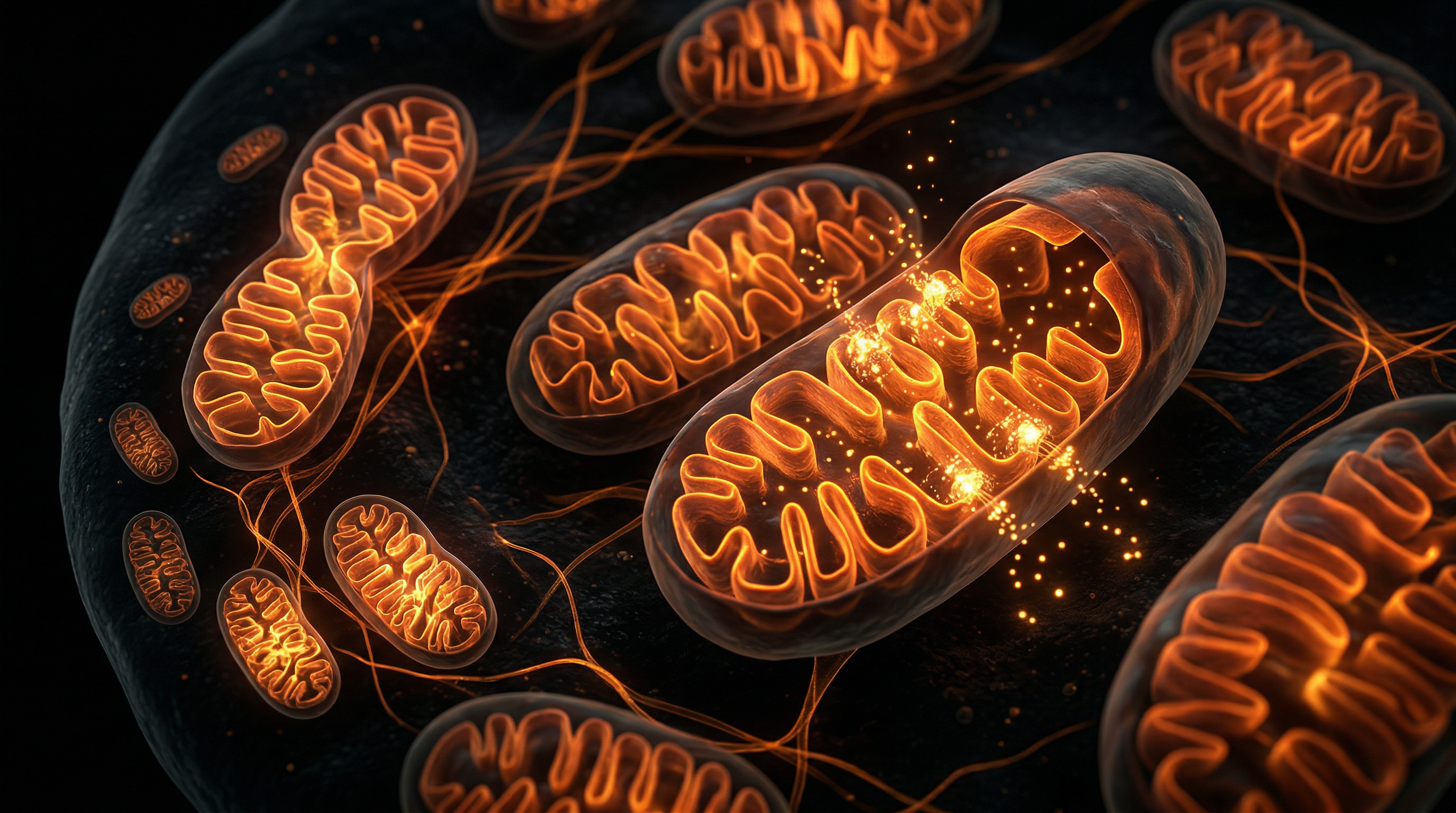
The ultimate goal of this process is to expand the surface area of the Inner Mitochondrial Membrane (IMM). This membrane is the site of the Electron Transport Chain (Chain I-V), where oxygen and nutrients are converted into Adenosine Triphosphate (ATP). A cell with a high density of mitochondria is more than just "energetic"; it is resilient. It can buffer oxidative stress more effectively, manage calcium signaling with greater precision, and undergo mitophagy—the selective destruction of damaged mitochondria—to ensure that only the most efficient "engines" remain in the fleet.
Fact: A single heart cell can contain upwards of 5,000 mitochondria, accounting for nearly 35% of the cell’s volume. When biogenesis is impaired, the heart is the first organ to suffer, leading to the "energy-starved" state characteristic of heart failure.
##
Mechanisms at the Cellular Level
At the heart of mitochondrial biogenesis lies a sophisticated regulatory network. If mitochondria are the engines, then PGC-1alpha (Peroxisome proliferator-activated receptor-gamma coactivator-1alpha) is the master throttle.
The PGC-1alpha Master Switch
PGC-1alpha is a transcriptional coactivator that coordinates the expression of both nuclear and mitochondrial genes. When activated, it docks onto transcription factors like NRF-1 (Nuclear Respiratory Factor 1) and NRF-2, which then travel into the nucleus to signal the production of mitochondrial proteins. PGC-1alpha also stimulates TFAM (Mitochondrial Transcription Factor A), a protein that directly enters the mitochondria to trigger the replication of mtDNA.
The AMPK Energy Sensor
But what activates PGC-1alpha? The primary trigger is AMPK (AMP-activated protein kinase). Think of AMPK as the cell’s "fuel gauge." When cellular energy levels (ATP) drop and the levels of its breakdown product (AMP) rise, AMPK is switched on. It immediately begins a process of metabolic triage: it shuts down energy-expensive processes like fat synthesis and ramps up energy-producing processes like glucose uptake and mitochondrial biogenesis. This is why interventions like fasting and high-intensity exercise are so potent; they create a temporary "energy crisis" that forces the cell to build more mitochondria to survive future demands.
SIRT1 and the Role of NAD+
Another critical player is SIRT1, a member of the sirtuin family of "longevity genes." SIRT1 is dependent on NAD+ (Nicotinamide Adenine Dinucleotide), a coenzyme that declines precipitously with age and environmental toxin exposure. SIRT1 de-acetylates (and thus activates) PGC-1alpha. Without sufficient NAD+, the bridge between the cell’s perception of energy and the actual production of new mitochondria is broken. This is a primary driver of the age-related decline in metabolic function.
Fission, Fusion, and Mitophagy
Biogenesis does not happen in a vacuum; it is part of a cycle known as mitochondrial dynamics.
- Fusion: Mitochondria fuse together to share resources and dilute the effects of damaged mtDNA.
- Fission: Mitochondria split apart, often to isolate a damaged segment.
- Mitophagy: The cell identifies the "broken" mitochondria and breaks them down for parts.
Successful biogenesis requires the balance of these three. If you create new mitochondria without clearing out the old, "leaky" ones, you end up with a high-energy environment that is also highly inflammatory.
##
Environmental Threats and Biological Disruptors
We are currently living in a "mitochondrial minefield." The modern world is engineered in a way that is fundamentally antagonistic to the electron transport chain. To trigger biogenesis, we must first stop the destruction.
Glyphosate and the Shikimate Myth
The UK’s agricultural landscape is heavily dependent on Glyphosate, the active ingredient in many broad-spectrum herbicides. While the mainstream narrative suggests glyphosate is safe for humans because we lack the "shikimate pathway" found in plants, it ignores the impact on our gut microbiome and, crucially, our mitochondria. Research indicates that glyphosate can act as a mitochondrial uncoupler, disrupting the delicate proton gradient across the inner membrane and causing ATP production to plummet while oxidative stress (ROS) skyrockets.
The Blue Light Pandemic
Perhaps the most overlooked threat is the "blue light" emitted by LED screens and overhead bulbs. Mitochondria are light-sensitive organelles. Cytochrome C Oxidase, a key enzyme in the electron transport chain, specifically absorbs red and near-infrared light to enhance ATP production. Conversely, excessive artificial blue light, especially at night, disrupts the production of melatonin. Most people view melatonin solely as a sleep hormone; in reality, it is the premier mitochondrial antioxidant. Without it, your mitochondria literally "burn out" overnight as they attempt to process the metabolic waste of the day.
Seed Oils and Cardiolipin
The consumption of industrially processed seed oils (sunflower, rapeseed, soybean) has introduced an abundance of Linoleic Acid into our cellular membranes. Mitochondria require a specific phospholipid called cardiolipin to maintain the structure of the inner membrane. When cardiolipin is built from fragile, polyunsaturated fats (PUFAs) rather than stable fats, it becomes highly susceptible to lipid peroxidation. This "leaky" membrane allows protons to escape, forcing the mitochondria to work twice as hard for the same amount of energy, eventually leading to premature mitochondrial death.
Warning: The Environment Agency in the UK has consistently reported high levels of endocrine-disrupting chemicals (EDCs) and microplastics in British waterways. Many of these chemicals, such as Bisphenol A (BPA), are known "obesogens" that directly inhibit mitochondrial enzyme activity, particularly in the liver and adipose tissue.
##
The Cascade: From Exposure to Disease
What happens when biogenesis fails and the mitochondrial population dwindles? We enter a state of Metabolic Stagnation. This is not a sudden event but a slow, decades-long cascade that manifests as the "diseases of civilisation."
Step 1: Oxidative Stress and mtDNA Damage
When the electron transport chain is inefficient, electrons "leak" out and react with oxygen to form Superoxide and other Reactive Oxygen Species (ROS). Because mtDNA is not protected by histones (like nuclear DNA) and sits right next to the site of ROS production, it is highly vulnerable to mutation. These mutations lead to the production of "broken" enzymes, which in turn produce more ROS—a vicious cycle of decay.
Step 2: Systemic Inflammation (Inflammaging)
Damaged mitochondria can release their DNA into the cytoplasm of the cell. Because mtDNA looks biologically similar to bacterial DNA, the cell’s innate immune system (via the cGAS-STING pathway) perceives this as a foreign invasion. This triggers a chronic, systemic inflammatory response. This "sterile inflammation" is the root cause of the Inflammaging seen in the UK’s elderly population, contributing to arthritis, vascular disease, and cognitive decline.
Step 3: Bioenergetic Failure
Eventually, the ATP deficit becomes critical. Organs with the highest energy demands—the brain, heart, and muscles—fail first. This explains the rise in Myalgic Encephalomyelitis (ME/CFS) and the prevalence of "Brain Fog." The brain, which consumes 20% of the body's energy despite being only 2% of its weight, cannot maintain its electrical gradients. The result is a loss of synaptic plasticity and the accumulation of protein aggregates like amyloid-beta.
##
What the Mainstream Narrative Omits
The current medical model, overseen by bodies like the NHS and regulated by the MHRA, is focused on "downstream" symptom management. If you have high blood sugar, you are given metformin; if you have high cholesterol, you are given statins.
The Statins Paradox
What the mainstream narrative omits is that statins are known to deplete Coenzyme Q10 (CoQ10), a vital electron carrier in the mitochondrial membrane. By lowering cholesterol, we are inadvertently crippling the very organelles responsible for the metabolic health we are trying to save. This is why muscle pain and fatigue are the most common side effects of statin use—it is direct mitochondrial toxicity.
The "Pill for an Ill" vs. Bioenergetics
Mainstream dietetics still clings to the "Calories In vs. Calories Out" (CICO) model. This model assumes the human body is a simple furnace. In reality, it is a complex quantum biological system. Two people can eat the same 2,000 calories, but if one has a robust mitochondrial population and the other has "thin," damaged mitochondria, their bodies will process that energy in entirely different ways. The former will burn it as heat (thermogenesis), while the latter will store it as fat (lipogenesis) because they cannot effectively convert it into ATP.
The Role of Water Structure
Furthermore, the narrative completely ignores the state of interfacial water within the cell. Mitochondria act as "nano-purifiers," creating Deuterium-depleted water (DDW) as a byproduct of the electron transport chain. This structured water is essential for protein folding and enzyme function. When mitochondria are damaged, we lose this internal hydration, leading to a "cellular drought" that no amount of bottled water can fix.
##
The UK Context
The United Kingdom presents a unique set of challenges for mitochondrial health. Our northern latitude means that for much of the year, we lack the UV-B radiation necessary for Vitamin D synthesis, but more importantly, we lack the Near-Infrared (NIR) light from the sun that naturally supports mitochondrial function.
The "Tired All The Time" (TATT) Epidemic
"Tired All The Time" (TATT) is one of the most common reasons for GP consultations in the UK. Research indicates that roughly 1 in 5 people in the UK feel unusually tired at any given time. While often dismissed as "stress," this is actually a reflection of the national bioenergetic state. The combination of a high-carbohydrate "Western Diet," a lack of sunlight, and the high density of electromagnetic frequencies (EMF) in our urban centres creates a perfect storm for mitochondrial suppression.
Soil Depletion and Mineral Deficiencies
British soils have been significantly depleted of Magnesium and Selenium over the last century due to intensive farming practices. Magnesium is a mandatory cofactor for ATP—in fact, ATP should technically be referred to as Mg-ATP, as it must be bound to a magnesium ion to be biologically active. Without adequate magnesium, even the mitochondria we do have cannot function. The Food Standards Agency (FSA) data suggests that a significant portion of the UK population does not meet the RNI (Reference Nutrient Intake) for these critical mitochondrial minerals.
##
Protective Measures and Recovery Protocols
Triggering mitochondrial biogenesis requires a "hormetic" approach—applying brief, controlled stressors that force the body to adapt and upgrade its hardware.
1. Cold Thermogenesis (The "Ice" Factor)
Cold exposure is perhaps the most powerful trigger for PGC-1alpha. When the body is exposed to cold (such as a cold shower or a dip in the North Sea), it must maintain its core temperature. This activates Brown Adipose Tissue (BAT), which is packed with mitochondria. These mitochondria express UCP1 (Uncoupling Protein 1), which allows them to bypass ATP production and instead generate pure heat. This "mitochondrial workout" stimulates the production of new, more efficient mitochondria throughout the entire body.
- Protocol: Start with 30 seconds of cold water at the end of your shower, gradually building up to 5-10 minutes of submersion in water below 15°C.
2. High-Intensity Interval Training (HIIT)
Steady-state cardio has its place, but HIIT is the king of biogenesis. By pushing the muscles to their absolute limit for short bursts, you create an immediate and profound energy deficit. This spikes AMPK and forces the muscular mitochondria to replicate.
- Protocol: 30 seconds of maximum effort (sprinting, cycling, or rowing) followed by 90 seconds of active recovery. Repeat 6-8 times, twice a week.
3. Time-Restricted Feeding and Autophagy
Fasting is the ultimate cellular "cleanup" crew. By abstaining from food for 16-18 hours, you lower insulin levels and activate SIRT1. This triggers mitophagy, where the body identifies and recycles "zombie" mitochondria that are leaking electrons. This clearing of the decks is a prerequisite for the birth of new, healthy organelles.
4. Photobiomodulation (Red Light Therapy)
To counteract the "blue light" of modern life, we must expose our cells to Red and Near-Infrared light (600nm - 900nm). This light penetrates the skin and is absorbed by Cytochrome C Oxidase, increasing the flow of electrons and reducing the production of ROS.
- Protocol: Use a high-quality LED red light panel for 10-20 minutes daily, preferably in the morning to help set your circadian rhythm.
5. Targeted Nutraceuticals
While a "food first" approach is ideal, the state of modern soil often necessitates supplementation:
- CoQ10 (as Ubiquinol): 100-200mg daily to support electron transport.
- Magnesium (as Glycinate or Malate): 400mg daily to stabilise ATP.
- NAD+ Precursors (NMN or NR): To provide the fuel for SIRT1 and PGC-1alpha.
- PQQ (Pyrroloquinoline Quinone): A unique compound shown to stimulate spontaneous mitochondrial biogenesis even in resting cells.
##
Summary: Key Takeaways
The path to reclaiming your cellular energy is not found in a stimulant-laden energy drink or a temporary caffeine fix. It is found in the fundamental rewiring of your bioenergetic potential through mitochondrial biogenesis.
- Mitochondria are the masters of the cell, regulating everything from energy production to the programmed death of damaged cells.
- PGC-1alpha is the master regulator of biogenesis, activated by signals of "scarcity" such as exercise, cold, and fasting.
- The modern environment is toxic to mitochondria, with glyphosate, artificial blue light, and seed oils acting as primary disruptors.
- The UK faces a bioenergetic crisis, manifested as widespread fatigue and chronic disease, exacerbated by a lack of sunlight and mineral-depleted soil.
- Biogenesis is achievable through hormetic stressors (HIIT, cold therapy), strategic nutrition, and a return to the light cycles our ancestors evolved within.
By understanding and harnessing the mechanisms of biogenesis, we move beyond the "disease-management" model and into a new era of Proactive Bioenergetics. Your cellular potential is not fixed; it is dynamic. The choice to build a more powerful, resilient engine lies in the lifestyle signals you send to your mitochondria every single day. Stop managing your symptoms and start building your energy.
This article is provided for informational and educational purposes only. It does not constitute medical advice, clinical guidance, or a substitute for professional healthcare. Information reflects cited research at time of publication. Always consult a qualified healthcare professional before acting on any health information.
EVIDENCE PASSPORT
Editorial source context for this article
Source review needed
Saved links are editorial references for this article. They may support specific claims rather than every sentence. Open and assess each source in context. This passport does not independently verify them.
Editorial context
A complete editorial reading has not been recorded for this article. Source links remain available for you to open and assess directly.
Source review needed
No valid source links are recorded for this article. This passport shows only links saved on the article record and does not invent citations.
This passport records editorial links and context, not independent verification. Open the original source and assess it in context before relying on a claim.
Medical Disclaimer
The information in this article is for educational purposes only and does not constitute medical advice, diagnosis, or treatment. Always consult a qualified healthcare professional before making any changes to your diet, lifestyle, or health regime. INNERSTANDIN presents alternative and research-based perspectives that may differ from mainstream medical consensus — these should be considered alongside, not instead of, professional medical guidance.
Read Full DisclaimerContinue the thread
Keep this question moving.
Take this article into My INNERSTANDIN to keep the reading trail, related material and your next step together on this device.
Explore this in the Body Map
See where this hits your biology. Interactive anatomy, threats, and protective protocols.
Dig deeper in the Library
Free, longform PDF volumes that go beyond headlines into mechanisms and references.