
Mitochondrial Dysfunction and Oxidative Stress: The Hidden Impact of Trace Metal Sequestration
Discuss this resourceUpdated May 2026
An in-depth exploration into how the displacement and sequestration of essential minerals like zinc and copper disrupt mitochondrial bioenergetics, leading to chronic oxidative stress and systemic cellular fatigue.
Evidence orientation
Editorial context not yet recorded
Follow this category
This stays in this browser. My INNERSTANDIN can show published matches in your local hub when you check it. It does not send email, push, or alert notifications.
Local learning review
A private browser aid for revisiting ideas. It is not an alert or a health recommendation.
Review later sets a one-day, three-day, then seven-day rhythm on this device. Choose it only when you want to revisit this article.
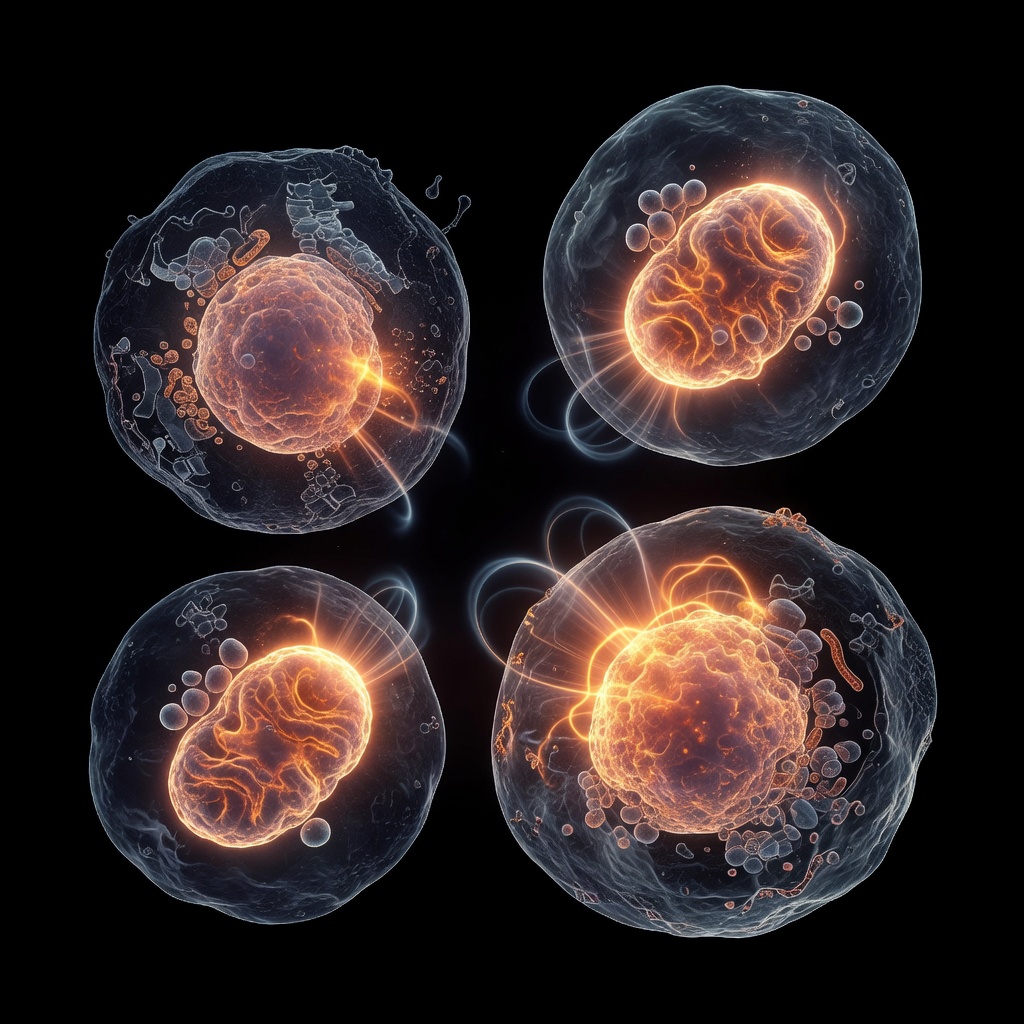
The ETC consists of four major protein complexes (I-IV) embedded in the inner mitochondrial membrane. These complexes act as a relay race for electrons. Complex IV, specifically known as cytochrome c oxidase, is the final enzyme in this chain and is absolutely dependent on copper. Without bioavailable copper, the transfer of electrons to oxygen is inhibited, causing the whole 'conveyor belt' to grind to a halt. Zinc, while not a direct electron carrier in the ETC, is vital for the structural integrity of the proteins involved and plays a massive role in the regulation of genes that produce mitochondrial components.
When these metals are sequestered—meaning they are present in the body but 'locked away' in storage proteins like metallothionein or trapped in tissues due to chronic inflammation—the mitochondria are starved of the tools they need to generate energy. ## Displacement: The Biological Identity Theft A more insidious form of mitochondrial damage occurs through displacement. This happens when a non-functional or toxic metal takes the place of an essential mineral in an enzyme's active site. For example, cadmium possesses a similar atomic structure to zinc. If the body is deficient in zinc, it may inadvertently pull cadmium into zinc-dependent enzymes. This 'identity theft' renders the enzyme dysfunctional.
In the context of mitochondria, this displacement can occur within the iron-sulfur clusters of Complexes I, II, and III. If lead or mercury displaces iron or disrupts the binding sites, electron leakage occurs. Instead of electrons flowing smoothly to create ATP, they 'leak' out and react prematurely with oxygen, creating the superoxide radical—a highly reactive and damaging form of oxygen. ## The Zinc-Copper Relationship and Superoxide Dismutase One of the primary defenses the body has against this electron leakage is an enzyme called Superoxide Dismutase (SOD). There are several forms of SOD, but the most prominent in the context of mineral balance is Cu/Zn-SOD (SOD1), which resides in the cytoplasm and the mitochondrial intermembrane space. As the name suggests, this enzyme requires both copper and zinc to function.
Zinc provides structural stability, while copper provides the catalytic activity needed to neutralise superoxide into hydrogen peroxide (which is later turned into water by catalase). When an individual has a zinc-copper imbalance—typically characterised by high 'unbound' copper and low systemic zinc—SOD function is impaired. Without functional SOD, the superoxide radicals generated by the mitochondria are left unchecked. They begin a process of lipid peroxidation, essentially 'rusting' the delicate mitochondrial membranes. This not only further inhibits energy production but also triggers a cascade of inflammatory signals. ## Mitochondrial DNA: The Vulnerable Target Unlike the DNA in the cell's nucleus, mitochondrial DNA (mtDNA) is not protected by histones (protective proteins) and has limited repair mechanisms.
This makes mtDNA exceptionally vulnerable to the oxidative stress caused by metal sequestration. When copper is sequestered and zinc is displaced, the resulting flood of reactive oxygen species (ROS) attacks the mtDNA directly. Mutations in mtDNA lead to the production of 'broken' ETC proteins, which in turn produce more ROS. This creates a vicious cycle of decay. Over time, the density of functional mitochondria within the cell decreases, leading to what we recognise as chronic fatigue, exercise intolerance, and accelerated aging. ## Systemic Consequences: From Brain to Metabolic Health The impact of mitochondrial dysfunction resulting from metal imbalances is not localised to a single organ.
The brain, which consumes roughly 20 percent of the body's total energy, is often the first to feel the effects. Neurodegenerative conditions are increasingly being linked to 'brain copper' issues and mitochondrial failure. Similarly, metabolic health is tied to this balance; if the mitochondria cannot efficiently burn glucose or fatty acids due to mineral-driven enzymatic blocks, the body begins to store energy as fat and develops insulin resistance. ## Root Cause Resolution: Restoring Homeostasis At INNERSTANDING, we believe that addressing mitochondrial dysfunction requires more than just taking CoQ10 or other 'energy boosters'. It requires a deep dive into the mineral status of the individual. Simply supplementing with high doses of zinc or copper can often exacerbate the problem if the underlying sequestration issue—often driven by adrenal fatigue, liver congestion, or chronic stress—is not addressed.
Restoring the zinc-copper balance involves: 1. Accurate Testing: Moving beyond standard serum tests to look at markers of bioavailability, such as Hair Tissue Mineral Analysis (HTMA) and ceruloplasmin levels. 2. Supporting Mineral Carriers: Ensuring the body has enough carrier proteins like ceruloplasmin to safely transport copper. 3. Reducing Toxic Load: Minimising exposure to displacing metals like cadmium, lead, and aluminium. 4. Nutritional Cofactors: Utilising Whole Food Vitamin C and Retinol (Vitamin A), which are essential for the proper loading of copper into enzymes. ## Conclusion Mitochondrial dysfunction is not a permanent sentence; it is often a reflection of a cellular environment that has lost its elemental harmony.
By understanding the intricate dance between zinc, copper, and the mitochondrial machinery, we can begin to reverse oxidative damage at its source. True vitality begins at the molecular level, through the restoration of mineral balance and the liberation of the body's innate energy-producing capacity.
This article is provided for informational and educational purposes only. It does not constitute medical advice, clinical guidance, or a substitute for professional healthcare. Information reflects cited research at time of publication. Always consult a qualified healthcare professional before acting on any health information.
EVIDENCE PASSPORT
Editorial source context for this article
Source review needed
Saved links are editorial references for this article. They may support specific claims rather than every sentence. Open and assess each source in context. This passport does not independently verify them.
Editorial context
A complete editorial reading has not been recorded for this article, and no source links are saved on its record.
Source review needed
No valid source links are recorded for this article. Supplementary research, where available, is listed separately below.
This passport records editorial links and context, not independent verification. Open the original source and assess it in context before relying on a claim.
Medical Disclaimer
The information in this article is for educational purposes only and does not constitute medical advice, diagnosis, or treatment. Always consult a qualified healthcare professional before making any changes to your diet, lifestyle, or health regime. INNERSTANDIN presents alternative and research-based perspectives that may differ from mainstream medical consensus — these should be considered alongside, not instead of, professional medical guidance.
Read Full DisclaimerContinue the thread
Keep this question moving.
Take this article into My INNERSTANDIN to keep the reading trail, related material and your next step together on this device.
Explore this in the Body Map
Explore related body structures and their educational pages in the interactive Body Map.
Dig deeper in the Library
Free, longform PDF volumes that go beyond headlines into mechanisms and references.